Tomokazu Matsuyama: Refusing Hierarchies Between ‘High’ and ‘Low’ Culture
A recipient of the Pen Creator Awards 2025, he reflects in this interview on his practice spanning painting, sculpture and public art.
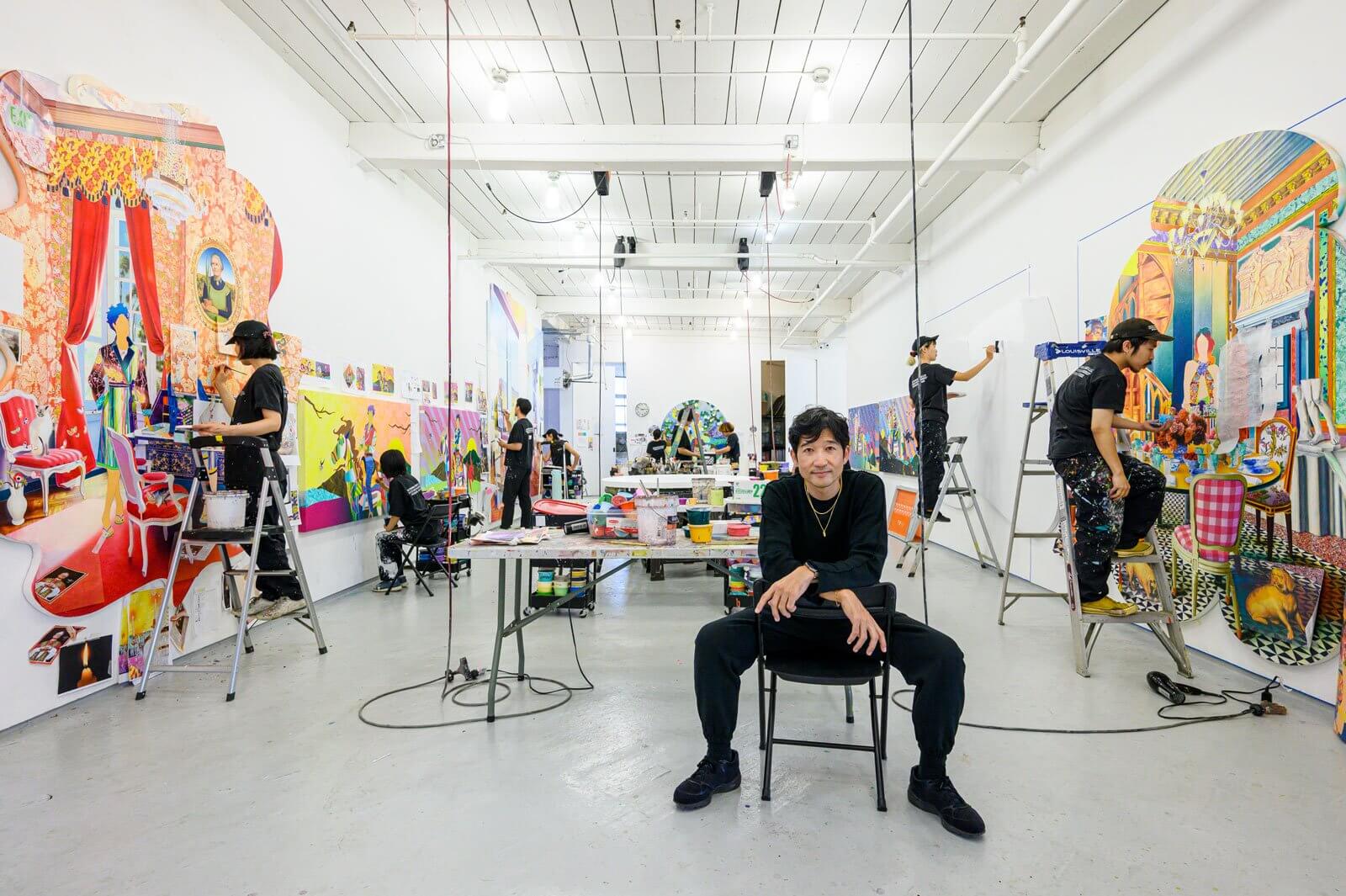
Tomokazu Matsuyama was born in 1976 in Gifu Prefecture. Based in New York, he has developed an international practice spanning painting, sculpture and large-scale public art. His works are installed across Japan, the United States, China, and numerous other countries, and are held in the collections of major museums and corporations worldwide.
Since 2017, the Pen Creator Awards have paid tribute to creators across a wide range of fields, recognising their achievements. For the ninth edition, held in 2025, five recipients were selected. Among them is contemporary artist Tomokazu Matsuyama, based in New York, whose work moves freely across cultural boundaries.
Immediately recognisable for their vivid colours and densely layered compositions, Tomokazu Matsuyama’s works leave a lasting impression. His major solo exhibition FIRST LAST, presented from March 2025 at Azabudai Hills Gallery in Tokyo, garnered significant attention within the international art world.
The exhibition in fact forms part of a longer trajectory, following his participation in the Istanbul Biennial in 2022 and the Venice Biennale in 2024. Turkey, positioned at the crossroads of Asia and Europe, and Italy, home to the Vatican, the centre of Catholicism, are both territories shaped by complex religious and cultural histories. In Istanbul, Matsuyama physically sensed the historical transition from the Roman Empire to the Ottoman Empire and the rise of Islam, an experience that prompted him to reflect on Christianity’s position as a minority religion in the contemporary world.
In Venice, the Biennale was held under the theme ‘Foreigners Everywhere’, highlighting the ways in which discrimination based on gender and nationality has obstructed human coexistence. A visit to the Vatican, meanwhile, offered him access to what he perceived as a concentrated form of Christianity’s cultural legacy from before the modern separation of religion and politics. Having been based in New York for nearly a quarter of a century, these experiences led Matsuyama to confront his own identity as ‘a Japanese person whose father is a pastor’.
FIRST LAST takes its title from a verse attributed to Christ in the Gospel of Matthew. It suggests that whether one turns to faith early or late is ultimately irrelevant; it is belief itself that brings fulfilment. Continuing his practice in New York with an almost missionary-like sense of purpose, Matsuyama came to feel that immediate recognition is not essential, and that remaining true to one’s convictions will eventually lead to the future one hopes for.
His collaborative works have also drawn attention. Drawing on ideas of ‘remix’ and ‘sampling’ rooted in street culture—a foundation of his practice—Matsuyama has engaged in co-creation projects with Yoshiyuki Miyamae for A-POC ABLE ISSEY MIYAKE, as well as with the confectionery brand Umaibō, the long-established wagashi house Toraya, and the nishijin-ori textile atelier Hosoo. Refusing any hierarchy between ‘high’ and ‘low’ culture, he continues to question the value of art within society. He refers to these projects, with respect, as ‘tributes’.
Matsuyama’s influence extends far beyond Japan. The acquisition of his works by the Albertina in Vienna attracted widespread attention, while the number of his pieces entering major American museum collections has doubled in recent years. He has also exhibited at key sites in the history of American art, including the Edward Hopper House Museum. A large-scale project is currently underway for next spring: a video intervention in Times Square, marking a rare instance of such scale within an urban public art context.
By transforming cultural fractures and marginal positions into creative force, while achieving international recognition and sublimating a distinctly Japanese sensibility within his work, Tomokazu Matsuyama stands as a truly singular artistic figure. His practice, grounded in continual reinvention, merits close attention.
In an age that calls for respect for diversity, continuing to unsettle society through ‘remix’
FIRST LAST brought together square-format paintings, irregularly shaped canvases, and sculptures made from stainless steel. How did your practice evolve towards such a diversity of media?
Tomokazu Matsuyama — I began working as a self-taught artist, and while painting murals in New York I found myself immersed in environments where culture and art intersect. I was drawn to a free, physical mode of expression. Over time, I became increasingly aware of the contexts underlying each work, and through exhibitions in public space my practice naturally expanded from painting to sculpture and then to public art. Developing exhibitions with a strong sense of spatiality felt like a natural progression.
You then went on to present a series of solo exhibitions at American museums.
T.M. — I was first invited to exhibit at the Edward Hopper House Museum, the artist’s childhood home converted into a museum. Hopper is best known for Nighthawks, his iconic depiction of a late-night diner. In homage to his exploration of urban solitude and the light that cuts through it, I presented an exhibition there titled MORNING SUN.
Edward Hopper is one of the artists who epitomise early twentieth-century America. This invitation reflects the attention you are receiving within the American art scene.
T.M. — I am grateful that the exhibition received extensive media coverage. The museum is located in Nyack, a small town along the Hudson River, facing the point where the river reaches its greatest width, nearly 4.8 kilometres. Realising that Hopper grew up bathed in this light, before becoming a true master of illumination, was a valuable experience.
You also held another solo exhibition at an American museum this autumn.
T.M. — I presented Liberation Back Home at the SCAD Museum of Art in Savannah, Georgia. It is a former port where the slave trade was once particularly active, a site emblematic of America’s darker history. My approach, which blurs boundaries between East and West, past and present in order to depict contemporary society, was recognised there.
Your work may also be read as a reflection on how diversity should be respected today.
T.M. — In April 2026, I will undertake a public art project in Times Square. Every night, from 11:57 p.m. until midnight, a video work will be simultaneously broadcast across one hundred screens for three minutes. In this work as well, I want to give form to a narrative in which minorities, as creators, gradually assert their existence within American society.
How would you like to be positioned within the art history yet to be written?
T.M. — In response to the machismo and white male dominance that have long structured art history, I have sought to work from a sensibility and attention to detail rooted in the DNA of Japanese culture, using sampling and remix to bring together different cultures and historical periods. Today, ambivalent positions, those that exist in between, are increasingly being valued. If I could become a precursor for an artistic practice that blends American culture, Western art history and Japanese values, while resisting simplistic categorisation, that would be ideal.
More information on Tomokazu Matsuyama’s work is available on his website.
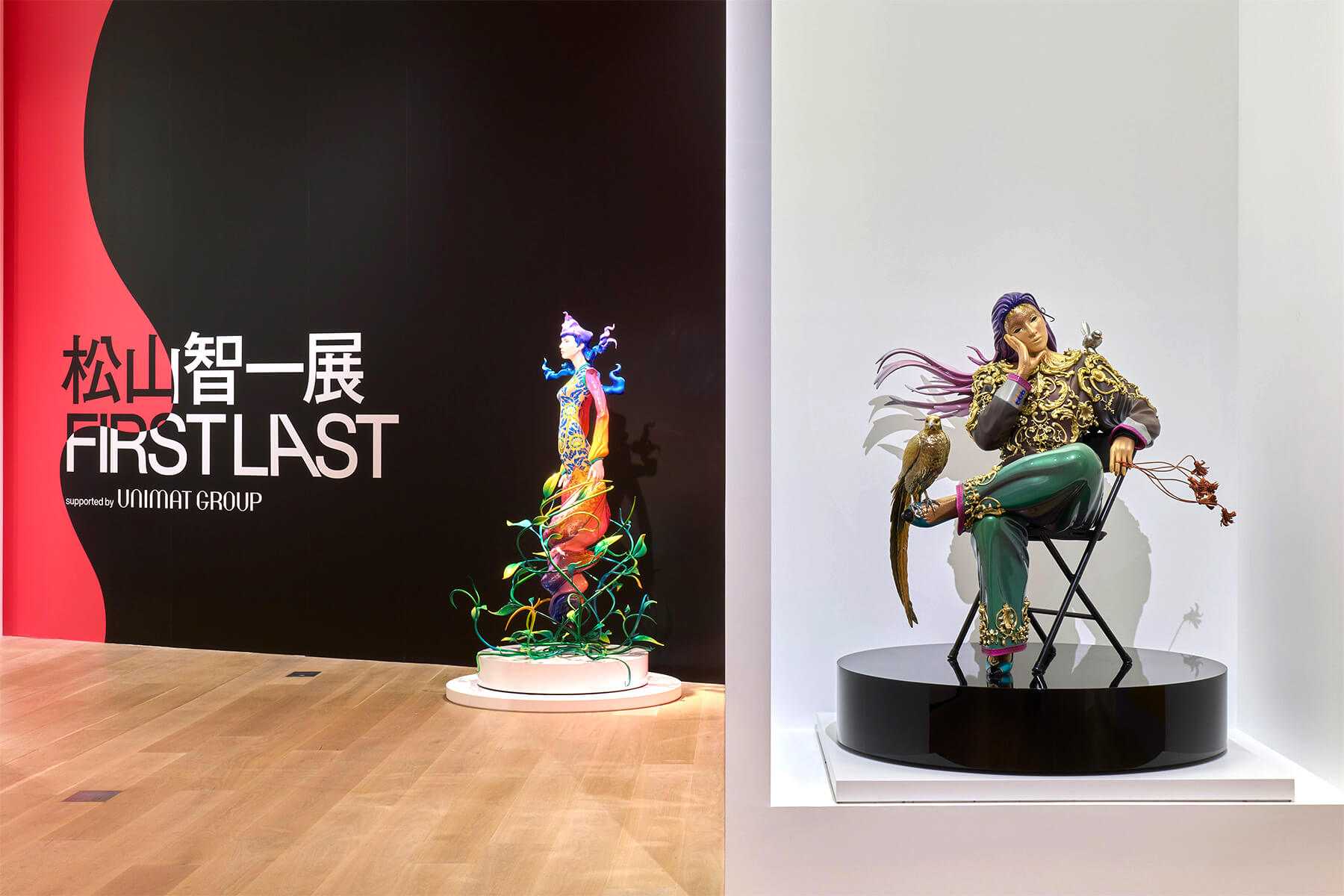
Tomokazu Matsuyama ‘FIRST LAST’ exhibition at Azabudai Hills Gallery (Tokyo), the artist’s first major solo exhibition in Tokyo.
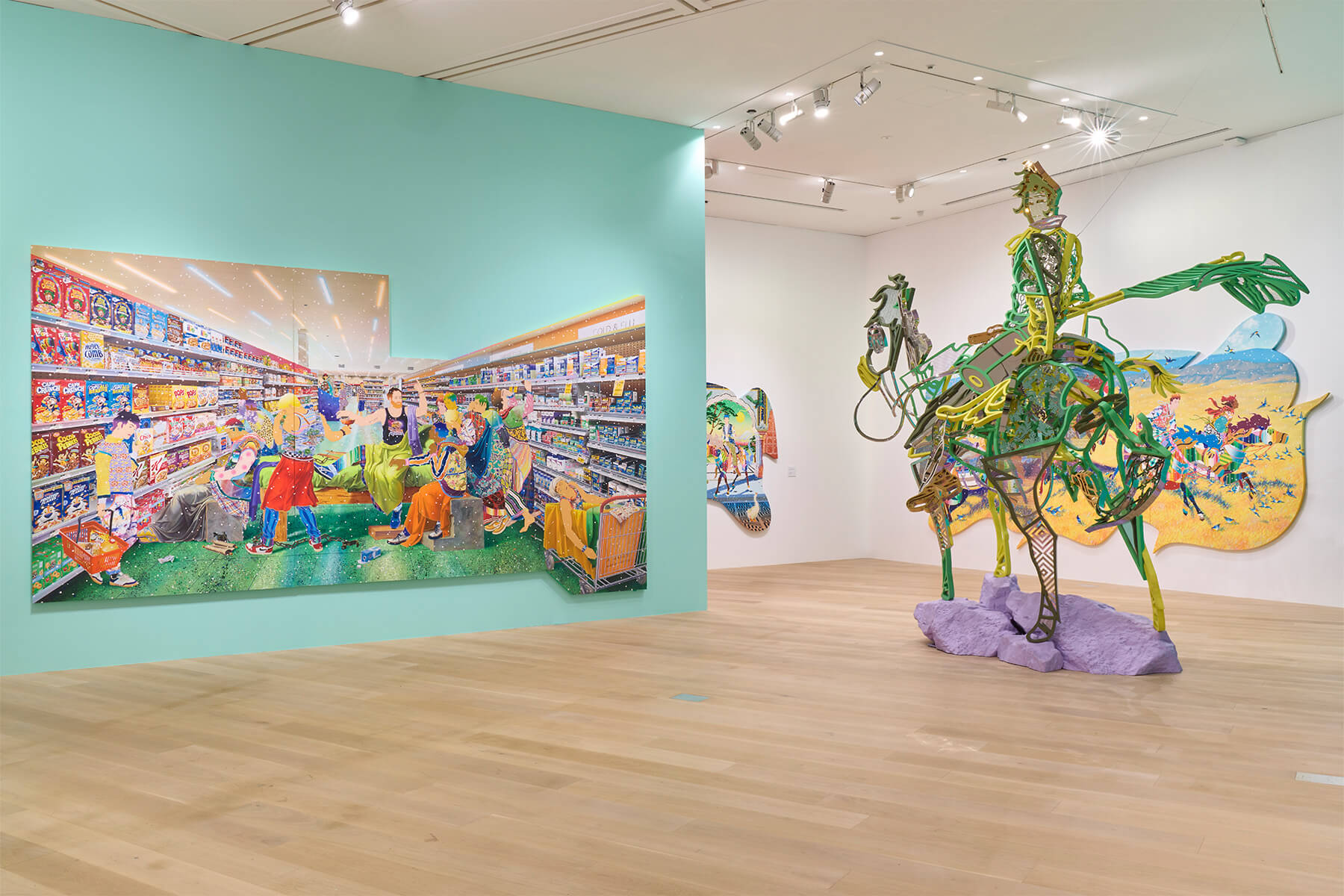
From his recent ‘First Last’ series, inspired by the biblical verse meaning ‘the last shall be first, and the first last’, which affirms that all who believe may be equally saved by God, to the sculpture series ‘Equestrian’, a wide range of Tomokazu Matsuyama’s works were brought together in a single venue.
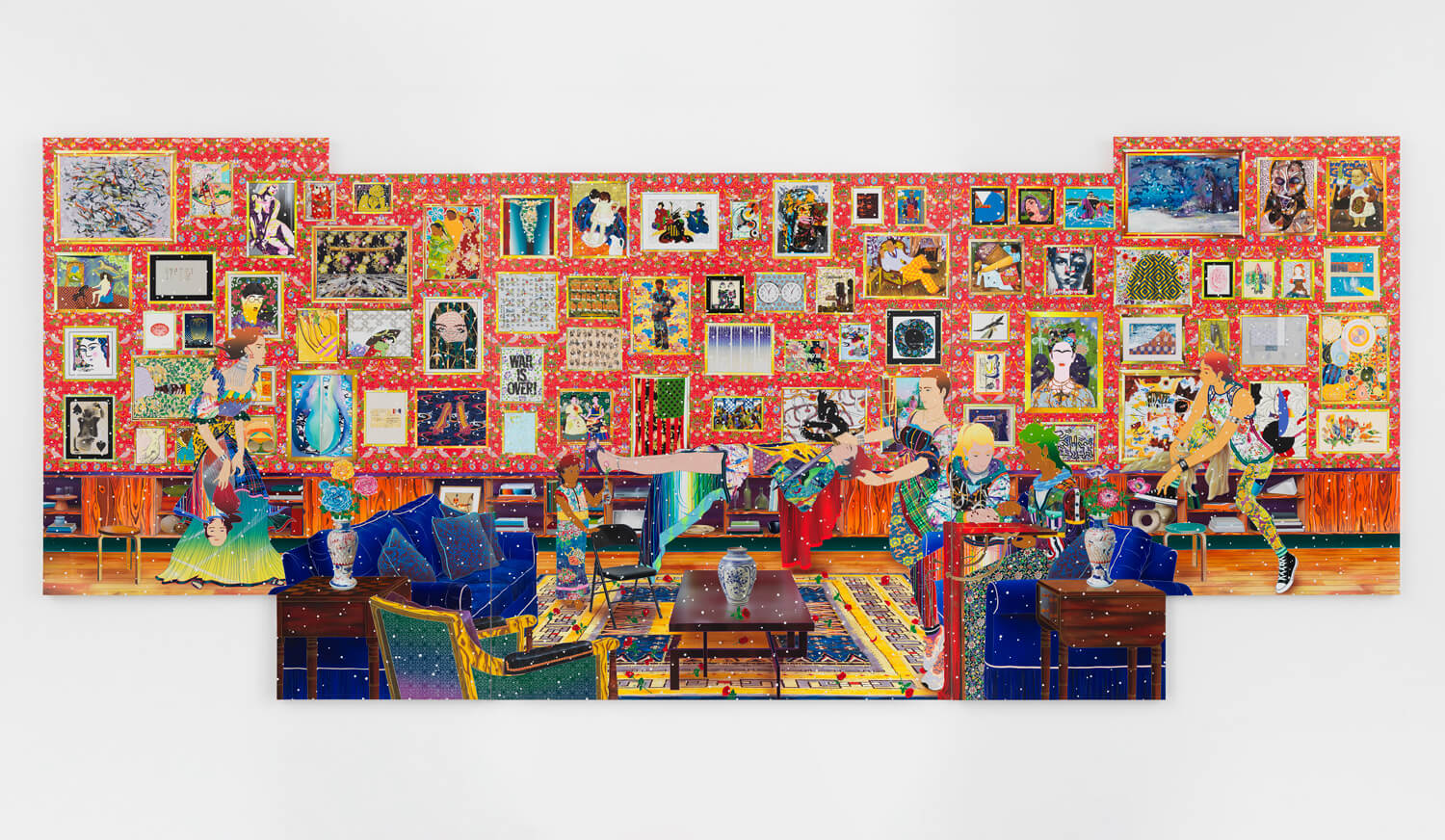
‘You, One Me Erase’ (2023, 274.3 × 660.4 cm). Held in the collection of the Crystal Bridges Museum of American Art, founded by the family of Walmart’s founder, the world’s largest retail corporation. Construction is currently underway on a permanent gallery dedicated exclusively to this work, with an opening scheduled in the near future.
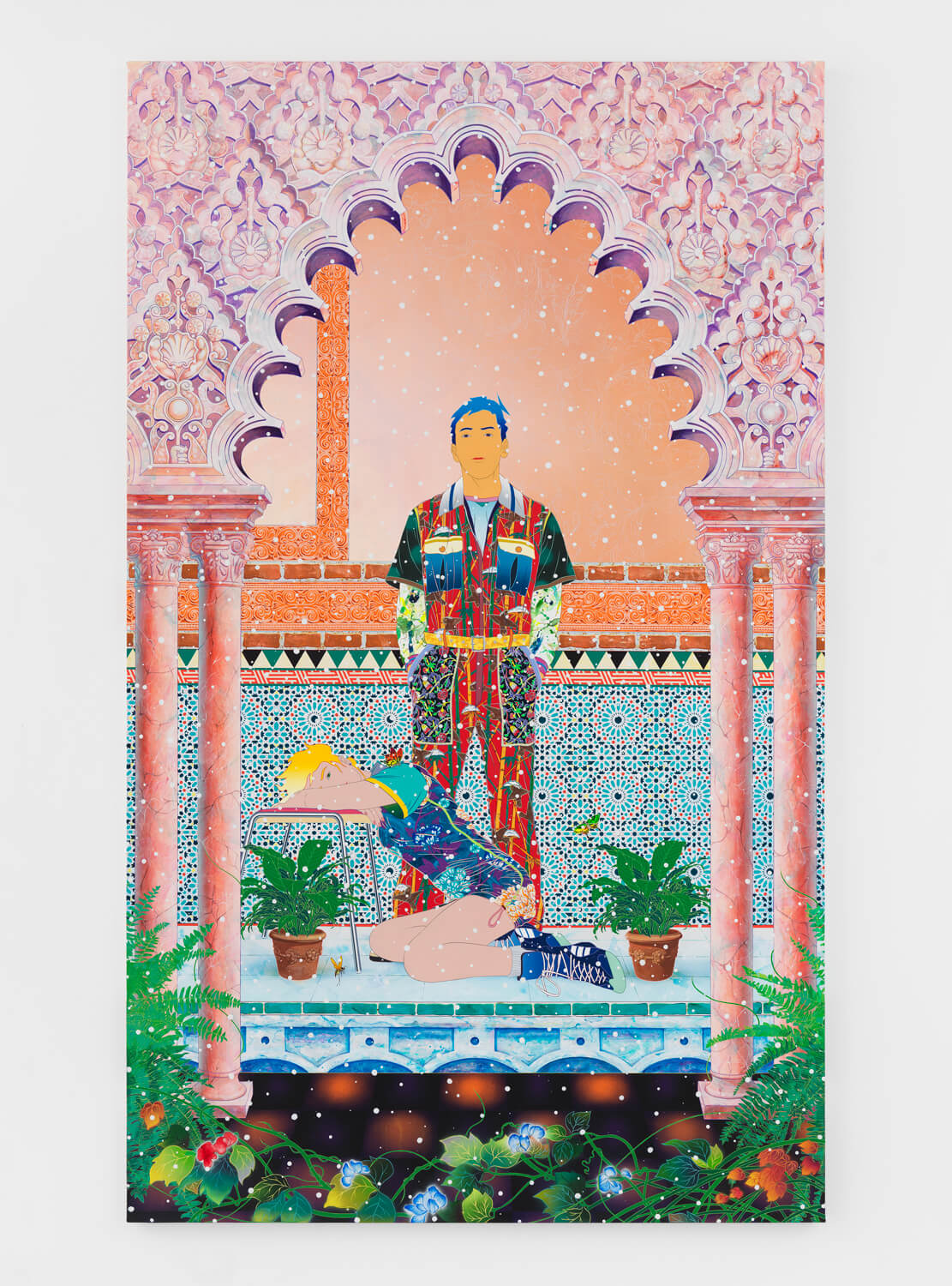
‘The More I See You, Joy is Sorrow Unmasked’ (2023, 254 × 152.4 cm). An environment evoking Islamic architecture is combined here with fashion drawing on multiple styles. The illusionistic space that appears to unfold beneath the tiled floor, according to Kenjiro Hosaka, Director of the Shiga Museum of Art, is a motif rarely seen in Matsuyama’s work and a particularly compelling element.
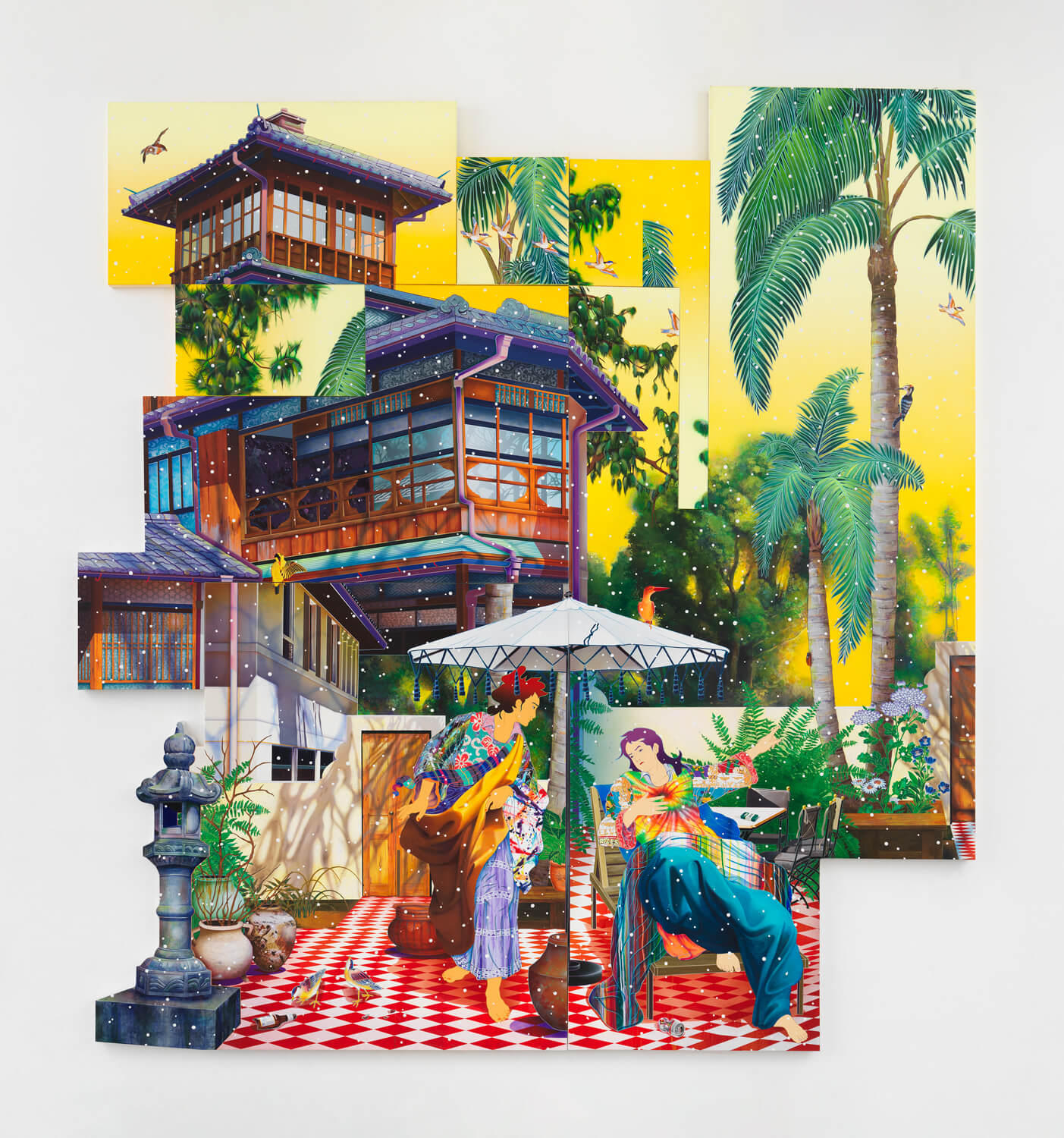
‘Bring You Home Stratus’ (2024, 330 × 307 cm). Two female figures at the center of the composition subtly allude to Annibale Carracci’s Christ and the Samaritan Woman, a New Testament scene centered on the offering of ‘living water’ and salvation beyond social boundaries. In Matsuyama’s work, however, the figures appear disconnected, as if placed within incongruous settings. This sense of dissonance invites layered interpretation and is central to the appeal of his practice.