More information on Yoichi Ochiai’s work can be found on his website.
Yoichi Ochiai, the artist behind the media art pavilion at World Expo 2025 Osaka
A recipient of the Pen Creator Awards 2025, he reflects in this interview on an immersive work translating ‘Digital Nature’ into art.
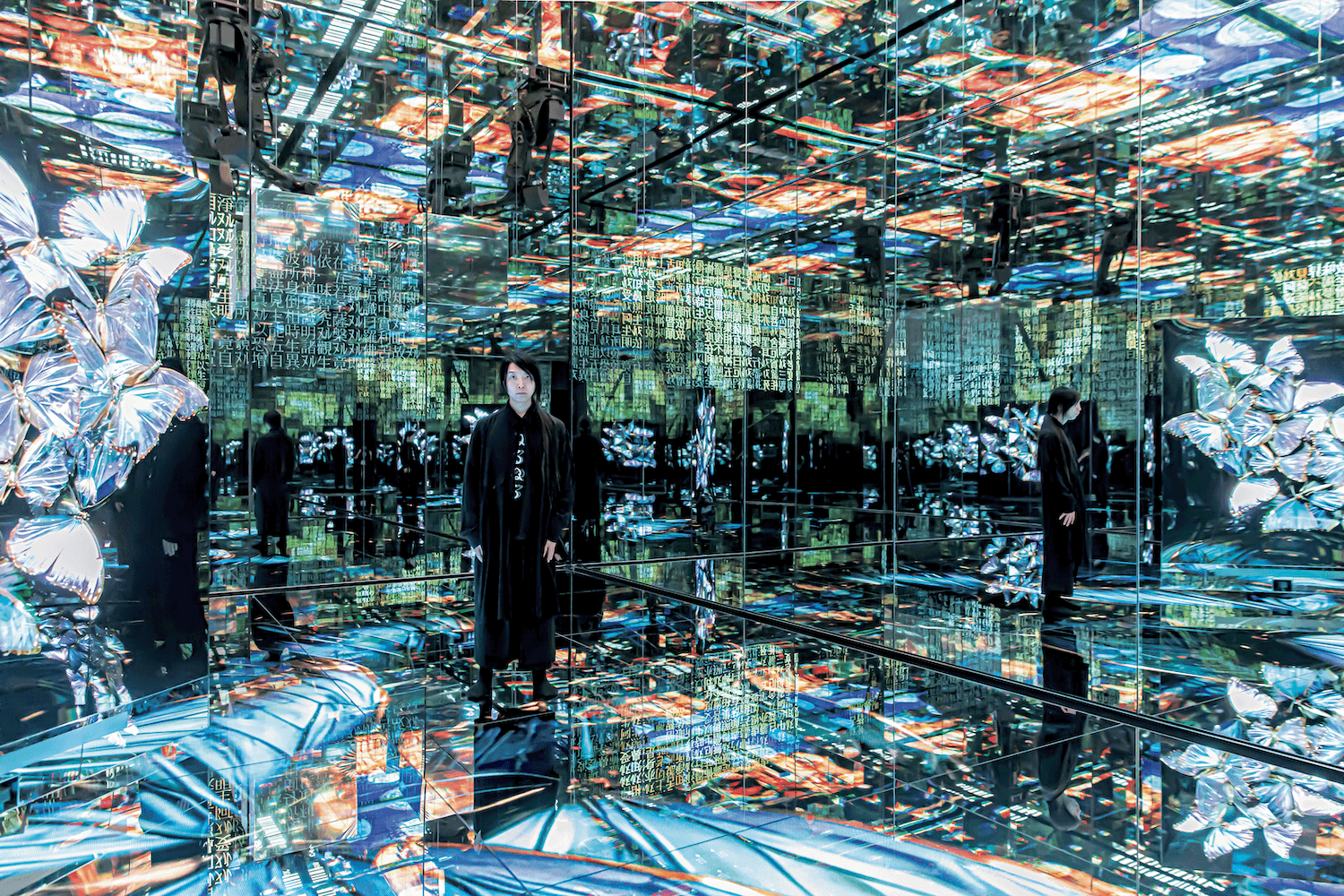
Yoichi Ochiai was born in Tokyo in 1987. He holds a PhD in Interdisciplinary Information Studies from the University of Tokyo. He is Director of the Digital Nature Development Research Center at the University of Tsukuba. His areas of expertise include human–computer interaction, virtual reality and interdisciplinary developments in the field of artificial intelligence. He is a recipient of numerous awards.
Since 2017, the Pen Creator Awards have paid tribute to creators across a wide range of fields, recognising their achievements. For the ninth edition, held in 2025, five recipients were selected. Among them is media artist Yoichi Ochiai, who drew widespread attention with his signature pavilion at World Expo 2025 Osaka.
As producer of the thematic projects for World Expo 2025 Osaka, Yoichi Ochiai brought to fruition the signature pavilion null², which met with remarkable success. Despite the scale of the undertaking and the budgetary constraints inherent in an event of this magnitude, he was determined to complete the pavilion while incorporating manual, artist-led processes. Throughout the exhibition period, he made frequent visits to the site and introduced a ‘walkthrough mode’, allowing visitors who were not selected in the lottery to nonetheless experience part of the pavilion. When a disruption to subway services left visitors stranded, he even restarted null² remotely to encourage them—an attentiveness to the on-site experience that also left a strong impression. In 2025, as AI has rapidly permeated everyday life, Ochiai’s achievement is a significant one: through this pavilion, he presents a vision of the world in a post-AI era.
His practice rests on two pillars: art and research. Since the early 2010s, he has produced numerous works as a media artist, while since 2015 he has also directed the Digital Nature Laboratory at the University of Tsukuba, where he conducts his own research and mentors younger scholars.
A proponent of ‘Digital Nature’, or computational nature
Starting from the idea of a fusion between primordial nature and the internal nature of computers, Ochiai conceives a ‘new nature’ born from an environment saturated with computational technologies. Through both his artistic practice and his engineering research (spanning acoustics, optical holography, digital fabrication and interaction) he has consistently given form to this vision. In recent years, he has defined the Mingei (folk craft) of computational nature as a form of media art, exploring how Japan’s vernacular arts and Buddhist worldviews might unfold within this new environment. His artistic language has expanded accordingly, taking on a distinctive character when he began to focus on intersections between computational nature and cultural practices such as the tea ceremony and Mingei. He has also collaborated with figures from the worlds of music and football.
In what can be seen as a culmination of these explorations, null², presented at World Expo 2025 Osaka, invites visitors into a pavilion entirely clad in mirrors. There, they experience a world of computational nature through dialogue with an AI-generated double of themselves. Visitors of all ages immersed themselves in the space, losing all sense of time.
null² is currently in the process of being relocated, with a view to taking on a new form of existence. Three weeks after the launch of its crowdfunding campaign, the project had already reached 2 billion yen. The enthusiasm surrounding what is already being called ‘null-loss’ shows no sign of fading.
The memory of a world expo becomes a legacy when it is passed on
On the eve of the closing of World Expo 2025 Osaka, Yoichi Ochiai stood inside the mirrored pavilion, his long hair—grown since his appointment as producer—now tied back.
Looking back on Expo 2025 Osaka, how do you feel today?
Yoichi Ochiai — Over these six months, I witnessed scenes I had never seen before. Every day, close to 100,000 people came simply to catch a glimpse of the pavilion. During a DJ set held in one of the international pavilions, I saw an elderly woman start dancing enthusiastically, while beside her a government official was bouncing along. It was a real festival.
You also introduced a ‘walkthrough mode’ that allowed visitors to see inside the pavilion.
Y.O. — When you see, up close, so many people who are unable to enter, it’s only natural to look for a solution. I believe that the memory of a world expo becomes a legacy when those who experienced it pass it on to future generations.
null² is an immersive work that translates into art the experience of ‘Digital Nature’ that Ochiai has been developing for many years. It presents a worldview in which the binary boundaries between nature and artifice disappear, as a result of the interpenetration and fusion of the physical world—primordial nature—and the informational environment of computers.
Many visitors were thus able to experience ‘Digital Nature’.
Y. O. — Digital Nature can be understood intellectually, through concepts or diagrams. But when you find yourself in a space like null², where a ‘sculpture larger than a human being’ begins to speak and behave as if it were alive, you can grasp it in a far more embodied way.
For the sculptural outer skin, a mirrored membrane made from a new material with a reflectivity rate of 98% was used. The low frequencies emitted by the speakers, combined with the movements of robotic arms and actuators, cause the surface to undulate in a fluid, viscous manner—nuru-nuru in Japanese, the onomatopoeia that gave null² its name—giving it the appearance of a living organism and drawing the attention of passers-by.
Inside, the reflection of the Heart Sutra was particularly striking.
Y. O. — Placing, at the centre of the World Expo 2025 Osaka site, an Eastern idea that moves from emptiness (null) to emptiness (null) felt highly symbolic to me. If, at the 1970 World Expo, Taro Okamoto’s Tower of the Sun was rooted in a Jōmon-inspired way of thinking, then null² is a mirror: Kofun, agrarian, Yayoi. Both are forms of total art that come into being through collective effort. Today, we have entered an era in which the artist is the one who brings a team together and directs it. I conceived and directed this pavilion as a monumental optical sculpture, as well as a digital space capable of transforming the mental state of its participants. It took shape through collaborations with Asratec for robotics, NOIZ for architecture, WOW for video, Nomura Kogeisha for interior design, among others. Ultimately, I concentrated my own motifs into it through an approach that is both artisanal and sculptural.
Etched into the memory of countless visitors, null² remains. All that is left is to await, with curiosity, the next form of magic that Yoichi Ochiai will choose to bring into being.
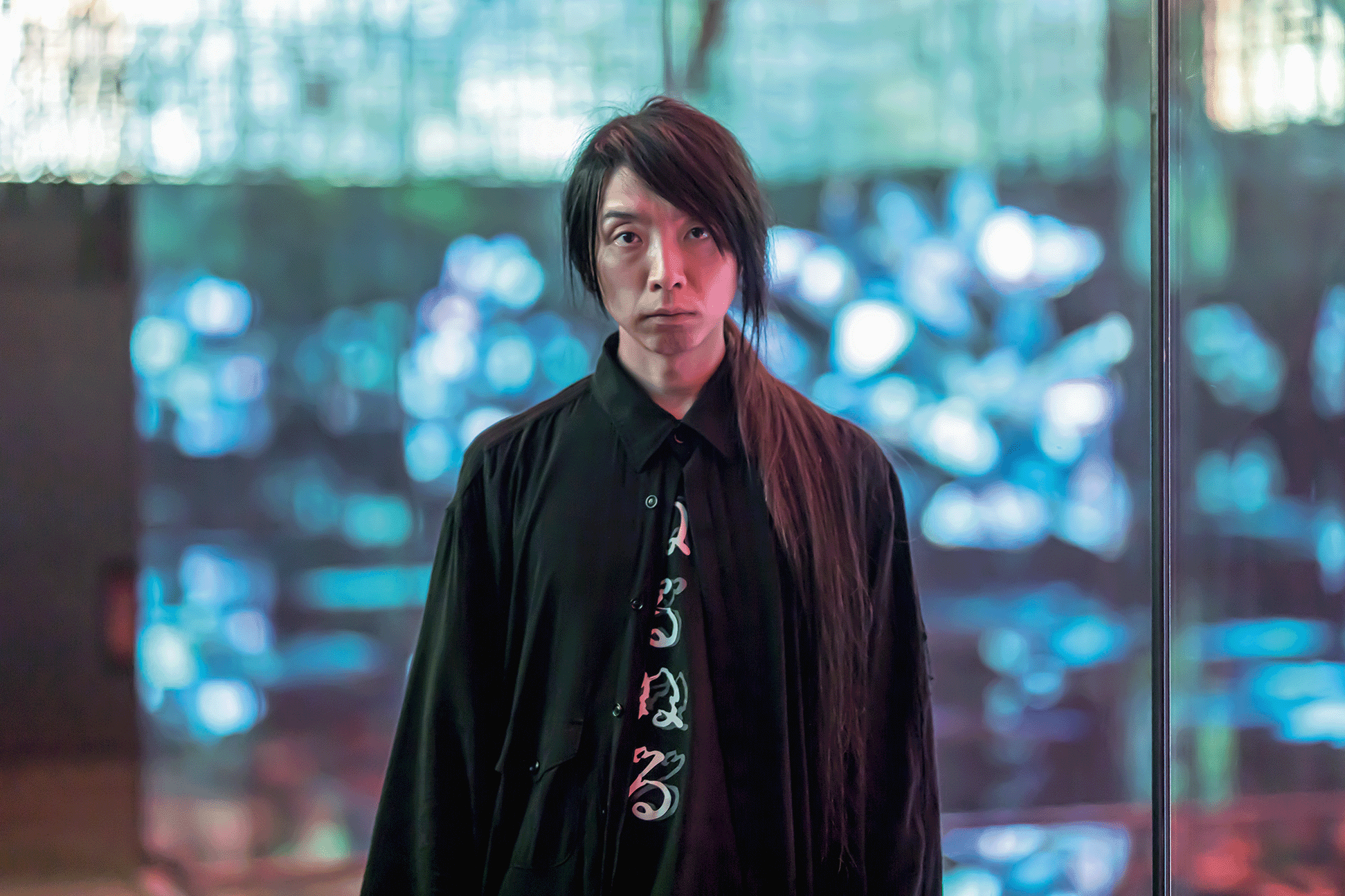
Yoichi Ochiai.
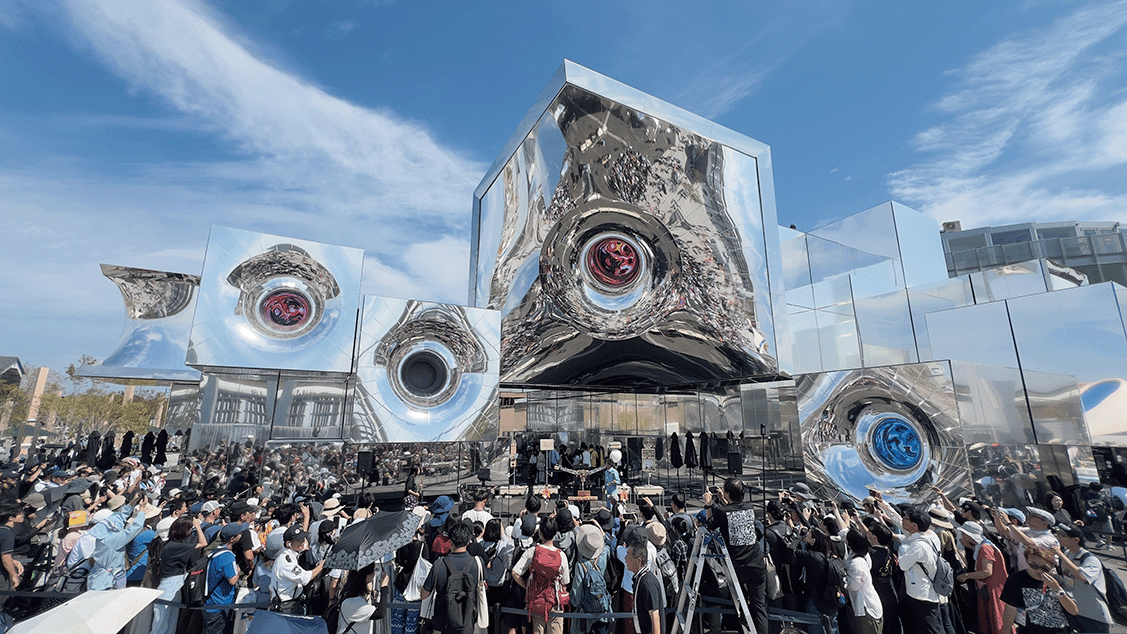
‘null²’, the pavilion that generated widespread enthusiasm at World Expo 2025 Osaka. Over the seven-month duration of the Expo, live performances were also held outside the pavilion, fostering a sense of communion with visitors.
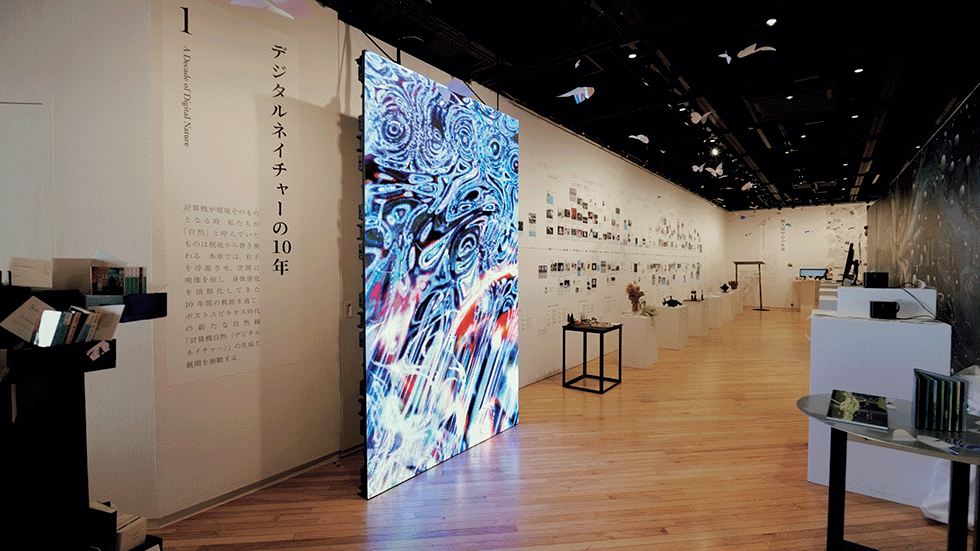
Digital Nature Group 10th Anniversary Exhibition. Held at AXIS Gallery in Tokyo to mark the tenth anniversary of the Digital Nature Laboratory at the University of Tsukuba. Photo: Ippei Suzuki (BONSAI STUDIO)
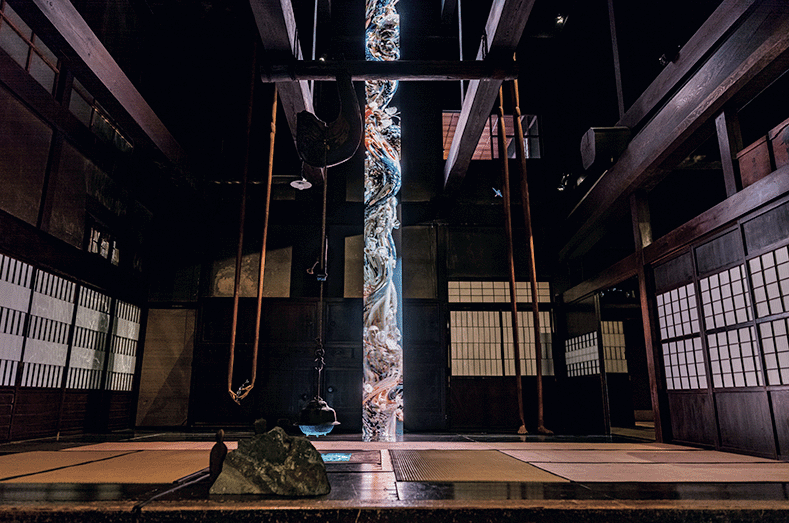
Yoichi Ochiai, solo retrospective exhibition, ‘The Tetralemma of Null: A Human Story Induced by Signs’. An installation presented since 2021 at the Kusakabe Folk Craft Museum in Hida. A dynamically spatial exhibition. With the cooperation of: Karimoku Furniture Co., Ltd. Equipment provision / technical support: Seibido Co., Ltd. Photo: Yoichi Ochiai
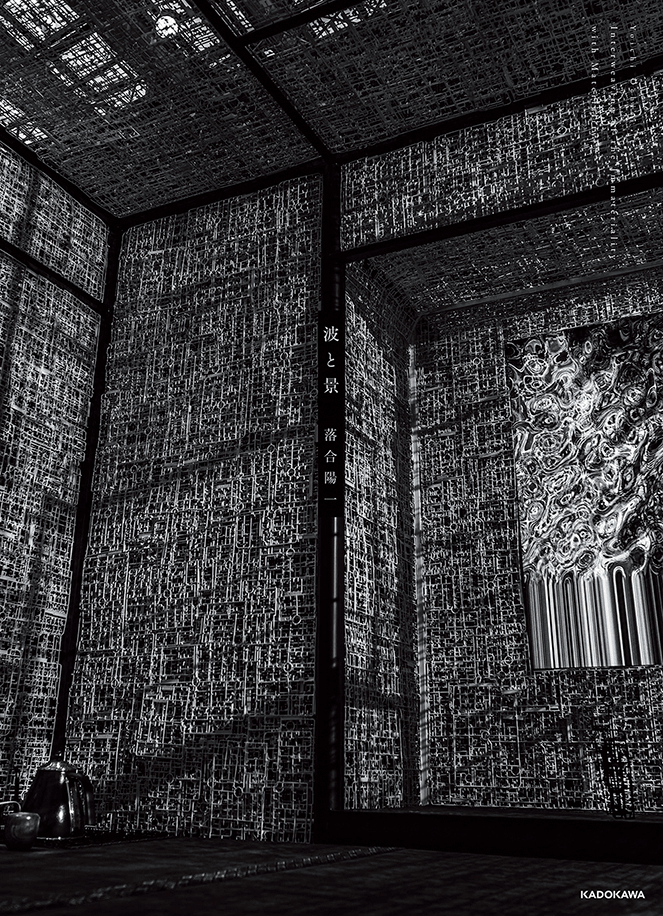
Publication of his first collected works, ‘Waves and Landscapes’. A trajectory devoted to exploring a new conception of nature, emerging in the interstices of technology. ¥7,480 (KADOKAWA)