Defying the Laws of Gravity in ‘The Kiriki’
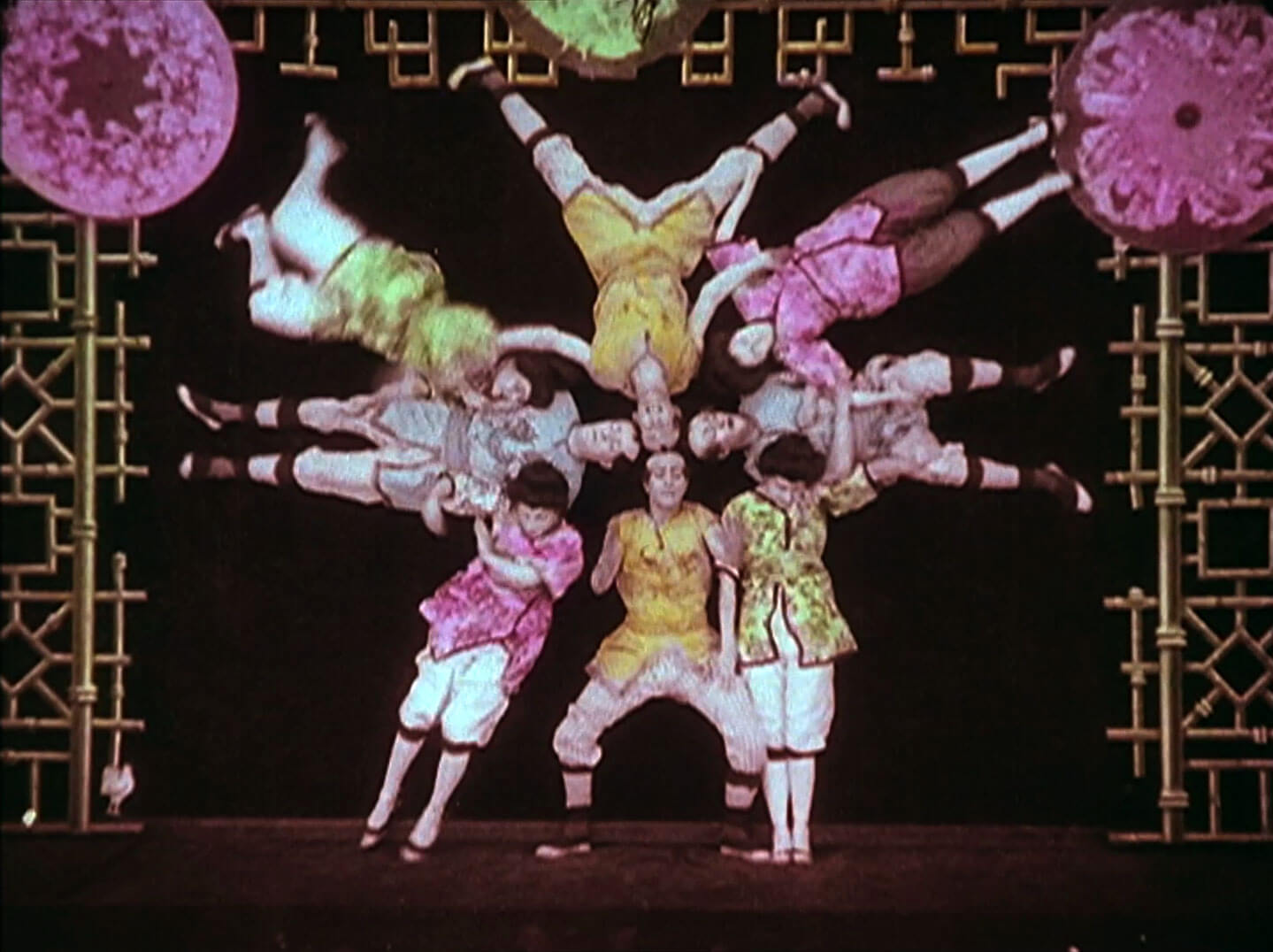
A troupe of Japanese acrobats perform a balancing act in this short film shot in 1907 at the Pathé studios.
© Studios Pathé
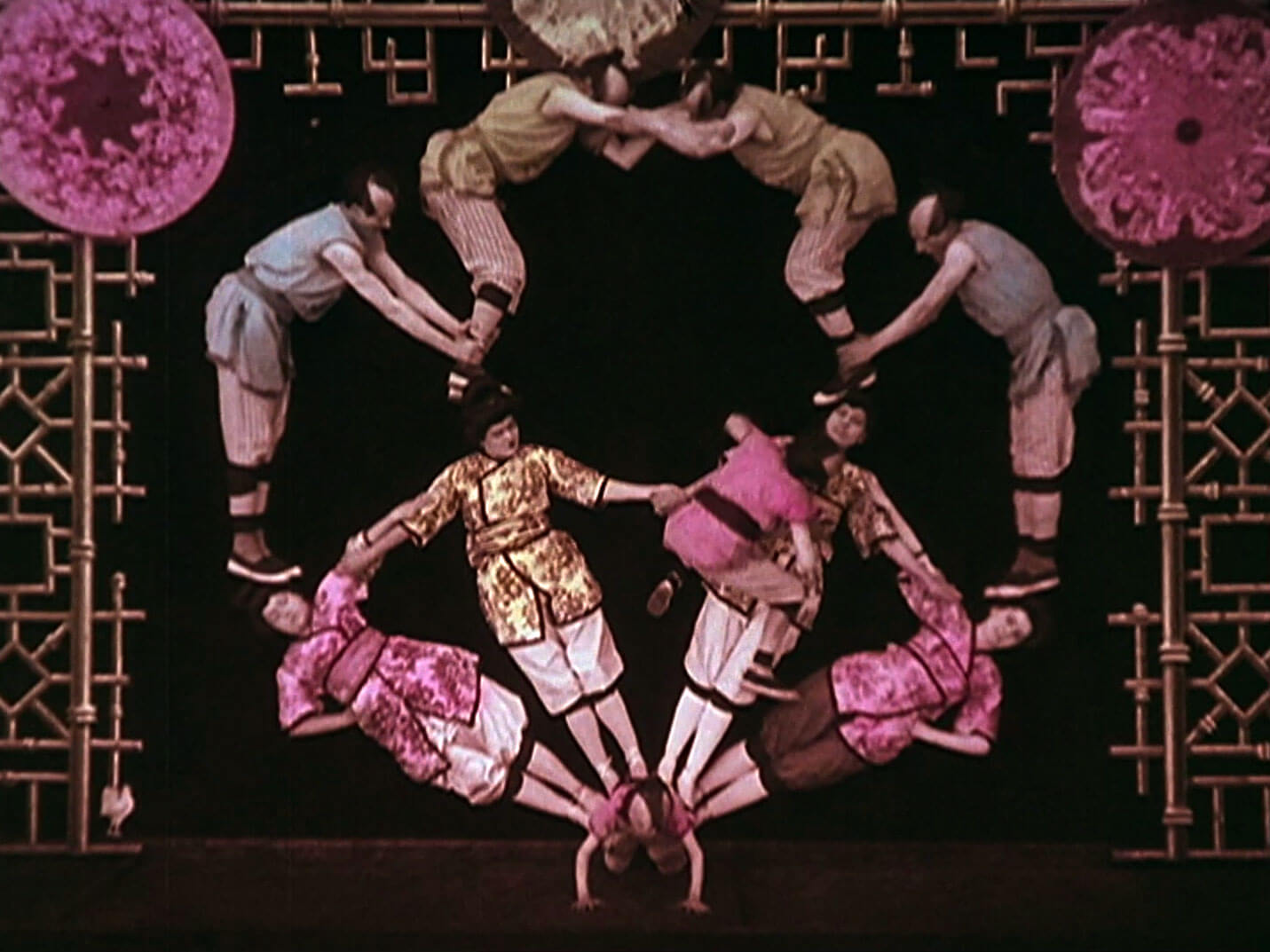
There are eleven of them—four men, four women, two teenagers, and a child—and together they form the Kiriki troupe of acrobats who defy the laws of gravity. Dressed in pink and yellow outfits and wearing wigs, they perform a sequence of acrobatic feats, each one more perilous than the last, filmed by Spanish director Segundo de Chomon.
Questioning the real
The Kiriki: Japanese Acrobats is a short film lasting two minutes and 36 seconds, filmed in the Pathé studios in 1907. The viewer admires the artists’ exploits as they execute acrobatic lifts and display great agility to get into precarious rose-shaped formations. On closer inspection, however, it would seem that, unless the troupe have magic powers, some of their tricks are not possible.
One such example is the child carrying a bar on their shoulder, with four adults being lifted on it. This is when the viewer realises that a trick is being played: Segundo de Chomon is a master of special effects. The troupe, after having greeted their audience in an upright position, lie down on the floor to continue their show, while still taking care to mime discomfort; their legs trembling, they sometimes feign balancing precariously.
Initially distributed in colour thanks to the use of stencils, no full copy of this short film survived other than a brief fragment. The sequence was recolourised from original black-and-white nitrate elements. This work was carried out using a paintbrush, image by image, over a three-month period.
The Kiriki: Japanese Acrobats (1907), a short film directed by Segundo de Chomon, is available on demand on La Cinetek.
© Studios Pathé