‘Giving Recommendations Is a Matter of Credibility’
In ‘A Non-Conformist’s Guide to Surviving Society’, author Satoshi Ogawa shares his strategies for navigating everyday life.
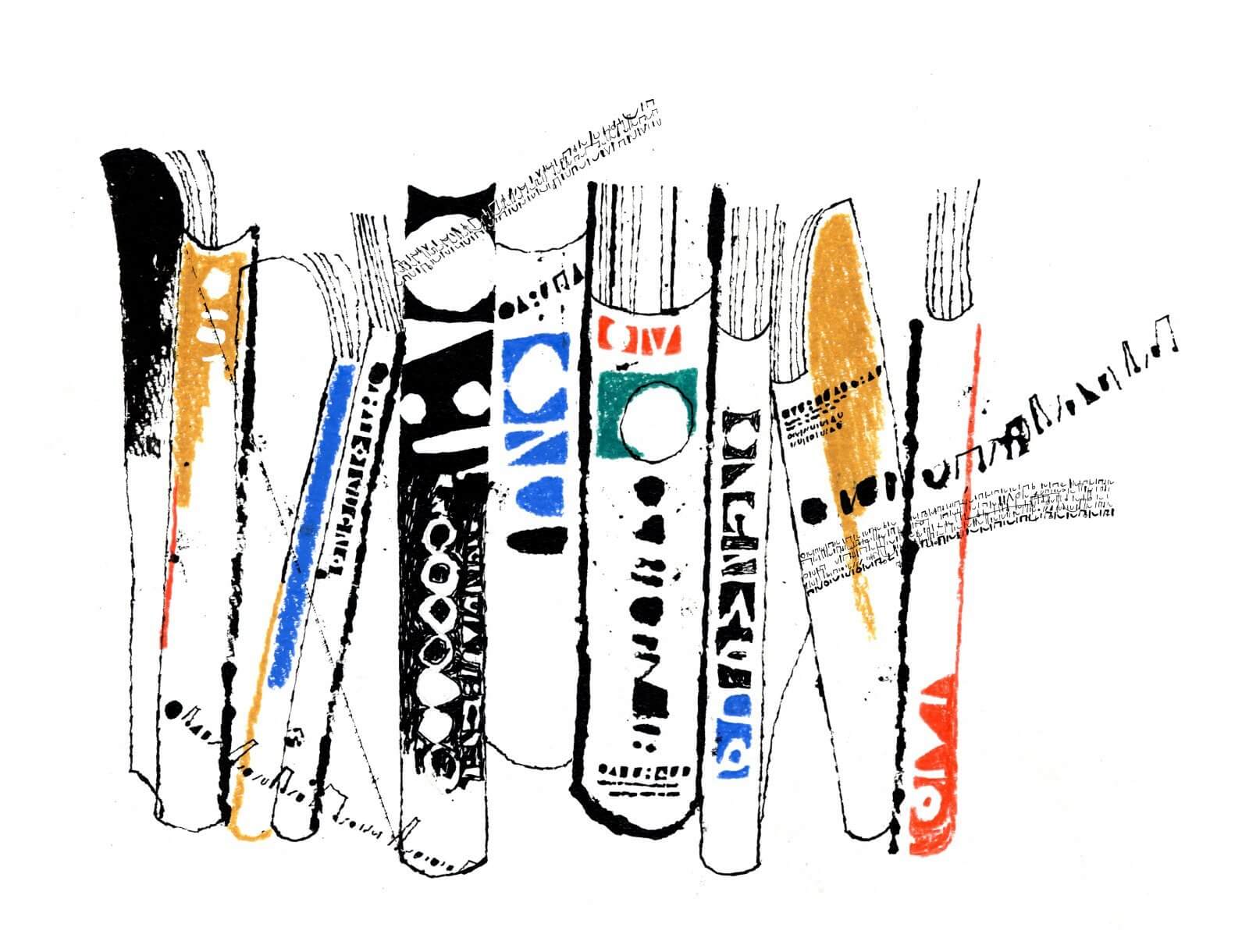
© Tomoyuki Yanagi
In every issue of Pen, the Naoki Prize-winning author Satoshi Ogawa presents a new essay in his series ‘A Non-Conformist’s Guide to Surviving Society’. In this series, Ogawa reflects on the often eccentric strategies he devises to navigate life’s everyday challenges. Below is the ninth installment, ‘My Points-Based Recommendation System’.
Editors and journalists often ask me, ‘Have you read anything recently that you’d recommend?’ My first thought is that perhaps they expect me to wield some special influence. Then I remind myself: recommendations are simply fashionable. And ultimately, I realize that humanity has always made recommendations. Even the warlord Sōrin Ōtomo advised his family and retainers to convert to Christianity.
I see recommendations as akin to bringing a gift when visiting someone’s home. If you know the person well, you select something likely to please them: ‘Mr. X dislikes sweets, so let’s bring some crackers,’ ‘Ms. Y enjoys wine, so let’s buy a bottle.’ If you know nothing about them, you rely on popular or well-regarded items.
With close friends, you can recommend with precision. You consider their tastes and past dislikes, and choose the book from your own collection or discoveries that seems most suitable. When you know little about someone, you defer to general opinion. And if no suggestion seems perfect, you preface your recommendation with a disclaimer: ‘This is just my personal taste, but…’ before naming a book you genuinely enjoy.
For my part, I tend to overthink recommendations. I am haunted by the thought that a suggestion might be deemed ‘boring.’ Why such caution? Because I’ve devised what I call a points-based recommendation system.
The system assigns each friend, acquaintance, family member, or even personalities I follow on social media, radio hosts, critics, or writers a certain number of trust points. When a book accumulates 100 points from these recommendations, I decide to read it.
For instance, a critic recommends a book, my mother finds it engaging, and a friend enjoys it as well. I assign 60 points to the critic, 0 to my mother, and 30 to my friend. The total reaches 90. Once another person, to whom I assign at least 10 points, recommends it, I go buy the book.
The number of points reflects my trust in that person. If I believe their tastes are incompatible with mine, I may assign negative points. If a trusted person recommends a book that disappoints me, I adjust their value downward. This system allows me to read efficiently, minimizing wasted time and disappointment.
Assigning points to others also carries the fear of having your own recommendations devalued. If I suggest a bad book, people may lose faith in my advice, even when I genuinely want to share a work I value. I strive to avoid this at all costs.
There is, however, one person to whom I have given 100 points. They do not know this, and, in truth, do not even know me. Yet everything they recommend, I read without fail. Perhaps you, too, have someone in your life who rates a perfect 100.
About the author
Satoshi Ogawa was born in Chiba Prefecture in 1986. He made his literary debut in 2015 with This Side of Eutronica (Yūtoronika no Kochiragawa, Hayakawa Books). In 2018, his novel Game Kingdom (Gēmu no Ōkoku, Hayakawa Books) earned both the 38th Japan SF Grand Prize and the 31st Yamamoto Shūgorō Prize. He was awarded the 168th Naoki Prize—one of Japan’s most prestigious literary awards, recognizing exceptional popular fiction— in January 2023 for The Map and The Fist (Chizu to Ken, Shūeisha). His latest work, Your Quiz (Kimi no Kuizu), was released by Asahi Shimbun Publishing in 2024.

© Seiichi Saito