‘Seeing People My Age or Younger Succeed Makes Me Uneasy’
In ‘A Non-Conformist’s Guide to Surviving Society’, author Satoshi Ogawa shares his strategies for navigating everyday life.
© Tomoyuki Yanagi
In every issue of Pen, the Naoki Prize-winning author Satoshi Ogawa presents a new essay in his series ‘A Non-Conformist’s Guide to Surviving Society’. In this series, Ogawa reflects on the often eccentric strategies he devises to navigate life’s everyday challenges. Below is the eleventh installment, ‘The Burden of Early Promise’.
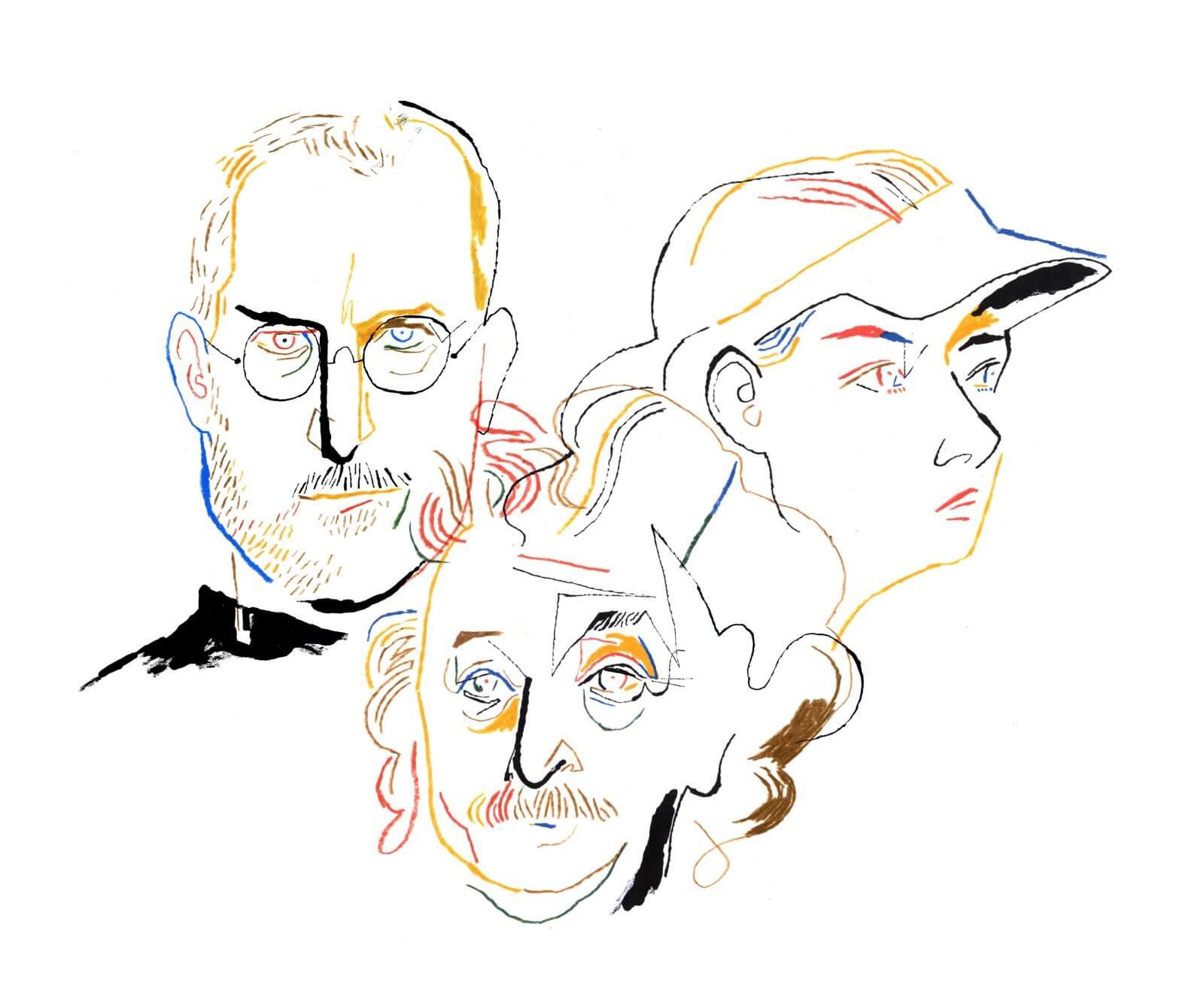
Maria Sharapova won the Wimbledon Championships in 2004. At the time, I was a high school student, and her victory stunned me, not simply because of its magnitude, but because she was younger than I was. Seeing people my own age, or even younger, excel in a given field has a way of unsettling me. ‘If they are already doing so much, what, then, am I doing with my life?’ I was especially prone to such feelings in my teens and twenties. I would compare myself to famous figures, thinking things like, ‘By my age, Steve Jobs had already founded Apple’, or ‘Einstein had already published the theory of special relativity’.
Even setting aside such historical figures destined for textbooks, I measured myself against those around me. While everyone else listened to J-pop, I admired a classmate who claimed to care only for Western music and imitated him, without quite knowing why. When others bought their clothes at Jeans Mate or Right-on, I went hunting through second-hand shops in Harajuku or Shimokitazawa, emerging with ill-fitting vintage Levi’s. The truth is, I too was performing a kind of ‘precocity.’ In high school, I drank black coffee while insisting it was delicious, despite the bitterness making me feel almost sick. At university, I read James Joyce without really understanding what I was reading, watched opaque French films, and listened to noise music. I had no real experience of adult life or society, yet I accumulated knowledge and convinced myself that I understood something essential.
One of my favorite writers, Ango Sakaguchi, referred to this kind of ‘precocity’ as a form of ‘maturity.’ In his essay Wind, Light, and the Twenty-Year-Old Me, he writes that everyone likely passes through a phase, somewhere between childhood and adulthood, in which they feel more mature than adults themselves. Straining to imitate grown-ups and stockpiling knowledge can suddenly create the illusion of insight, as though one has grasped some profound truth. Yet this maturity is not grounded in experience; it is a counterfeit maturity, one whose emptiness gradually becomes apparent with time. Sakaguchi saw through this illusion and named it for what it was: ‘hollowness’.
Looking back now, it seems to me that while ability and talent know no age, experience inevitably does. Young people described as ‘remarkably mature for their age’ are often simply playing a role, performing adulthood. At thirty-six, I can fully acknowledge the extraordinary talent and effort that allowed Sharapova to become world number one at seventeen, while also feeling sympathy for what that must have cost her. She would have faced jealousy, unfounded criticism, relentless media scrutiny—every gesture watched, every move dissected. Dealing with such pressure at seventeen could not have been anything but exhausting.
Many novelists who debut in their teens never manage to publish a second book and quietly disappear from the industry. Publishing a novel exposes one to criticism from people one has never met, to the envy of peers, to evaluations that fall short of one’s hopes. Without a certain accumulation of experience, or without a sober acceptance of how people and society work, such careless words can strike head-on, eventually making one come to loathe the act of writing itself.
What appears, at first glance, to be a detour can sometimes take shape as experience that ultimately saves us. Nothing happens too early, and nothing too late. Perhaps there is only one thing that truly matters: the right moment.
About the author
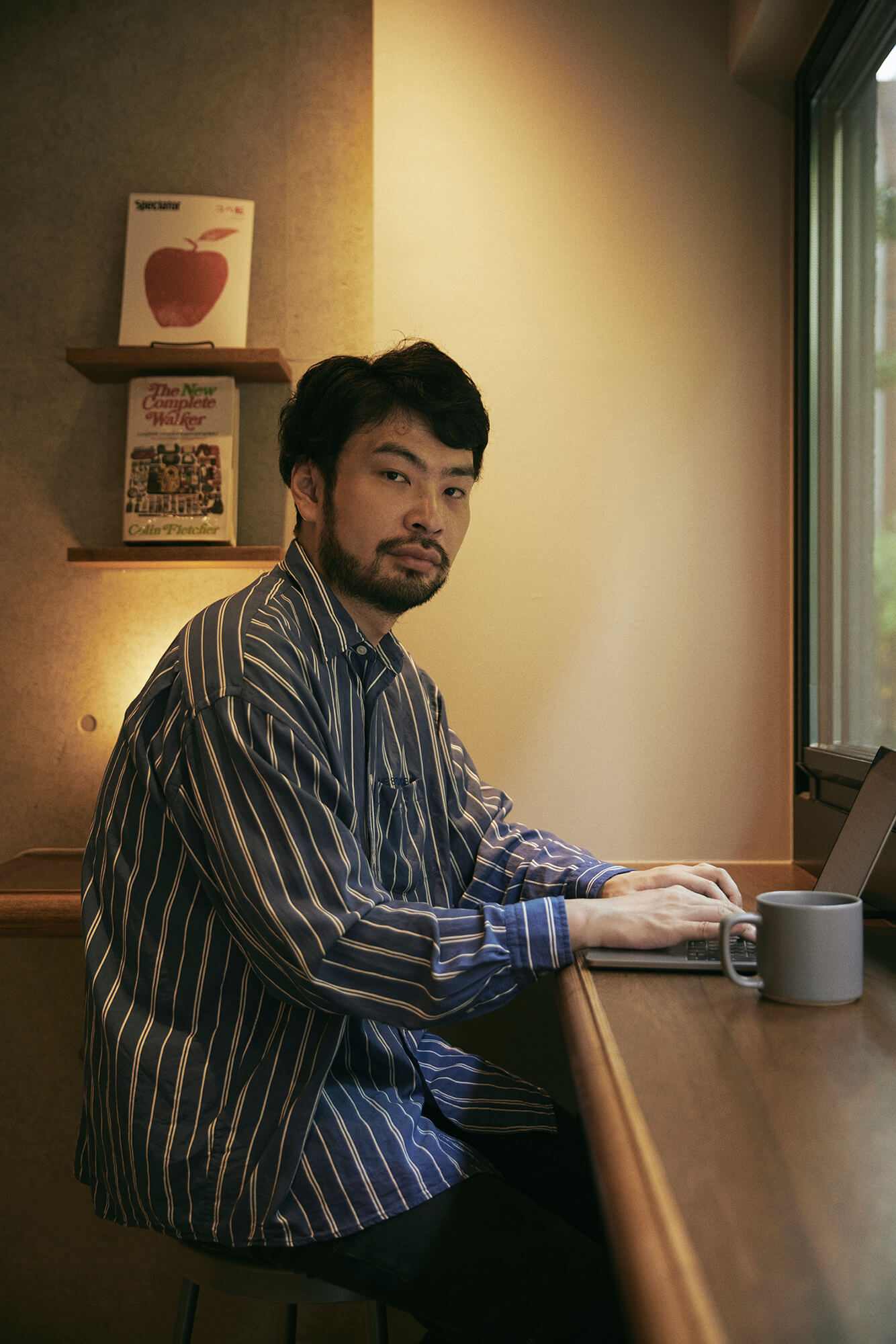
Satoshi Ogawa was born in Chiba Prefecture in 1986. He made his literary debut in 2015 with This Side of Eutronica (Yūtoronika no Kochiragawa, Hayakawa Books). In 2018, his novel Game Kingdom (Gēmu no Ōkoku, Hayakawa Books) earned both the 38th Japan SF Grand Prize and the 31st Yamamoto Shūgorō Prize. He was awarded the 168th Naoki Prize—one of Japan’s most prestigious literary awards, recognizing exceptional popular fiction— in January 2023 for The Map and The Fist (Chizu to Ken, Shūeisha). His latest work, Your Quiz (Kimi no Kuizu), was released by Asahi Shimbun Publishing in 2024.
© Seiichi Saito