‘What if we classified our partners as ‘manga type’ or ‘novel type’?’
In ‘A Non-Conformist’s Guide to Surviving Society’, author Satoshi Ogawa shares his strategies for navigating everyday life.
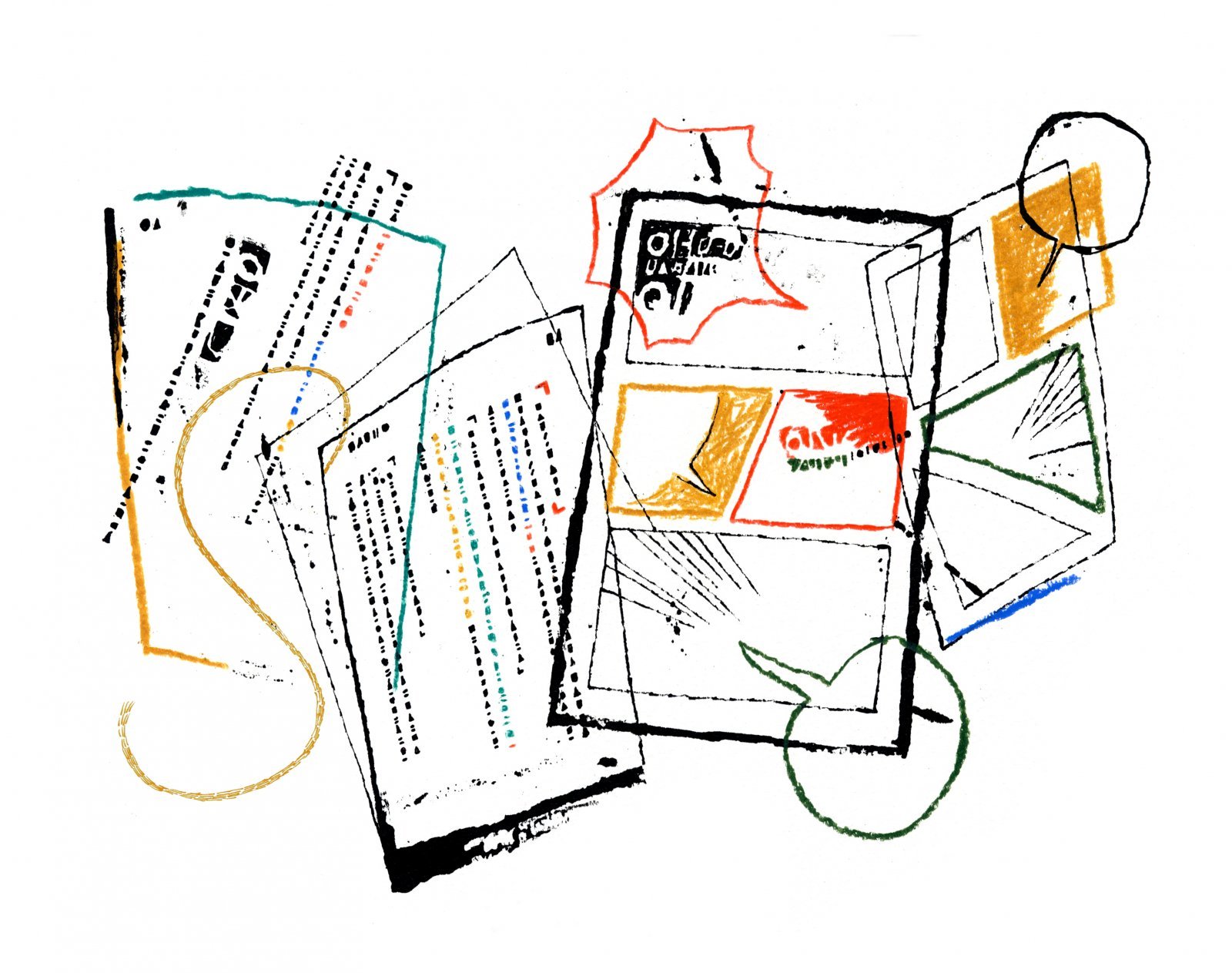
© Tomoyuki Yanagi
In every issue of Pen, the Naoki Prize-winning author Satoshi Ogawa presents a new essay in his series ‘A Non-Conformist’s Guide to Surviving Society’. In this series, Ogawa reflects on the often eccentric strategies he devises to navigate life’s everyday challenges. Below is the twelfth installment, ‘Manga Type and Novel Type.’
During a meal with a manga editor, I heard a remark that struck me. He explained that a manga continues as long as it remains popular. Even when the story has reached a natural stopping point, or the point where the author originally intended to end it, the series goes on if the readers are still engaged. New story arcs are added, often forcibly, to keep the serialization alive. There are exceptions today, of course, but generally a manga only concludes when it has run its course, when its popularity wanes. In a way, this is its ideal ending.
Reflecting on several famous titles, I nodded in agreement. The strength of a manga lies not in how it ends, but in how it continues. Serialized in magazines and later collected into volumes, a successful manga can run for years, sometimes across dozens of volumes. For most readers, the time spent anticipating the next installment, wondering ‘what happens next?’ far exceeds the nostalgic minutes spent on the final chapter.
Novels (at least those that are not part of a series) operate under a different logic. Most are read in a single volume, so readers naturally focus on how the story concludes, a concept sometimes called the ‘peak-end rule.’ Even if parts of the narrative drag, or some character actions seem puzzling, a satisfying ending, a twist, or a poignant scene can leave a strong impression. Conversely, a novel that is engaging throughout but ends ambiguously, or leaves elements unresolved, will often be judged harshly. As a reader, I tend to experience a work cumulatively and do not dwell excessively on its conclusion—but this is a minority perspective among novel enthusiasts.
If we accept that the ‘manga type’ is defined by continuity, and the ‘novel type’ by conclusion, many things in the world can be classified along these lines. Melodramatic TV series, for instance, clearly belong to the manga type: as long as the audience remains, the seasons continue; when interest fades, a sudden plot twist or final showdown brings the story to a close. Cinema, in contrast, functions more like the novel type. You pay for a ticket, watch a two-hour film, and only after the credits roll do you form your judgment—one that depends largely on whether the ending satisfies you.
What happens when we apply this framework beyond creative works? What would a manga-type partner look like, and a novel-type partner?
A manga-type partner likely knows a wealth of excellent restaurants and alluring travel destinations. They take you everywhere, and boredom has no place. With them, the relationship is intense, exhilarating. But such relationships often end in exhaustion. Arguments arise, resentment can take root. The story concludes in a kind of final combustion, leaving only memories behind.
A novel-type partner, by contrast, may lack attentiveness or practical flair. The relationship is stable, which can mean dull weekends or a life without thrills. Yet the probability of eventual satisfaction is high—each person defining that satisfaction in their own terms.
What about manga-type companies versus novel-type companies? Manga-type ramen versus novel-type ramen? Observing the world through this lens can be surprisingly revealing. Push the analogy far enough, and almost anything can be classified as one type or the other.
As for my own novels, they are often criticized for their endings. It would be fair to say they are not even of the novel type.
About the author
Satoshi Ogawa was born in Chiba Prefecture in 1986. He made his literary debut in 2015 with This Side of Eutronica (Yūtoronika no Kochiragawa, Hayakawa Books). In 2018, his novel Game Kingdom (Gēmu no Ōkoku, Hayakawa Books) earned both the 38th Japan SF Grand Prize and the 31st Yamamoto Shūgorō Prize. He was awarded the 168th Naoki Prize—one of Japan’s most prestigious literary awards, recognizing exceptional popular fiction— in January 2023 for The Map and The Fist (Chizu to Ken, Shūeisha). His latest work, Your Quiz (Kimi no Kuizu), was released by Asahi Shimbun Publishing in 2024.

© Seiichi Saito