A Craft Practice Rooted in Okinawa’s Nature and Everyday Landscapes
Ai and Hiroyuki Tokeshi work with Okinawan wood, an exacting material, drawing on a local tradition of woodworking and lacquerware.
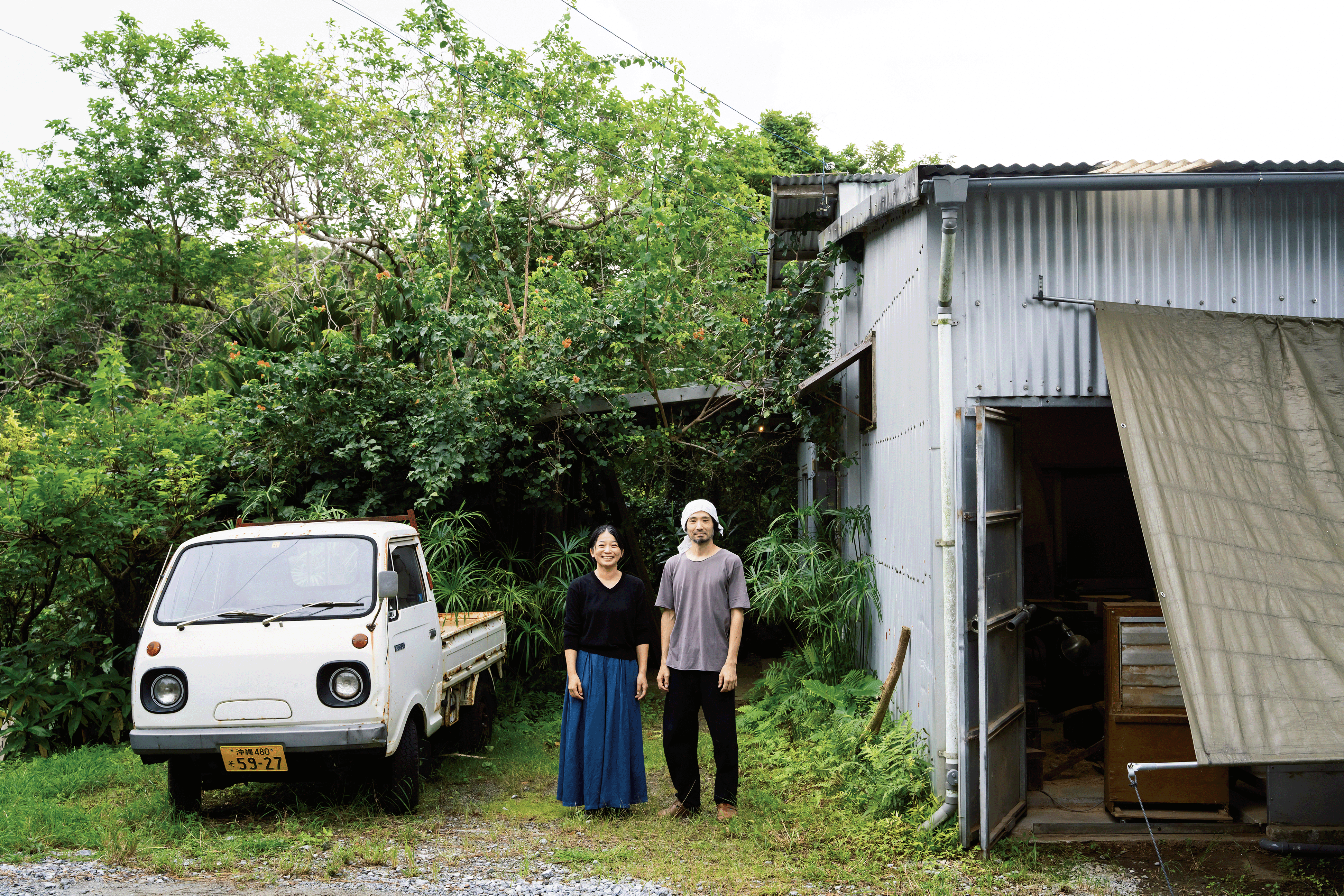
Hiroyuki Tokeshi was born in Okinawa in 1980. In 2003, he became an apprentice at Kirimoto Mokkō in Wajima. After leaving the workshop, he trained in woodturning under Shigeru Kanchō before returning to Okinawa to establish his own practice. In 2011, he presented his first solo exhibition under the name Mokushikkō Tokeshi. Since 2016, he has also been developing the brand Nakayama Mokkō. Ai Tokeshi was born in Okinawa in 1979. In 2003, she worked in Wajima at the workshops of Toshio Fukuda and Akito Akagi. After returning to Okinawa in 2010, she set up as an independent artist. Since 2011, she has been presenting her work as part of Mokushikkō Tokeshi while also pursuing an individual practice as a lacquer artist.
Based in Nago, in the northern part of Okinawa Island, Hiroyuki and Ai Tokeshi run the atelier Mokushikkō Tokeshi. The bowls, utensils and everyday objects shaped by their hands appear imbued with the generous, untamed vitality of the land itself, echoing the presence of the Yanbaru forest that stretches endlessly around their workspace.
‘The wood we use comes exclusively from Okinawa. Influenced by the subtropical climate and the nature of the soil, the trees do not grow very tall and are often twisted in form. Their textures vary widely, from very soft to extremely hard, and the heat and humidity make them particularly susceptible to insects. As a base for lacquerware, these are extremely difficult materials to work with.’
On a national scale, sourcing wood better suited to lacquerware would be far easier. Why, then, persist in working with local woods, known for their constraints?
‘Because this is where we live. It’s as simple as that.’
Both born in Okinawa, Ai and Hiroyuki first trained at a prefectural craft training centre—she studying lacquer, he woodworking. They then moved to Wajima, a major centre of lacquerware production, where they apprenticed under master craftsmen and rigorously absorbed traditional techniques. After seven years of training, they returned to Okinawa, ready to establish themselves independently. It was then that they encountered an unexpected obstacle.
‘We had acquired the techniques, but no clear image of what we wanted to make emerged. We simply didn’t know where to begin.’
At that point, they were deeply struck by a phrase by Jissei Ōmine, a master ceramicist from Yomitan: ‘Making things is a matter of thought; the result comes naturally.’
‘We realised that we needed to reach out to what was right in front of us—the nature of Okinawa, the passage of time, scenes from everyday life. The answers were close at hand.’
A Practice Grounded in Orally Transmitted Knowledge
The very characteristics of Okinawan wood, initially perceived as obstacles, gradually became an asset. As they continued to work with the material, the island’s landscapes, climate and rhythm of life began to manifest more clearly in their pieces, helping them to define what they were truly seeking.
‘The refined lacquerware of Wajima is, of course, wonderful. But living in Okinawa and working with its wood has taught us to see the beauty in simpler bowls—pieces that allow you to fully feel the surface of the wood.’
The trees they use grew freely, in the wild. Their strong individuality translates into distinctive characteristics that are often difficult to control, requiring time-consuming and meticulous finishing work.
‘For some species, there are no reference materials at all. We rely instead on the knowledge passed down by elders, particularly the local ojii. By repeating failures and accumulating experience, we gradually learned how to anticipate and address problems.’
When the material is not in ideal condition, the craftsman must quickly grasp its particularities, apply the appropriate techniques, and find, on their own, a path that allows the material to unfold with balance and integrity. By steadfastly pursuing woodworking and lacquer practices rooted in Okinawa and its present-day context, the duo is convinced that a form of making will inevitably emerge—one that can exist nowhere else.
‘We want to express, with honesty, the richness of our real experiences and our everyday lives. That sensitivity is something we want to hold on to.’
The deigo, an emblematic tree of Okinawa and the prefecture’s official flower, offers a telling example. Its vivid red blossoms, which bloom in early summer, are striking, yet its trunk is extremely soft and quickly develops mould if left unattended. At the same time, it absorbs lacquer remarkably well and offers good dimensional stability as a base material. By listening closely to what the material has to say and approaching it with care, the Tokeshi aim to shape it without undue force. This attentive attitude is clearly reflected in their lacquerware.
A Form of Making Unique to Okinawa
Fifteen years into their career, the couple continue their joint practice under the name Mokushikkō Tokeshi, while also developing individual projects. Ai is deepening her study of traditional Ryūkyū lacquerware, while Hiroyuki is exploring new ways of working with Okinawan wood through his own venture, Nakayama Mokkō, dedicated to wooden objects.
‘In the past, Okinawa had a well-established history of woodworking and lacquerware. Wooden houses and furniture were made here, and workshops under state control produced lavish lacquerware for offerings and tribute. Now that what can be done in this place has become clearer to us, we would like, with deep respect for these traditions, to also create “ceremonial vessels” for celebrations—New Year’s gatherings and joyful family occasions.’
Not allowing oneself to be bound by tradition, while remaining acutely attuned to the currents of the present. This ability to evolve without losing a sense of generosity may well be one of Okinawa’s defining qualities.
‘The knowledge, techniques, culture and history cultivated by past generations through the course of life form our foundation. It is because there was a past that we are here today. With that awareness, we continue to work with our hands every day.’
More information on Mokushikkō Tokeshi can be found on the atelier’s website (in Japanese) and on Instagram.
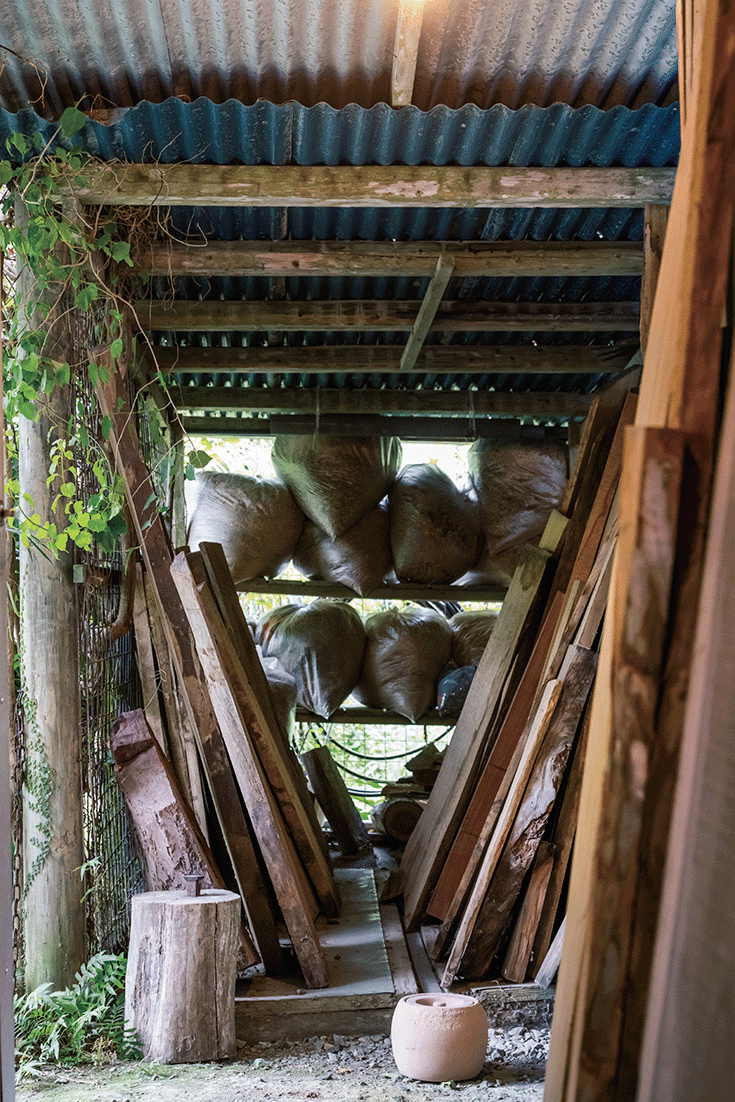
In addition to wood purchased from sawmills, they occasionally receive raw logs. The materials are first stored in a nearby warehouse, then brought into the atelier just before work begins. In the semi-outdoor space in front of the entrance, the wood patiently awaits the moment when it will slowly be shaped into a harmonious form.
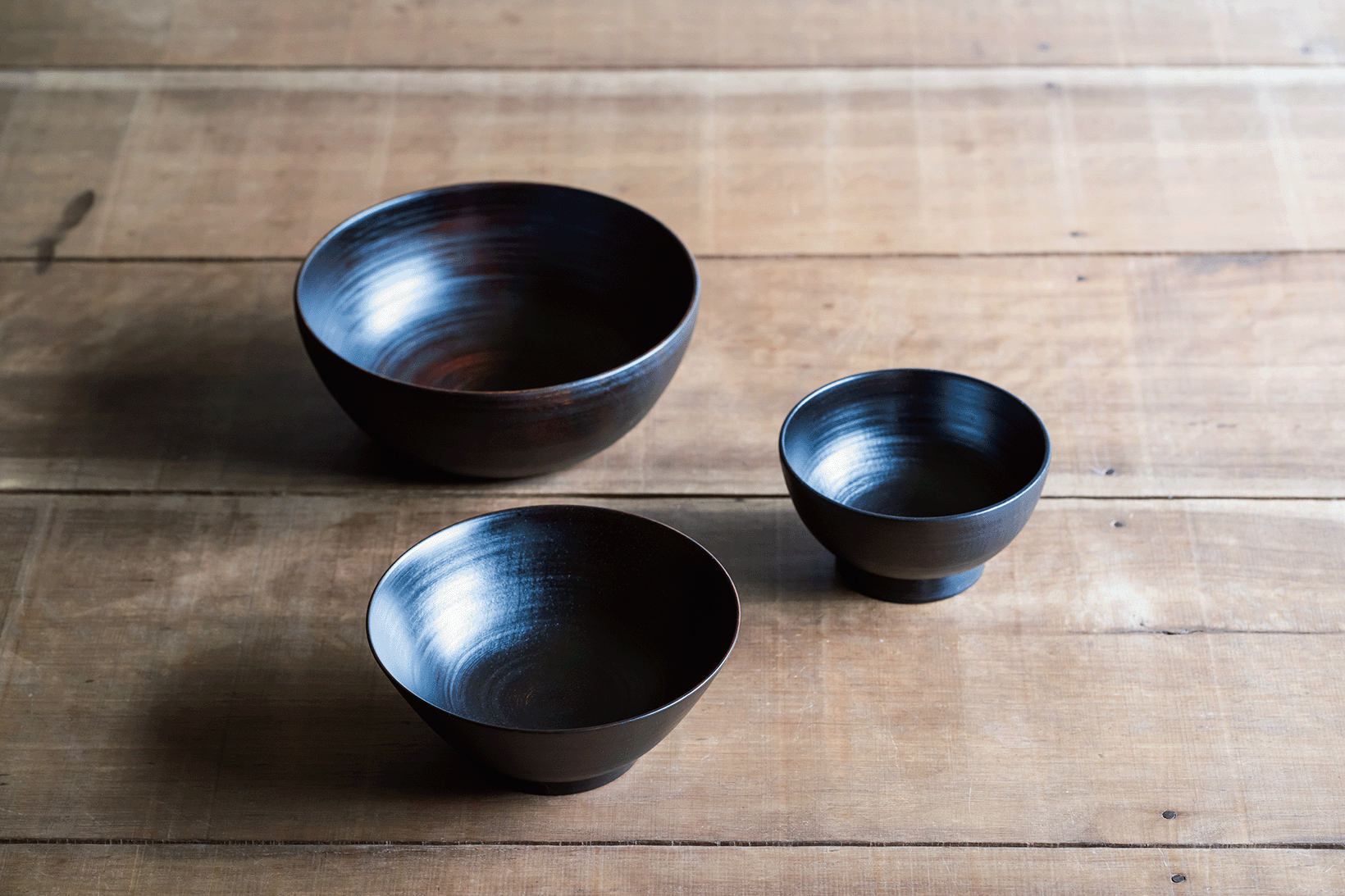
Even when limited to local species, the types of wood available vary from one period to another. This diversity of textures and grain is an integral part of the appeal of Mokushikkō Tokeshi’s work. At right, a children’s bowl, ¥12,100; at top, a bowl, ¥18,700; at bottom, a Wakuta bowl—named after a traditional Okinawan pottery style—¥16,500. All are made of camphor wood.
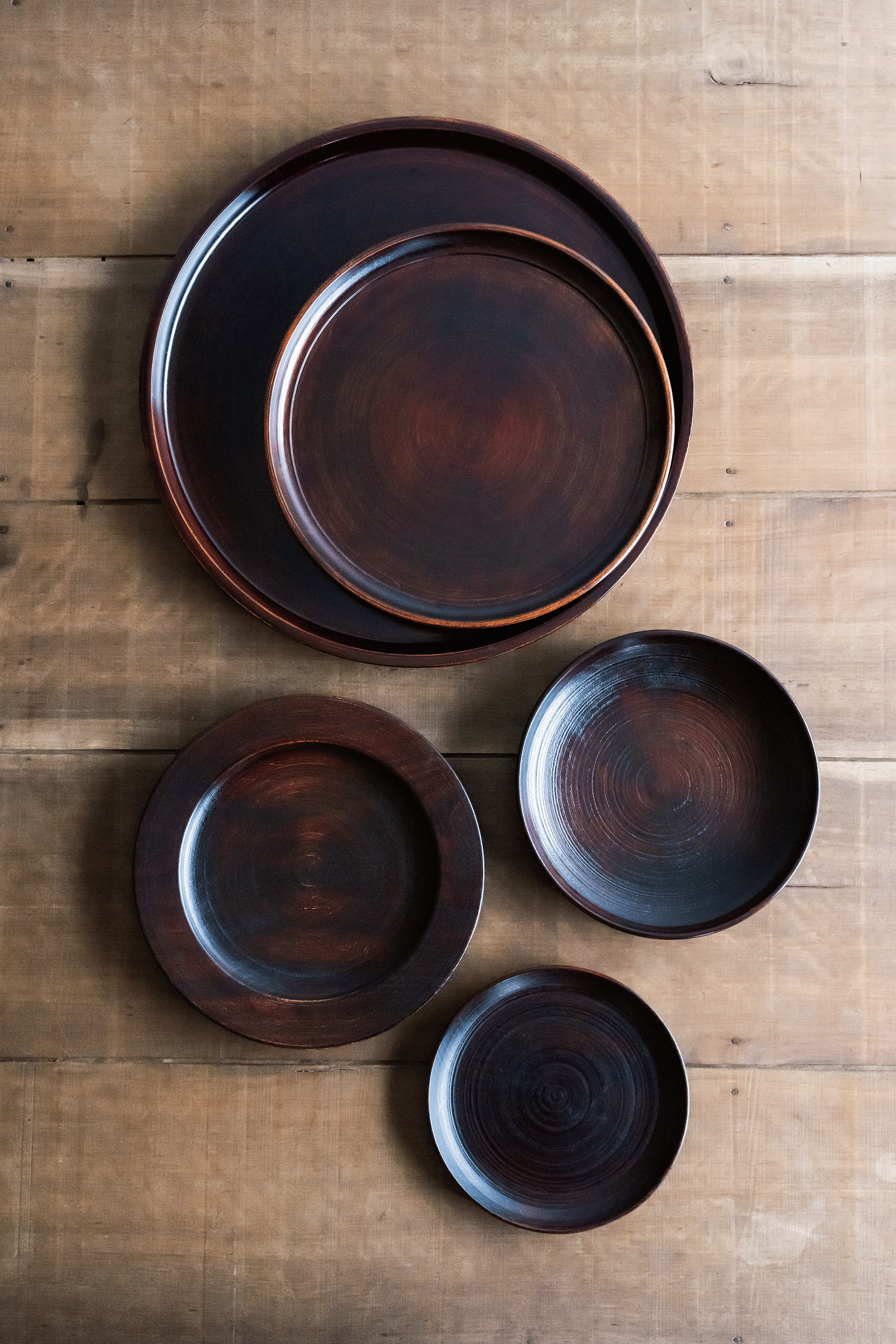
At top, round trays in ‘shimaguwa’ (Okinawan mulberry), large (price upon request), small ¥35,200; at bottom right, two plates in ‘itajii’, large ¥14,300, small ¥11,000; at bottom left, a rimmed plate in camphor wood, ¥15,400.
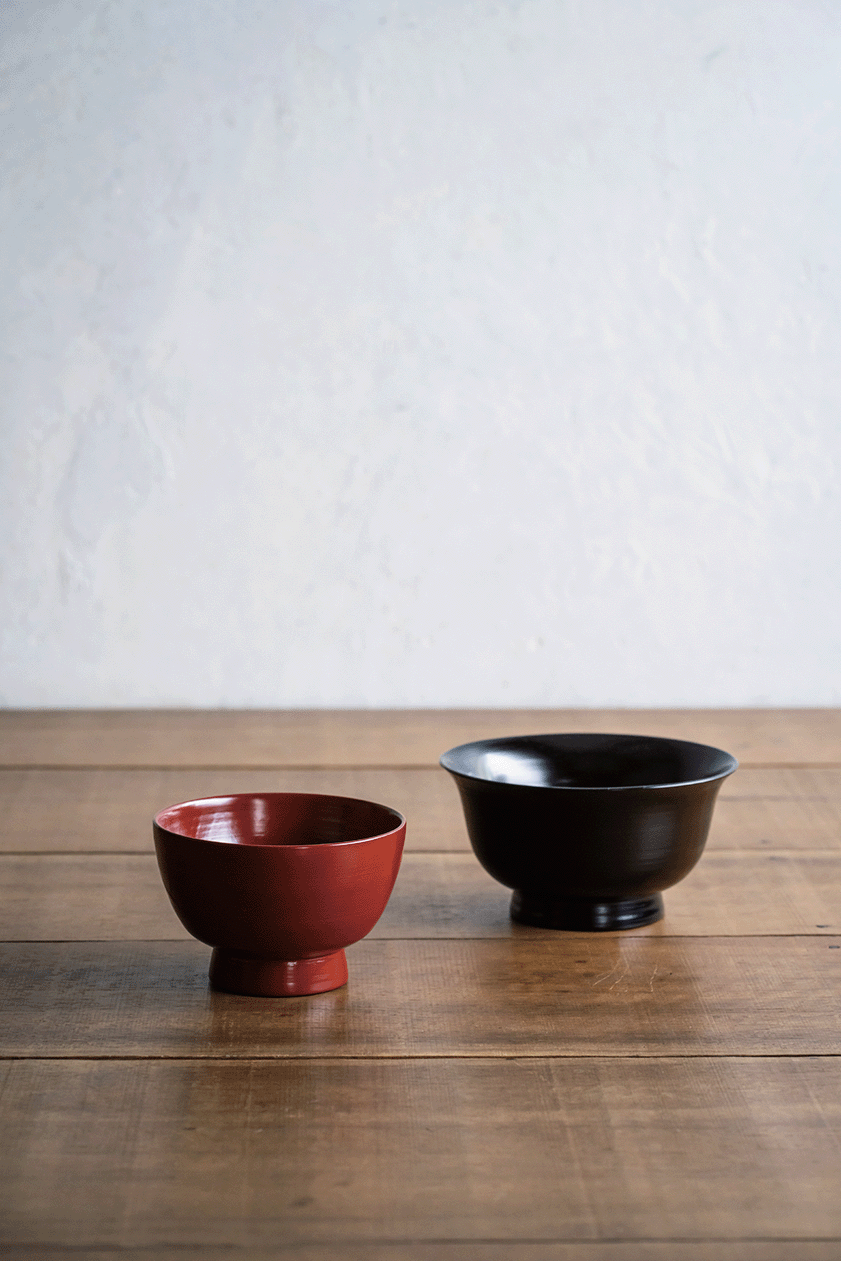
Bowls with an expansive, fluid silhouette, their distinctive forms settling naturally into the hand when lifted. At right, a flared-rim bowl in ‘iju’, ¥22,000; at left, a children’s bowl in camphor wood (tall), ¥14,300.
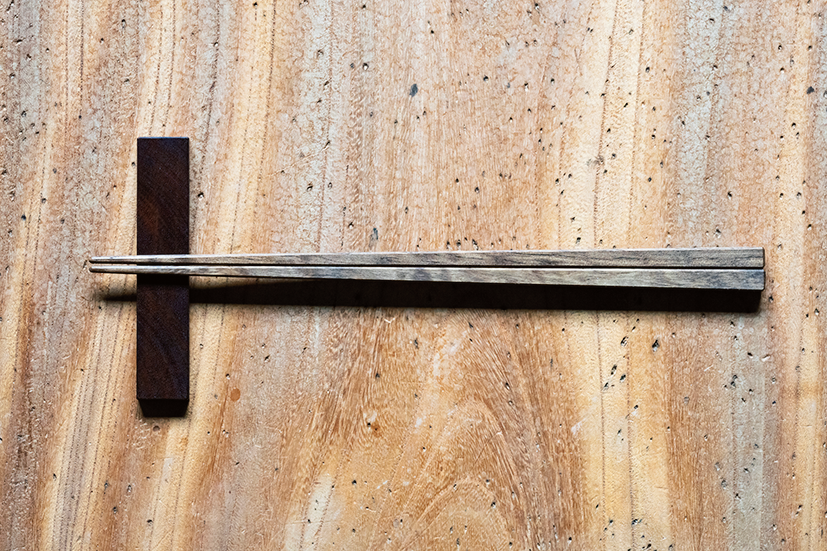
Nakayama Mokkō, the branch of Mokushikkō Tokeshi dedicated to wooden objects, also develops pieces in collaboration with the Okinawan design studio Luft. Among them are square chopsticks in ‘itajii’ and cutlery rests in ‘sōshiju’. Each edge of the chopsticks is carefully chamfered, creating a gentle grip and a form that naturally follows the hand.
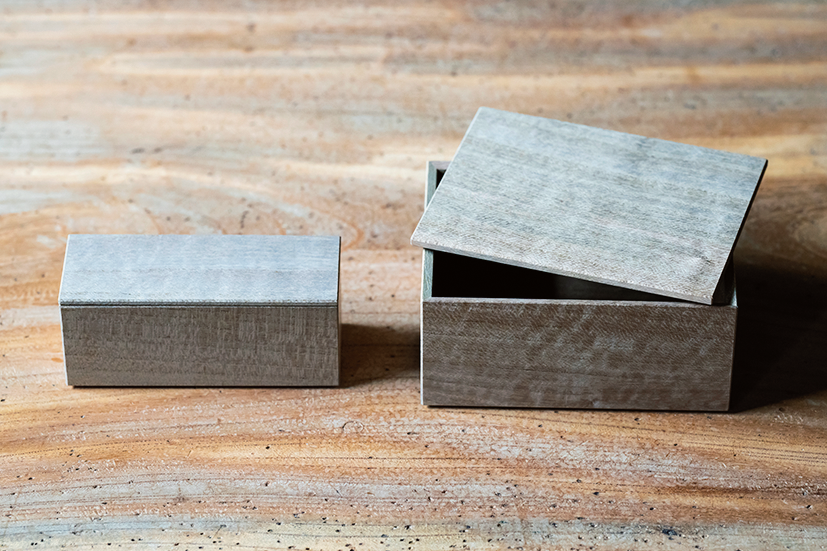
Other works by Nakayama Mokkō. At right, a key case in ‘hamasendan’, ¥8,800; at left, a cotton-swab container in ‘hamasendan’, ¥6,600.
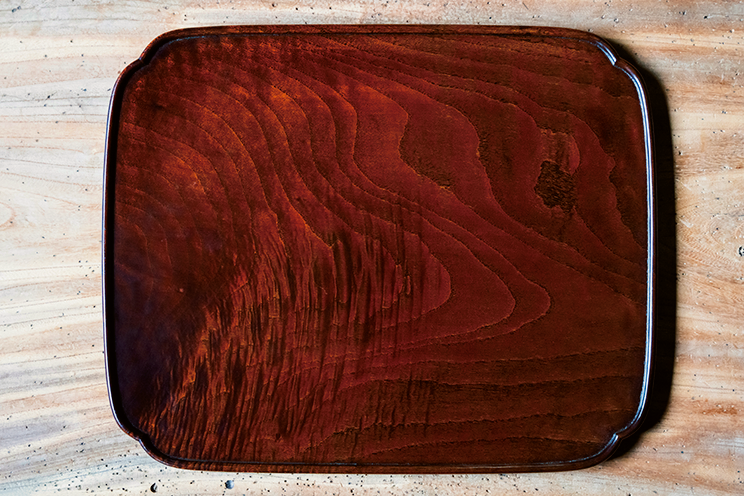
Alongside his work as a craftsman, Hiroyuki Tokeshi also pursues a more personal, creative practice. For this inward-angled tray in ‘hamasendan’, he applies the ‘fuki-urushi’ (wipe-lacquer) finish himself.
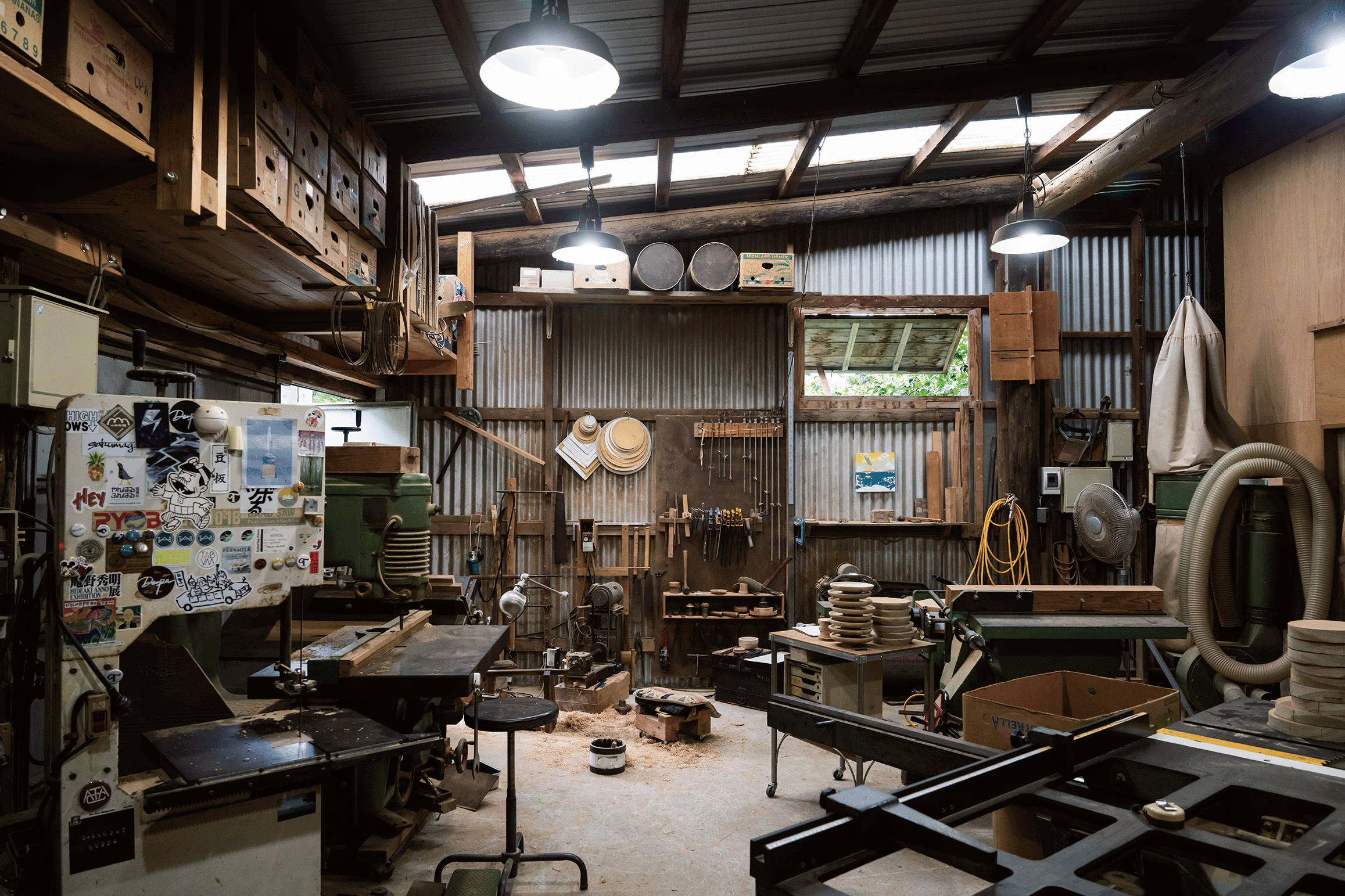
In the protruding space used as a rough-shaping workshop, electric saws, planes and other woodworking machines are arranged in close quarters. Here, purchased lumber is cut into approximate forms according to the size and intended use of each piece.
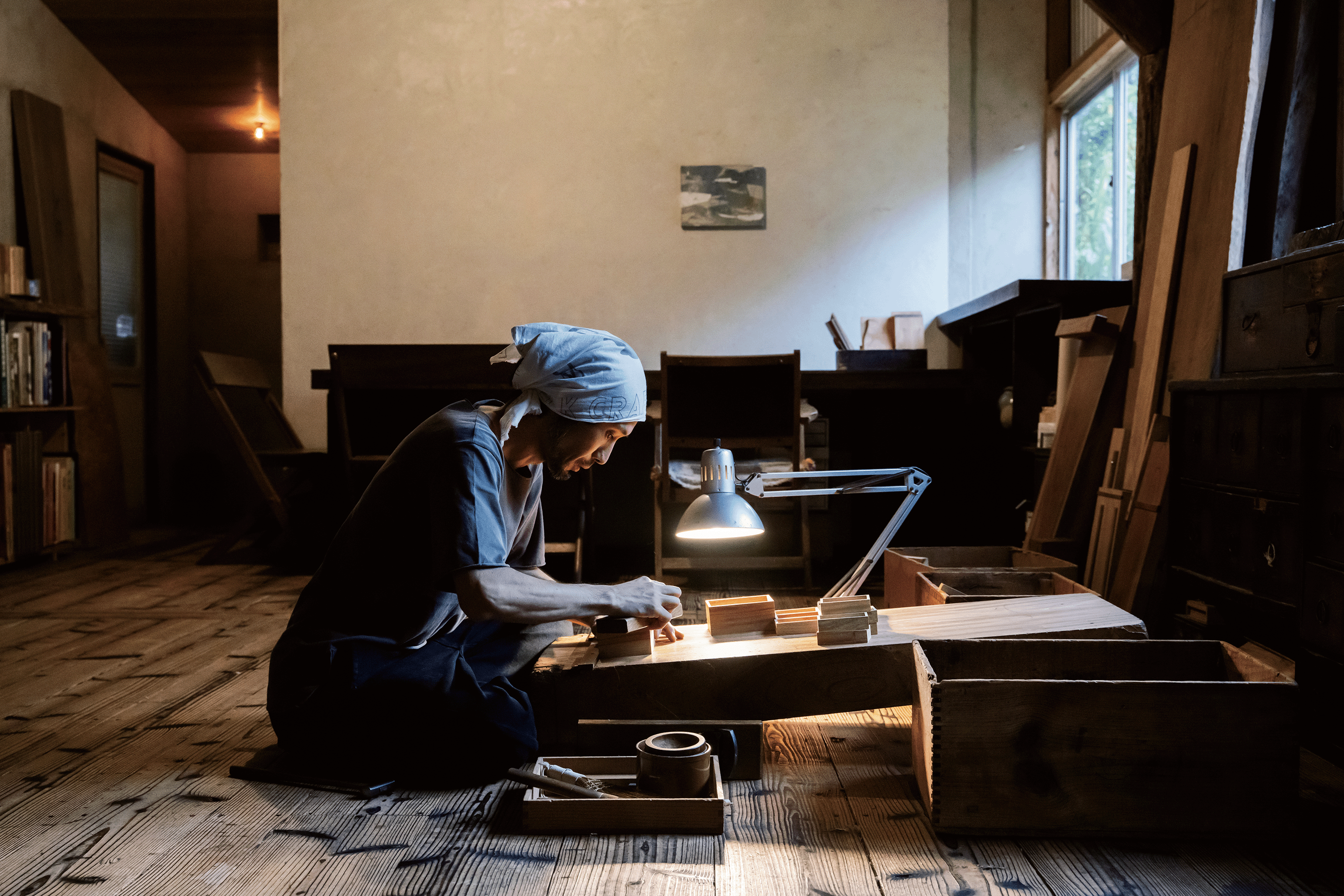
Seated directly on the floor with his legs crossed, Hiroyuki Tokeshi carries out the final finishing work. ‘Rather than sitting on a chair, this position allows me to move my knees freely. The body is more stable, and it’s easier to control force.’
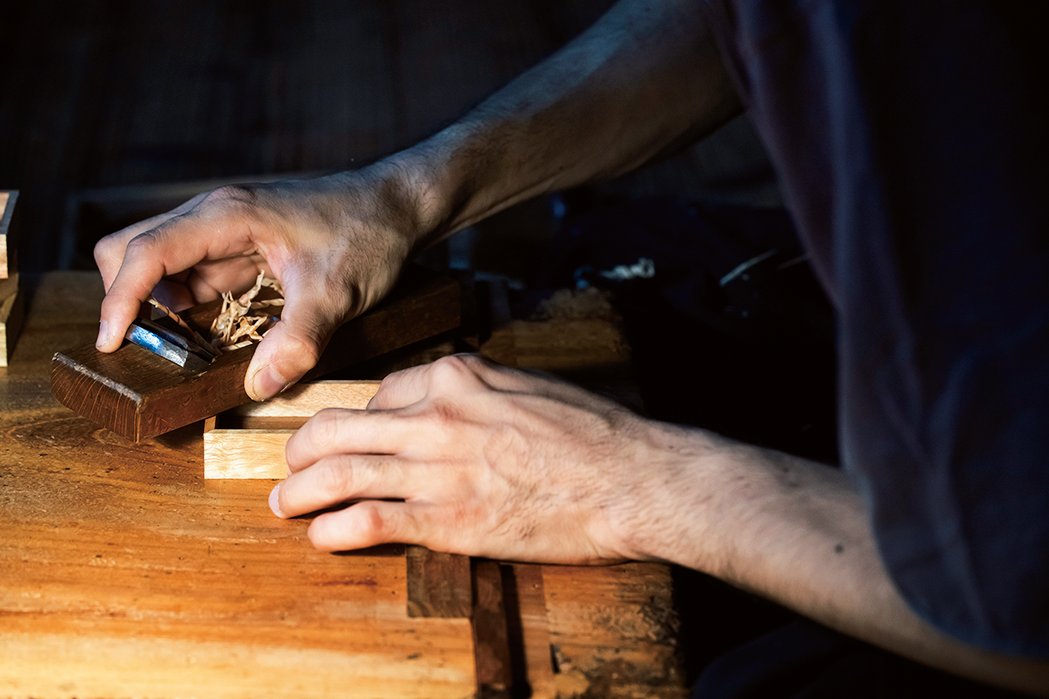
Feeling the surface of the wood with the fingertips of his left hand, he slowly guides the plane, carefully refining the edges of the boxes.
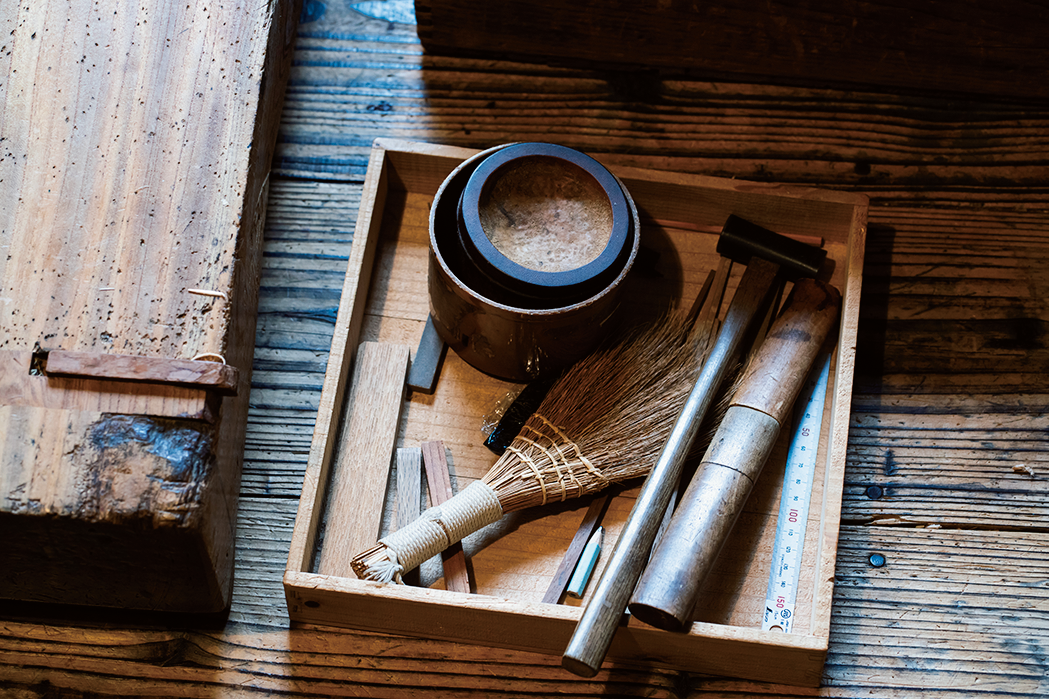
The many tools arranged beside the workbench. The care given to each personal object is evident in their placement.
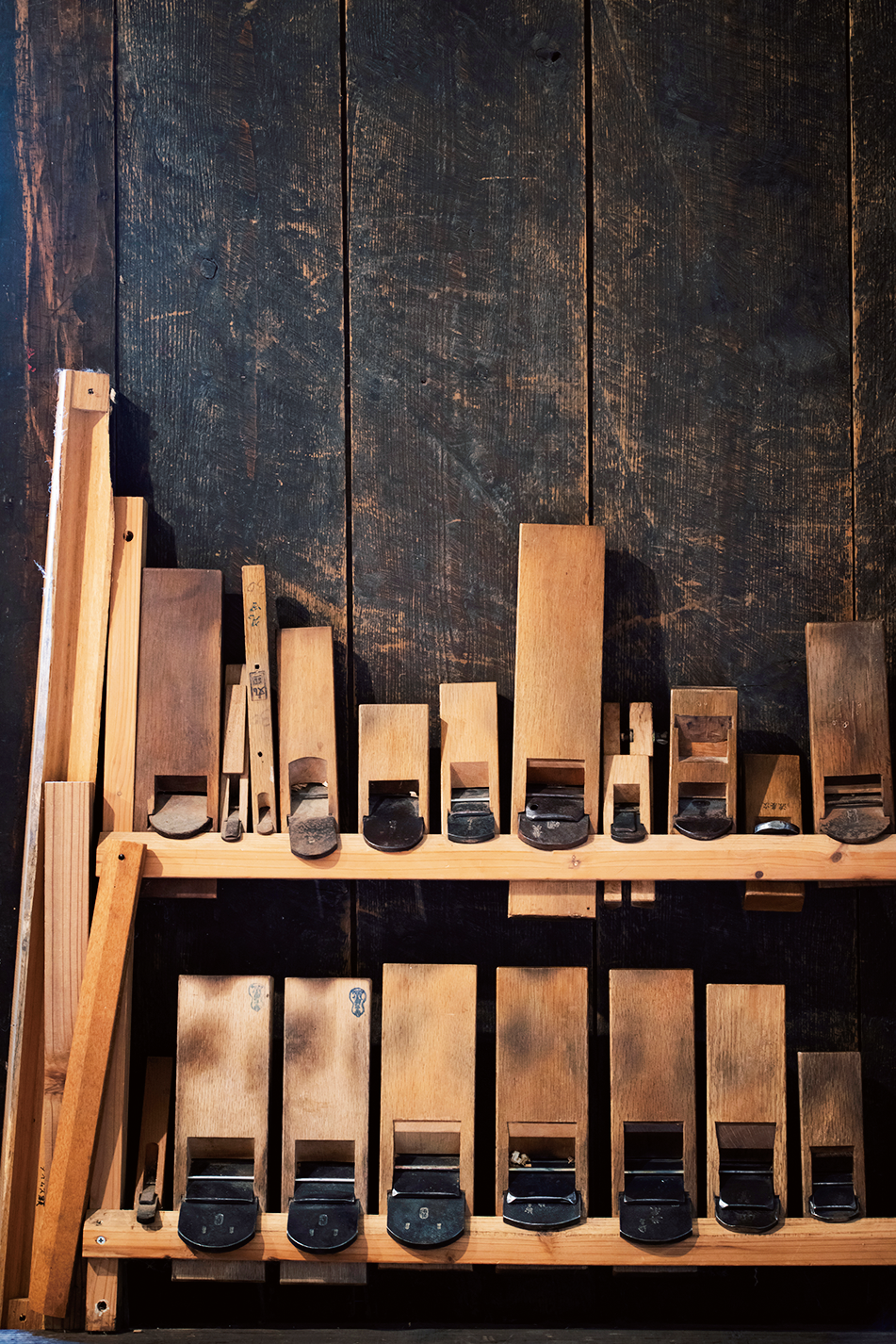
On the wall of the workshop, planes of various sizes are lined up with an almost graphic precision.
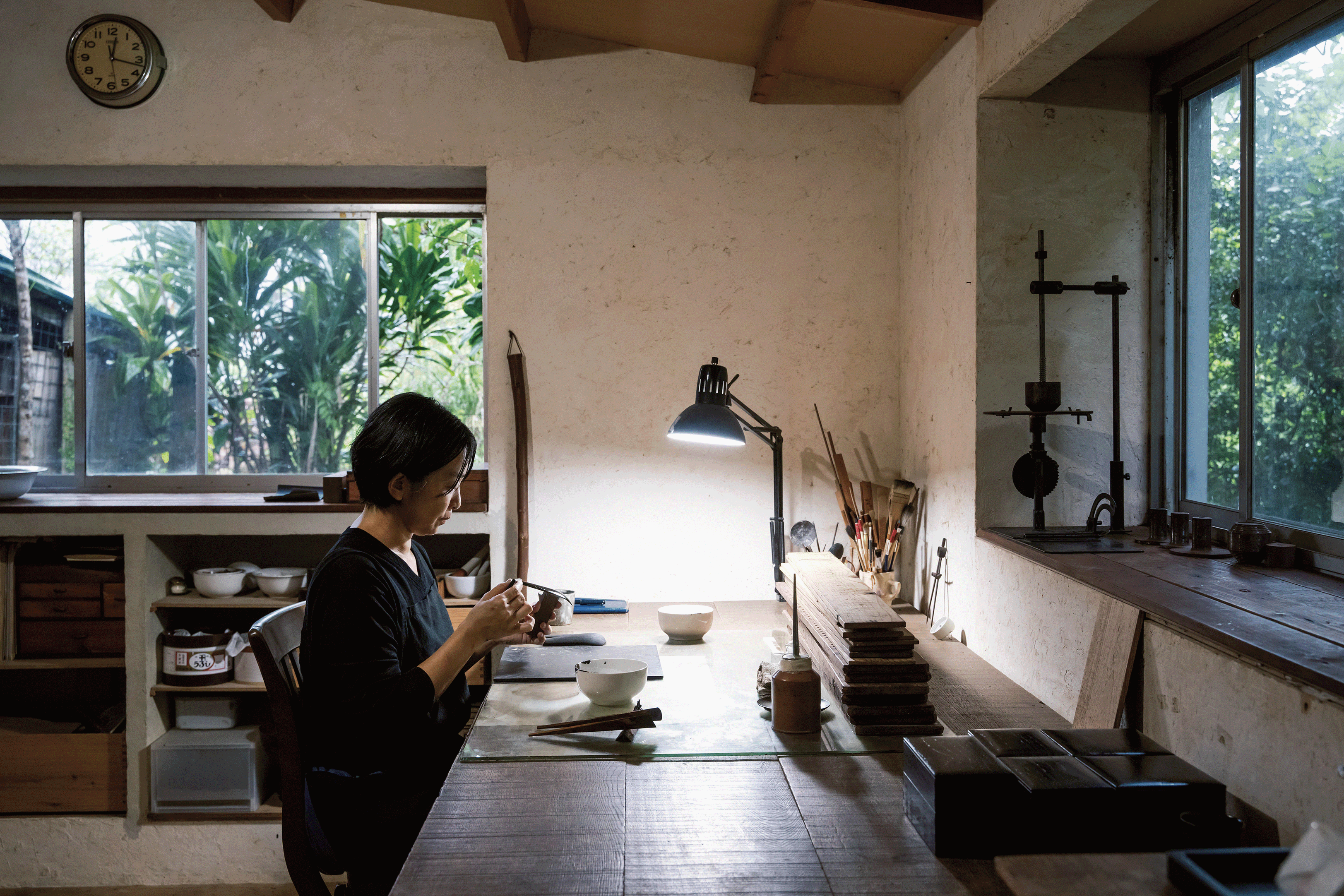
All lacquer work is handled by Ai. Seated at her desk, she works alone and in silence, carrying out each gesture with steady focus. Between steps, glimpses of the greenery surrounding the atelier, caught in passing, gently ease the mind.
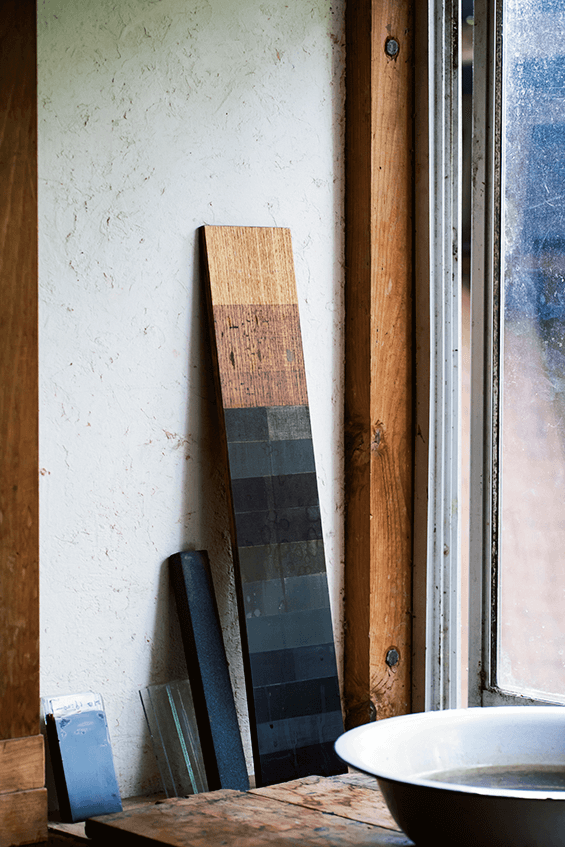
Samples illustrating the various stages of the process, from preparing the base to applying the final coats. Adjusting the lacquer in multiple ways according to the condition of the material and its intended use is one of the defining characteristics of Mokushikkō Tokeshi.
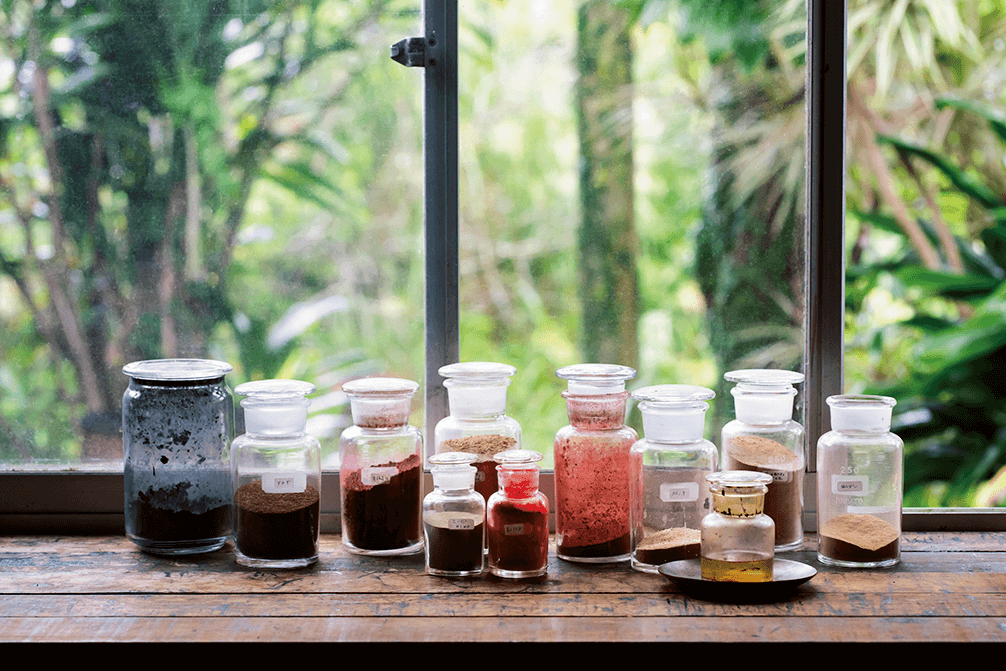
The workroom is filled with a wide range of materials. Glass jars contain pigments for coloured lacquer, wood powder used to fill joints and cracks in the base, and oil for cleaning brushes.
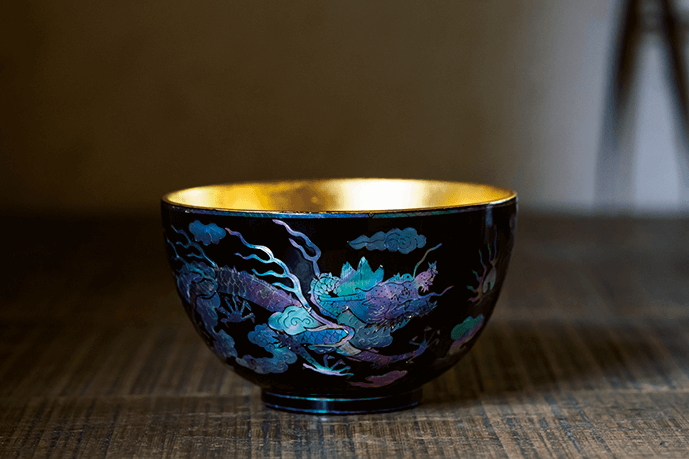
Alongside the understated bowls she creates for Mokushikkō Tokeshi, Ai has recently been working on recreations of pieces from the Ryūkyū lacquer tradition. Pictured here is a ‘kuro-urushi unryū raden’ bowl.
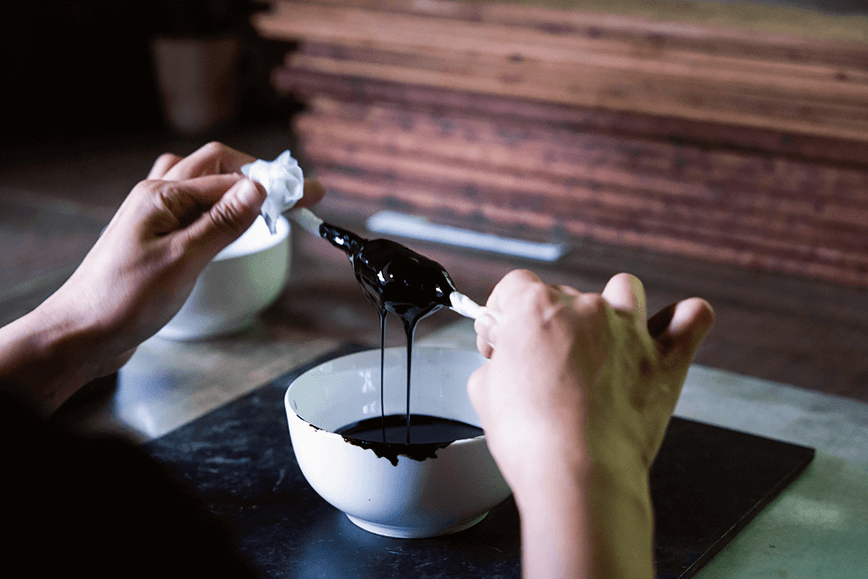
During the lacquering process, extreme care is required to prevent dust or impurities from contaminating the surface. Before application, the lacquer is filtered through paper to remove the finest particles.
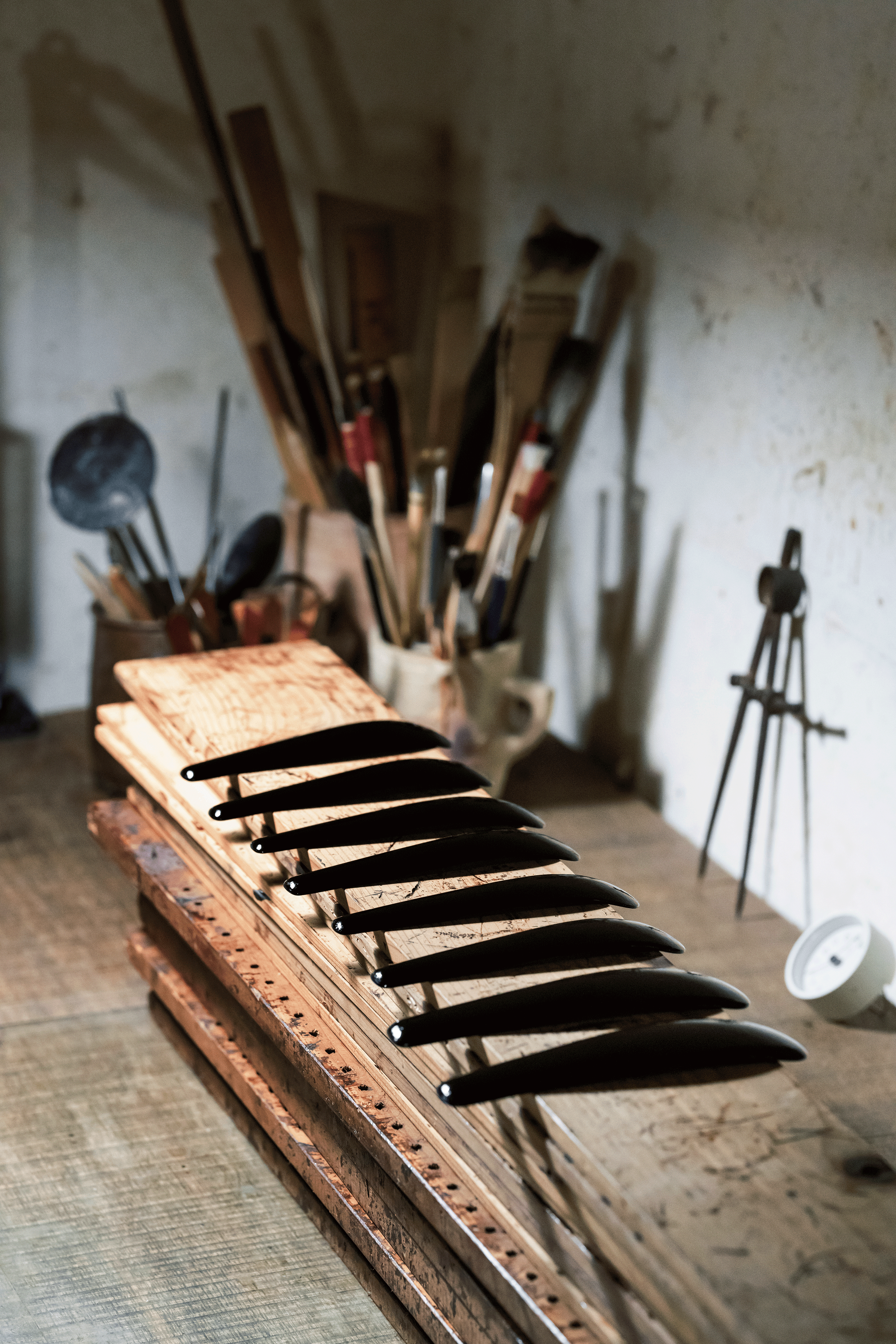
Spoon-shaped spatulas set aside while the lacquer dries. As it absorbs oxygen from the air, lacquer hardens slowly. Allowing time—patiently—for this process to unfold is fundamental to lacquerware making, ensuring pieces that are both structurally sound and impeccably smooth in finish.