Diorama, A Former Factory Transformed into a Gallery
This singular space located in Yamanashi showcases unsigned objects, carefully selected for their expressive power.
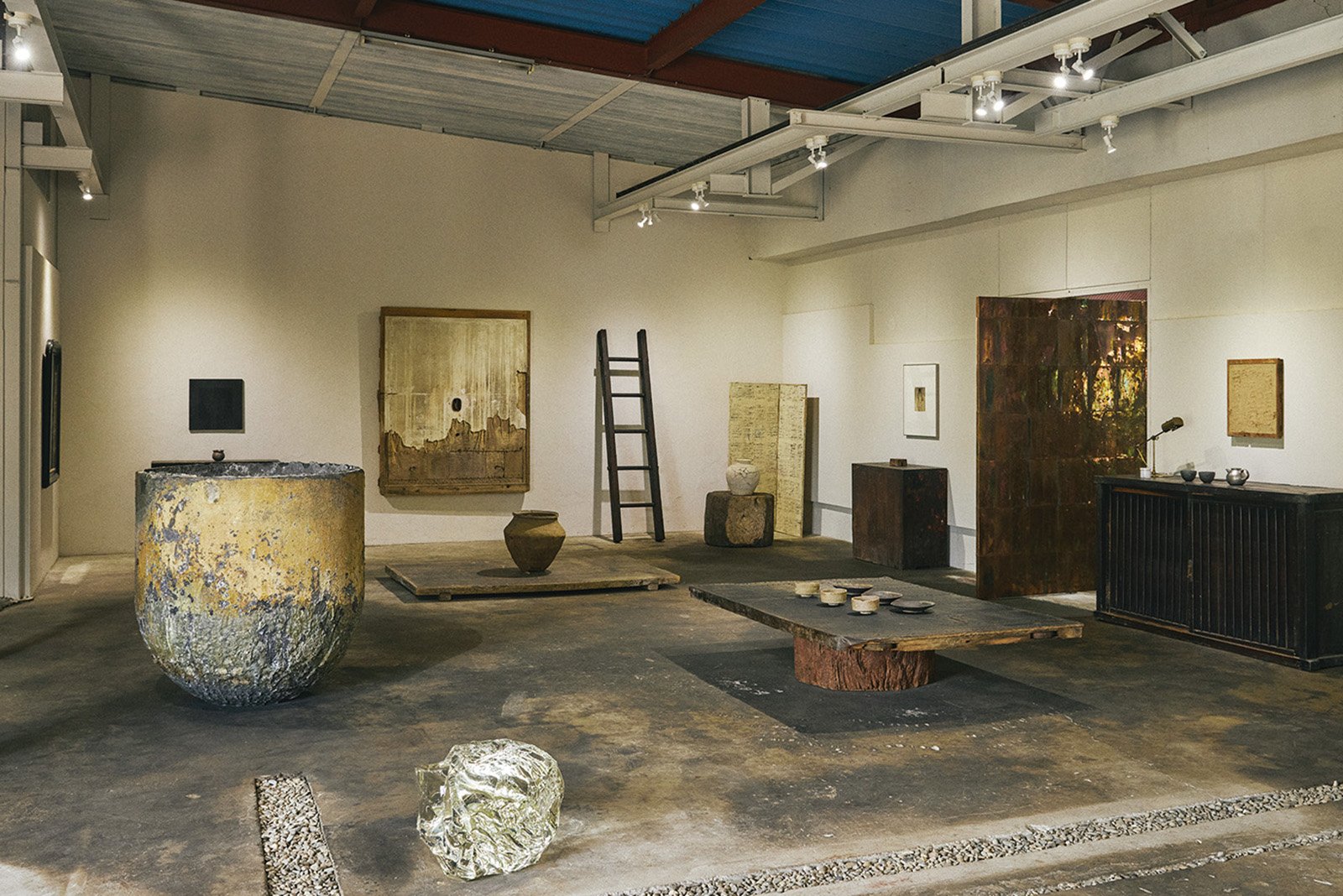
Interior view of Diorama, where objects of all shapes, materials, eras, and functions coexist freely in a space laid bare to its structural essence. On the right, beyond the copper-paneled door, lies a room dedicated to antiques from the Edo to the Shōwa period.
Nestled in the rural landscapes of Hokuto, Yamanashi Prefecture—east of the Southern Alps and south of the Yatsugatake mountains—an old factory has been transformed into a gallery. Diorama was conceived by Daniel Kai Hirao, a former Tokyo interior designer, who collaborated with his father, carpenter Morrison Neil Stewart, to bring the project to life.
Despite its remote location—about a two-hour drive from the capital—the gallery draws daily visitors from across Japan and abroad. They are captivated by Hirao’s free-spirited approach to objects, their uses, and value, as well as the way he curates a visually coherent space unfettered by era or category.
‘The oil stains left over from the factory’s days as a plastics plant were deliberately preserved—they now form part of the venue’s patina,’ he explains. ‘The channels in the floor where pipes once ran create beautiful lines, which I highlighted by filling them with gravel to add texture. As for the large original windows, I covered them with oxidized aluminum panels to block natural light and better control the interior lighting.’
Unique Objects, Open Uses
Among the varied pieces on display, one of the most striking is an industrial crucible, over a meter in diameter and depth, once used to melt aluminum. Reused as-is, this object commands attention with its weathered, timeworn presence.
‘I was once asked to design a display using this crucible as a gigantic planter,’ Hirao recalls. ‘Although that project never materialized, I think it would create an incredible visual impact placed at a hotel entrance or in a garden.’
From vintage furniture and antiques to works by emerging artisans, contemporary pieces, and creations by Hirao himself, the objects gathered at Diorama resist being defined by an artist’s name or market price. Instead, they exist in the space as anonymous pieces, proudly asserting their individuality.
‘I’ve never been drawn to the conventional,’ says the gallerist. ‘Rather than famous pieces with predetermined value, I prefer to uncover unique objects found only here and offer them with open, fluid uses. People sometimes ask me what era a piece is from or what it was originally for, but most visitors enjoy freely interpreting the pieces. Foreign visitors especially prioritize their own inspiration, even after I explain the original function.’
A Carefully Crafted Setting
Edo-era storehouse doors are repurposed as low table tops or hung on walls with their weathered plaster intact. A low coffee table by Massimo & Lella Vignelli, steel chairs designed by Hirao, blocks of raw glass, and carefully polished river stones are thoughtfully arranged, creating an installation-like interior. Delicate hand-formed ceramics by contemporary artists rest atop an imposing, timeworn slab of white oak. Many interior designers and architects visit specifically to source these anonymous pieces.
‘There are designer furniture pieces, African folk crafts, animal-motif objects, wooden daruma molds, contemporary art, ceramics… Indeed, there is a wide variety. But as I continued to pursue Diorama’s unique identity, my selection criteria narrowed, and I increasingly favored objects with deliberately ambiguous provenance.’
Perhaps it is precisely because there are always new discoveries to be made here that visitors willingly travel several hours to reach Diorama. Far from fixed market values, the gallery invites each person to exercise their own gaze and rediscover the joy of assigning personal meaning and value to vintage items. In this place, removed from the urban rush, such an approach feels entirely natural.
Diorama
Adress: 841-1 Kamikurosawa, Takane-cho, Hokuto-shi, Yamanashi
Appointments can be made via the website.
www.dioramajpn.comDiorama
Daniel Kai Hirao was born in Tokyo in 1989. In 2020, after working in renovation and interior design, he set out in search of a space where he could express his own vision of beauty. This marked the beginning of Diorama. Alongside the gallery, he also designs original furniture and creates his own artworks.

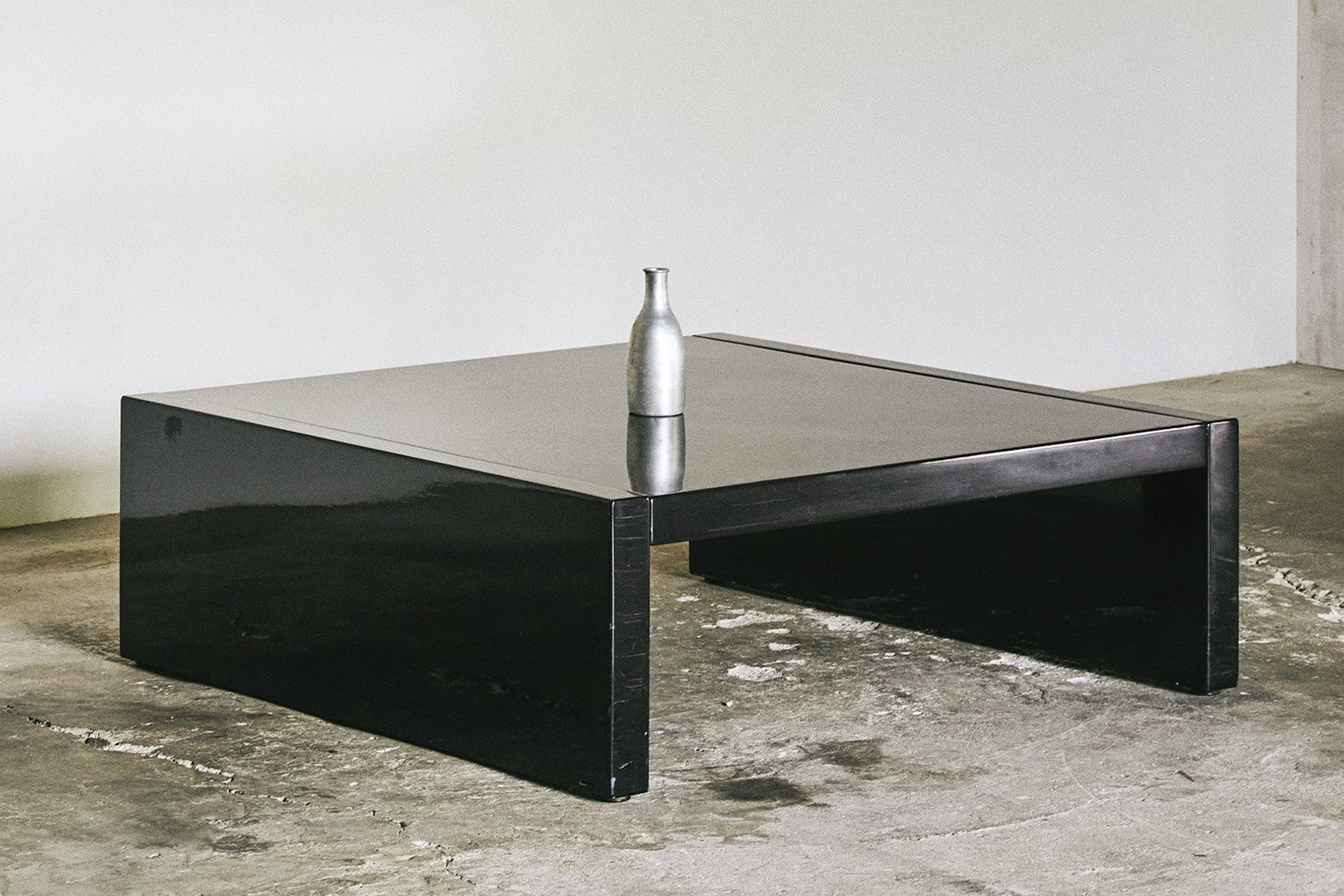
‘Saratoga’ coffee table by Massimo & Lella Vignelli, dating from the 1960s. Its sharply linear design and piano-black finish give it a cool, understated elegance. The small vintage aluminum bottle beside it is of unknown provenance and purpose. Table: ¥132,000, bottle: ¥7,700.
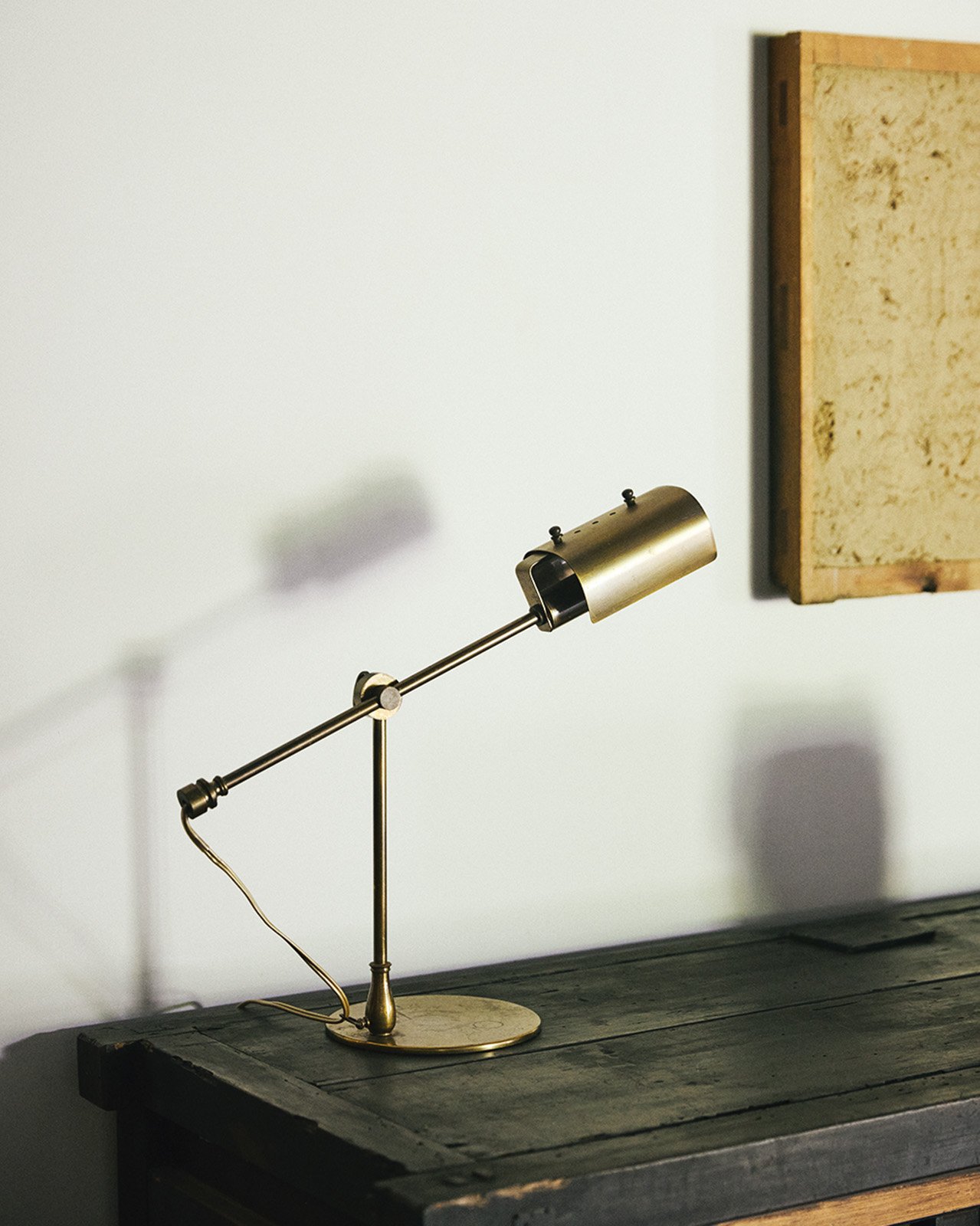
Brass table lamp from 1990s Japan, featuring an adjustable arm. Its minimalist industrial design, crafted entirely from brass, combined with a soft glow, gives it a timeless charm. It adds a warm, retro atmosphere to any interior. ¥49,500.
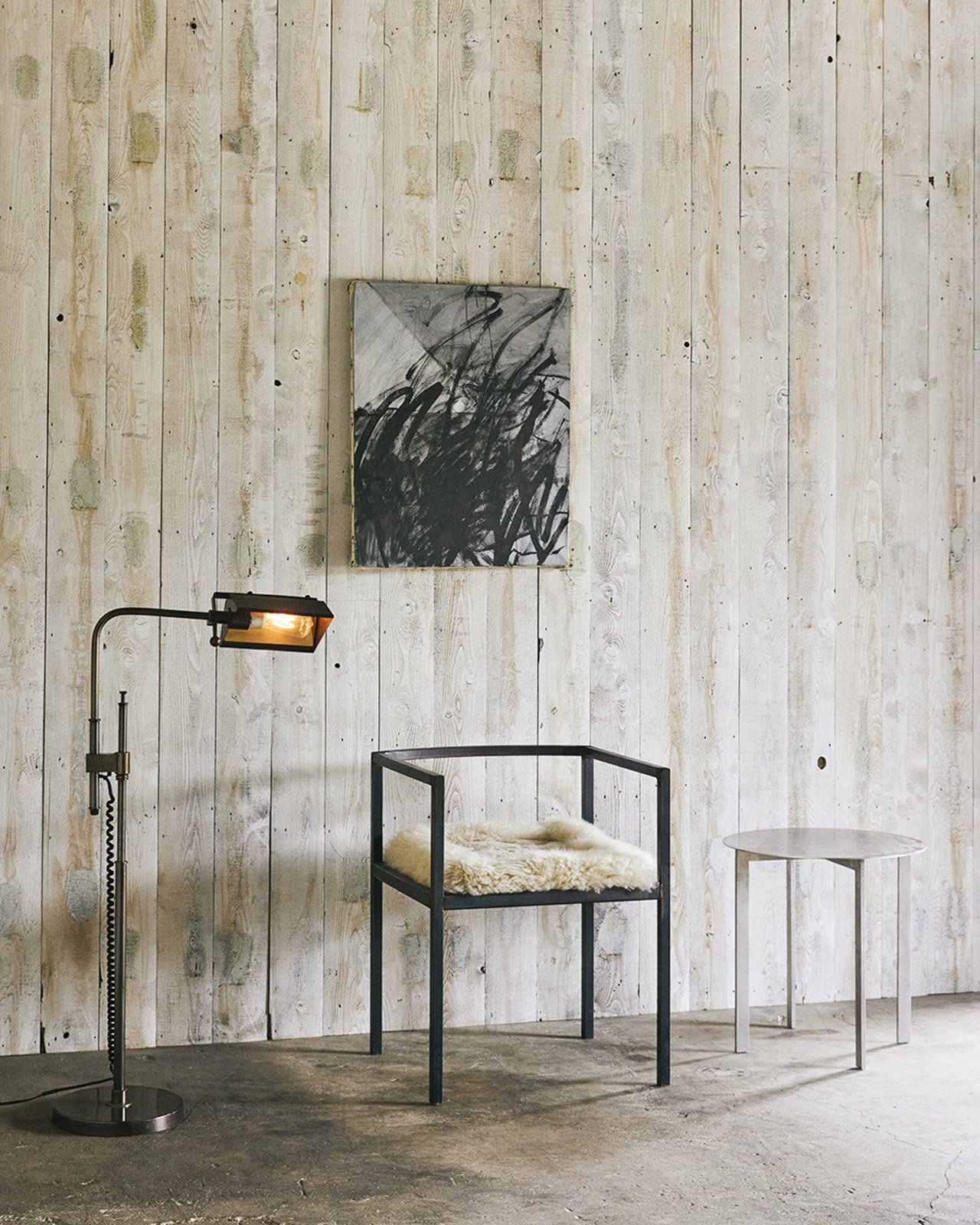
Stainless steel coffee table and steel chair, both designed by Daniel Kai Hirao. The adjustable brass pharmacy lamp, like the previous one, is a Japanese vintage piece from the 1990s. Table: ¥132,000, chair: ¥160,000, lamp: ¥99,000.
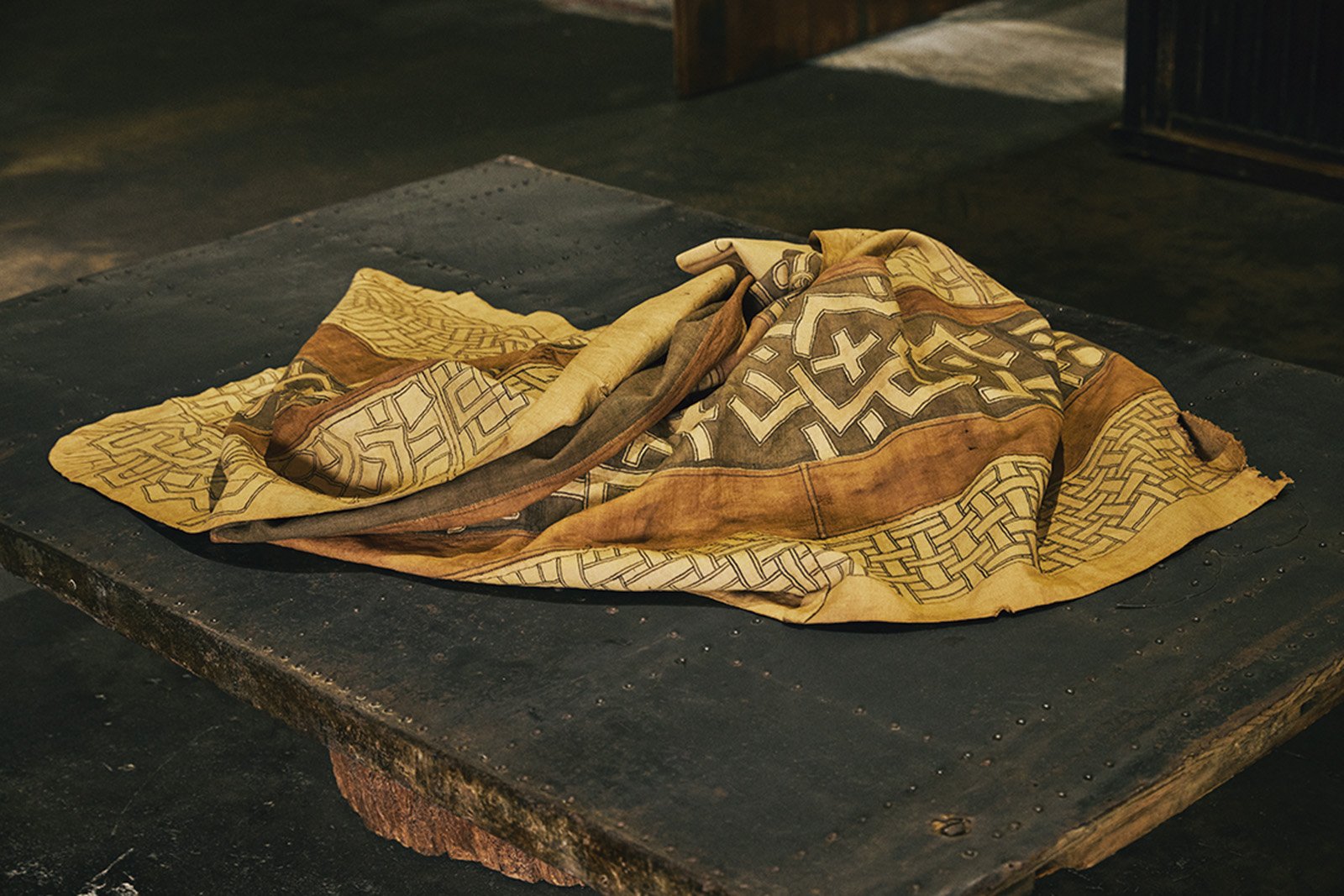
Traditional ‘kuba’ cloth, passed down within the Kuba Kingdom of Central Africa since the 17th century. This six-meter-long piece, likely woven in the mid-20th century, was probably used during ceremonial occasions. Price upon request.
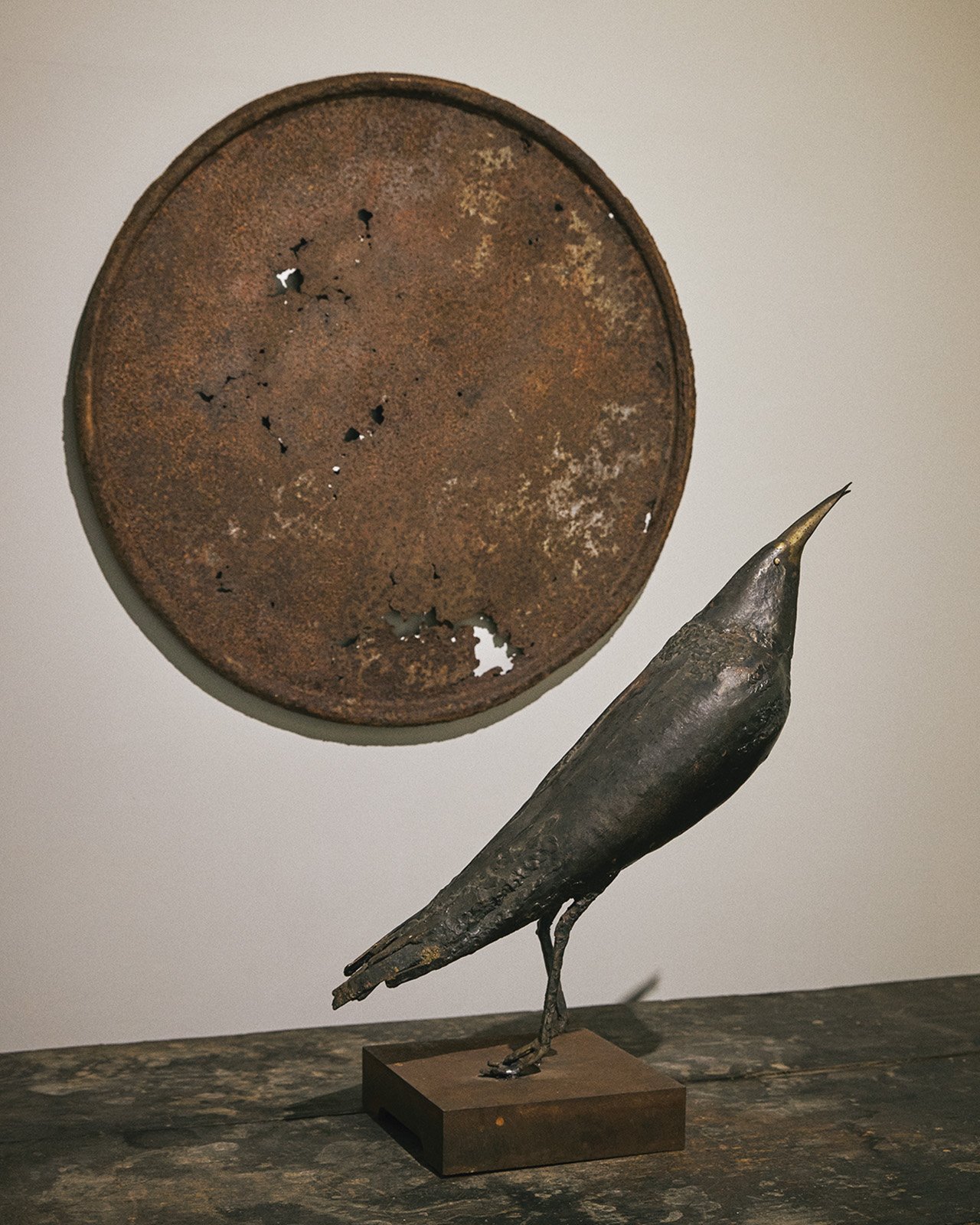
Bird sculpture in iron and brass, by an unknown artist, date unspecified. The iron disc hung on the wall, visibly rusted, is displayed as a patinated object shaped by time—an artwork in its own right. Sculpture: ¥99,000, disc: ¥24,200.
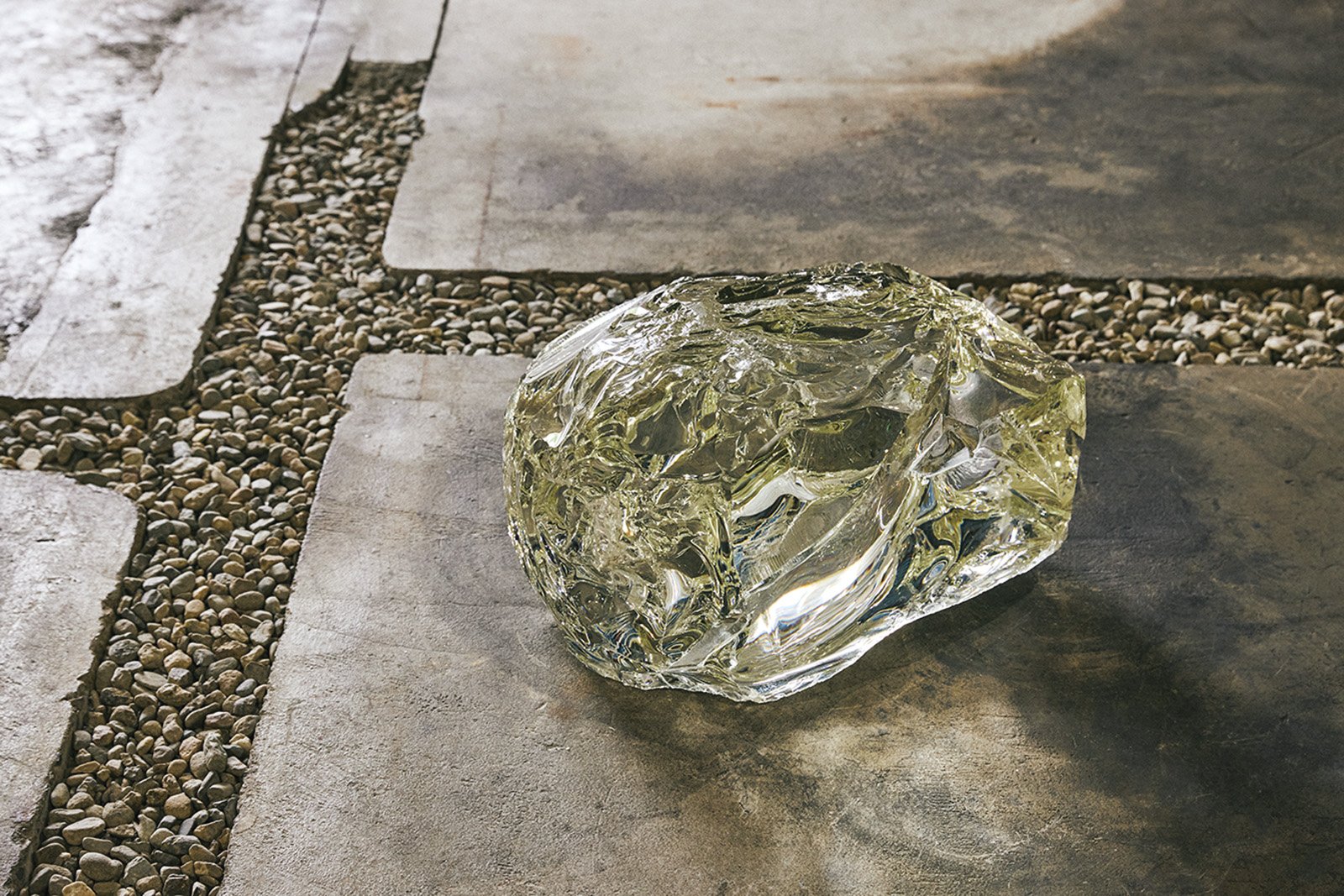
Large block of optical glass that refracts natural light into prismatic patterns across the floor and walls. Hirao notes that pieces of this size are extremely rare. Resting on a gravel floor, it evokes the spirit of a modern dry garden. Price upon request.
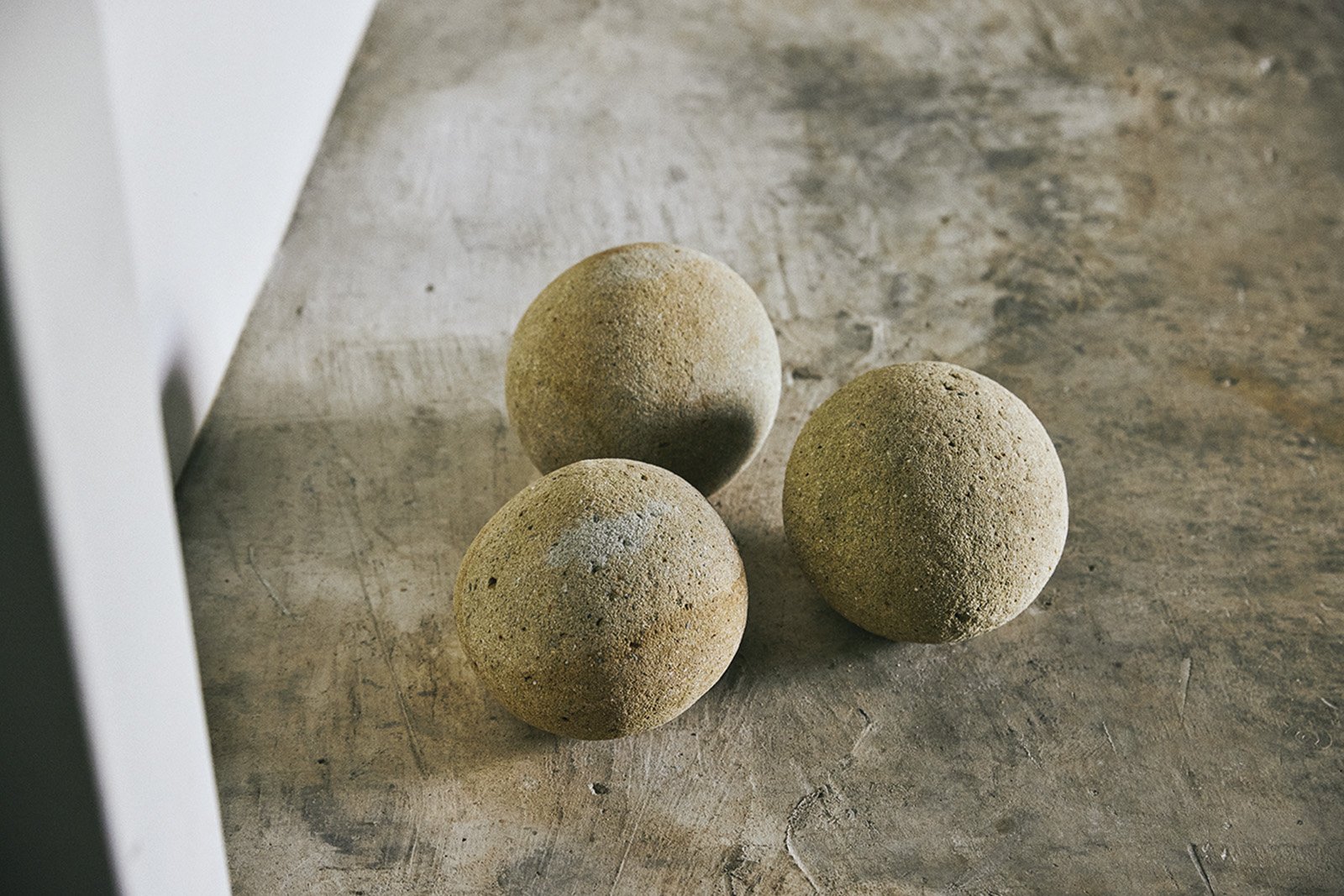
Near-perfectly round stones, likely polished by hand, whose origin and age remain unknown. In Yamanashi, such stones are sometimes venerated as protective deities. Their shape and scale make them ideal as threshold guardians or doorstoppers when wrapped in rope or leather. ¥33,000 each.
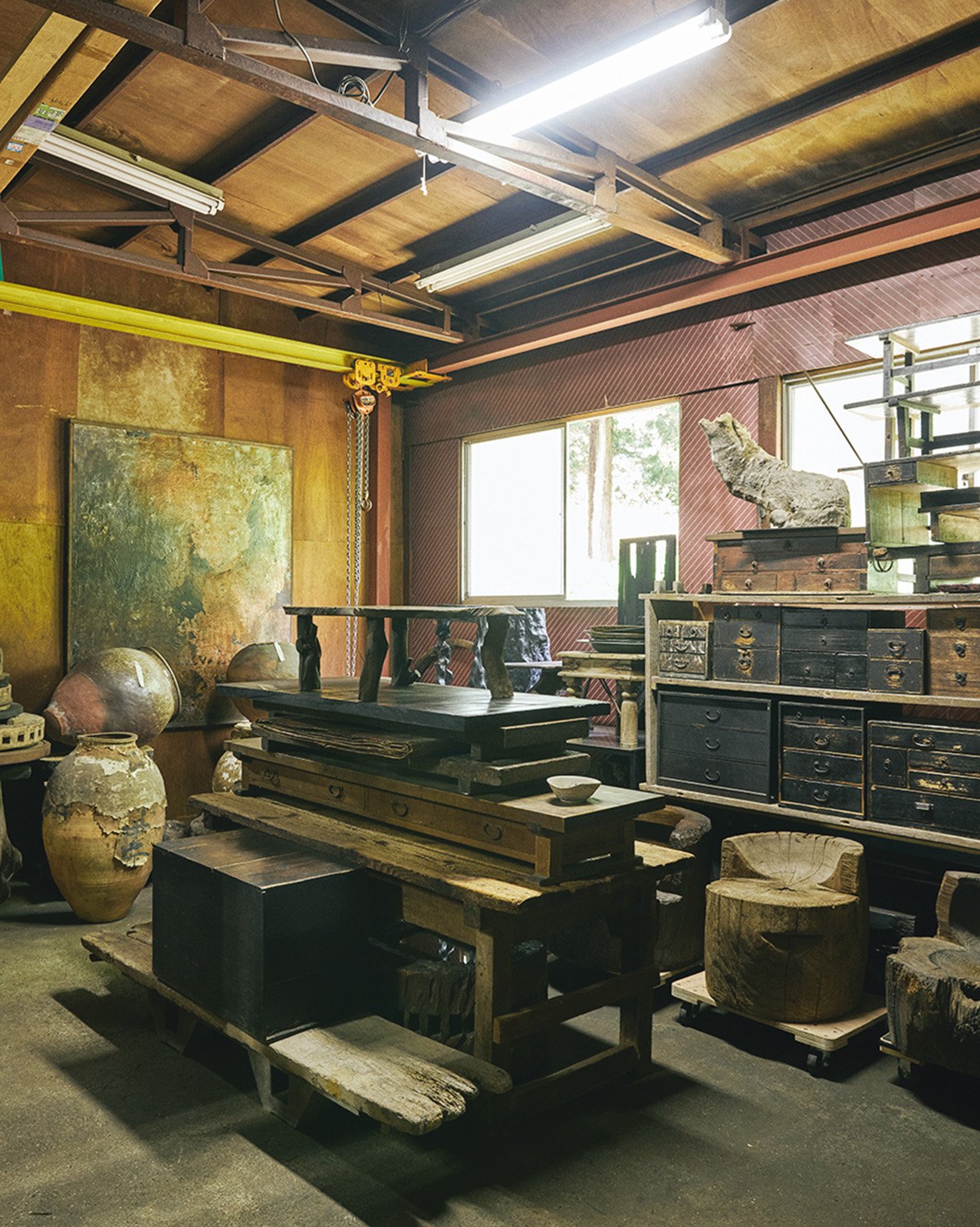
In the antiques section behind the main gallery, a stool repurposed from a wooden mortar sits among bottles, small chests, and other objects reimagined for contemporary interiors.
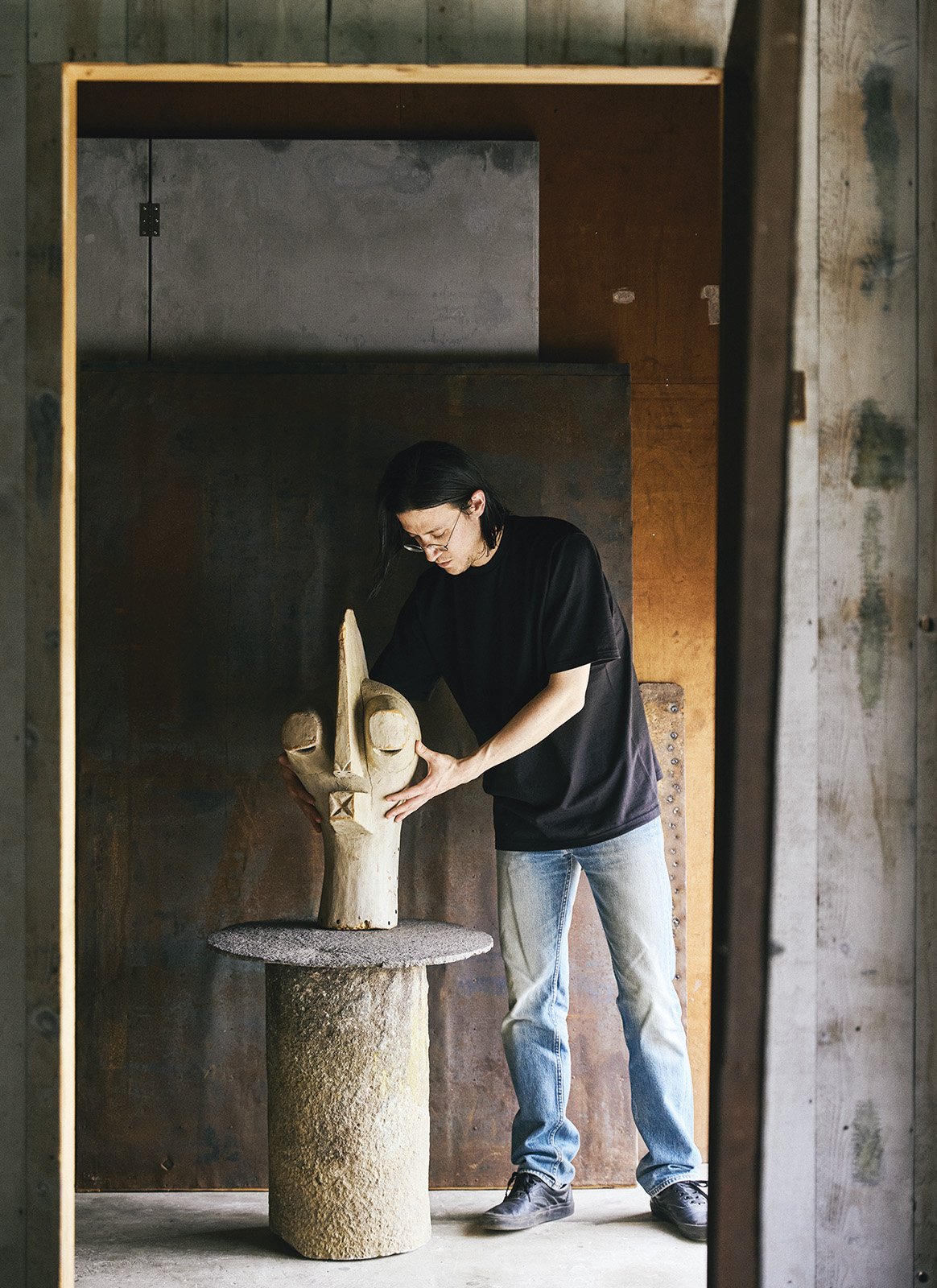
Mask from the Songye people of Africa, exuding a primitive presence. The raw, unpainted wood enhances its anonymous allure. Among the Songye, a society called Kifwebe used masks in ritual settings, often inspired by forest spirits or animals. ¥132,000.
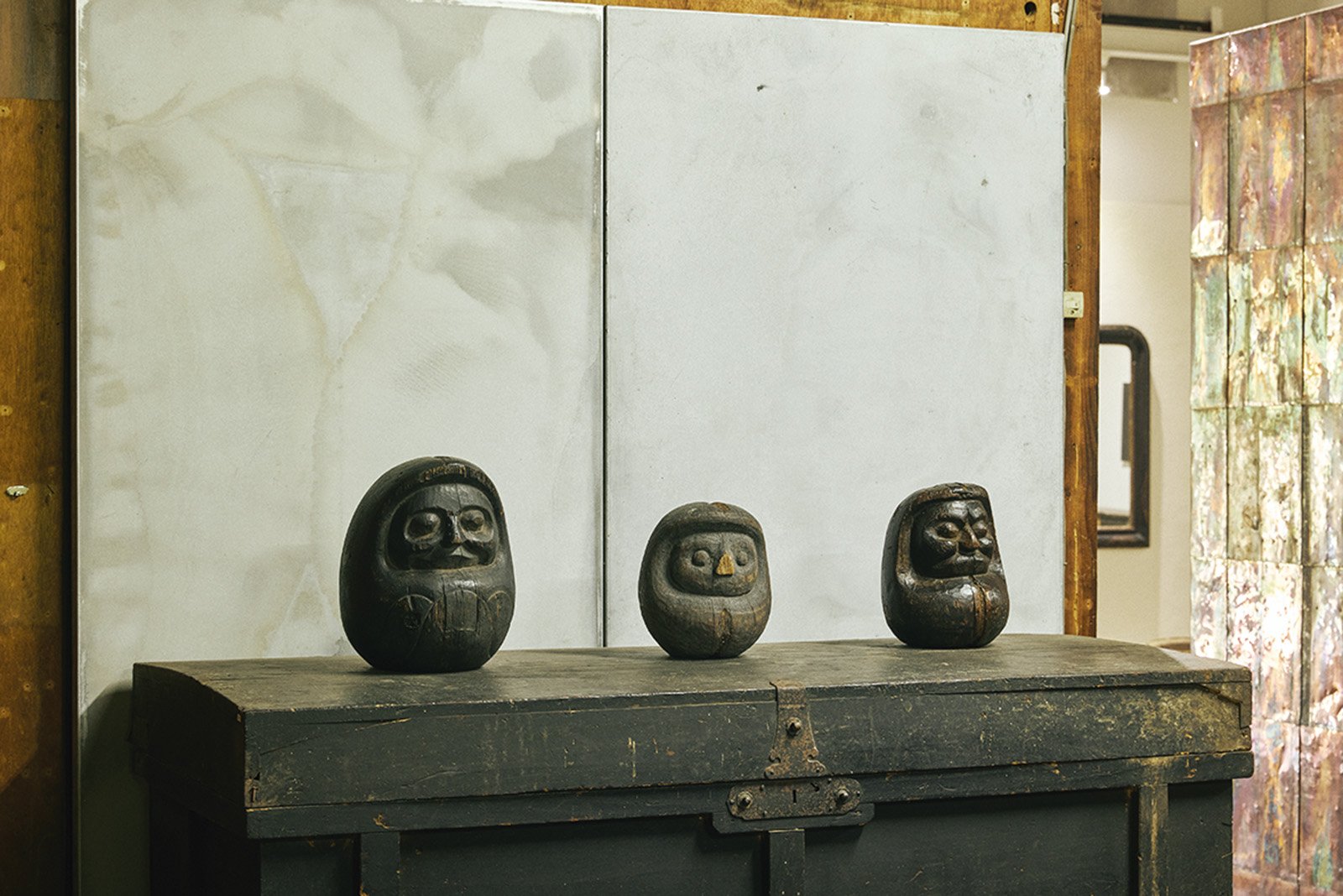
Wooden molds used in the making of ‘daruma’ dolls, likely from the Taishō to Shōwa periods. Each region has its own style; displayed side by side, their differences become striking. Like the Edo-period ‘nagamochi’ chest used here as a base, black-toned antiques are particularly sought after abroad. From right to left: ¥99,000, ¥55,000, ¥88,000.
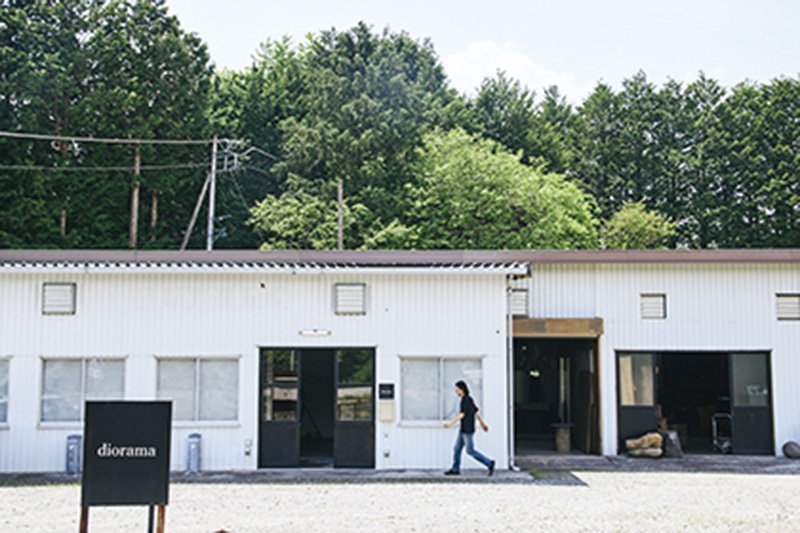
Housed in the former machine room of a renovated plastics factory, Diorama has retained the raw aesthetic of its original structure. Next to the gallery stands Daniel Kai Hirao’s workshop, where he sells one-of-a-kind pieces crafted from salvaged and reworked materials.