Inside the Heart of Japanese Fine Watchmaking, A Visit to the Grand Seiko Manufacture
These refined pieces are made in a Kengo Kuma–designed building, set in a natural environment that inspired their signature dial motifs.
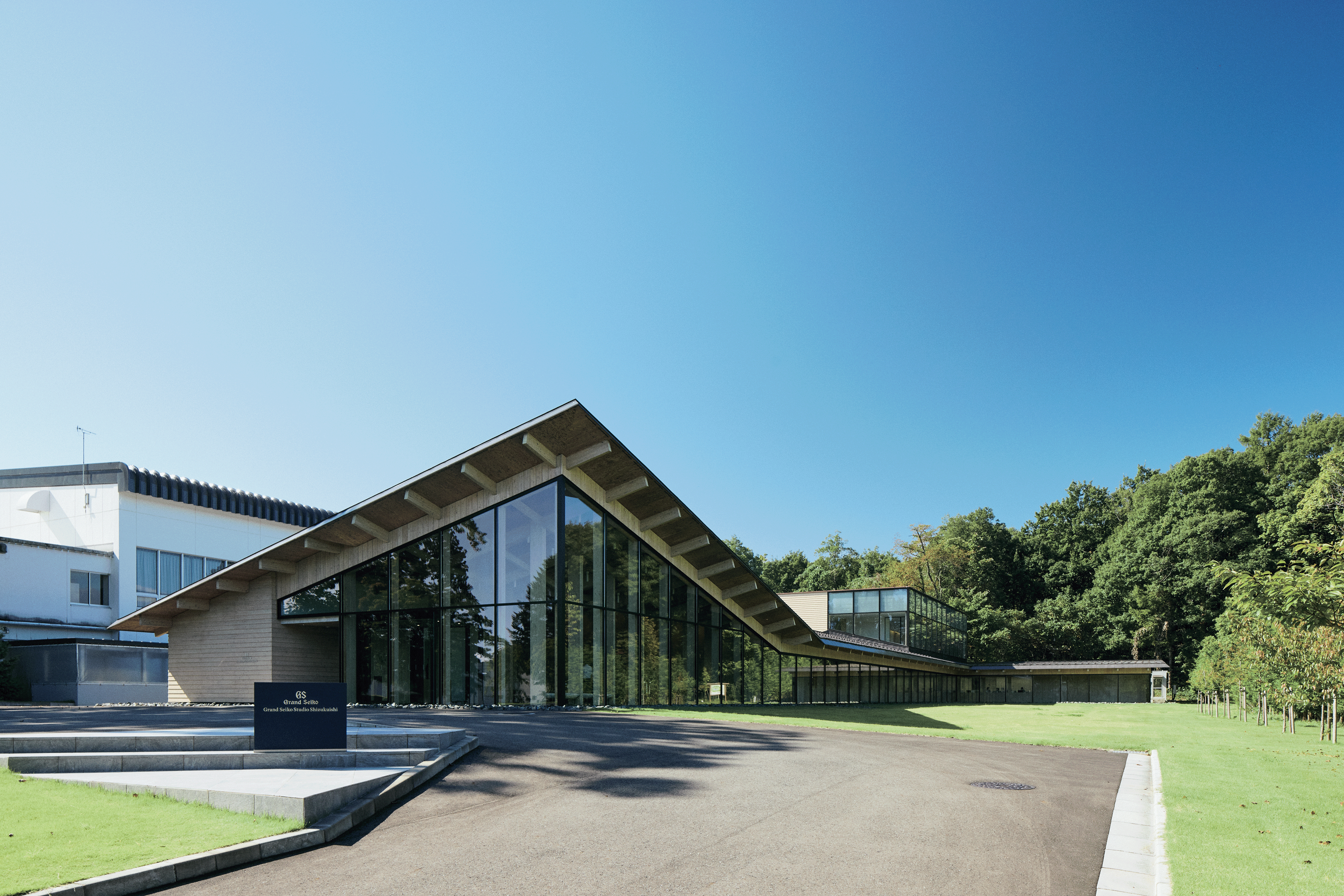
Inaugurated in 2020, the year of Grand Seiko’s 60th anniversary. Designed by Kengo Kuma, the building is defined by its sweeping north-facing roof. The studio is also open to visitors.
Regarded as the pinnacle of Japanese watchmaking, Grand Seiko distils remarkable expertise into its mechanical timepieces. Their production takes place at the Grand Seiko Studio Shizukuishi, in Iwate Prefecture. A visit to Shizukuishi reveals the origins of the brand’s emblematic dials and the artisans who bring them to life.
In the world of fine watchmaking, a timepiece draws part of its identity from the environment in which it is created and from the hands that shape it. In Switzerland, whether the workshops are located in cities or nestled in snow-covered valleys, the surrounding landscape influences design, mechanics, and finishing. For watchmakers, place matters.
Grand Seiko’s mechanical models are produced by Morioka Seiko Instruments in Shizukuishi. On its extensive grounds stands the Grand Seiko Studio Shizukuishi, where every stage following component manufacturing—including final assembly—is carried out.
The building was designed by Kengo Kuma. From the glass corridor reserved for visitors, technicians appear wholly absorbed in their work, focused on the precision of the movement. Its generous roofline allows for large north-facing windows, framing a sweeping view of Mount Iwate. Grand Seiko frequently draws on the surrounding landscapes—from white birch forests to the contours of the mountain—to imagine its dial textures. Here, interior and exterior enter into dialogue: the flooring echoes the colour and grain of the stone in the garden, softening the boundary between architecture and nature.
Grand Seiko’s philosophy, ‘The Nature of Time’, reflects the way the house turns to seasonal transitions and the presence of living ecosystems to approach the essence of time—an invitation to sense it rather than merely measure it. The studio gives form to this idea.
A Conversation with One of Japan’s Contemporary Master Craftsmen

Tsutomu Itō, watchmaker. Itō joined Morioka Seiko Instruments in 1991, first working on quartz watch assembly. From 2000 onward, he devoted himself to high-end mechanical models. In 2010, he placed second in the top category of the national watchmaking skills competition. Recognized as a ‘Contemporary Master Craftsman’ in 2018, he received the Medal with a Yellow Ribbon in 2024 for his career achievements.
Creating a mechanical watch requires skills that cannot be fully automated: many operations depend on the hand, the eye, and accumulated experience. The Grand Seiko Studio Shizukuishi brings together several highly skilled artisans responsible for assembling and casing the movements. Leading the team dedicated to assembly and adjustment, Tsutomu Itō has spent twenty-five years honing his craft. He holds the title of ‘Outstanding Skilled Worker’ (Contemporary Master Craftsman) awarded by the Ministry of Labour and last year received the Medal with a Yellow Ribbon. A respected figure across the profession.
In recent years, new calibres have appeared in succession, including the slim 9SA5 and the hand-wound 9SA4. The assembly team plays an active part in their development, sharing feedback with R&D designers as the movements evolve.
‘The level of machining is extraordinary today,’ explains Tsutomu Itō. ‘Parts fit together with remarkable accuracy, which makes adjustments easier than before. Still, because most components have been redesigned from the ground up, lubrication, the key to preventing wear, remains an area where hands-on experience is essential. We often discuss different lubrication techniques among technicians to determine the most appropriate approach.’
Grand Seiko also places great emphasis on transmitting expertise. In Swiss watchmaking, young artisans typically graduate from specialised schools before joining a manufacture. In Shizukuishi, the approach differs: the workshop regularly recruits local youth and trains them entirely in the craft. This demanding process led to the creation of a ‘professional talent development system’, in which each artisan is expected not only to cultivate their own skills but also to identify and train their successor. Progression from bronze to silver, then gold, reflects the responsibility of becoming a custodian of watchmaking culture.
‘We draw up training plans and record every difficulty encountered so we can revisit them later. Sensitivity alone isn’t enough—understanding the structure of the watch is crucial.’
As a master artisan and instructor, Itō is constantly in demand. And even with his experience, carrying out consecutive operations that require such intense focus, all while working with minuscule components, remains a true challenge.
‘When I feel tired, I just look outside. Nature is right here. At this time of year, I can see the greenery through the window—it helps me rest my eyes. There have even been moments when a sound caught my attention, and when I looked up, I saw wild animals walking past the studio.’
He recounts these scenes with a gentle tone. A simple impression emerges: a fine watch is born of a fine person. That, perhaps, is the enduring appeal of Grand Seiko.
Grand Seiko Studio Shizukuishi
Address: 61-1 Itabashi, Shizukuishi, Iwate, within Morioka Seiko Instruments
Phone: +811-9692-5863
Hours: 9:30–11:30 / 12:15–16:00
Advance reservation required at the link below.
gs-studio-shizukuishi.resv.jp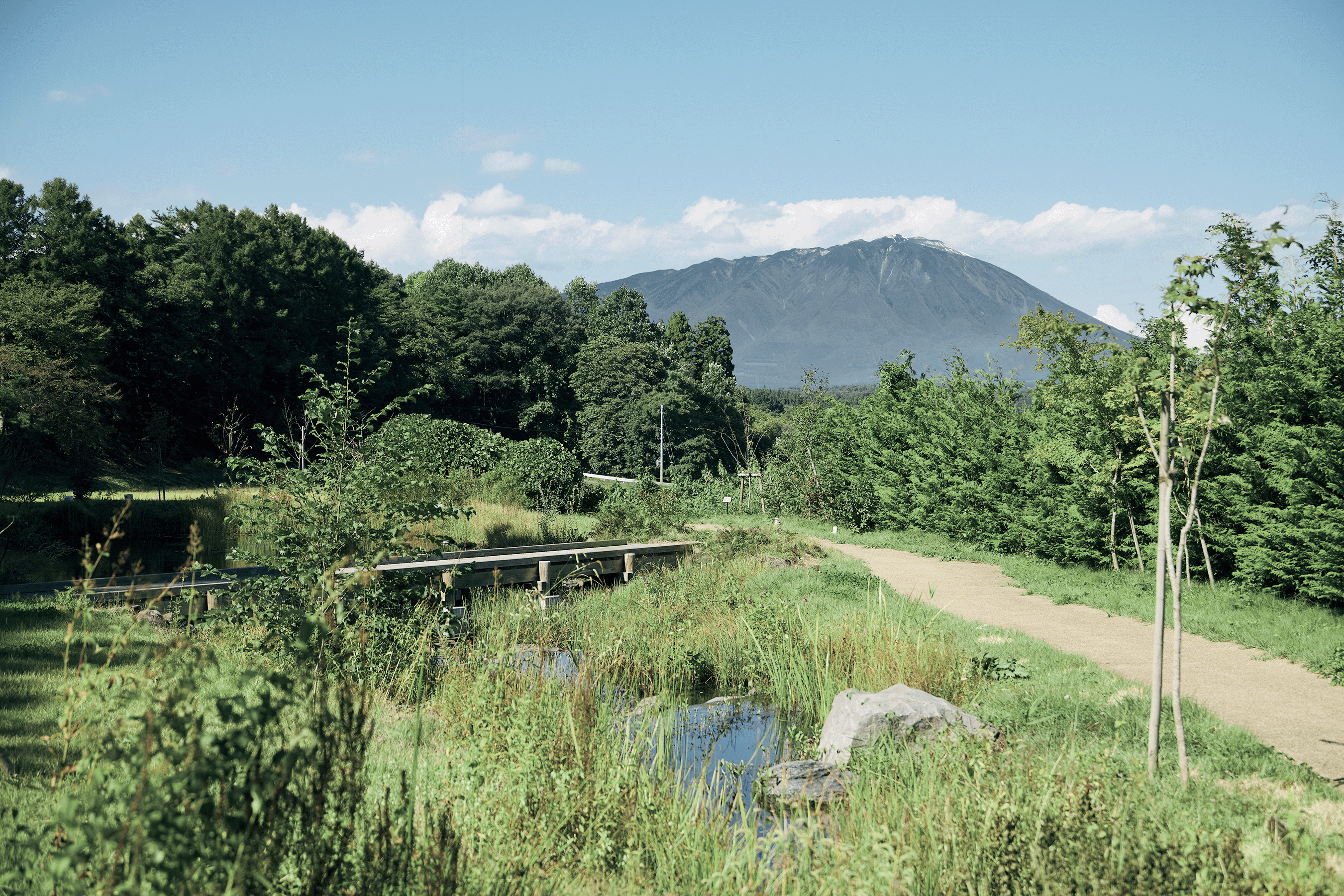
A biotope has been created in front of the studio to support the aquatic ecosystem and provide habitat for local wildlife. In the background rises Mount Iwate, whose silhouette inspires several dial designs. This coexistence with the living world deepens the brand’s understanding of ‘The Nature of Time’.
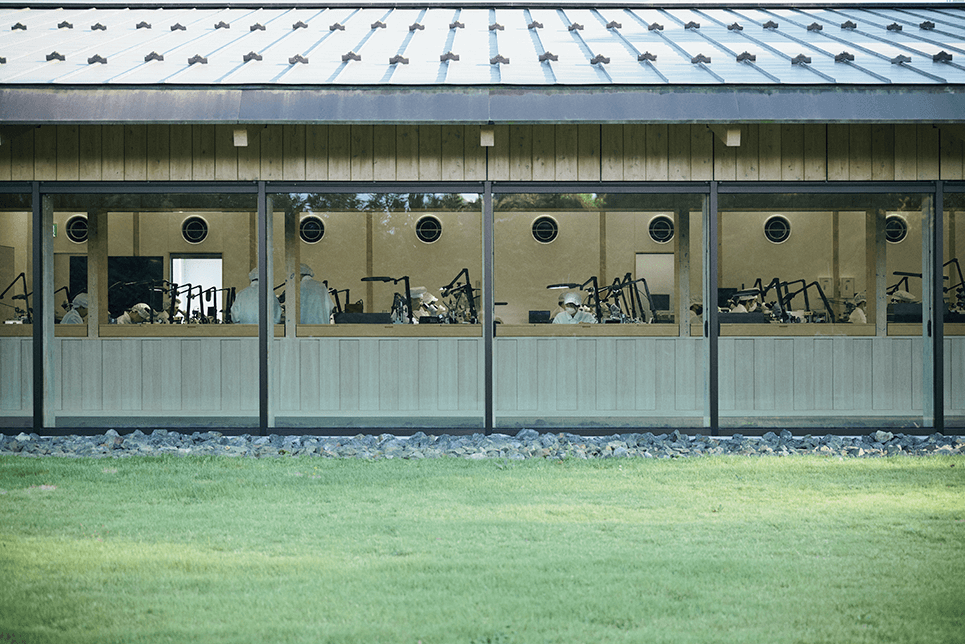
The cleanroom where assembly operations take place. Large north-facing windows bring in natural light, a longstanding practice in watchmaking. The view of the surrounding landscape also offers artisans a visual pause.
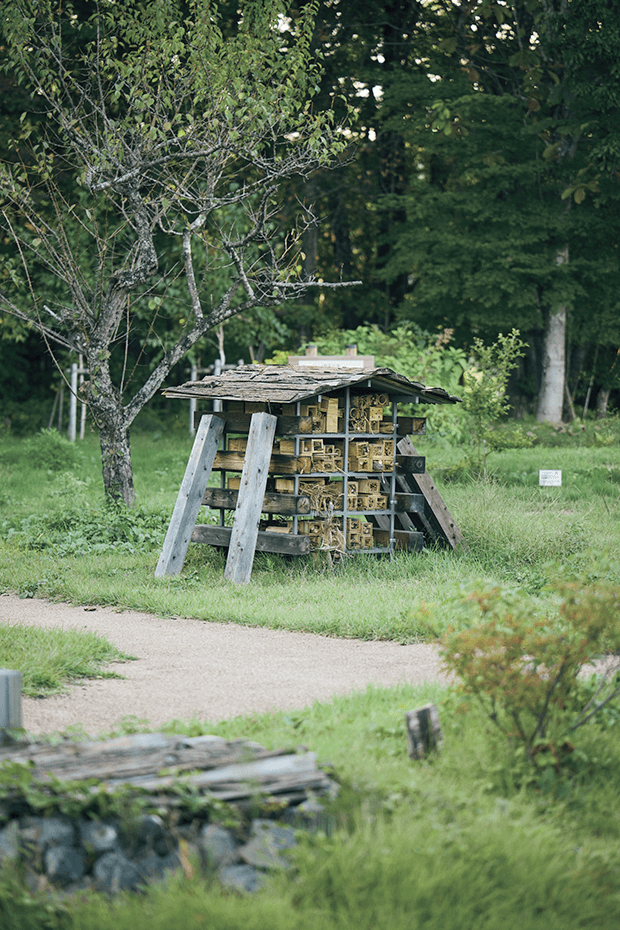
Across the grounds of Morioka Seiko Instruments stand small structures roughly one metre tall. These ‘insect hotels’, made from offcuts of wood and fallen branches, are designed to support reproduction and overwintering.

The forest that extends across the site forms a vital corridor for local wildlife. It is maintained, yet preserved as much as possible in its natural state. Certain areas are home to white birches, a signature motif of Grand Seiko dials.
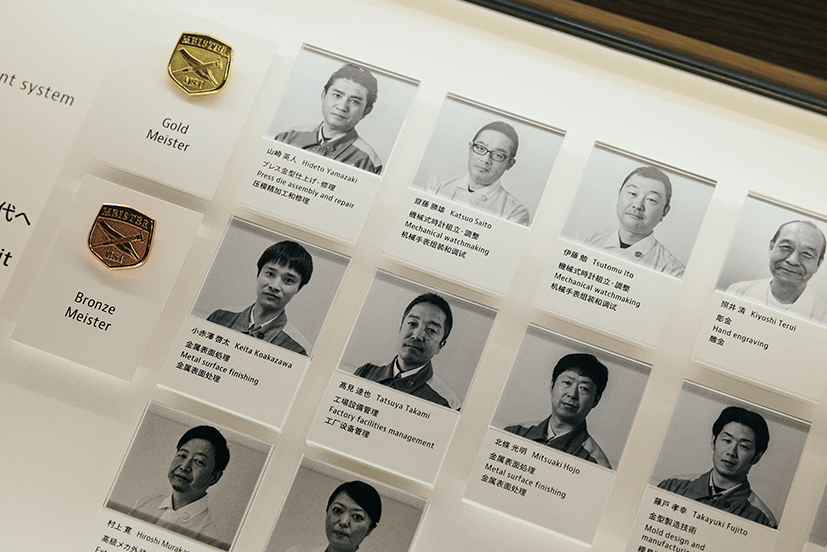
An internal program dedicated to talent development. Technical expertise and teaching ability are evaluated across three levels—gold, silver, bronze. Here, panels featuring master artisans and specialists, displayed in the reception area of the Grand Seiko Studio Shizukuishi. Tsutomu Itō’s name appears among them.
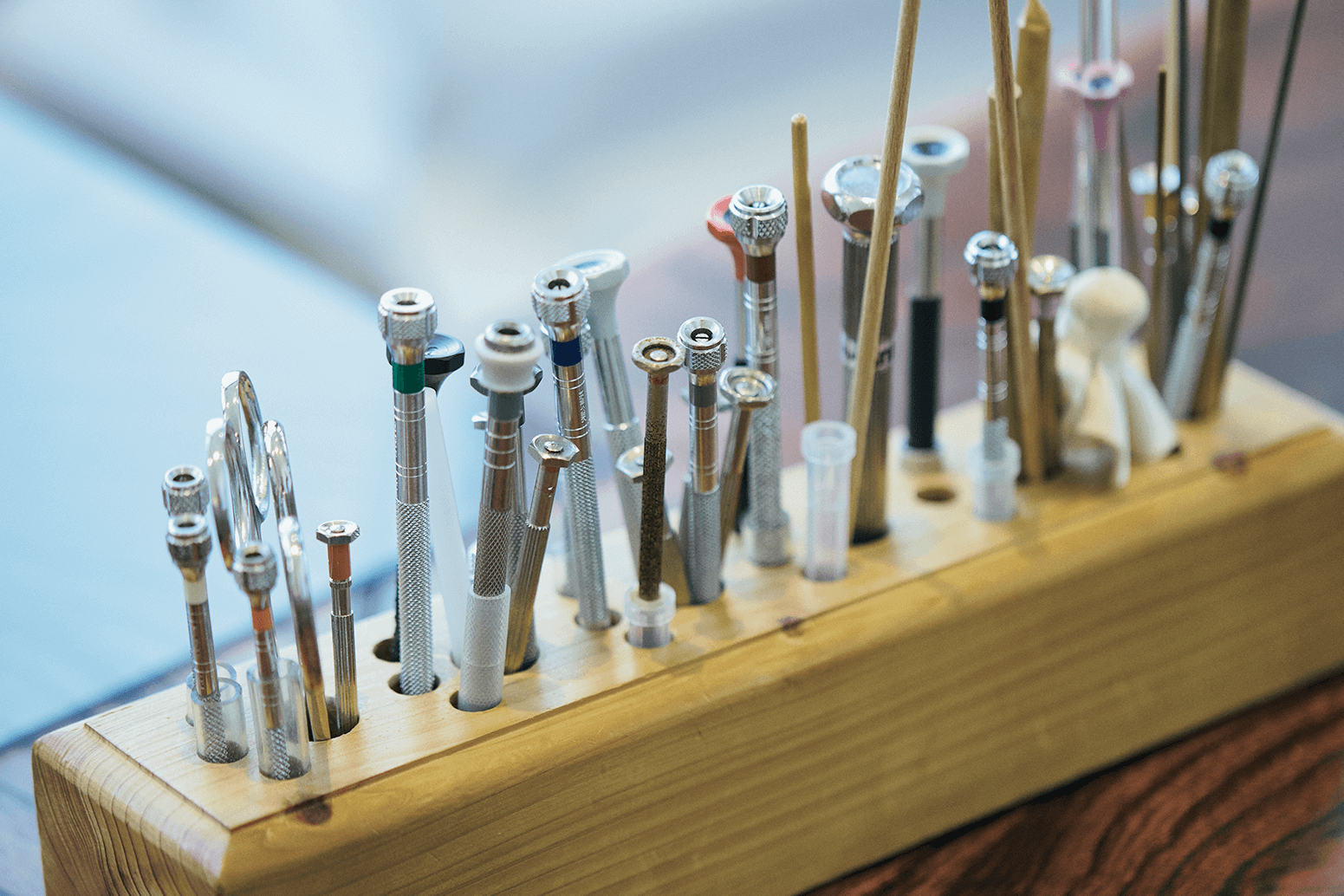
Tools shaped for their user. The tools Tsutomu Itō relies on daily. While their bases are commercially made, he modifies the tips of his tweezers and screwdrivers to match the dimensions of each component. An extension of his fingers, they form an essential part of a watchmaker’s craft.
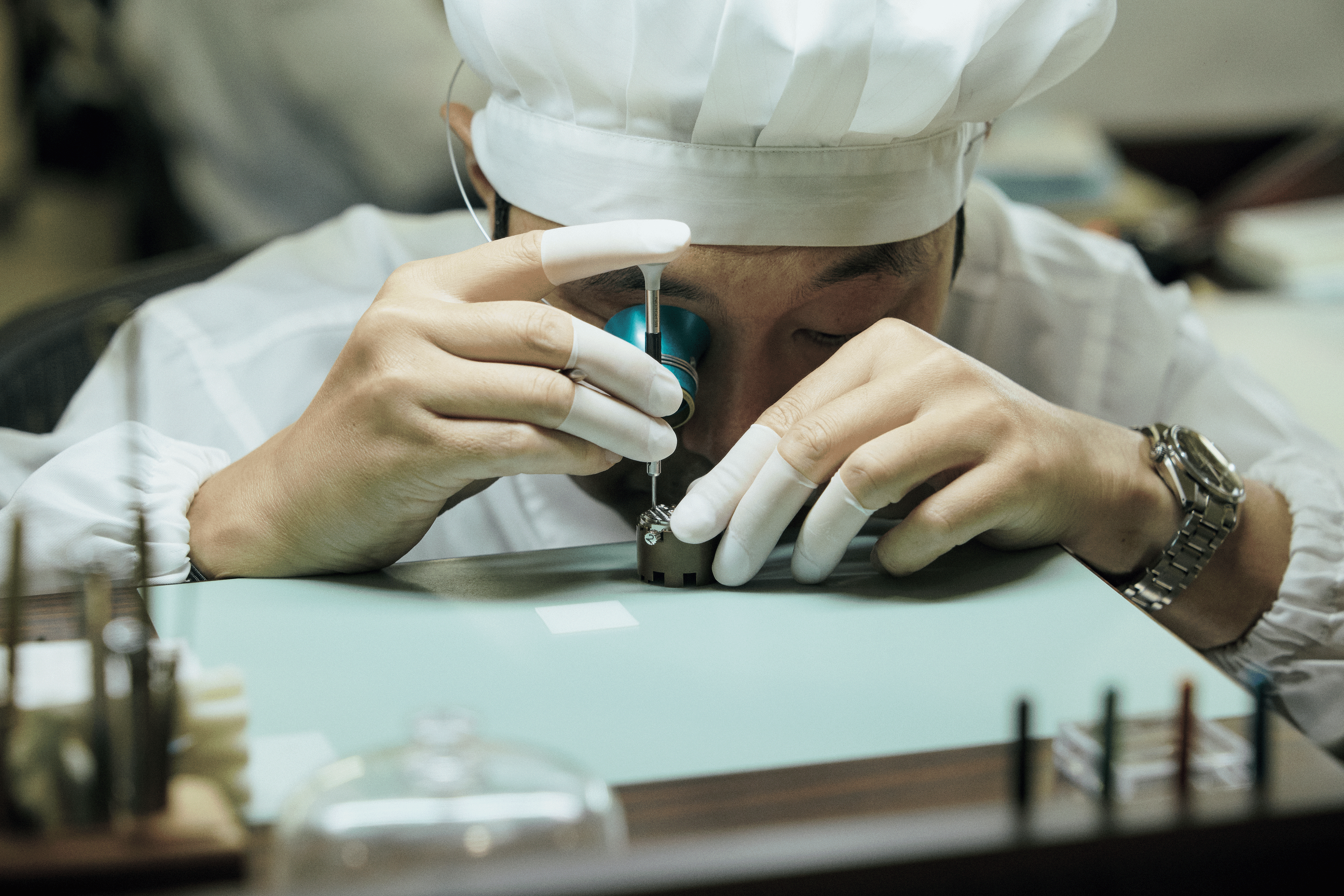
A task demanding extreme delicacy. Tsutomu Itō leans over his workbench, loupe in place, fine-tuning adjustments. With tweezers, he aligns components to a hundredth of a millimetre. The most intricate operation remains regulating the balance spring. For the finest tasks, he frequently turns to the microscope.
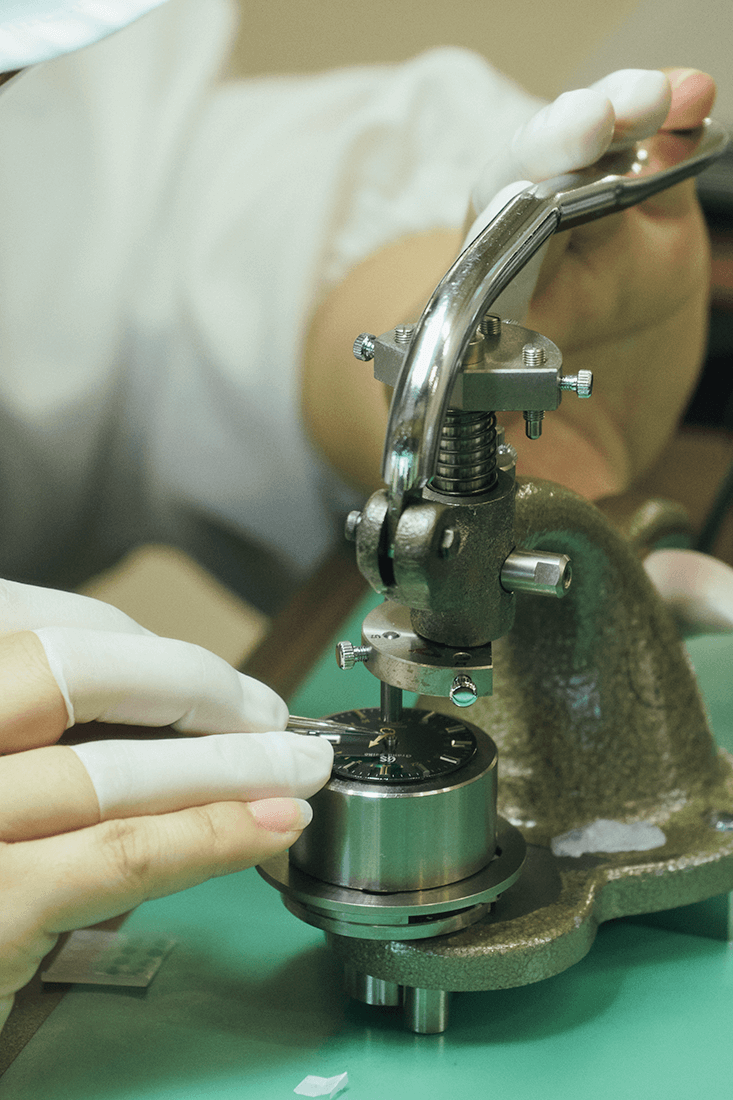
Division of labour to optimise workflow. The process follows a structured system of task allocation: movement assembly (pre-assembly), precision adjustment, casing. Each step is separated to improve efficiency. Here, the setting of the hands. As Grand Seiko is known for its broad, weighty hands, this step requires particular care.
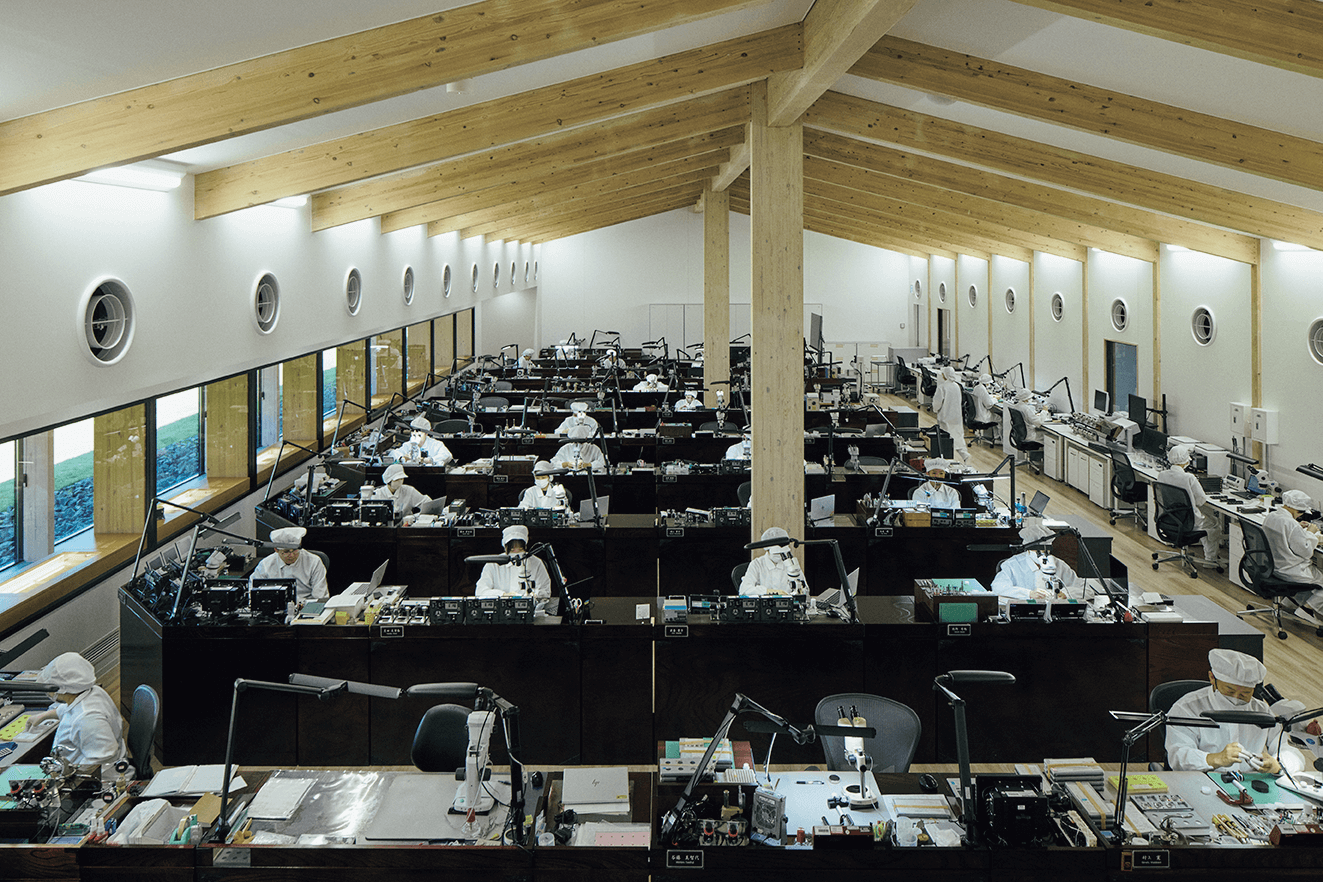
The cleanroom where all assembly stages unfold. Although the wooden structure is characteristic of Kengo Kuma, the cleanroom contains no horizontal beams that could trap dust. This expansive space is the result of advanced structural planning. Workstations are organised in lines according to each stage, following an optimised layout.
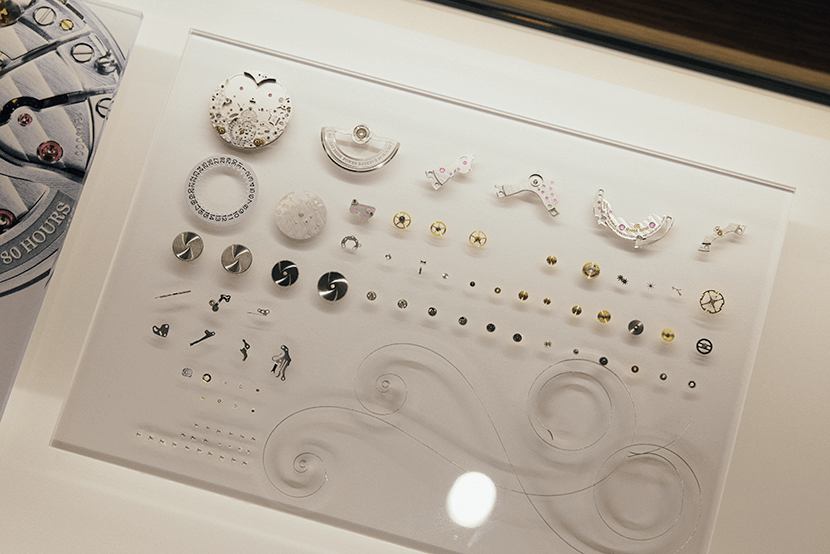
The microscopic components of a movement. Exploded diagram of the groundbreaking 9SA5 automatic calibre, launched in 2020. Comprising roughly 200 micro-precision parts, it is assembled with exceptional rigor.