Kamaro’an, Indigenous Taiwanese Craft in Dialogue with the Present
In Taipei, the traditional techniques of the Pangcah people are reimagined through the lens of contemporary design.
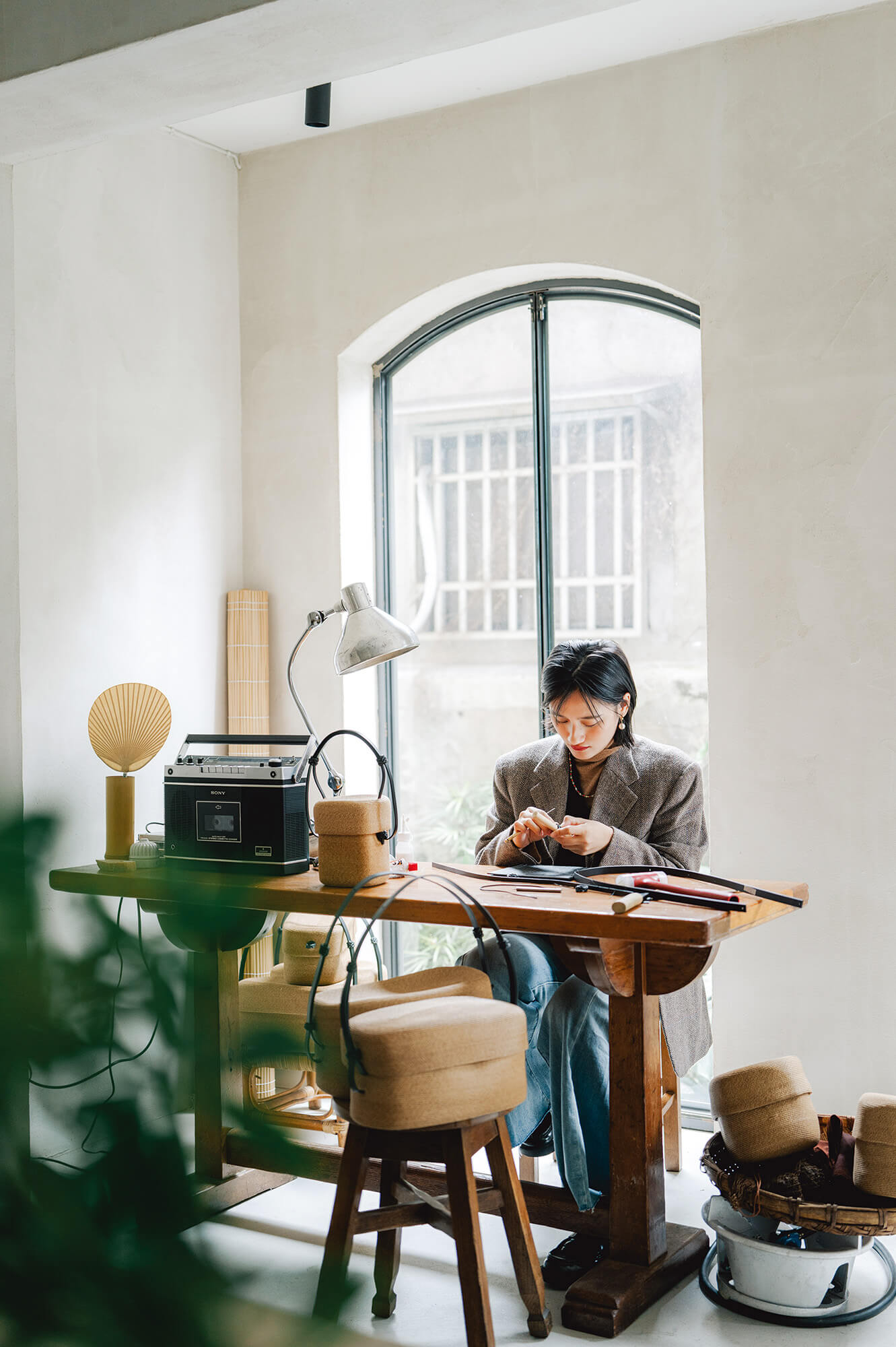
Nacu Dongi, Artisan. Born in Fengbin, a quiet port town in Hualien County, Nacu is a Pangcah artisan. After studying visual communication design in Taipei, she joined Kamaro’an in 2017 upon graduation. She is now one of the studio’s leading figures based in the capital.
Founded in 2015 by three young creatives—Shane Liu and Yun-Fan Chang, both trained in design, alongside Tipus Hafay, a Pangcah native of Hualien—Kamaro’an emerged from a desire to reinterpret indigenous craftsmanship. One of their earliest creations, a lampshade made from umbrella sedge grass, a fiber long used by the Pangcah, embodies this approach: minimalist in form, yet deeply rooted in tradition. Today, the studio’s handcrafted pieces, produced between Hualien and Taipei, are featured in curated spaces from the MoMA Design Store in New York to the Picasso Museum in Barcelona, as well as in select boutiques across Paris, Tokyo, and Vienna.
‘As a child in my village, we wove our own hats, bags, and tools from rattan, and even brewed our own alcohol,’ recalls Nacu Dongi, one of Kamaro’an’s leading artisans. ‘But over time, younger generations began relying on store-bought goods, and much of that knowledge faded away. It wasn’t until I joined Kamaro’an that I felt the urge to learn, so we wouldn’t lose those traditions. The elders are generous in teaching us how to weave—even the younger ones.’ This shift in perspective, she adds, was also shaped by meeting craftspeople from around the world, whose insights helped her see the enduring value of her own cultural heritage.
At Kamaro’an, each object is the result of collective dialogue. Ideas are shared, prototypes multiply, and gradually, forms emerge. Among the first designs developed, Nacu Dongi holds a special fondness for the umbrella sedge grass lampshade—a material deeply familiar to her. As a child, she slept on mats woven from this fiber, a staple of everyday life in Pangcah homes, now transformed into a medium for contemporary expression.
She later learned to craft the handle of the ‘triangle bag’, applying a traditional wrapping technique once used by the Pangcah to prevent knives from slipping out of the hand. The weave is intricate—Nacu recalls practicing late into the night before she could master it.
More recently, the artisans at Kamaro’an have begun reexploring plant-based dyeing methods rooted in Pangcah tradition. For Nacu, the process took on a deeply personal meaning: ‘While learning this technique, I found out that my mother had also studied under the same dye master years ago. Since then, this work has become even more intimate for me.’
Passed down through gestures and memory, Pangcah knowledge continues to evolve without losing its depth. At Kamaro’an, it finds new life—not as a relic, but as a living language.
Kamaro’an House
Address: No. 2, Lane 11, Section 3, Xinsheng South Road, Da’an District, Taipei
Phone: +8862-2356-3616
Opening hours: 1pm – 6pm (Friday to Sunday); 3pm – 6pm (Monday, Wednesday and Thursday, by appointment only).
Closed on Tuesdays.
www.kamaroan.com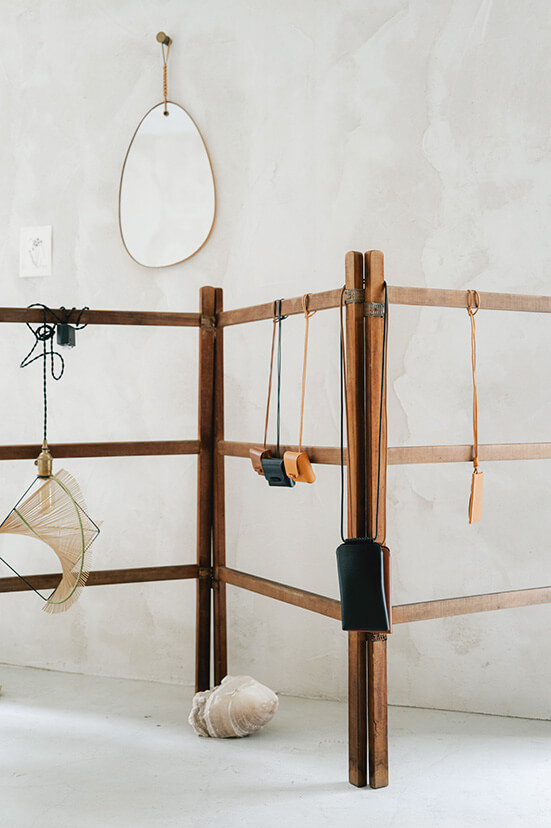
Smartphone cases, earbud holders, compact mirrors—everyday accessories appreciated by an international clientele.
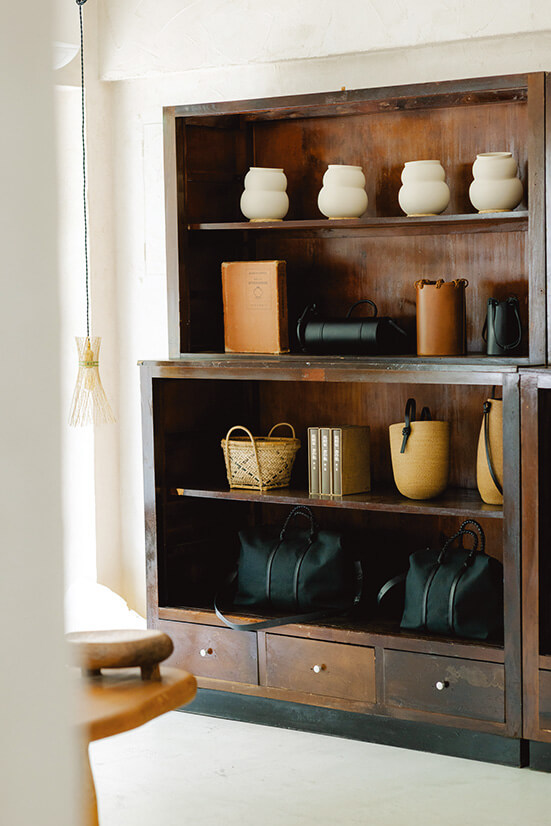
A wide selection of unisex, functional pieces, including these understated travel bags.
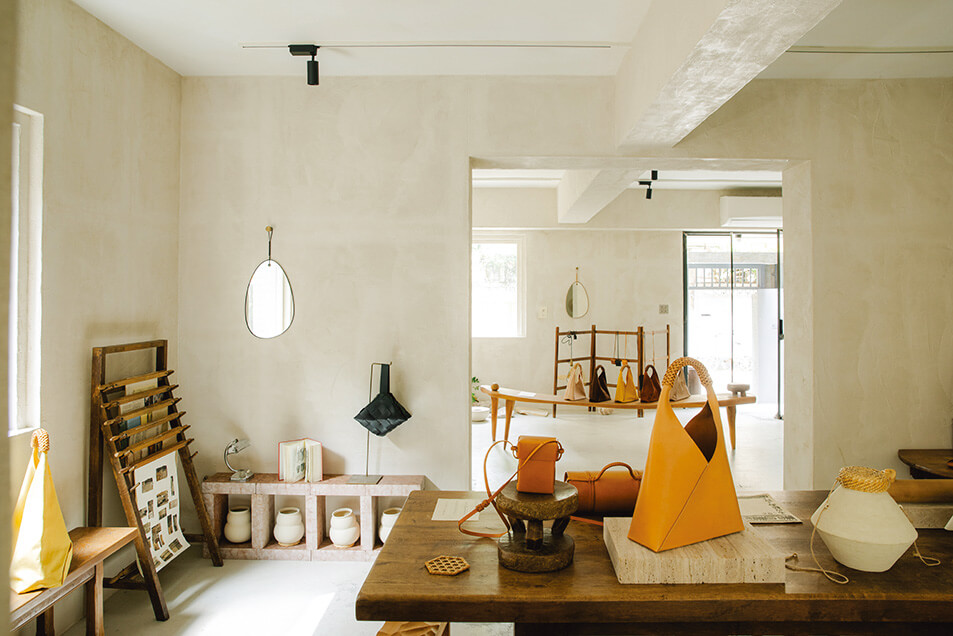
With the feel of a contemporary gallery, the studio allows visitors to observe artisans at work. Maintenance services are also available on-site.
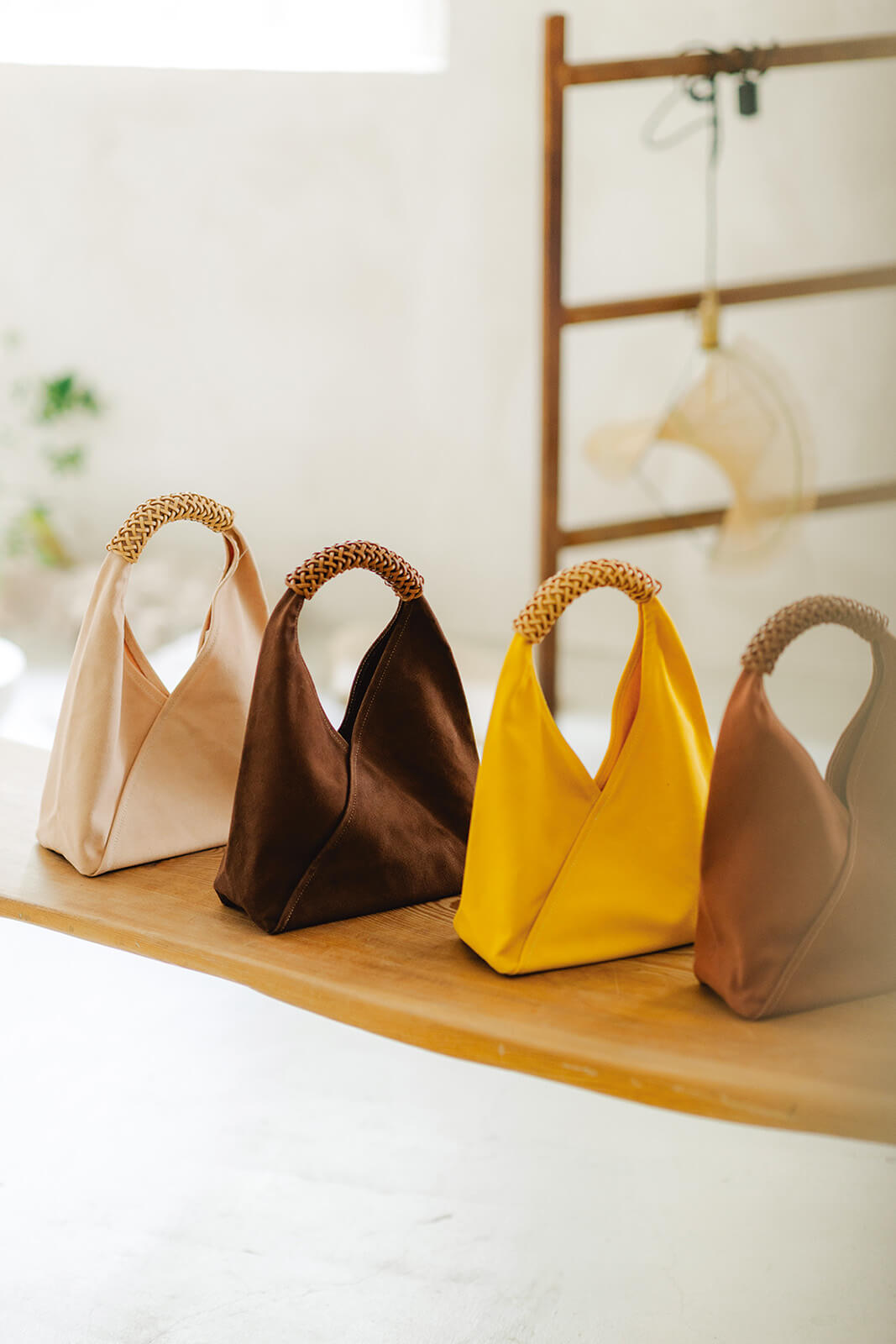
Now available in new plant-dyed tones, the signature ‘triangle bag’—inspired by the Japanese ‘azuma bukuro’—is crafted from cotton, with a handle made from vegetable-tanned leather. Two sizes available: 36 (4,500 TWD) and 58, which fits A4 documents (6,000 TWD).
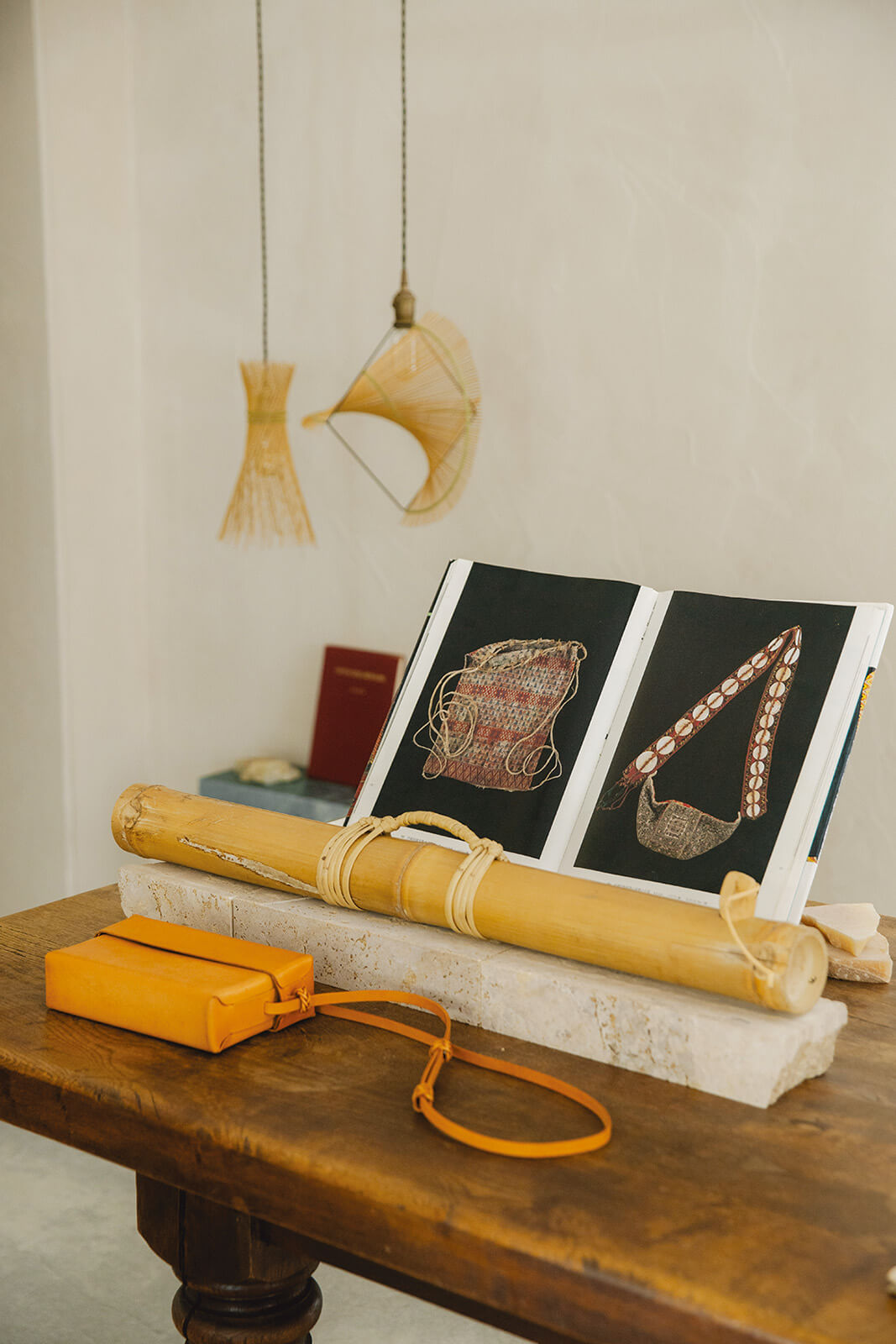
Each piece draws inspiration from traditional Pangcah utility objects. Pictured: a vessel once used to carry water. In the foreground, a bag modeled after containers used for tools and food. 8,500 TWD.
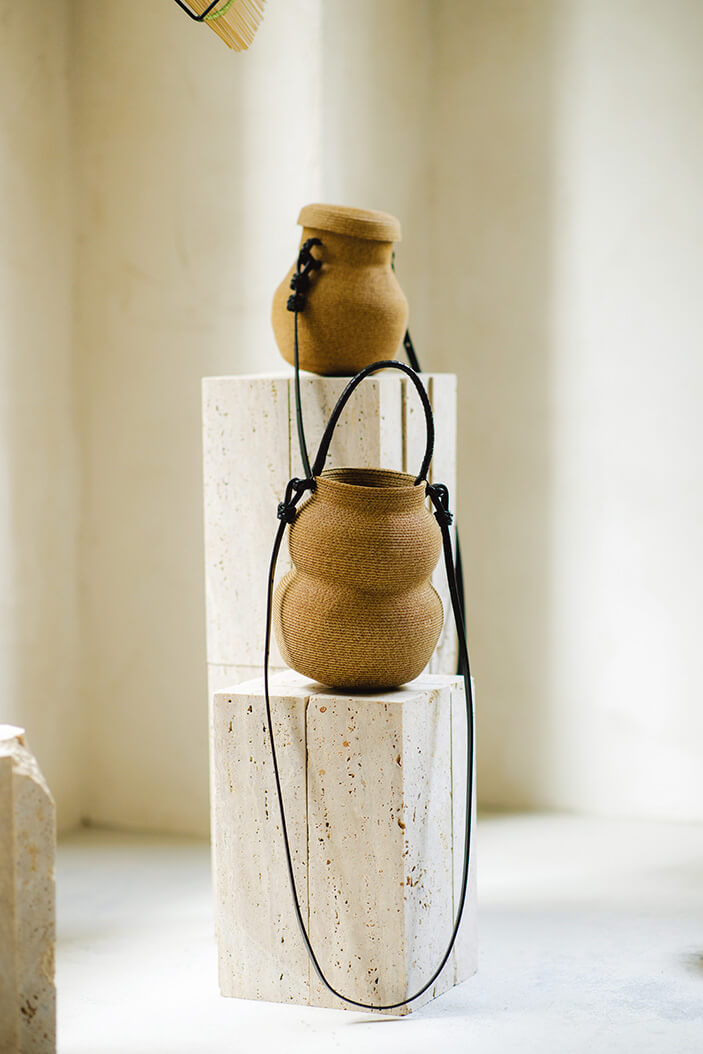
With its gourd-like silhouette, this unique bag design pays tribute to the traditional Pangcah rice steamer. Foreground model: 9,500 TWD; background: 8,500 TWD.
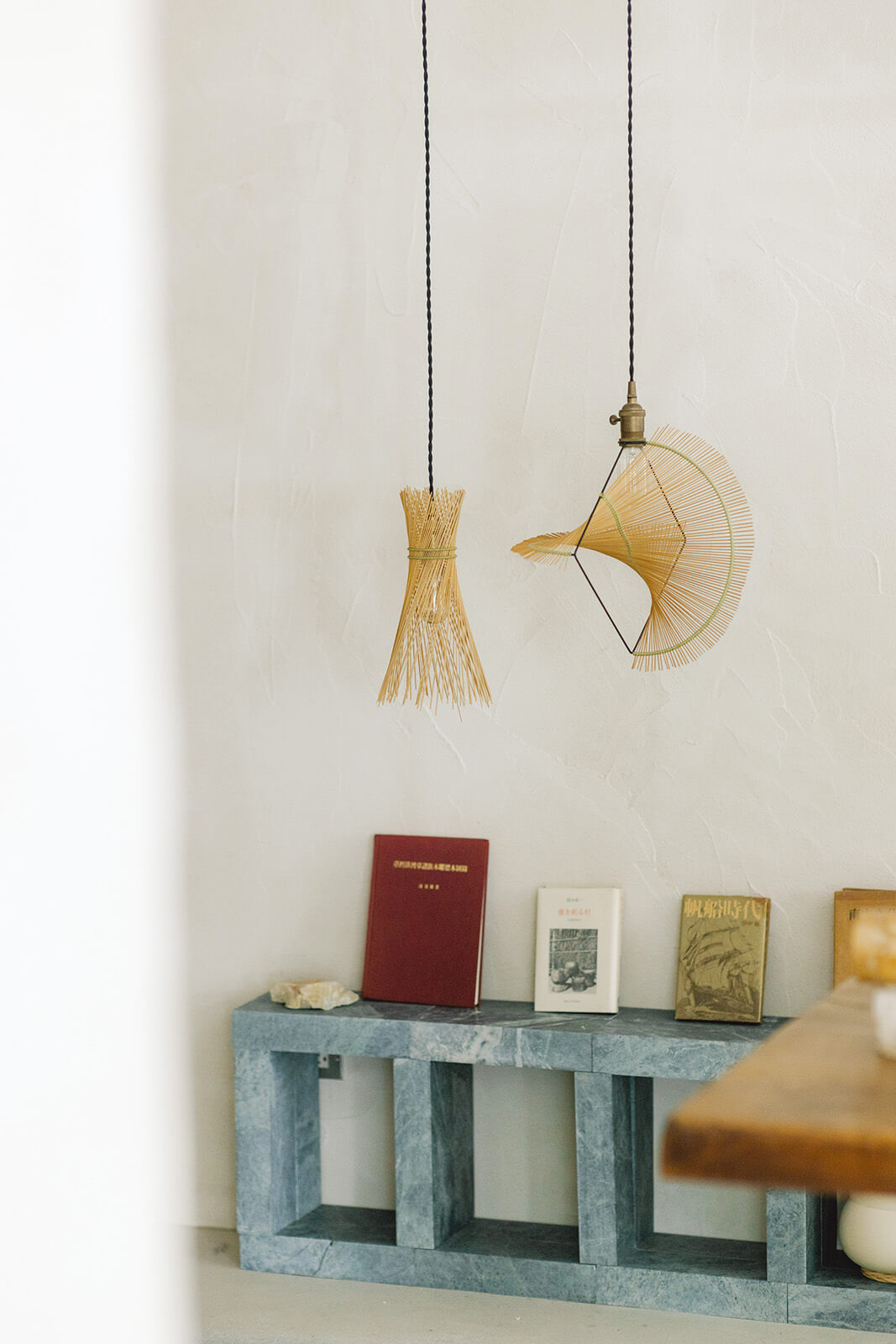
Handwoven from umbrella sedge grass, these lampshades filter light with subtlety. Their carefully constructed geometric forms give them a sculptural presence. Right: 12,000 TWD; left: 8,000 TWD.