After noma, Ryo Haga Pursues the Flavours of a ‘Pure Japan’
Trained at one of the world’s top restaurants, the chef now seeks to create a taste both unknown and deeply familiar to the Japanese palate.
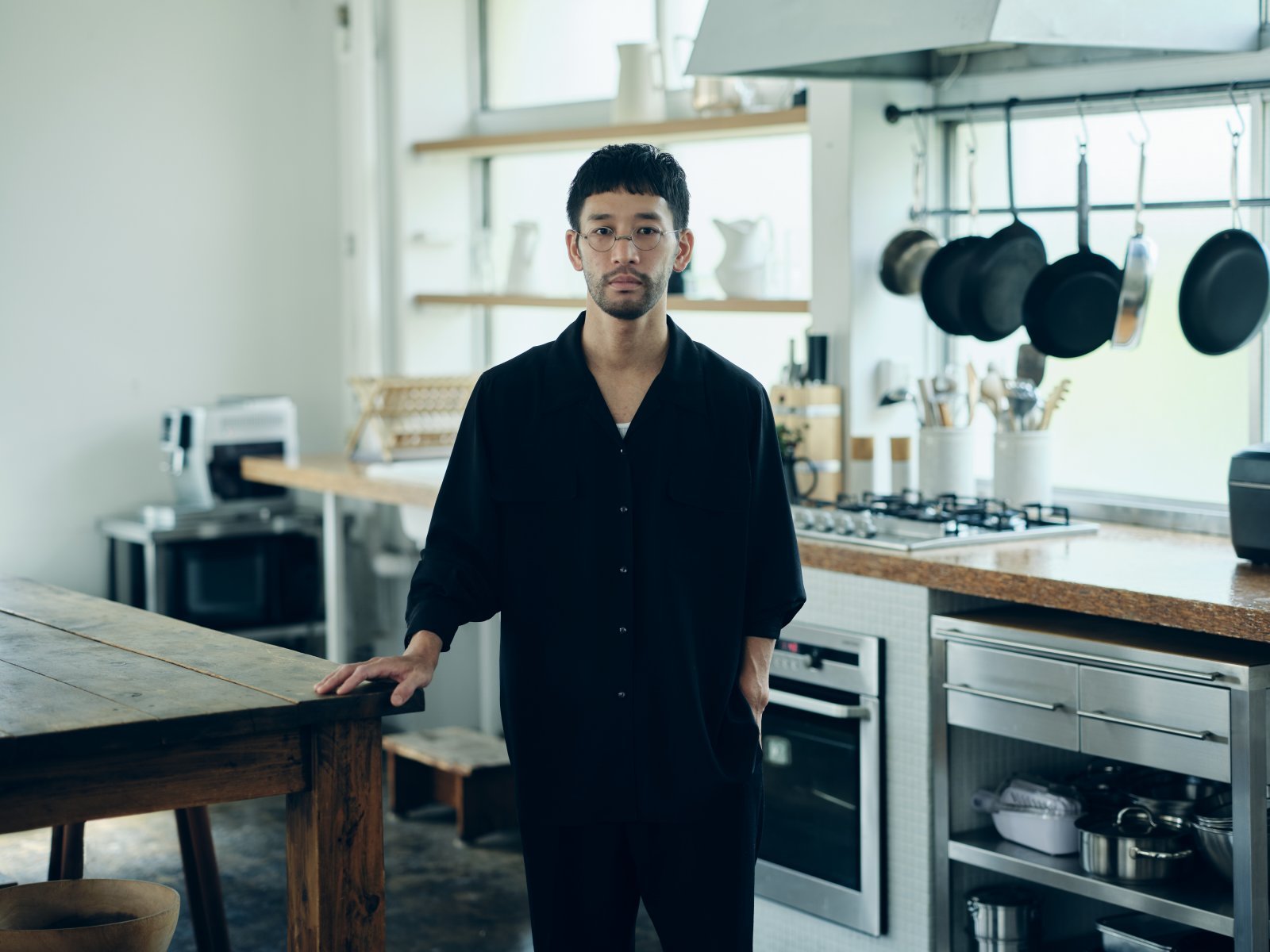
Born in 1991, Ryo Haga trained in Tokyo before apprenticing under Yoshihiro Imai at monk in Kyoto. During this time, he also interned at Kadeau Copenhagen. From 2022 to January 2025, he worked at noma in Copenhagen. He is now preparing to open his own restaurant while actively hosting pop-ups in Japan and abroad.
‘I want to reinterpret and reconstruct the ingredients, the spirit, and the aesthetics inherent to Japan, and express them through my dishes. What I aim for doesn’t fall under a category like Japanese cuisine or washoku, yet it conveys the true essence of Japan. I call it ‘a taste that’s unknown yet familiar,’’ says chef Ryo Haga.
Layering Flavours to Create an ‘Unknown Yet Familiar Taste’
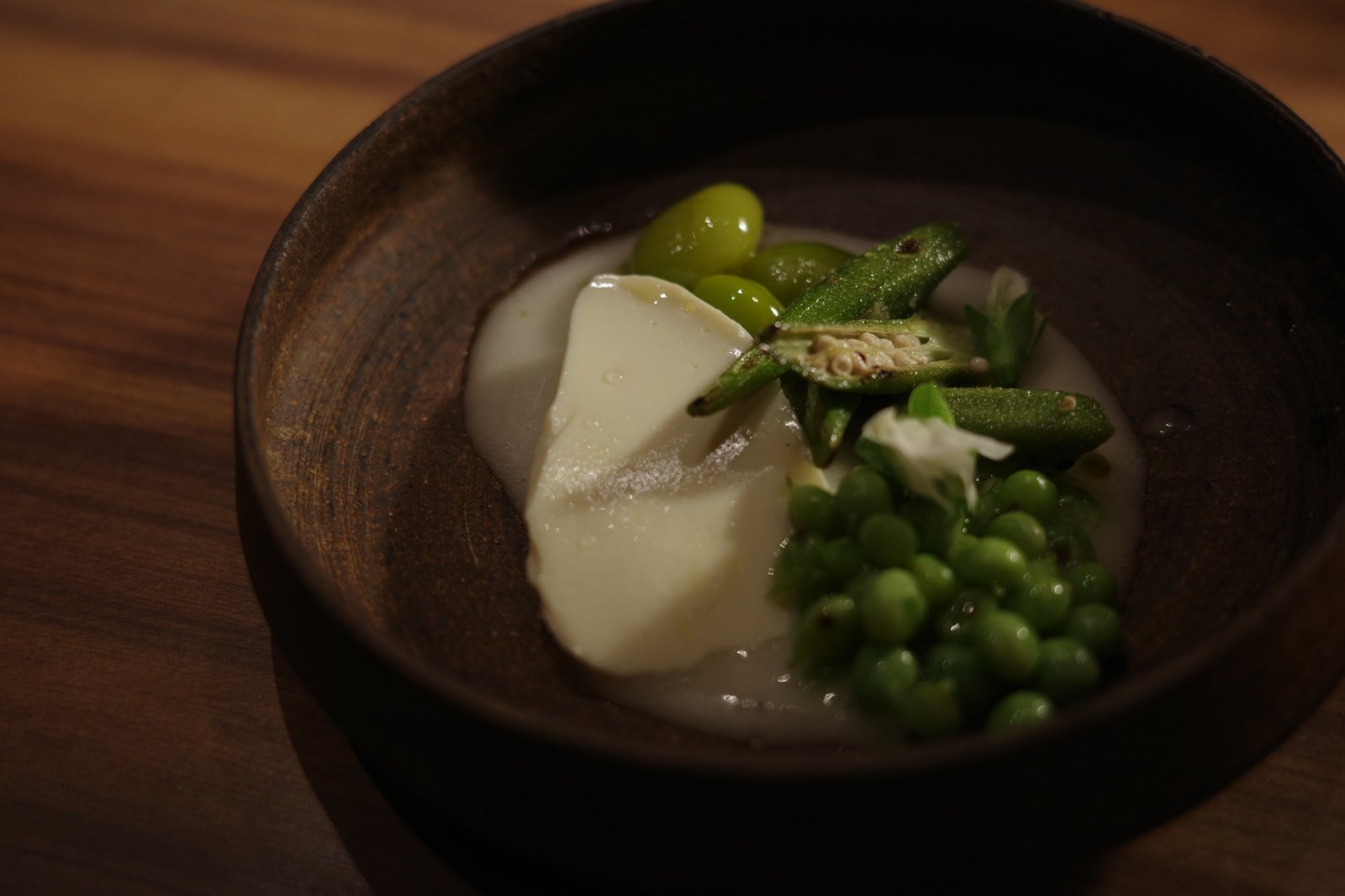
At the pop-up held on August 31 and September 1 at eatrip kitchen, he presented nine dishes themed around a ‘journey of flavours’. Pictured here: a dish inspired by the green hues of the vegetable garden—green soybean tofu, okra, and teardrop peas.
Ryo Haga approaches his dishes like paintings, in which the layers blend and resonate with one another. ‘I want my food to have the transparency of a watercolour and the depth of an oil painting,’ he explains. At a recent pop-up held at eatrip kitchen, he presented a plate inspired by the greens of a vegetable garden: teardrop peas, young ginkgo nuts, okra, and tofu made from green soy milk, all paired with a translucent broth of tomato and kōji fermented with lactic acid.
‘Each ingredient on its own has a delicate flavour,’ the chef says, ‘but by layering them, I wanted to show that they can gain structure and body.’
One guest described the experience: ‘Each bite revealed new layers of flavours, aromas, and textures, yet everything came together in perfect harmony on the palate. It was moving to realise that familiar ingredients could combine to create something entirely new.’
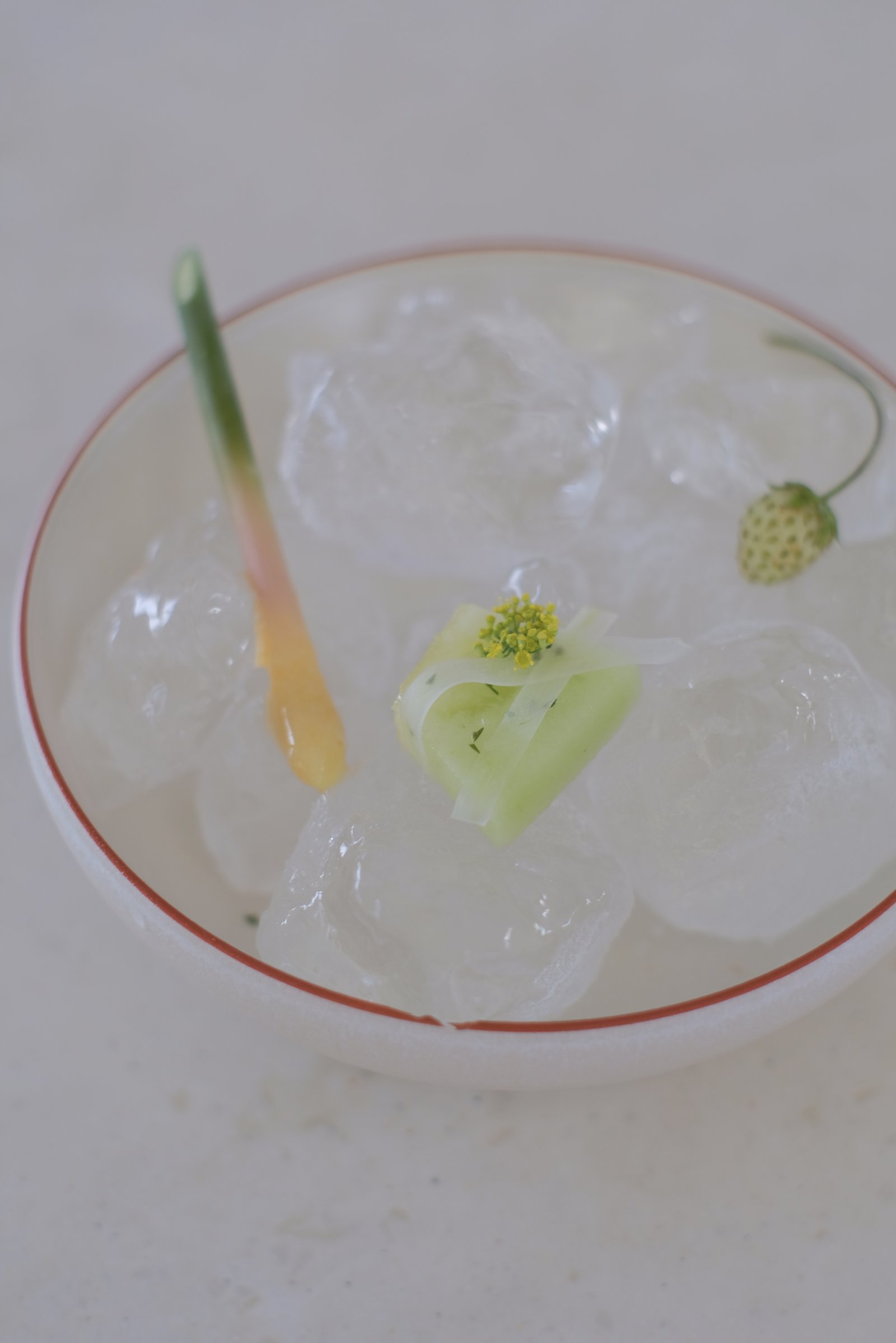
One of his recent favourite creations. From left to right: Yanaka ginger coated with physalis purée, melon topped with Nikko fir, and a lightly pickled green strawberry—a delicate, almost painterly composition.
The pop-up’s theme, ‘a touch of pure Japanese’, encapsulates the direction Haga now envisions for his cooking.
‘It’s not about Japanese cuisine as a category, but about Japan as an attitude,’ he explains. ‘The word ‘touch’ literally means to come into contact with something, but I also sense a nuance of gentleness, of approaching with care. When I cook abroad, it means letting my Japanese sensibility quietly come through. And that’s different from a non-Japanese chef honouring Japanese ingredients—there are flavours and ideas that only someone born and raised in Japan can express. That’s what the word ‘pure’ represents for me.’
Behind these seemingly abstract words lies a philosophy deeply rooted in his personal experience.
From Kyoto to Copenhagen, A Philosophy Shaped by the Language of Cuisine
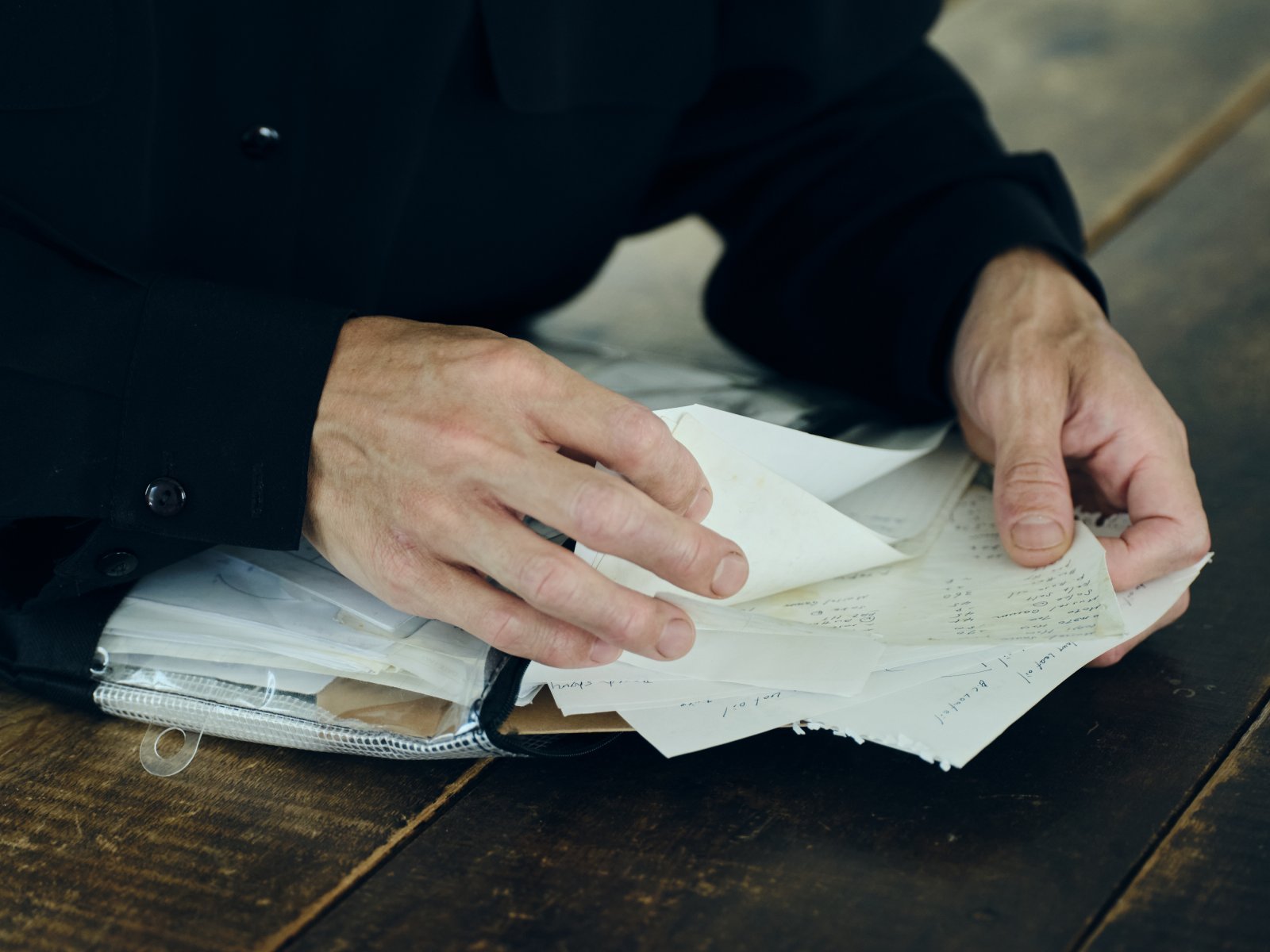
Ryo Haga carefully preserves his notes and menus from his time in Denmark, revisiting them regularly. Each page captures fleeting thoughts and emotions, jotted down like spontaneous sketches.
At the beginning of his career, Haga trained in Kyoto at monk. ‘What I learned from chef-owner Yoshihiro Imai—his philosophy of capturing the landscape directly in the dish—was fundamental,’ he recalls.
Together, they would visit local farms and markets to source the freshest produce, and even spent their days off attending tea ceremonies. After this formative period, Haga moved to Copenhagen to join noma, one of the most acclaimed restaurants in the world, where he worked for about three years until January 2025, serving as a station chef. During his time there, noma hosted two pop-ups in Kyoto—a coincidence that allowed him to reinterpret the Japanese ingredients and culinary culture he had grown up with, this time through an international lens. The experience, he says, broadened his perspective immeasurably.
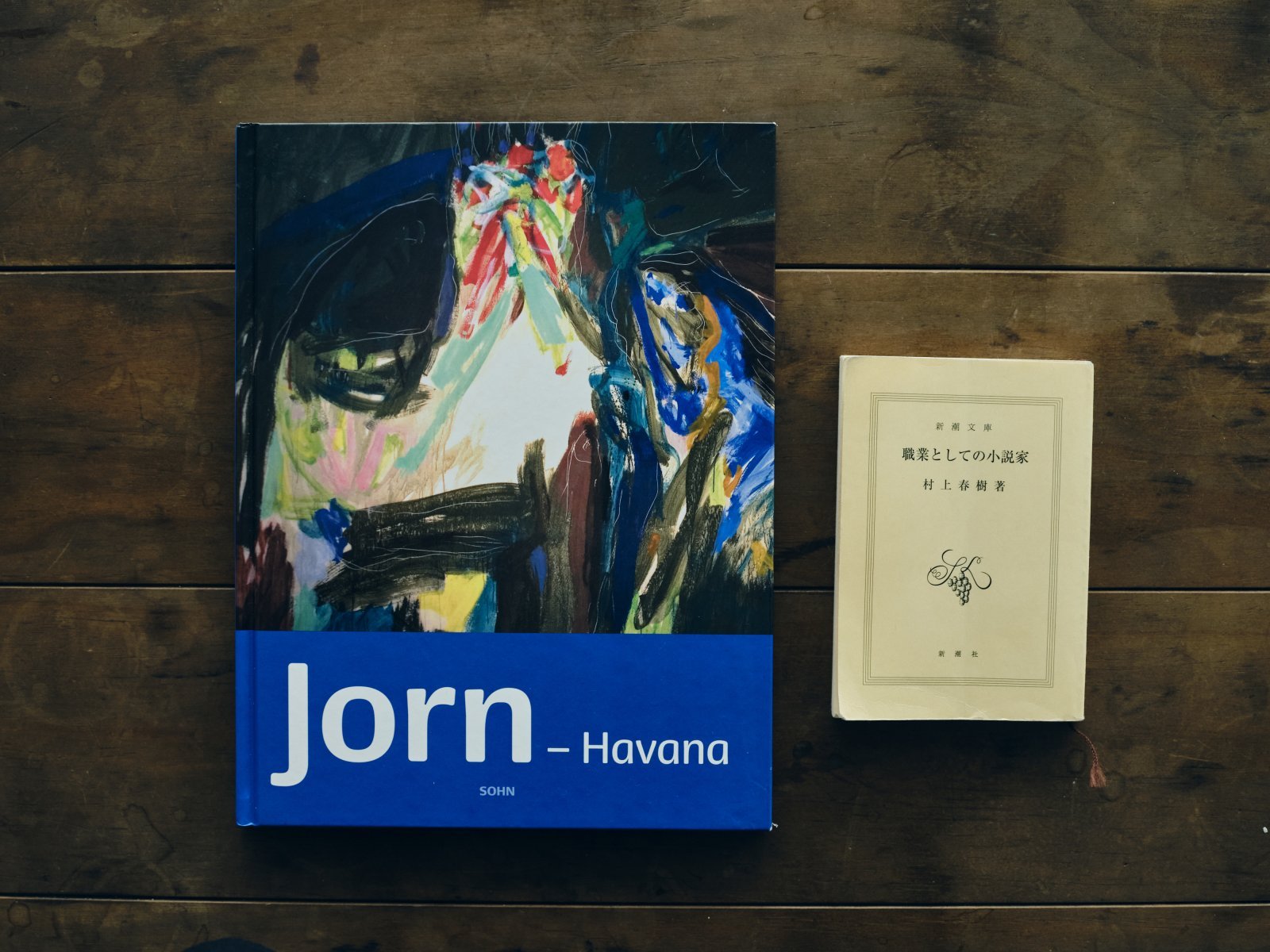
Two sources of inspiration. On the left, a collection of works by the painter he admires, Asger Jorn. On the right, ‘Novelist as a Profession’ by Haruki Murakami.
Around the same period, a book also became a source of reflection: Haruki Murakami’s Novelist as a Vocation.
‘Murakami writes that ‘exploring the possibilities of language as far as one can is a right granted to every writer, and without that sense of adventure, nothing new can be born.’ He adds that pursuing the instrumental potential of the Japanese language leads to its renewal. I realised that if you replace ‘language’ or ‘Japanese’ with ‘cuisine’ or ‘culture,’ the same idea holds true.’
A Vision in Constant Evolution
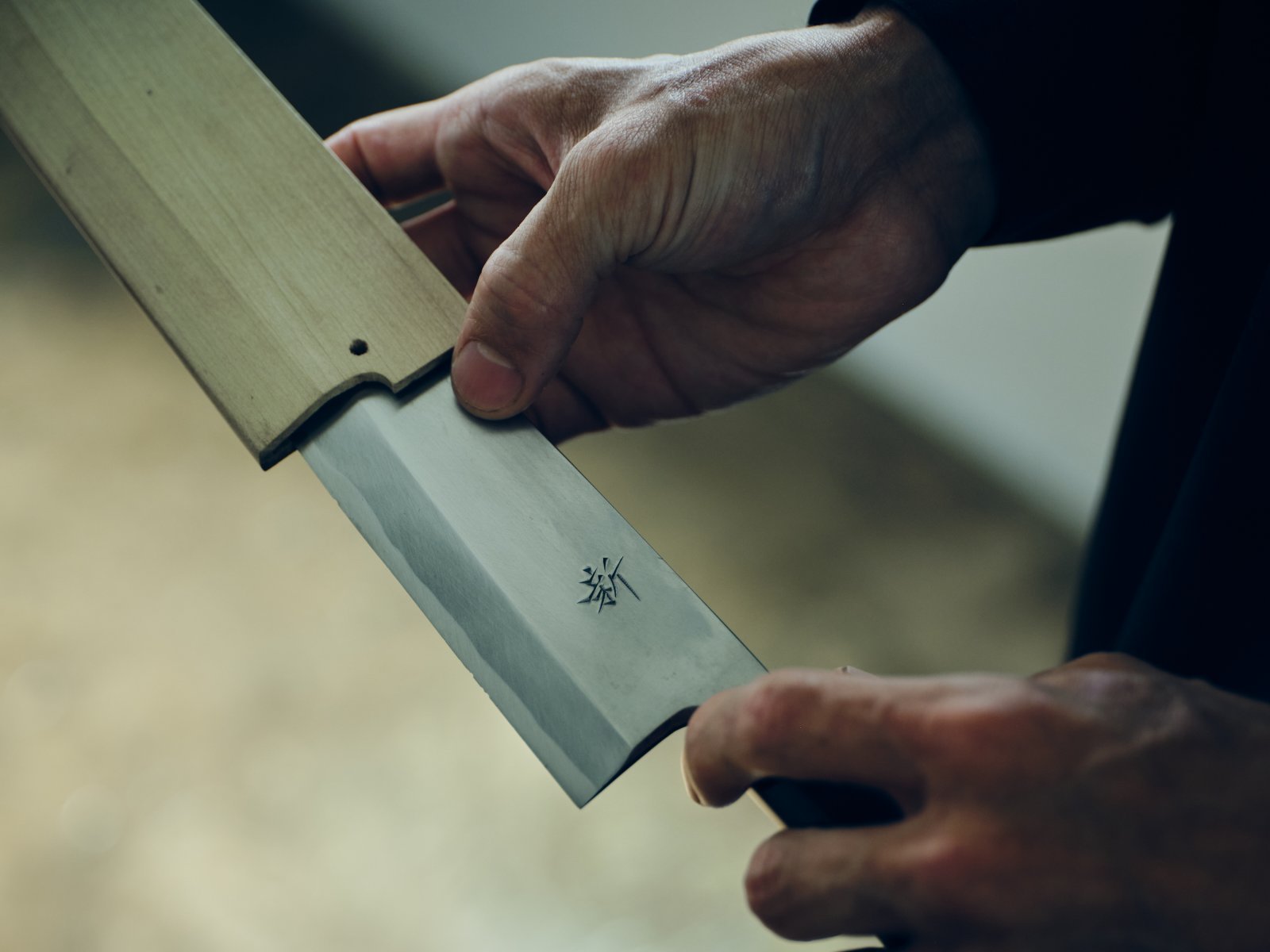
When he purchased a new knife earlier this year, he had it engraved with the name of his first child, born recently. It’s a simple ebony ‘deba’ knife. He also owns one engraved with his own name.
These experiences have shaped a thought process that continues to deepen. Haga feels that his culinary universe is taking shape, and that he is beginning to grasp how to express it. His next goal is to open his own restaurant.
Whether in Japan or abroad, he has yet to decide. But his cooking—and his thinking—keep evolving. Ryo Haga continues to pursue a flavour that is both unfamiliar and intimate, what he calls a ‘purely Japanese taste’.
PERSONAL QUESTIONS
Who would you like to meet?
Asger Jorn, the late Danish avant-garde artist. His freedom, rebellious spirit, and the vitality of his colours fascinate me. I often wonder what kind of person he was.
A phrase that inspires you?
‘LEAVE NO DOUBT.’ These words were written on the wall by a former head chef at noma. It literally means ‘leave without a doubt.’ I see it as a mindset—assertive, direct, and uncompromising.
A video you often watch?
Radiohead – In Rainbows From the Basement (April 2008). It’s raw and emotional, yet so precise and perfectly constructed. That balance is what I strive for in my dishes.
A place you love?
The Louisiana Museum of Modern Art in Copenhagen, where works by Asger Jorn are also displayed. Among restaurants, Osteria del Mirasole in Bologna and Ultramarinos Marin in Barcelona are my favourites.
Ryo Haga shares updates and upcoming events on his Instagram account.
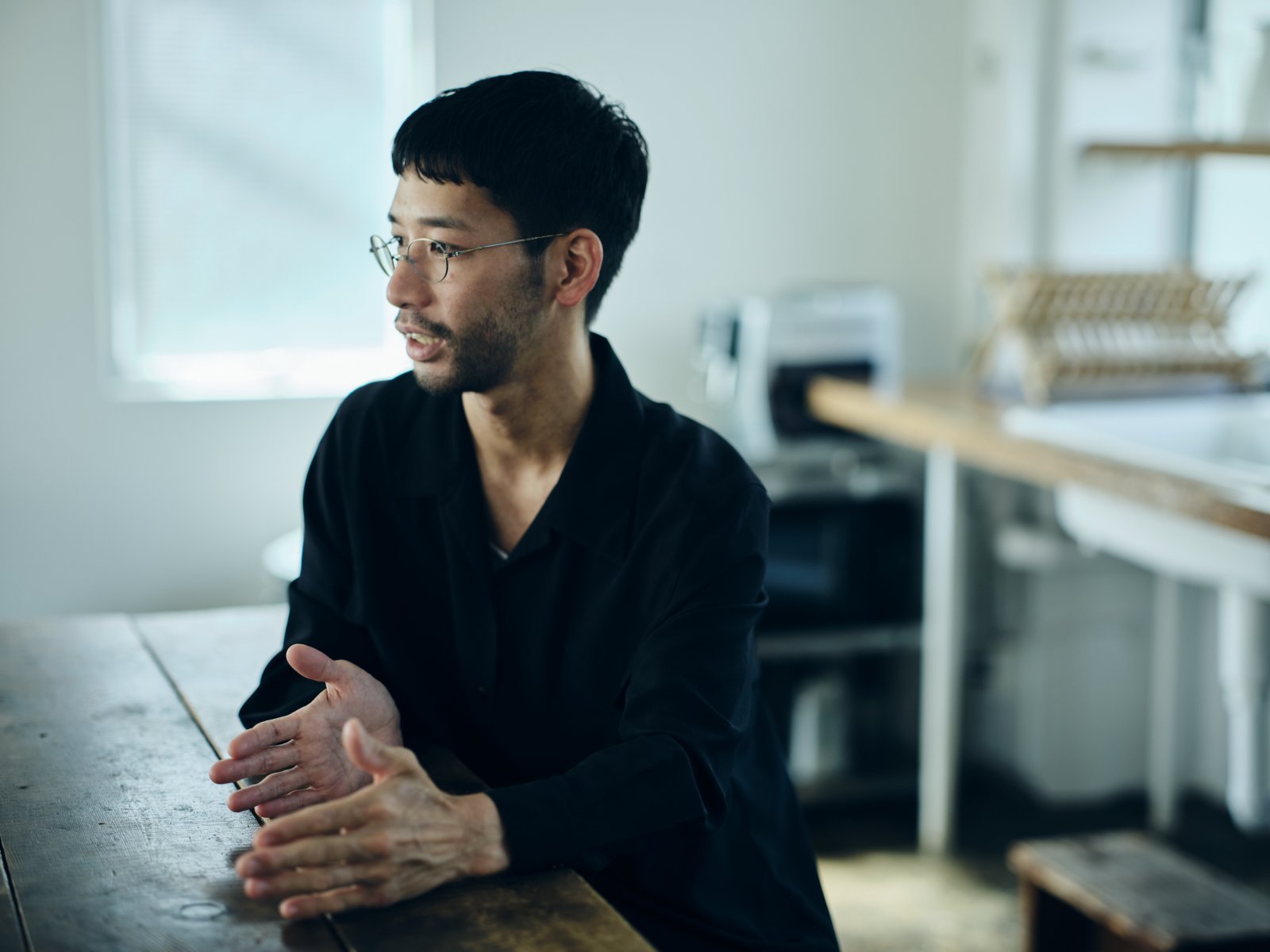
Ryo Haga.