Mitsui, a Refined Sushi Counter in Azabu-Juban by Shō Mitsui
Trained under Ginza’s three-star Harutaka, the chef brings precision, warmth, and charcoal-kissed flavors to his first namesake restaurant.
In Azabu-Jūban—one of Tokyo’s leading gourmet neighborhoods, home to numerous popular restaurants ranging from Japanese to French cuisine—a new opening is attracting attention. The restaurant is Mitsui, led by sushi chef Shō Mitsui, who trained at the renowned Harutaka in Ginza, a restaurant that has earned three Michelin stars, and later served as head chef at Sushi Shō in Nishi-Azabu.
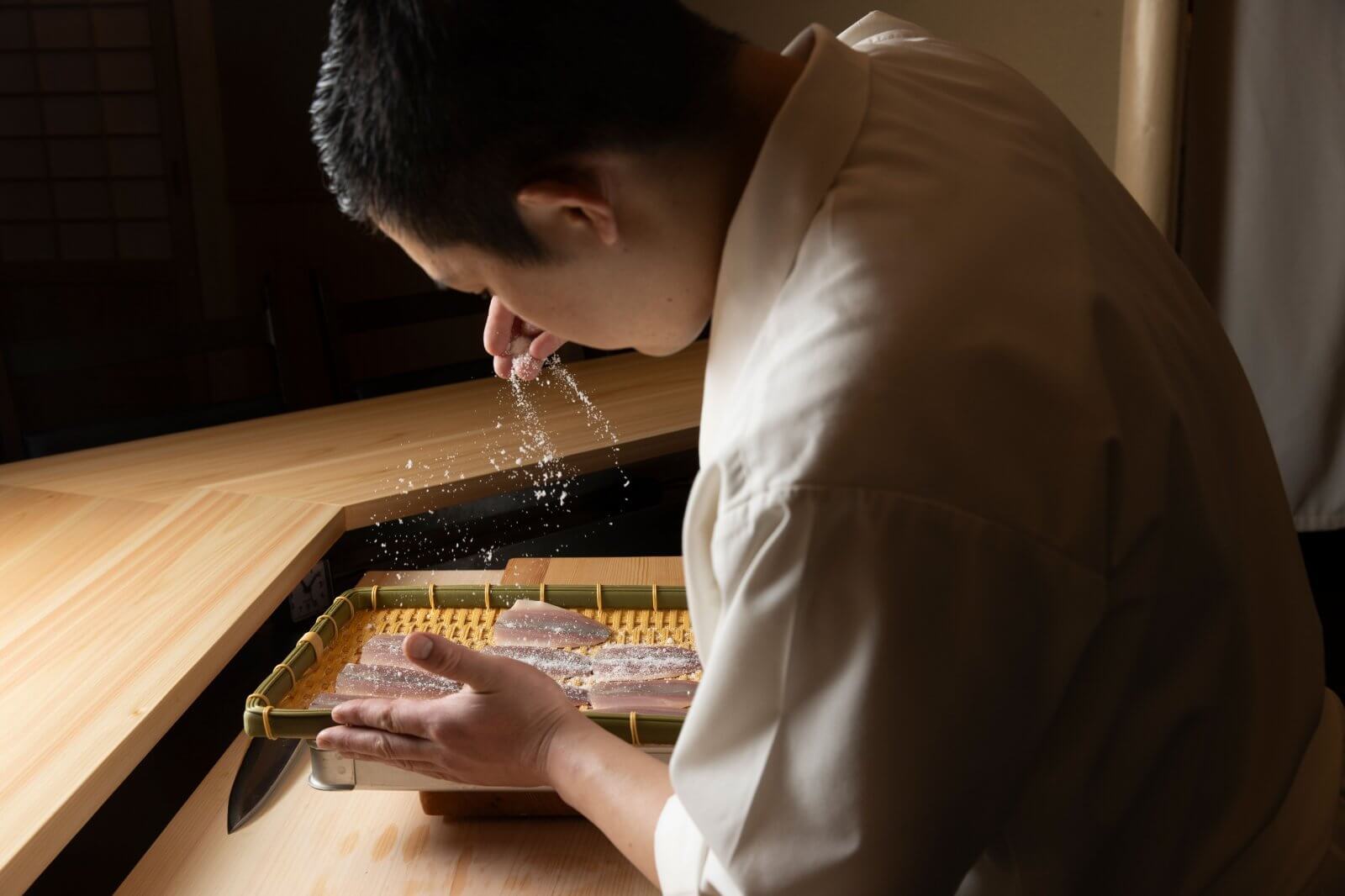
Chef Shō Mitsui believes that for sushi chefs, the ability to assess the quality and condition of each individual fish is essential. Even fish of the same kind differ greatly depending on the individual, and he is committed to thorough, attentive preparation.
Opened on May 1st 2025 in Azabu-Jūban, Mitsui offers a single omakase course priced at ¥27,500, with nine counter seats and one private room (a four-seat counter). Since opening, it has remained consistently booked out—an early sign of the excitement surrounding the restaurant.
Chef Shō Mitsui, who leads the restaurant, was captivated by Japan’s traditional food culture from a young age. After graduating high school, he moved from his hometown of Nagano to Tokyo. While studying Japanese cuisine at Hilton Tokyo in Shinjuku, he also obtained his license to prepare fugu. On his days off, he would visit top sushi restaurants to deepen his knowledge, and it was one visit to Harutaka in Ginza that left a strong impression. He was so taken by the sushi of Takahashi Harutaka that he requested to become his apprentice. Mitsui then trained at Harutaka for eight and a half years, refining both skill and spirit. Later, with the goal of opening his own place, he became head chef at Sushi Shō in Nishi-Azabu, earning acclaim from knowledgeable diners. It was with this background that he launched his own restaurant, named after himself: Mitsui. After a pre-opening in April, the restaurant held its grand opening on May 1st 2025.
Supporting Mitsui is his wife and partner Miki, who warmly welcomes guests with a cheerful smile. Holding a SAKE DIPLOMA certification, Mitsui and Miki offer pairings centered on Japanese sake, thoughtfully incorporating awamori and kame-jikomi koshu (aged sake stored in traditional jars) from Miki’s native Okinawa. One delightful touch is the meticulous attention to temperature, such as the use of a traditional hagama pot at the back of the counter to gently warm sake to 50–60°C using the mushi-kan (steamed warming) method, tailored to bring out the full potential of each dish and drink. In addition to sake, the restaurant offers Champagne and wine, allowing guests to choose according to the occasion and their mood.
Adding depth to the course alongside Mitsui’s sushi and Miki’s pairings are dishes such as charcoal-grilled sushi made with rich cuts like nodoguro or kinmedai, as well as other grilled items. These are prepared by Shingo Kuninami, a longtime friend of the chef and formerly a chef at the acclaimed Italian restaurant Trattoria Siciliana Don Ciccio. Behind the counter, a charcoal grill has been installed in a way that makes the cooking process visible from any seat, immersing guests in the sounds and aromas unique to charcoal grilling as Kuninami prepares each dish to tender perfection.
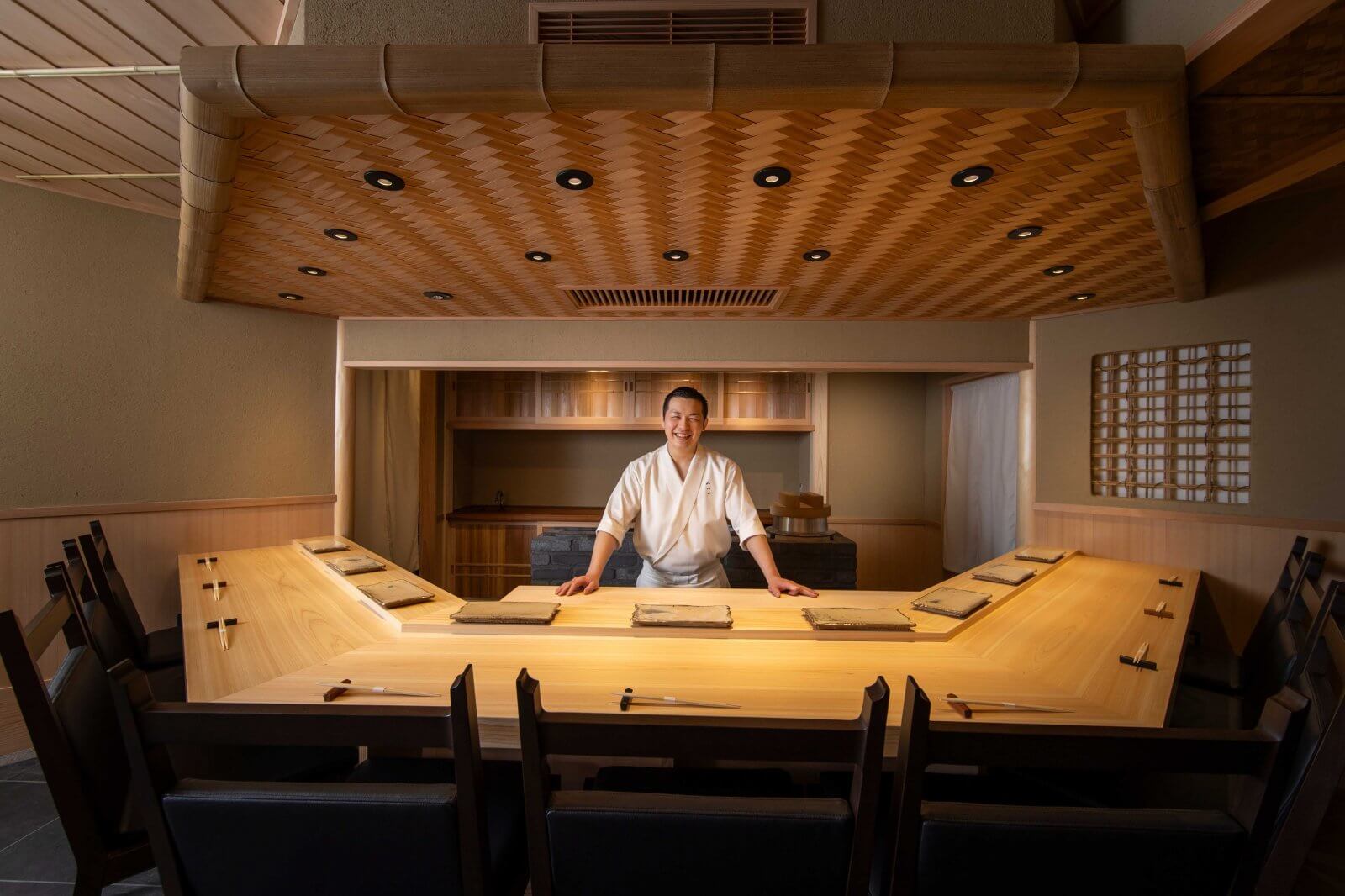
Shō Mitsui was born in Nagano in 1988. After acquiring foundational skills at Hilton Tokyo’s Japanese restaurant, he was captivated by the sushi of Takahashi Harutaka at Ginza’s Michelin three-star Harutaka, and became his apprentice. After eight and a half years of training, he went on to lead the counter at Sushi Shō in Nishi-Azabu. In May 2025, he opened Mitsui in Azabu-Jūban.
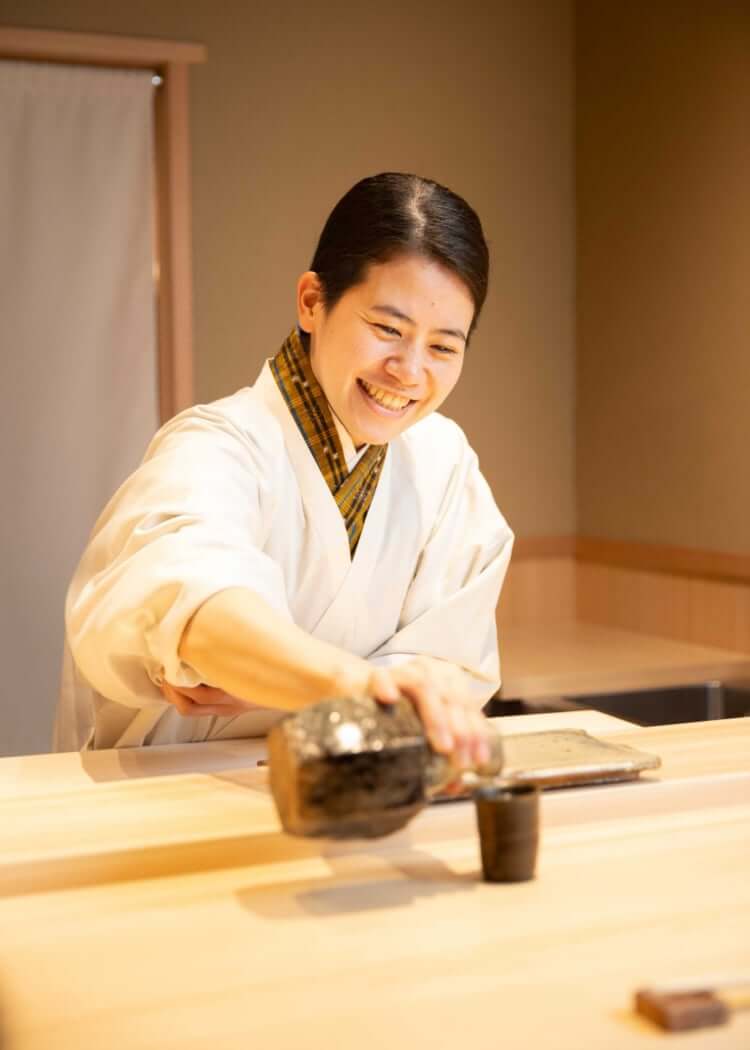
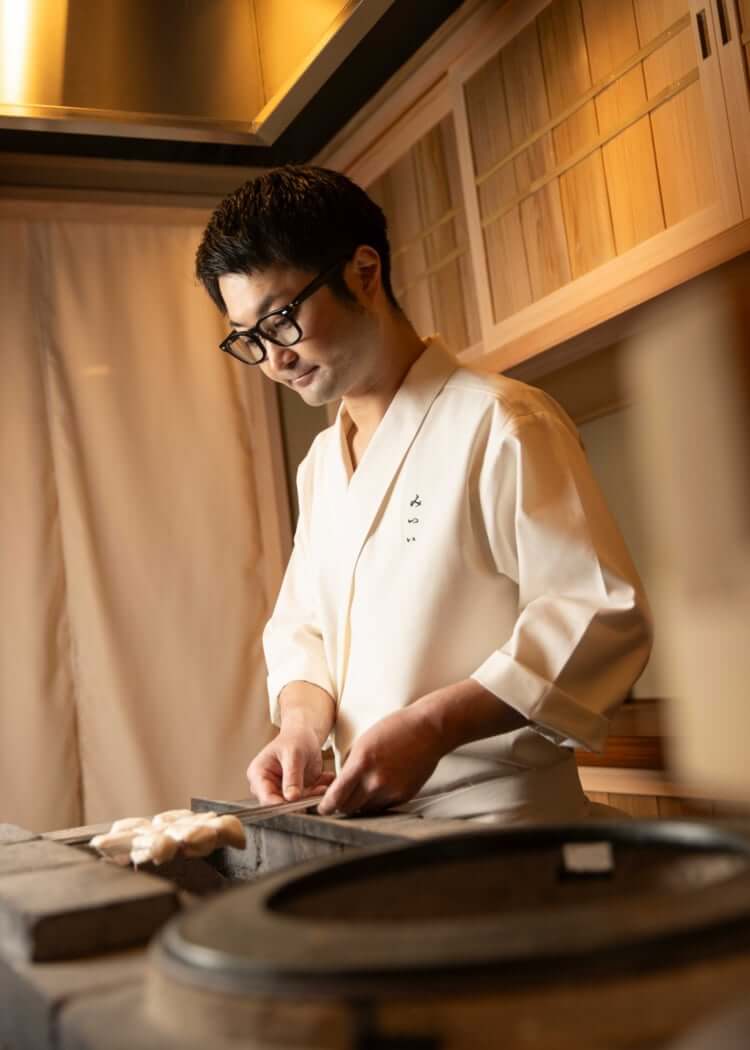
Left: Miki Mitsui, wife of the chef and the restaurant’s ‘okami’. Alongside her husband, she curates a unique pairing experience featuring regional liquors from her native Okinawa. 7-glass pairing: ¥7,700 (excluding service charge) / Right: Head chef Shingo Kuninami, in charge of charcoal-grilled dishes. The team of three is one of Mitsui’s greatest strengths.
A Thoughtfully Crafted ‘Omakase’ Course Featuring Charcoal-Grilled Sushi and Carefully Selected Seasonal Ingredients
Mitsui serves only one omakase course (¥27,500, excluding service charge), consisting of five to six appetizers using carefully selected seasonal ingredients from around Japan, 12 to 13 pieces of sushi, and dessert. For the sushi, Mitsui uses toppings personally chosen with a discerning eye. Tuna is served in a sequence of chūtoro, akami, and ōtoro, all sourced from trusted supplier Yamayuki. The tuna, caught in fixed nets along the Sea of Japan, is praised for its excellent balance of acidity and umami, which Mitsui says pairs well with his style of sushi. Another memorable ingredient is anago (saltwater eel), delivered live from Nagasaki to Toyosu Market by a fisherman Mitsui met during his time at Sushi Shō.
The shari (sushi rice) is made from highland-grown Koshihikari rice from Mitsui’s home region of Nagano, cooked in a hagama. Mitsui aims for rice that integrates with the topping but gently falls apart in the mouth. Every element—from the precise and thoughtful preparation to the use of traditional Edo-style techniques—is guided by respect for seasonal ingredients and the addition of Mitsui’s own personal touch. Grilled items and small dishes cooked over charcoal add rich flavor and lingering depth to the course.
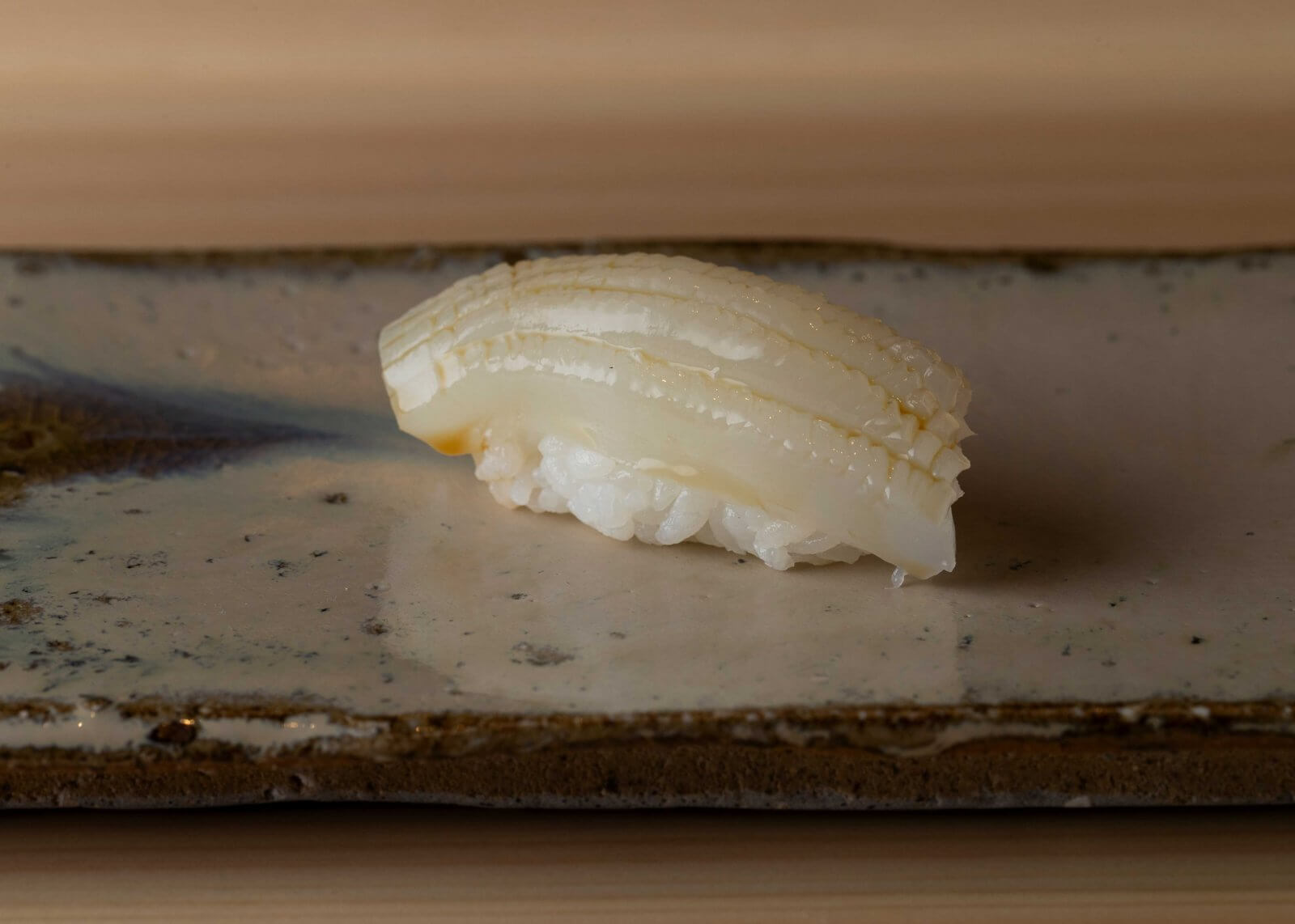
‘Aori-ika (bigfin reef squid) nigiri’, from the ¥27,500 ‘omakase’ course (excluding service charge).
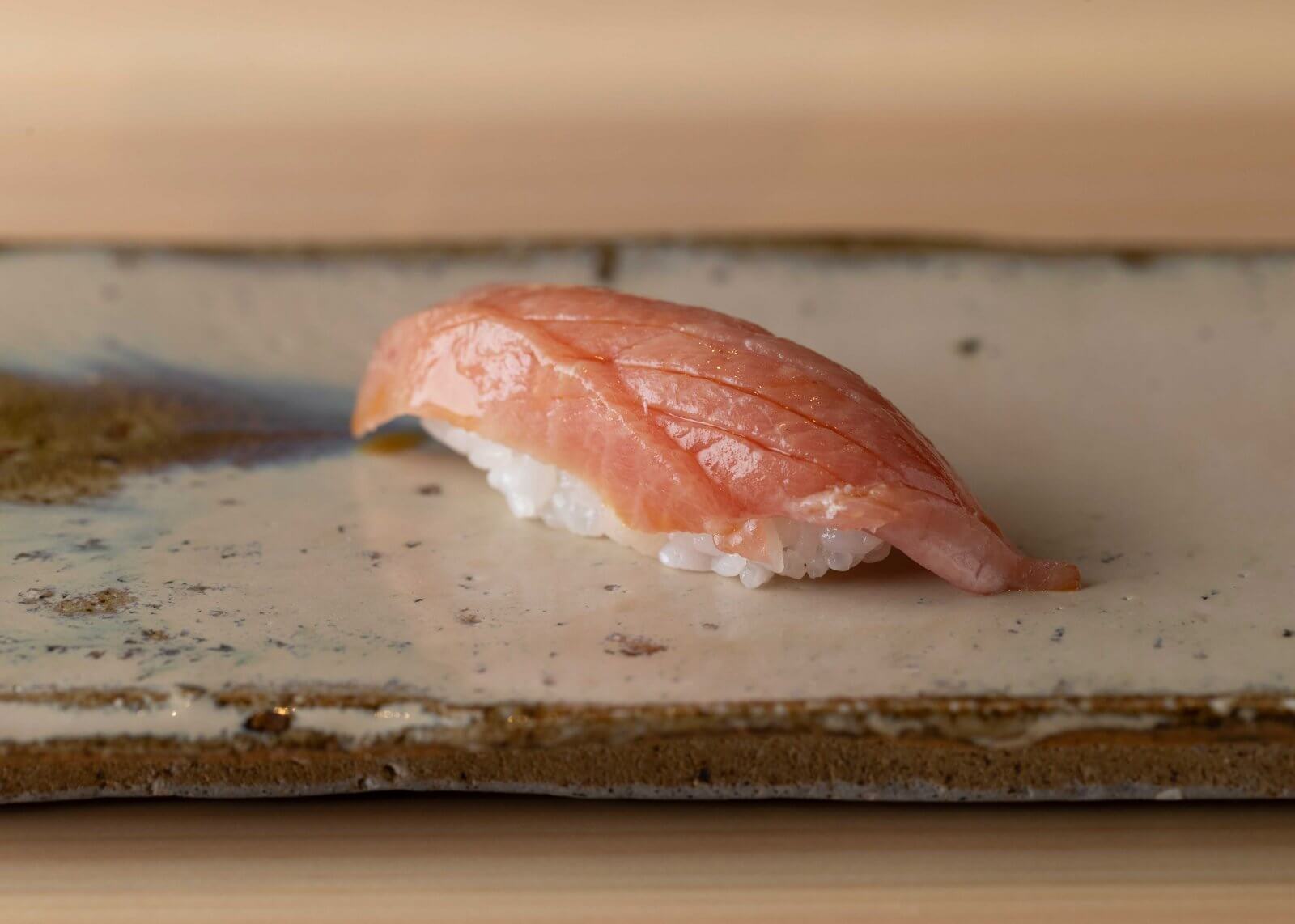
‘Ōtoro’.
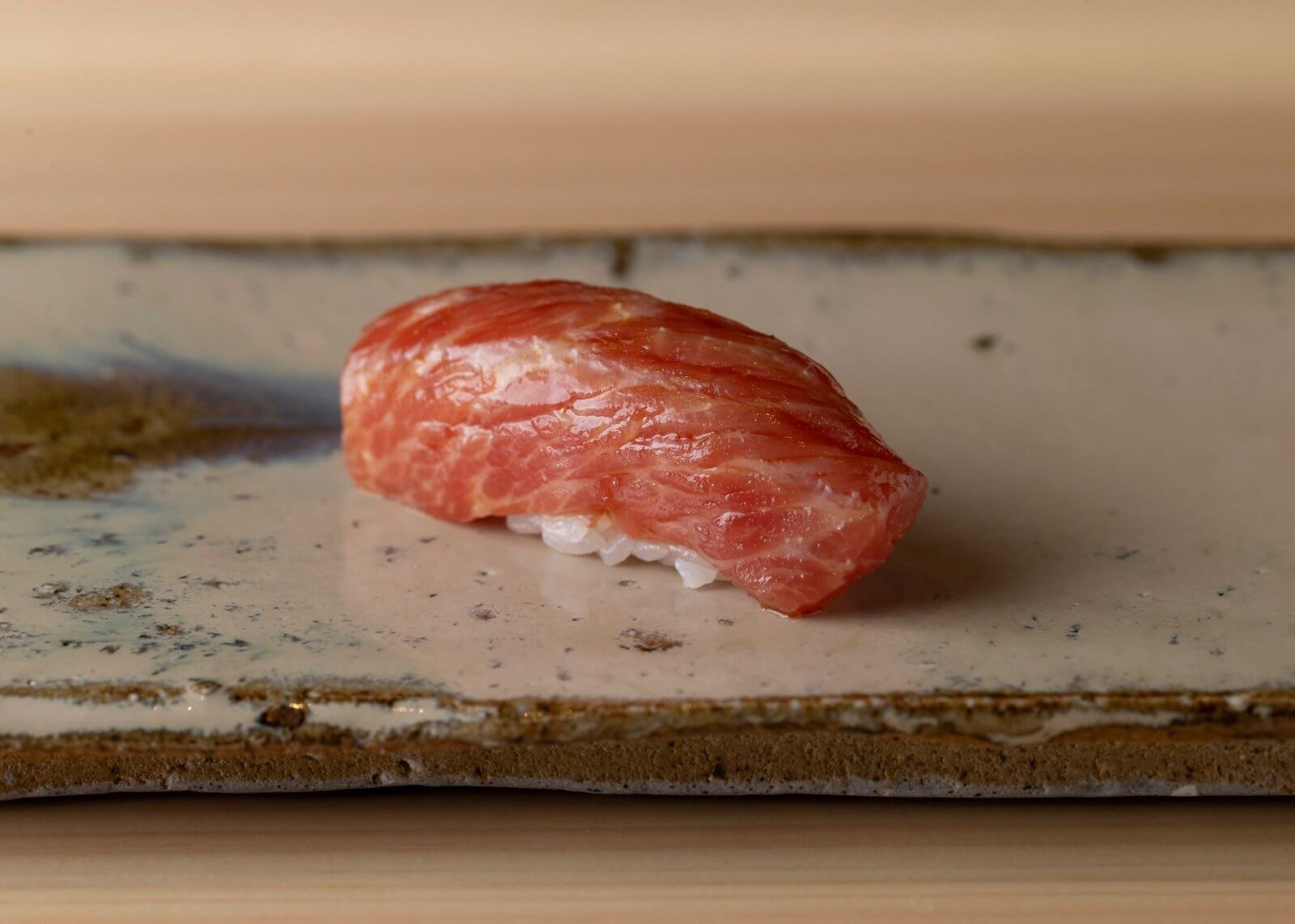
‘Kujira’ (whale).
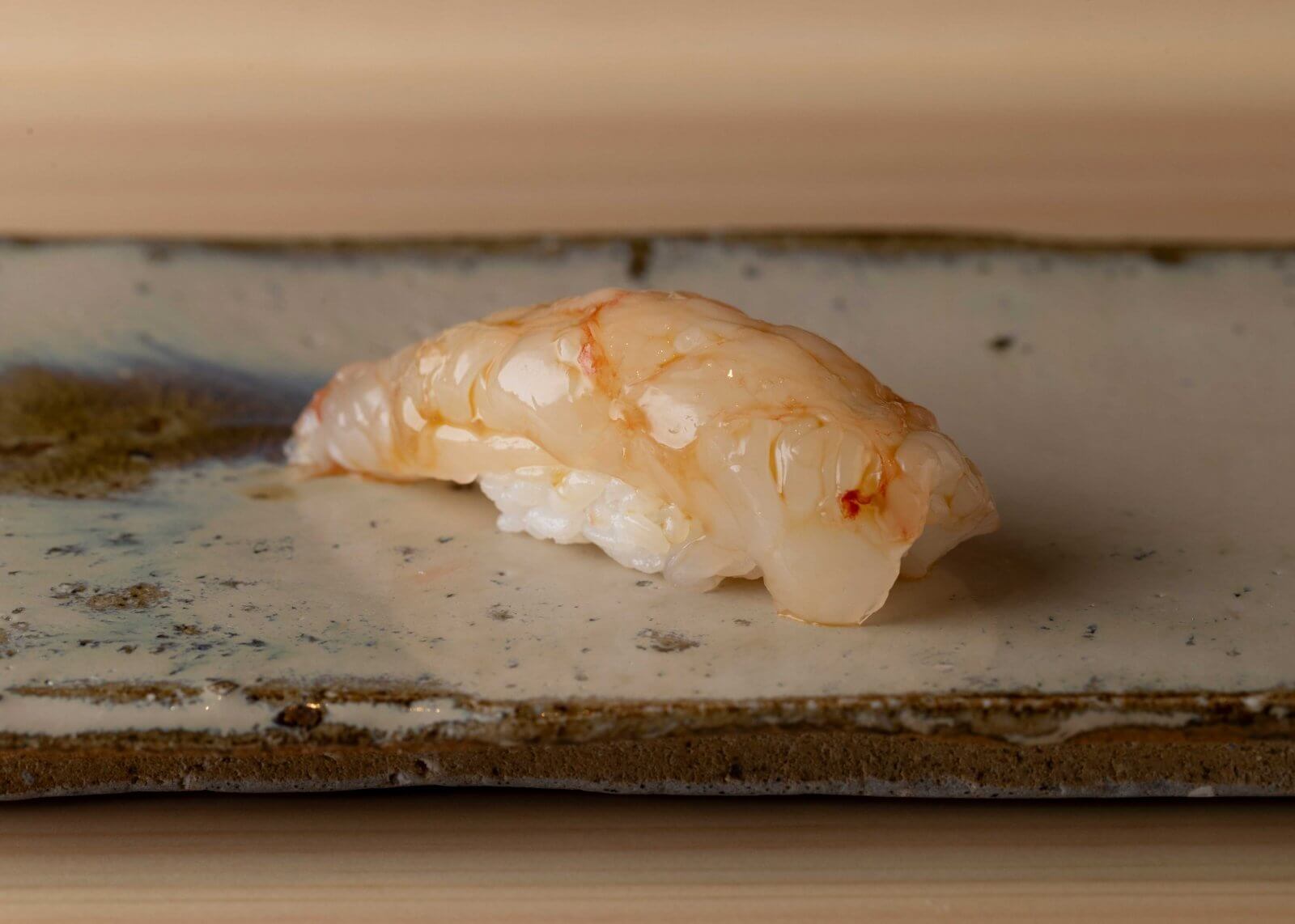
‘Kuruma-ebi’ (tiger prawn).
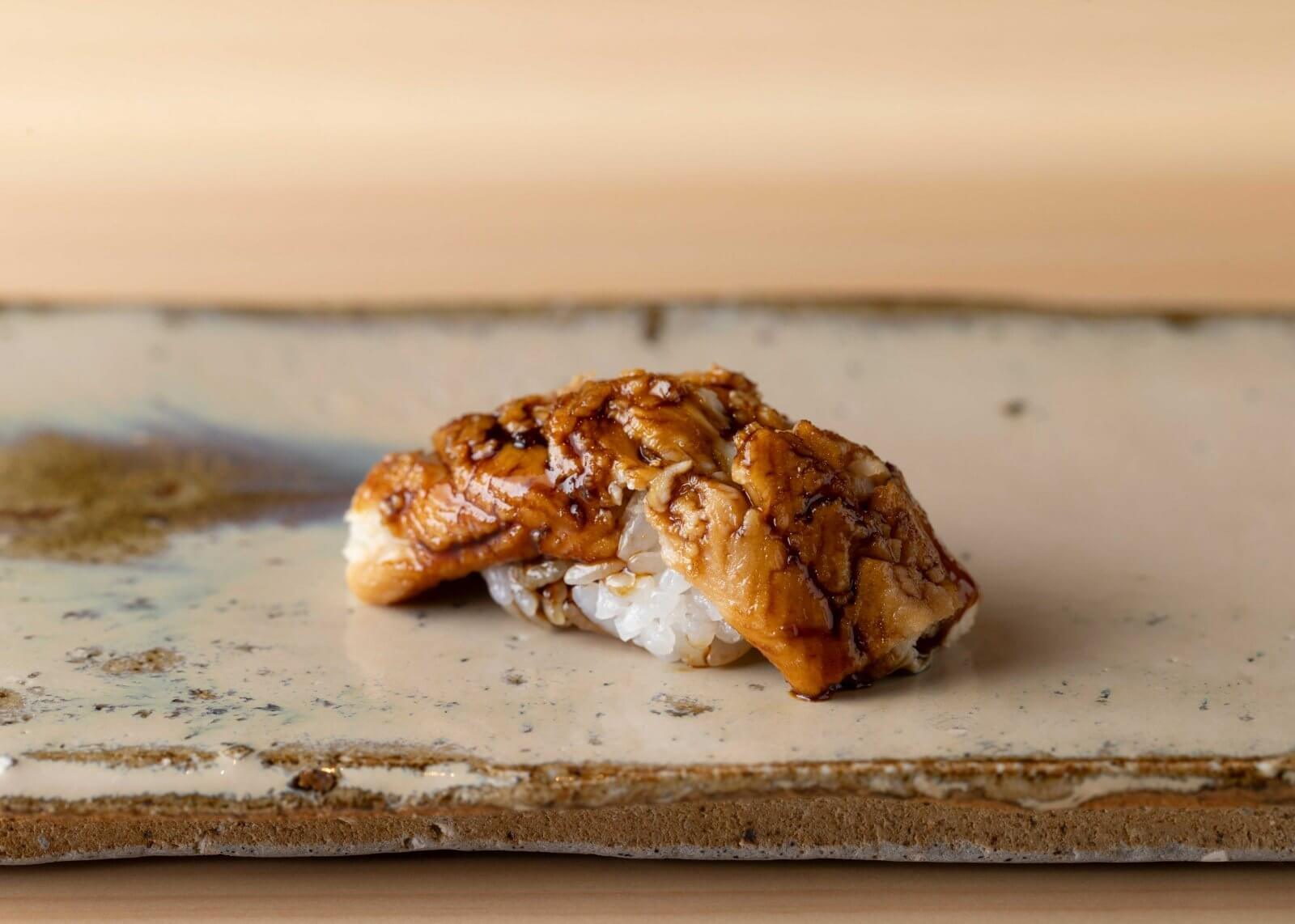
‘Anago’ (saltwater eel).
The restaurant’s interior was designed by Akira Sugihara of Sugihara Design Studio, known for his many restaurant interiors based in Kyoto. Mitsui requested a space where guests could enjoy each unique encounter at their own pace. The resulting whitewood counter, designed with a soft curve, brings diners closer to the chef, allowing them to observe his movements up close.
The woven ceiling is made of bamboo and cedar, layered at two different heights to create a gentle sense of intimacy through its slightly lowered height. The restaurant also offers a private room with a four-seat counter, separate from the main area, making it suitable for business meetings or private gatherings.
The wooden plaque at the entrance was handwritten by Takahashi Harutaka, Mitsui’s mentor at Harutaka, with a wish that Mitsui would become ‘a sushi restaurant loved by many for years to come.’ Every corner of the restaurant reflects Mitsui’s careful consideration—not just in the food, but in the atmosphere. It promises a warm, memorable experience, best shared with someone special.
Reservations for Mitsui can be made online.
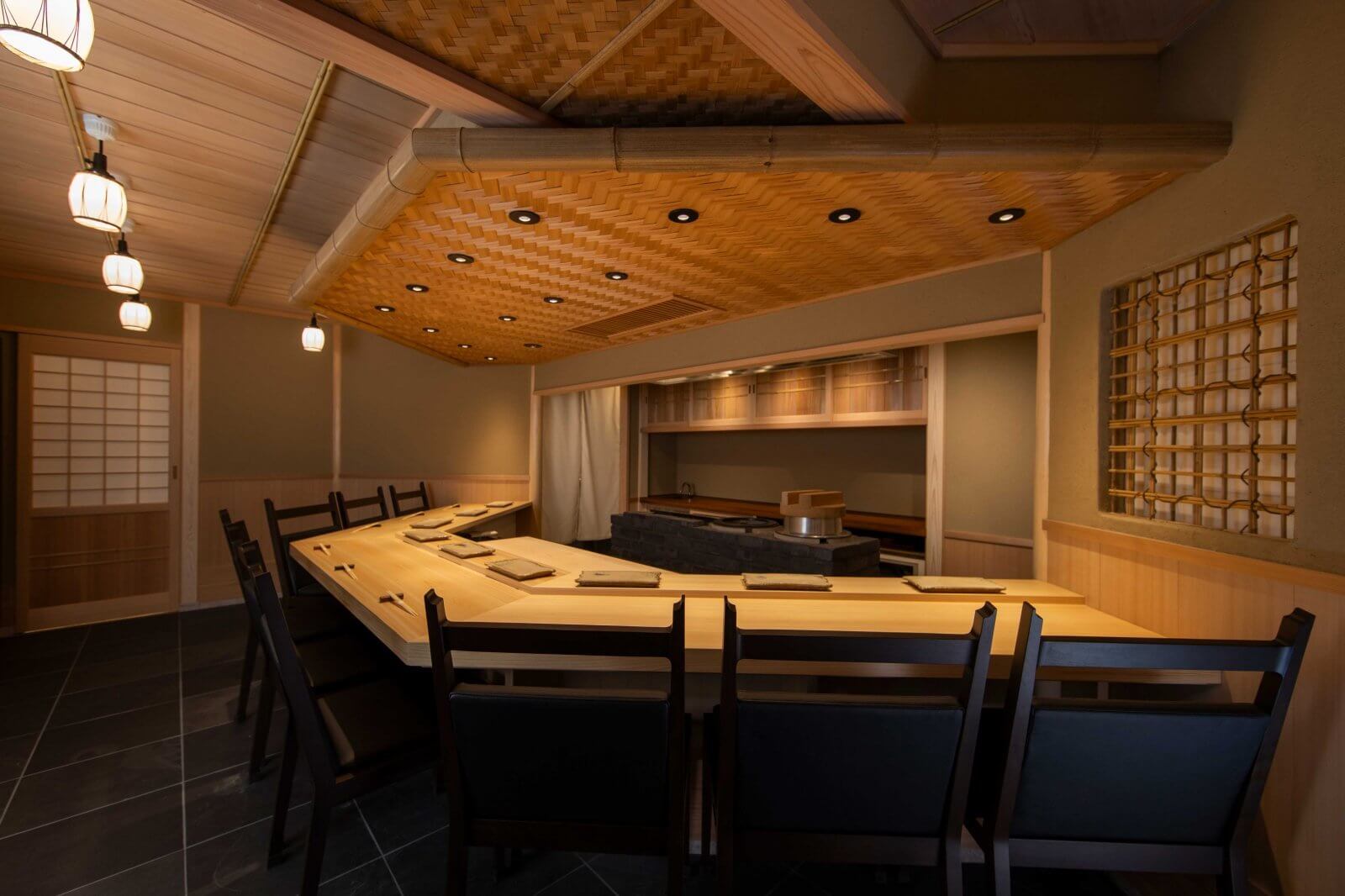
A custom-shaped counter allows diners to observe the chef’s technique up close from any seat. A charcoal grill is installed behind the prep station.
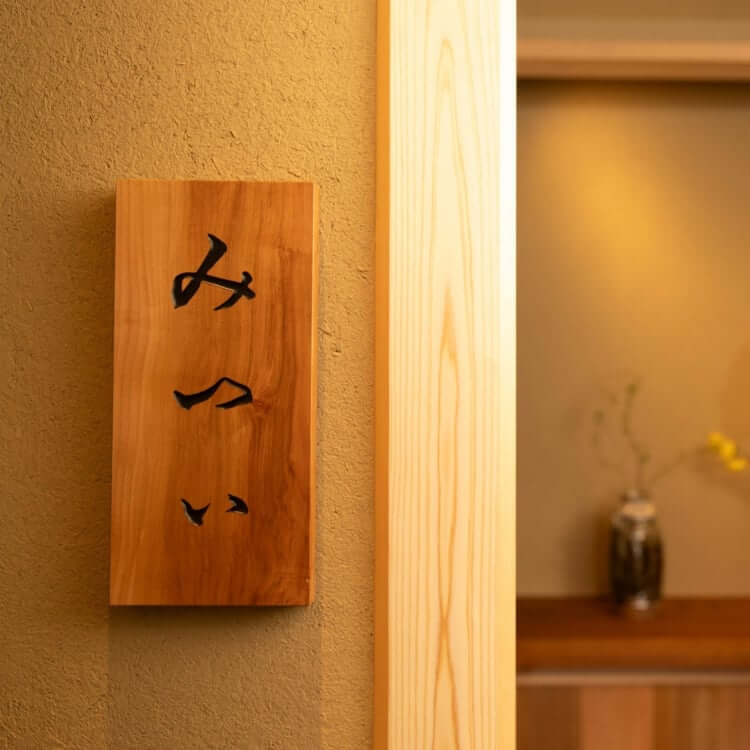
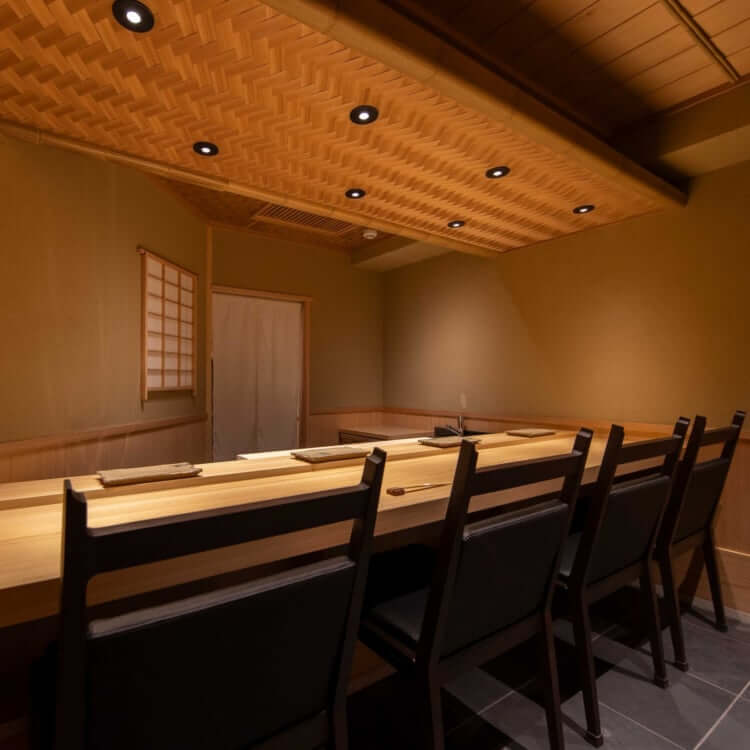
Left: The wooden plaque at the entrance, handwritten by Harutaka’s Takahashi Harutaka, Mitsui’s mentor. It reflects Mitsui’s emphasis on meaningful connections. / Right: A private counter room for up to four guests, connected to the main counter beyond the ‘noren’ curtain.
Mitsui
Address: THE CITY Azabu-Jūban LIBERTA 5F, 3-10-2 Azabu-Jūban, Minato-ku, Tokyo
Phone: +813-4400-3023
Hours: From 5:00 PM (last seating at 9:00 PM).
Closed: Sundays and irregular holidays.