Savoring Sushi Afloat: A Michelin-Level Course on Tokyo Bay
Sushi Origami reinterprets the traditional ‘yakatabune’, pleasure boats popular for dining and sightseeing.
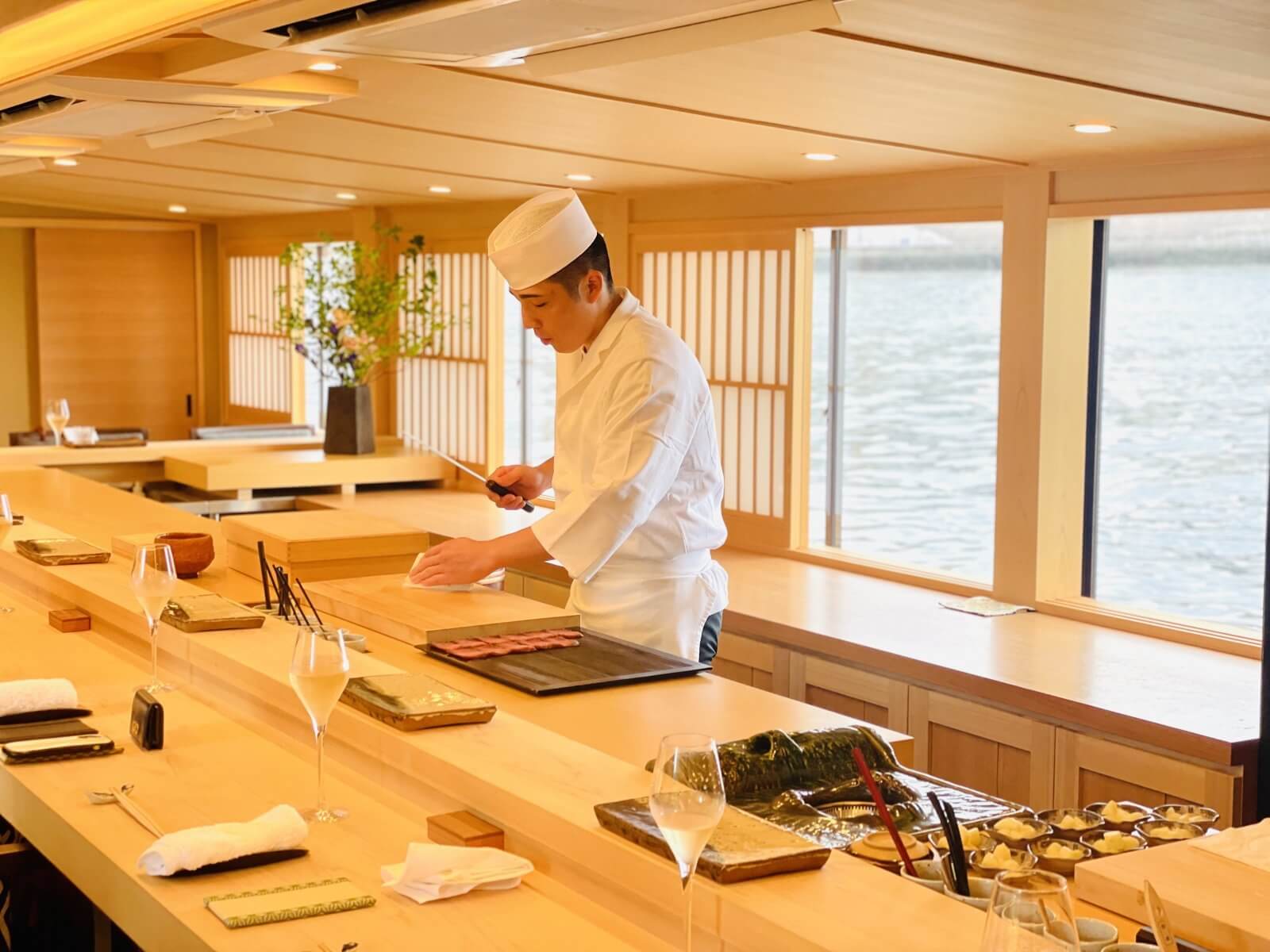
Sushi Origami is a ‘yakatabune’ with an eight-seat counter (maximum capacity: 12 guests). The roughly 10-meter L-shaped counter is made from fragrant solid ‘hinoki’ wood.
Sushi Origami, a new ‘sushi experience’, is set to upend expectations of Tokyo Bay’s yakatabune—traditional Japanese pleasure boats once used by nobility, now popular for dining and sightseeing. From the pier at Tennozu Isle, you step aboard a sleek black vessel that immediately evokes a venerable sushi counter. Inside, tatami mats cushion your feet, while a pristine hinoki-wood counter stretches before you.
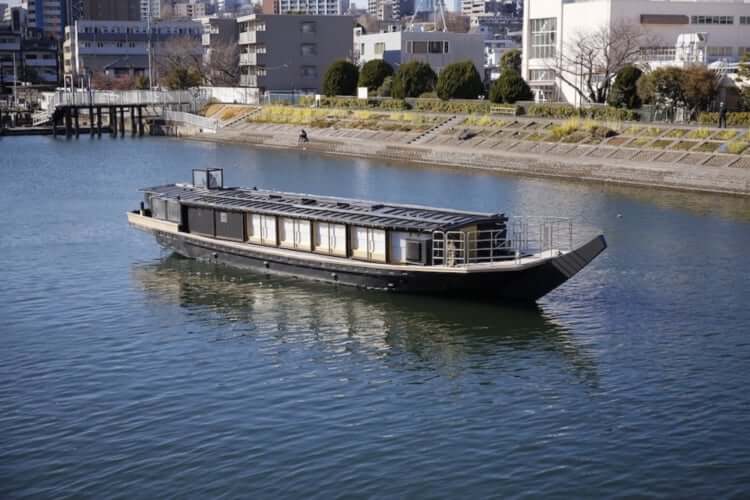
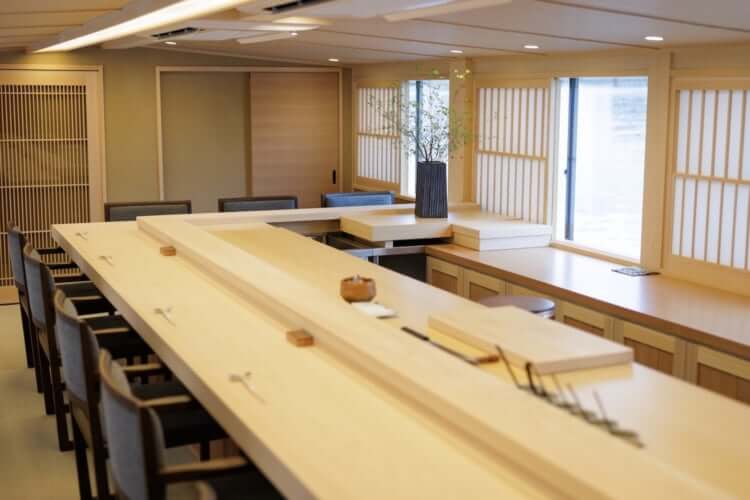
Left: The exterior is a chic black ‘yakatabune’, with no lanterns or other decorations. Right: A clean, refined counter space. Private charters are also available.
After removing your shoes and settling in, the glittering water and Tokyo Bay skyline spill into view through wide windows. As the boat glides away, landmark after landmark unfolds—Rainbow Bridge, Tokyo Tower, Hamarikyu Gardens, Kachidoki Bridge and, finally, the Tokyo Skytree. All the while, you’re served an exclusive course overseen by Ginza’s Michelin-starred Sushi Murayama.
Featuring line-caught honmaguro (bluefin tuna) sourced from Toyosu’s venerable wholesaler Ishiji—now in its 80th year—and the freshest Edo-style seasonal sushi and small plates, each dish showcases the harmony of premium ingredients and masterful technique, elevating your time on the water into something unforgettable.
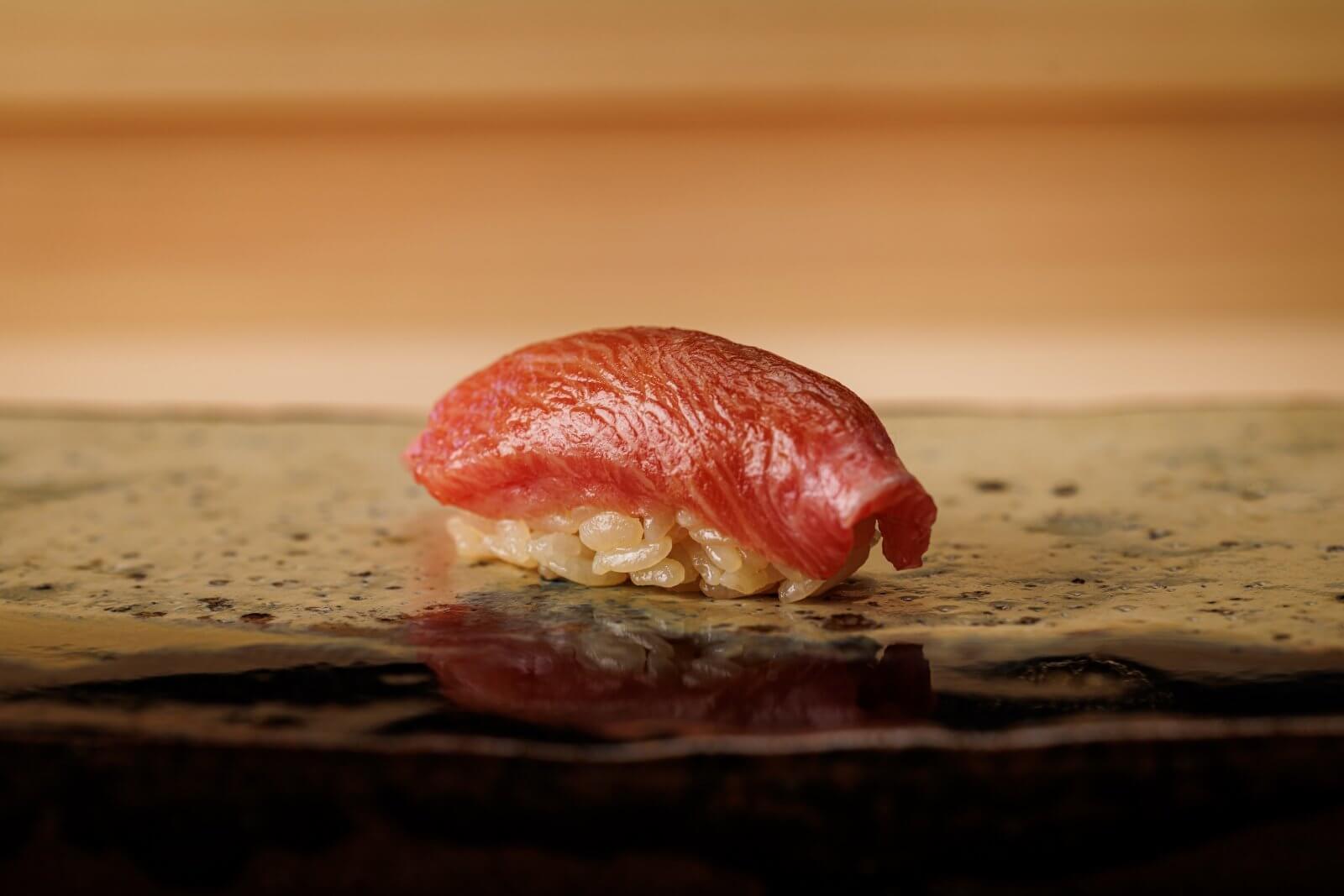
The ‘chūtoro’ (medium-fatty tuna) served mid-course, where the lean red flesh melts on the tongue.
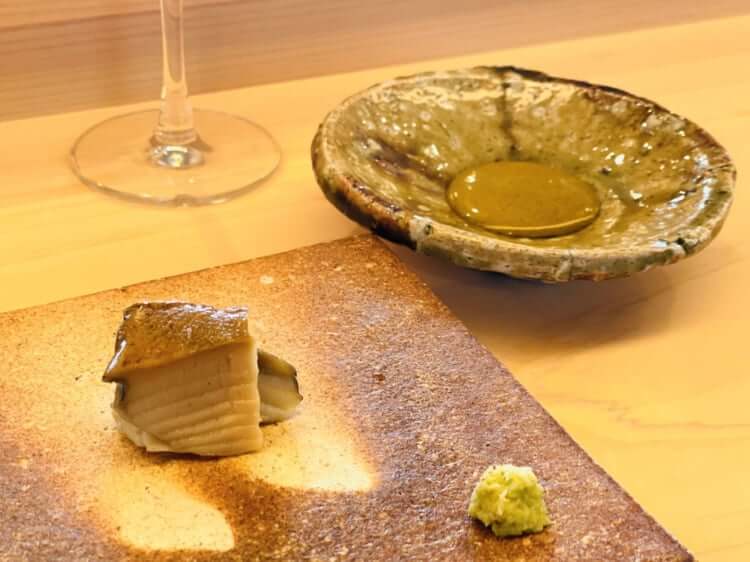
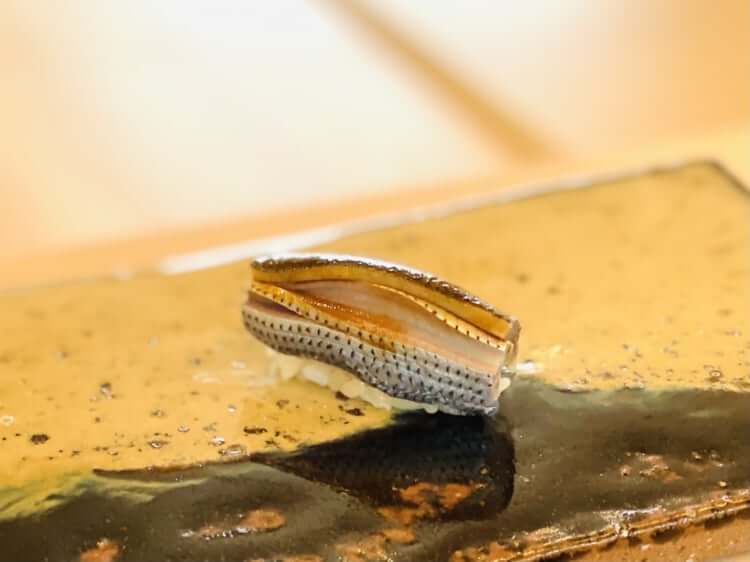
Left: The signature steamed abalone, a delicacy whose flavor is concentrated through precise cooking. Also delicious with the accompanying liver sauce. Right: ‘Kohada’ (gizzard shad) marinated in vinegar for about three days to allow the flavor to settle. All vinegars and soy sauces are house-made.
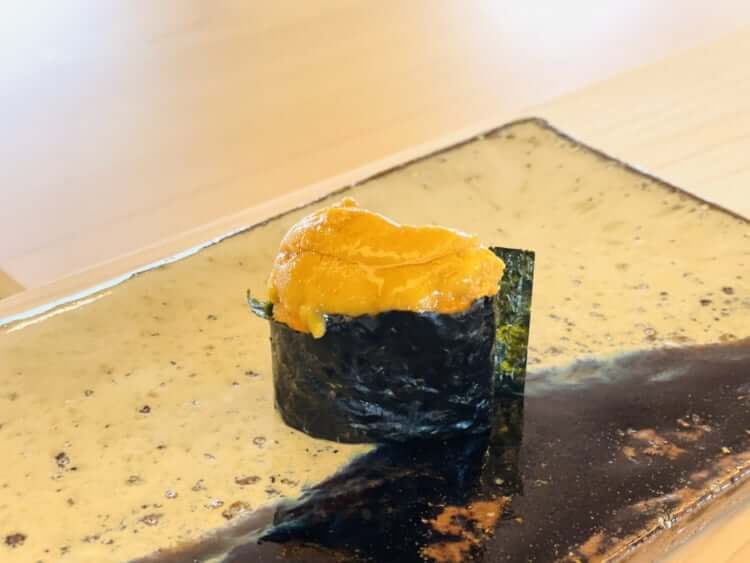
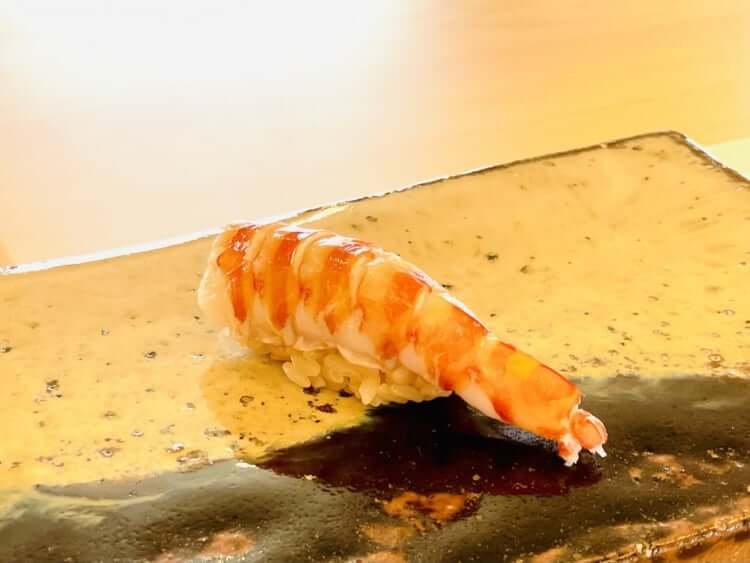
Left: ‘Gunkan’ (battleship-style sushi) topped with two kinds of ‘uni’ (sea urchin), combining melting richness with a briny ocean aroma. Right: ‘Kuruma ebi’ (tiger prawn) with a subtle sweetness.
A ‘moving sushi counter’ with Tokyo’s views as a backdrop
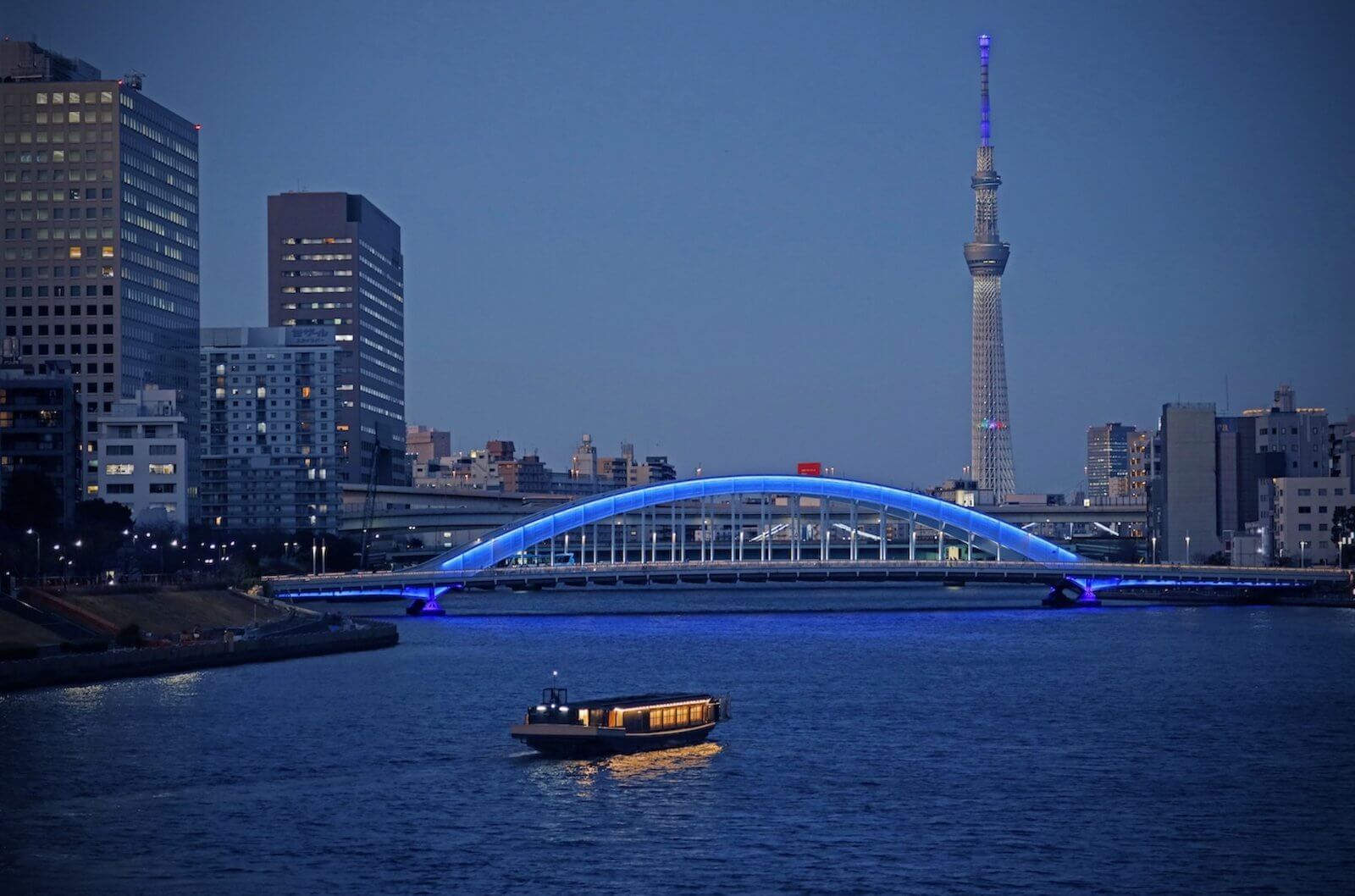
Watching Tokyo’s city lights slowly come on while savoring sushi.
During the daytime cruise, diners enjoy Tokyo’s modern skyline shimmering across the water. At night, the illuminated city unfolds outside, creating an opulent setting for this ‘moving sushi counter.’
Whether you wish to escape the everyday bustle and quietly take in the city, or spend a special moment with someone important, this is a truly unforgettable experience. Both the scenery and the sushi are fleeting encounters—treasures to be savored in the moment and remembered long after.
‘Yakatabune’ Sushi Origami
Day cruise: Departs 11:30 AM, returns 2:00 PM
Evening cruise: Departs 5:30 PM, returns 8:00 PM
Closed: Irregular
Price: ¥27,500 (day), ¥41,800 (night) Plus ¥5,500 boarding fee and 10% service charge.
www.origami-yakata.com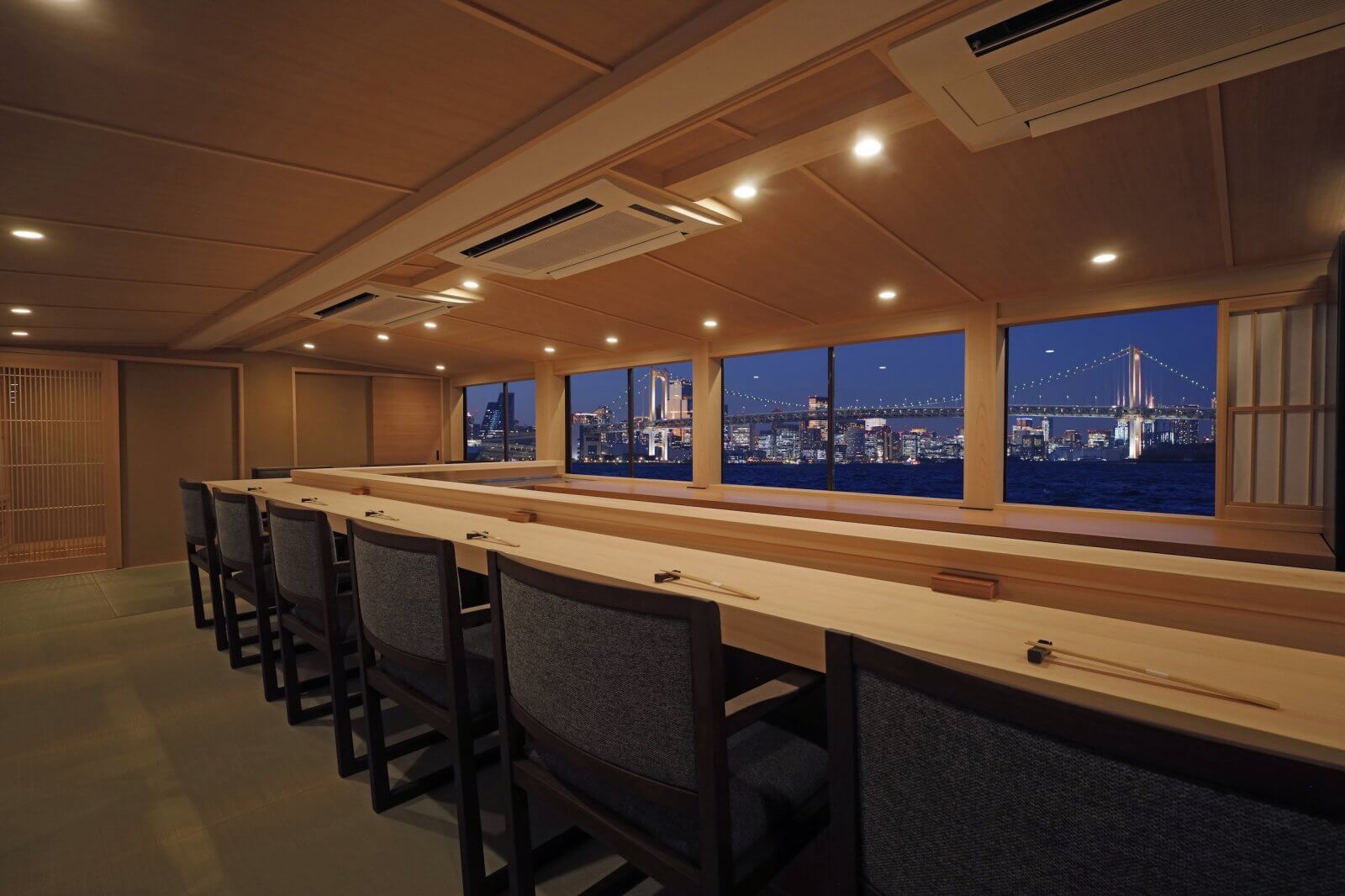
The Rainbow Bridge as seen from across the counter.