Before the Sauna Boom, Exploring Japan’s Oldest Steam Bath
Tsukahara no Karaburo, a 1,300-year-old bath in Kagawa, carries the legacy of Japan’s earliest sauna culture.
Ryoko Iwata is a writer, illustrator, and sauna enthusiast. She is the author of ‘Have a Good Sauna!’ (2021) and ‘I’m Off to the Sauna for a Bit’ (2022), among other books.
In 2017, when there were only four sauna facilities in Japan where women could pour water over the sauna stones themselves, I fell in love with saunas. If we mark history as BC (Before Christ), that period was just before BSB—Before Sauna Boom.
Now, you can find incredible sauna facilities all over Japan, from those offering self-pouring (löyly) to ones surrounded by nature, recreating the Finnish experience.
Yet, there exists one sauna that stands apart from all trends—a bath that has survived since the Nara period. Japan’s oldest sauna, located in Kagawa Prefecture.
The ancient karaburo that existed long before the sauna boom
For years, I had wanted to visit Tsukahara no Karaburo, but somehow eight years passed before I finally made it there. During that visit, as I sat in the dim, steaming chamber, I realized: ‘This is where it all began. Thank you.’ It became a moment to look back at my modest eight-year sauna journey with deep gratitude.
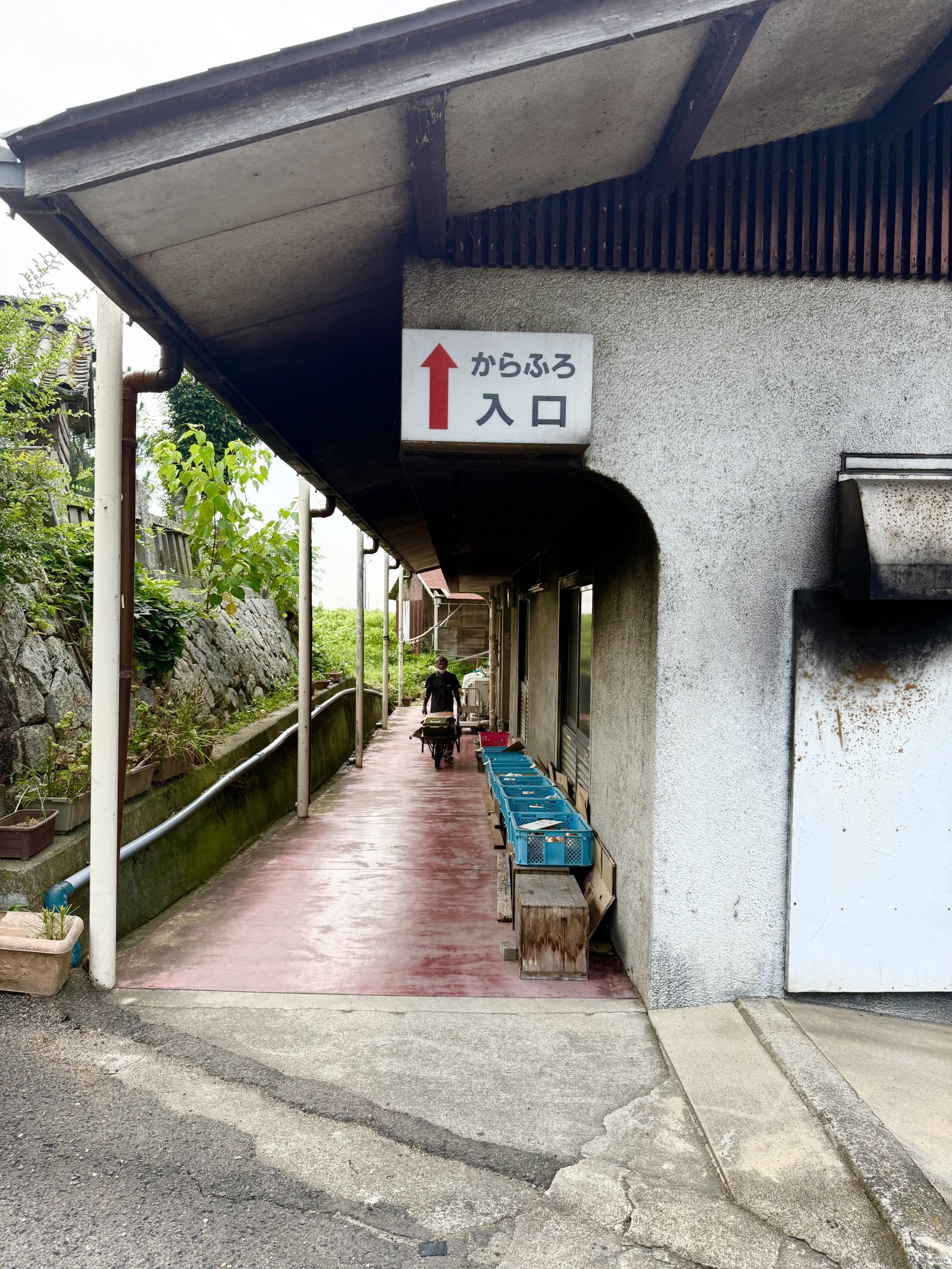
So, let me introduce you to this ancient steam bath, nestled quietly in Sanuki City, Kagawa.
Japan’s oldest steam bath, dating back to the Nara period
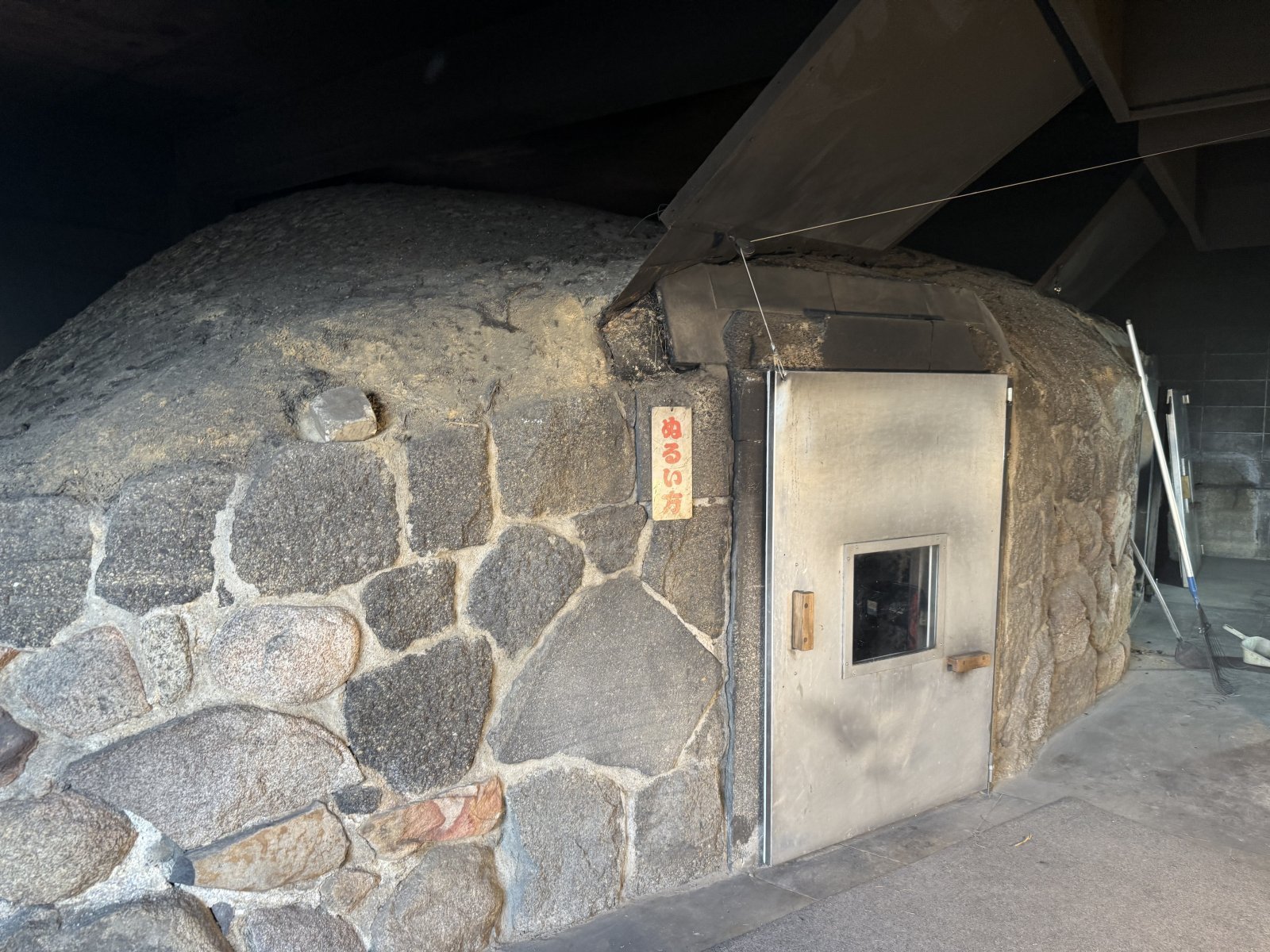
The Japanese word for bath, furo (風呂), is written with the characters for ‘wind’ and ‘spine.’ It turns out that ancient baths didn’t involve soaking in hot water. Instead, people would heat a small stone or earthen chamber with hot air, entering it to sweat—essentially, a sauna.
Because there was no heat source inside the chamber, firewood was burned until it turned to charcoal, and once the flames were out, people would enter, basking in the residual heat.
Preserved by volunteers, the ‘Karaburo Preservation Society’
Around 1,300 years ago, during the Nara period, the Buddhist monk Gyoki built this karaburo to heal the sick. For generations, one family acted as its caretakers before the local government took over. However, use declined, and the facility was temporarily closed in 2007.
A group of local volunteers later revived it, founding the Karaburo Preservation Society. Today, the bath continues to operate thanks to their dedication.
Just learning about this system of care filled me with appreciation. I knew I had come to a truly special place.
‘The cool side’ and ‘the hot side’, wisdom from the ancients
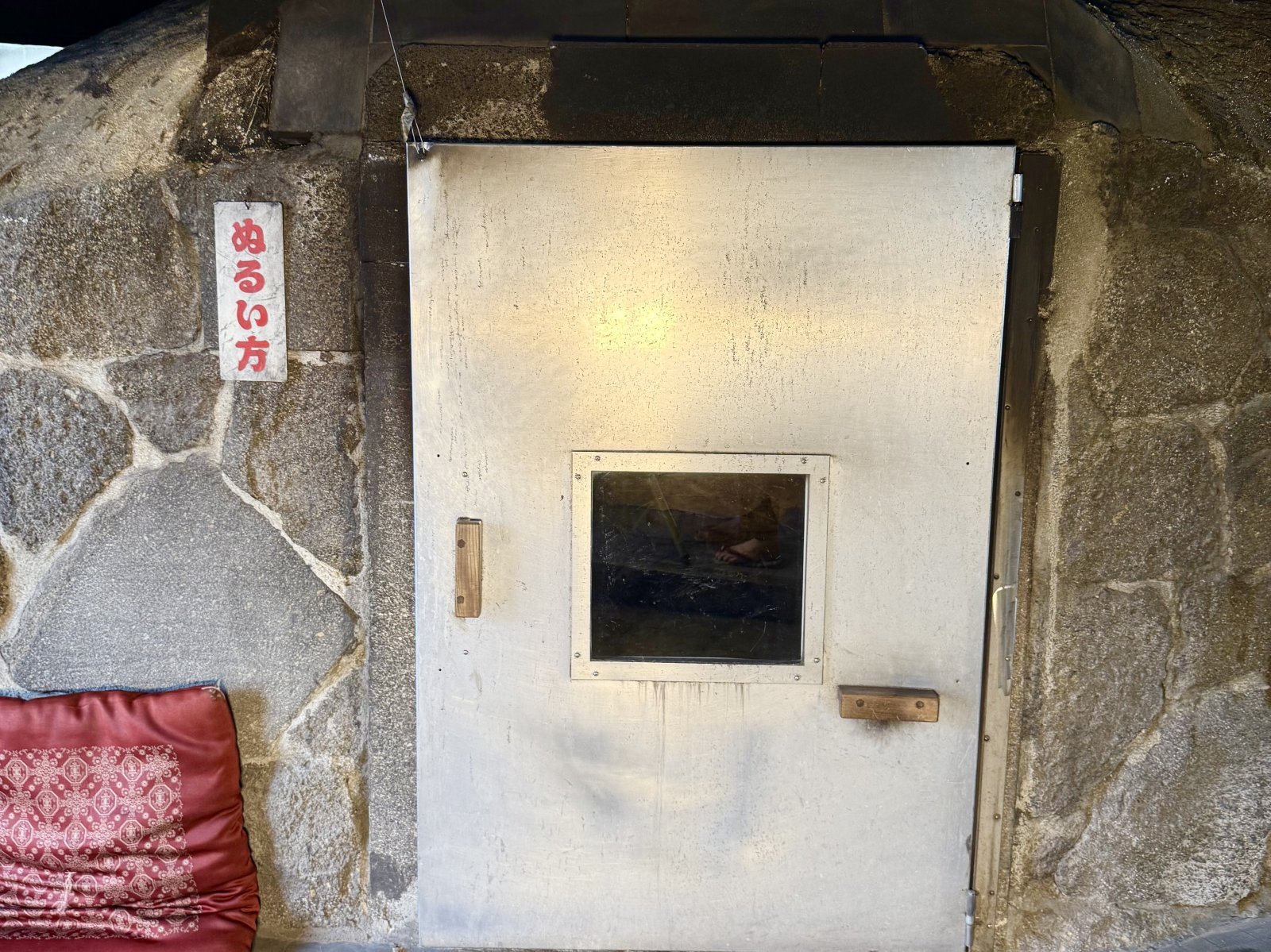
Even the signs—‘Cool Side’ (Nurui Hou) and ‘Hot Side’ (Atsui Hou)—are wonderfully straightforward. The ‘Hot Side’ is the chamber that has just been fired, while the ‘Cool Side’ is the one that was heated earlier and has since cooled slightly.
You enter the karaburo fully clothed, wearing a hood to protect your head from the heat. Inside, the space is small, and the humidity is staggering—much higher than I expected. I assumed it would be dry from the fire, but no—it’s hot and steamy. I had to ask the preservation staff how they created such humidity.
Within just four or five minutes, sweat poured off me. In ancient times, baths didn’t use water, so of course, there’s no cold bath here. It was a blazing July afternoon, yet stepping outside after the steam felt unbelievably refreshing.
It made me think: when people complain that a cold bath isn’t cool enough, it’s like someone starving saying, ‘This meat is too tough.’ Gratitude, that’s what it all comes down to. Even the summer air, which I had found stifling just moments ago, now felt divine. Once again, I felt nothing but thanks. ‘Thank you, karaburo.’
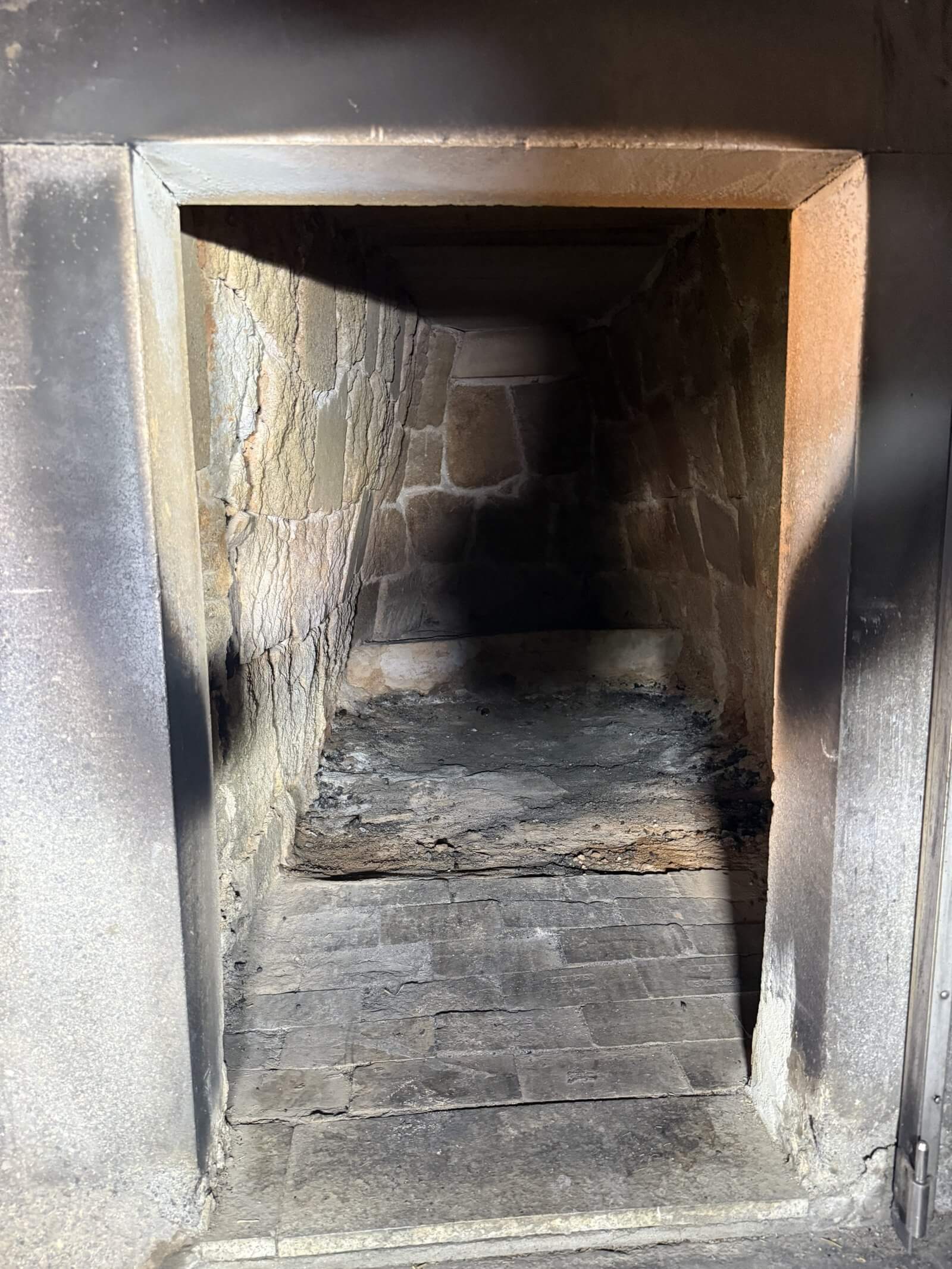
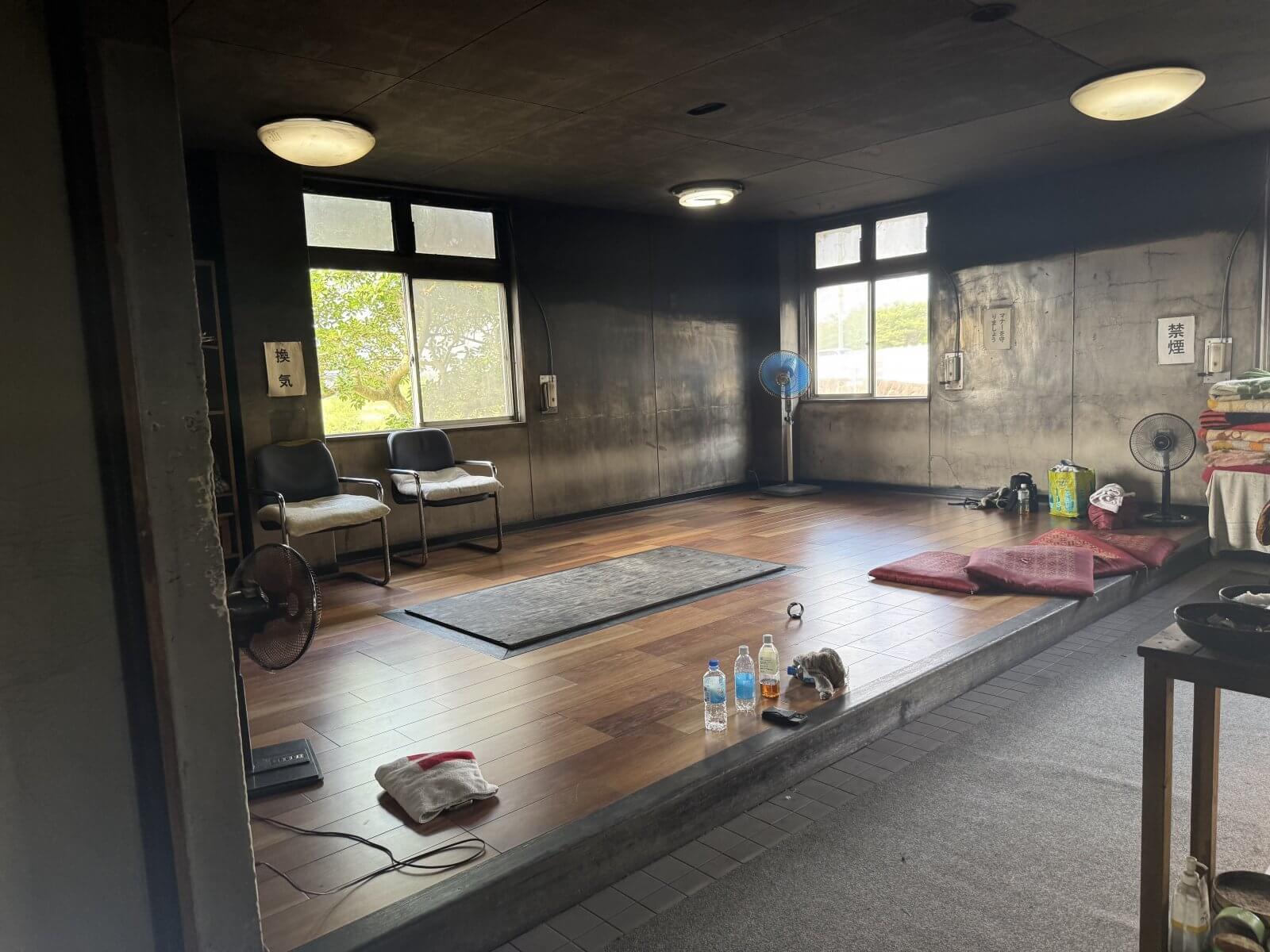
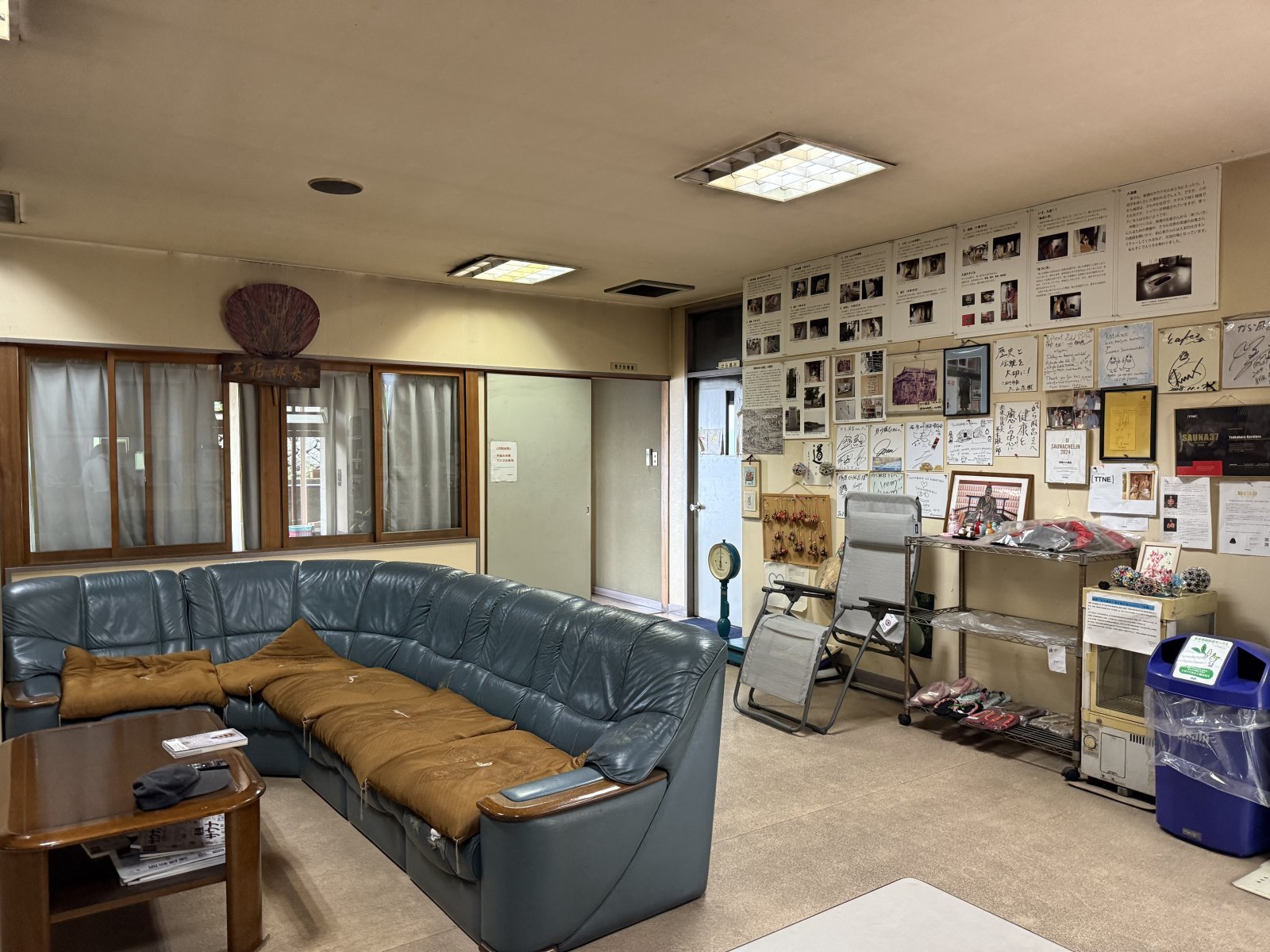
After stepping out of the stone chamber, guests can relax by lying down or sitting outside in the open air.
The secret to the steam
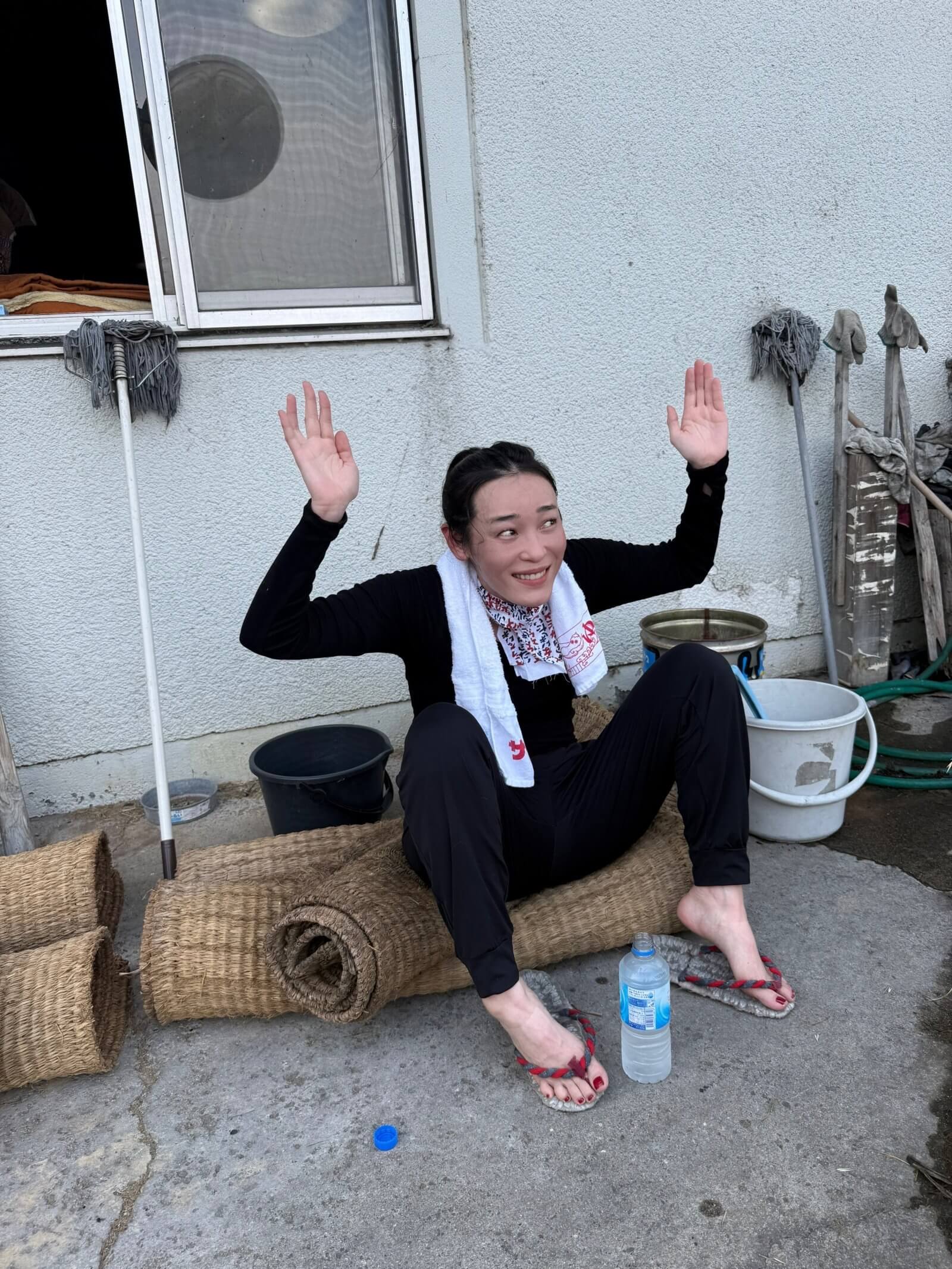
When I asked about the humidity, they explained that after the wood burns to charcoal, straw mats soaked in saltwater are placed over it, and more saltwater is poured on top. The mat I was sitting on was one of these very mushiro mats.
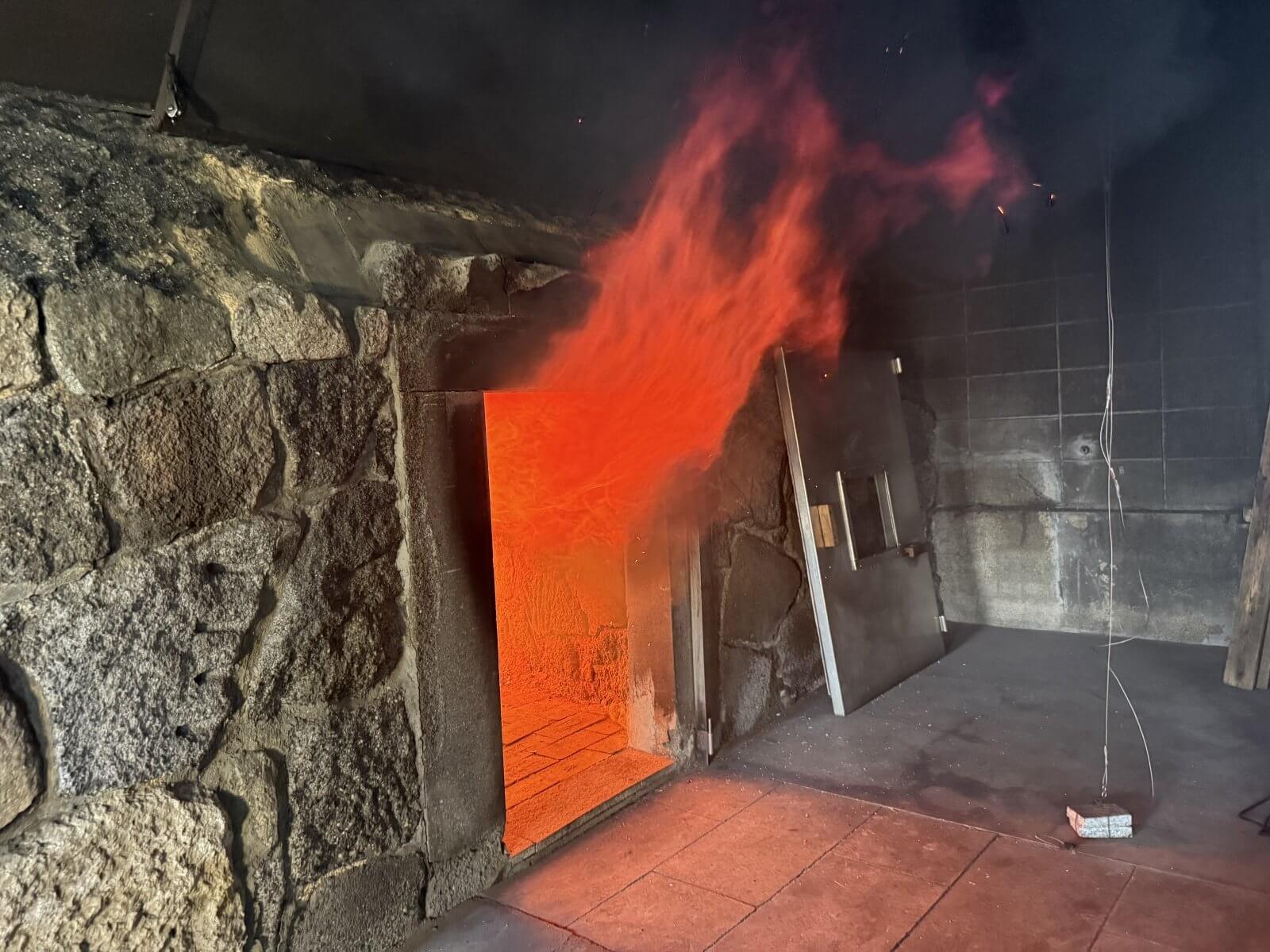
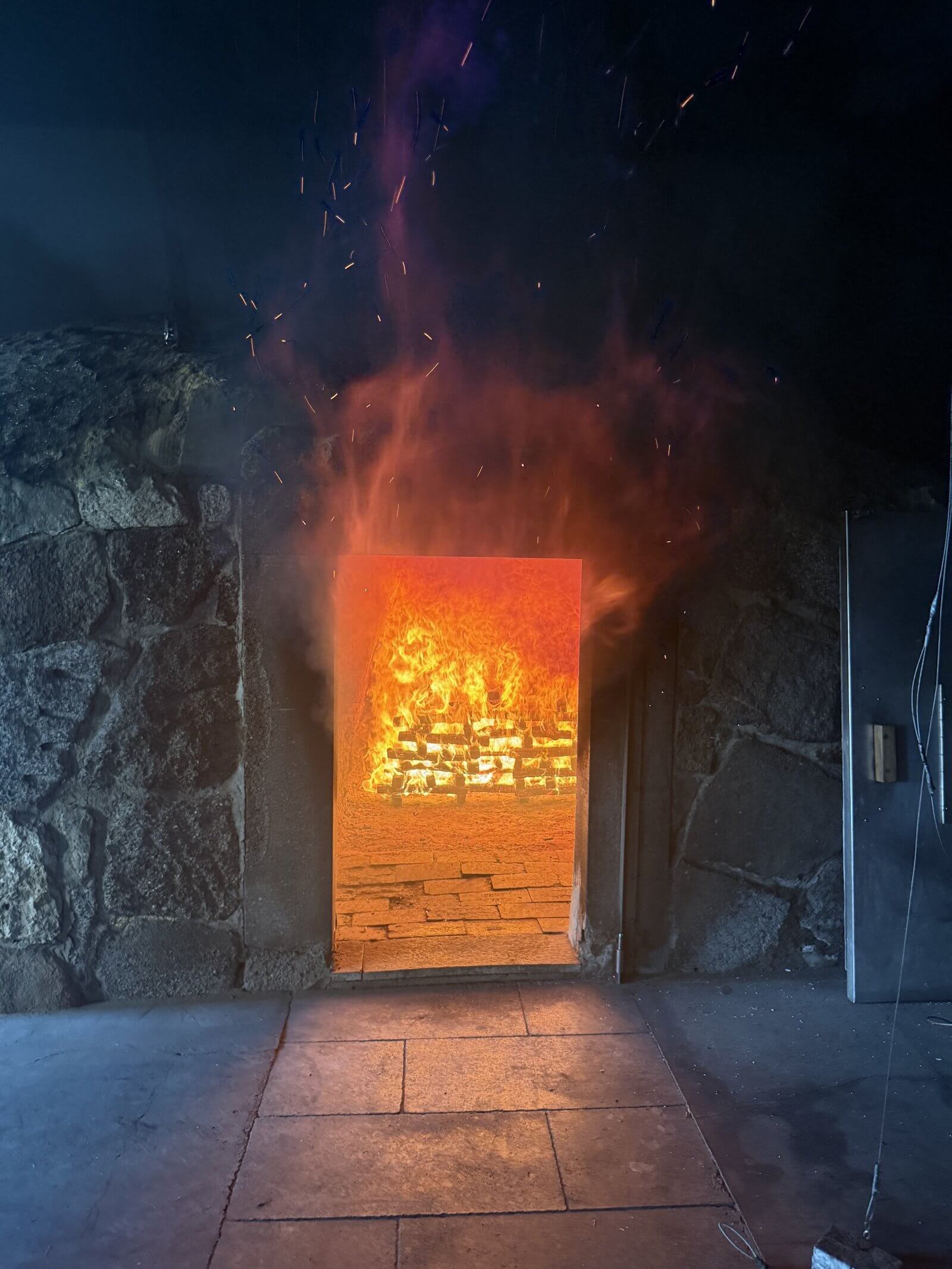
Nearby was the chamber that would become the ‘Hot Side’ the next day. Watching the flames roar was awe-inspiring. I hadn’t imagined they would burn so fiercely.
The funniest part? People casually walk right past these blazing fires to reach the changing room. When you open its door, the fire is right there in front of you. I caught myself muttering ‘Hot!’ as I walked by.
Leaving the bath, I couldn’t help glancing back, wondering just how scorching that ‘Hot Side’ must be.
Finally being able to visit the karaburo felt like checking off a dream from my life list.
Before going, I wondered if visiting an outdoor steam bath with no cold water in midsummer was a bad idea—but I was wrong. It turned out to be one of the most humbling and enriching experiences I’ve ever had.
And now, I want to go again, in winter this time, and try the ‘Hot Side.’
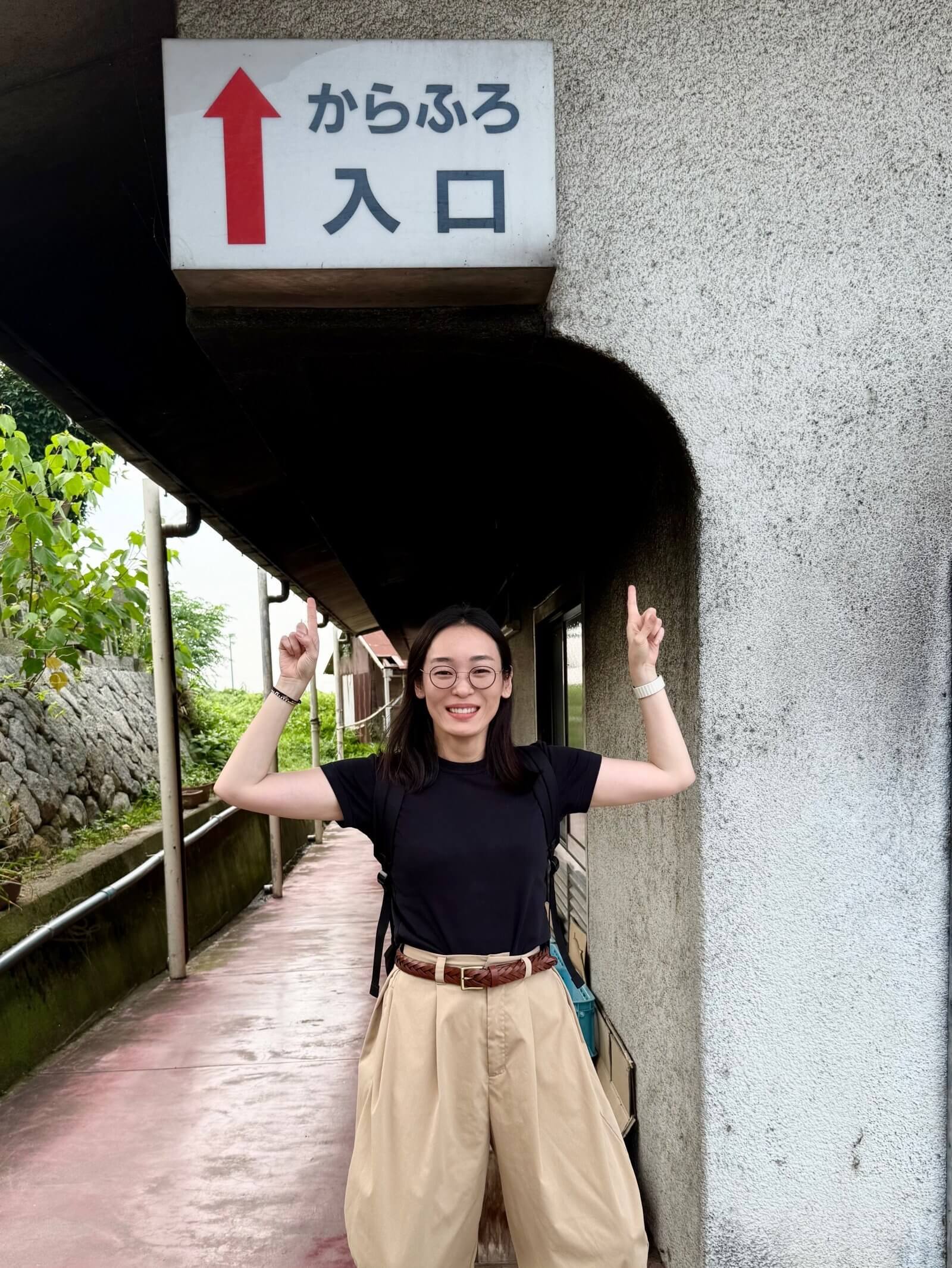
Tsukahara no Karaburo
Address: 1050-4 Showa, Sanuki City, Kagawa Prefecture
Phone: +818 7952 1202
Open: Thursday to Sunday, 12:00–21:00
Admission: ¥700