Experiencing the Atayal Way of Life in Bulau Bulau Village, Taiwan
Between alternative education, craftsmanship, and food self-sufficiency, a mountain village explores new ways of living.
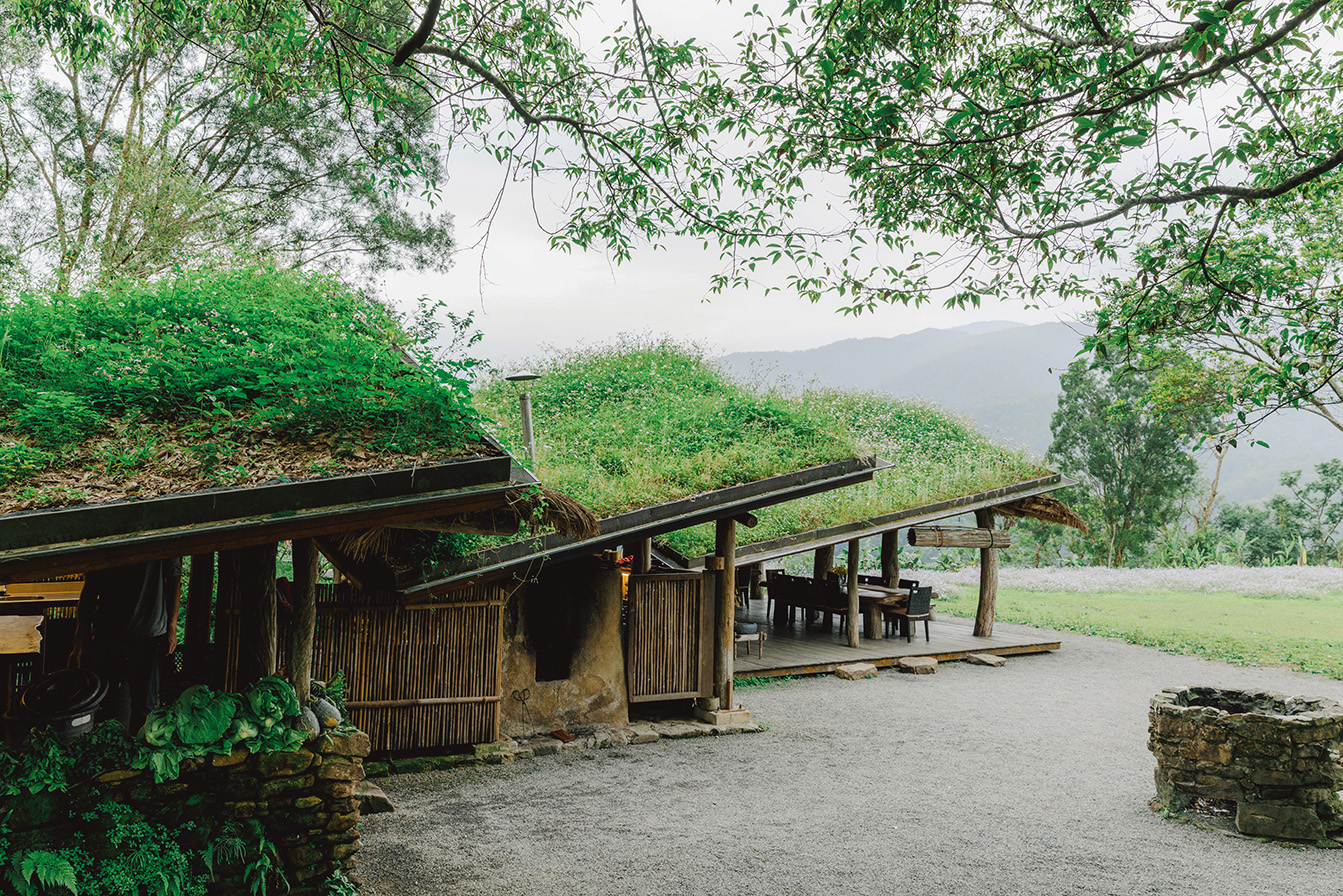
It rains nearly 200 days a year. In the past, typhoons would rip the roofs off. The current roofs have been redesigned to deflect wind laterally, while the plants growing on top help keep the interior cool.
Away from major cities like Taipei or Tainan, some villages remain custodians of Taiwan’s Indigenous cultures. A journey to these remote places offers a chance to reconnect with ancient knowledge and preserved ways of life—to experience Taiwan’s history not through books, but through close observation and touch.
Nestled at around 400 meters above sea level near the village of Hahnsi, Bulau Bulau sits high in the mountains of Yilan County in northeastern Taiwan. It takes roughly an hour by car or bus from Taipei to reach the area, followed by a trip further into the mountain heartland. Here lives a community belonging to the Atayal people, one of Taiwan’s sixteen officially recognized Indigenous groups. Today, the village welcomes a limited number of visitors through a unique one-day tour that offers a rare glimpse into the Atayal way of life. The program, so popular that it often sells out, invites a quiet and attentive immersion into an ancestral daily routine woven from nature, craftsmanship, and cuisine.
Between Atayal Knowledge and Contemporary Design
The name Bulau Bulau means ‘stroll’ in the Atayal language. The village was founded in 2003 by seven families who chose to reclaim this stretch of mountainous land. Over time, they traced footpaths by hand, built homes with care, and cultivated gardens according to natural rhythms. Among the founding members were Hu Ai-ling, an Atayal woman known for her culinary skills, and the Taiwanese architect couple Pan Chin-sheng, both specialists in landscape design. Their collaboration gave rise to a dialogue between Indigenous knowledge and contemporary spatial practices, shaping both the village’s distinctive landscape and the foundations of the one-day tour offered today.
The village is divided into two zones: one residential, the other dedicated to food cultivation. Today, around forty people live in relative autonomy under the guidance of Kwali, son of the founding couple, while welcoming a limited number of visitors five days a week. In order to protect the surrounding ecosystem, the daily cap is set at 30 people. From a meeting point at the foot of the mountain, guests are driven up to the village in jeeps. On arrival, they are served a full-course meal prepared with local ingredients, accompanied by xiaomijiu, a cloudy millet wine traditionally shared during Atayal celebrations.
Between courses, visitors are introduced to traditional hunting traps crafted by hand, step into workshops where women pass on the arts of plant dyeing and weaving, and admire baskets hand-braided from rattan by the village’s men. Many of these objects are available for purchase on site.
In the past, the villagers sold their vegetables and log-grown shiitake mushrooms to hotels and restaurants in the city. But over time, they chose another path. Rather than compete on price in the commercial market, they opted to invite guests into their village, to taste the harvest at its freshest. It’s a different approach to hospitality—one grounded not in spectacle, but in the sharing of everyday life.
An Alternative High School Rooted in Local Culture
The village of Bulau Bulau operates through a remarkably sustainable system. One of the key figures behind it is Kwali, who was born in Taiwan, moved to Australia at the age of thirteen, and later returned to his native country to complete his military service after university.
While studying at Brigham Young University, he also worked at the Polynesian Cultural Center in Hawaiʻi—an experience that left a lasting impression. In 2015, he founded The Root Vocational School in the village, the first government-accredited alternative high school initiated by an Indigenous community in Taiwan. The school offers a pedagogy deeply grounded in local culture while remaining open to the wider world.
Children from the village join the school at fifteen, after completing compulsory education. From the outset, they divide their time between classes and hands-on work in one of four fields, depending on their interests and skills: agriculture, crafts, cuisine, or construction. The first year focuses on foundational learning, including language; the second allows students to explore their specializations; and the third, prior to graduation at eighteen, includes an extended internship outside the village. One of the school’s guiding principles is clear: to return with purpose, one must first step away and broaden their perspective.
This philosophy has already borne fruit. In recent years, the village’s signature product has emerged: a millet sparkling wine created by a young woman who studied fermentation in Japan and abroad. Her initiative has inspired other members of the younger generation, who now envision returning to build their own projects.
At Bulau Bulau, tradition is never static—it evolves, adapts, and takes new forms in the present. The village offers a different approach to the relationship between life and work. No travel agency offers access: visits are available by direct reservation only. But for those who make the journey, the experience is meaningful—and often unforgettable.
Bulau Bulau Village
A one-day tour to experience the Atayal way of life. The visit includes a guided tour with a dedicated host, a full-course lunch, and beverages. A vegetarian option is available.
The experience is open to guests aged 16 and over and may be cancelled in case of rain.
It is recommended to book at least three months in advance for weekday visits, and over six months ahead for weekends or public holidays.
Address: No. 5, Hanxi Lane, Hanxi Village, Datong Township, Yilan County, Taiwan
Phone: +8869-1909-0061
Hours: 10:00 a.m. – 4:30 p.m. (Tuesday to Saturday).
Rate: 3,200 TWD per person.
www.bulaubulau.com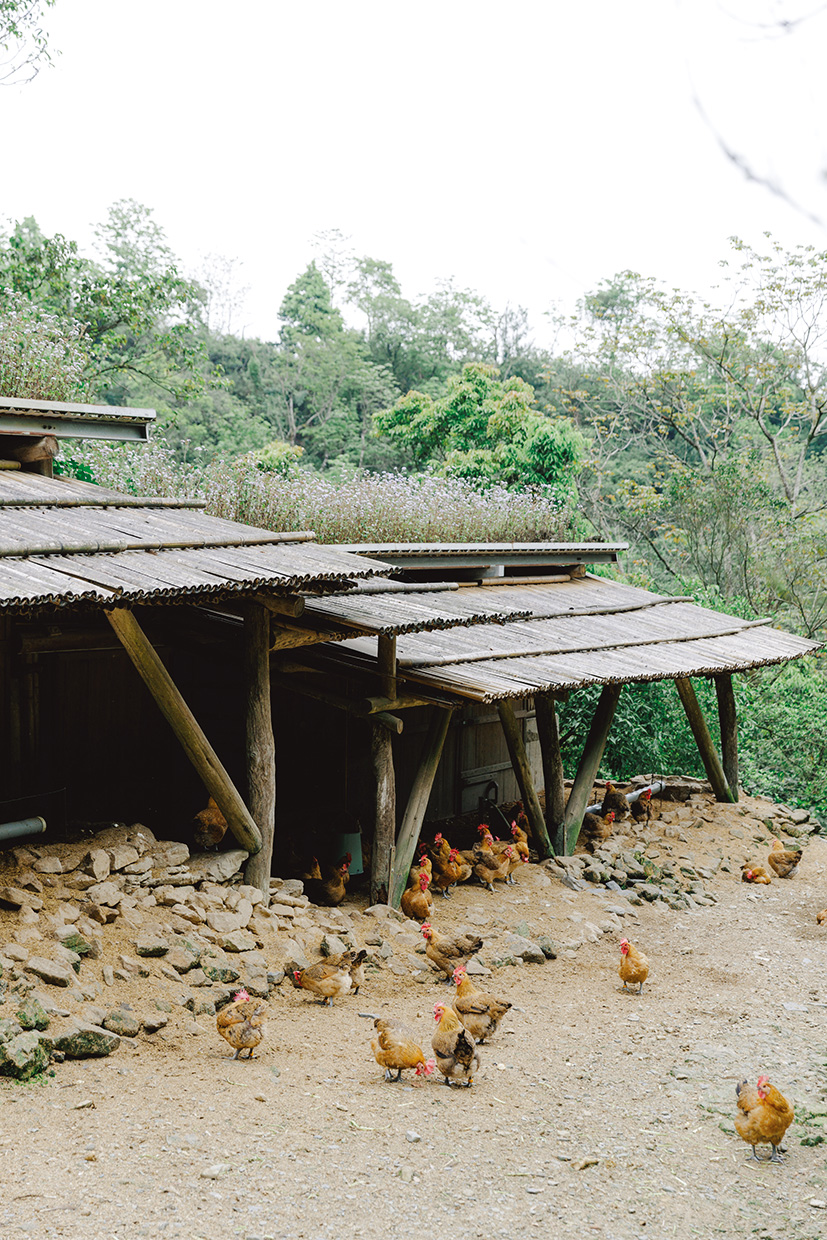
Free-range chickens. After being used for shiitake cultivation, the logs are crushed and spread across the coop, where they mix with poultry droppings to create natural fertilizer—a deeply sustainable Atayal practice.
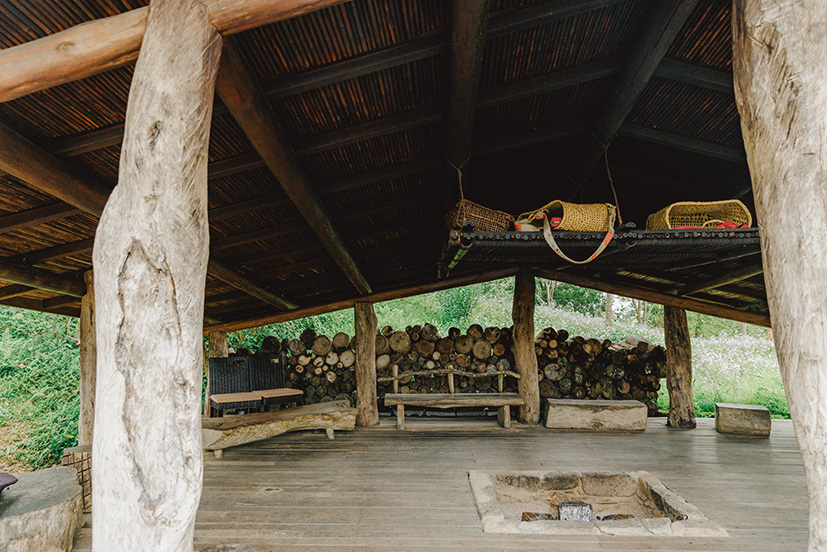
Campfire zone. Game meat is smoked here, a long-standing preservation method used before storage.
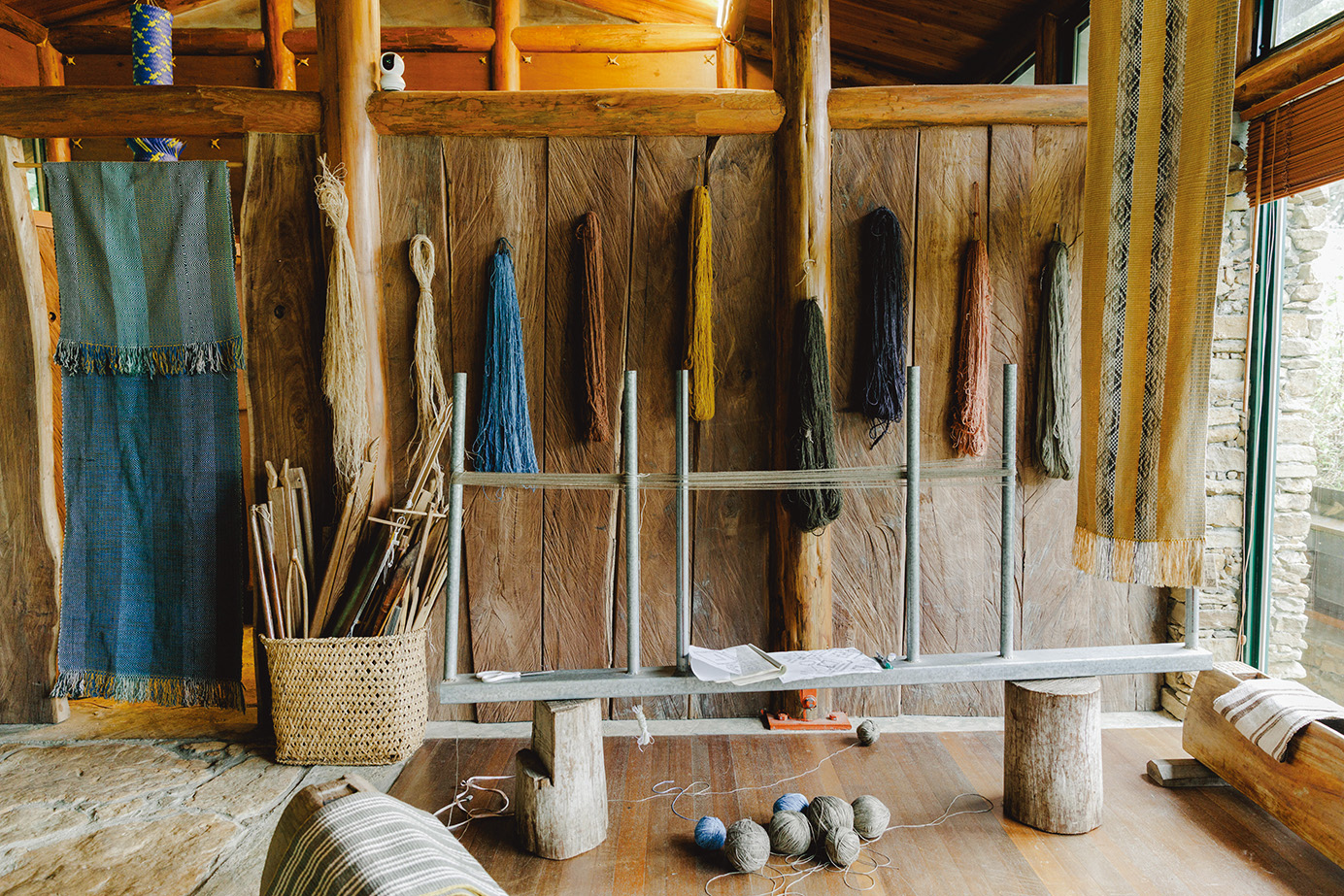
Plant dyeing is a longstanding Atayal tradition. Both threads and pigments are derived from local flora. The technique, passed down through generations, produces remarkably durable colors.
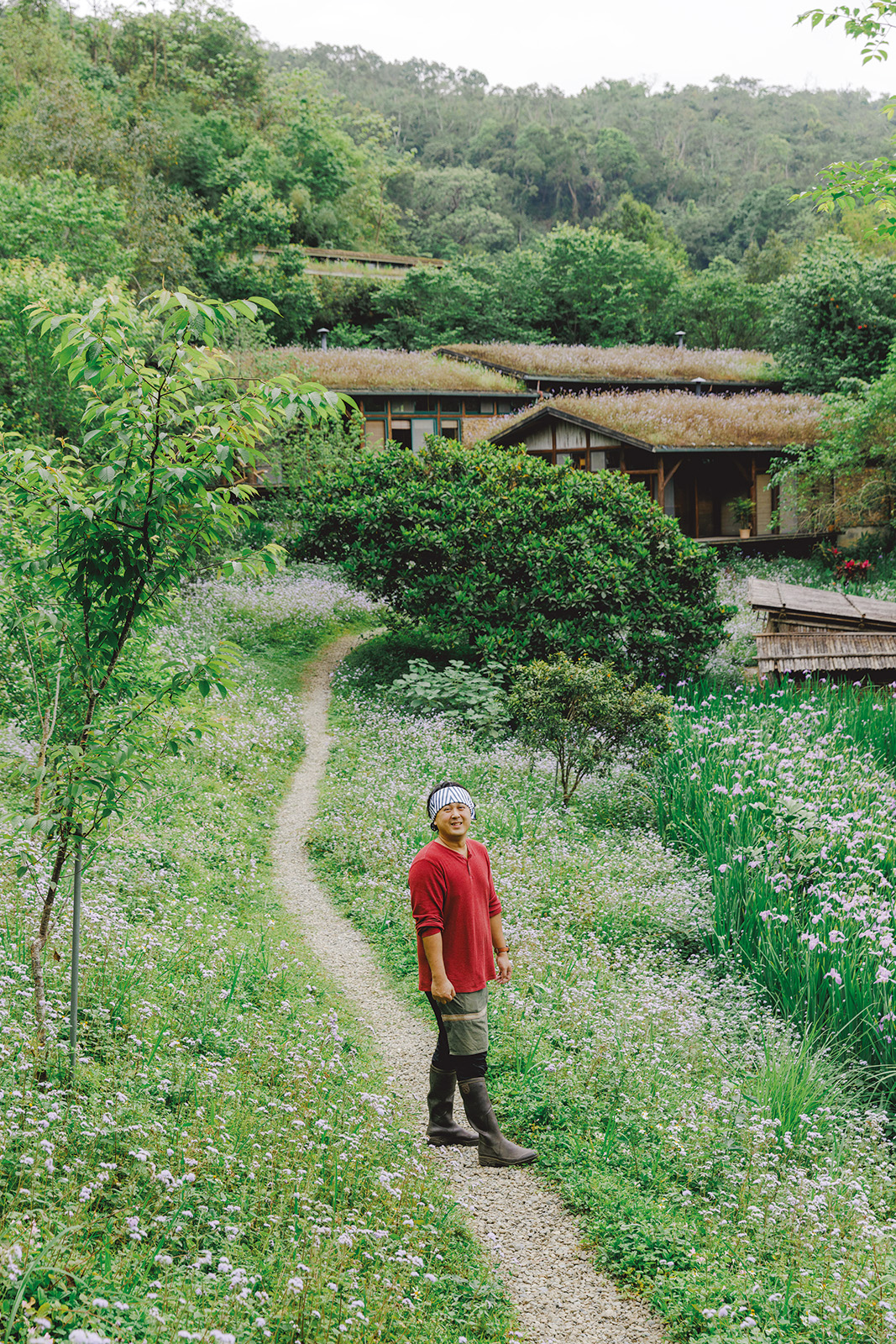
Kwali, the current village leader, is fluent in Atayal, Taiwanese Mandarin, and English. He has delivered two TED Talks on tourism and education, offering a fresh perspective on these fields in Taiwan.
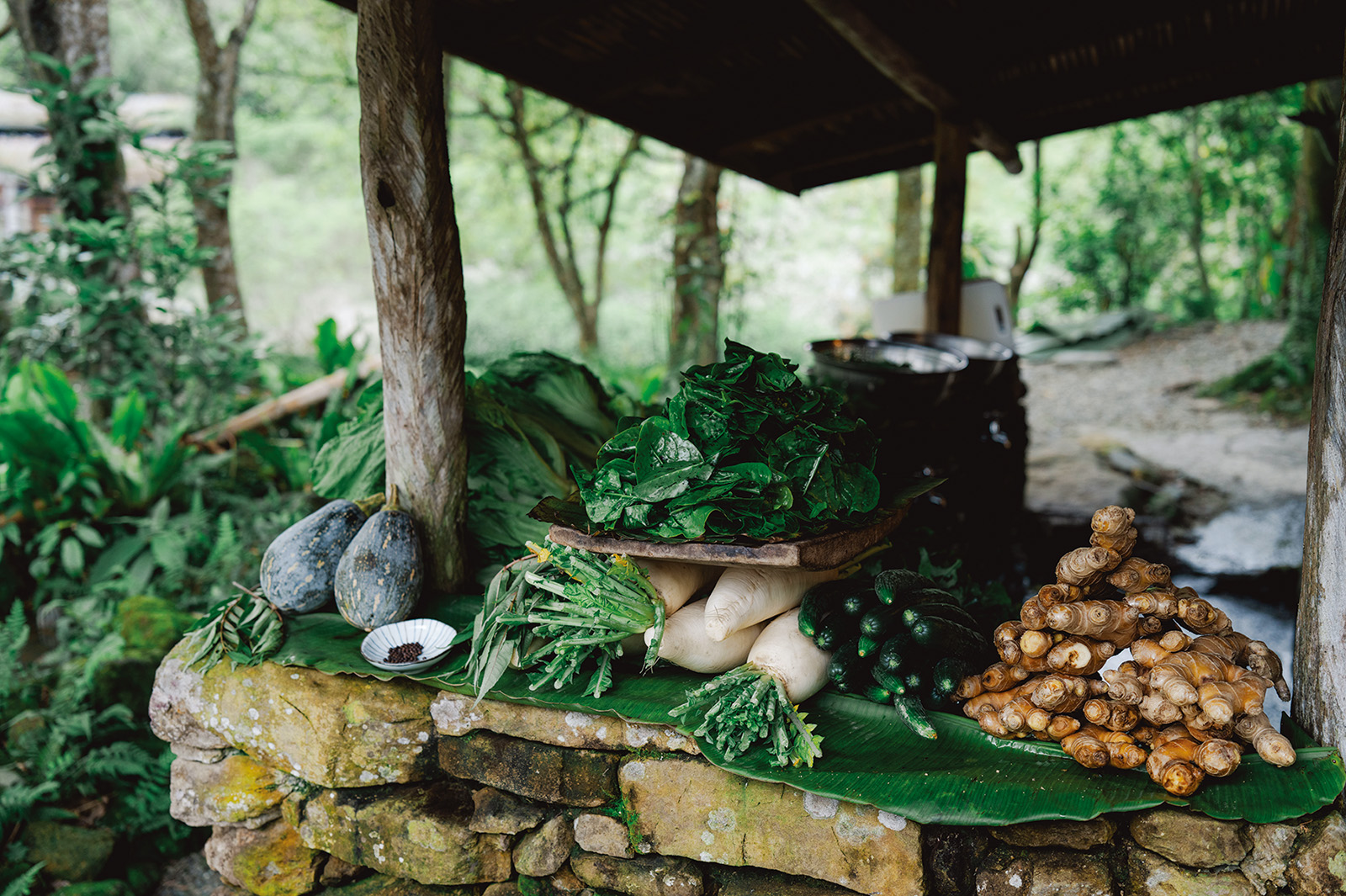
Freshly harvested seasonal vegetables are paired with local spices like maqaw and tana—a feast for the eyes. In line with Atayal tradition, the dishes are prepared without frying or oil.
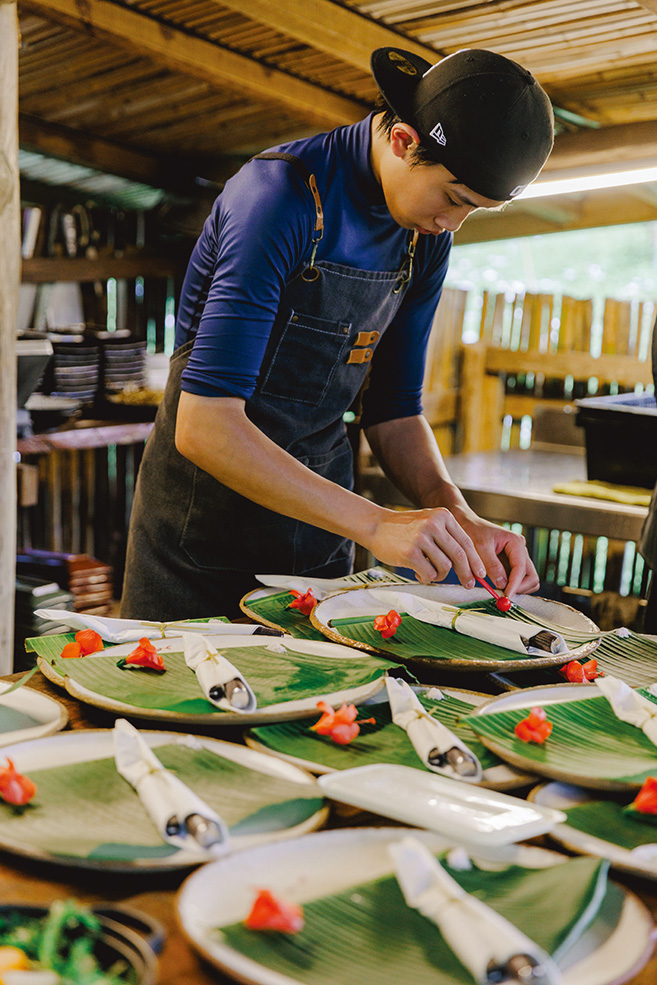
Table settings are being quietly assembled. Their visual elegance is part of the legacy of Hu Ai-ling, the Atayal cook who helped shape the village.
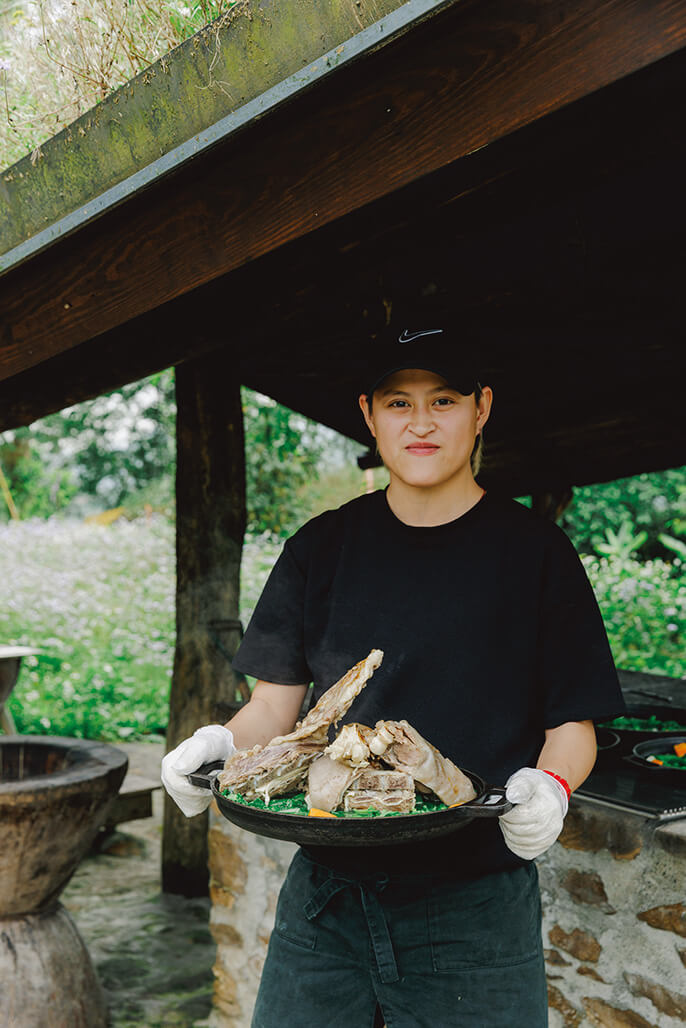
Zhao Ting, the village’s third head chef, trained at a Japanese restaurant in Taipei before returning to Bulau Bulau, where he was appointed chef at age 28. He is pictured here with the main dish: a goat meat stew.
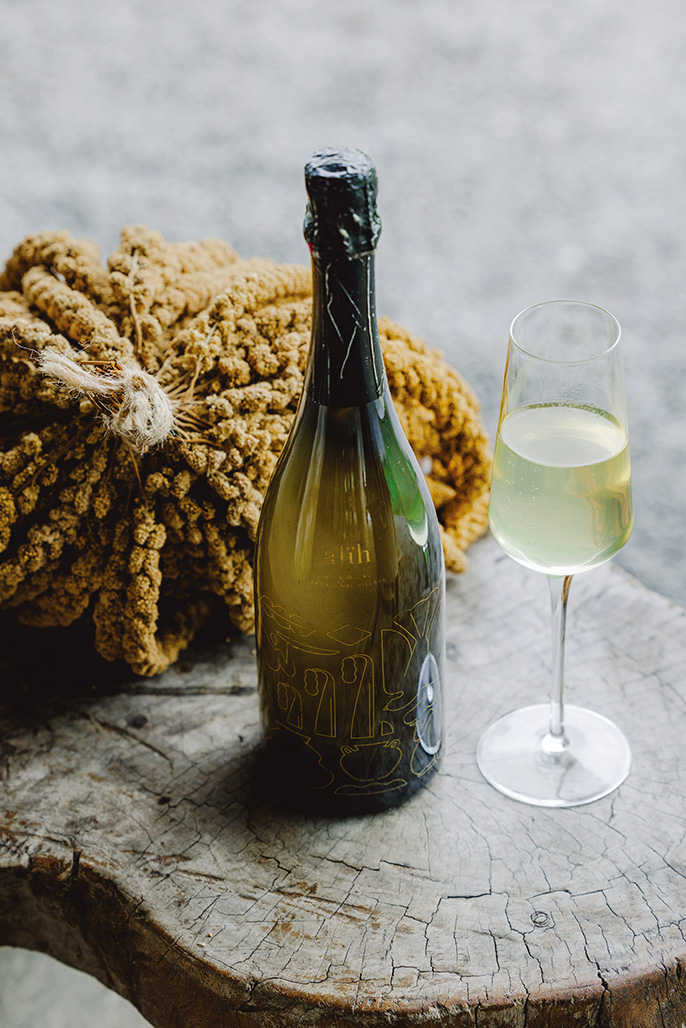
‘Alïh’, a millet wine crafted using the champagne method, was served at the Michelin-starred restaurant RAW, where it met with great acclaim. Its rich aroma fills the mouth, finishing with a refreshing clarity. It sells for 2,200 TWD per bottle.
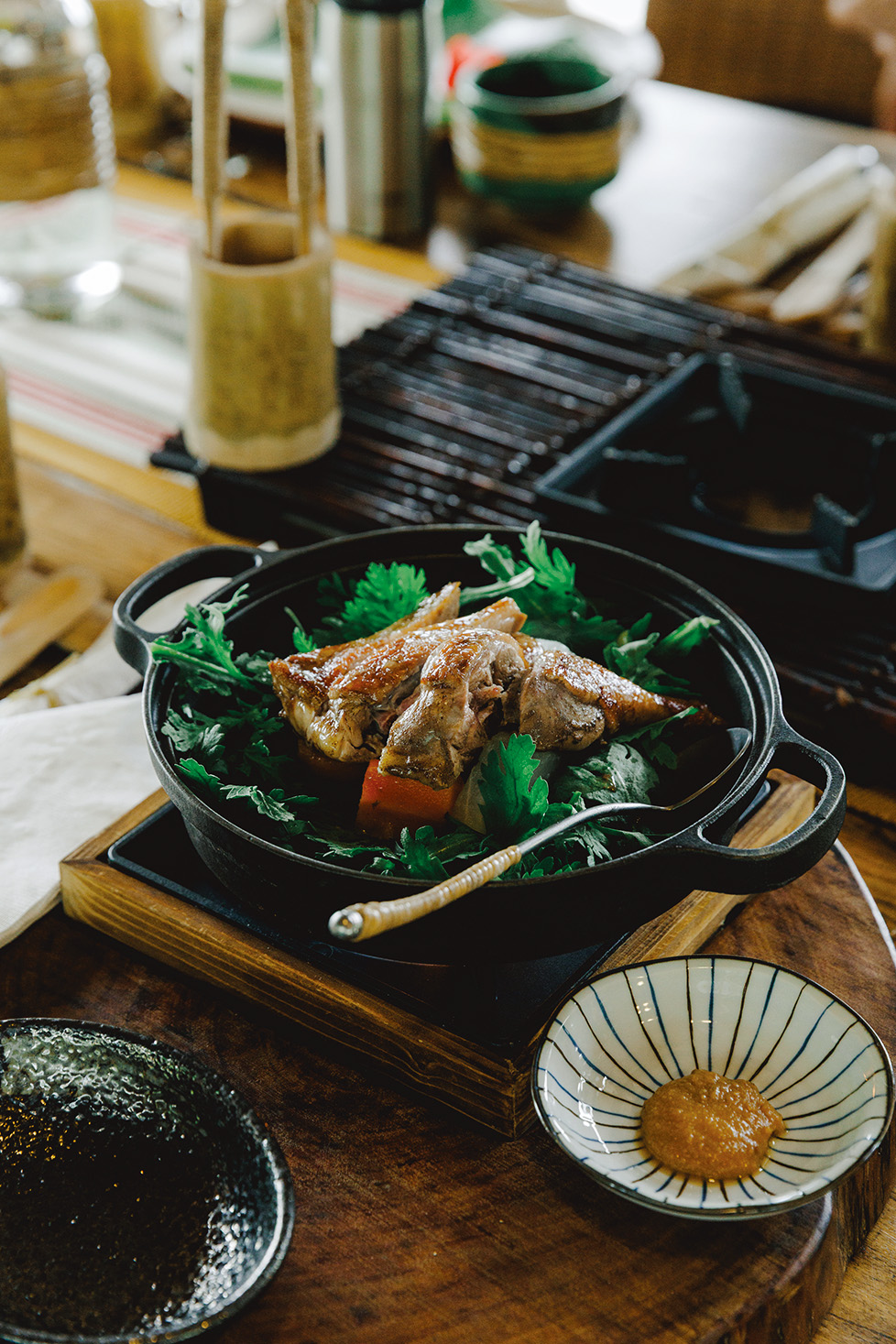
In addition to the goat stew, the main course may feature grilled bamboo partridge—a wild quail native to Taiwan—served with freshly picked vegetables.
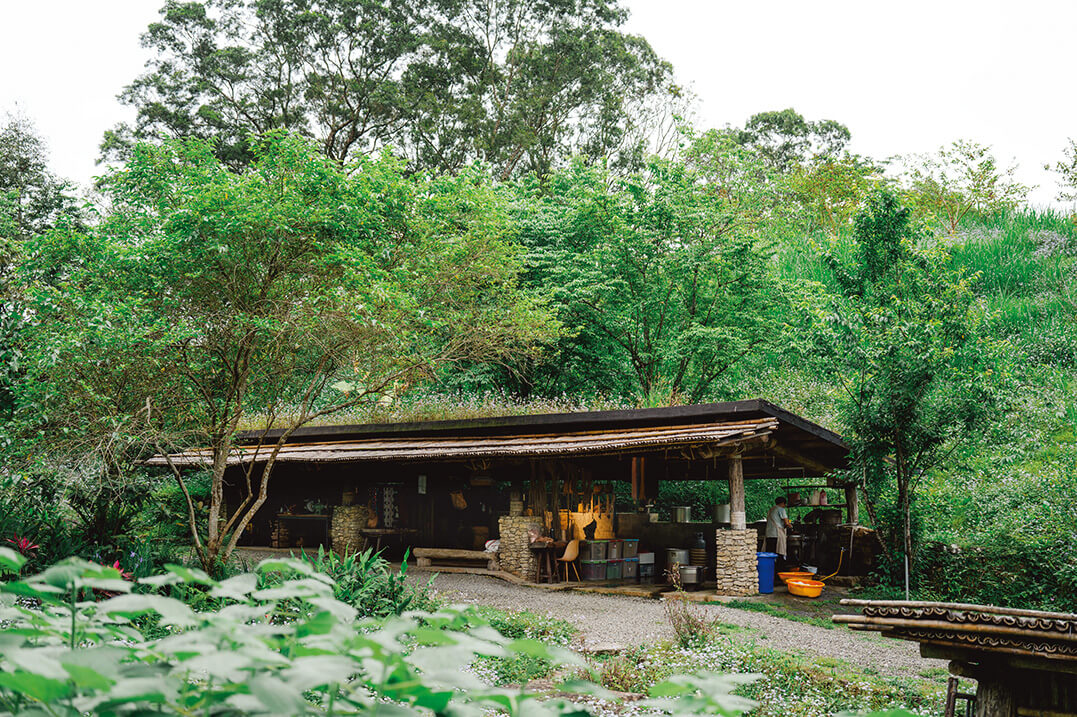
A dyeing and basketry workshop. The open layout invites a sense of harmony with nature. Visits are welcome.
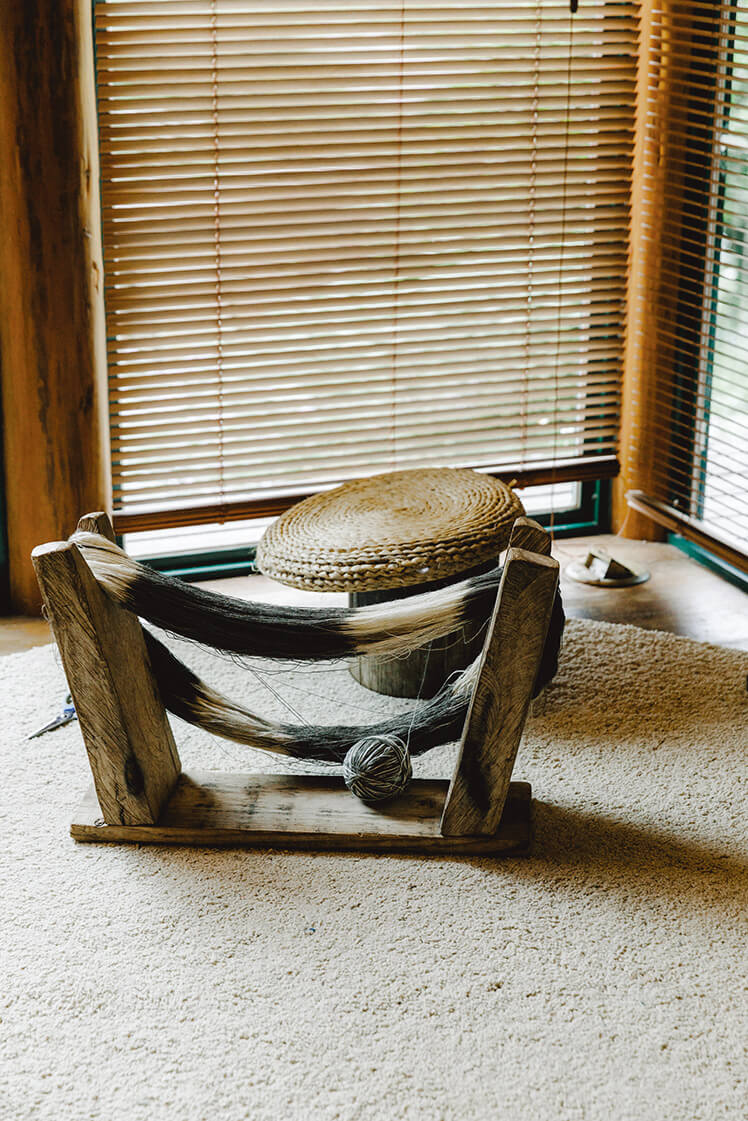
The space where Kwali’s 90-year-old grandmother weaves each morning. The stool used to flip and gather the threads has the presence of a sculptural object.
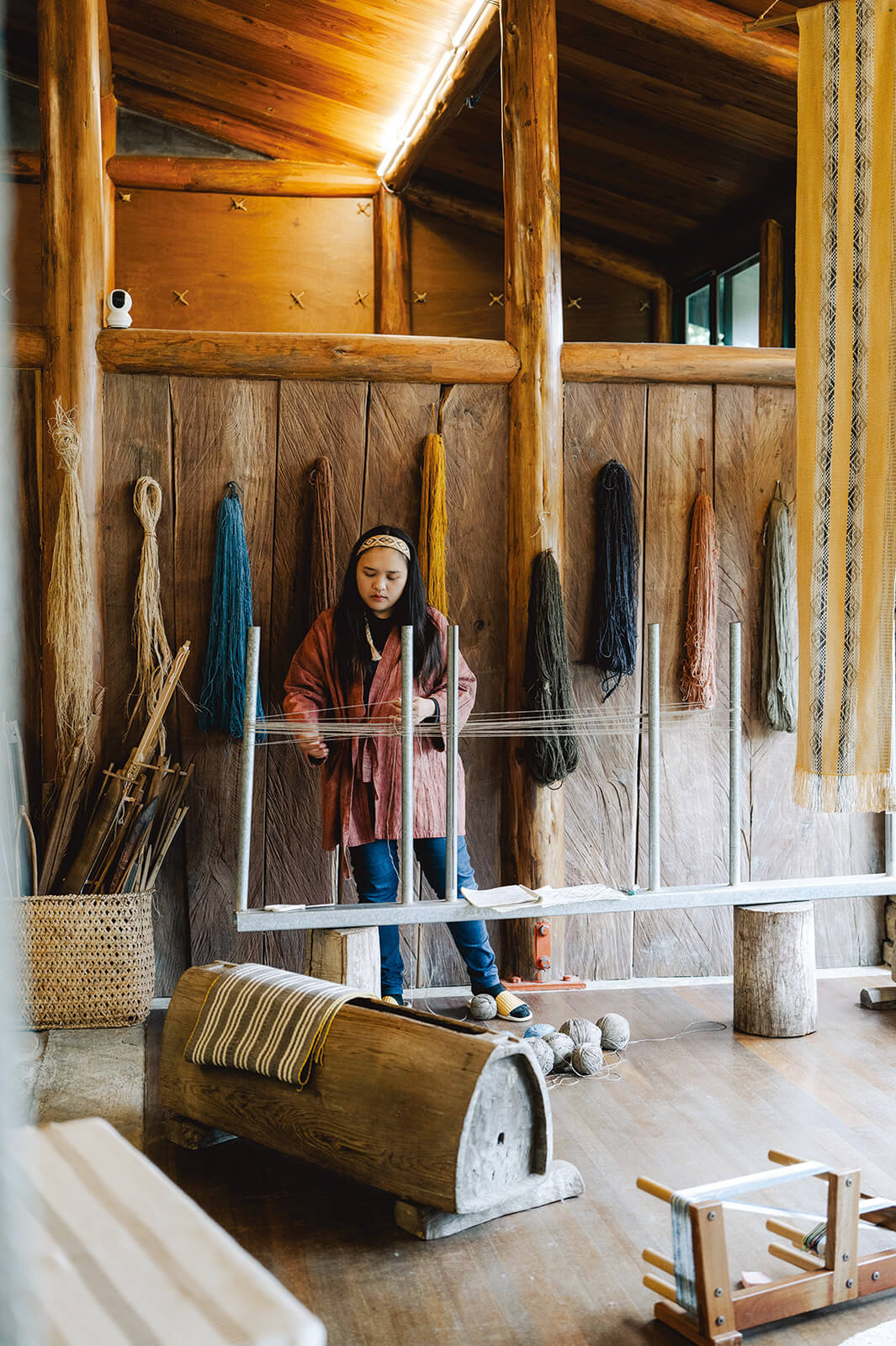
Weaving is primarily done by women. They begin by considering the design and colors. According to tradition, men are not allowed to touch the fabric and instead use a bow-like tool to assist with the weaving.
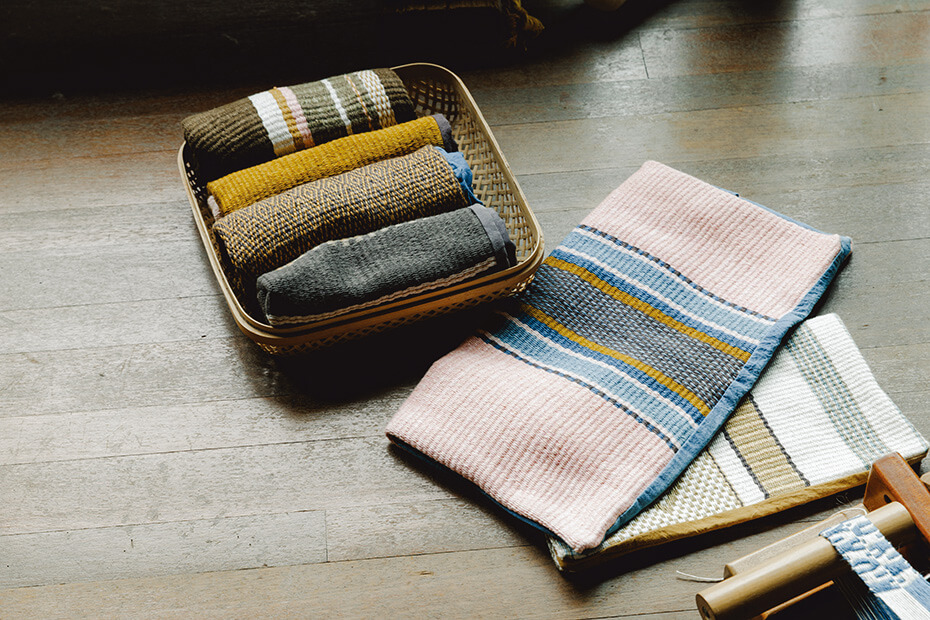
Each cushion cover is entirely handmade and one of a kind. From 3,500 TWD.
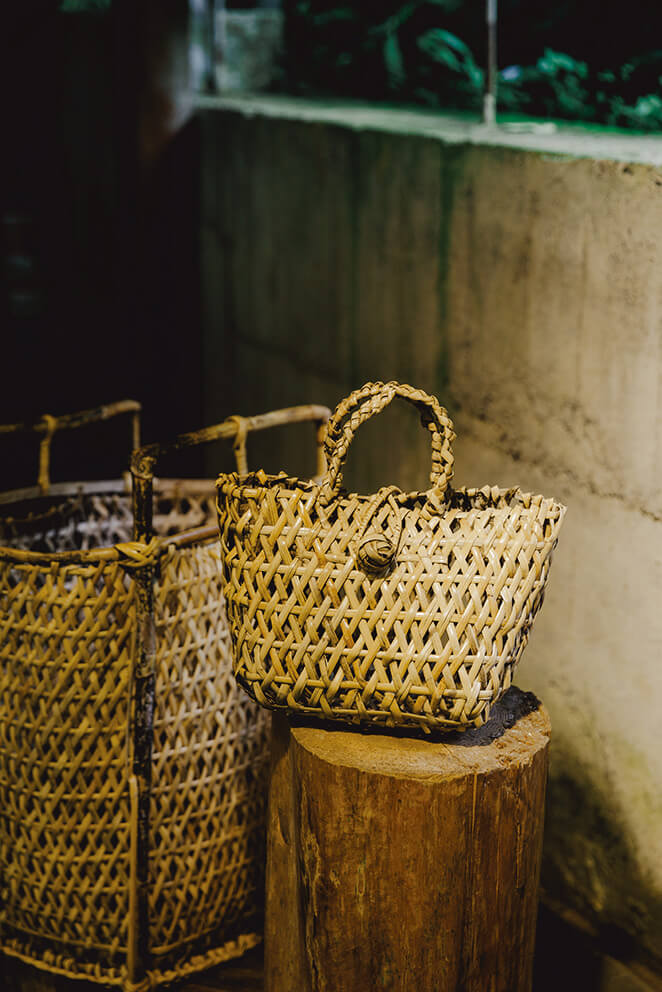
Rattan basket (4,000 TWD, by reservation), a contemporary reinterpretation of traditional hunting tools (pictured in the background, left).