Hirayama Ryokan, a Sacred Bath on Iki Island Said to Bring Happiness
In his ‘Bath Chronicle’ series, Kundō Koyama advocates for ‘yudō’, the ‘way of the bath’, as a pillar of traditional Japanese culture.
Screenwriter Kundō Koyama advocates for the recognition of yudō, the ‘way of the bath’, alongside sadō, the way of tea, and kadō, the way of flowers, as a fundamental element of traditional Japanese culture. He immerses himself across Japan in different types of baths, from hot springs (onsen) to public bathhouses (sentō), as well as domestic bathtubs. In each issue of Pen, he records these journeys in his ‘Bath Chronicle’.
Hirayama Ryokan (Iki City, Nagasaki Prefecture)
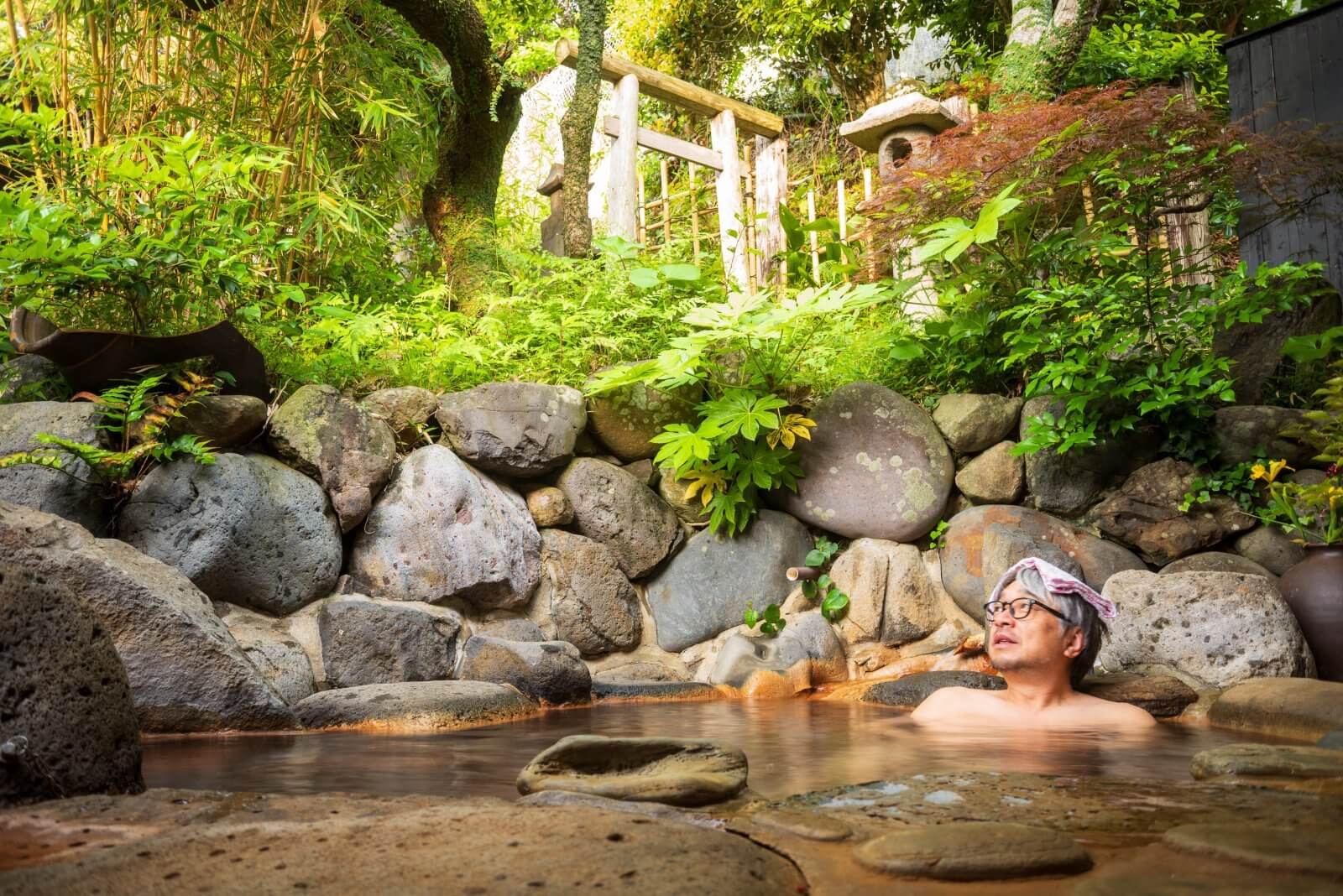
Kundō Koyama bathing in Hirayama Ryokan.
Iki is an island shaped by the wind. The term haru ichiban, the first warm southern wind of early spring, is said to originate from local fishermen who named the season’s first strong breeze. Go back even further in time and the island has deep ties to the legends of divine winds. Iki is also considered an island of the gods. There are 150 shrines officially registered with the local shrine authority, and if you include countless smaller ones and tiny roadside sanctuaries, the number reaches nearly one thousand. In a way, the entire island is a spiritual power spot. With so much divine presence, how could the waters that spring up here not be effective?
A divine bath on Iki is easier to reach than it sounds. It takes only about an hour by high-speed ferry from Hakata Port. The hot spring managed by Hirayama Ryokan was discovered approximately 1,800 years ago. Legend has it that Empress Jingū used the water for her son Emperor Ōjin’s very first bath.
The bath I had the pleasure of entering this time was the open-air tub of the Tsuki-no-Ma room. Before slipping in, I bowed my head toward the water deity enshrined beyond the torii gate. Then I slowly lowered my body into the high-concentration hot spring, whose mineral content measures fifteen times above the threshold for therapeutic waters. As the wind rustled through the surrounding trees, I could not help but feel the presence of something more than nature.
‘Guests who stay in this room always find good fortune comes their way,’ says Makiko Hirayama, the third-generation proprietress, her face lighting up with a smile. My own luck arrived before the day was over, starting with an unforgettable meal. The food here is extraordinary, from fresh sea urchin and squid to Iki beef, known as a rare and prized regional wagyū. With a glass of barley shōchū, a spirit that also originated on the island, I savored what may have been the best ryokan dinner of my life before soaking in the bath once again. Happiness comes so fully and naturally here that it truly feels like the work of the gods themselves.
Hirayama Ryokan
Address: 77 Tateishinishi-fure, Katsumoto-machi, Iki City, Nagasaki Prefecture
Phone: +819 2043 0016
Rates: ¥800 day-use bath, ¥33,000 and up per guest for one night with meals
iki.co.jp/
About a 20-minute drive from Ashibe or Gonoura ports. The Hirayama family, who have long cared for this hot spring revered as a medicinal bath, established the ‘ryokan’ in 1955.
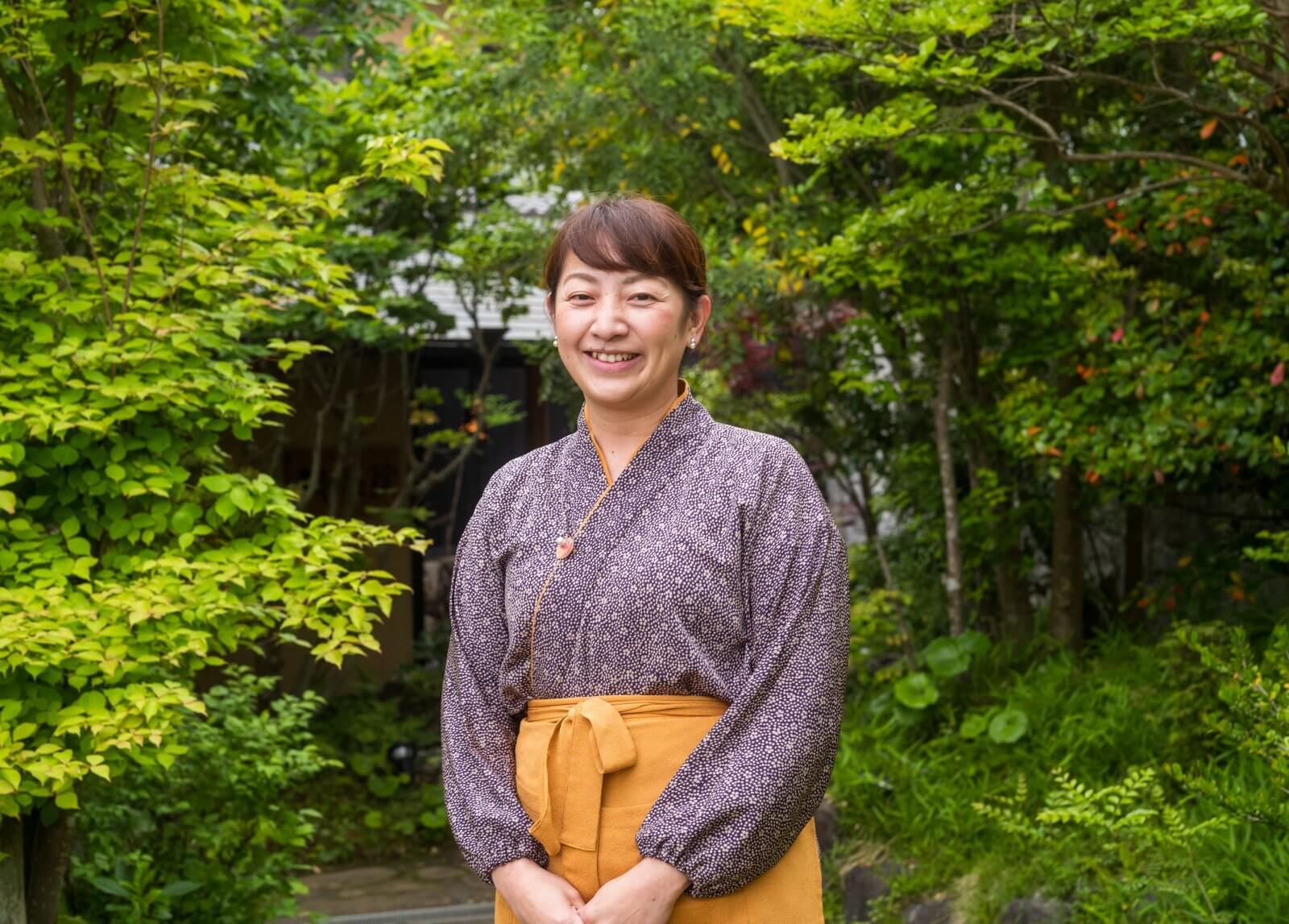
Third-generation proprietress Makiko Hirayama. Nearly ninety percent of the ingredients used in the meals are sourced from Iki, including pesticide-free vegetables grown by the family. Food scraps and vegetable peels are used as livestock feed or returned to the soil as compost, creating a circular system across the estate.