Reinventing Space and Time: New Narratives Emerging in Taiwan
In Taipei and beyond, emblematic sites have been reimagined for contemporary use while remaining rooted in local heritage.
Through the lens of designer Yu Chih-Wei, several spaces in Taipei and its surroundings demonstrate how memory and modernity can intertwine to generate new stories.
1. From Market to Tavern: The Transformation of Xinfu Market in Taipei
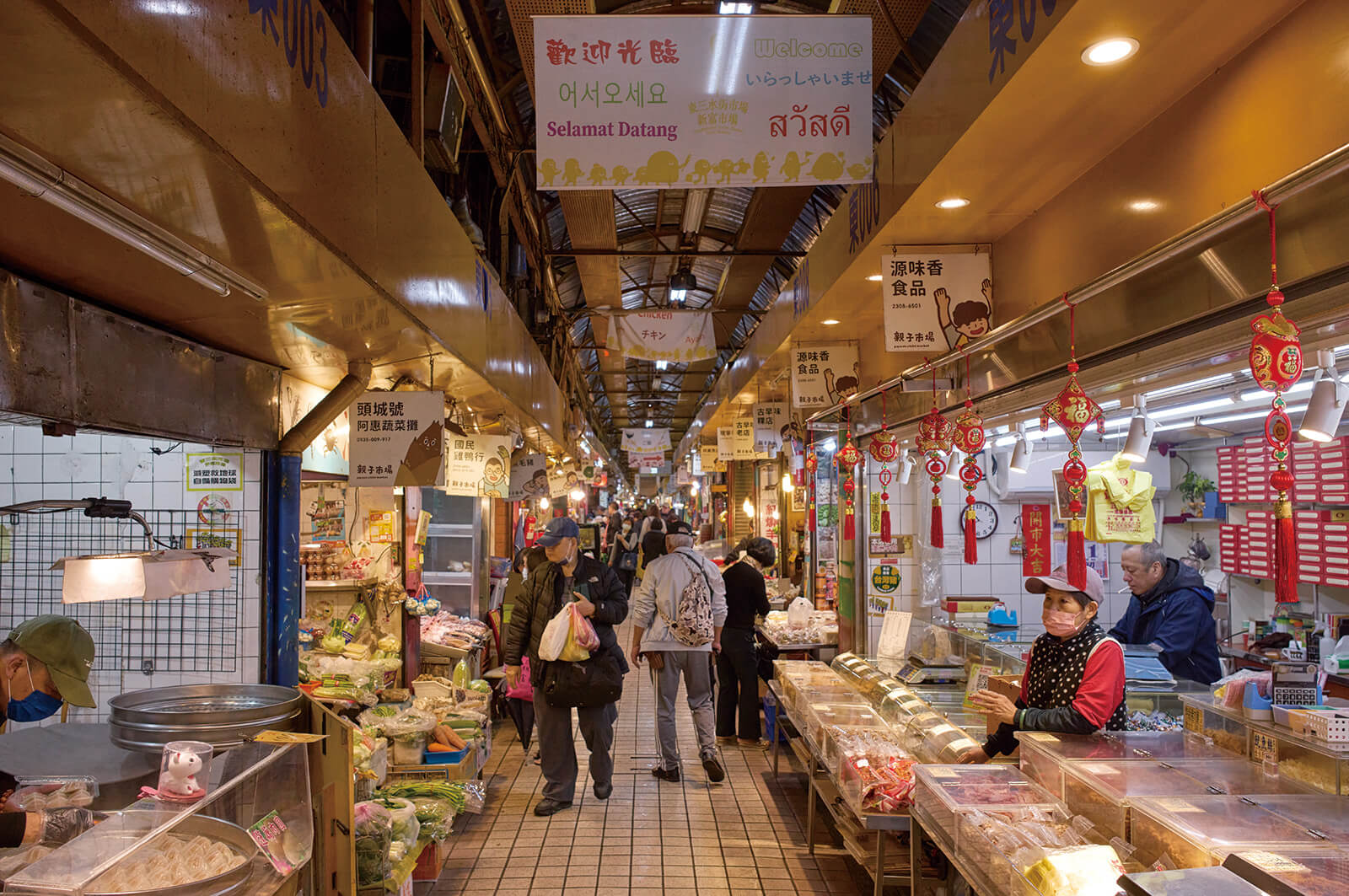
Dongsanshui Market is lined with vendors selling fresh produce from the mountains and the sea, drawing both locals and tourists, especially on weekends.
First opened in 1935 under Japanese rule, Xinfu Market was once a central hub of daily life in Taipei, especially during the 1950s. As the city underwent rapid modernisation, the market gradually declined. In 2006, the horseshoe-shaped building was officially recognised as a heritage site and listed as a historical monument by the city. A new chapter then quietly began.
Now revived as a space for food, learning, and urban experimentation, the market has regained its place as a gathering point. At the heart of this reinvention is restaurateur Lee Cheng-Tao, who introduced the concept of a ‘daytime tavern’—a hybrid venue where visitors are free to enjoy dishes purchased from the neighbouring Dongsanshui Market. Straddling tradition and modernity, the space celebrates the rituals of everyday life while opening the door to new forms of conviviality.
‘In Taiwan, there’s a culture of shared banquets around round tables. By reusing old furniture and salvaged materials, I wanted to create a place where people could connect through food sourced directly from the market,’ explains Lee Cheng-Tao.
Once a drink is ordered and a seat secured, visitors can borrow tableware and browse the market stalls for ready-to-eat dishes. Garlic-soy marinated shellfish, sticky rice sausages, freshly steamed sweet potatoes, water caltrops, and shrimp noodles topped with generous handfuls of coriander offer a modest yet deeply local culinary experience.
The space retains the texture of its past—wooden beams, steamer baskets turned into lampshades, serving trays repurposed as tables. A retro atmosphere that appeals as much to locals as to curious travellers. There’s also a cooking school dedicated to traditional Taiwanese dishes and a cultural events area, reinforcing the venue’s role as a site of exchange.
As Yu Chih-Wei puts it, ‘The market—part of everyday life—is turned into a tavern. It’s an act of spatial reinvention.’ A place where memory is handed over to the future.
Xinfu Market, Wanhua Daytime Tavern
Address: Around No. 70, Sanshui Street, Wanhua District, Taipei (inside the Xinfu Cultural Market)
Phone: +8862-2308-1092
Opening hours: 10am – 6pm, closed on Mondays.
umkt.jutfoundation.org.tw/en?language=en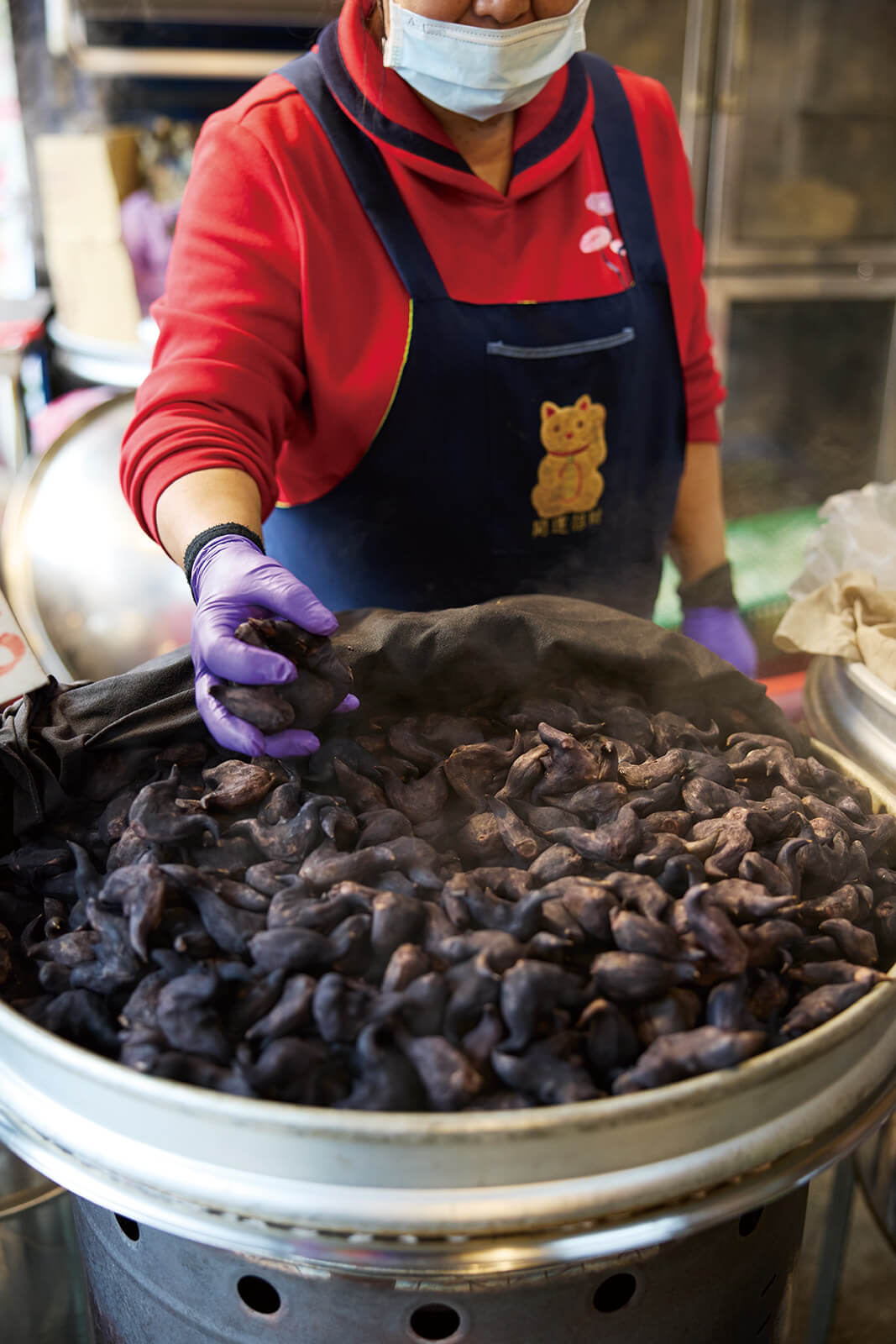
At the market entrance, sweet potatoes and corn are steamed in giant bamboo baskets. A local specialty: water caltrops. Encased in a black shell, their white flesh has a texture reminiscent of chestnuts.
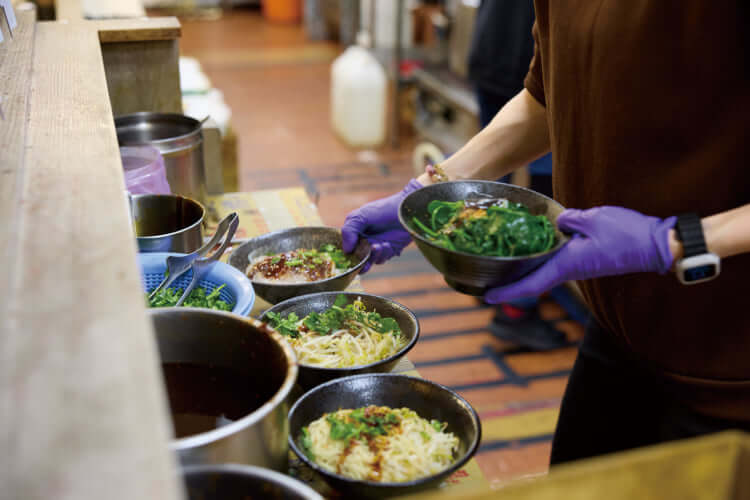
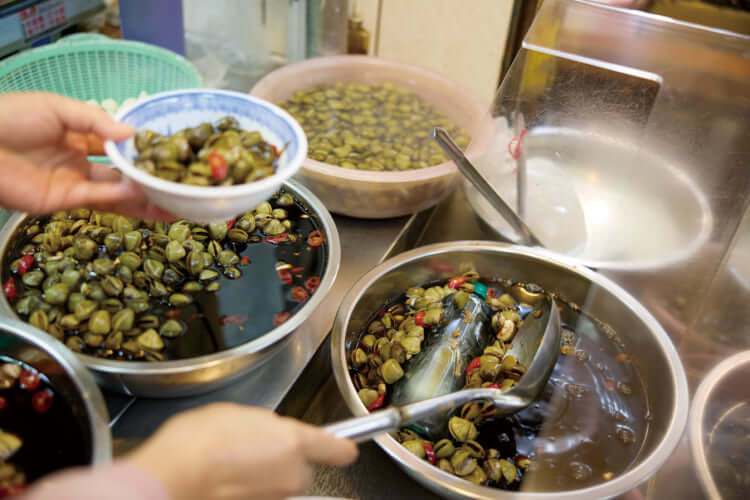
Left: a generous portion of rice vermicelli topped with heaps of fresh coriander, ready to go. Right: clams and other shellfish marinated in garlic soy sauce—perfect with a drink. A wide variety of fish paste products and other local delicacies are also available for takeaway.
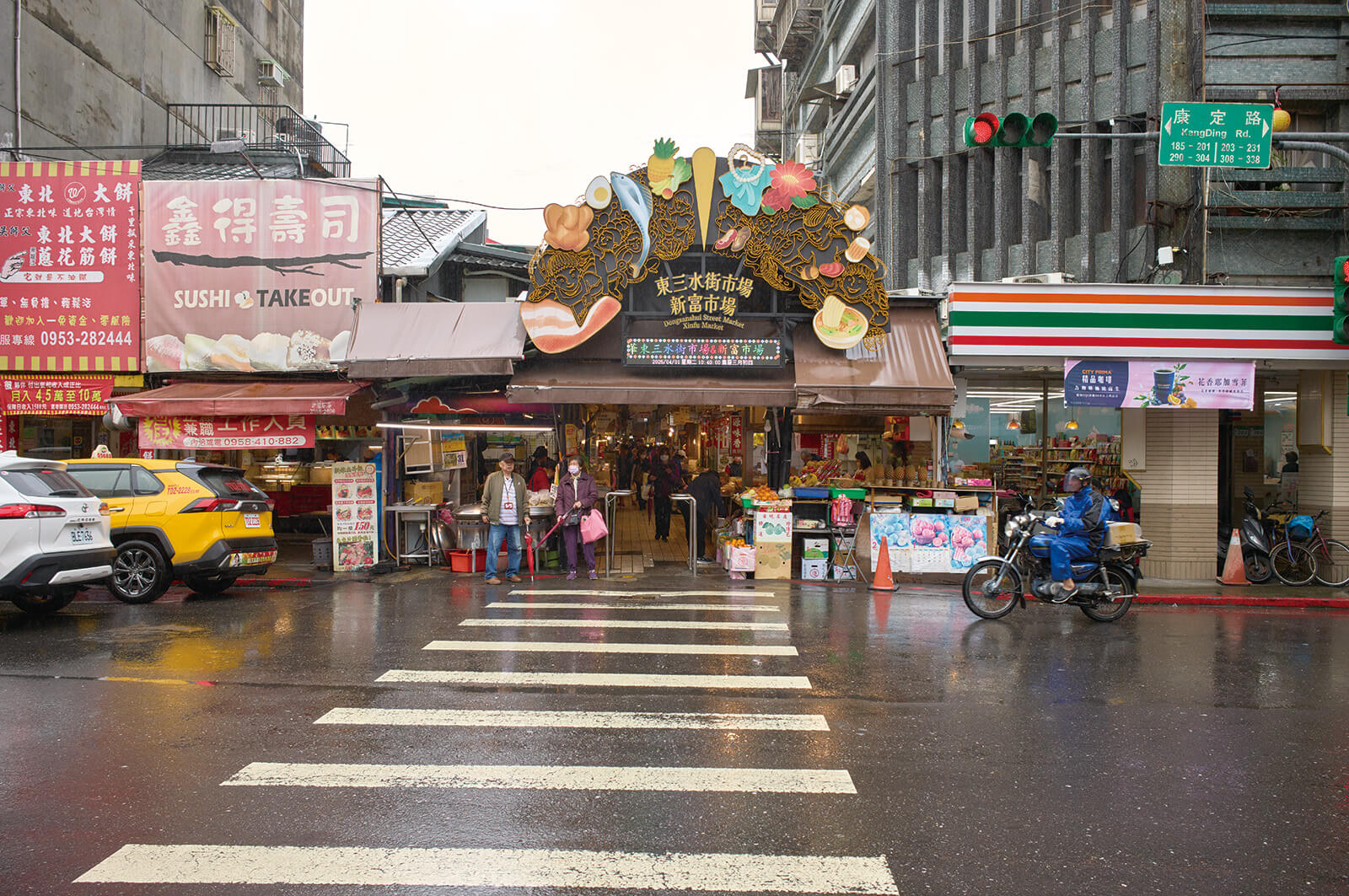
Entrance to Dongsanshui Market, in the Longshan Temple area. The entrance to Xinfu Market can be found halfway down this bustling shopping street.
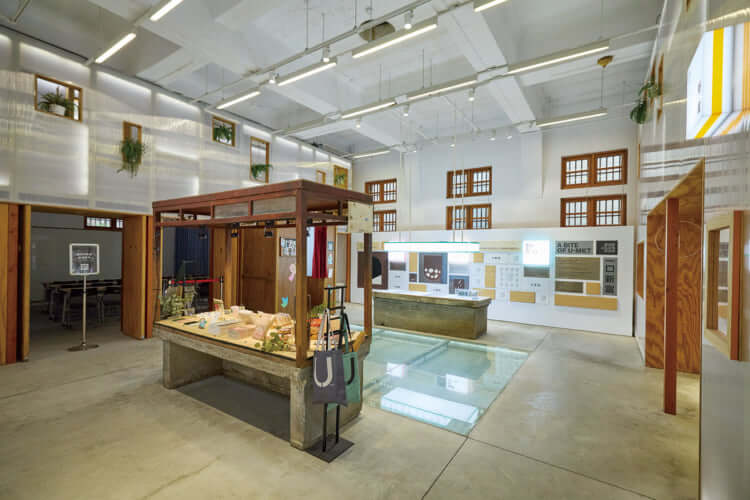
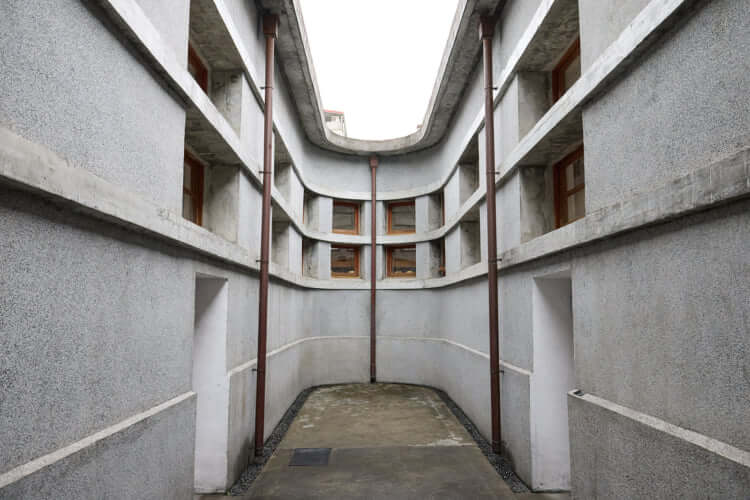
Left: inside, an exhibition space presents Taiwanese culture alongside a room for talks and events, making the venue a cultural crossroads. Right: the central part of the horseshoe-shaped building, constructed during the Japanese colonial period. The original structure has been preserved, while the interior has been fully renovated.
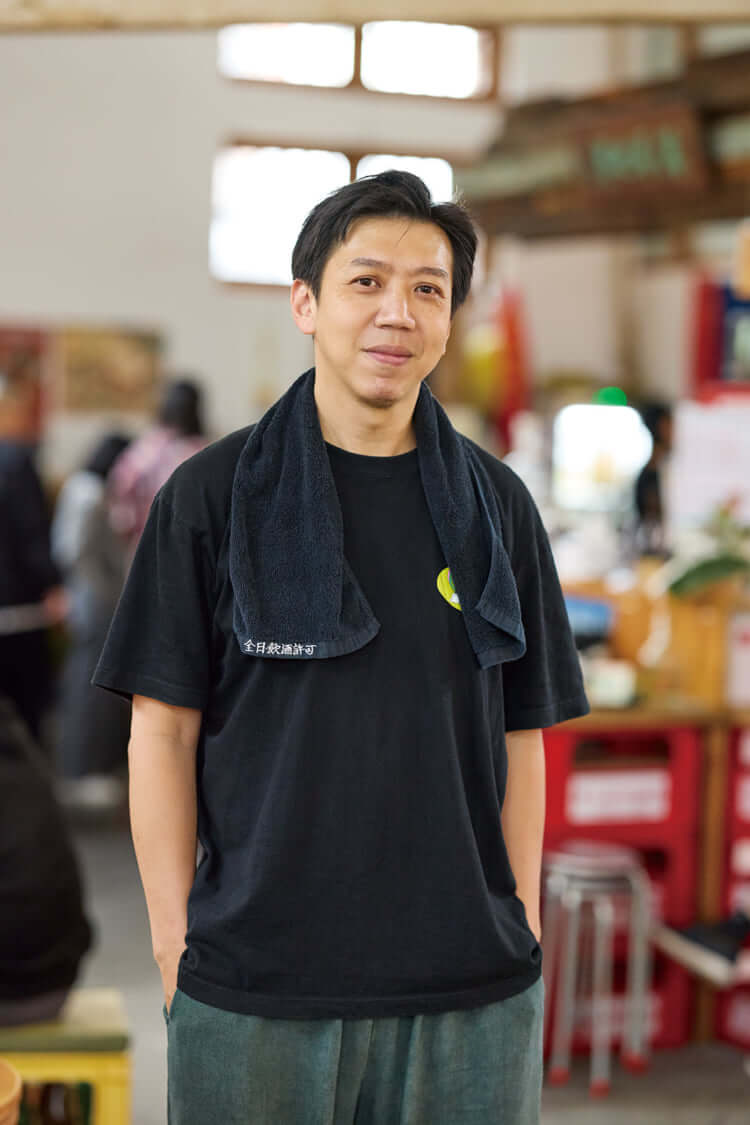
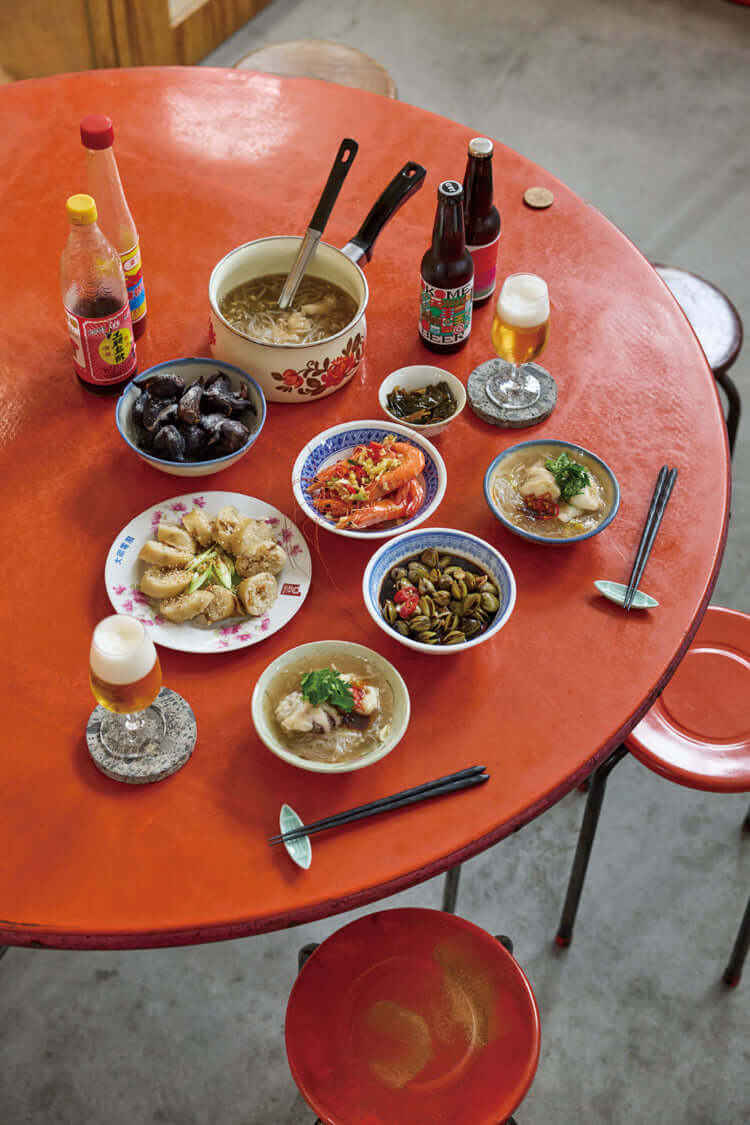
Left: Lee Cheng-Tao, who manages the tavern. A seasoned advertising producer, he is also actively involved in urban revitalisation projects. Right: once food bought at the market is set out and drinks are ordered, the banquet begins. Tableware and condiments are available at the tavern counter. From Friday to Sunday, reservations are required. The drink menu includes Taiwanese craft beers and collaborations with Japanese breweries.
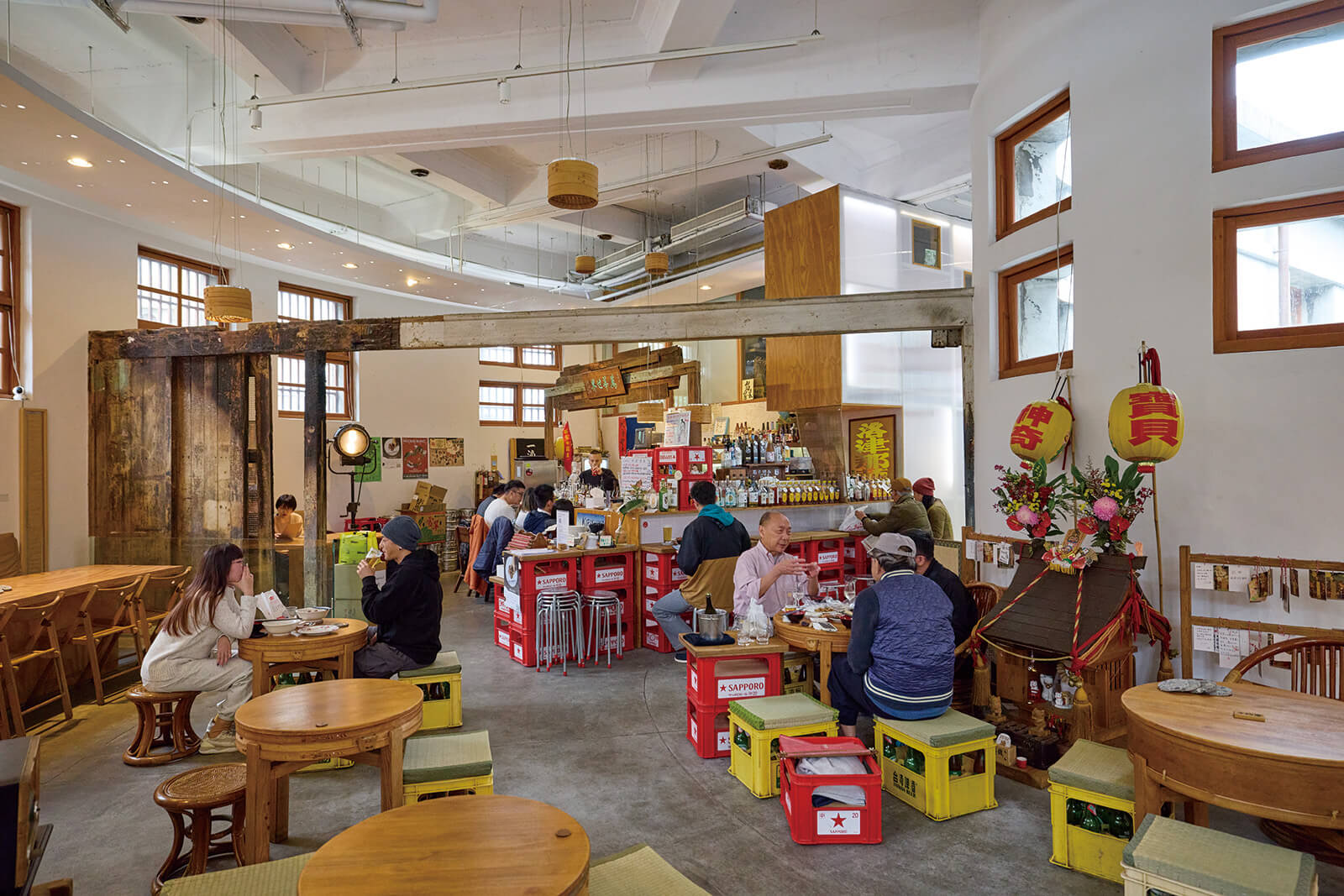
A dining space themed around the idea of a ‘daytime tavern’, where visitors enjoy food sourced directly from the market. The central beams and old counter signage echo the site’s past as a traditional market.
2. Sidoli Radio: A Pocket Studio Linking Memories Through Sound
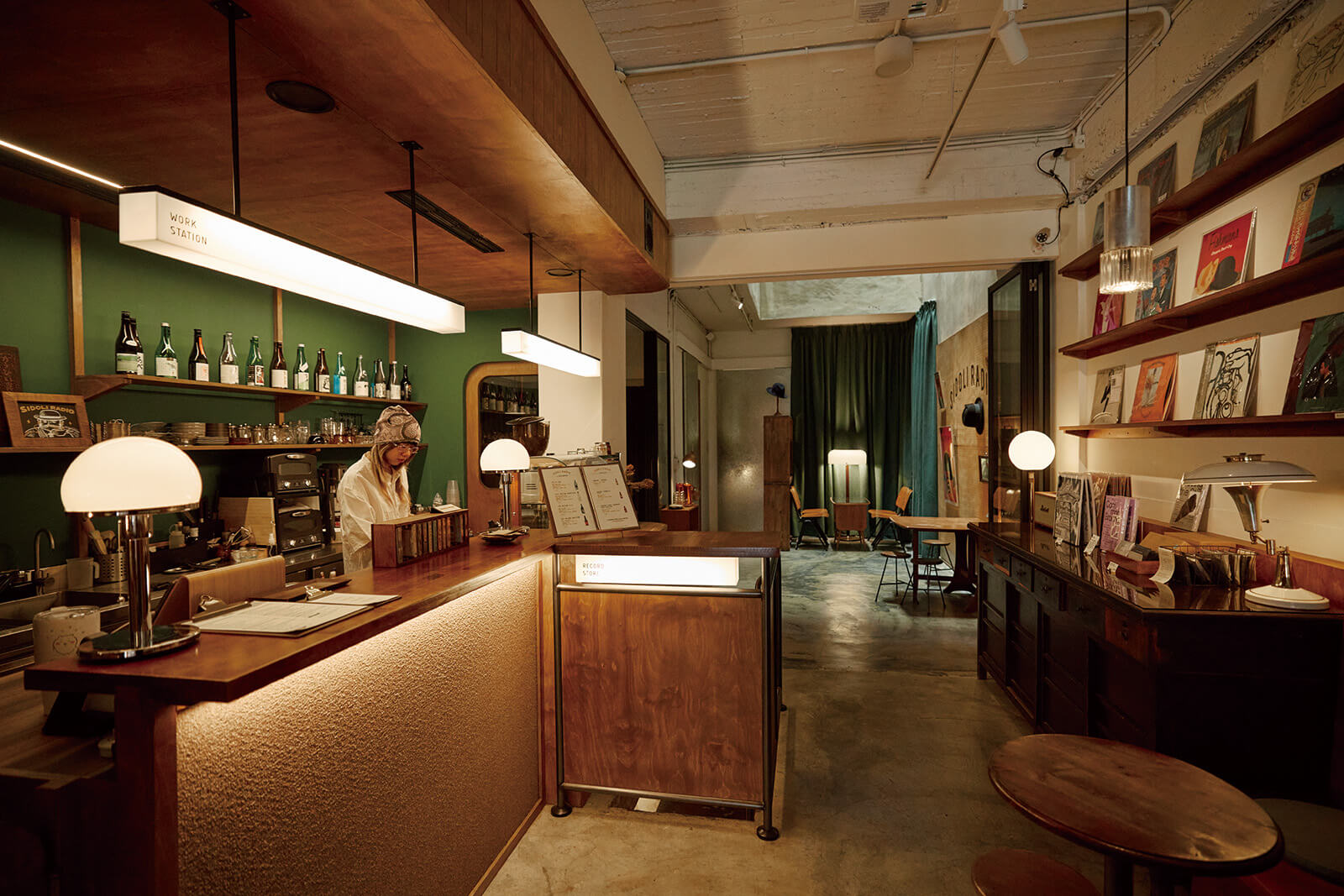
Just past the entrance, a cafe counter serves coffee and light snacks. In the back, a semi-private room offers a quiet space to unwind.
Nestled in the historic district of Dadaocheng, Sidoli Radio 小島裡 is a space conceived by Yu Chih-Wei and designer Fang Xu-Zhong. A cafe paired with a podcast recording studio, it offers a dual-layered experience: beneath its floor lies a former air-raid shelter from the Japanese colonial era, now home to a curated selection of cassette tapes and vinyl records, focused mainly on Taiwanese and international pop music.
‘‘Sidoli’ originates from a local mishearing of the English word ‘story,’ as pronounced by Japanese speakers in the past. Language changes with time and place. This is a small editorial studio where sound and content meet,’ explains Yu Chih-Wei.
Starting from the idea that sound is a more primal form of communication than speech, Sidoli Radio aims to tell the story of the city through sound. Recordings take place in emblematic locations across the neighbouring Dihua Street area, including century-old shops and temples. In doing so, the team is creating an audio archive of Taiwan’s living history, with plans to eventually expand the project into Japanese and Korean.
Listening to Taiwanese pop from the 1980s and ’90s on cassette, surrounded by the quiet hum of the past, offers a rare experience—one that feels gently detached from time and place.
Sidoli Radio 小島裡
Address: 1F, No. 245, Chang’an West Road, Datong District, Taipei
Phone: +8862-2552-5300
Opening hours: 11am – 6pm (Wednesday to Sunday). Visits limited to 2 hours. No reservations. Irregular closures.
sidoli.tw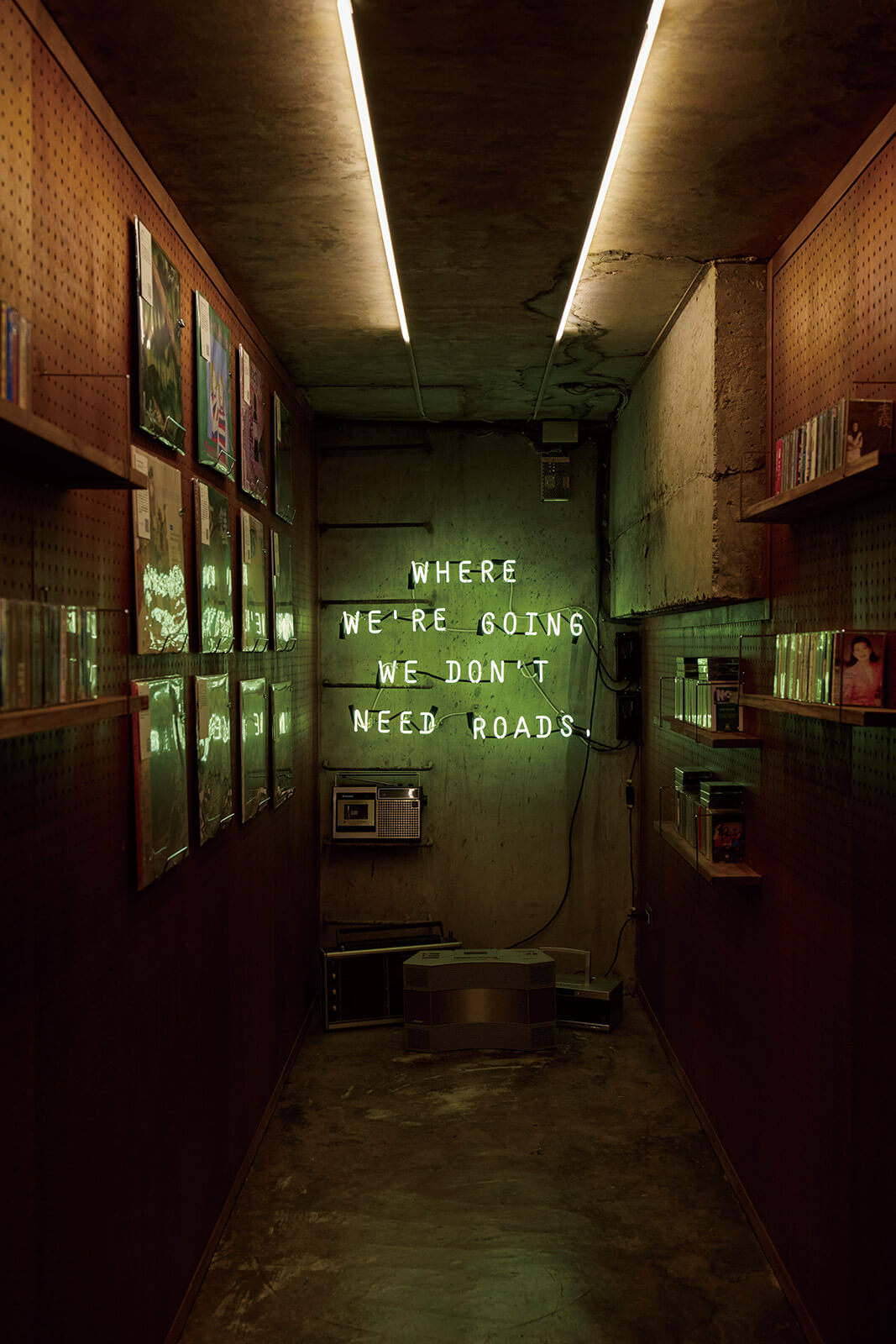
The narrow underground corridor once served as an air-raid shelter. At the far end, a neon sign quotes Back to the Future: ‘Where we’re going, we don’t need roads.’
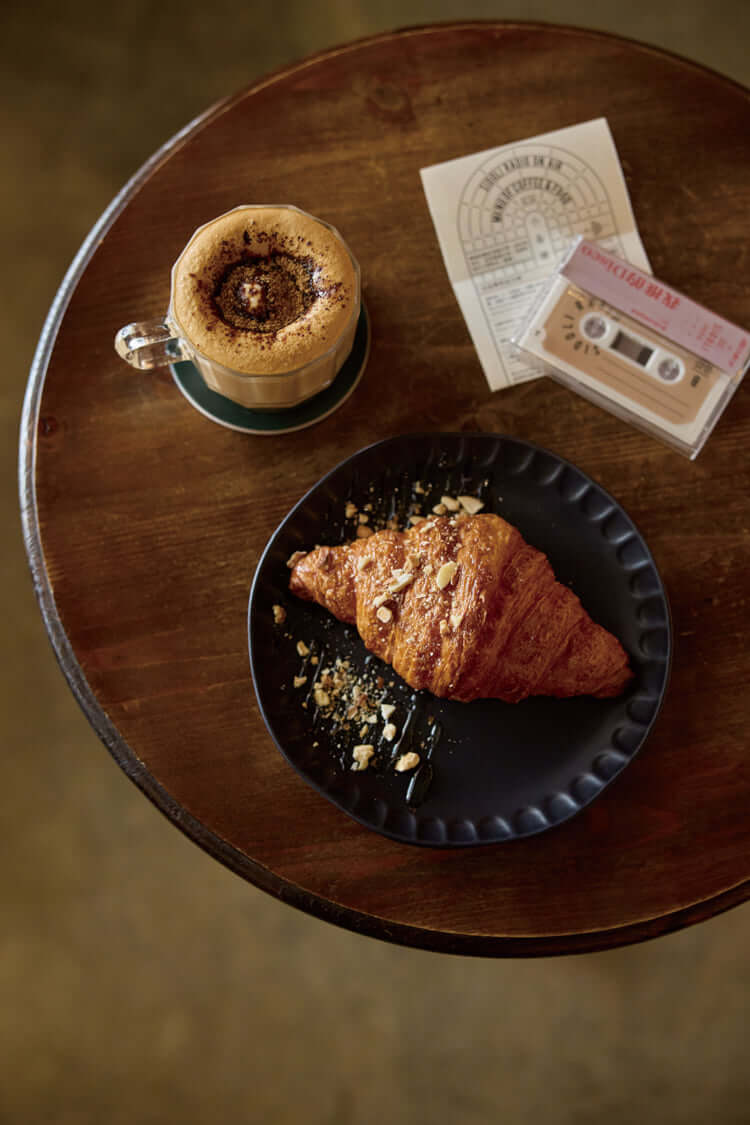
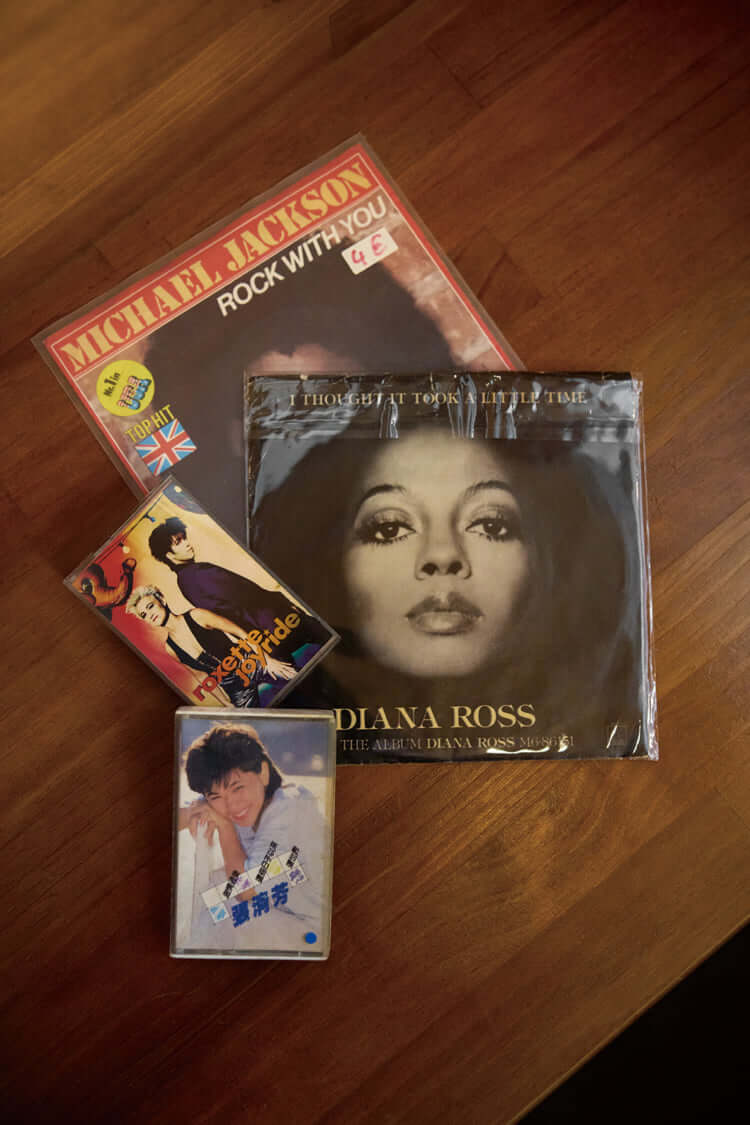
Left: a cafe latte brewed with carefully selected beans, served with a fragrant croissant. Blank cassette tapes are also available for purchase. Right: Yu Chih-Wei curates a playlist centred on the 1980s—Diana Ross, Michael Jackson, Roxette—where music becomes a medium for exchange across generations and cultures.
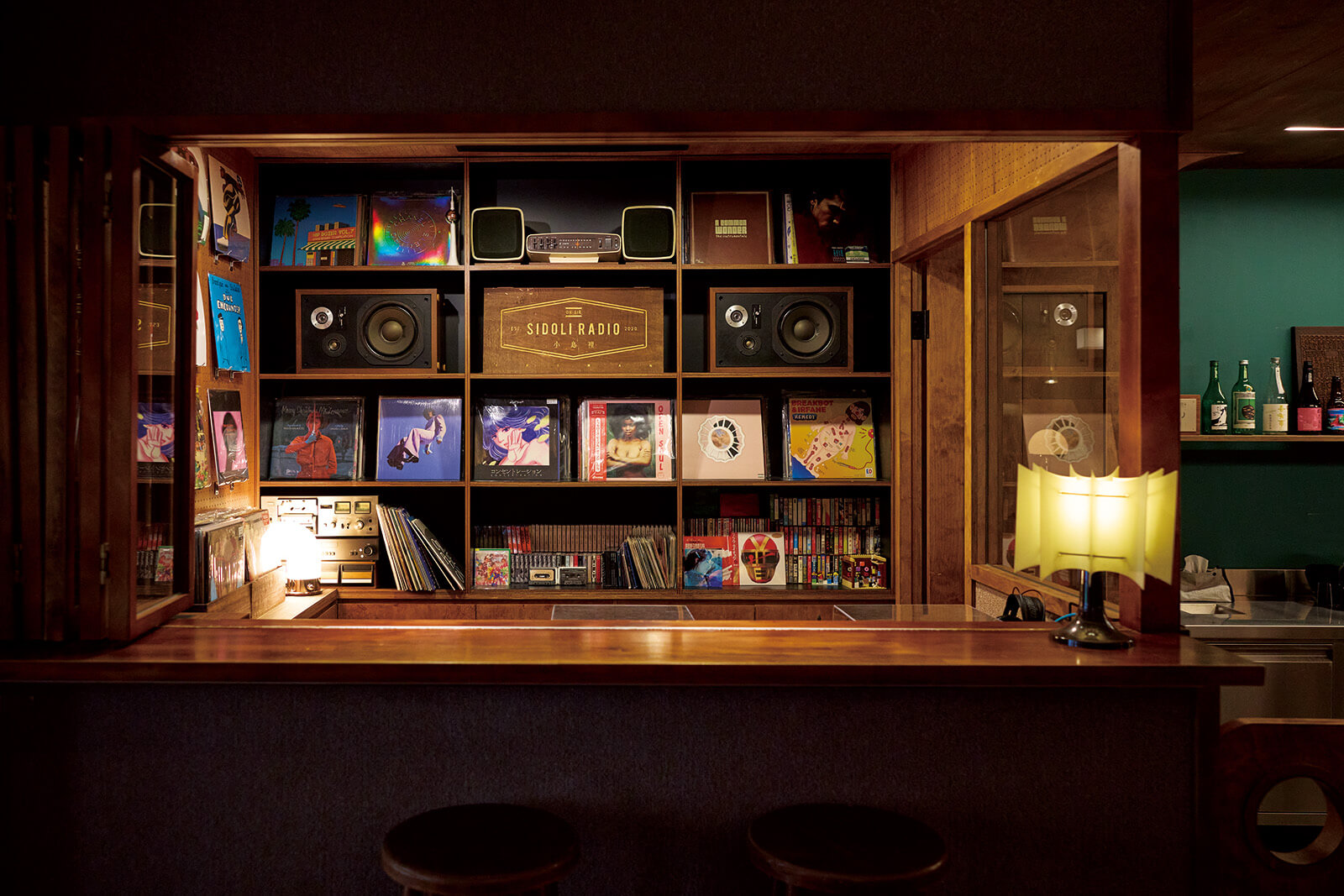
The DJ booth also functions as a recording studio. All podcast episodes are available on the official website.
3. Mineless: Releasing Body and Mind in a Ruin Marked by Mining Memory
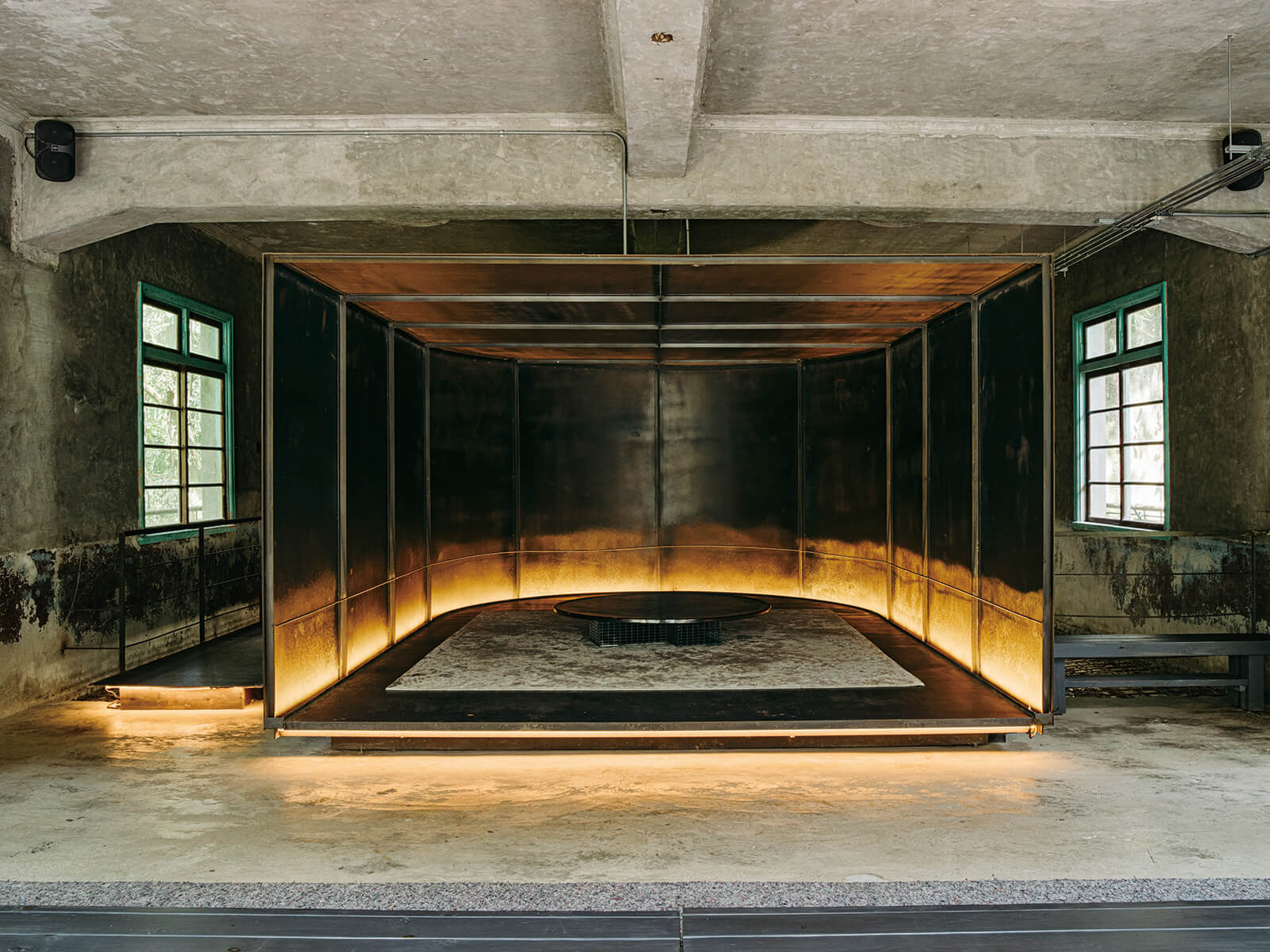
The tea room, designed for perfect acoustics, stands out with its distinctive semi-oval shape. In shadow and silence, thoughts deepen naturally.
About an hour’s drive from central Taipei, the city gives way to a gentler landscape, until the road leads to a discreet site tucked within dense, untamed greenery. Once home to a coal mine’s administrative offices, this secluded space now draws a creative-minded crowd, hosting brand receptions and a range of events. The area flourished from 1918 onwards, with mining operations employing as many as 3,000 workers at their peak. But in 2000, when all of Taiwan’s mines were officially closed, the site fell silent.
In June 2023, it was reborn as Mineless 無礦, following a renovation by the Natural Journey Architecture Team, led by acclaimed Taiwanese architect Divooe Zein. The group chose to preserve the wilderness that had taken over the ruins, carefully integrating elegance and functionality without erasing the site’s quiet decay.
‘An exhibition space in ruins, embraced by nature—a place to reconnect with one’s body and spirit,’ says Yu Chih-Wei, who considers the site a sanctuary. Wind moving through the leaves, dappled light filtering through the trees, and the hush of a forgotten mine all come together in an immersive, introspective experience—where one can encounter both the traces of a lost landscape and a newly attuned self.
Mineless 無礦
Address: No. 119-1, Zhuntou, Jinzhunli, Sanxia District, New Taipei
Phone: +8862-2674-9678
Reservation only.
www.mine-less.com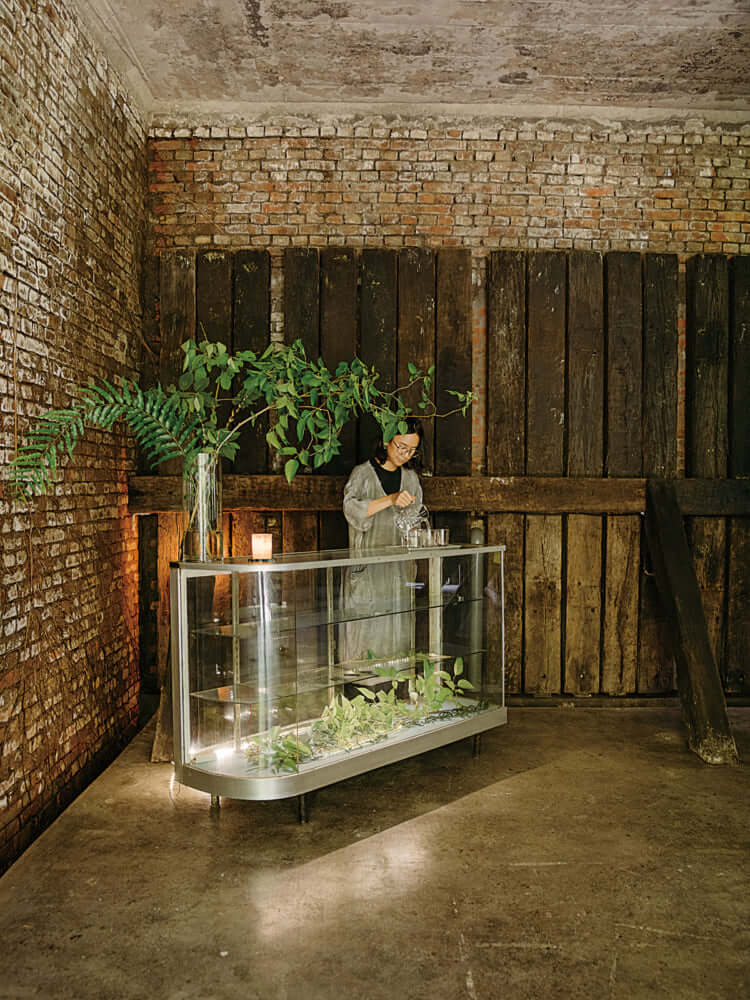
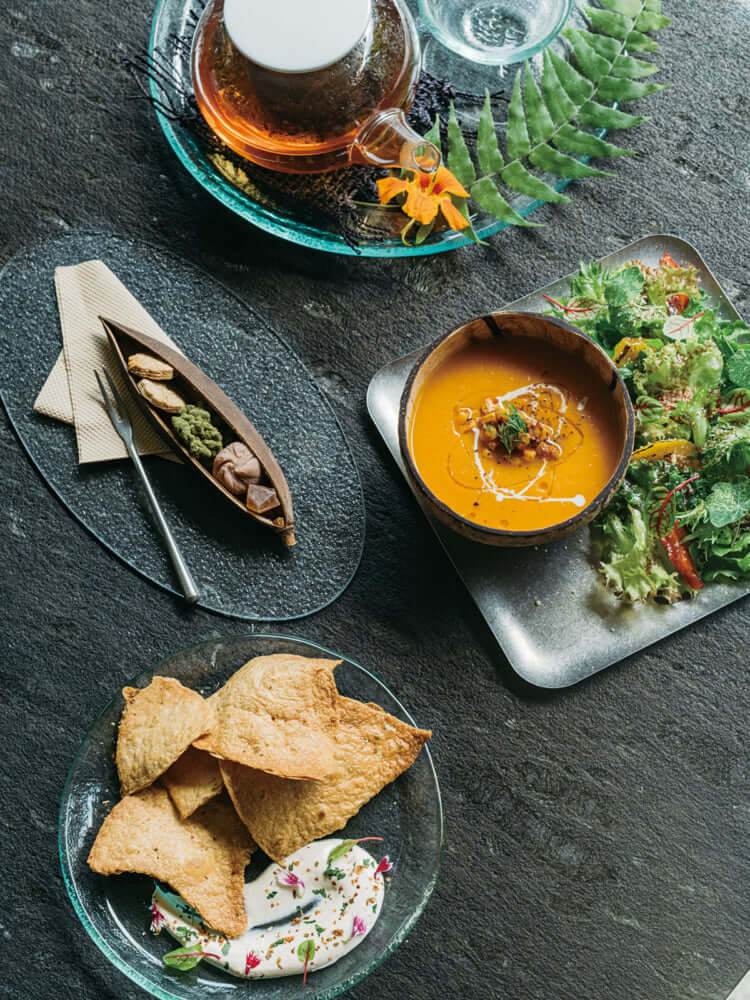
Left: railway sleepers reinforce the walls, a material choice combining functionality with harmony alongside the existing structure. At arrival, guests are greeted with a welcome drink delicately scented with magnolia blossoms. Right: carefully crafted, refined dishes highlighting seasonal vegetables. Reservations available for groups of 10 or more. 1,620 TWD per person, with a 3-hour limit.
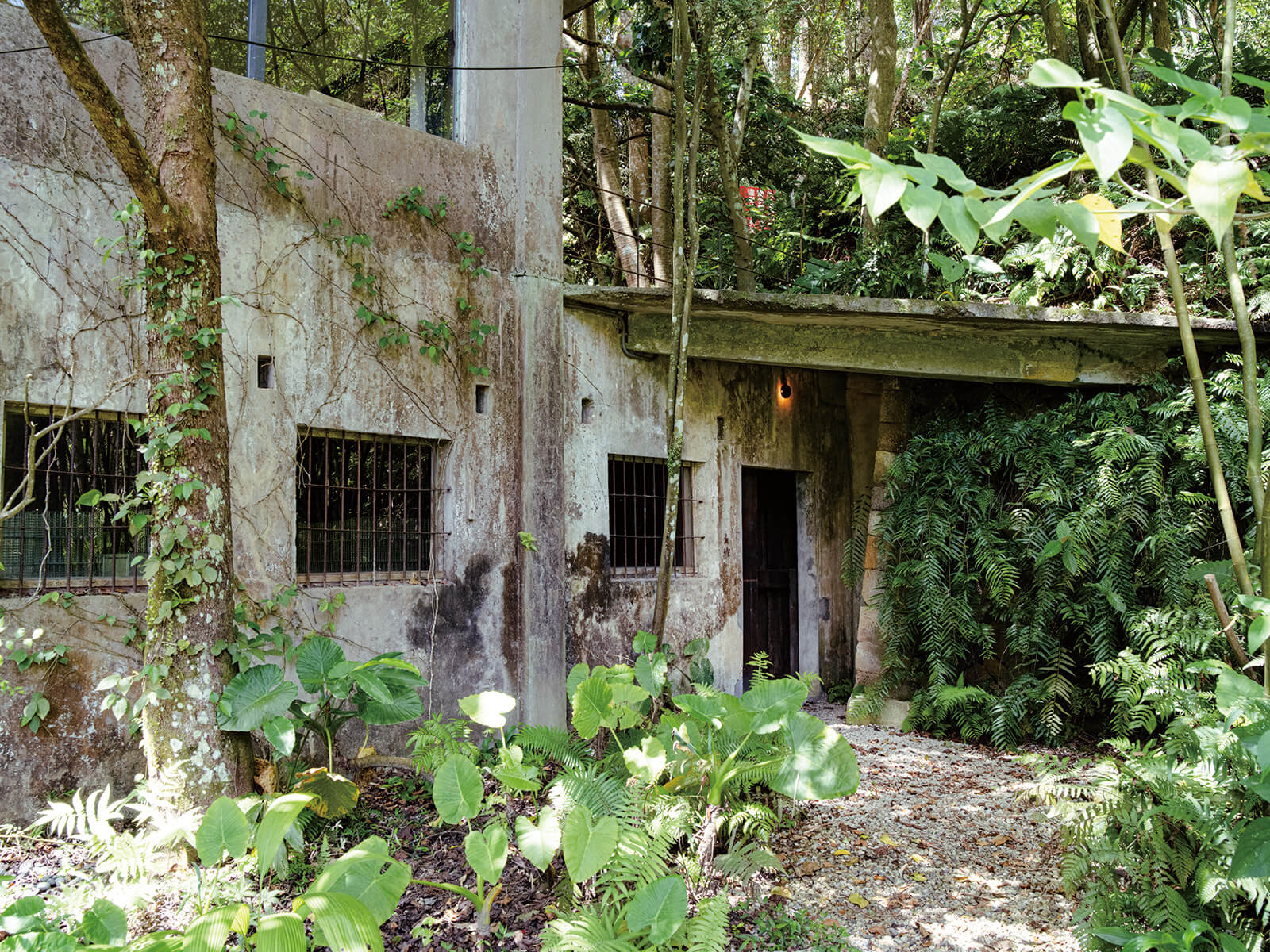
Multiple vegetation-covered buildings align, connected by exterior stairs and walkways. The complex offers cozy lounges with sofas as well as the acoustically refined tea room, presenting a variety of spaces.
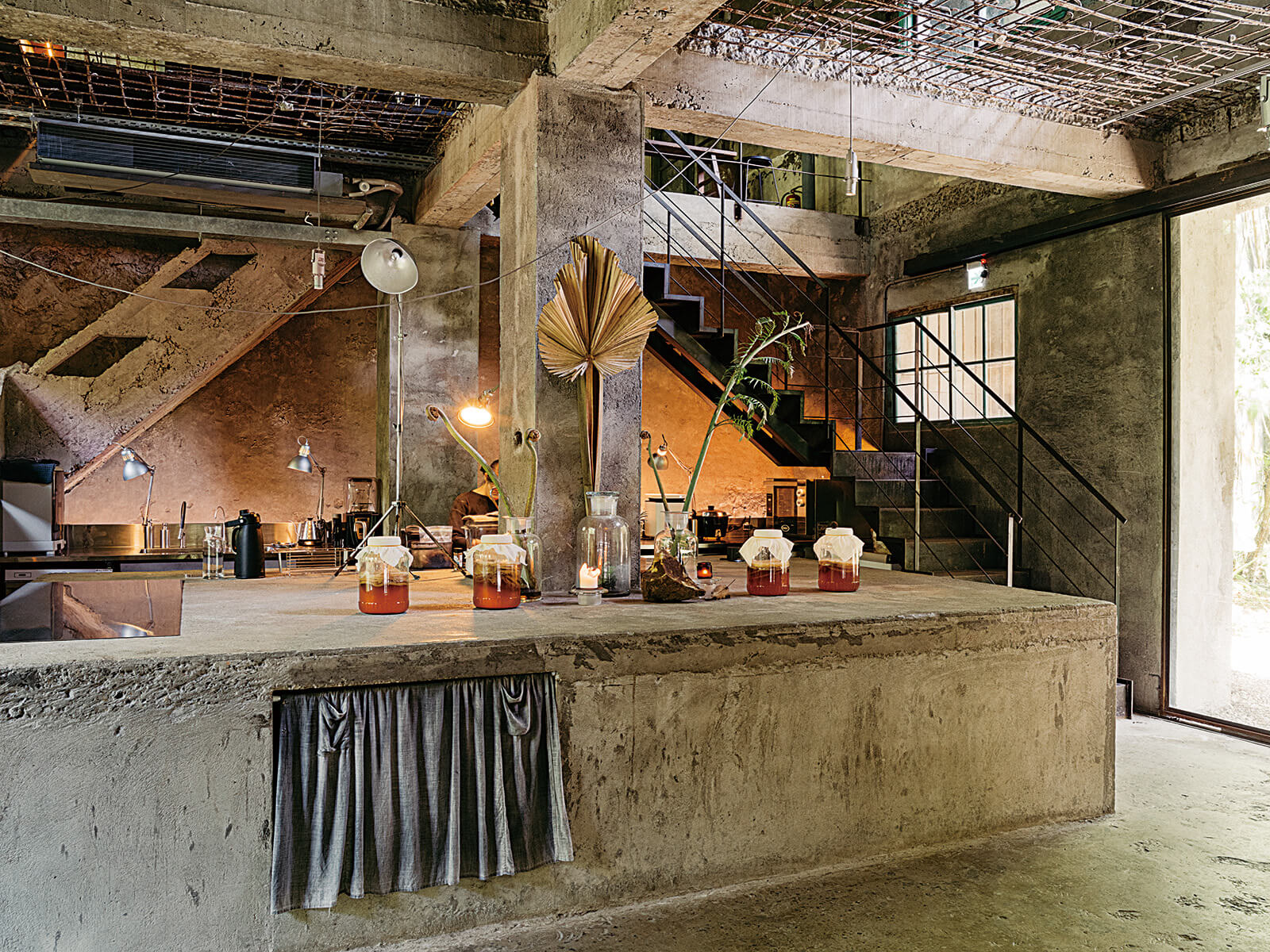
An open, bright kitchen. Buffets can be arranged according to budget and needs. Opposite, a bright and welcoming dining room.
4. At 0km, Recharging in a Timeless Urban Forest
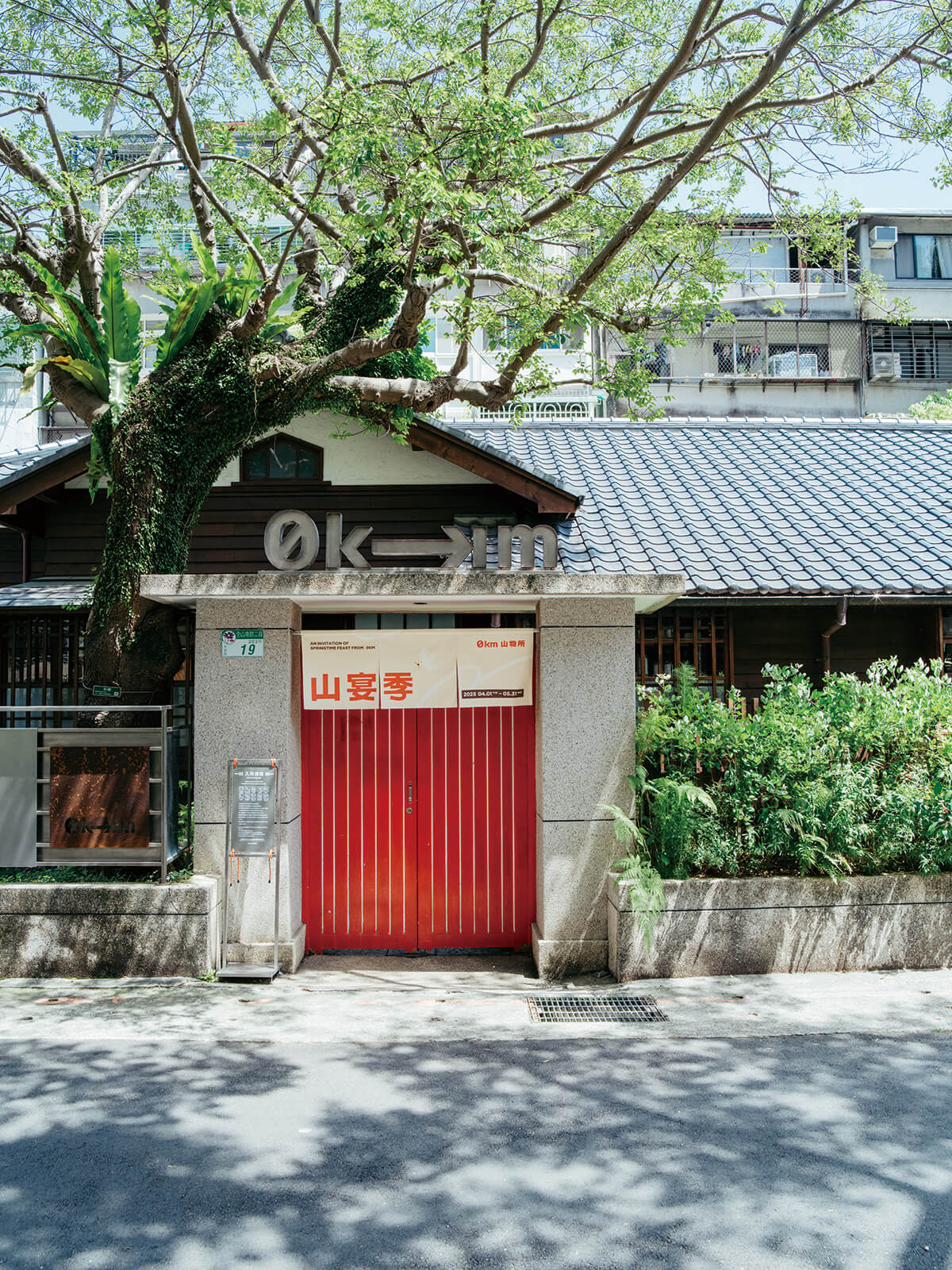
A single-story house nestled among apartment buildings, surrounded by ancient trees that have watched over the site for decades, alongside transplanted endemic species.
‘A haven of calm between mountain and city, where contact with plants evokes the body’s memories,’ describes Yu Chih-Wei. Surrounding an old Japanese-style house, a dense and diverse array of vegetation thrives—over a hundred species, all endemic to Taiwan, including several endangered.
Originally used in the 1930s as a residence for the colonial government’s forestry department, the site later came under the care of the Forestry Bureau. In 2006, the area was designated a historic monument. The discovery of a Taiwania tree over 100 years old sparked local conservation efforts. In March 2024, a public-private partnership brought forth 0km 山物所, conceived as a gateway to experiencing Taiwanese nature within the urban environment.
The site encompasses six buildings, including a shop, a cafe, pop-up spaces, and an event hall, offering a variety of experiences. The coexistence of plants from different habitats and elevations creates a forest within the city—a suspended space beyond time and place, where visitors can almost forget they are in Taipei.
0km 山物所
Address: No. 21, Lane 203, Section 2, Jinshan South Road, Da’an District, Taipei
Opening hours: 11am – 7pm, closed on days announced via social media.
www.0km.com.tw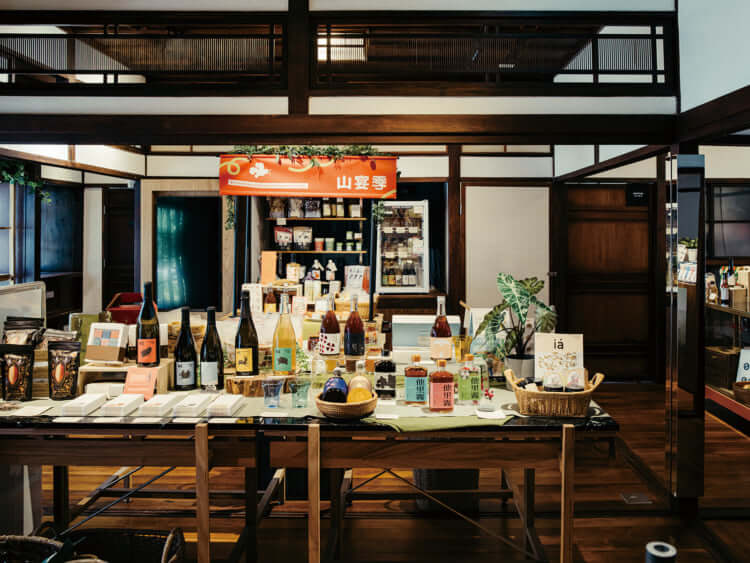
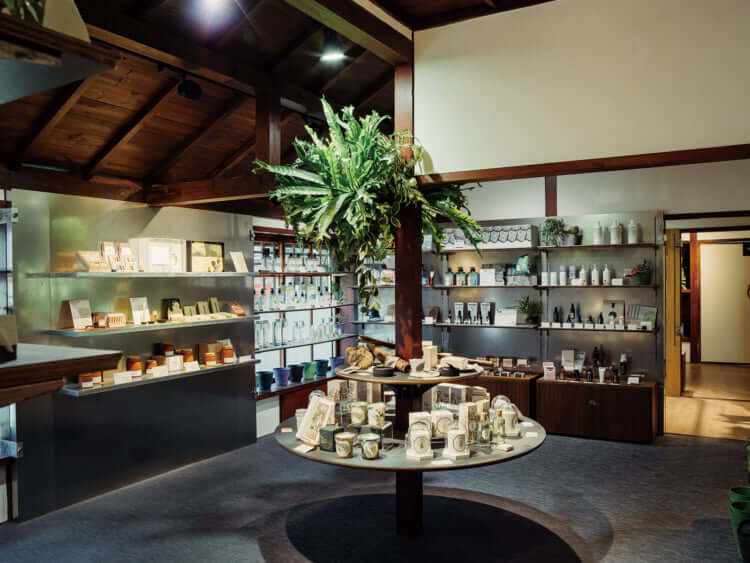
Left: the shop offers a curated selection related to the forest, including carefully crafted spirits and snacks, outdoor gear, aromatherapy products, and collaborations with sustainable brands. Right: Building B, displaying aromatherapy goods, stands out for its successful blend of historic architecture and contemporary design. The layout, originally designed to accommodate two families, is also notable.
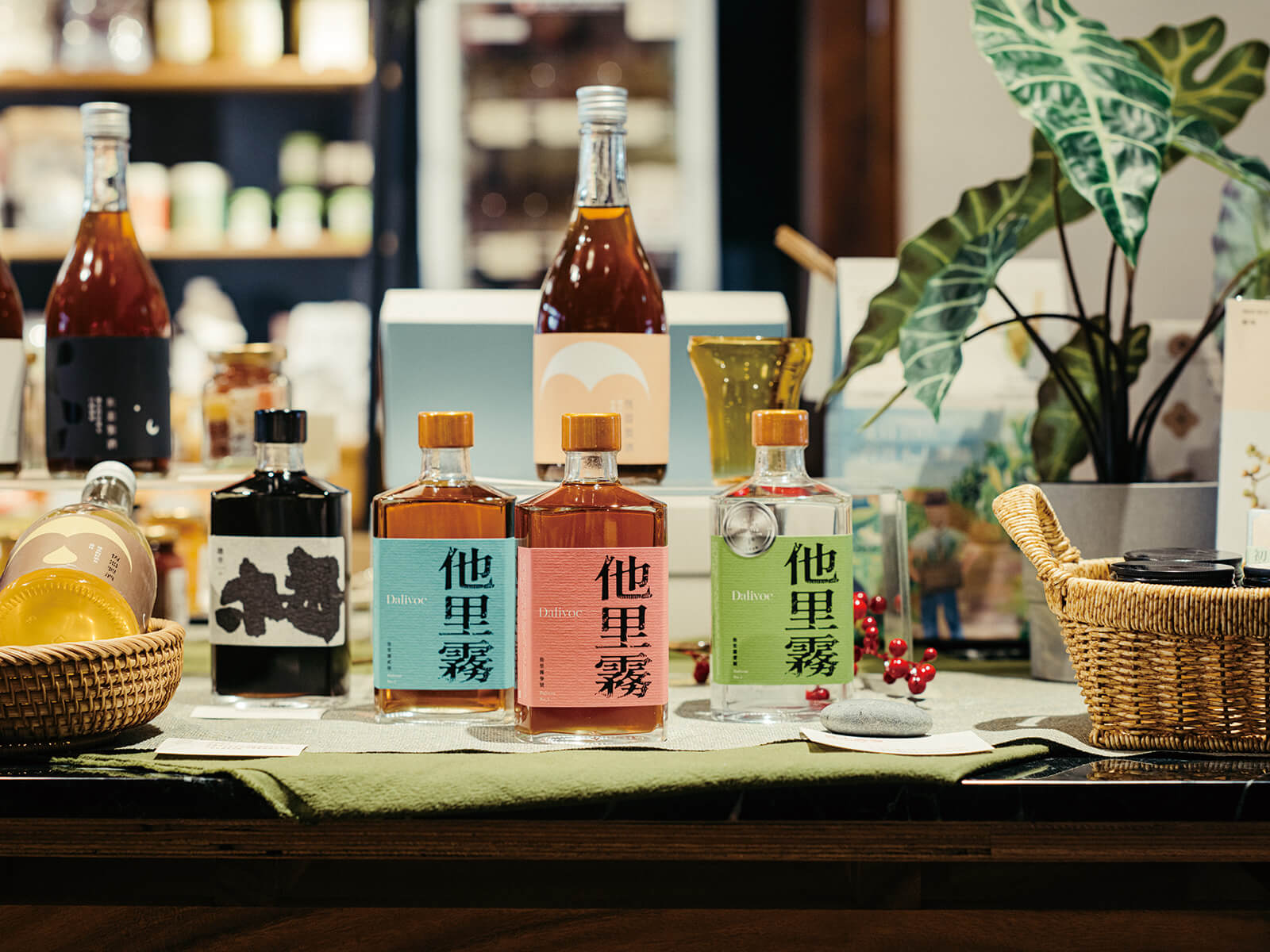
Spirits made from Taiwanese sweet potatoes and local fruits.
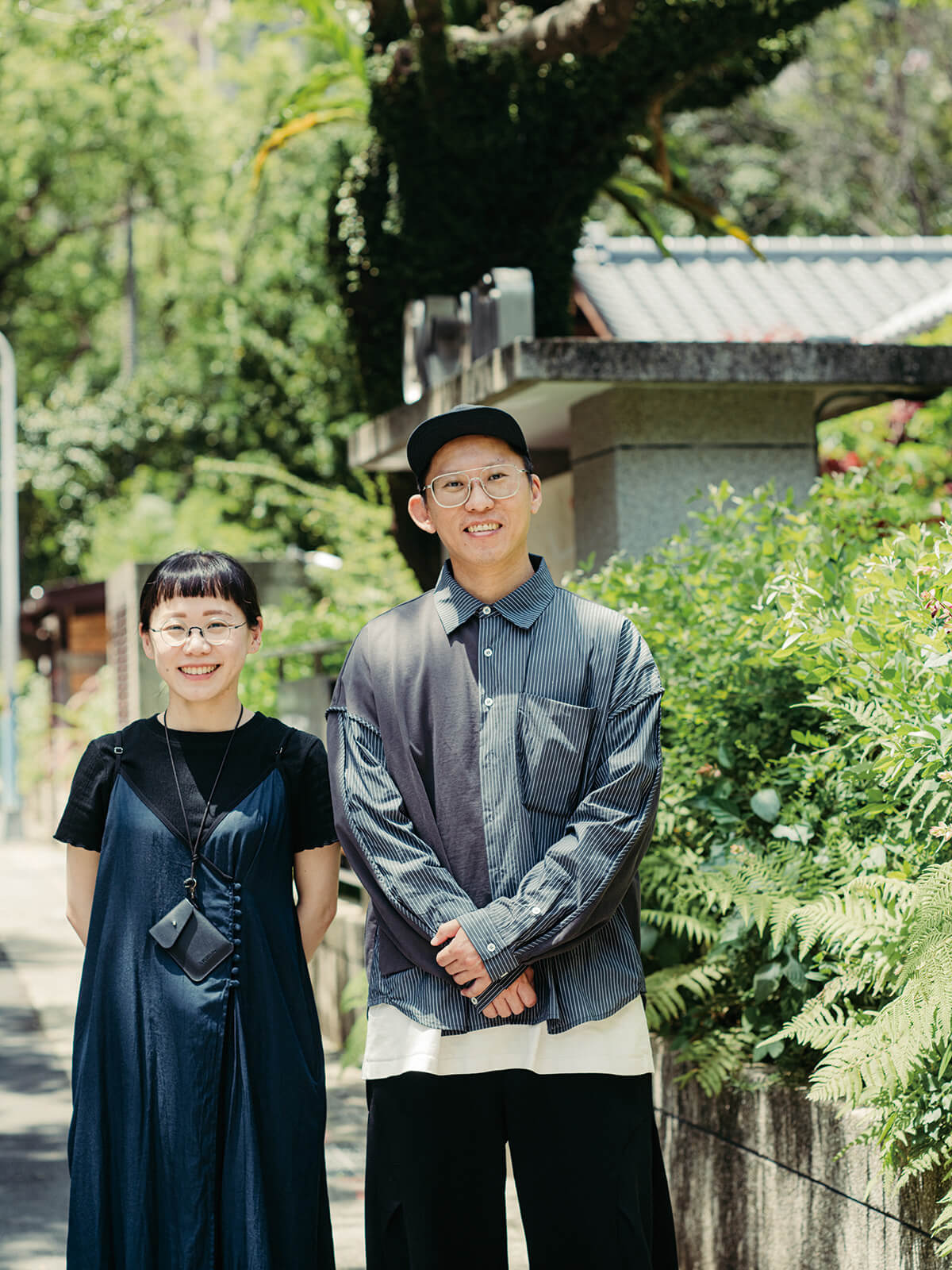
Xie Junxuan (left) and Lu Zhihao, our passionate guides specially recruited for this project, share their detailed and enthusiastic explanations.