Screenwriter Kundō Koyama advocates for the recognition of yudō, the ‘way of the bath’, alongside sadō, the way of tea, and kadō, the way of flowers, as a fundamental element of traditional Japanese culture. He immerses himself across Japan in different types of baths, from hot springs (onsen) to public bathhouses (sentō), as well as domestic bathtubs. In each issue of Pen, he records these journeys in his ‘Bath Chronicle’.
Sanbonmatsu-yu, A ‘Sento’ Where One Reflects on the Preciousness of Peace
In his ‘Bath Chronicle’ series, Kundō Koyama advocates for ‘yudō’, the ‘way of the bath’, as a pillar of traditional Japanese culture.
Sanbonmatsu-yu (Hiroshima City, Hiroshima Prefecture)
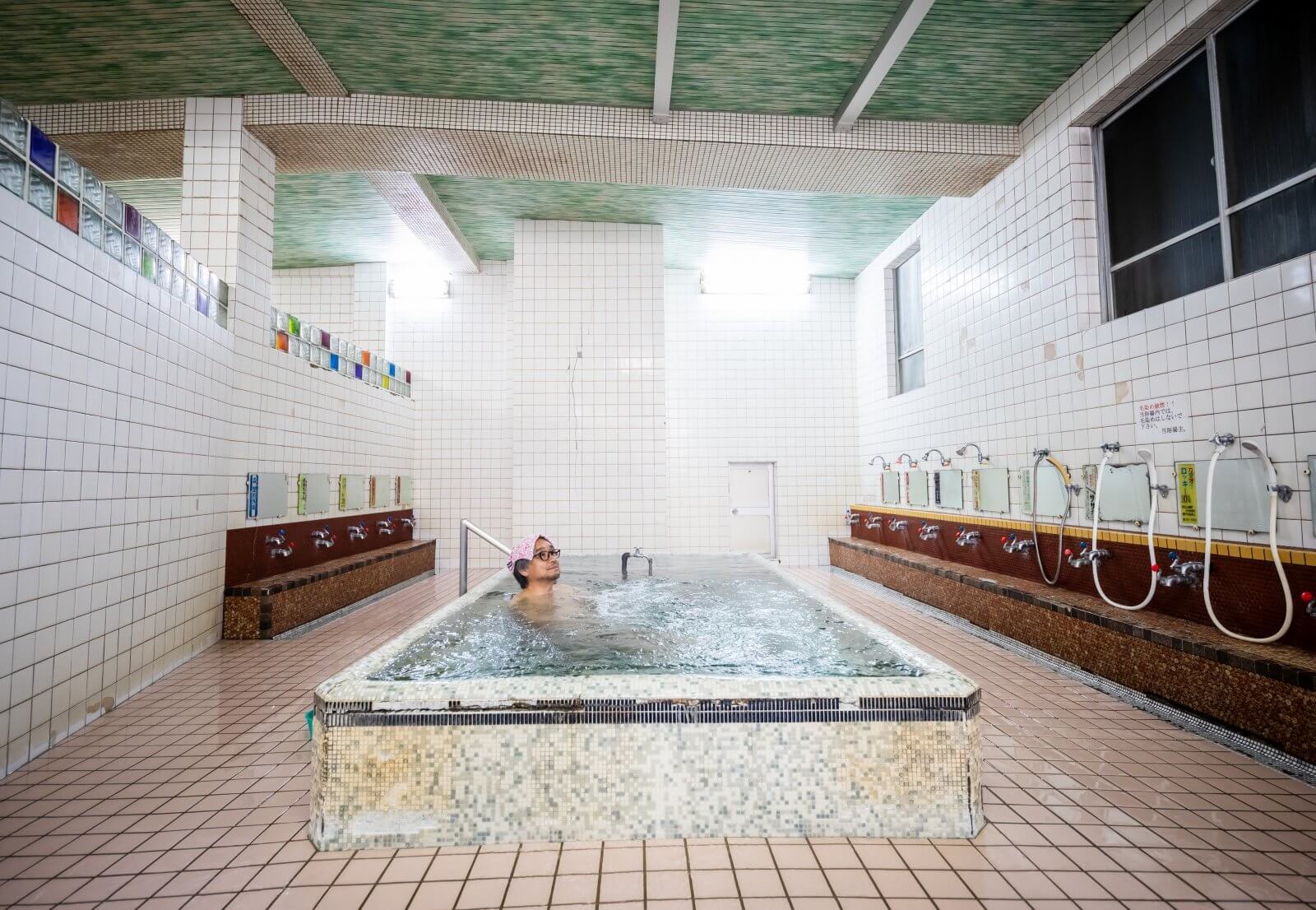
Kundō Koyama bathing in Sanbonmatsu-yu.
This year marks 80 years since the end of the war, an important milestone. In the height of summer, there was only one bath I felt compelled to visit.
Sanbonmatsu-yu, located in Hiroshima’s Higashi Ward, is the kind of retro sento I have always been fond of. It opened in the early Shōwa period and was named after the three pine trees (sanbon matsu) standing diagonally across from its entrance.
At 8:15 a.m. on August 6, 1945, the bathhouse, which stands about three kilometers from the hypocenter, suffered severe damage from the atomic bombing. Even so, parts of the original structure survived. Today it is the only sento in Hiroshima that still operates with its bomb-scarred walls preserved as they were.
In the days that followed the bombing, Sanbonmatsu-yu was used as an evacuation shelter where many residents slept. The current owner, Shirō Takatsuchi, is the third-generation successor and the grandson of the founder. Although his father once told him he did not need to take over the business, seeing the familiar faces of longtime customers made him realize he could not bring himself to close the bathhouse.
I slip into the characteristic three-tiered tubs, a feature of Hiroshima’s sento, and let time slowly rewind. In the slightly hot and comforting water, I try to imagine the summer that unfolded here 80 years ago.
Two years ago, the fourth-generation successor began helping the family business. Recently he opened a small coffee stand in the parking space beside the building. After my bath, I drink a homemade coffee milk in front of the wall that once endured the blast. It makes me reflect once again on how precious peace truly is, and how easy it is to take something as simple as a daily bath for granted.
Sanbonmatsu-yu
Address: 1-5-7 Onaga-nishi, Higashi-ku, Hiroshima City, Hiroshima Prefecture
Phone: +818 2261 0464
Hours: 16:00–22:00
Closed: Wednesdays and Saturdays
Admission: General ¥500
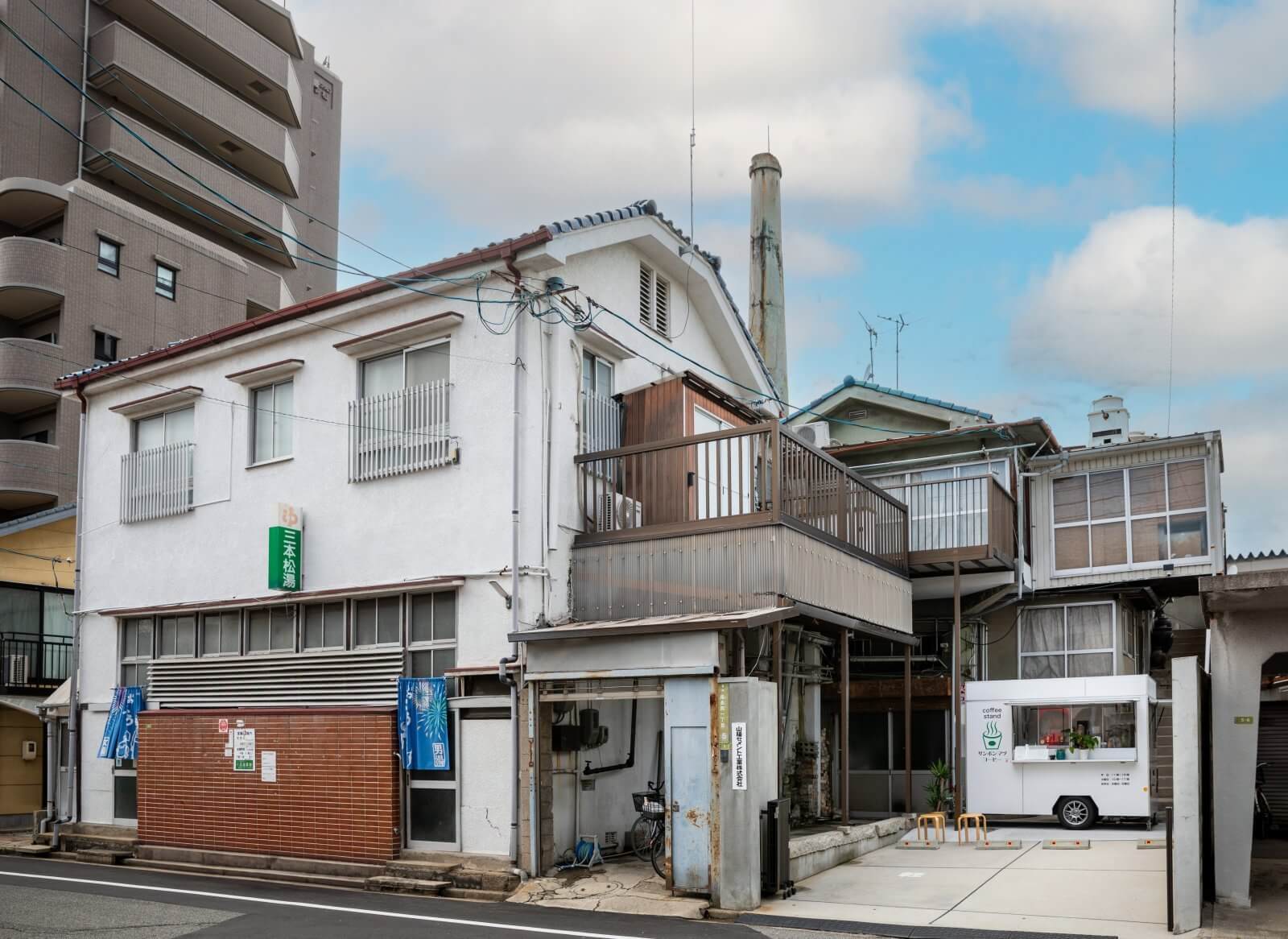
A five-minute drive from JR Hiroshima Station, this long-cherished neighborhood bathhouse continues to uphold traditional ‘sento’ culture, offering seasonal baths such as ‘sakura-yu’ (cherry blossom bath) and ‘shōbu-yu’ (iris leaves bath).
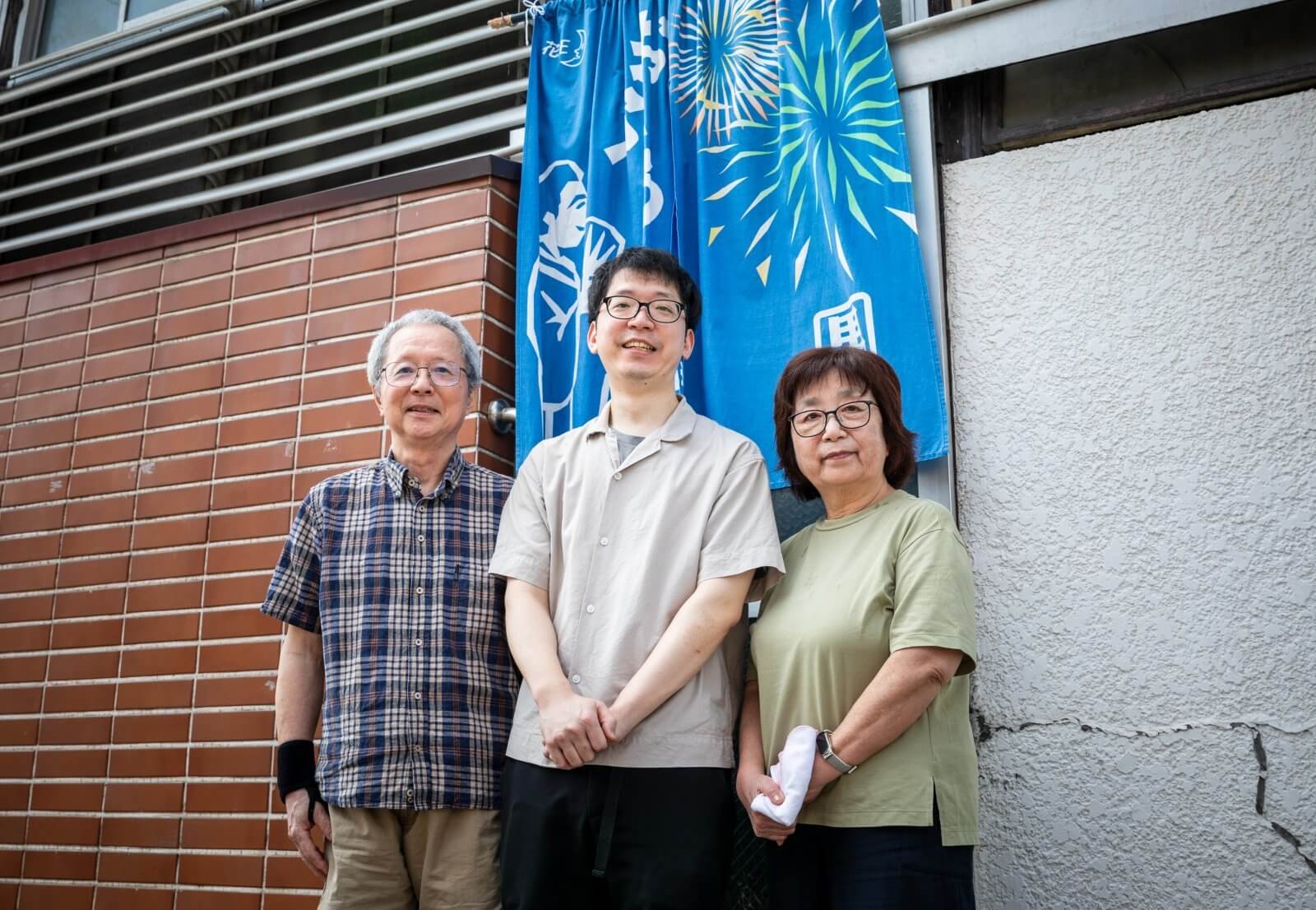
From left: third-generation owner Shirō Takatsuchi; fourth-generation successor Junmei; and Shirō’s wife, Keiko. With Junmei joining the family business, improvements to the facilities have begun from a fresh perspective. Together, the family works hand in hand to protect and sustain the ‘sento’.