The Rice Fields of Tokamachi
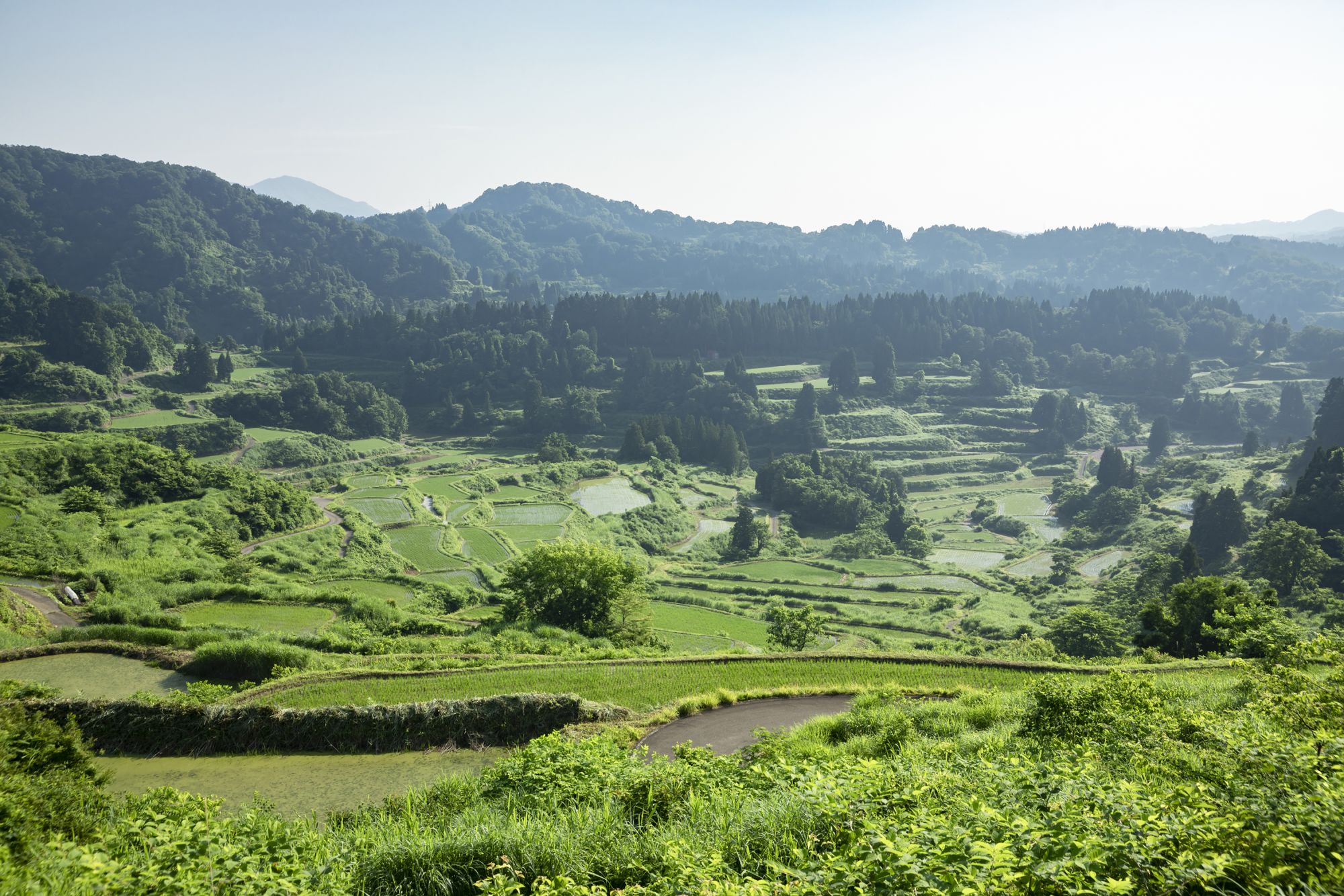
Over 200 rice terraces are spread over the mountainside in this rural region of the hinterland of Niigata.
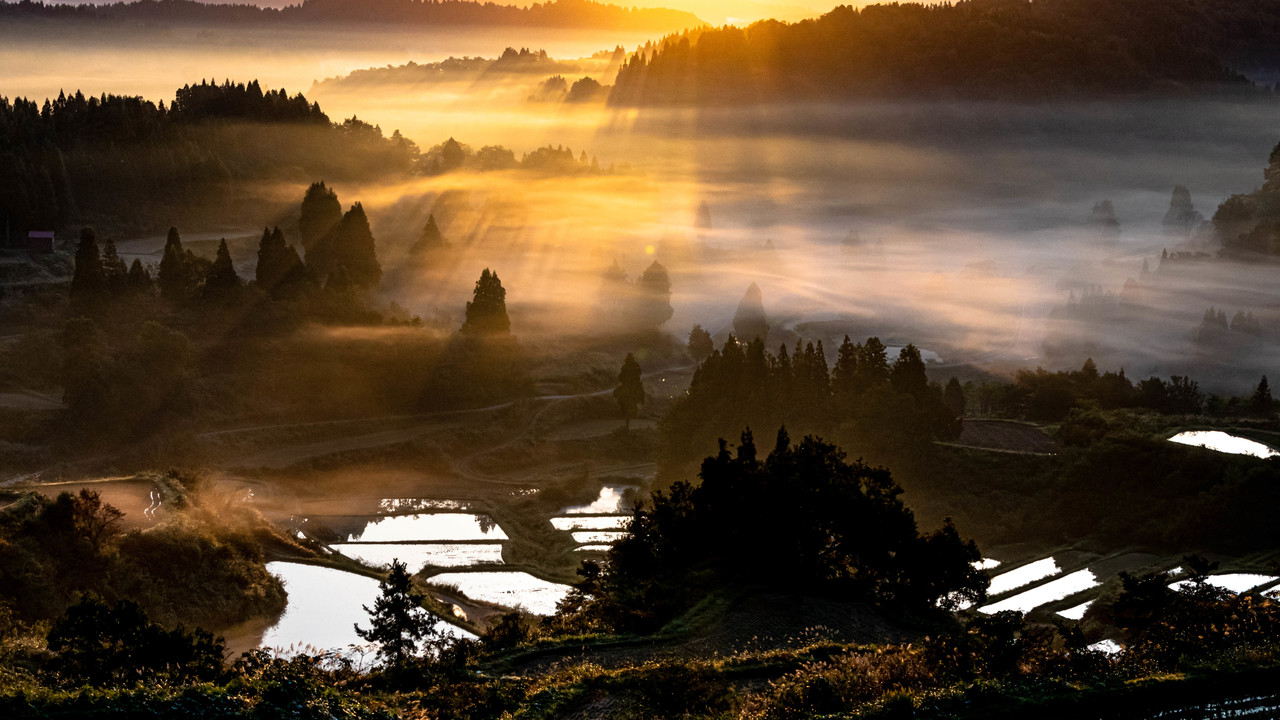
© Koichi Hayakawa
Surrounded by mountains and forests, the city of Tokamachi in Niigata Prefecture, which runs along the Sea of Japan in the north of Honshu, is particularly known for its wild surroundings. Not far from this municipality lies a string of rice terraces—the only way the local farmers can grow rice in such a harsh environment.
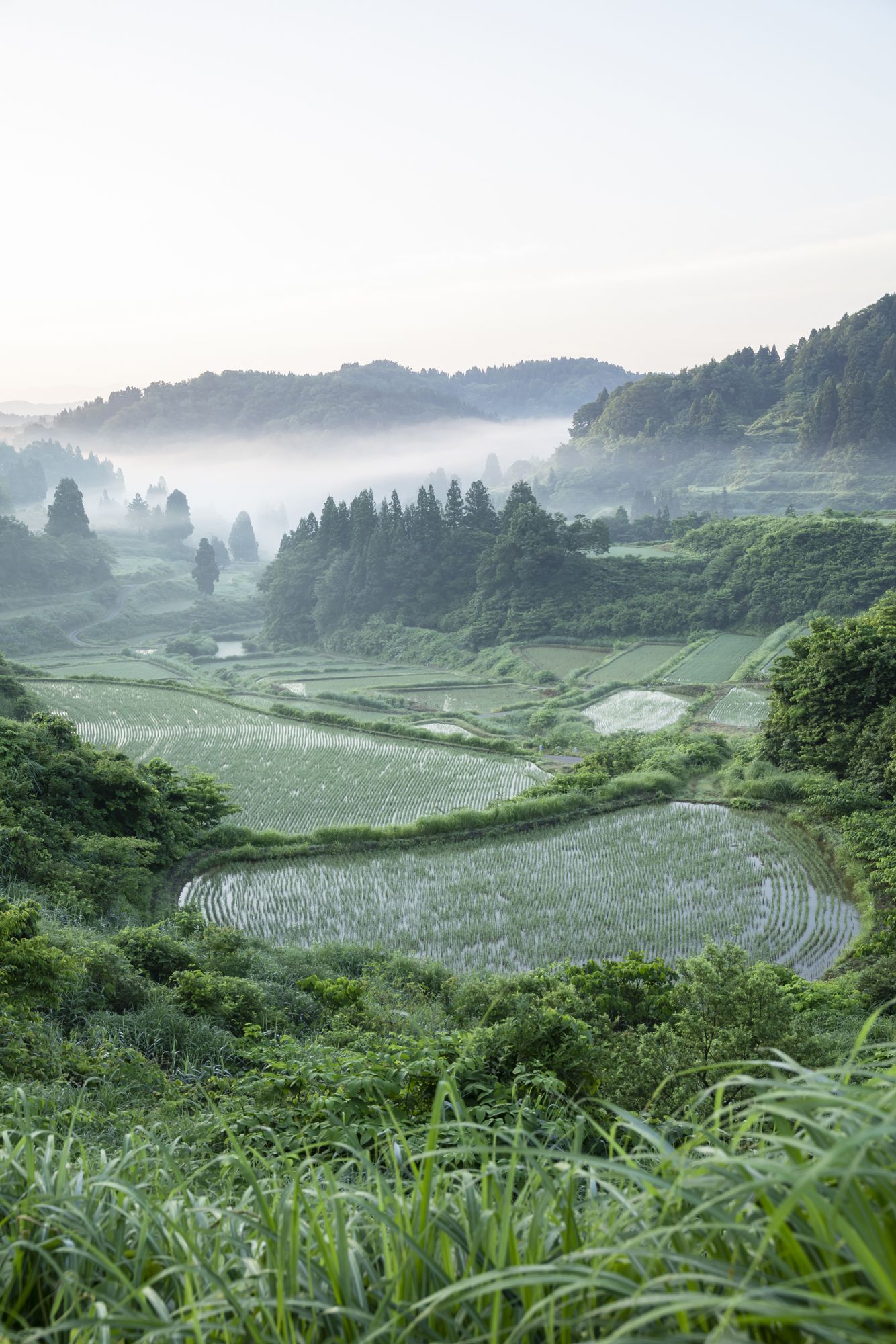
Gimyou, Kamou, Matsushiro, and Hoshitoge are among the most remarkable sites. There are over 200 plots spread over the mountainside, decked out in their finery at different times of year. In spring and autumn they look like watery mirrors that reflect the sky, but they become a bright green colour when summer comes. In winter, the rice fields are somewhat hidden away from visitors’ eyes as they are entirely covered by a blanket of snow several metres deep.
Hoshitoge rice terraces, bathed in sunlight
To watch this spectacle, which is particularly pleasant at sunrise when the rice terraces appear to be floating in the mist, or at sunset when the warm colours of the sky are reflected or gild the stems, it is advisable to follow the route a few metres higher up to take in the view from above.
The Tokamachi rice terraces are only accessible by car. To get there, visitors can take the shinkansen line from Tokyo to Echigo-Yuzawa, then change for the Hokuhoku Line towards Saigata, with a stop at Matsudai. From there, the magnificent Hoshitoge rice fields are just 20 minutes away and taxis are available to make the journey.
More information about the Tokamachi rice fields can be found on the municipality’s website.
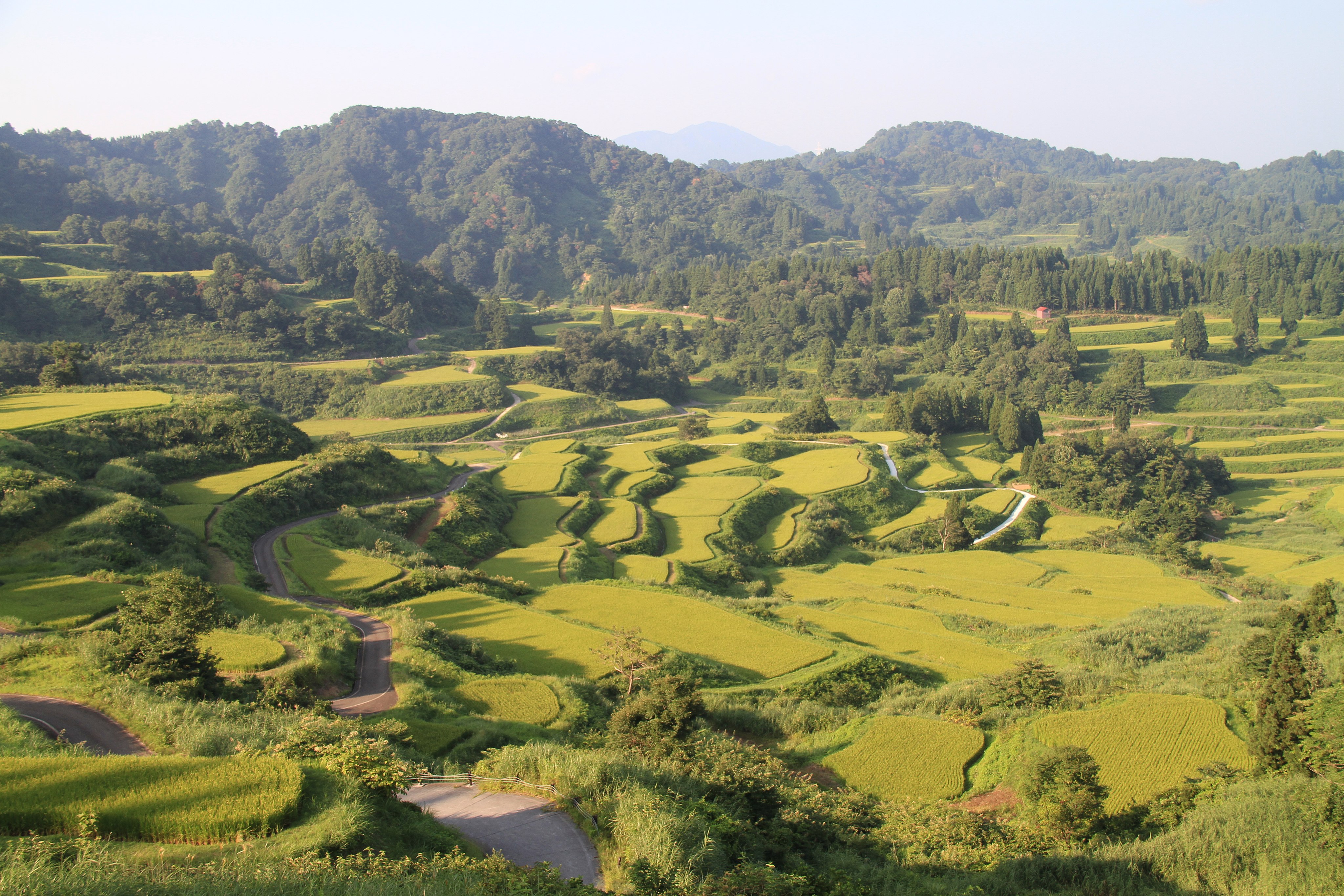
© Wikimedia
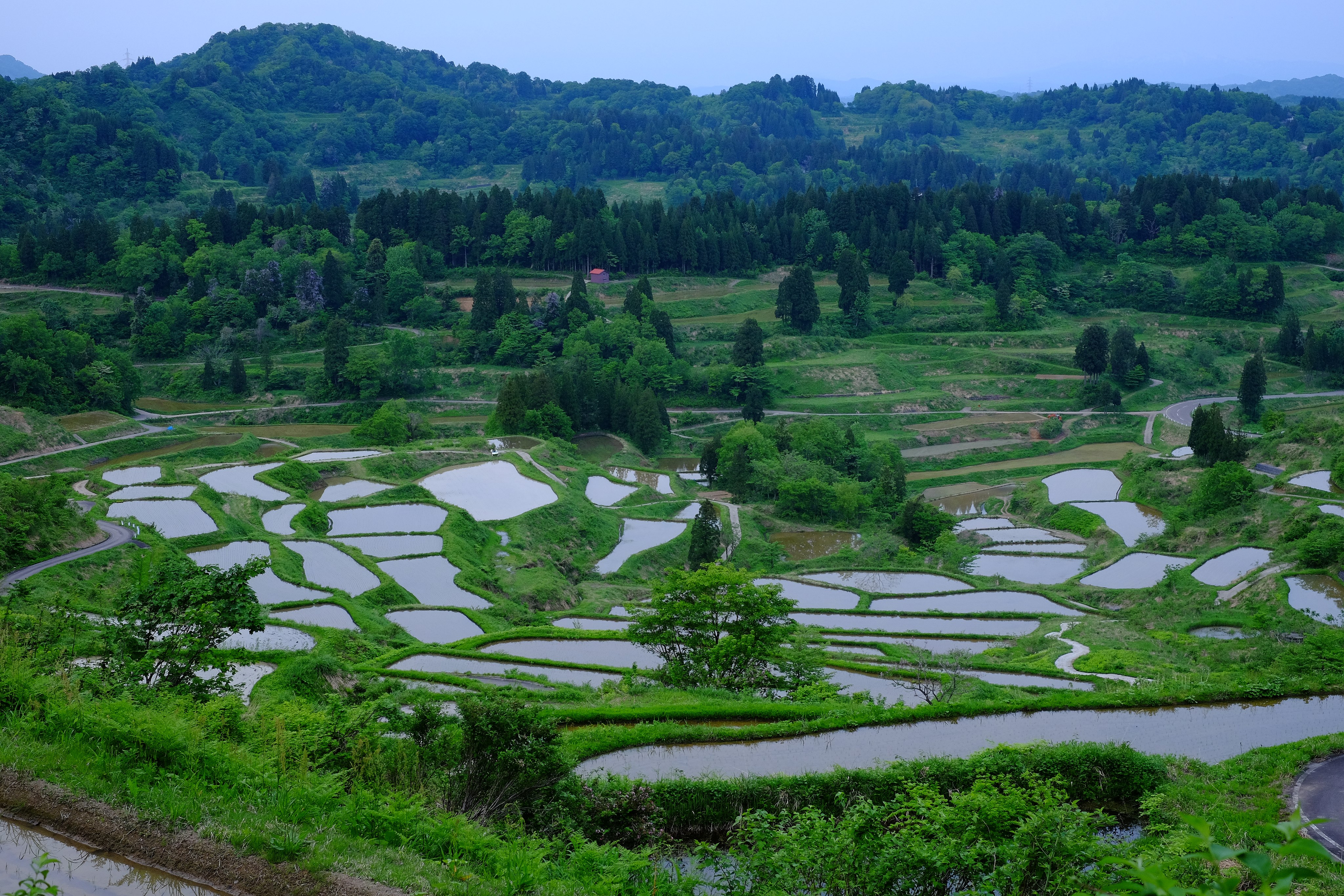
© Wikimédia
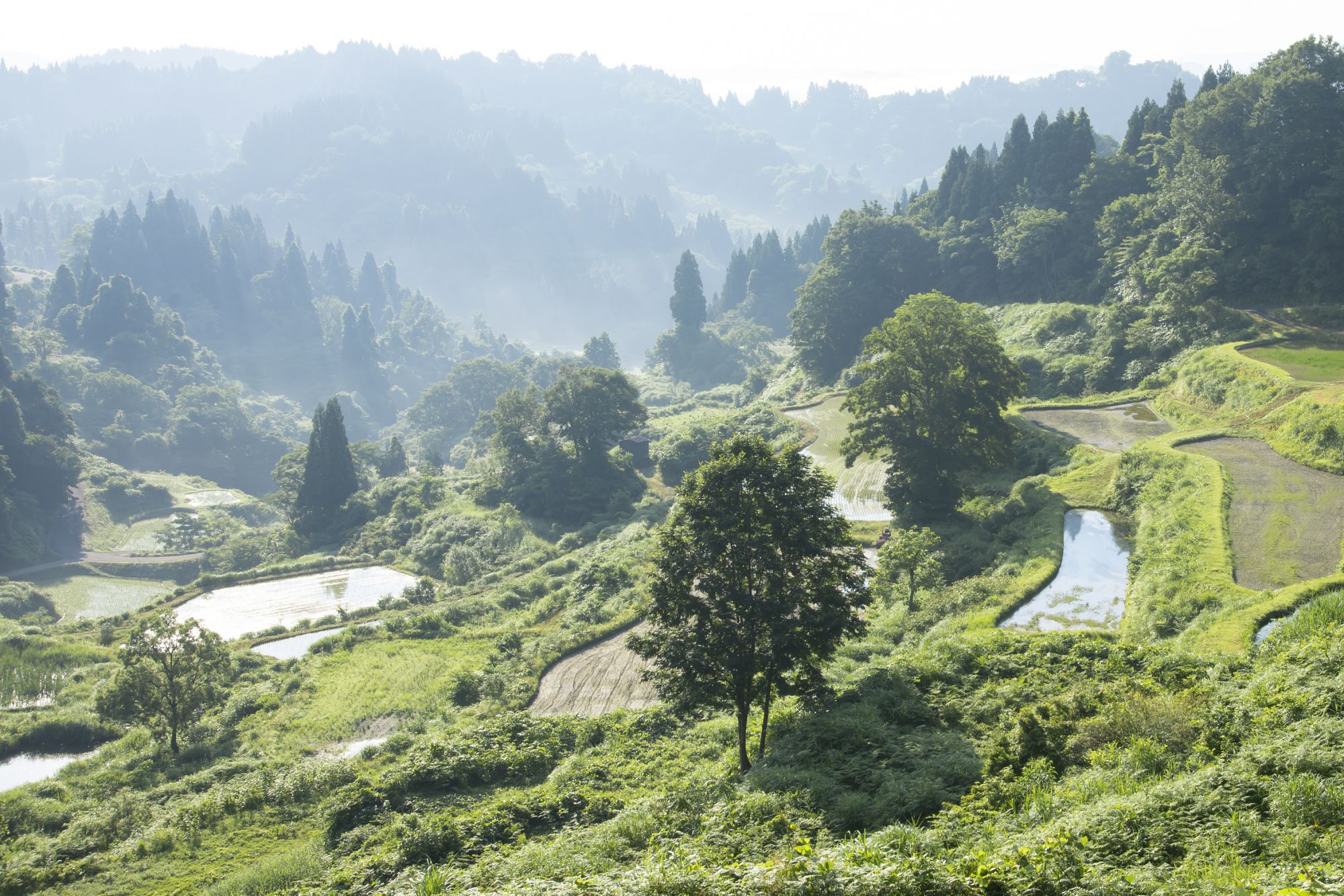
© JNTO
© JNTO
© JNTO