From Chicago to Tokyo, Yasuhiro Ishimoto Always Inhabits the City
The photographer, with an unusual path to success, built bridges between man and his architectural environment.
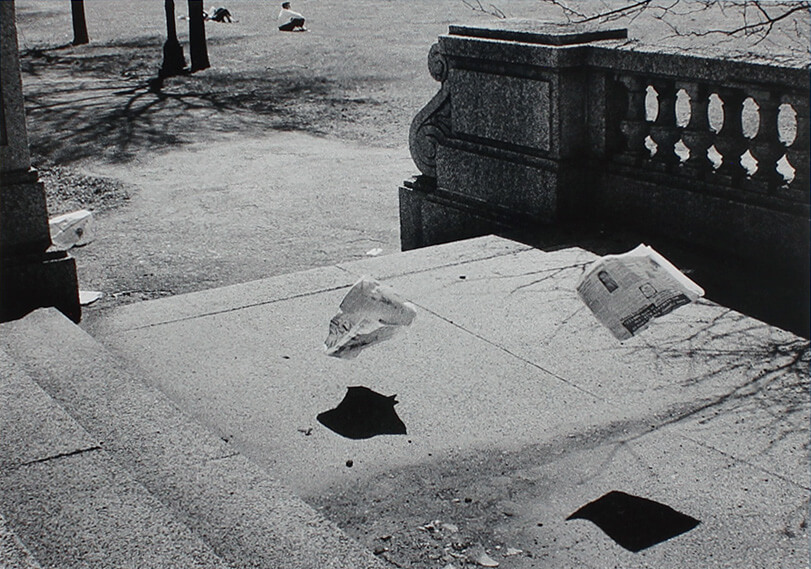
‘Chicago, Town’, 1959-61, Gelatin Silver Print, Tokyo Photographic Art Museum ©Kochi Prefecture, Ishimoto Yasuhiro Photo Center
Born in 1921, Yasuhiro Ishimoto died in 2014, but his work is coming to the fore once more with the centenary of his birth. This return is marked by the retrospective The city brought to life, presented in 2020 at the Tokyo Photographic Museum in collaboration with the Museum of Art in Kochi, to which the artist donated an archive of 7000 images in 2004.
Originally from San Francisco, Yasuhiro Ishimoto moved to the Prefecture of Kochi, Japan when he was three years old. Upon his return to California in 1939, he studied modern agriculture. During the war, from 1942 to 1944, he was interned in the Amache camp in Colorado, reserved for Americans of Japanese origin. It was here that Yasuhiro Ishimoto began taking photographs alongside other prisoners. Following the war, he studied architecture in Chicago, and in 1948 he joined the Chicago Institute of Design where he studied under the photographers Harry Callahan and Aaron Siskind.
Walls and men
Yasuhiro Ishimoto returned to Japan in 1953 for a commission from MoMA dedicated to the Katsura Villa in Kyoto. It is the first project where his unique style becomes readily apparent. Bringing together his two passions, he worked as a photographer for architects including Kenzo Tange, Arata Isozaki, and Hiroshi Naito.
This interest in architecture also allowed him to address broader questions, as can be seen with his 1969 Chicago Chicago, the year the artist was naturalised as Japanese. The work brings together images taken between 1959 and 1961, when Yasuhiro Ishimoto was living in Illinois thanks to a Minolta bursary. It includes street photos of major city transformation projects carried out at that time, as well as of their social repercussions.
An engaged body of work
Beyond the formal dimensions of his photography, Yasuhiro Ishimoto used his work to address questions of racism and social inequality. In Chicago, his photos show the consequences of the reconstruction of the city and the gentrification that pushed African Americans away from these transforming neighbourhoods. In his last series, Shibuya, Shibuya (2003-06), shot in Tokyo, he presents a series of photographs featuring his subjects with their backs to him. Grouping together his subjects into various teams, each is identified by the logos on their clothing. The images display a form of social exploration linked to individuality characterised by Western society.
In the text that accompanies Moment (2004), published by Heibonsha Ltd., the artist’s wife Shigeru Ishimoto describes his oeuvre: ‘Perhaps it was the influence of the New Bauhaus that let him see objects without any preconceived notions… he is very curious, always asking, “Why, why?”’
The city brought to life (2020), a retrospective of the work of Yasuhiro Ishimoto, is exhibited by the Tokyo Photographic Art Museum.
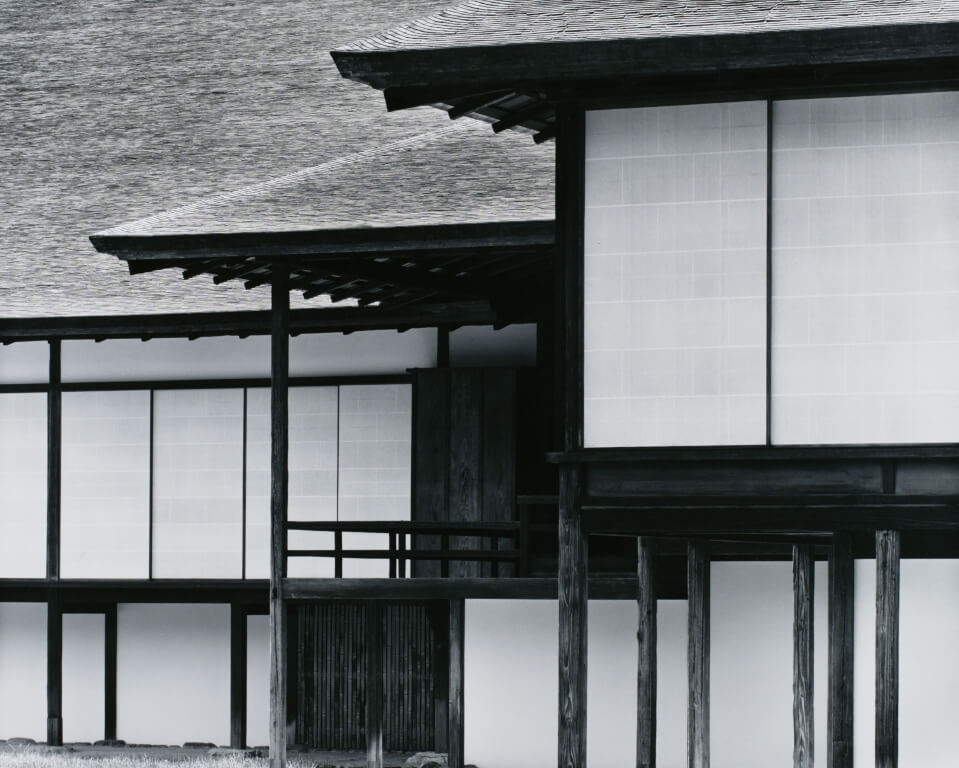
‘Katsura Imperial Villa, Middle Shoin, and the New Goten, viewed from the east.’, 1981-82, Gelatin Silver Print, Tokyo Photographic Art Museum ©Kochi Prefecture, Ishimoto Yasuhiro Photo Center
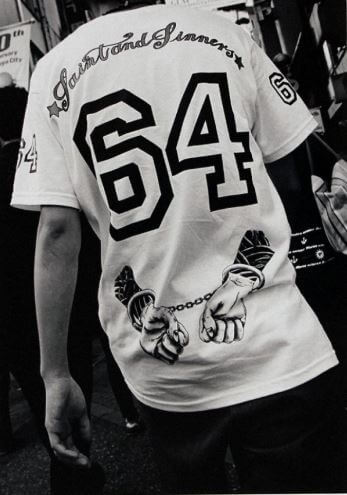
‘Shibuya, Shibuya’, 2003-06, The Museum of Art, Kochi ©Kochi Prefecture, Ishimoto Yasuhiro Photo Center
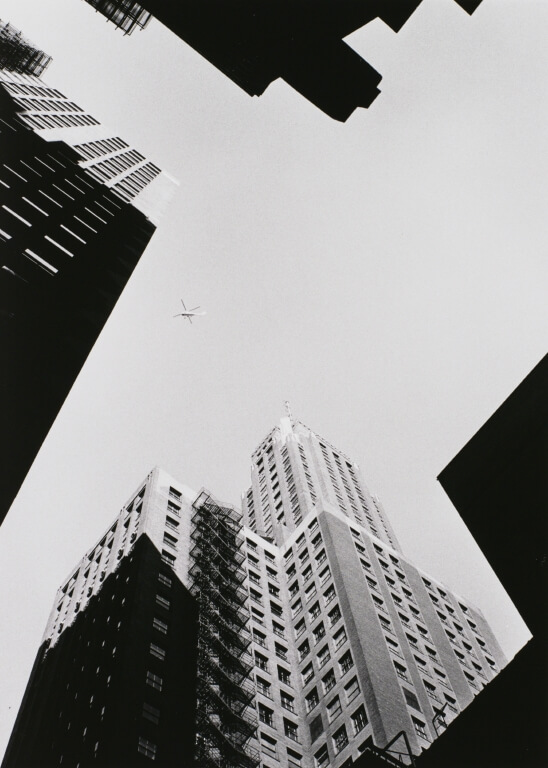
‘Chicago, Town’, 1959-61, Gelatin Silver Print, Tokyo Photographic Art Museum ©Kochi Prefecture, Ishimoto Yasuhiro Photo Center
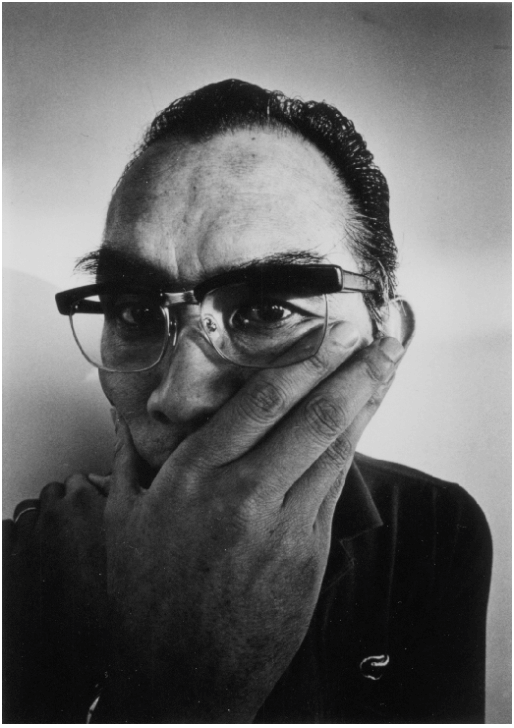
‘Self portrait’, 1975, The Museum of Art, Kochi ©Kochi Prefecture, Ishimoto Yasuhiro Photo Center