Mamoru Oshii and the Primacy of the Fictional World
For the director of Ghost in the Shell, the world of a film takes precedence over plot and character.
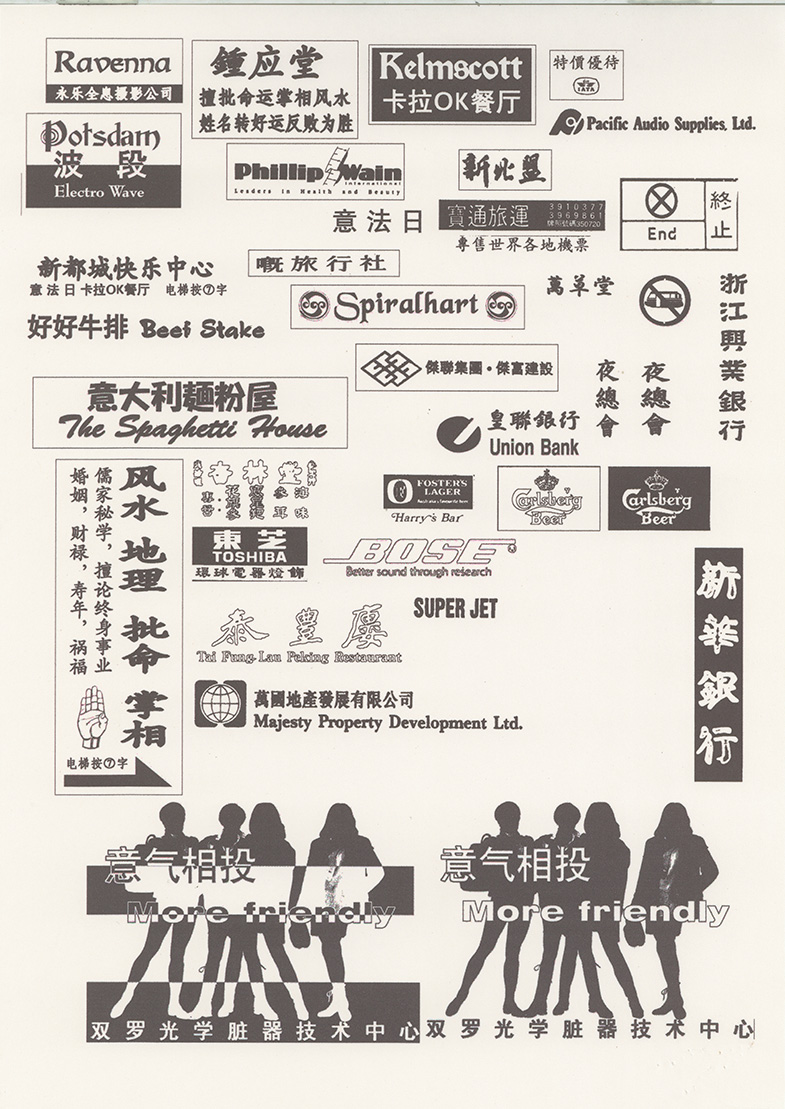
Numerous signs, first printed and then integrated into the backgrounds. They were subsequently brushed over to add wear and tear, giving the surfaces a texture marked by time. ©1995 Masamune Shirow / Kodansha, Bandai Visual, Manga Entertainment
Ryūsuke Hikawa
Anime and special effects (tokusatsu) researcher. Born in 1958 in Hyōgo Prefecture. Vice President of the Association of Anime and Tokusatsu Archives (ATAC). Author of numerous works, including A Handbook of 100 Years of Japanese Anime (Kaikai Kiki).
For decades, Hikawa has traced the evolution of television animation. Among the works he considers epoch-making, he cites Mamoru Oshii’s 1995 film Ghost in the Shell. In his view, its significance lies in a mode of creation that emerged between the 1970s and 1980s—what he describes as a ‘world-centered approach’ (sekaikan shugi). But what does this notion entail?
‘Up until the 1970s, most commercial animated works, often referred to as ‘cartoons’ or ‘manga films’, remained confined to the realm of entertainment for children. Unrealistic characters, such as talking animals, were positioned as star attractions, with narratives built around them to draw in audiences. From the 1970s onward, however, a shift began to take shape, aiming to produce works capable of sustaining the attention of teenage viewers.
In Space Battleship Yamato (1974), for instance, the Earth of the year 2199 is depicted as having been devastated by indiscriminate attacks from the Gamilas Empire, its surface turned red by radioactive contamination. This apocalyptic vision reflects the mood of the time, marked by the oil crisis and a surge of interest in Nostradamus’s prophecies. Set to music tinged with melancholy, it gives rise to a visual expression of striking aesthetic power, one that transcends language. Even in the absence of characters tasked with explaining the plot, the coherence and density of this world stimulate the viewer’s imagination and thought, enabling an active mode of reading. This is what defines a world-centered approach. Works built on this principle leave, long after viewing, a lingering sensation of having inhabited their world.’
A Wealth of Meticulously Rendered Detail
It is precisely this approach that Mamoru Oshii would absorb and elevate to an unprecedented level. Even before the animation process begins, he places decisive importance on layout—the stage at which image composition and art direction are articulated—in order to ensure total immersion.
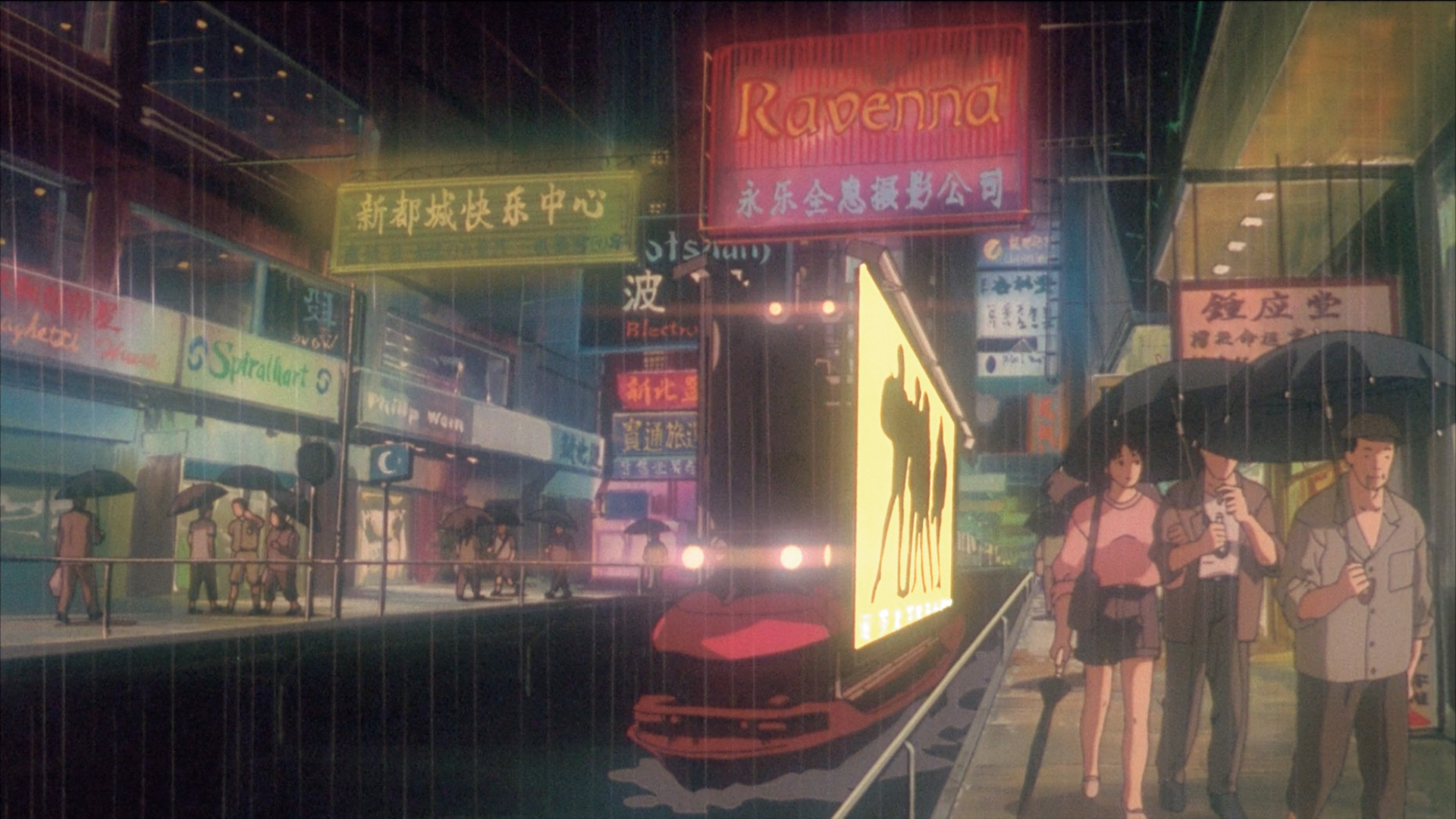
In Ghost in the Shell, the fictional city of Niihama draws directly from Kowloon in Hong Kong. Oshii conducted location scouting there, relying on an extensive body of photographs to reconstruct an urban environment that is dense, chaotic, yet charged with a singular energy. The cityscape becomes the vehicle of a world saturated with information, each frame containing such a wealth of detail that it exceeds immediate perception.
The countless signs that fill the city attest to this exacting approach. Unable to render them directly with sufficient precision, they were first created on computer at an enlarged scale, then adjusted for perspective, reduced, printed, cut out by hand, and finally pasted individually into the backgrounds. The scale of this process gives a sense of the immense labor invested in densifying each image.
Depicting Technology with Realism
Yet this attention to world-building extends beyond visual materiality alone. What also distinguishes Ghost in the Shell in the history of animation is its depiction of technology.
At the time, Hikawa himself was working in telecommunications:
‘In 1995, when personal computers and the internet were not yet widely adopted, the film accurately anticipates the evolution of digital technologies. The term ‘mobile computing’ had only just begun to circulate. And yet, members of Section 9 communicate while on the move, without any visible devices, via wireless exchanges—direct cybernetic communication. It struck me immediately that such technology could plausibly be realised as an extension of mobile phones and networks.
Unlike many animated works, the film does not rely on arbitrary science fiction or convenient fictional devices. Everything is grounded in an extension of existing reality. Likewise, the real-time display of vehicle positions on a map, at a time when GPS usage was still rare, appears, in retrospect, remarkably prescient.’
An Approach Close to Surrealism
In Oshii’s work, even the most forward-looking elements rest on an internal coherence that renders them immediately believable. This credibility is built upon a carefully constructed system of implicit rules.
Hikawa also draws attention to another key aspect: the visualisation of the interface between human and machine.
‘The film suggests how its characters, now cyborgs, perceive the world. They retain an organic dimension, yet their vision is mediated—as though they were seeing reality through a screen. This convention is tacitly shared with the viewer.
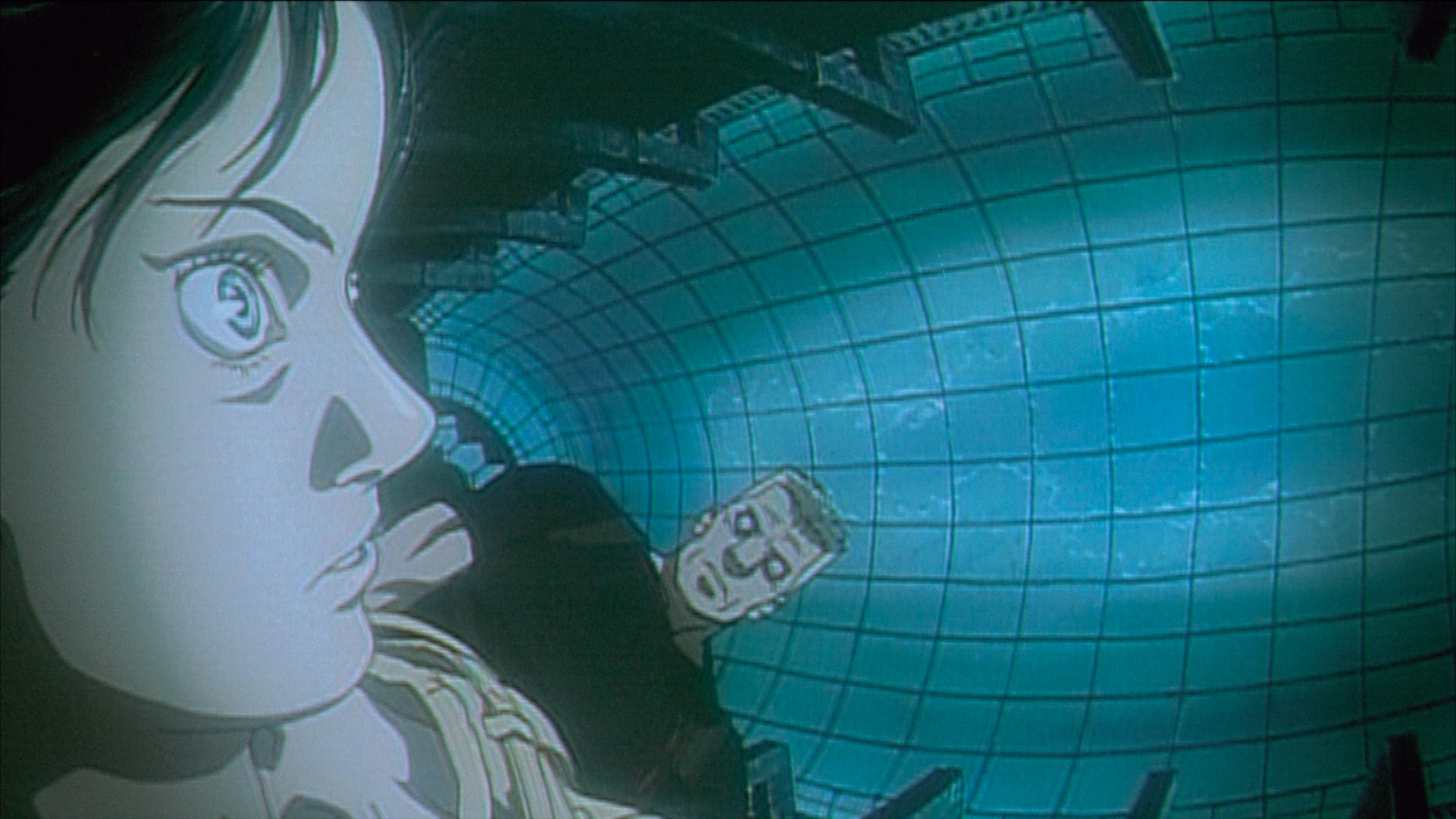
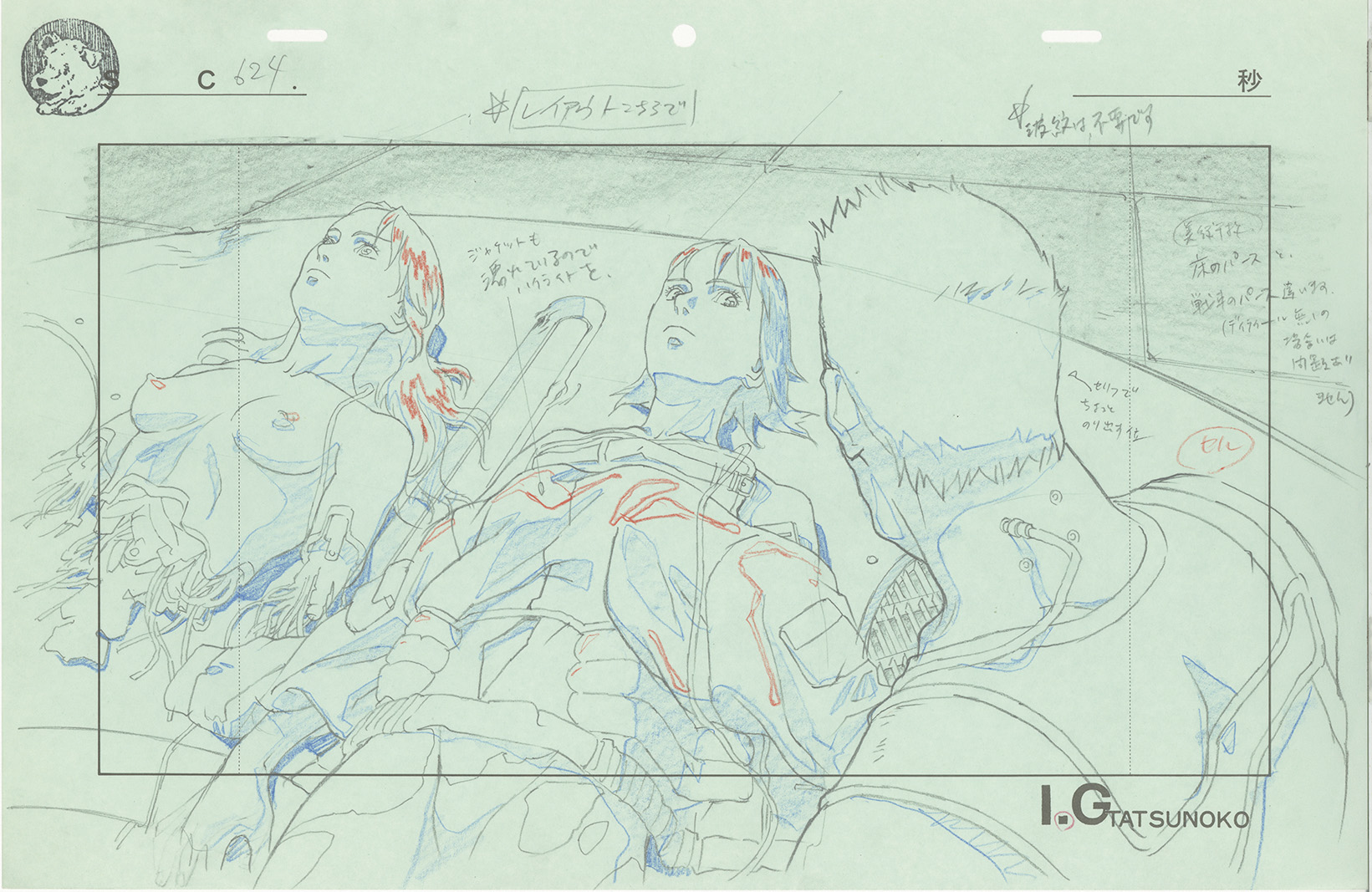
A striking example occurs just before the climax, when Motoko connects via cable to the Puppet Master. After her line ‘I’m starting,’ her field of vision is briefly shown. The screen then turns fluorescent green, before shifting to a grainy, distorted image, as if seen through a fisheye lens. Batō’s face appears frontally, with Motoko’s profile to the side—revealing that this is the Puppet Master’s point of view.
The sequence presents a mode of perception that exceeds human experience. And yet, it carries a strange sense of plausibility: this is how a cyborg might see. It recalls a logic close to Surrealism—introducing a slight transformation to reality in order to bring forth a new image.’
In the early twentieth century, Surrealist artists sought to reveal a reality beyond the visible. Through this film, Mamoru Oshii pursues a comparable ambition: to render perceptible what lies beyond the limits of human perception—a form of surreality that extends naturally from reality itself.
The urban landscape of Niihama, which shapes the world of ‘Ghost in the Shell.’ It was reportedly designed around the concept of a ‘submerged city with Chinese-inspired elements.’ The many signs shown above are scattered throughout the space. ©1995 Masamune Shirow / Kodansha, Bandai Visual, Manga Entertainment
Original drawing of the scene in which Motoko, lying on her back, attempts, with Batō’s help, to connect to the artificial entity known as the Puppet Master. ©1995 Masamune Shirow / Kodansha, Bandai Visual, Manga Entertainment
The perspective shifts from a bird’s-eye view of the three characters, as previously shown, to Motoko’s viewpoint as she enters the Puppet Master’s visual field. The image, heavily distorted as if seen through a fisheye lens, surpasses human visual perception. The lattice-like pattern on the ceiling in the background appears designed to enhance this distortion. ©1995 Masamune Shirow / Kodansha, Bandai Visual, Manga Entertainment
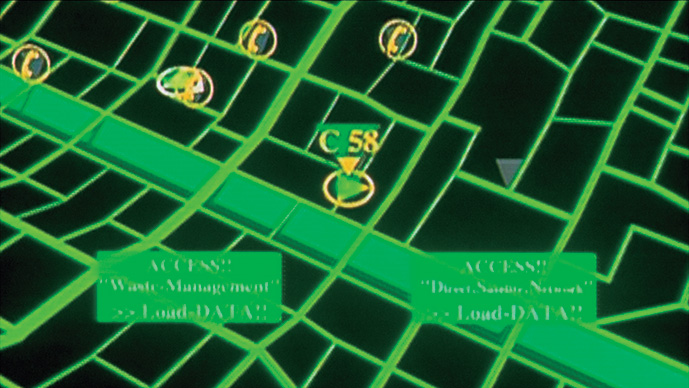
The film depicts moving vehicles and helicopters displayed on a real-time map. While such visualizations are now commonplace thanks to in-car navigation systems or Google Maps, in 1995 this represented a particularly innovative visual device. ©1995 Masamune Shirow / Kodansha, Bandai Visual, Manga Entertainment