The Spiritual Dimension of ‘Ghost in the Shell’, Decoded by a Scholar of Religion
Beyond science fiction, Mamoru Oshii’s work captivates through its philosophical depth and underlying Japanese spirituality.
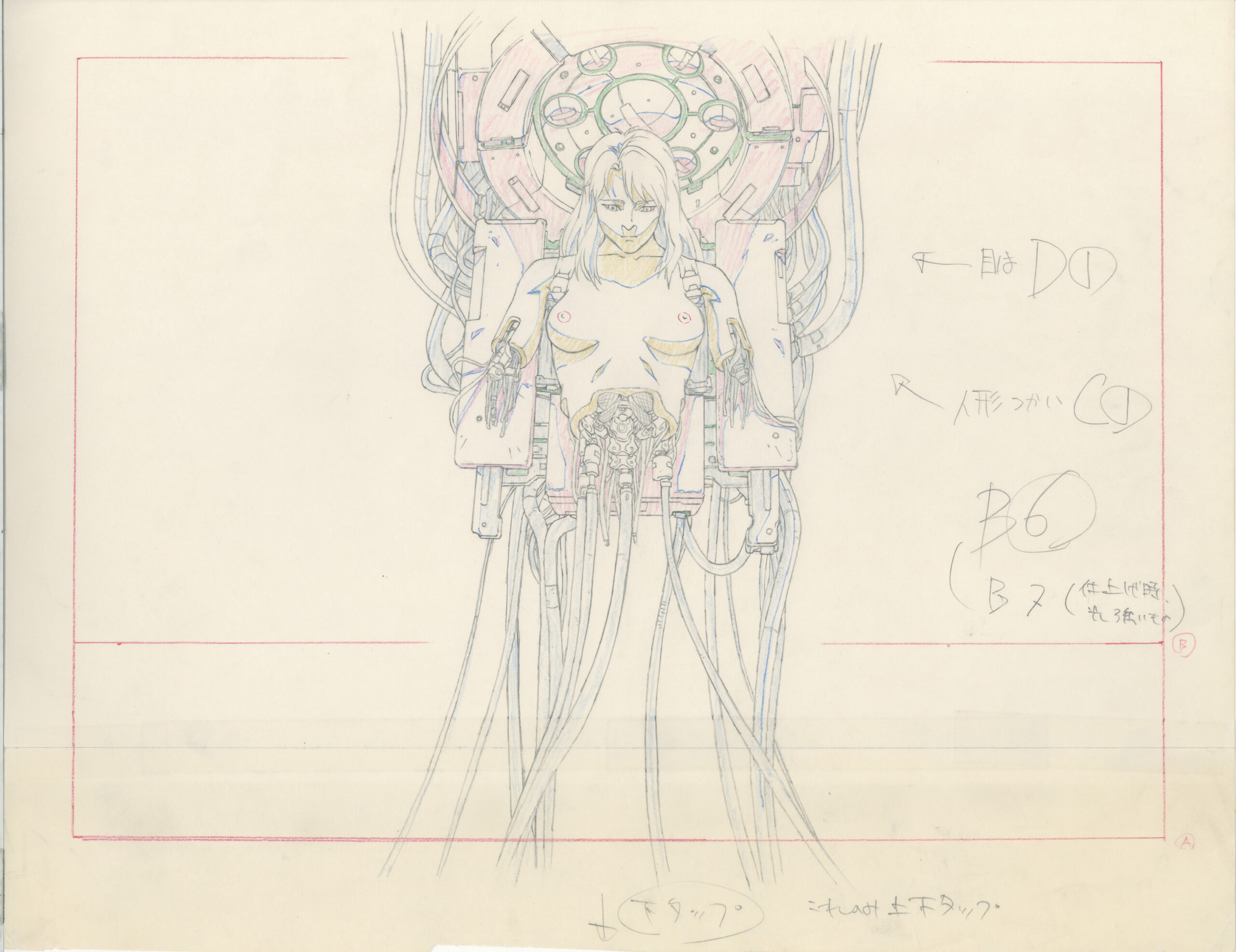
An illustration of the Puppet Master inhabiting a female cyborg body. Considered one of the most singular hackers in History, the character plays a key role both in the original work and in the films by Mamoru Oshii. Its true identity is an autonomous program created by the government, known as ‘Project 2501’. Defining itself as a life form without a physical body, the Puppet Master merges with Motoko in order to attain a higher level of existence. © 1995 Masamune Shirow / Kodansha · Bandai Visual · MANGA ENTERTAINMENT
Akira Masaki
Scholar of religion
Born in 1953 in Kanagawa Prefecture. A specialist in Japanese and Tibetan Buddhism. He completed his doctoral studies at the University of Tsukuba. He has held positions including visiting associate professor at the International Research Center for Japanese Studies and associate professor at Chūkyō Women’s University.
Even in seemingly incidental lines or fleeting scenes, Ghost in the Shell reveals philosophical and religious undertones, a key part of its enduring appeal. But how does a specialist in thought approach the work? We spoke with Akira Masaki, a scholar of religious studies, to explore this question.
The first issue to consider is the one that runs throughout the narrative: ‘Can a machine possess a soul?’
‘I believe the power of this question is deeply tied to Japan’s religious worldview. Since ancient times, Japan has been rooted in animism, with beliefs in countless deities and in tsukumogami, spirits inhabiting objects. The idea that all things possess a soul is widely shared. This is likely why stories about cyborgs or AI are not perceived as ‘mere tales of machines.’ There was already a cultural foundation for accepting that machines might possess a soul.’
The notion that not only living beings but even objects may have a soul is, in fact, rare elsewhere in the world.
Staging Buddhist Concepts
‘In Japanese Buddhism, Kūkai, the founder of Shingon, taught from an early stage that ‘grass, trees, and even the land itself can become buddhas.’ The idea is that if plants and the earth can attain enlightenment, then human beings certainly can as well. Comparable doctrines are rarely found in other parts of Asia. In the West, a clear distinction is drawn between humans and animals. René Descartes, in particular, regarded animals as nothing more than machines, explicitly denying them a soul. Since then, the idea that plants, animals, or objects might possess a spirit has remained marginal in Western societies.’
Another recurring concept in the work is that of the ‘ghost’. For Masaki, this notion resonates with the Buddhist concept of kū (emptiness).
‘Emptiness refers to the idea that nothing exists in and of itself, and yet everything exists. While this may seem paradoxical, it means that all phenomena are interdependent and lack any inherent substance. The ghost—without a body, yet appearing everywhere through the network and whispering to humans—is a perfect embodiment of this concept.’
In the narrative, Motoko ‘marries’ the Puppet Master, abandons her body, and becomes a presence capable of influencing the real world through the network. While it is never explicitly stated whether she becomes a ghost, her post-fusion state closely reflects the notion of kū.
‘In Innocence, also directed by Mamoru Oshii, Motoko, manifesting through a companion robot, reunites with Batō. At the moment of their parting, she tells him: ‘Batō, don’t forget. Whenever you access the network, I will always be by your side.’ ‘Though she has no physical form, she exists everywhere—an existence that vividly illustrates the concept of emptiness.’ The scene also recalls the Buddhist concept of gu-e issho, the reunion with loved ones in the Pure Land after death. This idea offers profound hope to those grieving the loss of someone dear, and it is echoed in the way Batō ultimately fulfills his wish to reunite with Motoko, who has vanished into the sea of information that is the network.’
In the same film, Batō asks Motoko whether she feels happy in her current state. She replies: ‘That is an old value. At the very least, I no longer experience any inner conflict.’ Masaki interprets this as evoking the state of the Buddha, liberated from the cycle of rebirth.
‘The way characters survive by transferring between artificial bodies calls to mind reincarnation—the idea that the soul persists and is reborn in different forms. In Oshii’s films, Motoko plunges into the water despite the danger in order to confirm her own existence. Water, often a metaphorical boundary between this world and the next, here suggests her desire to detach from the earthly realm. Like the Buddha, her ultimate aim is to attain enlightenment and break free from the cycle of suffering. By diving into the sea of information that is the network, she perhaps reaches a state close to liberation.’
Each deeper reading reveals further layers of thought that resonate with Japanese spirituality. Immersing oneself in the world of Ghost in the Shell offers a glimpse into these hidden depths.
1. Japan, Where Life Resides in Animals and Objects
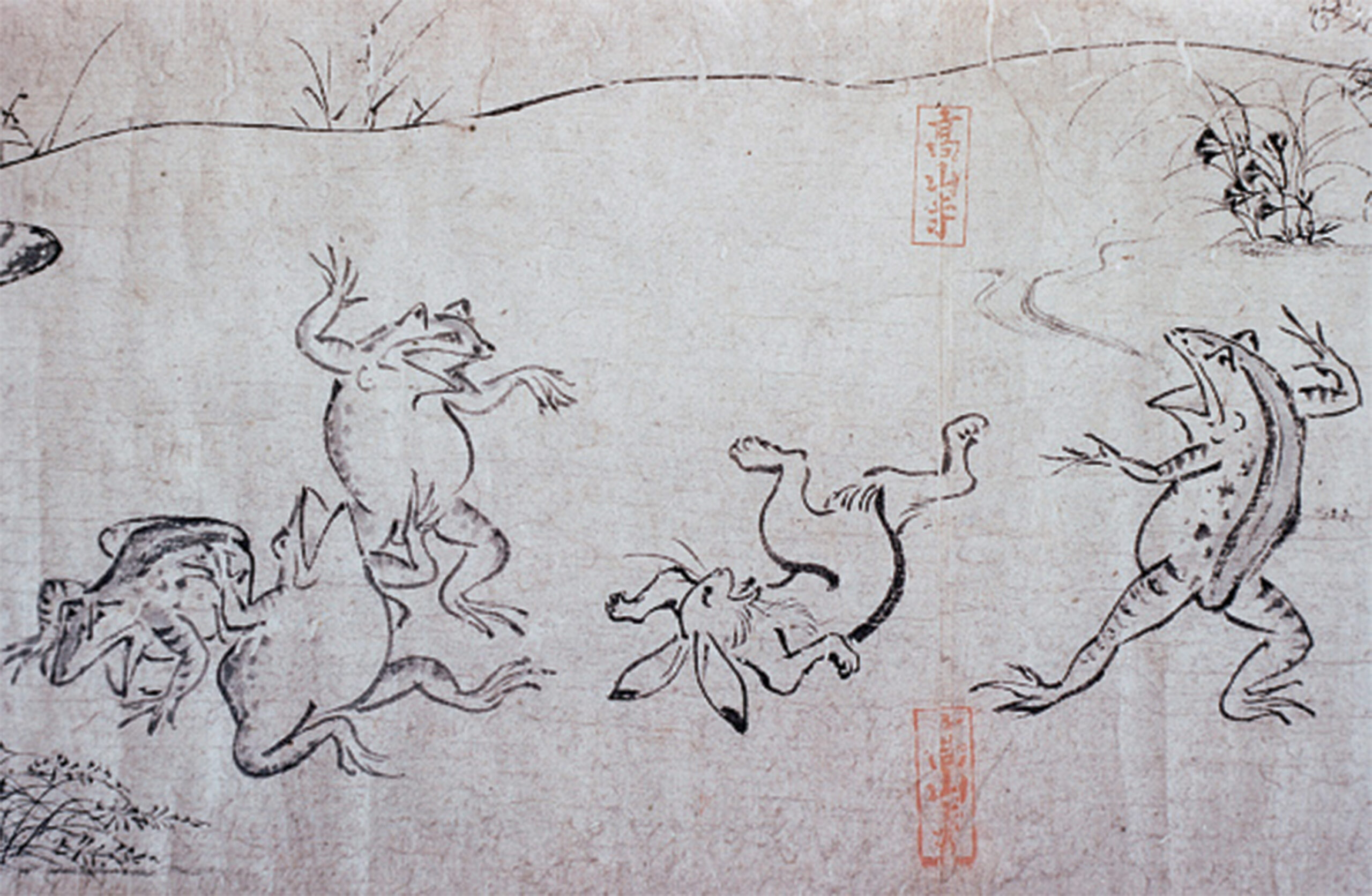
A detail from the ‘Chōjū-jinbutsu-giga’ scrolls, preserved at Kōzan-ji in Kyoto. They reflect a time when no clear boundary was drawn between animals, objects, and human beings in Japan. © Burstein Collection
Historical works such as the Chōjū-jinbutsu-giga (12th–13th centuries), which depict animals in human form, or the 15th-century Hyakki Yagyō Emaki, portraying tsukumogami, suggest that the idea of animals and objects possessing a soul was long accepted in Japan. Likewise, the practice of memorial services for dolls and stuffed toys, held at temples and shrines, is rarely found outside the country. This spiritual sensibility resonates deeply with the world of Ghost in the Shell.
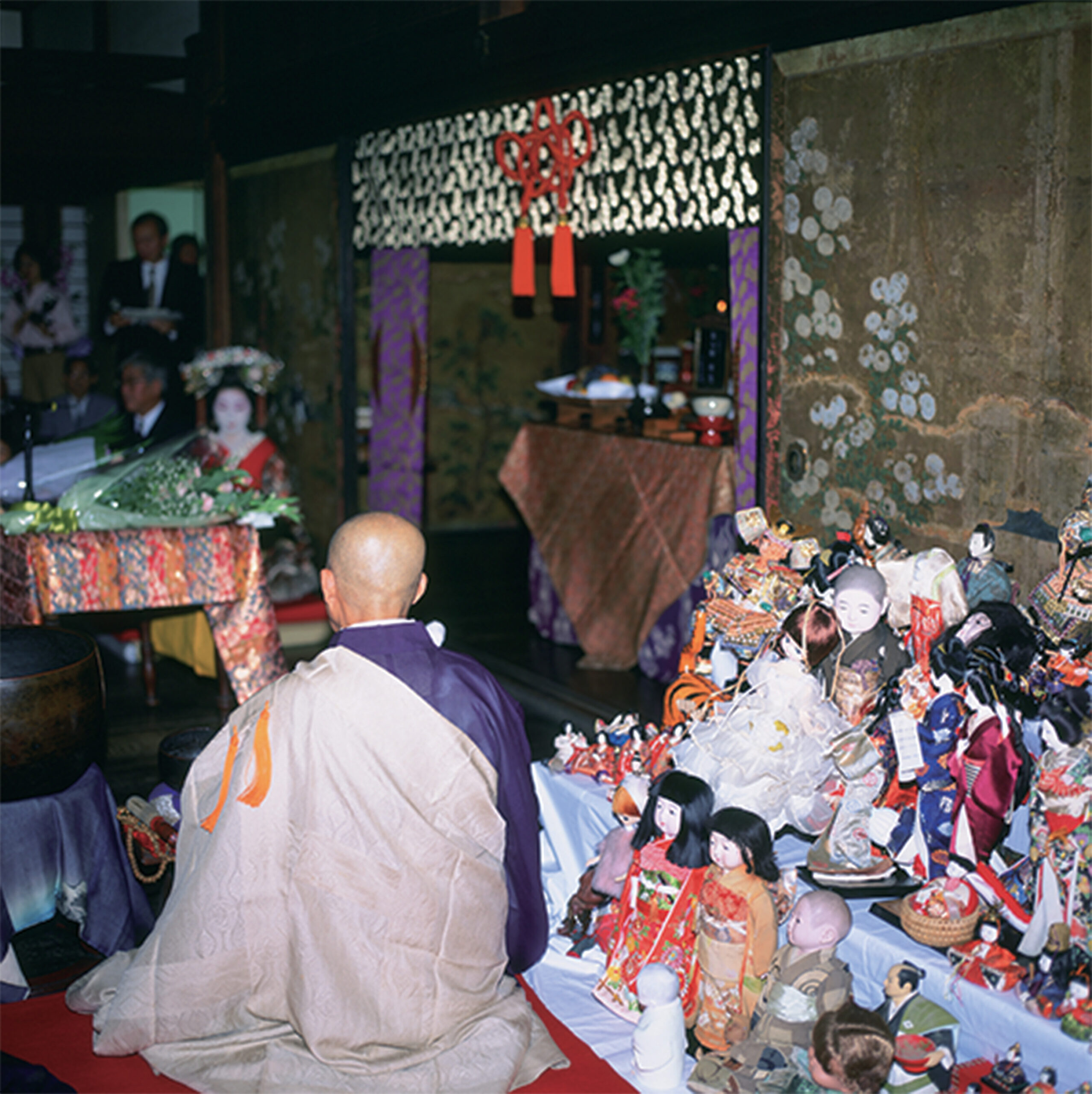
A ‘ningyō kuyō’ (memorial service for dolls), held every October at Hōkyō-ji in Kyoto, also known as the ‘Temple of Dolls’. © HIROSHI MIZOBUCHI / SEBUN PHOTO / amanaimages
2. Kū, Emptiness Where Everything Exists Without Substance
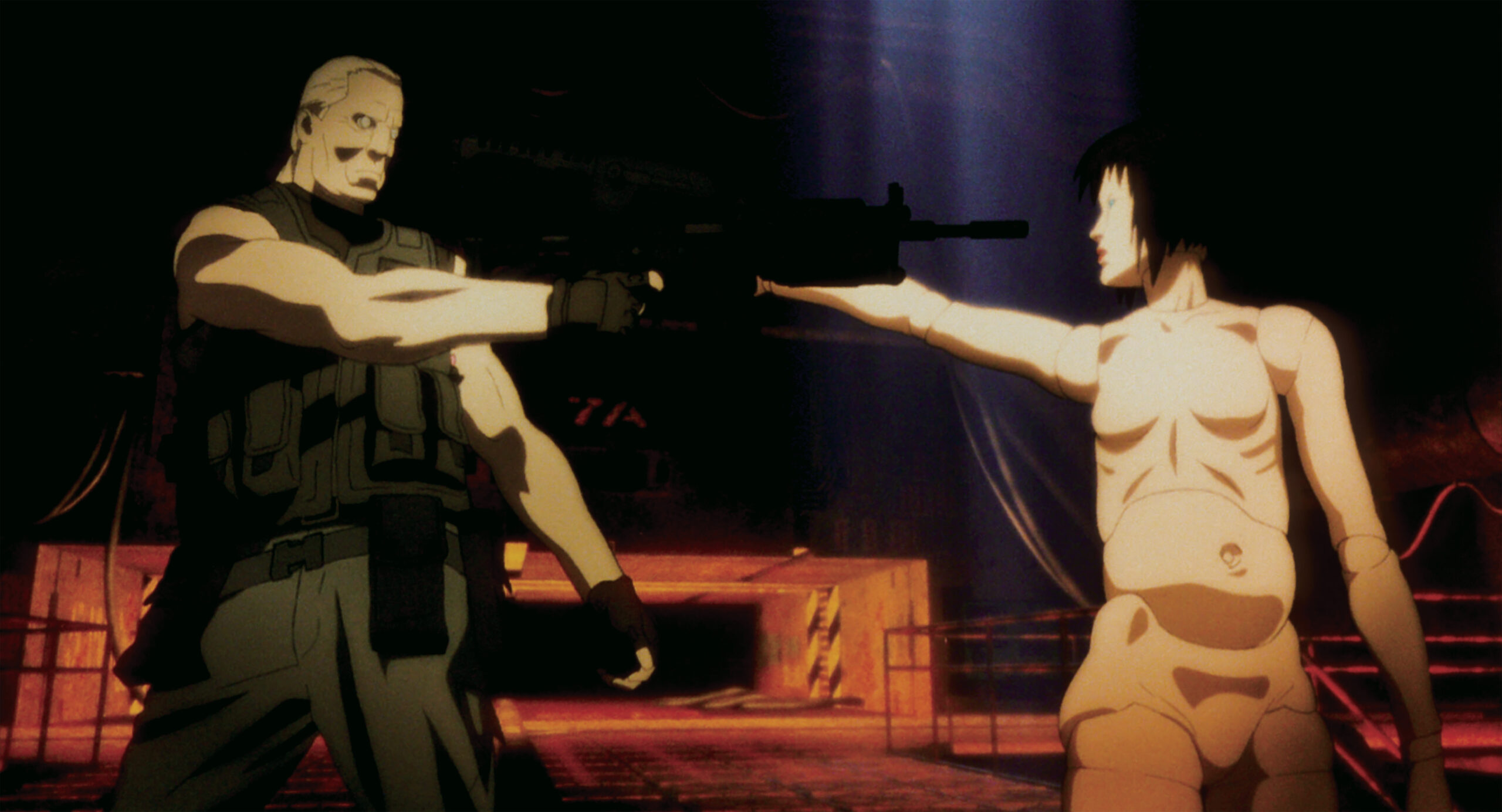
In Innocence, when Batō confronts a group of robots, he points his weapon at one of them, only to instantly realise that Motoko resides within it. The scene underscores the depth of the spiritual connection between the two. © 2004 Masamune Shirow / Kodansha · IG, ITNDDTD
Motoko exists everywhere within the network, yet without a tangible body—a state that mirrors the concept of kū, in which ‘nothing exists, and yet everything does.’ For Japanese audiences, familiar with the Buddhist notion of impermanence, this idea is relatively accessible. ‘Monotheistic traditions hold that all things are intentionally created by a single absolute God, and that the world is therefore perfect and complete. This represents a fundamentally different worldview,’ Masaki notes.
3. Has Motoko Achieved Liberation from the Cycle of Rebirth?
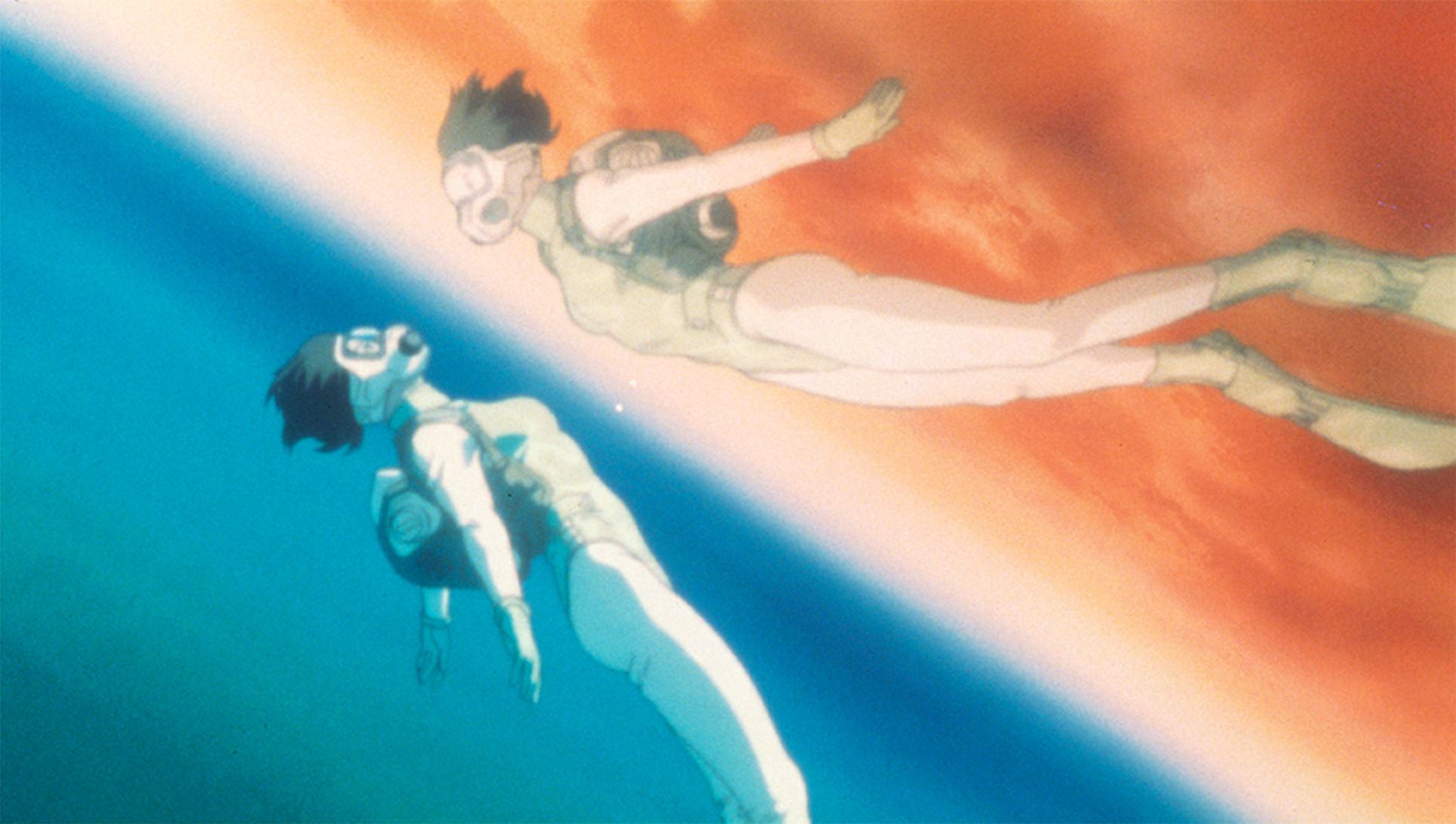
For a cyborg with a heavy mechanical body, it is impossible to resurface unaided: water becomes a natural enemy. In these scenes, Motoko, caught between machine and human, reaffirms her identity through a perilous act that carries the risk of death. © 1995 Masamune Shirow / Kodansha · Bandai Visual · MANGA ENTERTAINMENT
One of the most striking images in Oshii’s films shows Motoko diving into the ocean despite the danger, as if to verify her own existence. When Batō asks her, ‘What does it feel like to dive into the sea?’, she replies: ‘There are moments when I feel that, as I rise to the surface, I might become someone different from who I was before…’
To escape the endless transfer between artificial bodies and be reborn in another form—this desire may reflect a longing to break free from the cycle of reincarnation, much like the Buddha. Her fusion with the Puppet Master may well represent the fulfilment of that liberation.