Tōfuku-ji, A Study in Geometry and Garden Design in Kyoto
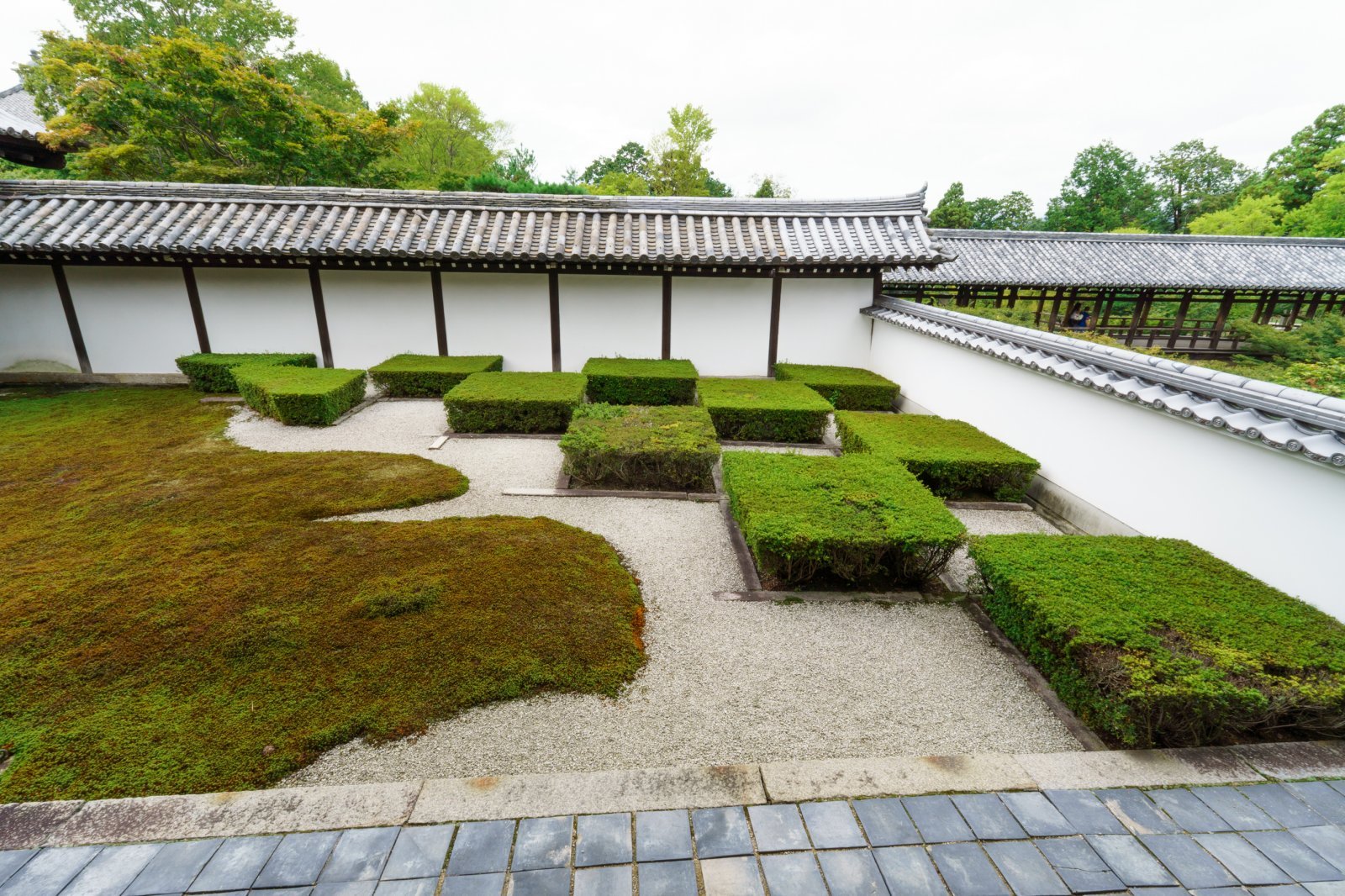
Created by Mirei Shigemori in 1939, its four gardens bring modern abstraction into dialogue with Zen architecture.
© Kazushi Takahashi
A garden where traditional Japanese aesthetics meet modern abstraction.
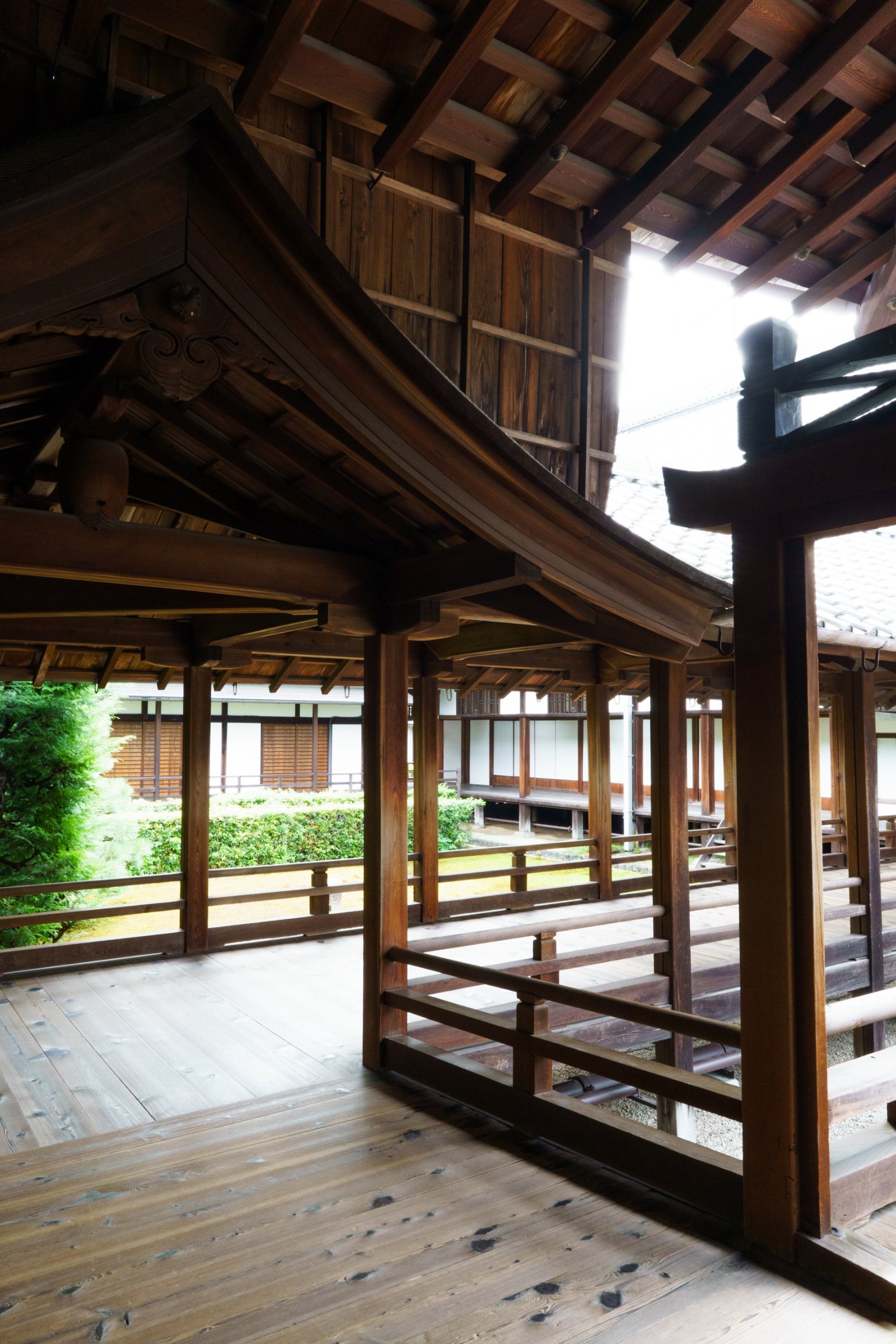
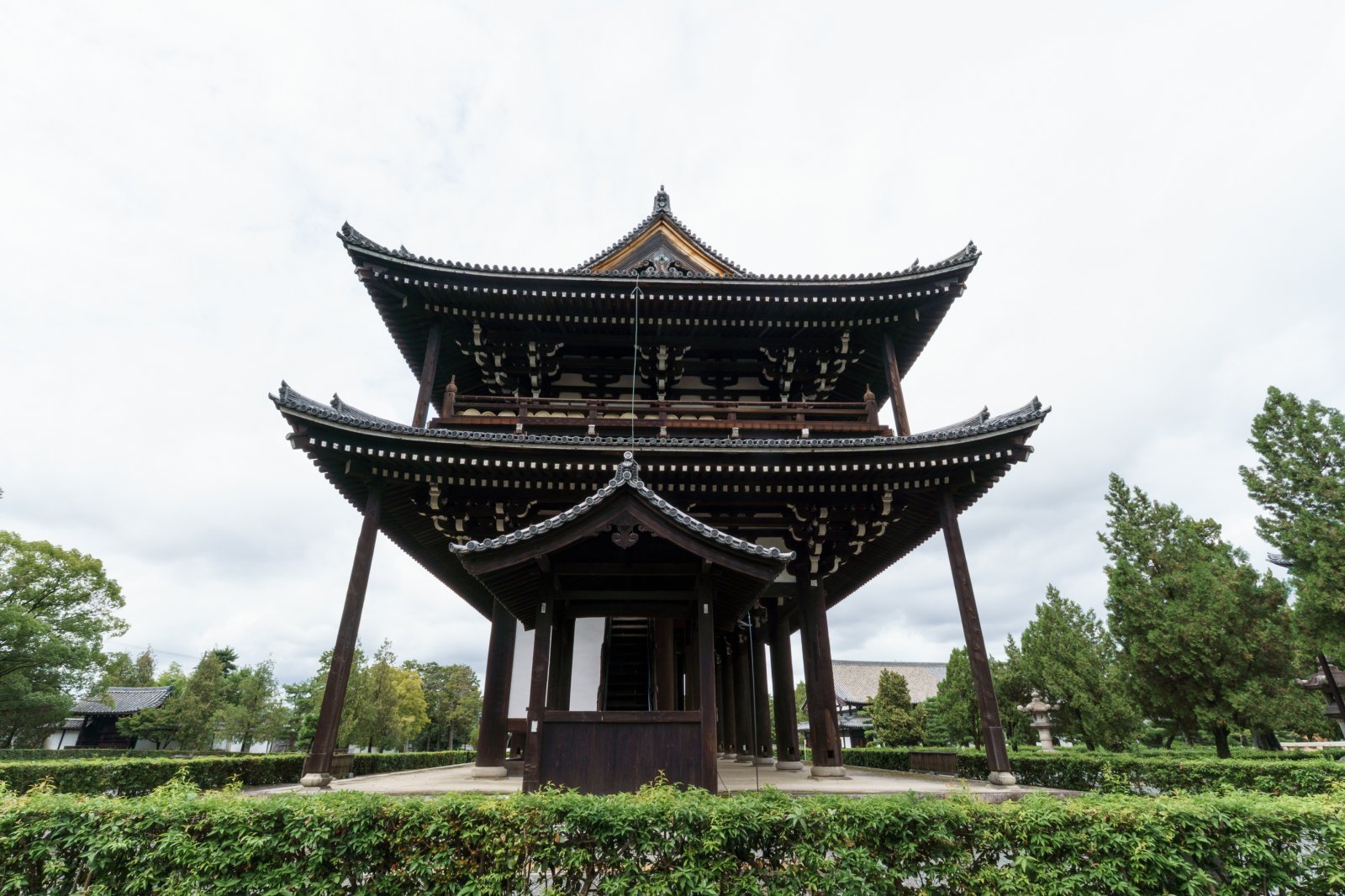
Monumental wooden architecture, rebuilt in the Meiji period.
A space enveloped in deep greenery, almost like a forest.
Just one stop from Kyoto Station, followed by a 15-minute walk.
And yet, there are hardly any people.
The quiet is striking.
It almost doesn’t feel real.
This is Kyoto, distilled.
© Kazushi Takahashi
When I visited in June 2024, there was almost no one there.
When I returned again in September 2025, it was the same.
To experience such a place in near solitude felt almost too good to be true.
Of course, it was off-season, and a weekday morning—but even so, places like Fushimi Inari, Ginkaku-ji, or the bamboo grove in Arashiyama are still crowded. At times, it feels like rush hour.
Crowds in Kyoto tend to concentrate in specific places.
Sites that appear on standard travel routes, especially those listed as World Heritage, draw the largest numbers.
After visiting Kyoto four times between September and November for work, I came away with a sense that places where one can truly feel the atmosphere of the ancient capital are becoming fewer.
And yet, there is one place I would still recommend: Tōfuku-ji.
© Kazushi Takahashi
At first, it’s hard to understand why such a place remains so quiet.
Then you learn that it is famous for autumn foliage, and that from November to early December, the approach becomes so crowded that people are not even allowed to stop on the bridges.
In other words, many people visit only during the foliage season.
Perhaps the appeal of wabi-sabi, or the restrained beauty of wooden architecture, is something that resonates with a more limited audience.
If you’ve read this far, you may be one of them.
For those who are, there are three things worth noting:
1. the four gardens arranged to the north, south, east, and west
2. the approach from the nearest station
3. the sense that ‘Kyoto’ is somehow contained here
To the north...
© Kazushi Takahashi
© Kazushi Takahashi
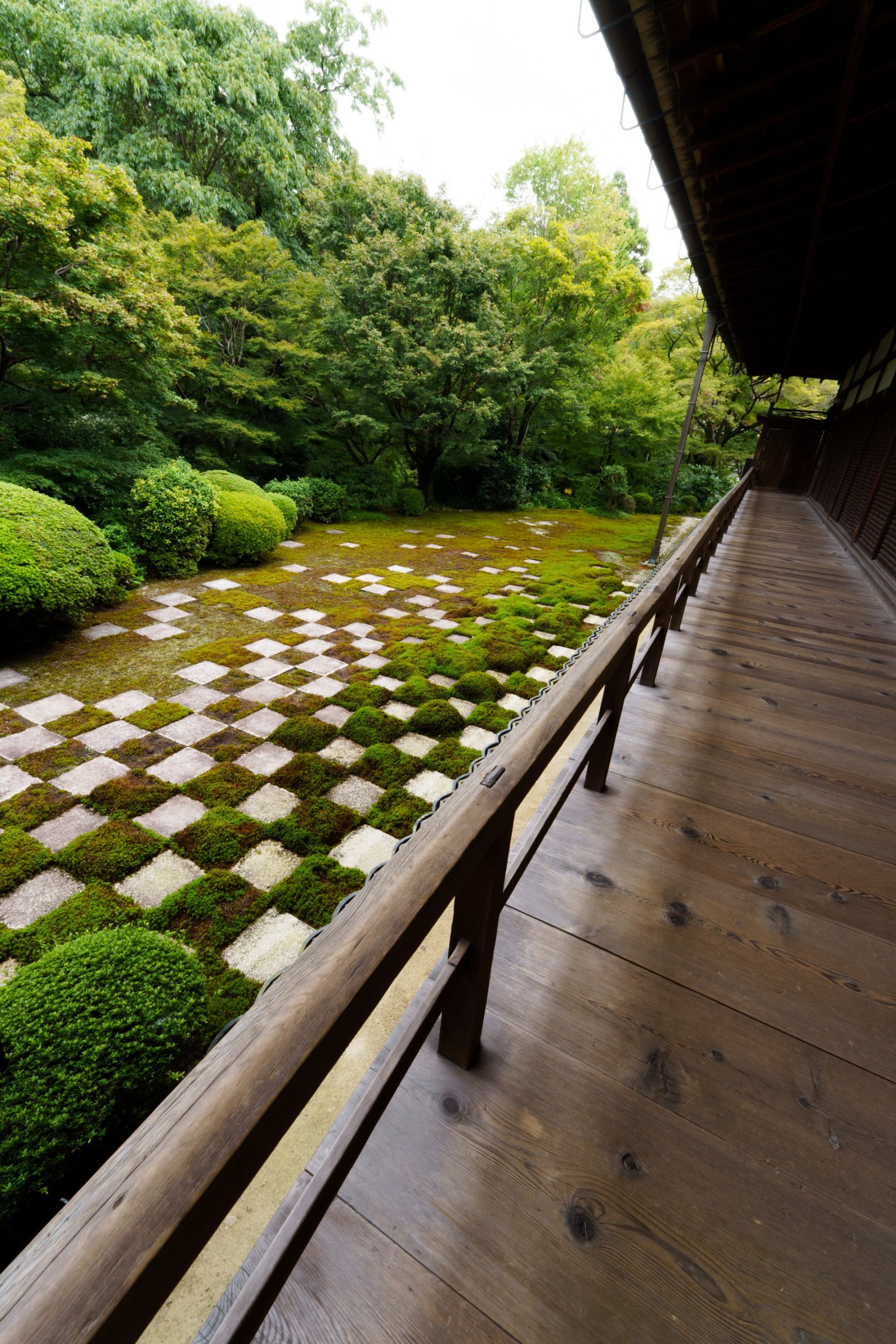
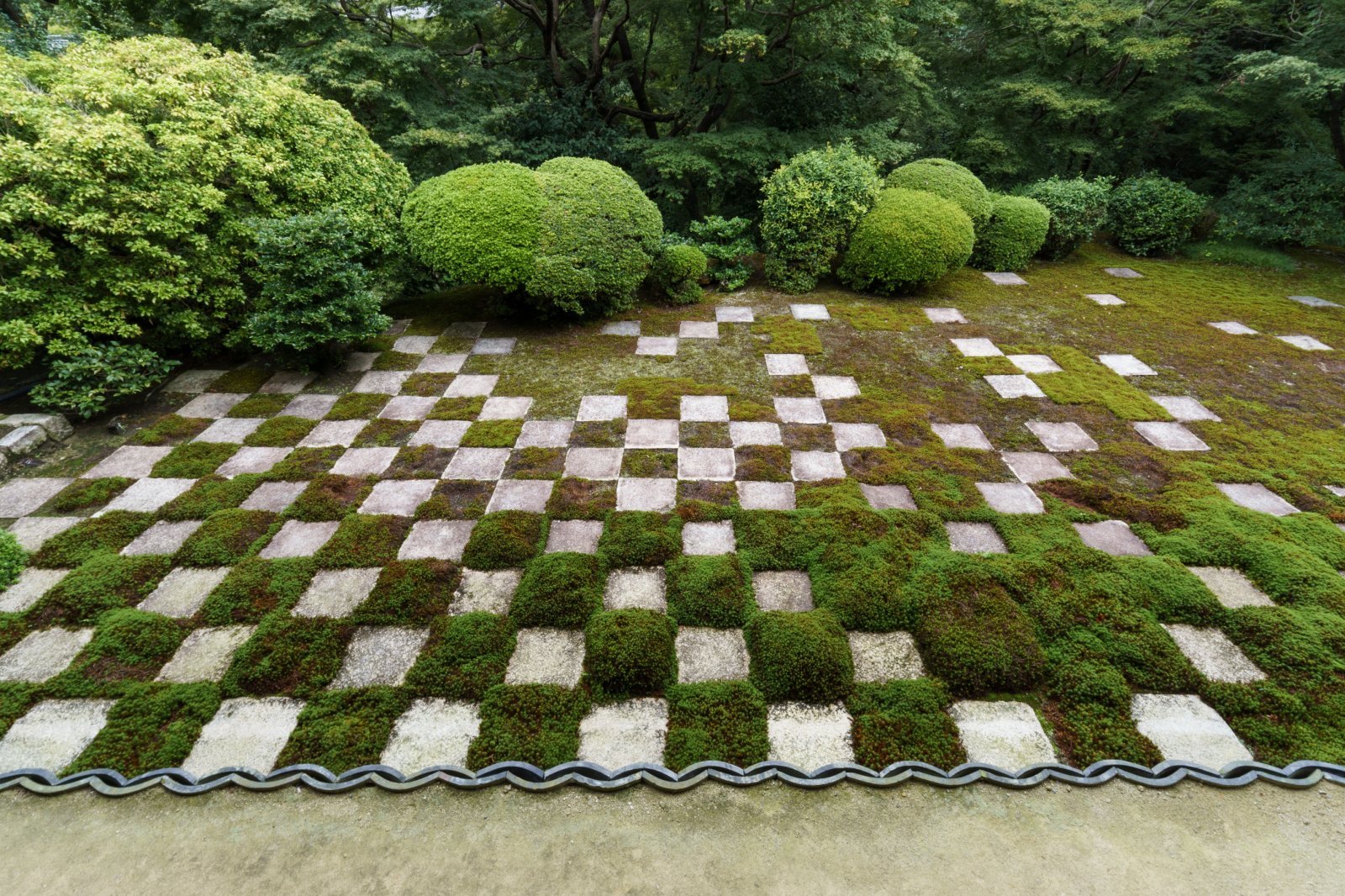
A checkerboard gradient arranged with calculated irregularity.
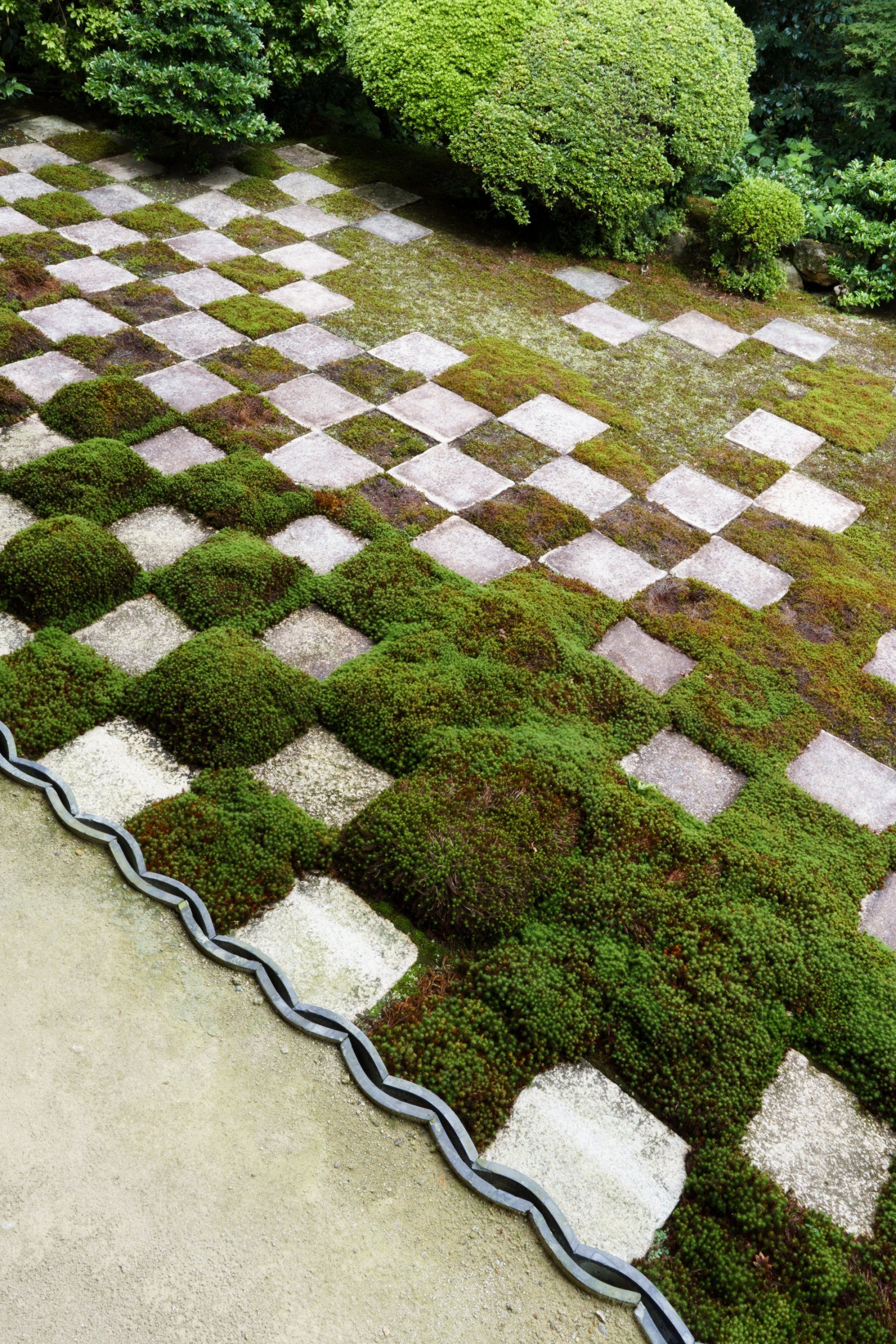
The mounds of moss vary in height as well, creating a soft, three-dimensional blur.
This is Tōfuku-ji’s greatest highlight.
Seeing this garden was the very reason I first came here.
It was created in 1939 by the landscape designer Mirei Shigemori.
The result is a remarkable spatial beauty, where the graphic sensibility of modern abstract art at its height comes into harmony with an old temple.
© Kazushi Takahashi
Seeing it in person, however, gives a more weathered impression than in photographs.
The greens are not as vivid, and the garden feels dry, even somewhat rough.
It’s best not to expect something overly decorative.
Whenever I come here, I find myself imagining what it must have been like when the garden was first created.
That it was shaped amid a tension between harmony with the temple and the artist’s own vision.
Its appearance may have changed since then, but the fact that a work using living plants has endured to the present is remarkable.
The effort required to maintain it must be considerable.
This is a garden sustained over time by many hands.
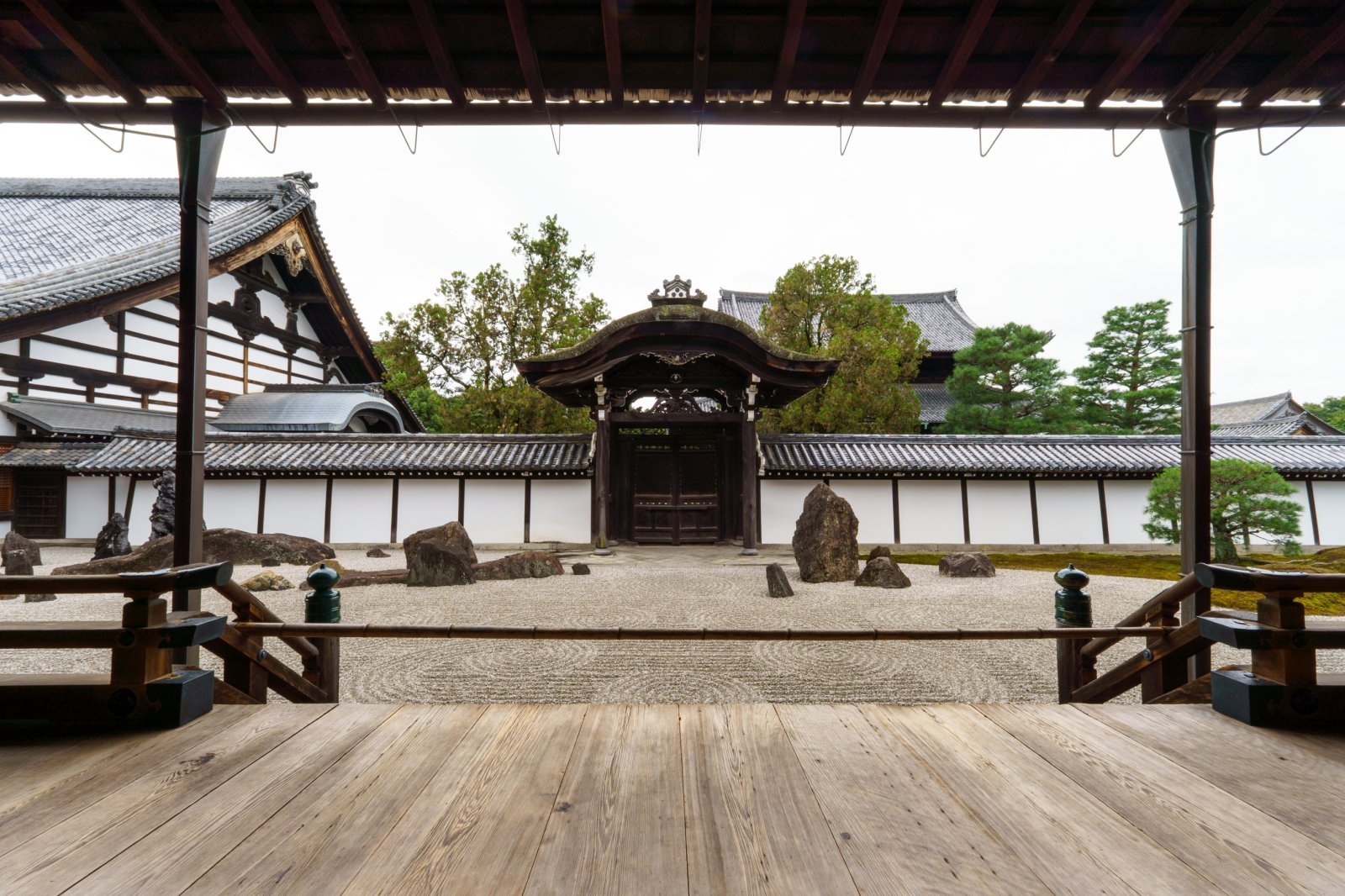
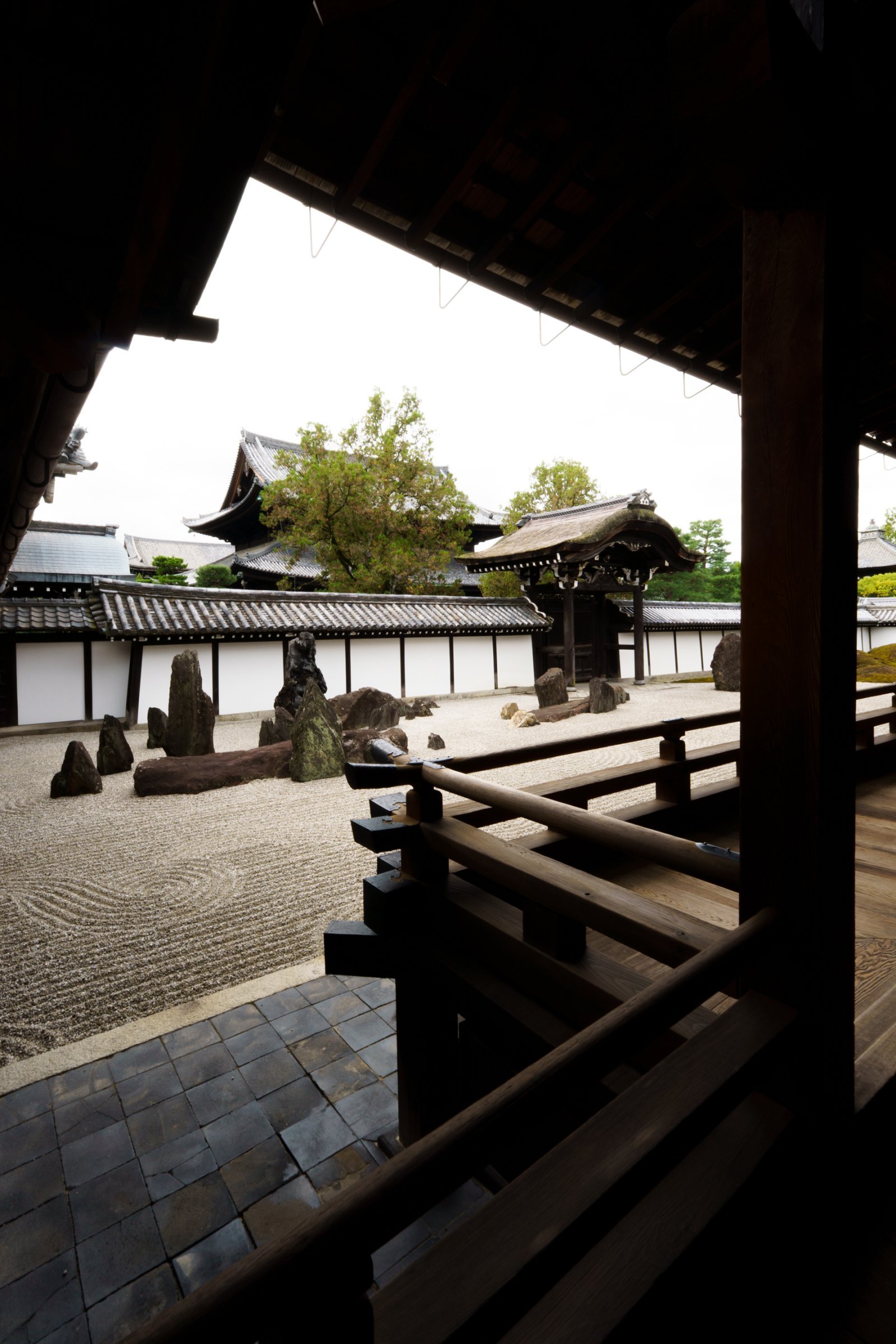
Here, in the Hōjō Garden (the Hōjō being the abbot’s quarters), Shigemori arranged four distinct gardens to the cardinal directions.
The checkerboard moss garden lies to the north.
To the south…
© Kazushi Takahashi
© Kazushi Takahashi
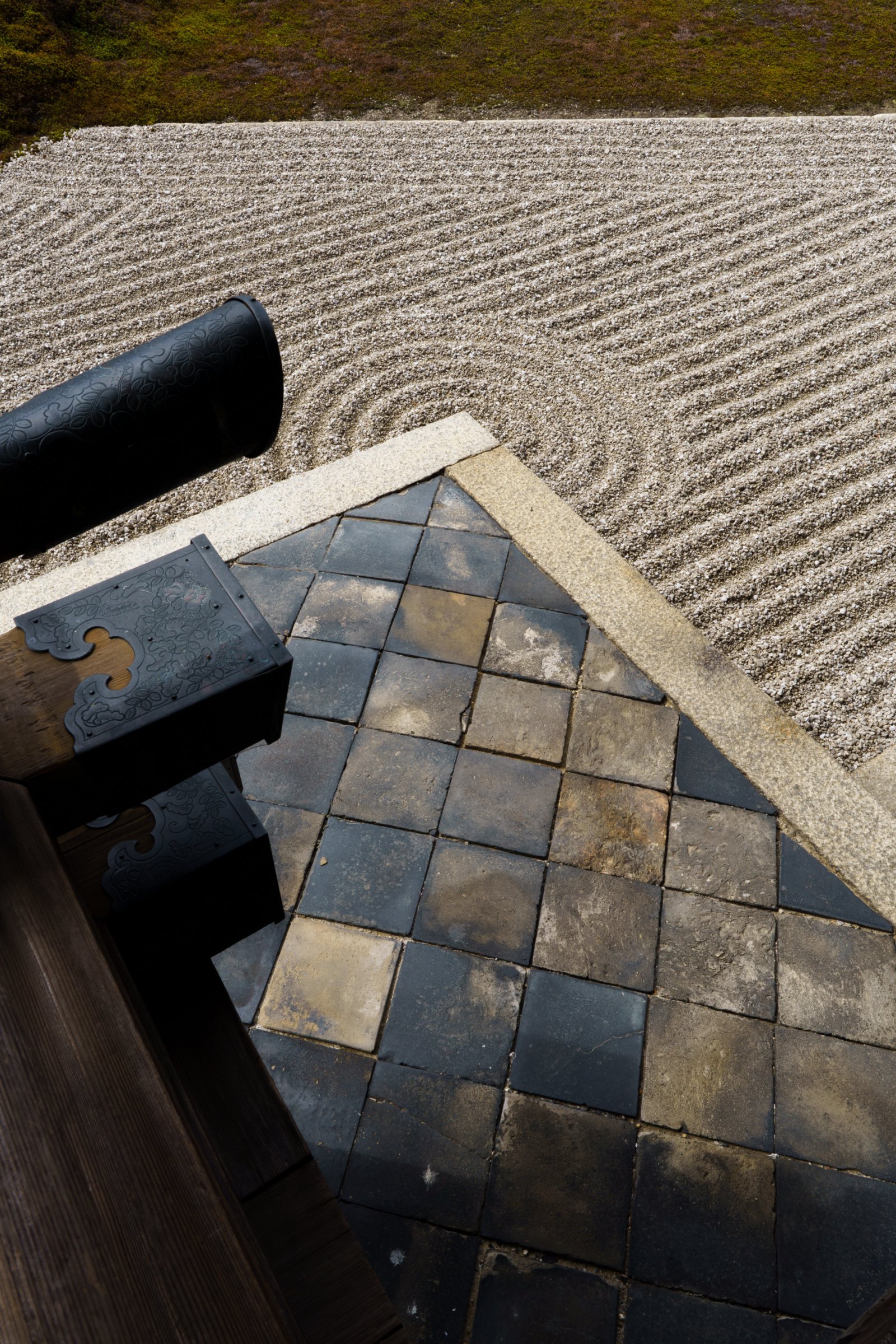
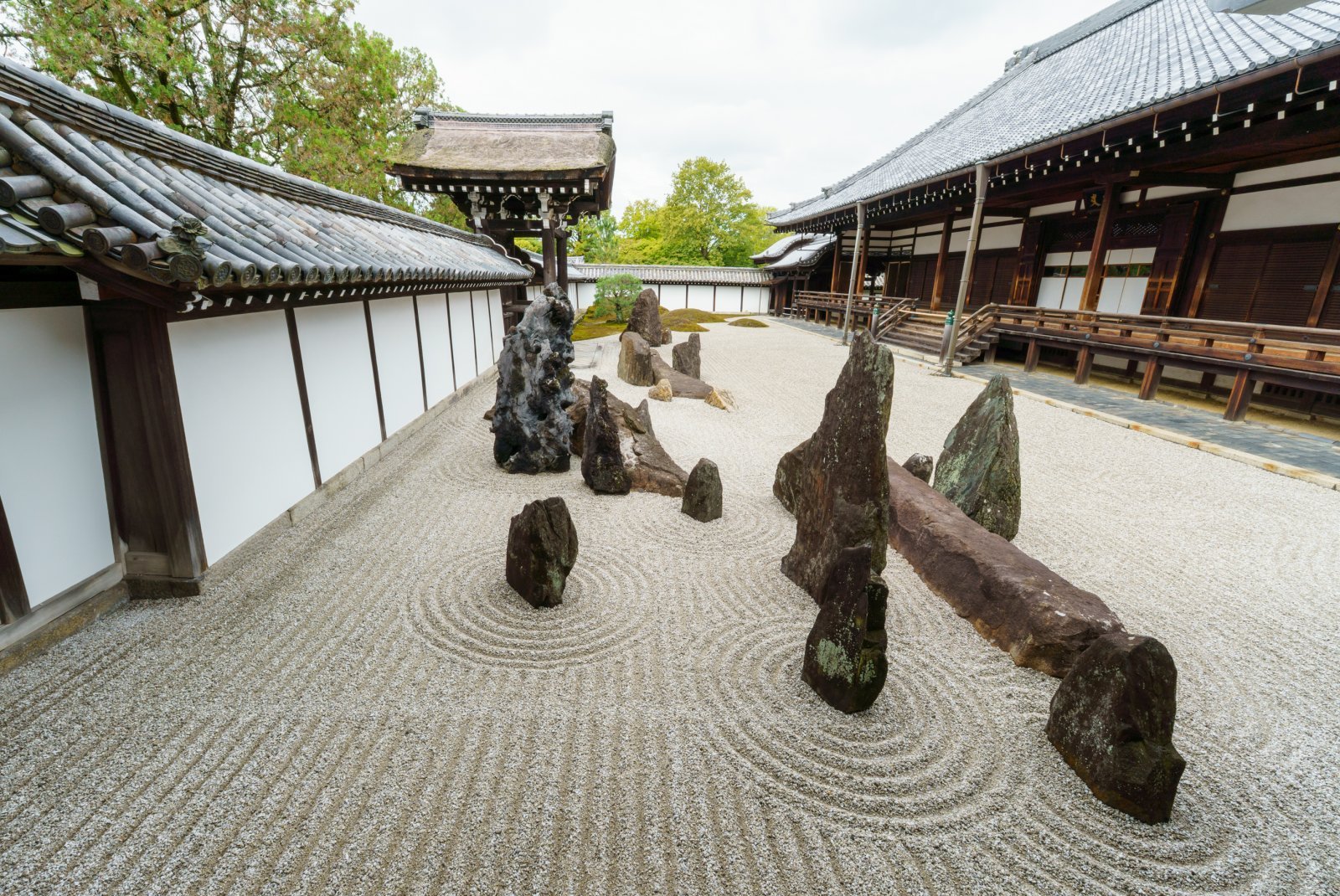
A modern interpretation of ‘karesansui’, where raked sand evokes the sea. / © Kazushi Takahashi
To the west…
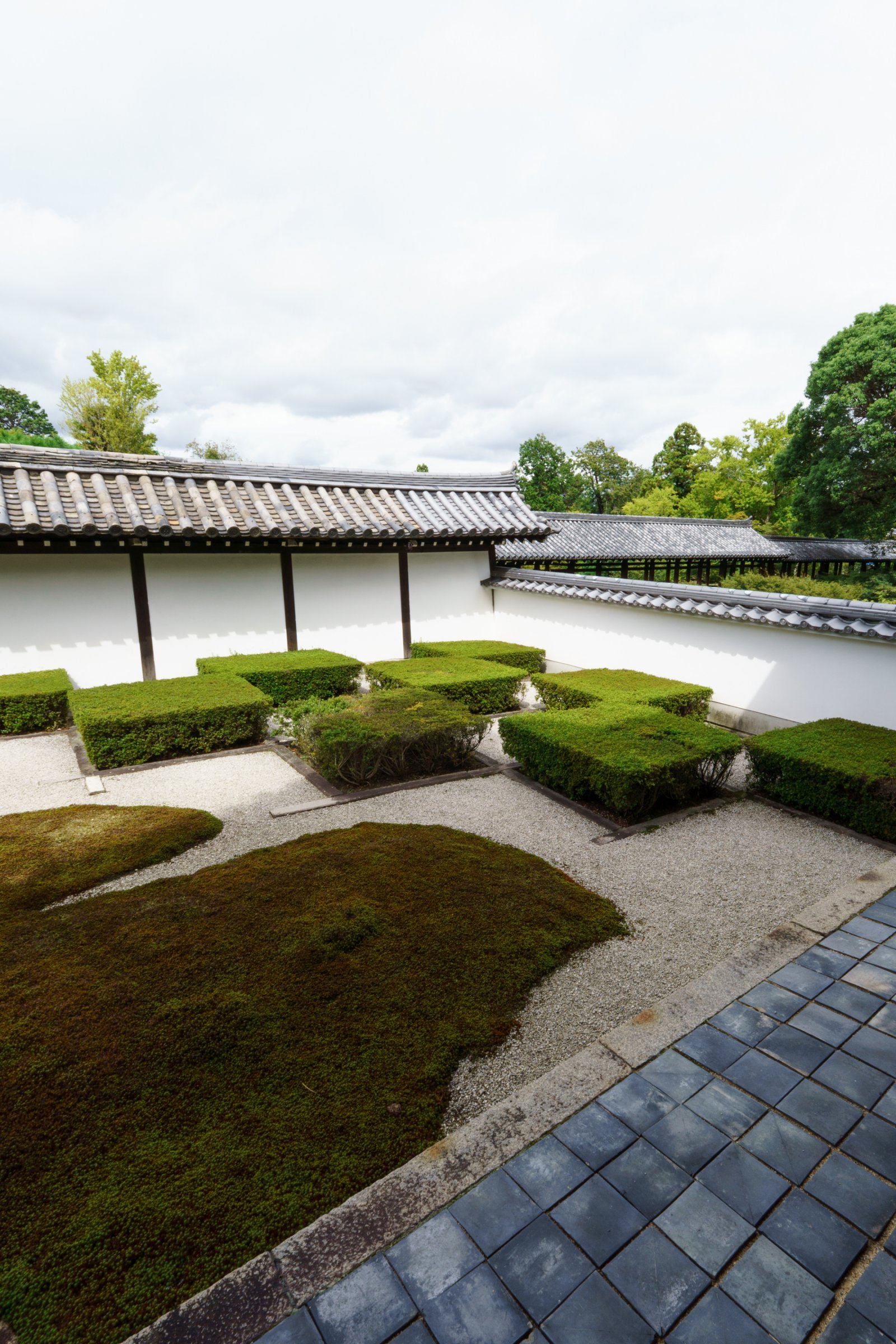
© Kazushi Takahashi
This side is also arranged in a checkerboard pattern.
One section of the planting seems a little weakened.
It looked healthy last year, though.
(Photos in this article were taken in September 2025.)
Maintaining natural vegetation is no easy task.
And finally, the east…
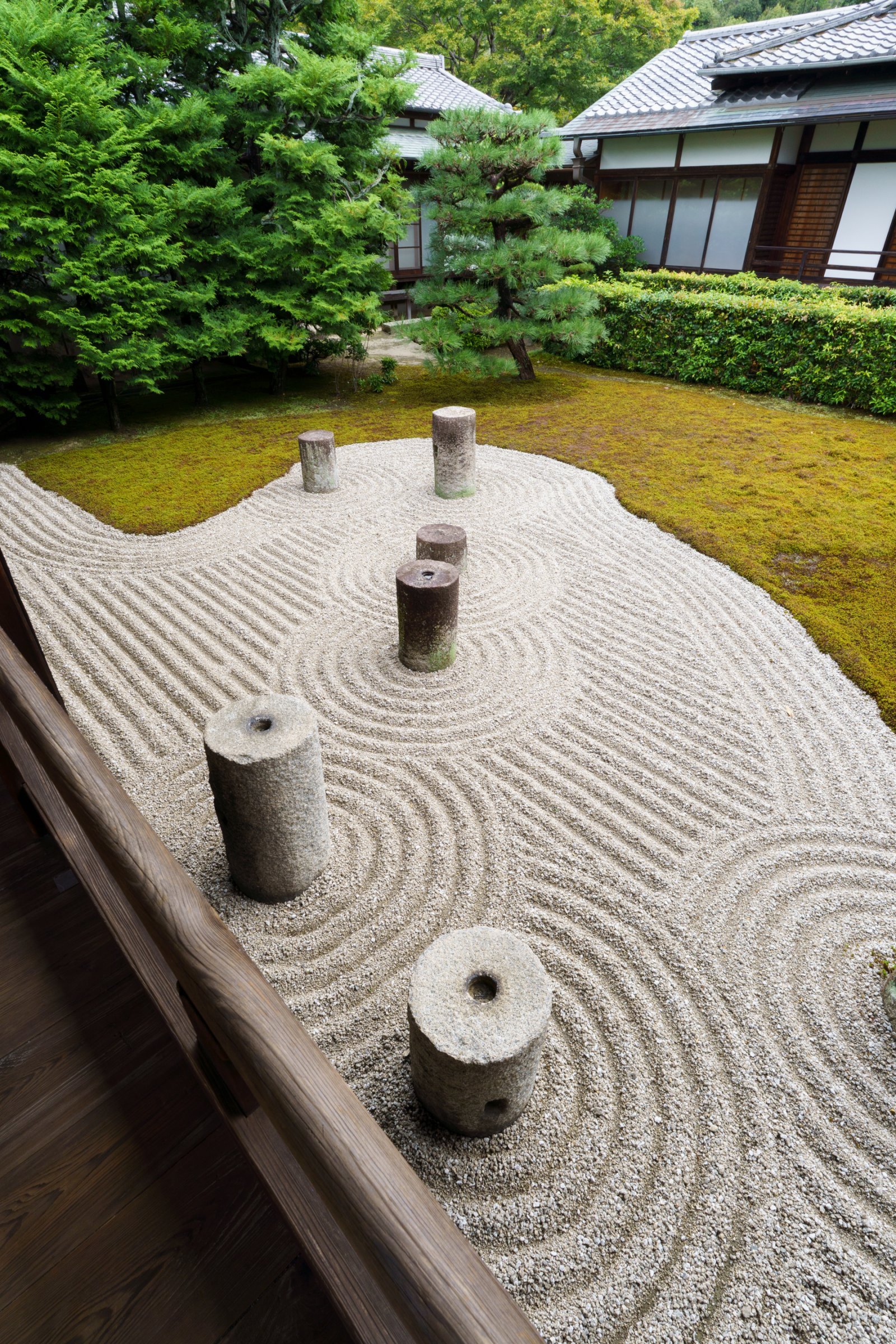
© Kazushi Takahashi
A smaller, less conspicuous garden, but beautiful all the same.
It is said to represent the Big Dipper.
The cylindrical forms are made from reused foundation stones.
When creating the gardens, the temple—guided by the Zen principle that nothing should go to waste—asked Shigemori to reuse materials from within the Hōjō rather than discard them.
These conditions gave rise to the four gardens arranged to the cardinal directions.
It makes you wonder—when fashion brands in today’s cities spend vast amounts of money and materials to build elaborate pop-up stores, only to dismantle them once the event is over, what happens to all that waste afterward?
© Kazushi Takahashi
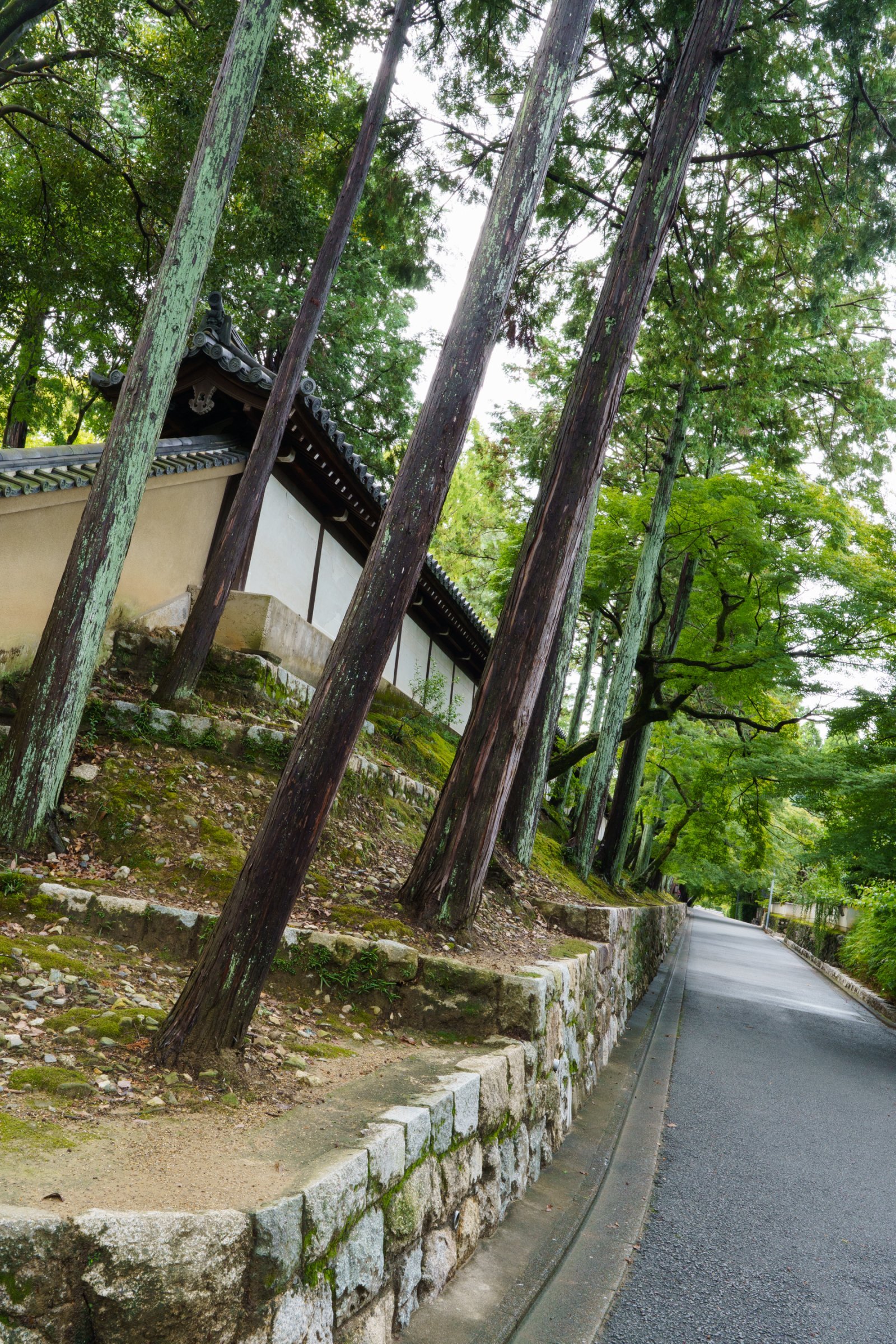
Now, moving on to the second highlight: the approach to the temple.
For convenience, I’ll refer to the walk from the nearest station, Tōfuku-ji Station, as the approach.
This walk is truly something special.
It’s best not to arrive by taxi—doing so would take away at least half the enjoyment of visiting Tōfuku-ji.
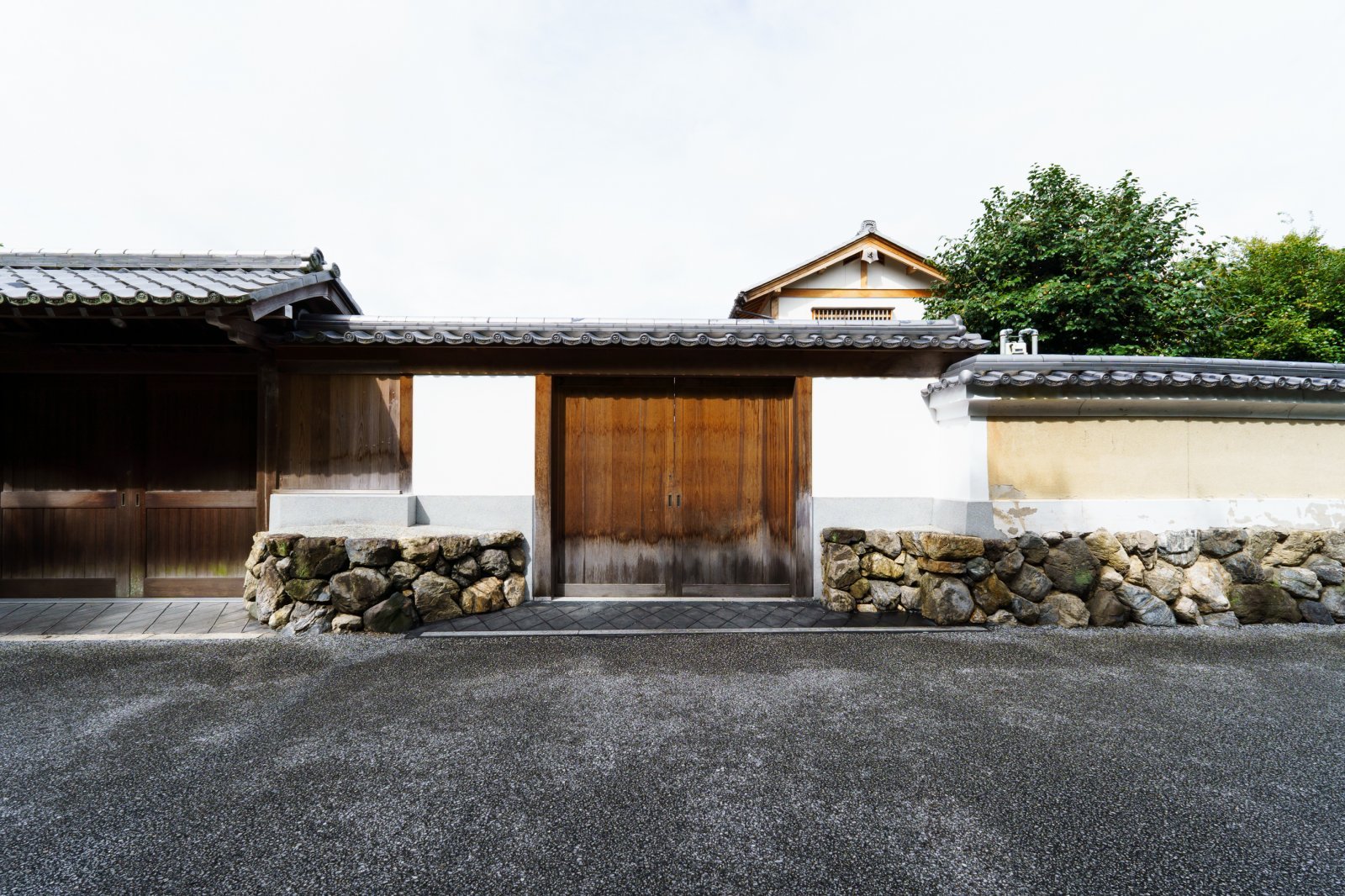
The road is lined with scenes that evoke the atmosphere of the old capital. © Kazushi Takahashi
© Kazushi Takahashi
© Kazushi Takahashi
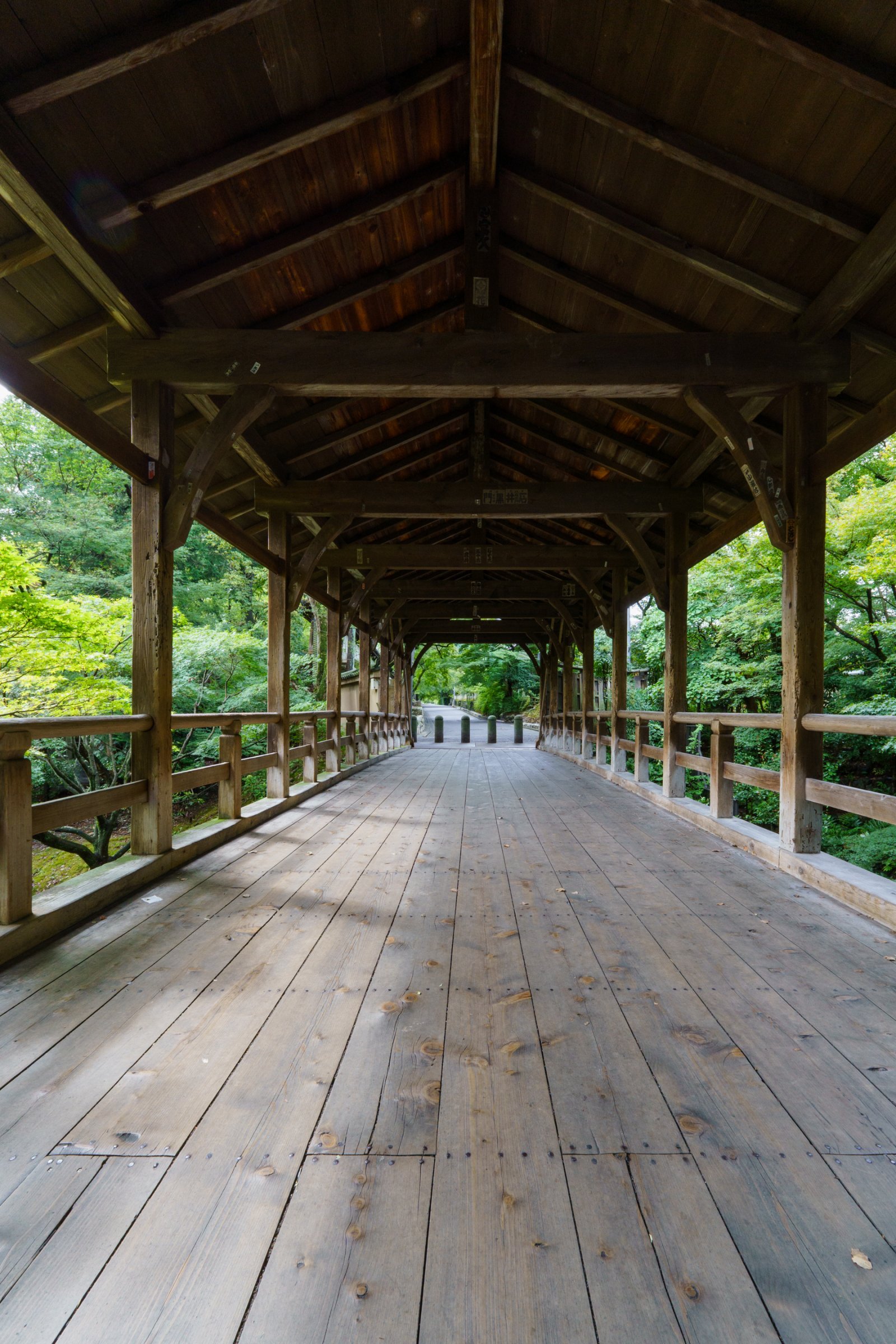
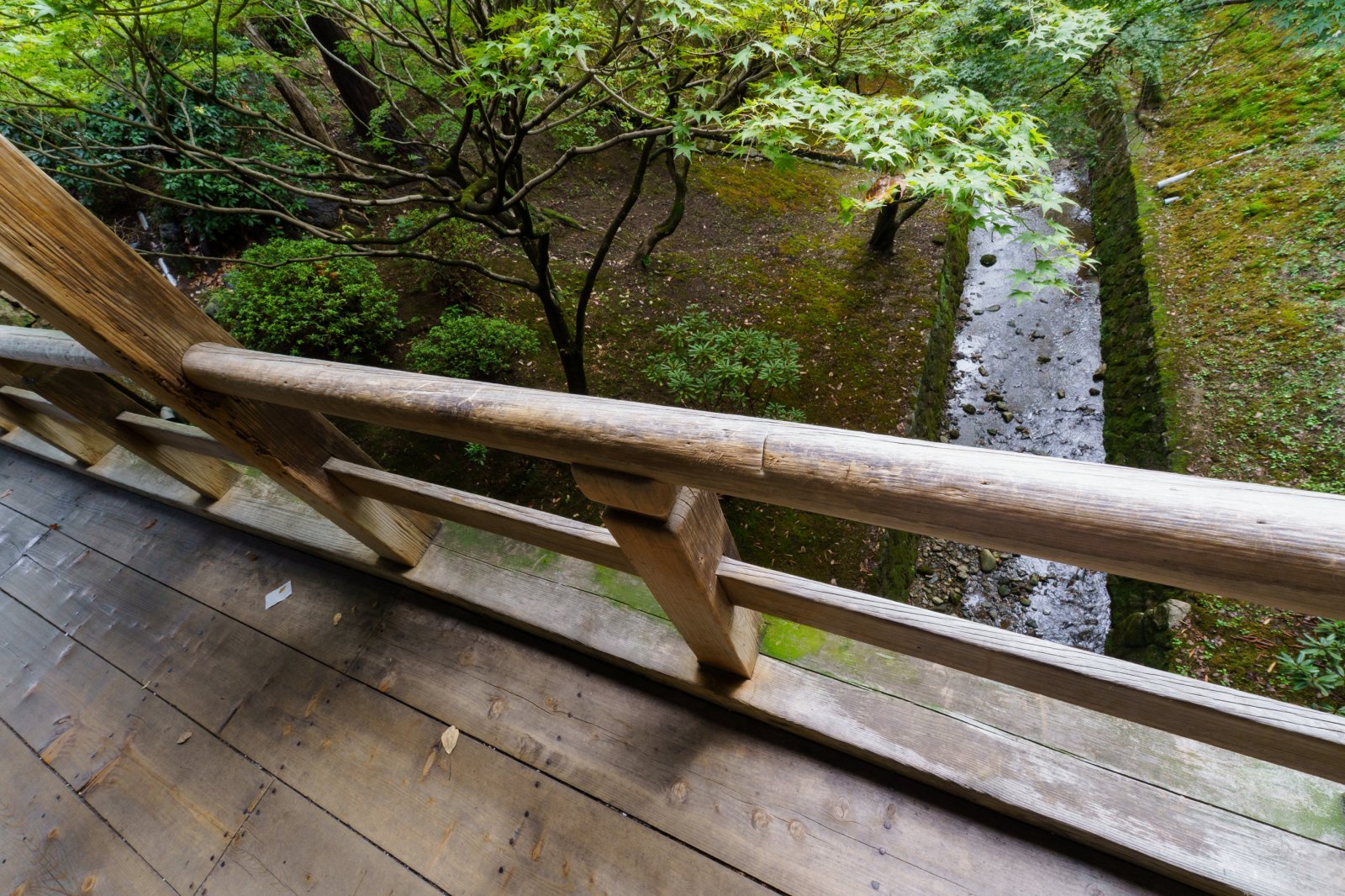
During the autumn foliage season, Gaun Bridge becomes so crowded that it’s difficult to walk across.
That’s because…
© Kazushi Takahashi
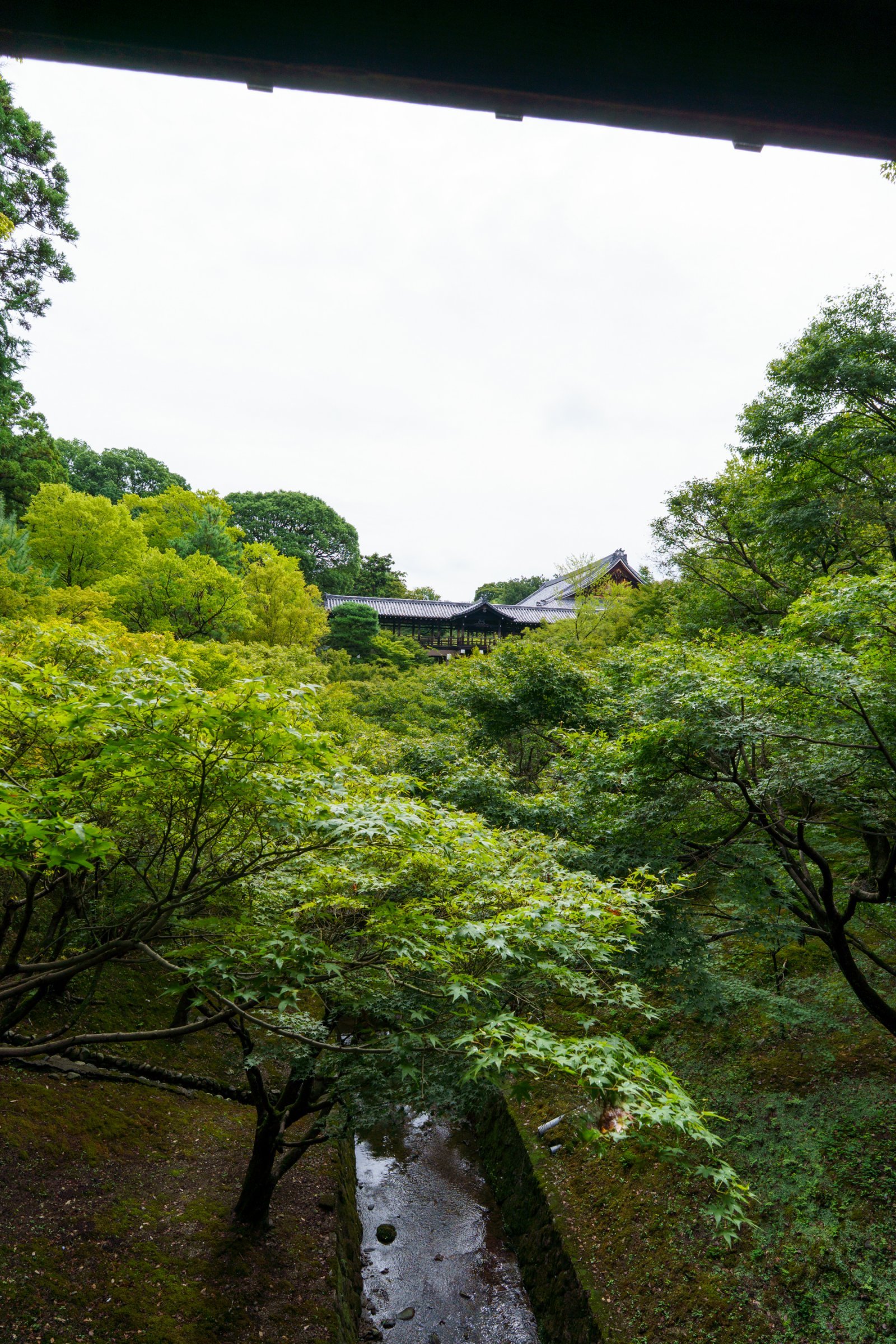
That’s because of this view.
In autumn, it all turns vivid red and bright yellow.
Since the bridge is free to cross, it’s easy to see how it becomes such a famous scenic spot.
Personally, I prefer the green leaves—the sense of vitality they convey—so I’m more than satisfied with the view as it is.
For those who want to take in the scenery from a higher vantage point, head to Tsūten Bridge within the temple grounds, visible further in the photo above.
Admission is ¥1,000 for adults during the foliage season (November 15 to December 7), and ¥600 at other times.
Outside the foliage season, the combined ticket with the Hōjō Garden, usually ¥500, is a good option at ¥1,000.
(Combined tickets are not available during the foliage period.)
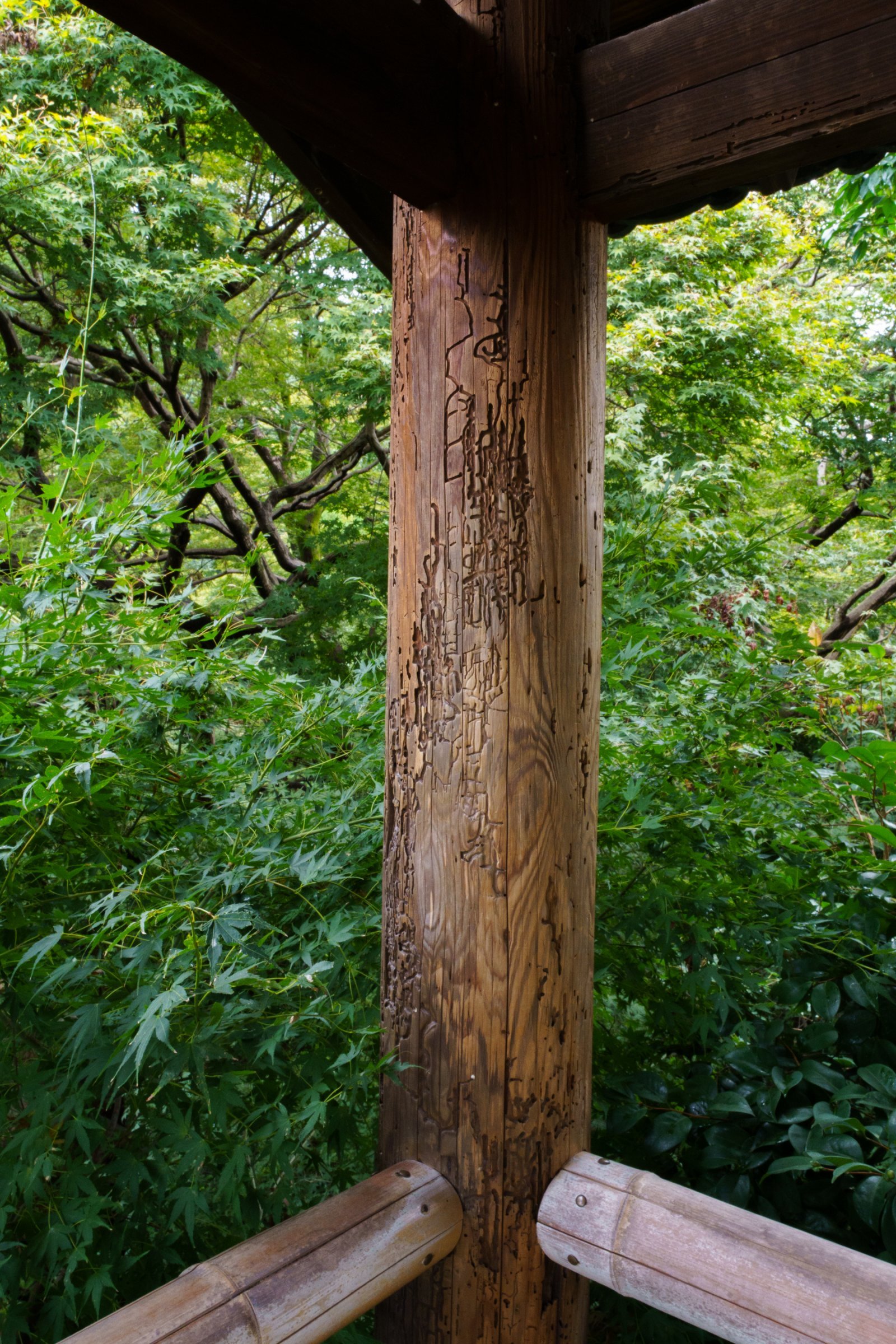
Finally, the third highlight: a place that captures Kyoto in its entirety.
© Kazushi Takahashi
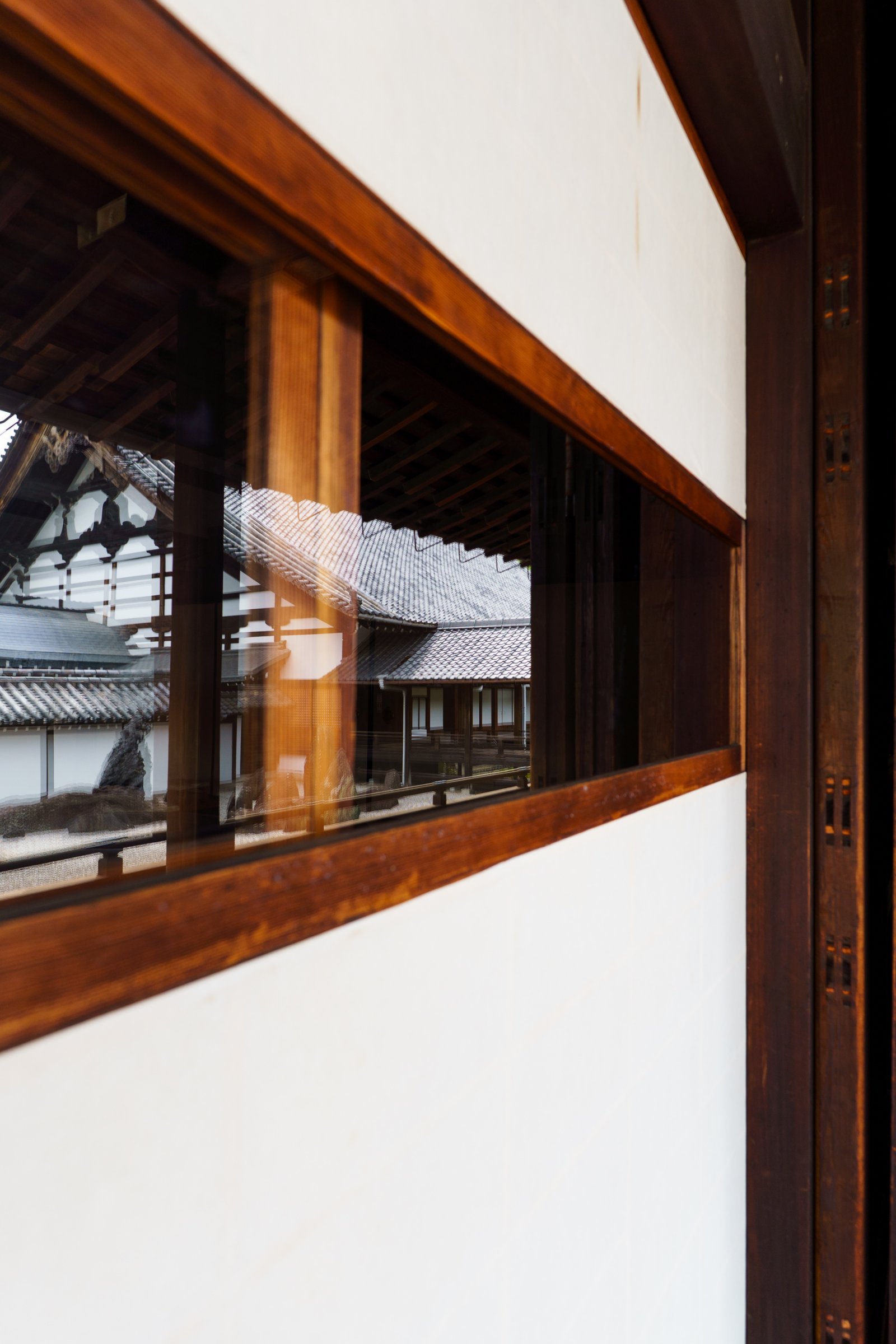
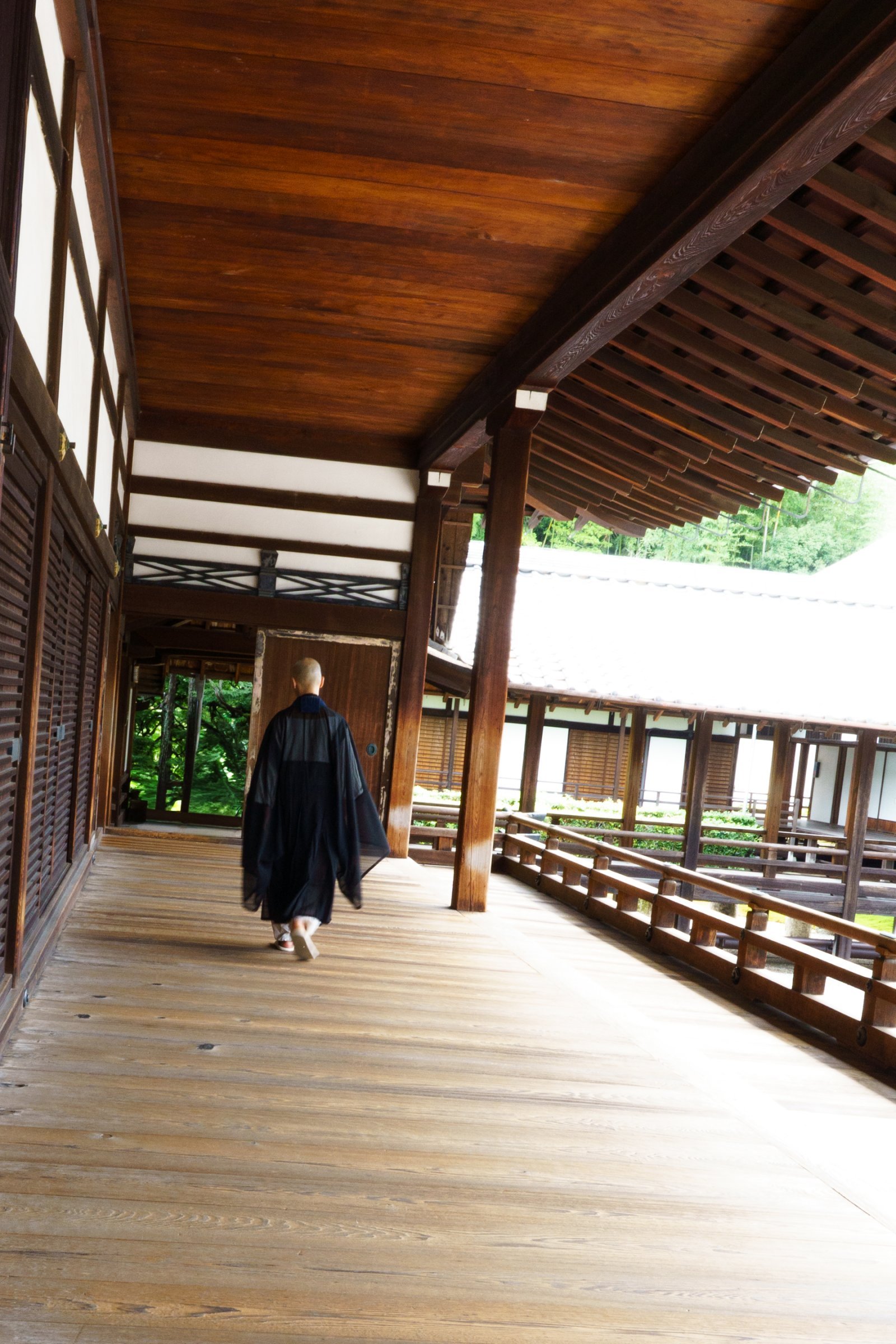
Centered around the Hōjō Garden designed by Shigemori, remarkable materials and forms can be found throughout.
If you’re stopping in Kyoto as part of a larger trip and only have time to visit one temple, Tōfuku-ji would be an excellent choice.
It feels as though all of Kyoto is contained here.
The only thing missing might be matcha sweets.
That said, there are long-established Japanese cafés at Kyoto Station, just one stop away by train.
Or you could head to Gion, known for its maiko.
From the nearest station, Tōfuku-ji, it’s only about six minutes by train to Gion-Shijō.
The accessibility really couldn’t be more convenient for visitors.
© Kazushi Takahashi
© Kazushi Takahashi
© Kazushi Takahashi
Originally, temples were places for the practice and teaching of Buddhism.
Today, they also serve as a reminder of the richness of Japanese culture, especially for those living in the city.
Even if you haven’t felt particularly drawn to temples before, why not visit Tōfuku-ji after the autumn foliage season—once things have settled down, from mid-December onward?