Suiseki, the Art of Stone Appreciation
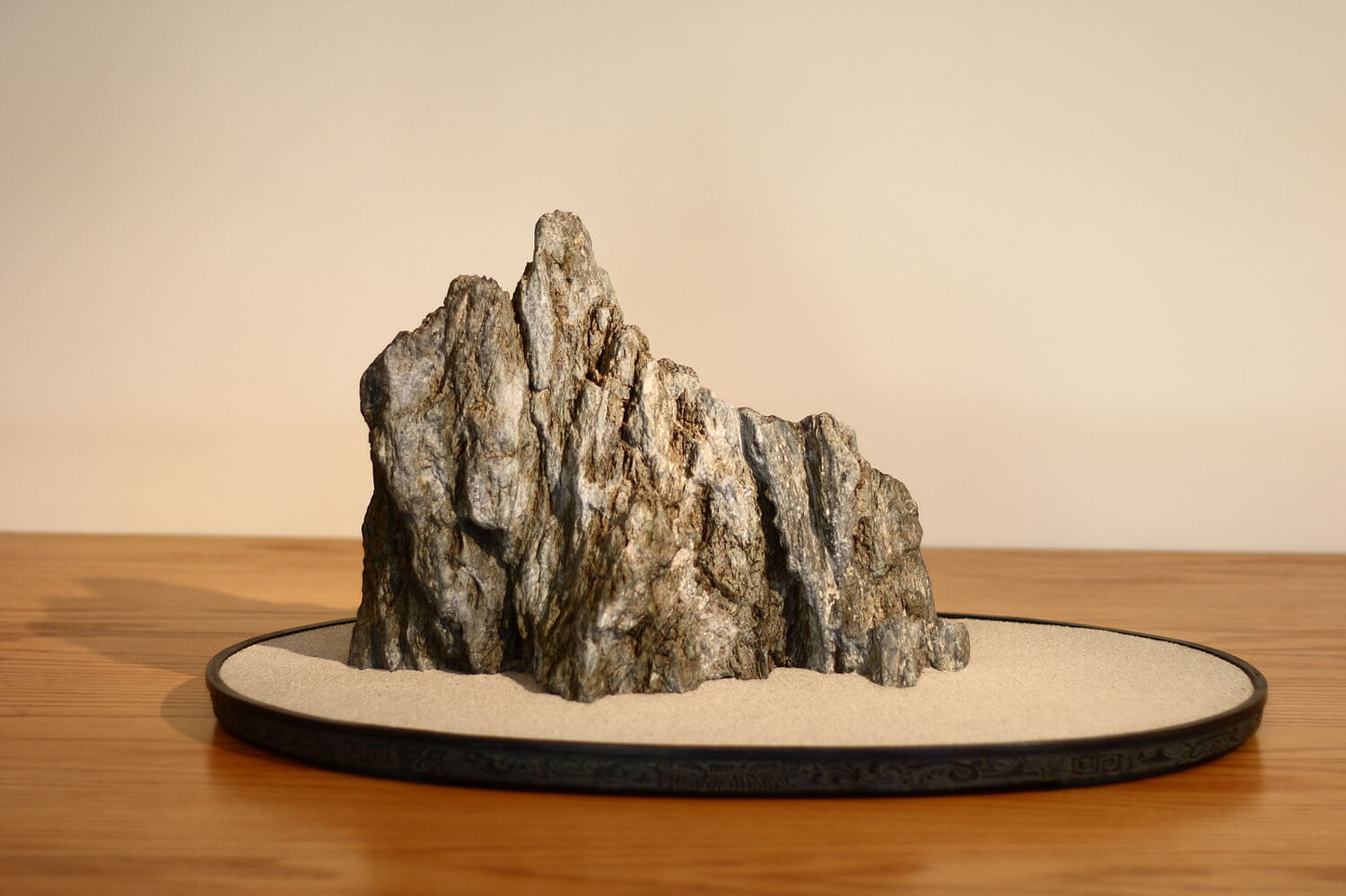
Suiseki, which literally translates as 'water stone', is an ancient Japanese art that advocates the contemplation of stones.
©Sage Ross, Wikipedia
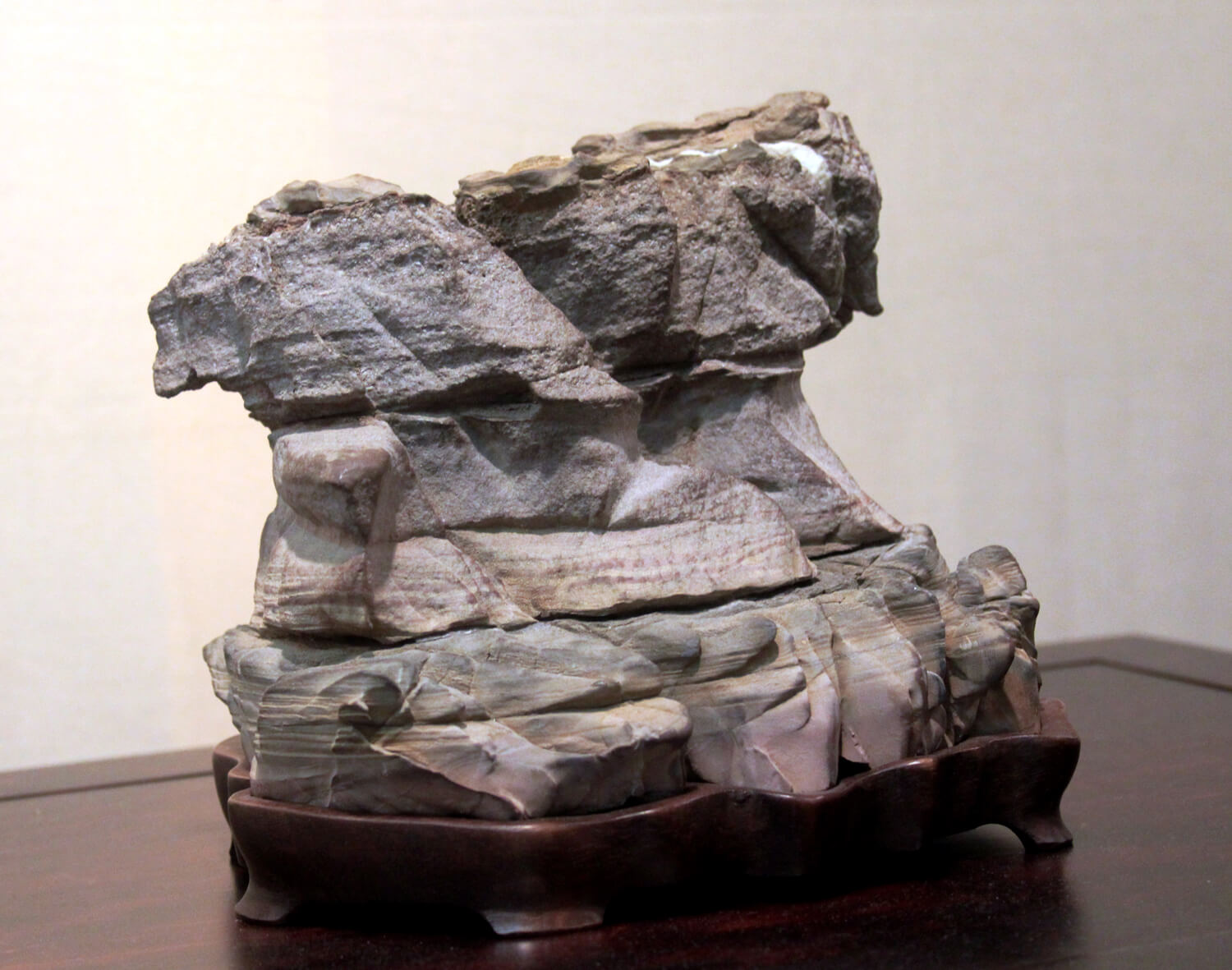
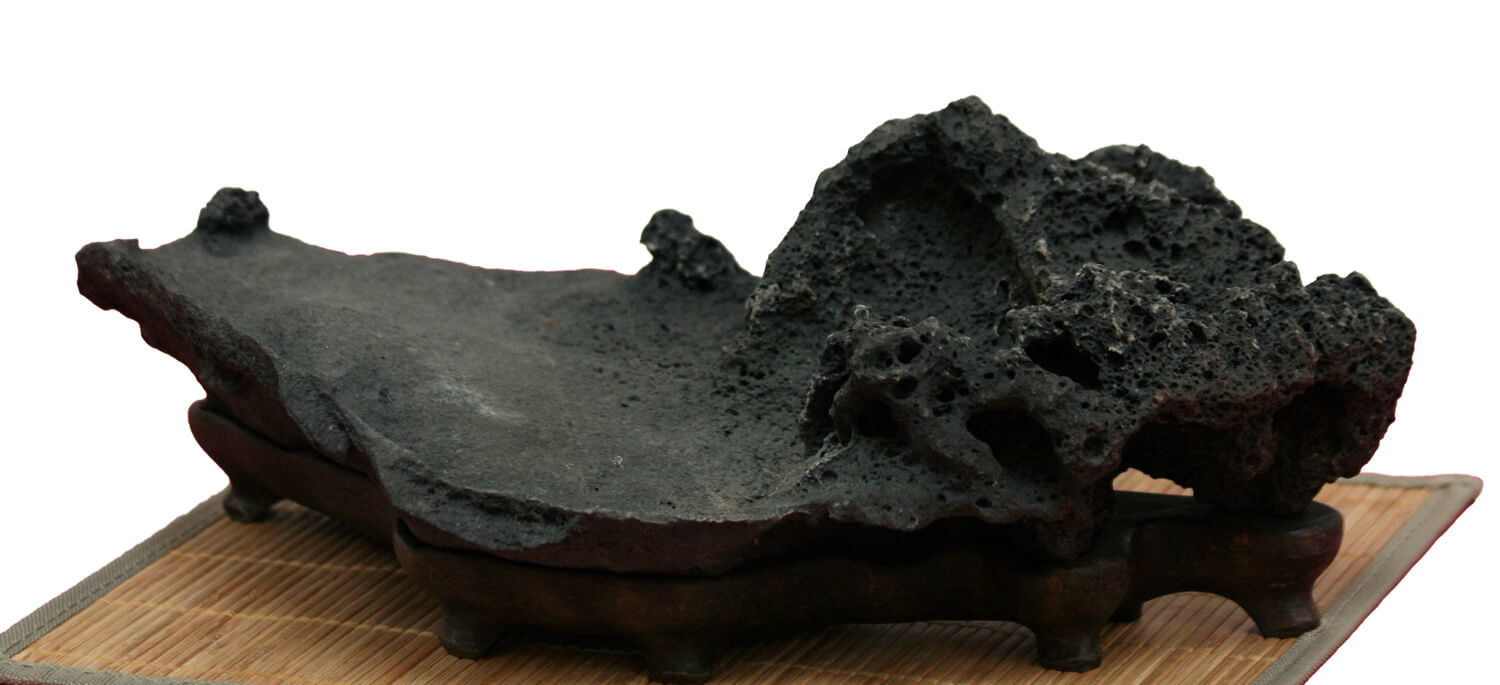
The beauty of a suiseki lies in its ability to evoke an aspect of nature. An ode to time, patience and simplicity, suiseki involves showcasing the most remarkable stones found in nature and upon which water, erosion, wind and time have acted to sculpt abstract or, depending on the imagination, more meaningful shapes, such as a mountain or animal.
A discovery through bonsais
Originating from China, where it is known as gongshi, and Korea, where it is termed Suseok, the art of suiseki was introduced to Japan by the Chinese Imperial Court during the Asuka period (538 or 552-710 CE), and was only discovered in the western world during the first bonsai exhibitions, where stones were also presented. Like the rigorous codes of bonsai, suiseki also has its own rules, linked to the quality of colours and the powers of suggestion and balance. Stones in multiple colours are the most appreciated, but suiseki enthusiasts also like to take advantage of the effects of light and shadow, which reveal the different sides to stones.
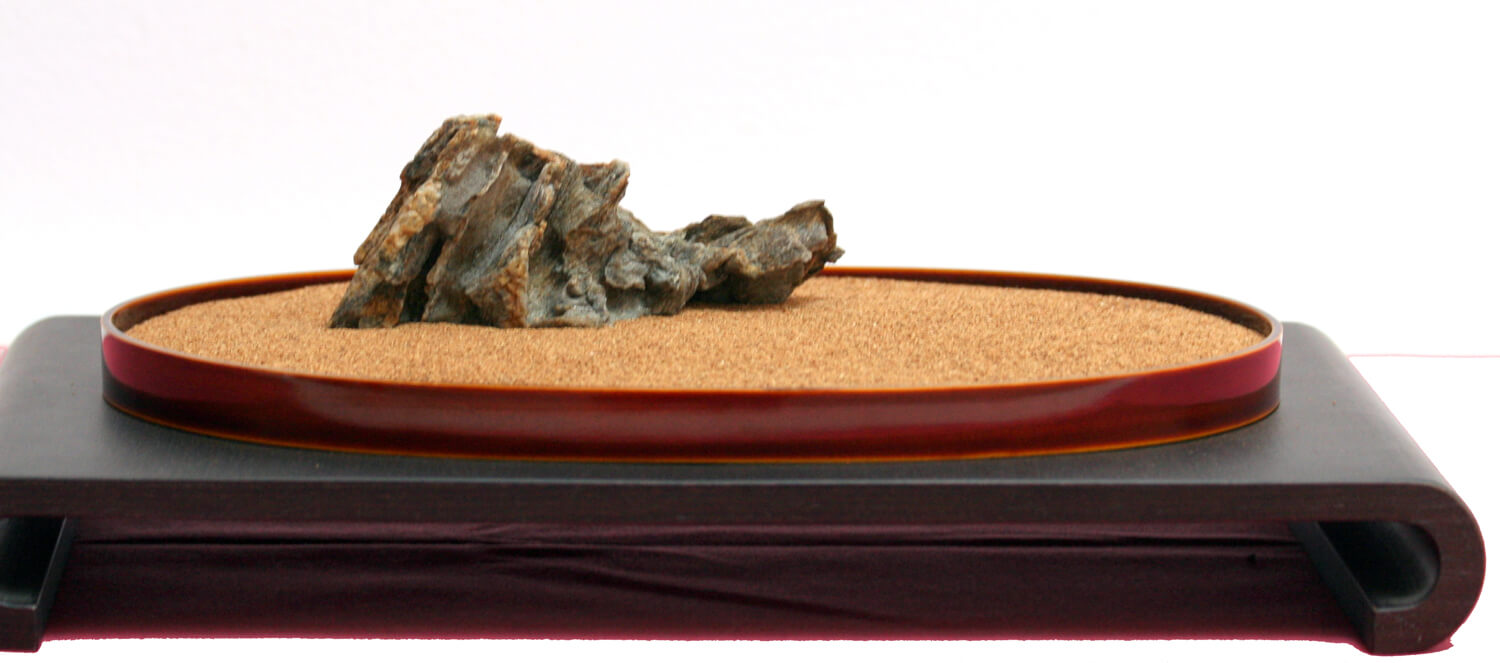
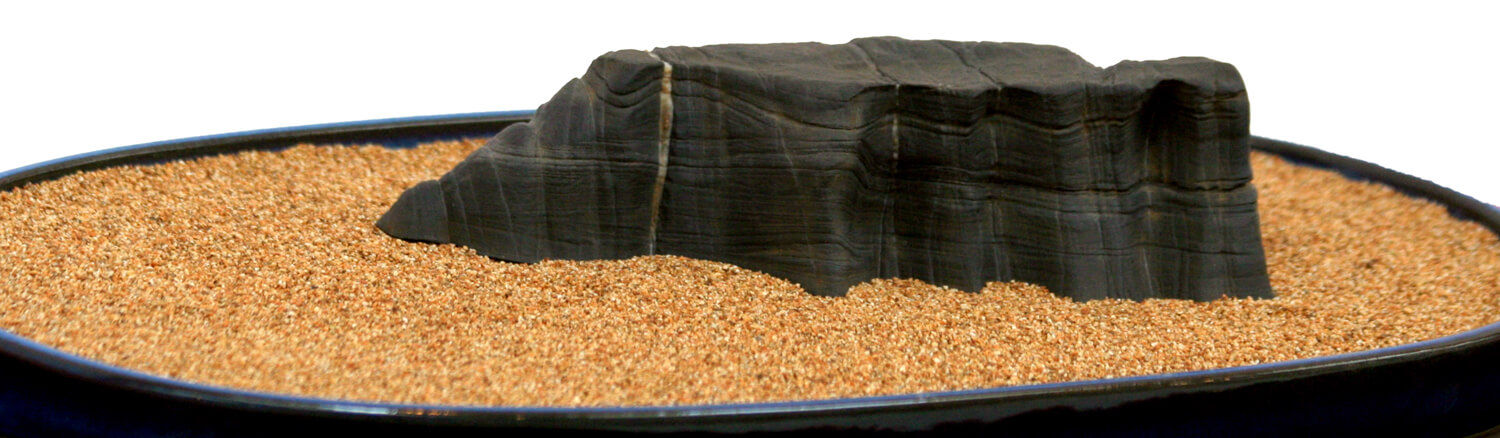
Enhanced naturally, the stone is simply placed on a wooden stand or, like in times past, presented in a bowl filled with a layer of water or sand. A wooden stand, or dai/daiza, is the most frequently used option, and is generally made from a type of refined wood such as rosewood, in order to support the stone and, more importantly, showcase it.
A representation of the world
For suiseki aficionados, the most difficult challenge is to find a stone that provides complete satisfaction from the moment it is discovered. Once the rare pearl is unearthed, the whole stone becomes conducive to contemplation of and reflection on the place of humans in their environment. As Matsuura Arishige, global ambassador of the art of suiseki, underlines, ‘a good suiseki has the power to represent to humans, in just a few centimetres, the whole of Earth and the cosmos’.
©Karelj, Wikipedia
©manuel m. v.
©manuel m. v.
©manuel m. v.