Fairytales Told on Crepe Paper
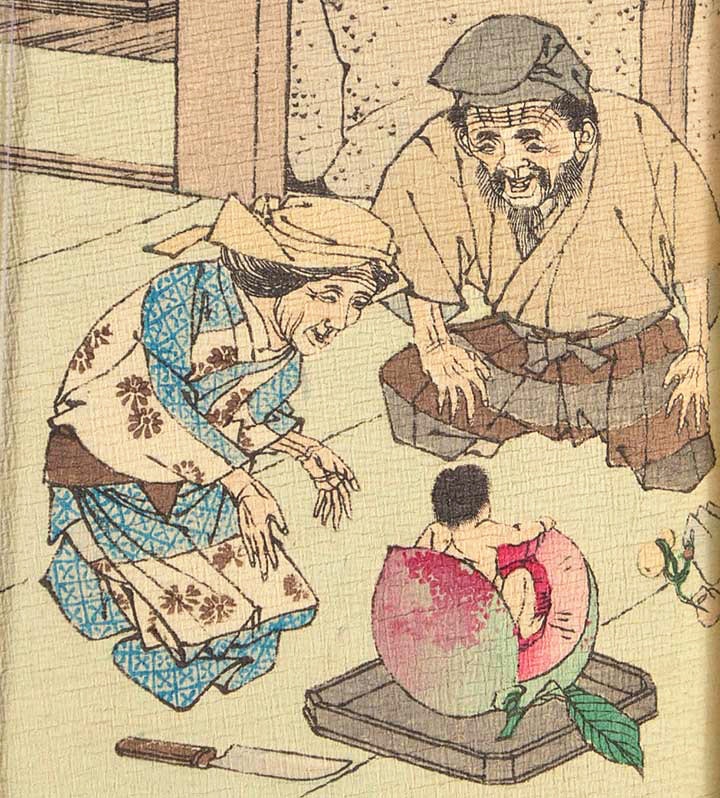
These traditional children's stories were published particularly for a Western readership between 1885 and 1922.
© Public Domain
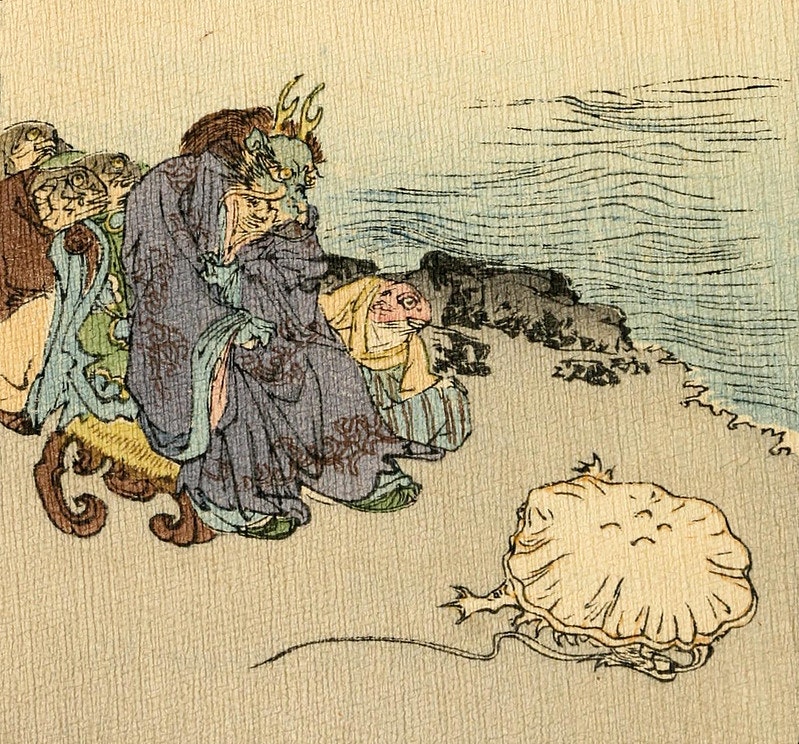
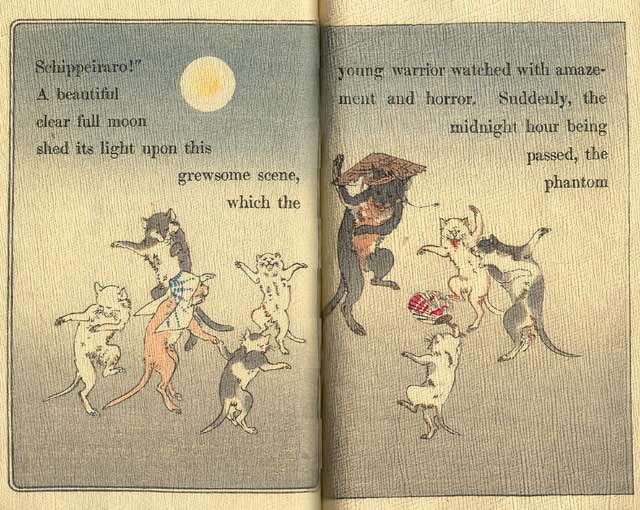
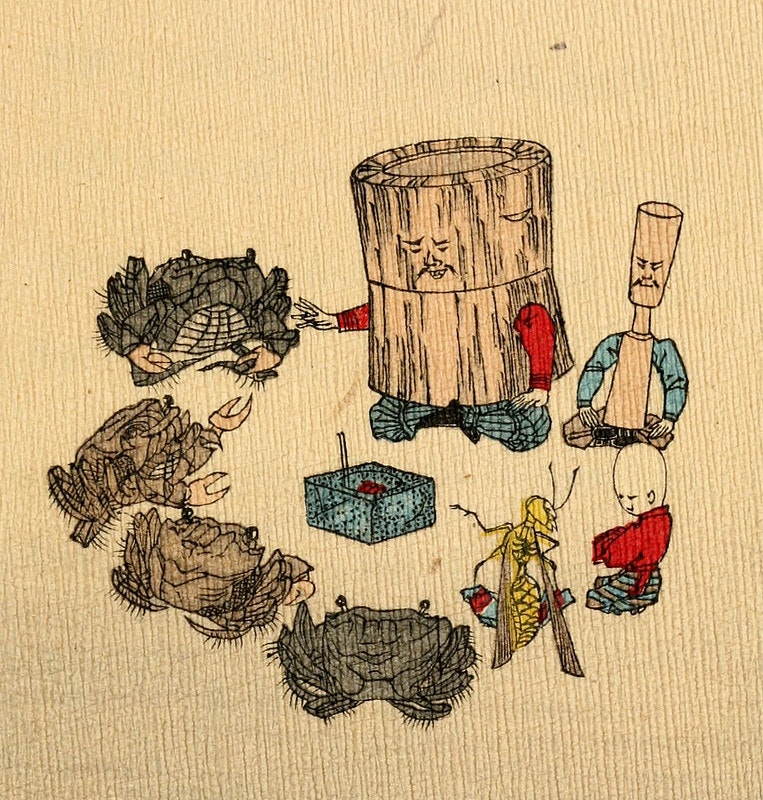
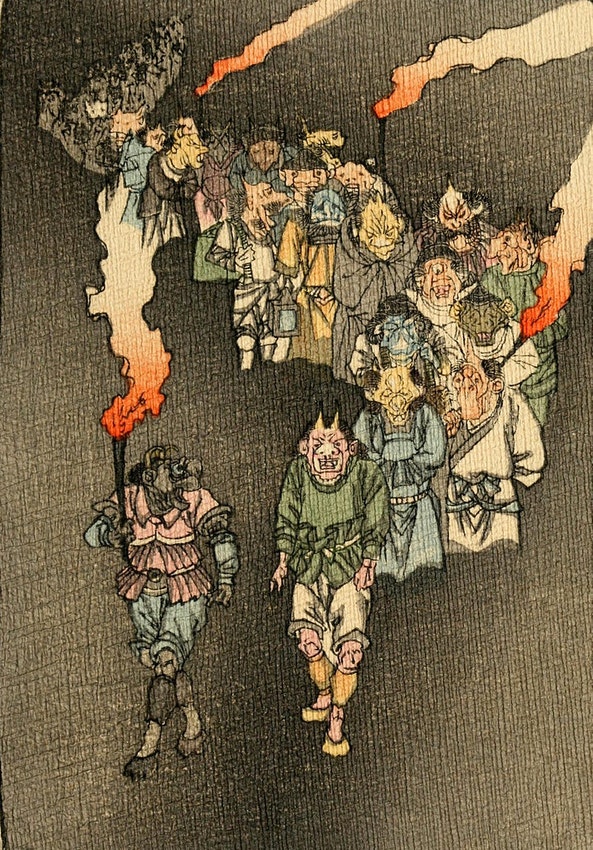
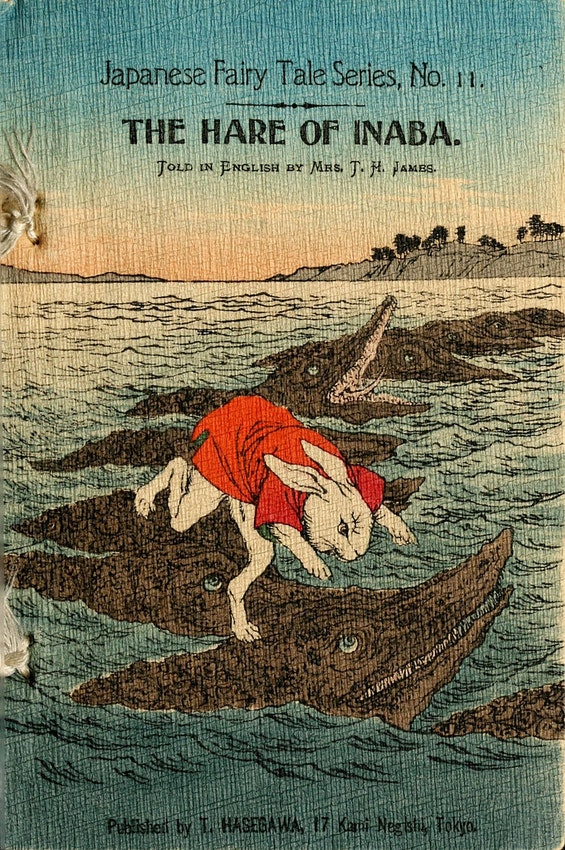
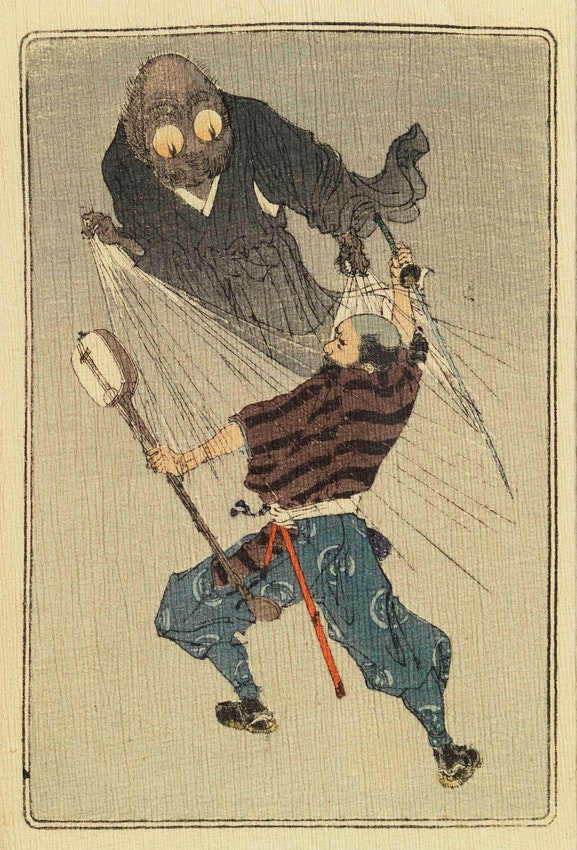
When Takejiro Hasegawa started publishing children’s stories through his publishing house Kobunsha, his ambition was twofold: first, to enable young Western children, particularly those expatriated to Japan, to discover traditional Japanese tales in their own language, tales often drawn from folklore or Buddhist tradition; and second, to showcase illustrations by Japanese artists from the late 19th and early 20th centuries.
The twenty volumes, published between 1885 and 1922, came to life from the pens of a trio from Tokyo’s missionary community: David Thompson, one of the people who had been involved in translating the Bible into Japanese; Basil Hall Chamberlain, a Japanologist who wrote travel books and ethnographic accounts; and Kate James, a Scottish author. For the illustrations, Takejiro Hasegawa gathered together famous woodblock artists who worked in the ukiyo-e style, such as Eitaku Kobayashi, Kason Suzuki, and Yoshu Chikanobu.
A surge in popularity due to Japonisme
Thus, these Japanese tales, which tell of the adventures of phantom cats (Schippeitaro), sinister spiders (The Goblin Spider), and a little boy who came out of a peach (Momotaro or Little Peachling), fell into the hands of young English-, French-, Spanish-, Dutch-, and Russian-speaking readers. Very soon, however, their reach grew and they proved to fascinate older readers too, who, at the start of the rise of Japonisme, began to collect these works that they elevated to the status of art. They had a specific, defining feature: they were not produced through the process of wood engraving like the prints were, but rather were made from crepe paper, chirimen-e, a material greatly appreciated by French artists like Van Gogh and Matisse.
Japanese Fairy Tales (1885-1922), a series of tales illustrated by Takejiro Hasegawa and written by David Thompson, Basil Hall Chamberlain, and Kate James, can be found in the New York Public Library’s collections.
© Public Domain
© Public Domain
© Public Domain
© Public Domain
© Public Domain
© Public Domain