Arima Onsen, Where Emperors and Aristocrats Came to Rest
Listed among Japan’s Three Ancient Hot Springs, Arima is known for its rare mineral waters and long history of patronage.
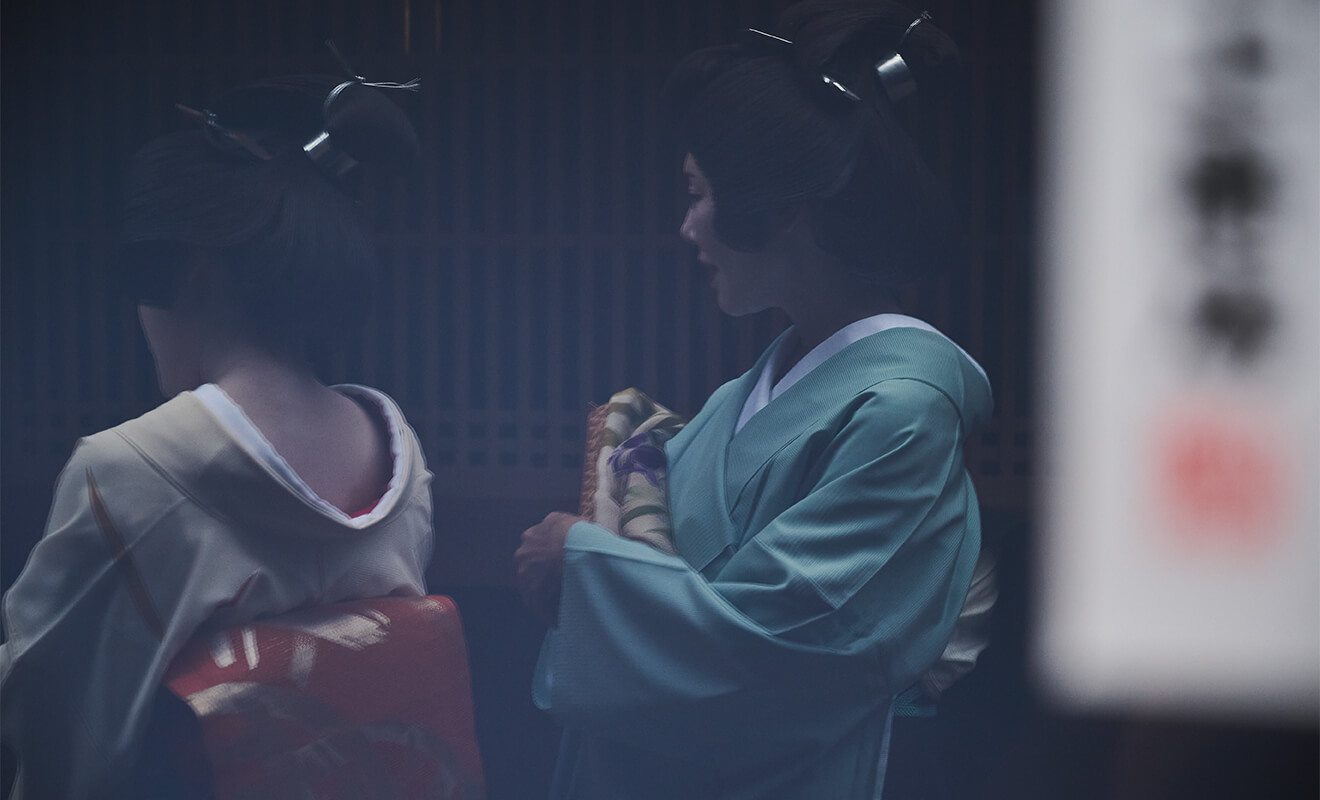
In Arima Onsen, visitors can encounter Hyogo Prefecture’s only remaining ‘geiko’ culture, preserving traditions once carried by women known as ‘yuna’, who performed dance, song, and classical music.
Located on the northern side of Mount Rokko, near Kobe, Arima Onsen is counted among Japan’s Three Ancient Hot Springs. Its history stretches back to the country’s earliest written records, and for centuries it was visited by emperors, aristocrats, and monks seeking purification of body and spirit. Just around an hour by car from Osaka, the town rests quietly within a mountain basin, where time seems to slow.
Enjoying the Gifts of the Earth, Kinsen and Ginsen
What sets Arima Onsen apart is the presence of two contrasting mineral springs, Kinsen and Ginsen, emerging from the same ground.
Rich in iron and salt, Kinsen turns a deep reddish brown as its minerals oxidize on contact with air. Its concentration is even higher than that of seawater, and soaking in it allows subterranean heat to seep gradually into the body’s core.
In contrast, the clear, carbonated waters of Ginsen leave the skin feeling refreshed and lightly moisturized. Alternating between these two rare spring types is an experience unique to Arima.
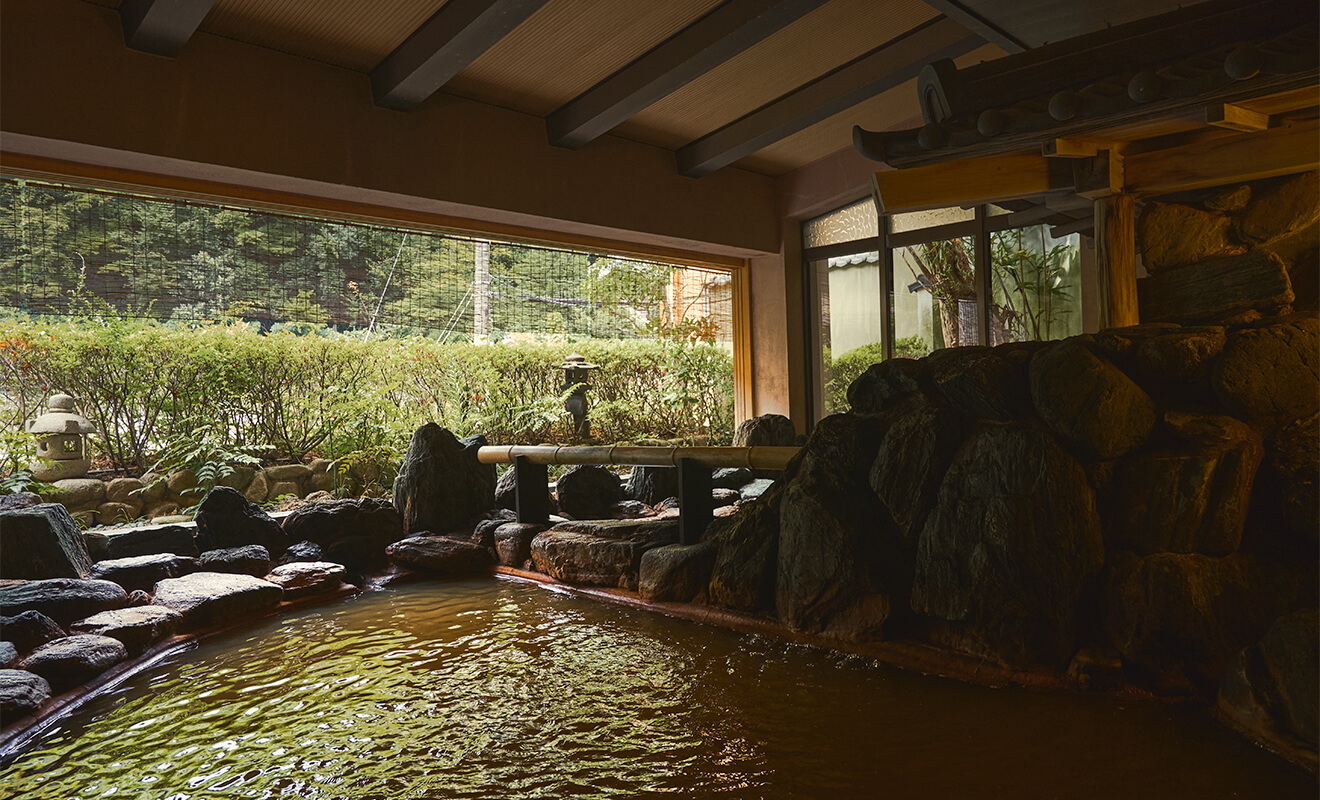
The bath at Goshoboh, Arima’s oldest inn, draws directly from the Kinsen source. The indoor baths are separated by gender, with a semi-open-air bath located deeper inside.
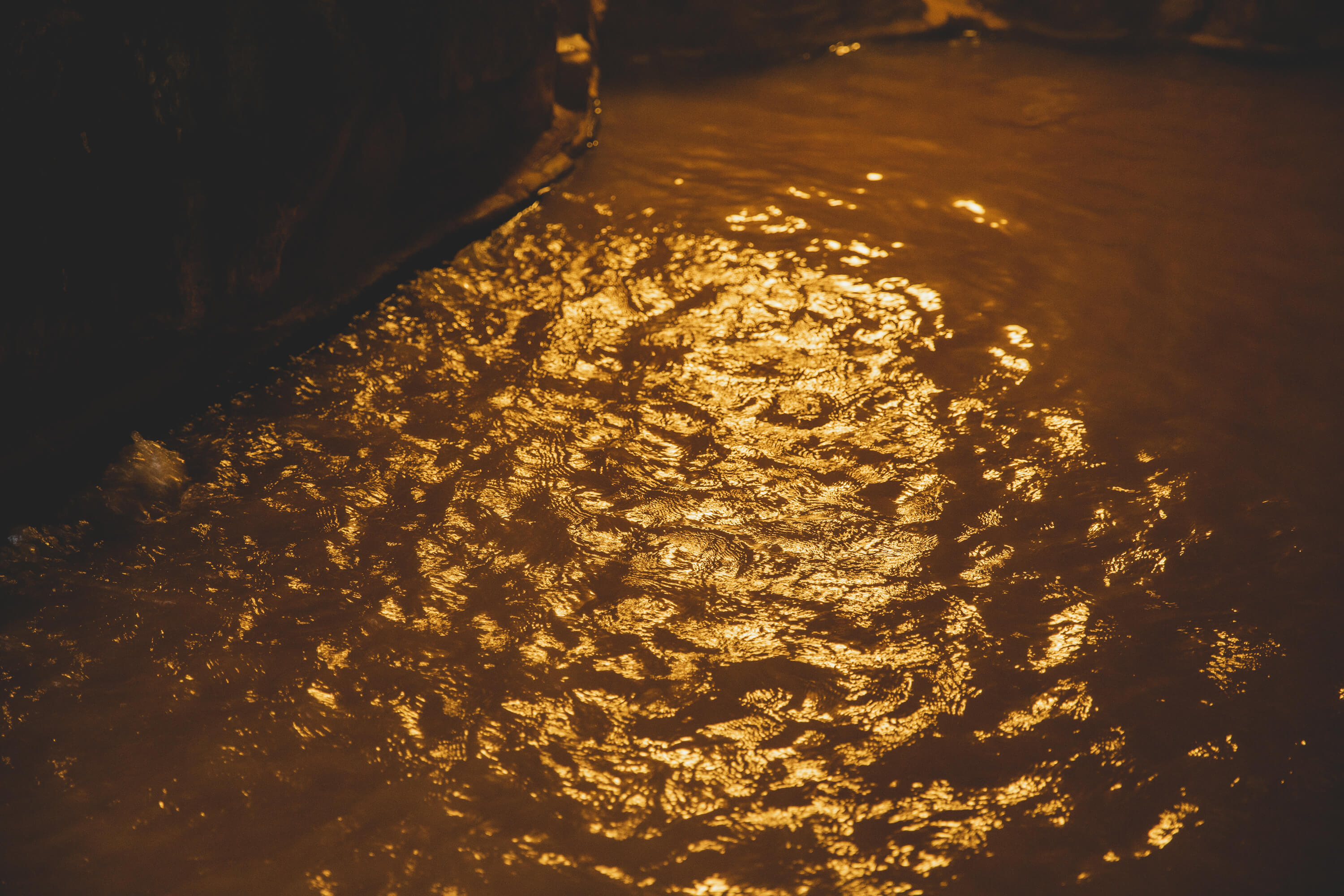
Kinsen appears clear at first, then turns reddish brown as its iron content oxidizes in the air.
A Hot Spring Cherished by Those Who Shaped History
Arima Onsen’s lasting prestige owes much to Toyotomi Hideyoshi, the 16th-century leader who unified Japan. After bringing an end to decades of warfare, Hideyoshi developed a deep affection for Arima, visiting frequently and contributing to the town’s restoration.
The culture of tea that he practiced here continues to echo in Arima’s refined hospitality, from simple floral arrangements to the quiet elegance of tokonoma alcoves. Stone walls and steps scattered throughout the town still bear witness to Arima’s role not merely as a place of rest, but as a meeting ground for figures of power.
Today, these traditions live on through Arima’s geiko and spaces such as geiko cafés, where visitors can casually experience ozashiki, or traditional parlor entertainment.
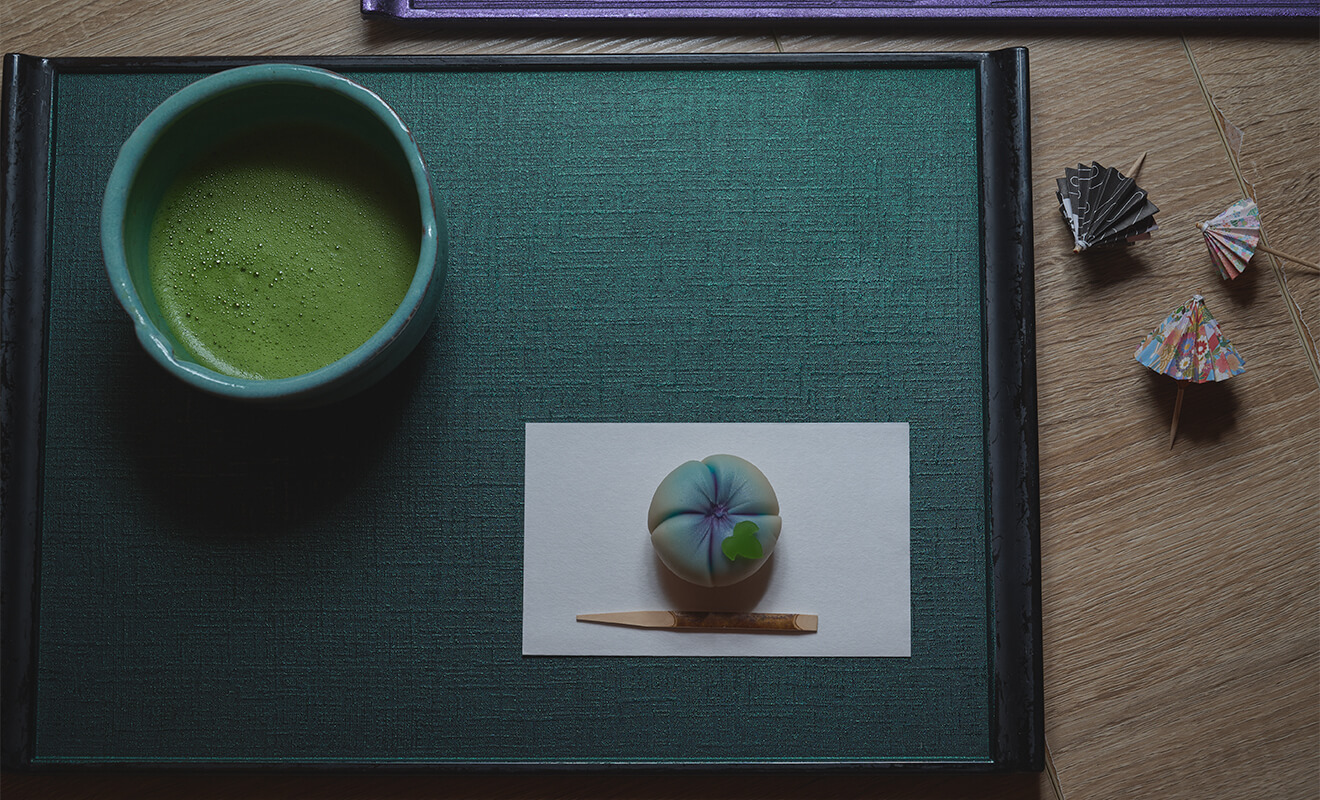
At the Geiko Café Ito, visitors can enjoy dance performances and traditional parlor entertainment by Arima ‘geiko’. A popular menu item is the matcha and Japanese sweets set (¥2,000).
Atmosphere and Cuisine Found in the Lanes
The hot spring town spreads out around Yumotozaka, where old wooden buildings stand close together and narrow alleys create a distinctive sense of place. The skilled hands of artisans crafting Arima fude, a traditional writing brush, and the crisp sound of tansan senbei rice crakers baking over heat are part of the everyday scenery. Each moment carries the atmosphere befitting Japan’s oldest hot spring town.
Dining here is equally memorable. Fresh seafood from the Seto Inland Sea meets seasonal produce from the surrounding mountains, shaping meals that feel both generous and grounded. From long-established ryokan to contemporary accommodations, Arima Onsen offers a depth of rest that satisfies both body and mind.
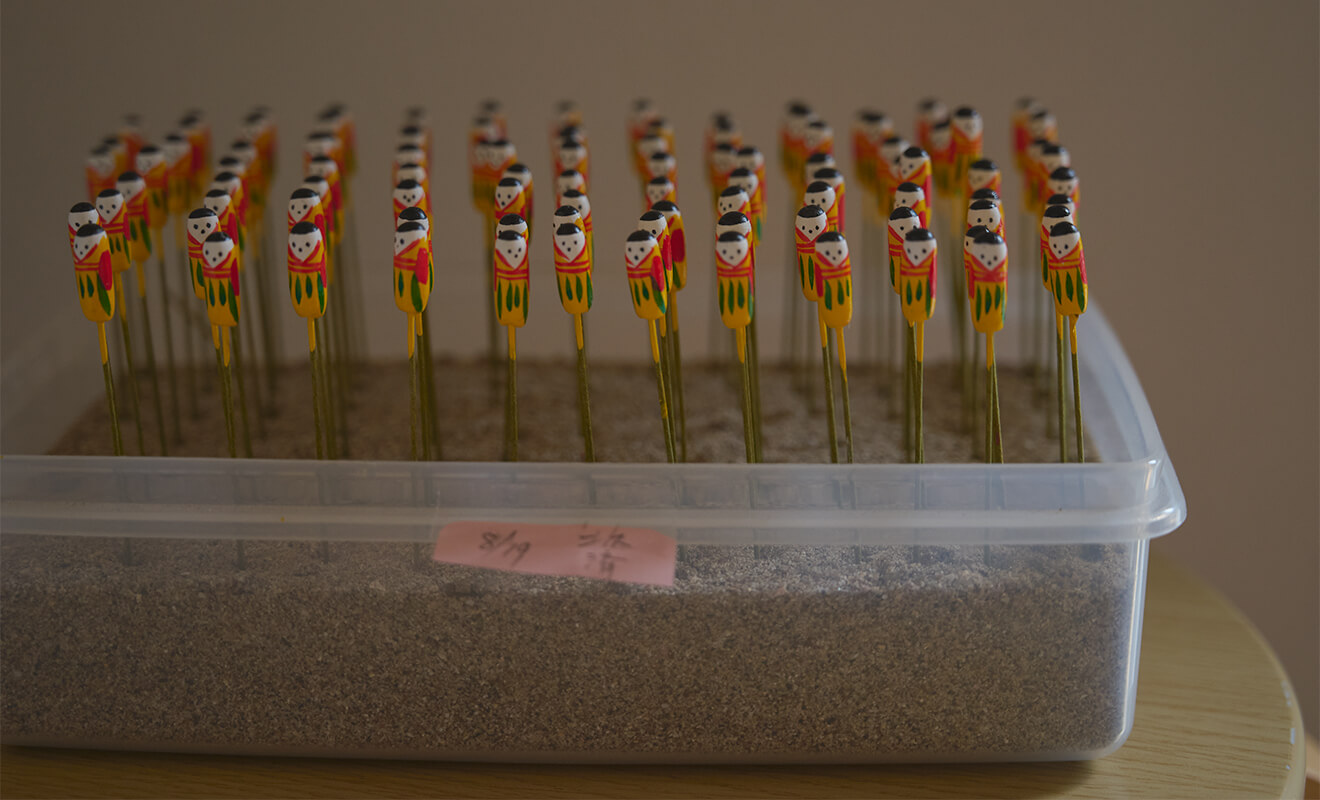
When the brush is lifted to write, a tiny hidden figurine inside the shaft playfully peeks out.
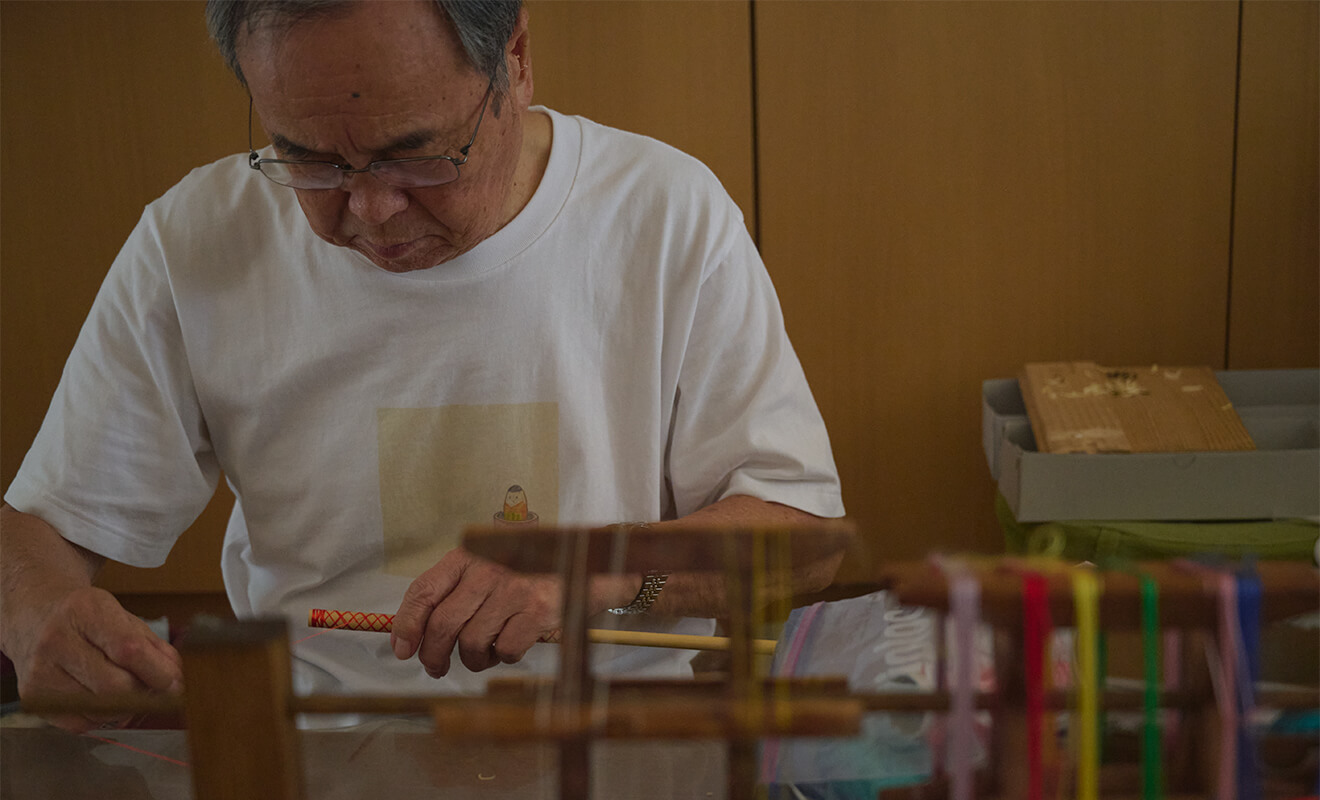
Haifukiya Nishida Fudeten is the only remaining workshop dedicated to Arima ‘fude’, where visitors can watch artisans craft each brush by hand.
Motoyu Ryuusenkaku
A Hillside Retreat with Kinsen and Mountain Views, Welcoming Generations of Families
Located on an elevated site in Arima Onsen, the inn commands wide views over the Hokusetsu and Rokko mountain ranges. Known as a family-friendly ryokan, it combines attentive hospitality with facilities designed to accommodate guests of all ages.
A defining feature is its privately sourced Kinsen, the iron- and salt-rich mineral spring that emerges on the property. Guests can soak in the dense, reddish waters throughout the night, while family suites with open-air baths allow for a more private experience of Arima’s famed spring. Dinner often includes a kaiseki course featuring Kobe beef, bringing together local culinary tradition and a relaxed, welcoming atmosphere.
Address: 1663 Utsugidani, Arimacho, Kita-ku, Kobe, Hyogo
Website
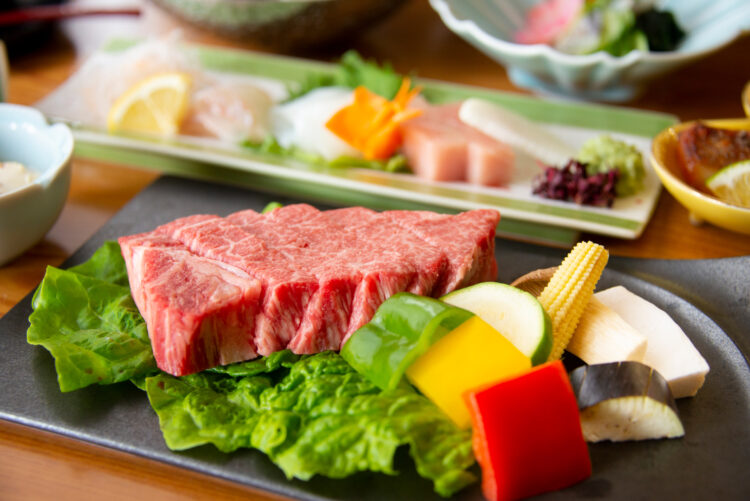
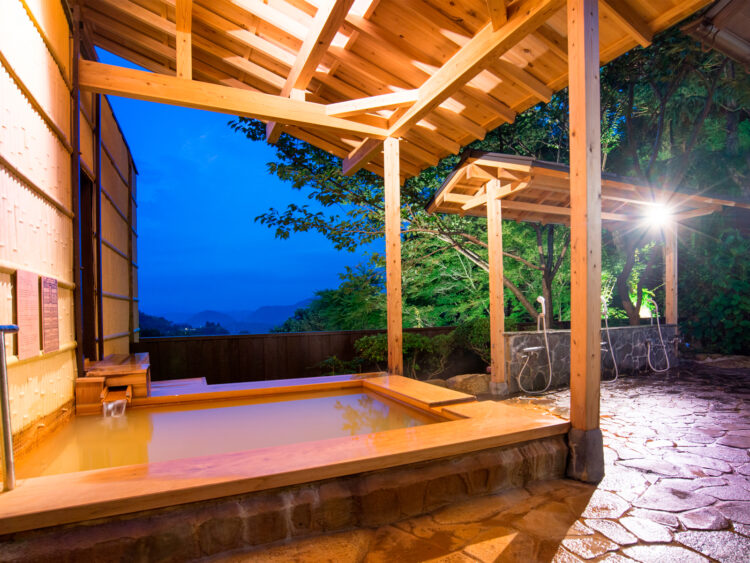
Left: A ‘kaiseki’ dinner centered on Kobe beef steak, showcasing seasonal ingredients and deep, aromatic flavors. / Right: The open-air Kinsen bath sourced directly from the property. Its iron and salt content gives the water its characteristic golden hue.
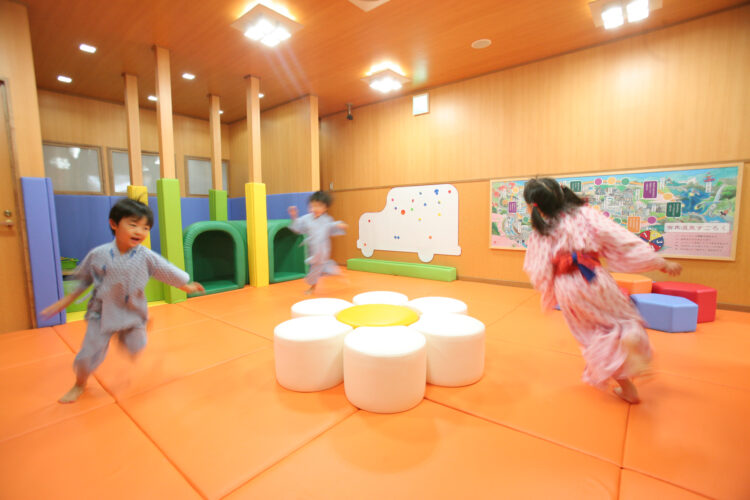
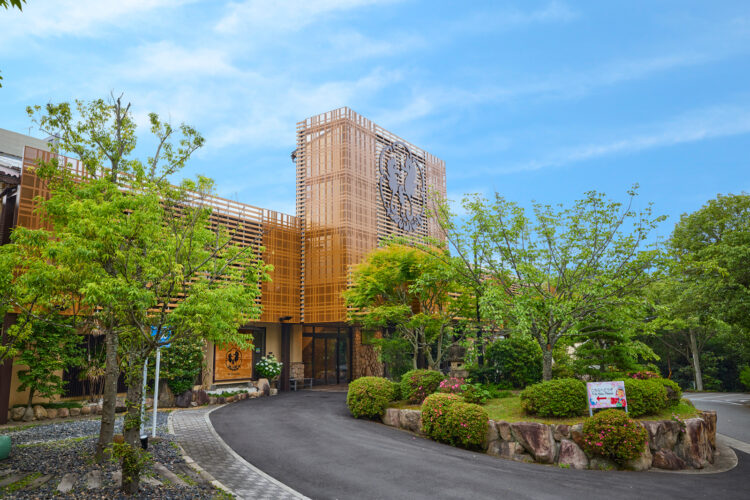
Left: A children’s corner designed for younger guests, equipped with books and play items that encourage curiosity. / Right: The inn stands on a hillside overlooking the mountains of Hokusetsu and Mount Rokko.
ToCEN GOSHOBOH
Eight Centuries of History and the Essence of Arima’s Kinsen
With a history spanning more than 800 years to the Kamakura period, this is the oldest inn in Arima Onsen. It balances a deep respect for tradition with a refined contemporary sensibility.
Guests can experience Arima’s distinctive Kinsen in its pure form, drawn directly from the source without dilution. The mineral-rich water, which turns a deep reddish brown upon contact with air, embodies the geological character of the region.
The inn’s 17 guest rooms range from suites to atmospheric Japanese-style rooms, each carefully designed. Seasonal cuisine prepared with locally sourced ingredients complements a stay shaped by centuries of history.
Address: 858 Arimacho, Kita-ku, Kobe, Hyogo
Website
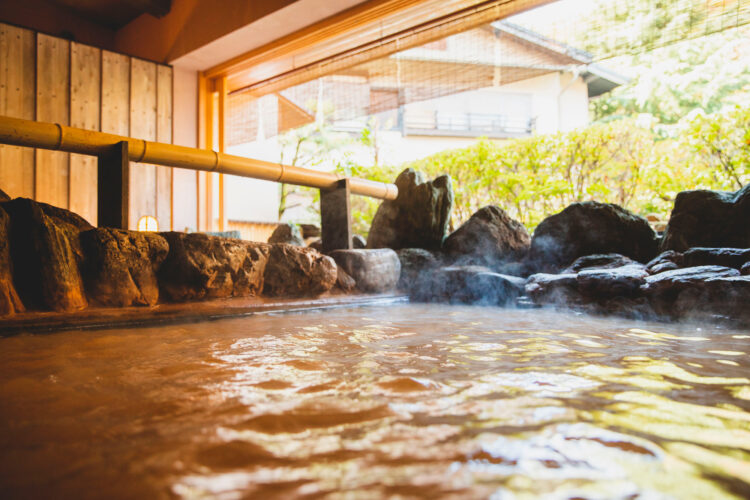
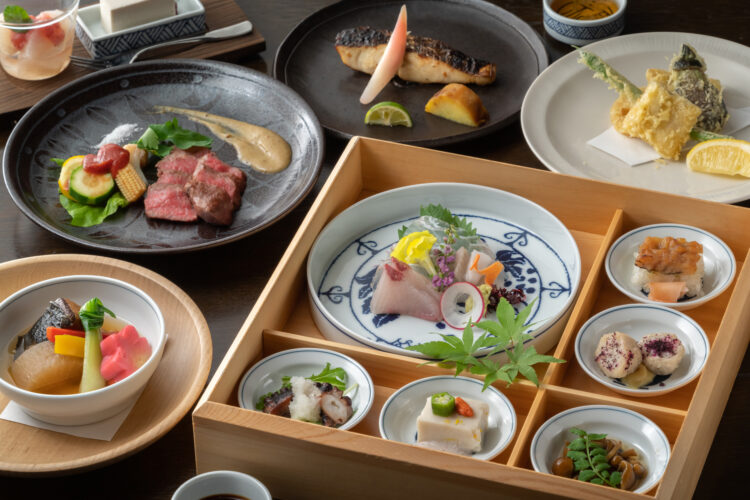
Left: The large communal bath features Kinsen flowing directly from the source. / Right: A seasonal ‘kaiseki’ meal highlighting fresh seafood from Akashiura, local vegetables, and Kobe beef.
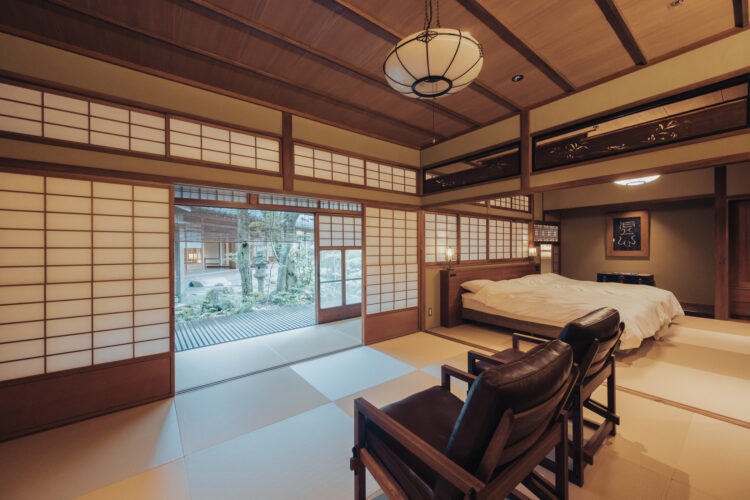
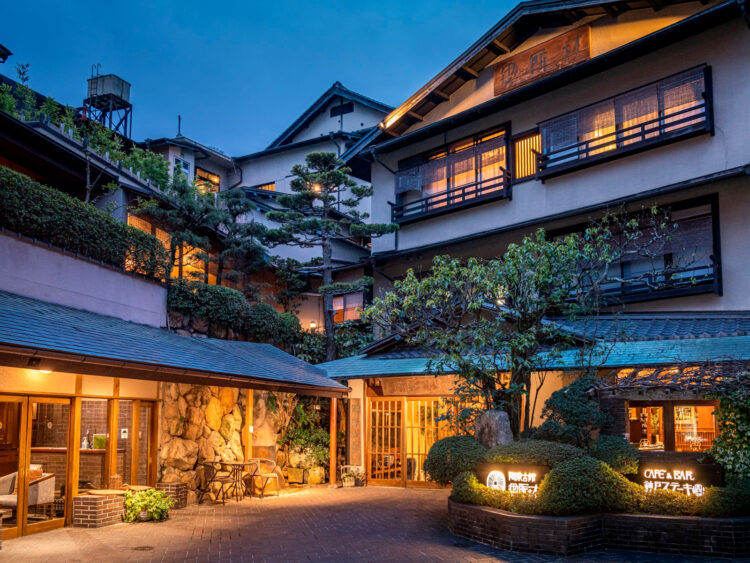
Left: Interiors that reflect the aesthetic of Hanshinkan modernism and the subtle play of light associated with Jun’ichirō Tanizaki. / Right: The exterior, registered as a Tangible Cultural Property, stands in the heart of town, convenient for exploring Arima.
Taketoritei Maruyama
Enjoy both Kinsen and Ginsen in eight private baths at this modern Arima retreat
Both of Arima’s celebrated hot springs—Kinsen and Ginsen—can be enjoyed in eight private baths, each with its own character. The 30 guest rooms range from accommodations with private hot spring baths to modern suites, offering time in a more private setting.
Guests can choose from a range of plans, including stays with breakfast or room-only options depending on the purpose of the trip. From this base, it is also easy to explore the wider Kansai region, combining the atmosphere of a historic hot spring town with a flexible, contemporary style of travel.
Address: 1364-1 Arimacho, Kita-ku, Kobe, Hyogo
Website
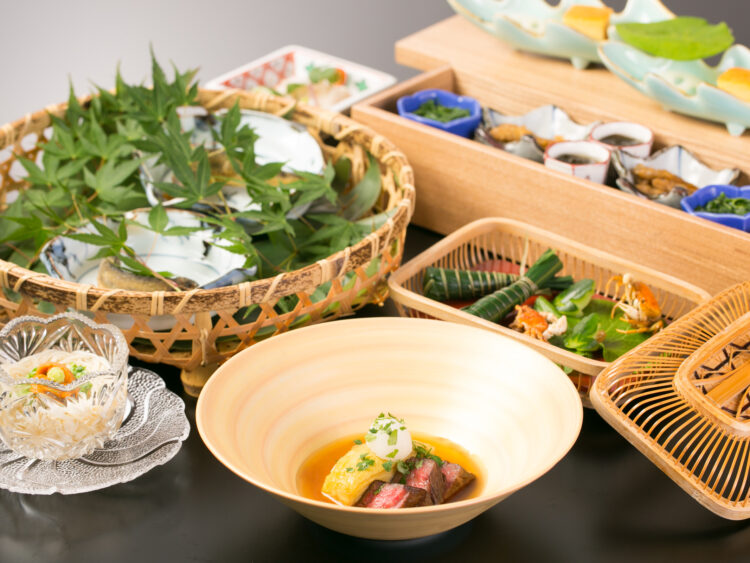
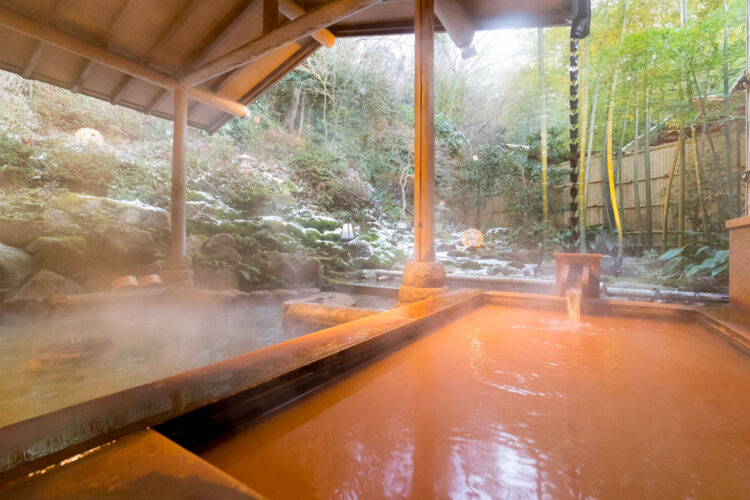
Left: Dishes prepared with ingredients that change each month, offering a sensory dining experience. / Right: Both of Arima Onsen’s hot springs, Kinsen and Ginsen, can be enjoyed here. Guests can relax at their leisure in eight private baths.
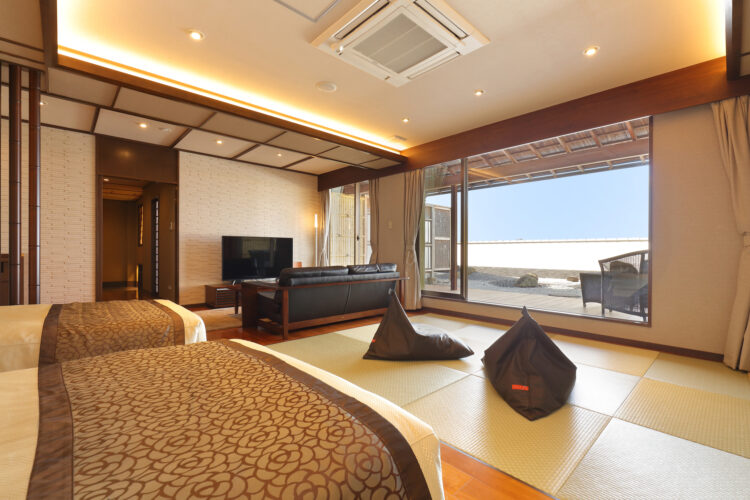
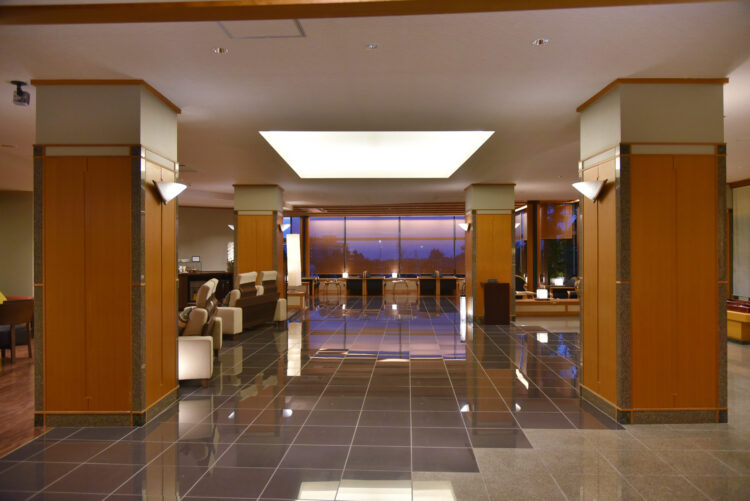
Left: Three guest rooms include private hot spring baths, one with Kinsen and two with Ginsen (all non-smoking). / Right: The open lobby includes a drink corner where guests can relax after bathing.