In Kyoto, a Japanese café nestled in the mountains
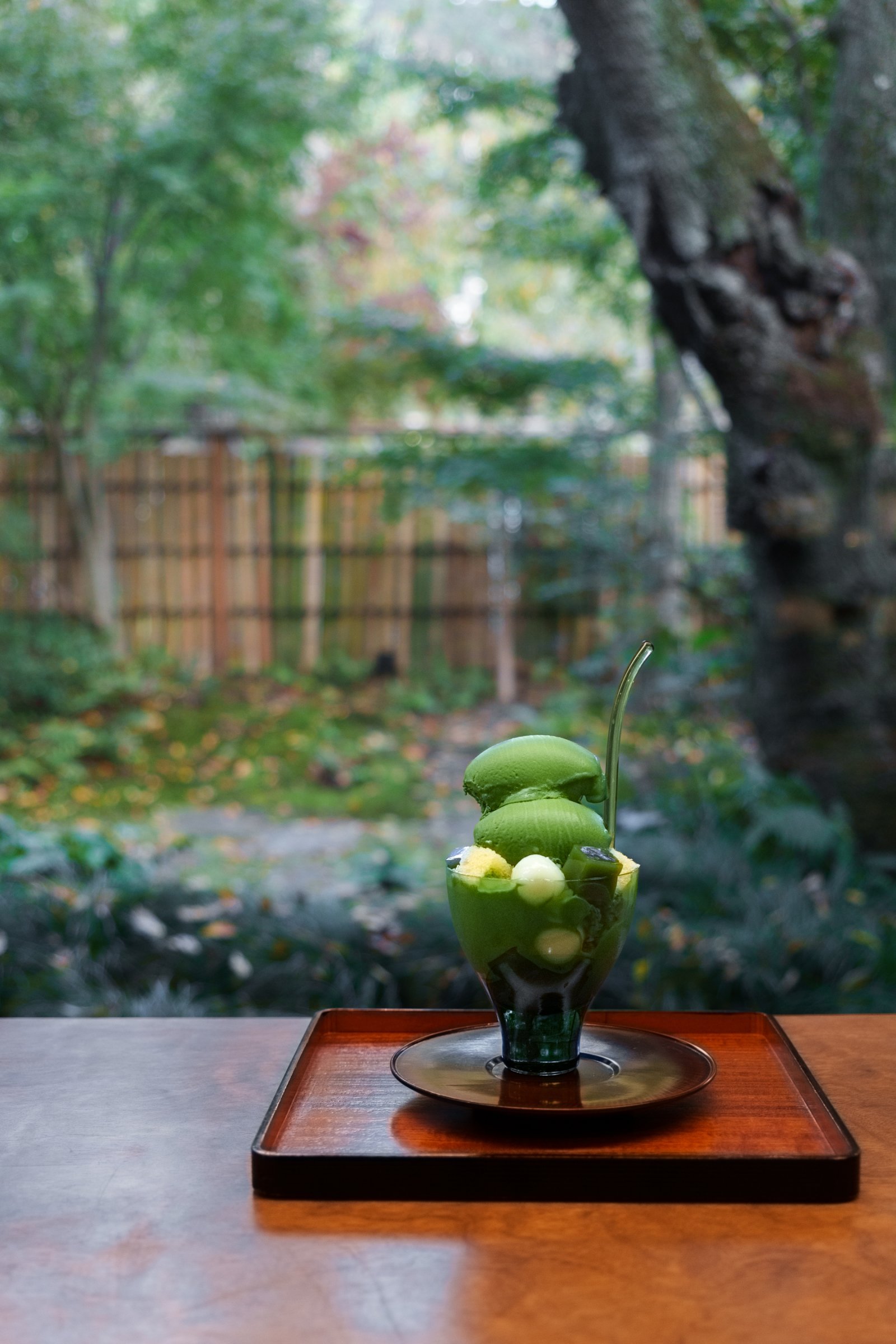
Muge Sanbō, the café offshoot of the Michelin-starred restaurant Kikunoi, is renowned for its ‘triple serving of premium matcha ice cream’.
© Kazushi Takahashi
Is it really a parfait…?
The name printed on the menu leaves little room for doubt: ‘Muge Sanbō – Intense Matcha Parfait’.
It is, undeniably, a parfait. Yet if one were to describe this dessert as closely as possible to the actual experience, it would read more like:
‘three enormous scoops of matcha ice cream, accompanied by a few toppings’.
Either way, one continues—quite happily—to eat matcha ice cream made with generous quantities of the highest-quality tea leaves.
For lovers of matcha ice cream, it is a sumptuous, almost unreal dessert.
Conversely, those who expect a parfait to offer a succession of flavours and textures may find it ‘too much’.
But it is precisely this abandonment of any notion of balance that makes the experience all the more memorable.
© Kazushi Takahashi
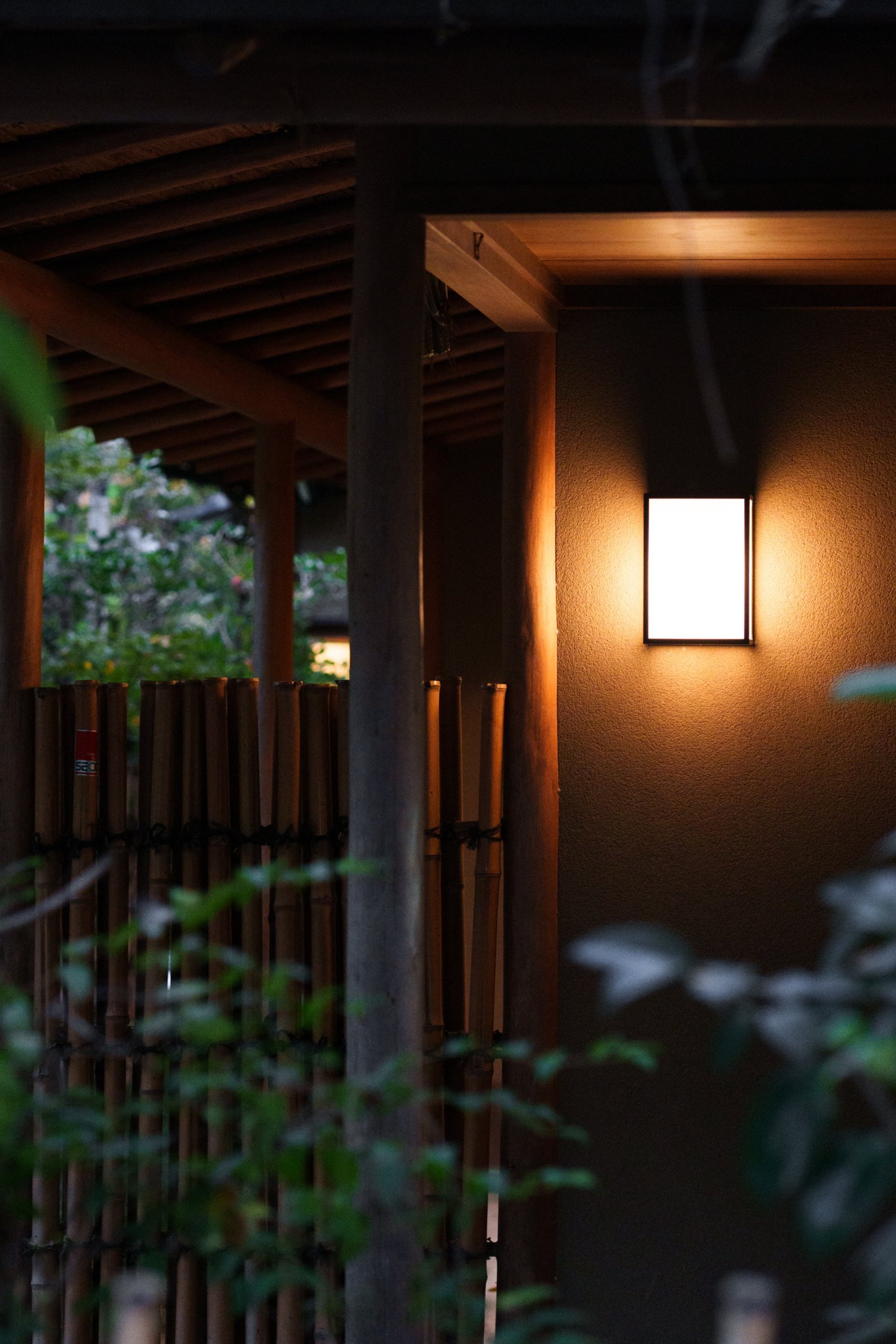
During a trip to Kyoto in November 2025, I finally made it to this well-known café that invariably appears in travel guides: Muge Sanbō Salon de Muge.
A place where matcha parfaits and warabi-mochi are enjoyed while gazing out over a garden.
Its reputation—as a spot so popular with women that getting in is said to be nearly impossible—had long kept me away, despite my lingering curiosity.
© Kazushi Takahashi
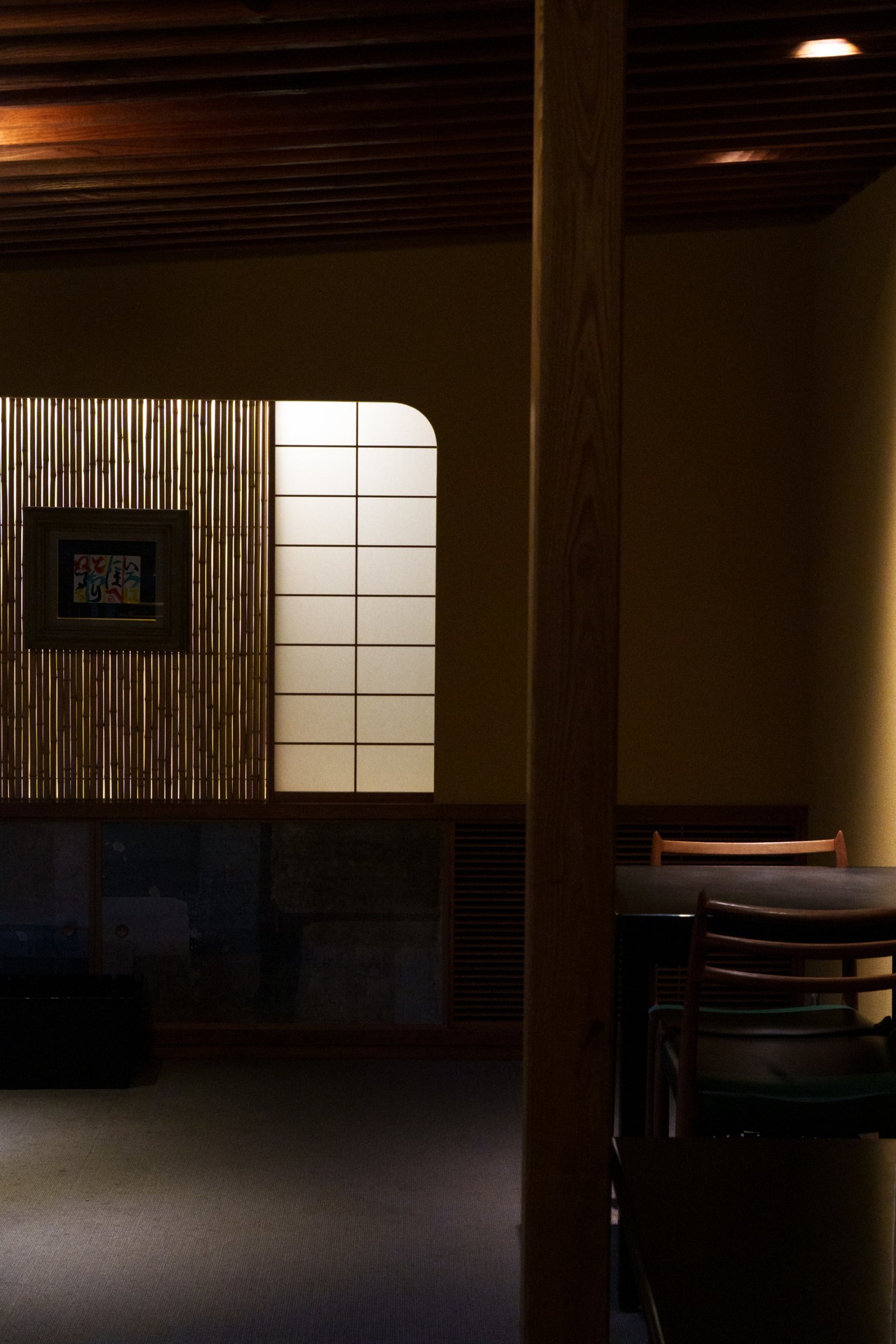
One weekday in early November, under an overcast sky, I nevertheless decided to climb the hill, for no particular reason other than the vague intuition that ‘there might be a seat’. The result: a smooth entry, and even the luxury of having a window-side counter seat all to myself.
(With the exception of lunch service, the café does not take reservations.)
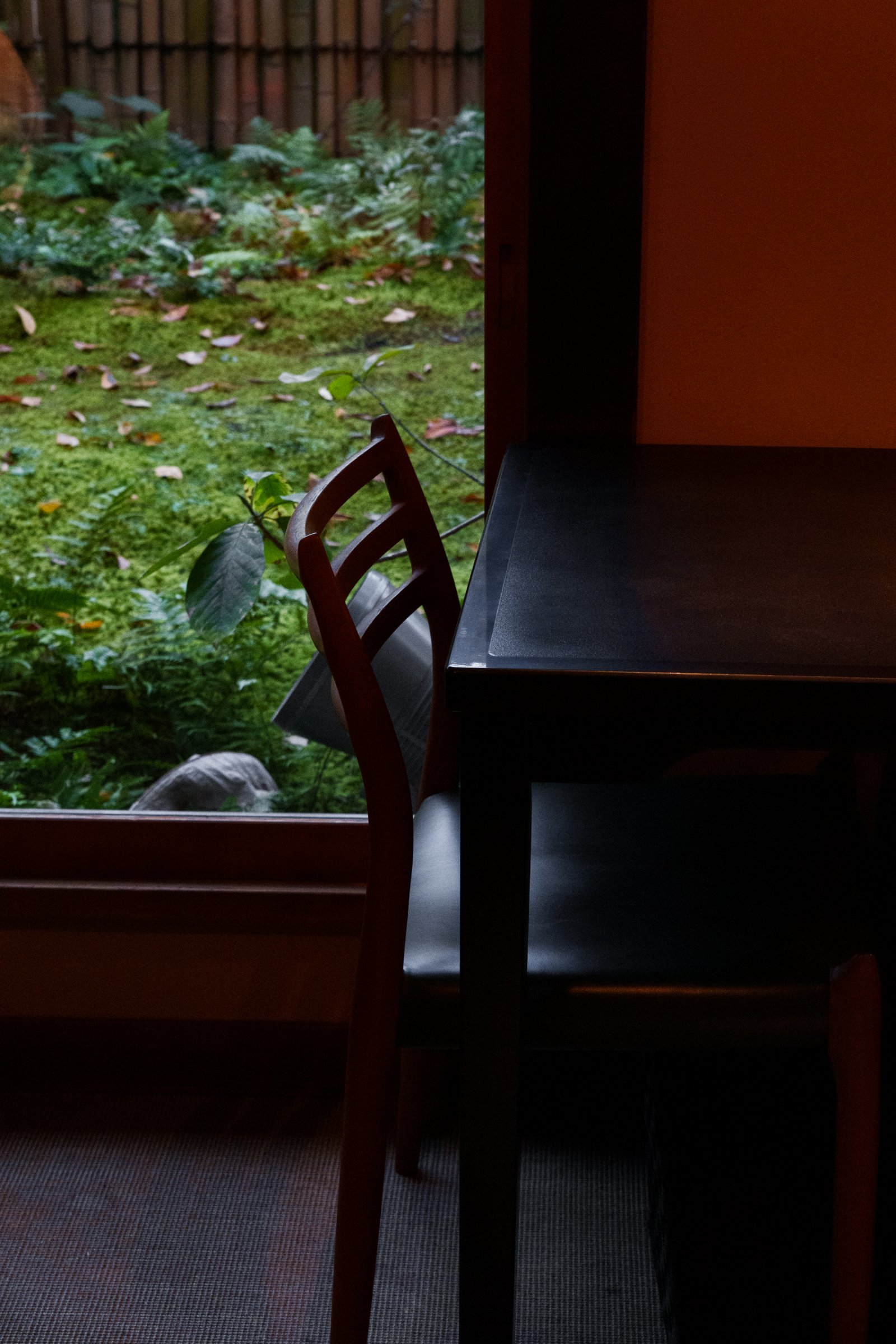
Late in the afternoon, on the day of my return to Tokyo, this moment spent contemplating the garden became a quiet interlude in which to reflect on the journey.
© Kazushi Takahashi
The main room, furnished with tables, was almost full, and my impression was that around 80 per cent of the guests were overseas visitors—from the West, from Asia, and elsewhere. I was the only Japanese customer, and the only man dining alone. Being able to settle into the separate counter area was a genuine pleasure: silence prevailed there.
‘Not many people choose the counter, but at this time of day the view of the garden may actually be better from here,’ a young staff member explained.
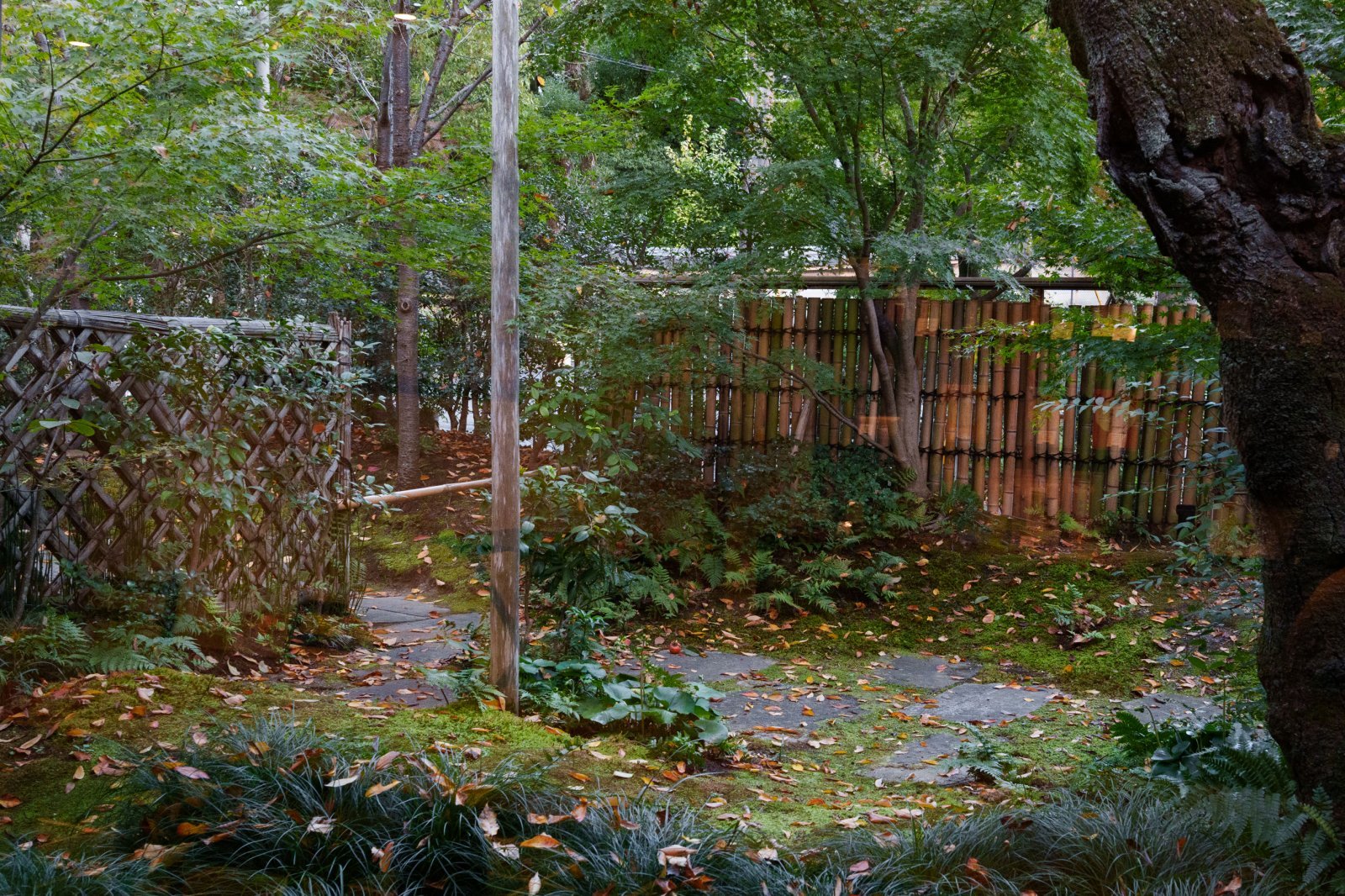
© Kazushi Takahashi
The garden resembles neither the meticulously ordered dry landscapes of temples and shrines, nor the carefully maintained tsubo-niwa of traditional machiya. It feels freer, almost a little wild.
And for good reason: this is truly the mountains.
The very name Sanbō (‘mountain retreat’) takes on its full meaning here.
Located in the Higashiyama area, not far from Kiyomizu-dera and Gion, the café can be reached from Gion-Shijō Station, but a walk of twenty to thirty minutes is to be expected. This relative inconvenience is no doubt part of the appeal of Kyoto’s café culture.
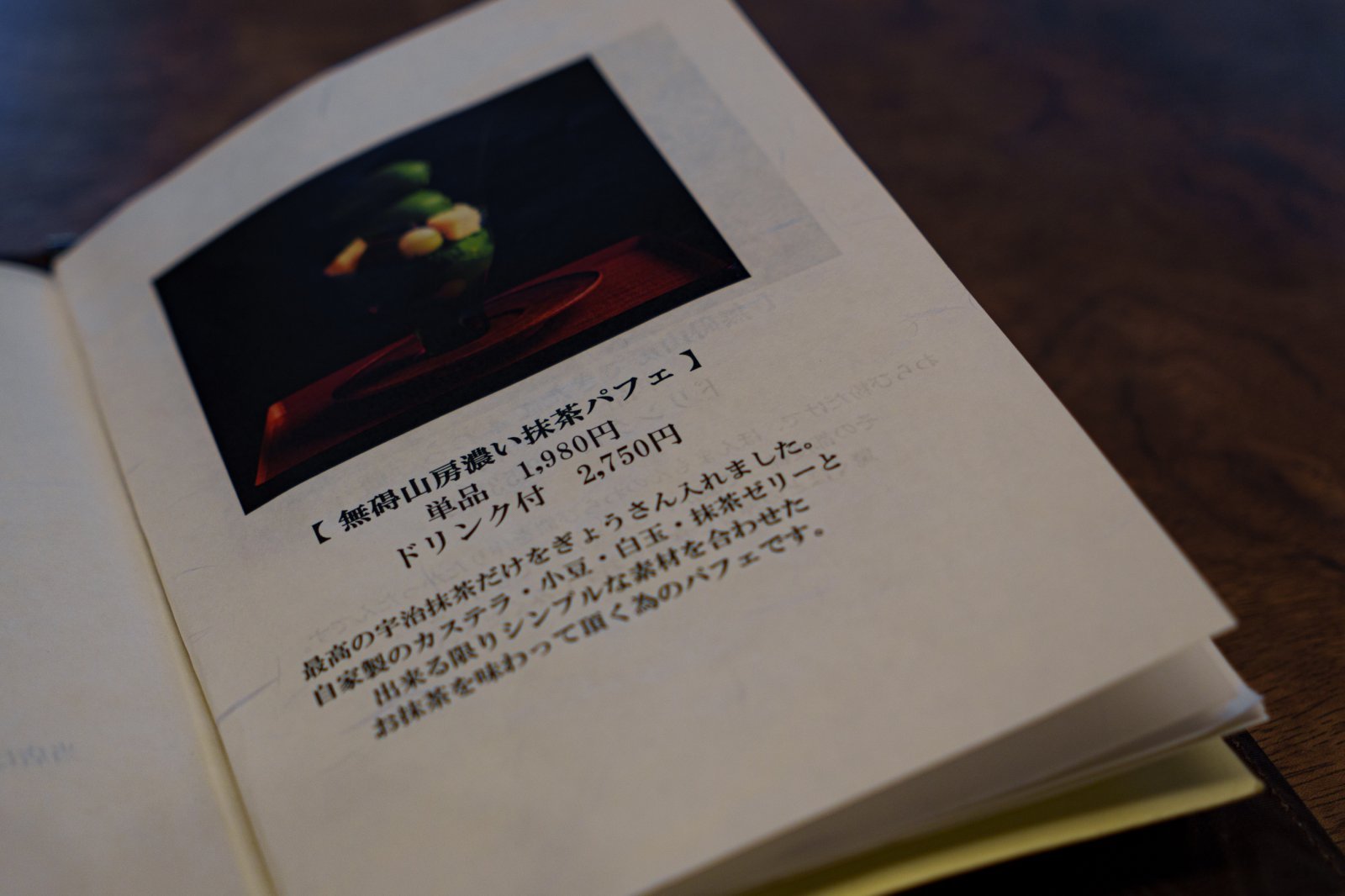
© Kazushi Takahashi
Even if the prices may seem high, they are fully justified when the experience is considered as a whole, steeped in the atmosphere of the former capital. Muge Sanbō’s high-end positioning also stems from its origins: it is the café arm of Kikunoi, the celebrated restaurant awarded three stars in the Michelin Guide Kyoto–Osaka 2024.
Kyoto also has another Muge Sanbō location, operating as a tea salon inside Kyoto Takashimaya department store.
For those simply wishing to enjoy a dessert, this option is far more accessible.
But for a first visit, it is better to climb the mountain.
And when the desire arises to relive that memory, only then does it make sense to step into the department store.
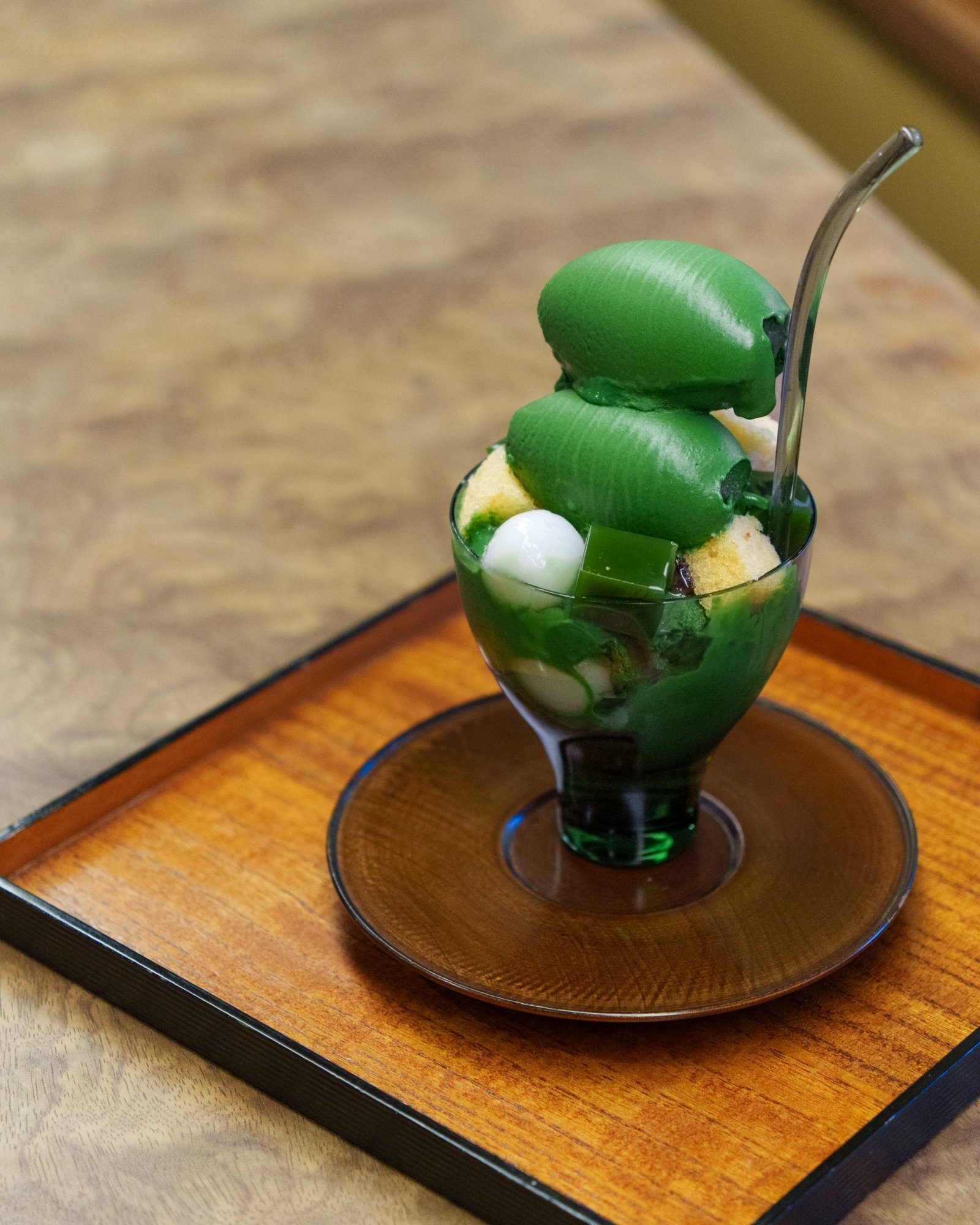
© Kazushi Takahashi
After the dessert, a cup of hot tea is served, gently warming a stomach chilled by ice cream. I had ordered the parfait on its own, without a drink, and did not regret it.
A true confrontation—almost a duel—with the matcha ice cream.
I dismantled the dessert’s striking silhouette without ceremony, plunging my spoon straight in.
In truth, all that remains in my memory is the taste of the ice cream. Nothing else. (laughs)
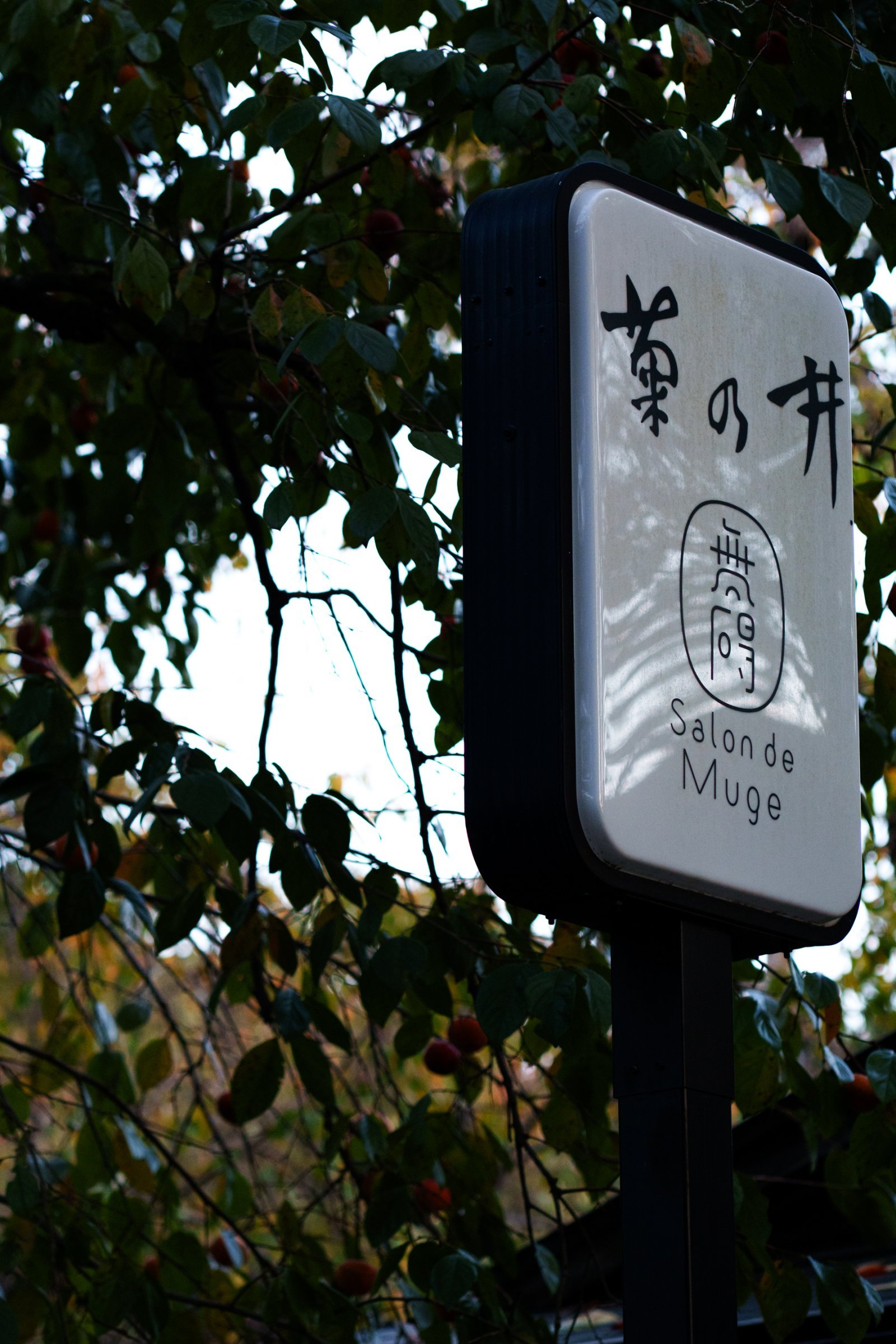
© Kazushi Takahashi
In Tokyo, where I live, I almost never go to cafés outside of work—aside from a few select coffee shops.
Even when the interior is lovely, stepping back outside is enough for the city’s noise to immediately unsettle the mind.
The time spent inside is too brief to feel truly soothed.
The constant bustle, the steady flow of customers, are also reasons why such places rarely call me back.
In Kyoto, by contrast, serenity accompanies both the walk to the café and the stroll that follows.
With every step, one encounters Japanese tradition.
Spending time in a well-designed space of Japanese architecture sharpens the senses; the outdoor scenery that unfolds afterwards suddenly appears through a different lens.
It is for these exceptional moments—unique to Kyoto’s cafés—that one always finds oneself returning.