Mie Craftsmanship, Shaped by Nature and Culture
From pilgrimage routes to modern industry, the prefecture’s traditions of making continue to evolve as they are carried into the next generation.
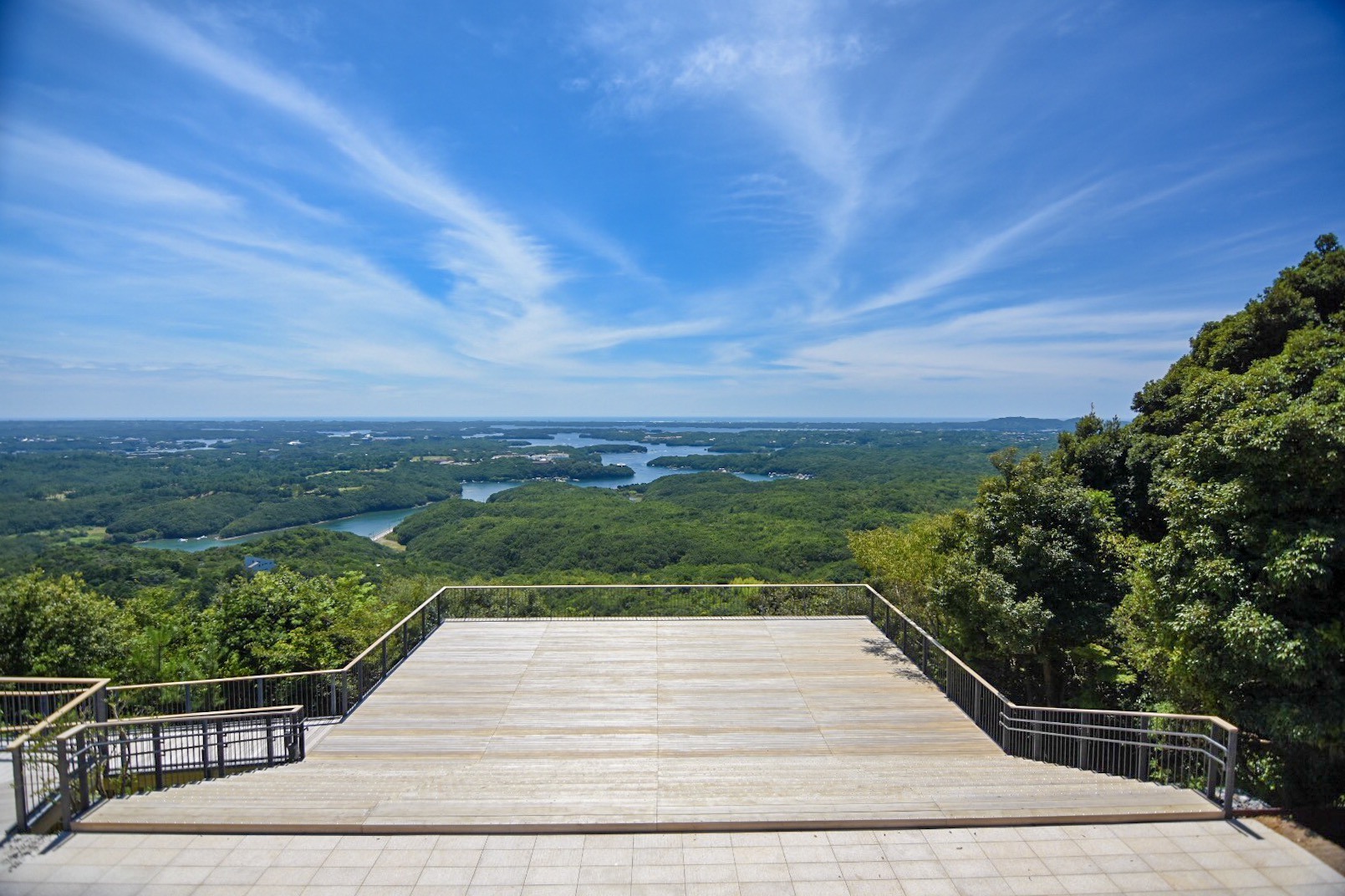
Facing the Pacific Ocean, Mie Prefecture is home to calm coves, the deep forests of the Kii Mountains, and fertile farmland nourished by clear rivers. Alongside this rich natural environment stand historic landmarks such as Ise Grand Shrine and the Kumano Kodo pilgrimage routes.
For centuries, the region also served as an important corridor connecting eastern and western Japan, where transportation and trade brought people and ideas together. This intersection of nature and human activity helped shape a thriving culture of craftsmanship. By absorbing diverse influences and transforming them through local sensibilities, Mie has cultivated a distinctive tradition of making.
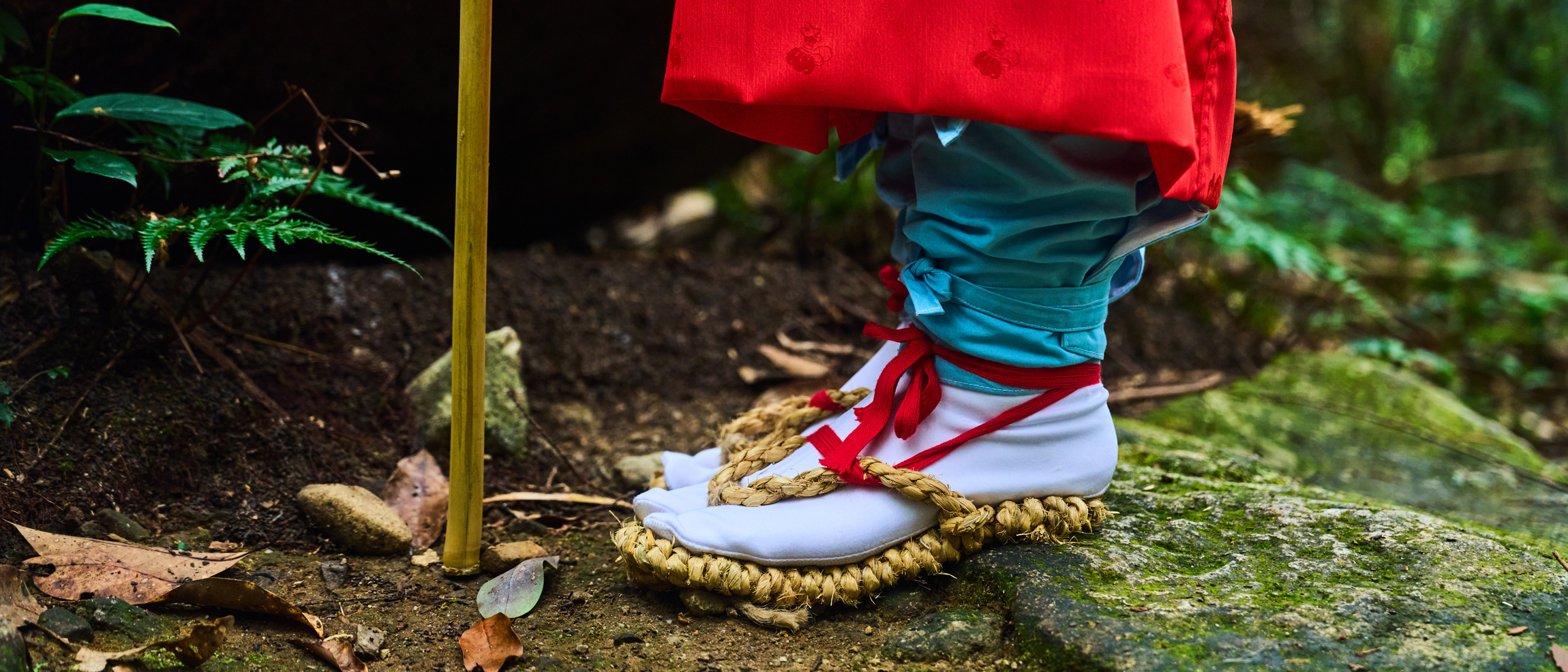
In Kumano, a land known for its massive rock formations and dramatic waterfalls, the spirit of nature worship remains alive. Many travelers still follow the ancient pilgrimage paths of the Kumano Kodo.
One place that embodies Mie’s culture of manufacturing is the industrial area centered around Yokkaichi. Here, advanced manufacturing technologies that support Japan’s industrial infrastructure have long been concentrated. The coexistence of traditional crafts and cutting-edge industry within the same prefecture creates a landscape that is rare even within Japan.
Rather than simply preserving tradition, artisans continue to reinterpret it in ways that connect the past to the future. This spirit has allowed traditional crafts in Mie to develop new forms of expression. One example is kumiko, an intricate woodworking technique in which small pieces of wood are assembled without nails. Rooted in regional craftsmanship, the technique has long been practiced in traditional joinery. Its appeal lies in the combination of precise craftsmanship—where even the slightest deviation is unacceptable—and the beauty of the geometric patterns created through careful assembly.
At Baba Tategu Shop in Iga City, this traditional technique has been reimagined beyond its conventional role in architectural fittings. Instead, it takes the form of delicate three-dimensional objects whose intricate patterns reveal shifting shadows as they catch the light. Depending on the time of day or the angle of view, the surfaces transform subtly, bringing a quiet tension to the surrounding space. This approach, extending the essence of traditional techniques into new forms, symbolizes the ongoing evolution of craftsmanship in Mie.
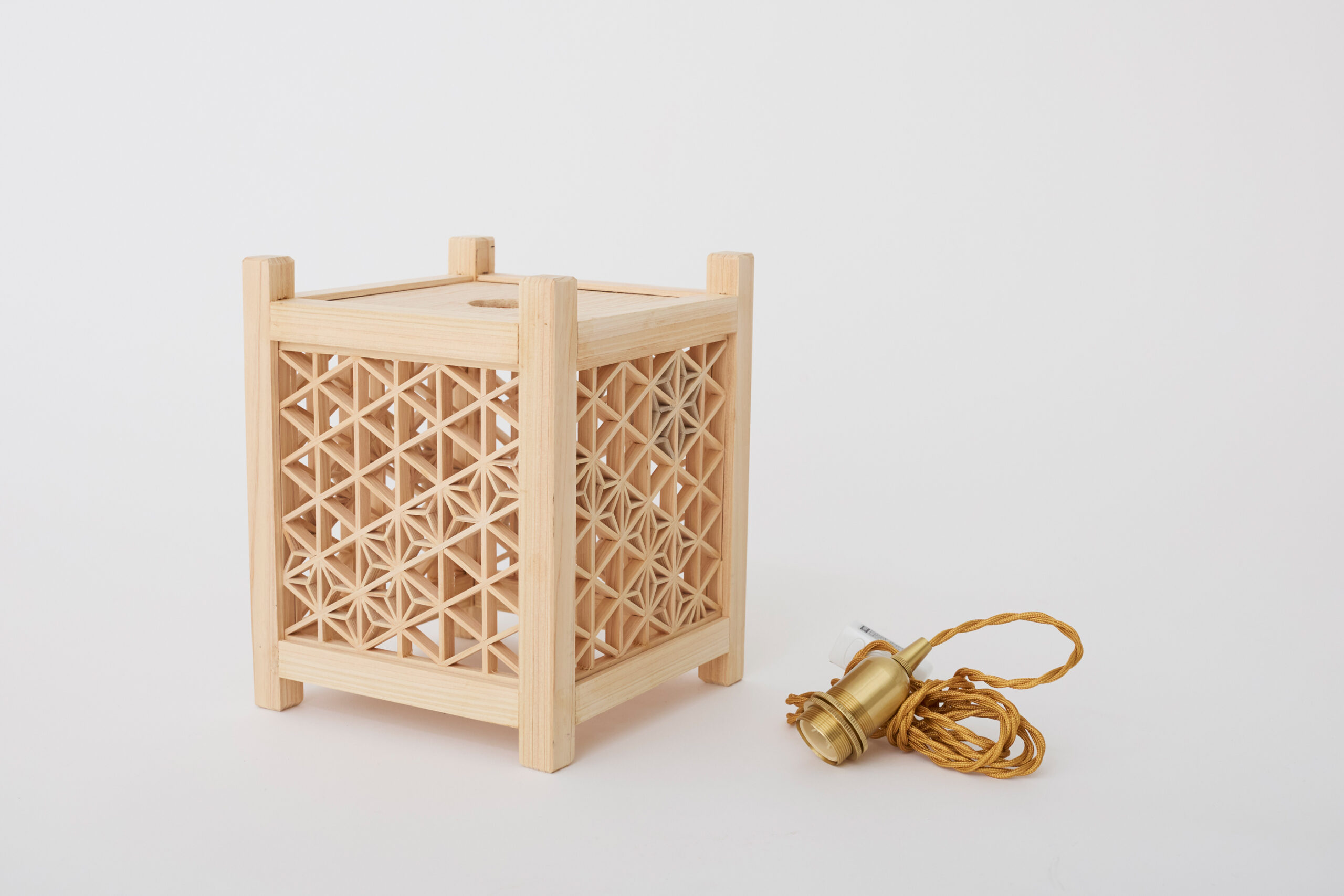
An object featuring the traditional ‘asanoha’ ‘kumiko’ pattern, created by Baba Tategu Shop.

Some people place their own lighting inside the object, using it as a lamp.
Another well-known product of Mie is the pearl industry of the Shima region, whose cultured pearls are renowned around the world. One unusual craft practice in the region involves giving new life to the mother-of-pearl shells that once held those pearls. Sakai Kogeisha, a workshop dedicated to mother-of-pearl craft, carefully cuts pieces from the iridescent shells and uses them to compose images and symbolic motifs within decorative framed artworks.
One piece depicting the Meoto Iwa, the ‘Wedded Rocks’ of Ise–Futami, captures the shimmer of the sea through the luminous reflections of the shell. Respecting the character of the material and making use of it without waste reflects a sensibility shaped by generations living alongside the sea.
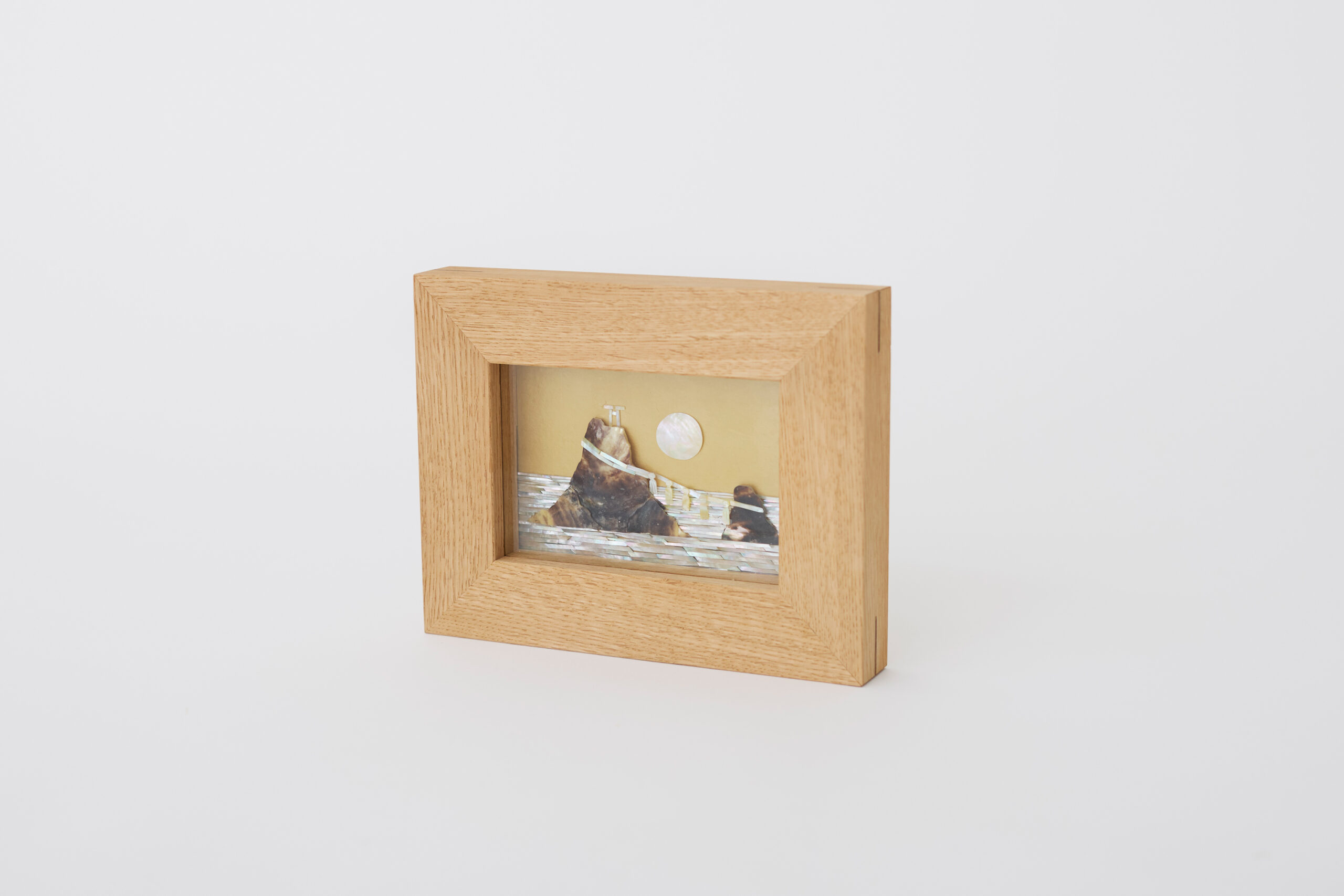
A framed artwork depicting the Wedded Rocks using pieces of mother-of-pearl, each one handcrafted by an artisan.
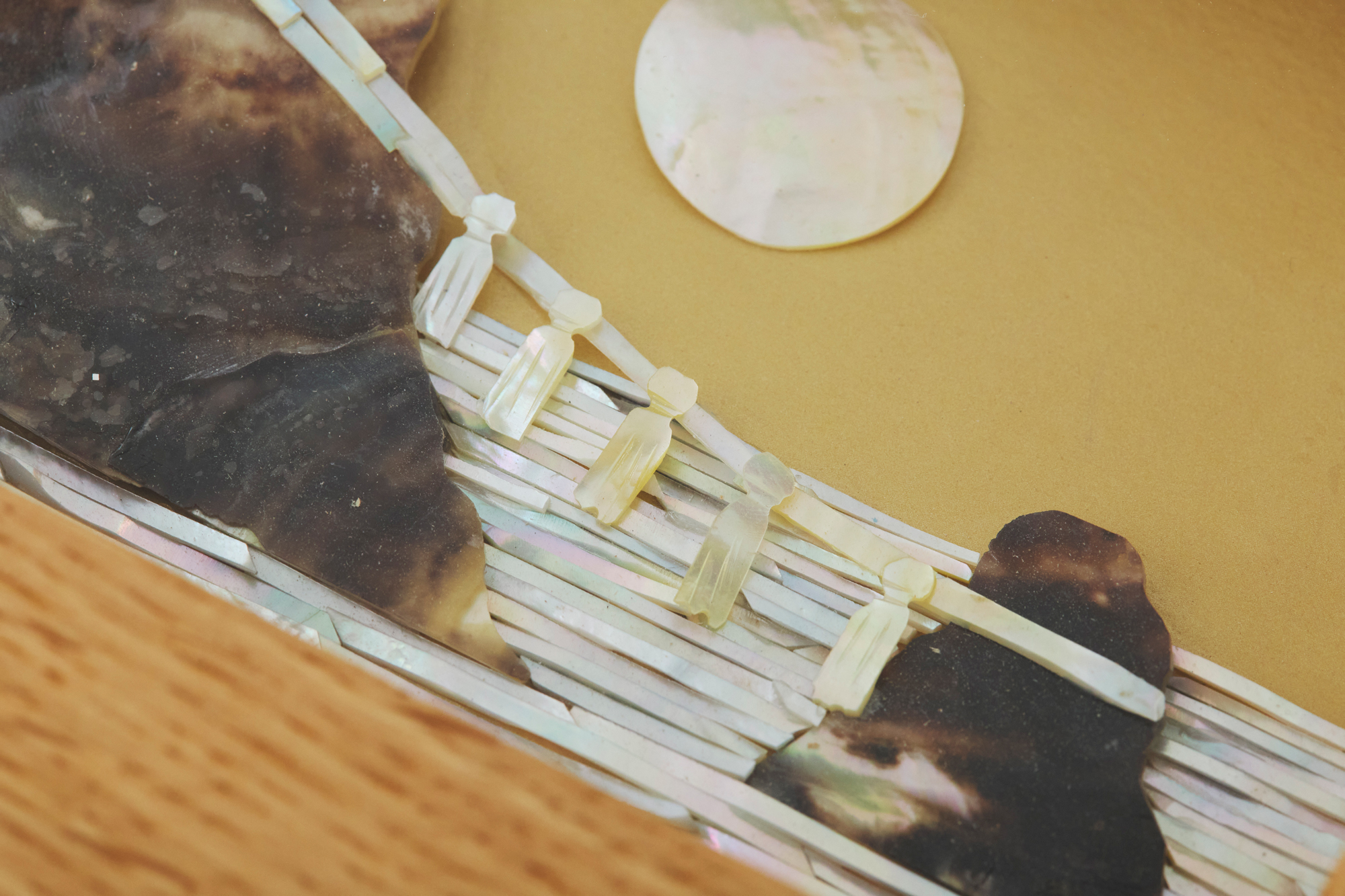
A closer look reveals the meticulous detail of the handwork.
Tradition endures not by remaining unchanged, but by adapting to the spirit of each new era. Woodworkers devoted to their materials, craftspeople drawing on the gifts of the sea—each continues to refine their work while living in close relationship with nature. Encountering these crafts offers a glimpse into the broader story that Mie Prefecture has cultivated over generations.