The Ashizuri Tower, Immersion in Aquatic Life
This tower, reminiscent of Wes Anderson's movies, houses an observation chamber where visitors can view the underwater fauna.
© Kochi Prefecture
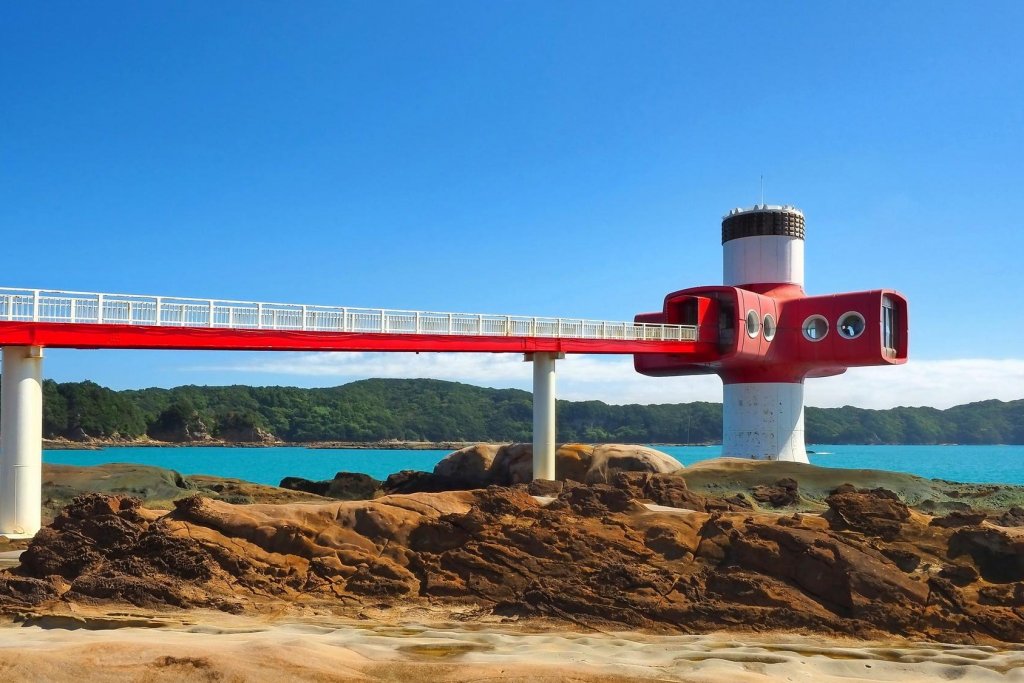
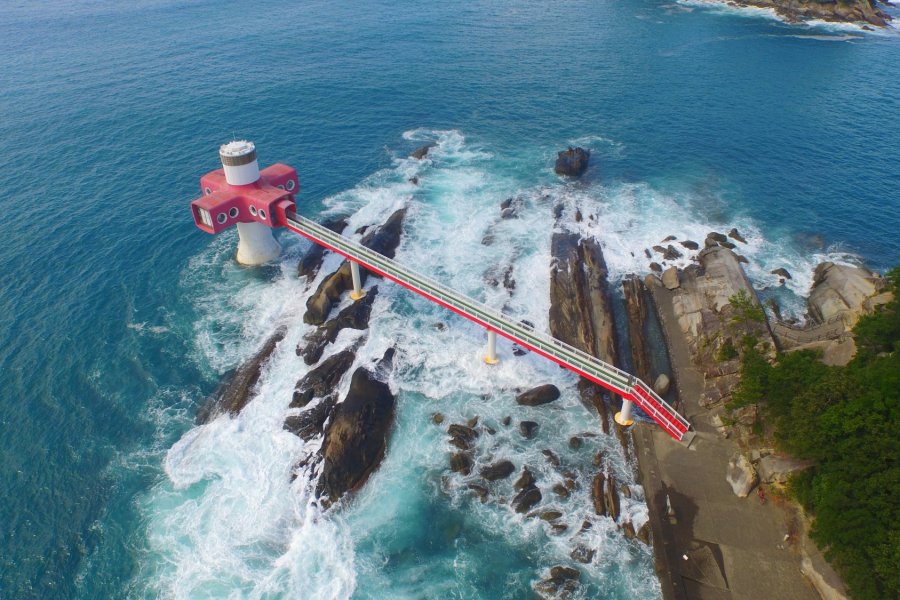
The Ashizuri Underwater Observation Tower, red and white and in the shape of a cross, with perfectly aligned windows, is located in Ashizuri-Uwakai National Park in Kochi Prefecture, in the south of the island of Shikoku. It stands at a height of 24 metres, but it is its underwater part that proves most interesting.
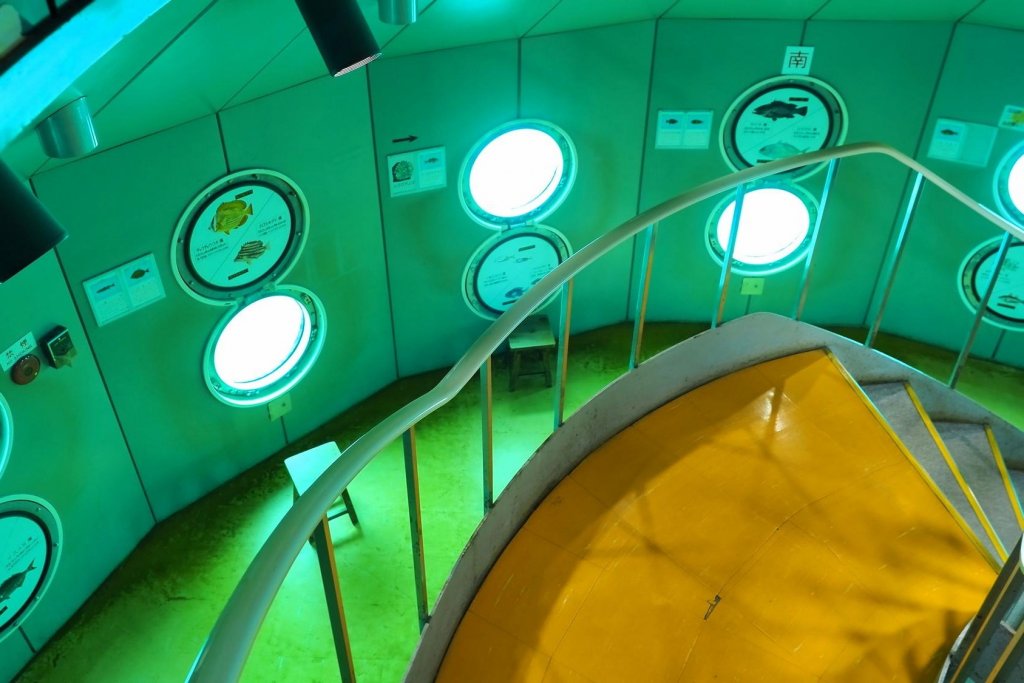
After having crossed the white pontoon and leaving the imposing boulders behind, visitors have a choice: to climb a few steps and observe the view out onto the Pacific Ocean, or to venture down under the water, descending a spiral staircase that goes seven metres deep and leads to a room immersed in darkness.
Observing the migratory fish
Each face of this underwater observation chamber has porthole windows that are 60 centimetres in diameter and enable visitors to watch the fish swimming around the tower. Sardines, barracudas, sea turtles, rays… Many marine species live in the crystalline waters that surround the edifice and, depending on the season, visitors can observe the movement of the migratory fish.
The simplest way to access the tower is to hire a car in Kochi, but it is also possible to take the JR Tosa Kuroshio Railway line from Kochi station to Nakamura, before taking a bus to the Shimizu Plaza Pal stop (Kochi Seinan Kotsu line) and then boarding the last bus that goes to the observation tower, bound for Sukumo station, Ashizuri Kaiteikan Mae bus stop.
More information about the Ashizuri Observation Tower can be found on the Kochi tourist office website.
© Kochi Prefecture
© Kochi Prefecture