The Spiritual Pilgrimage Culminating in a Rock in the Ocean
Yaharazukasa at Hyakuna Beach indicates the spot where the goddess Amamikiyo is said to have first appeared on Okinawa Island.
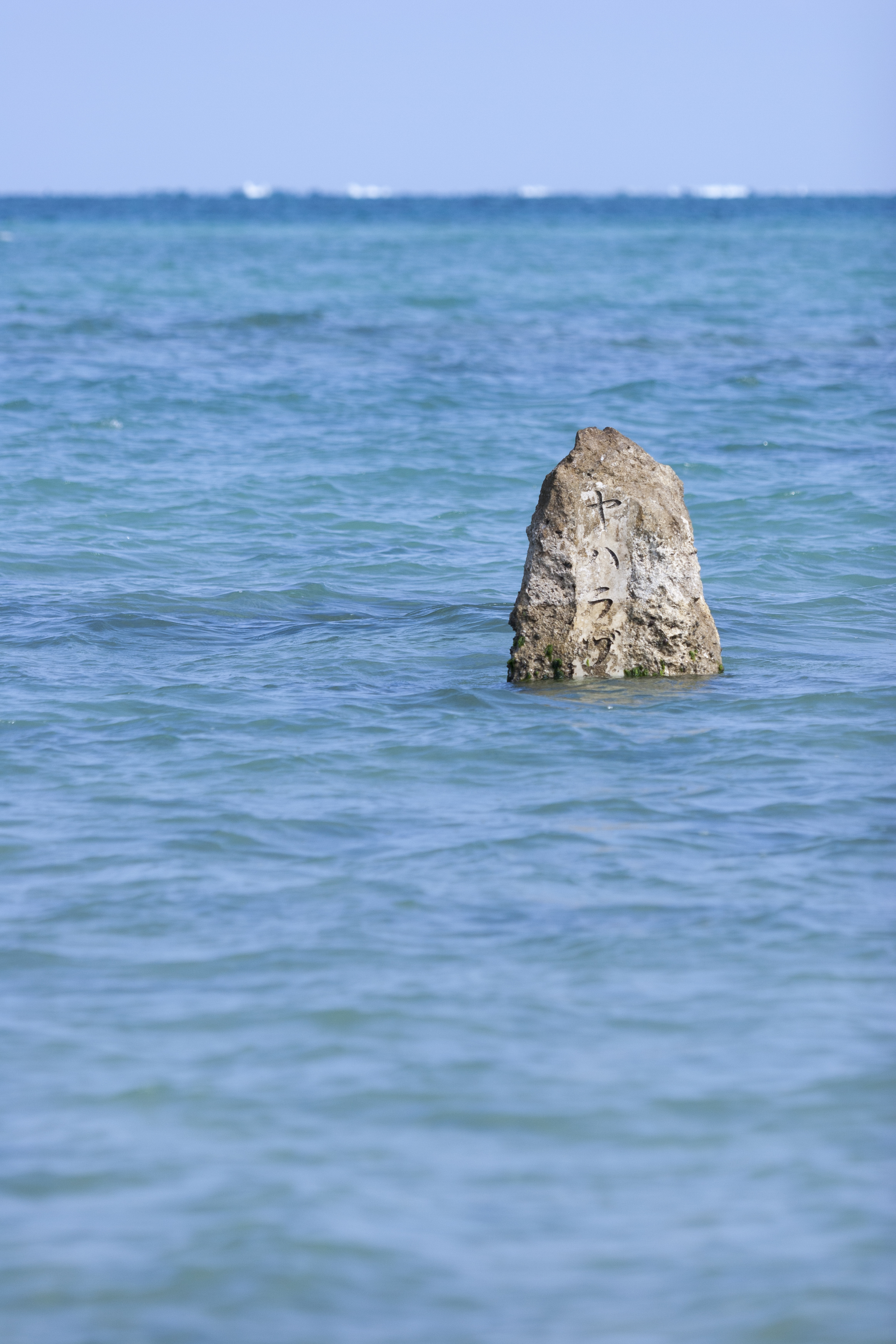
A stone monument standing in the sea next to Hyakuna Beach. It symbolizes the first landing on Okinawa by the god Amamikiyo.
Similar to the Tamagusuku Castle Ruins, Yaharazukasa is a spiritual spot related to the god Amamikiyo.
Specifically, it is said to mark where the goddess first appeared on Okinawa Island.
A place that is entrenched in legend, coming here is equivalent to a pilgrimage for Okinawan locals, making this a great place to visit to learn more about the spiritual side of the island’s culture and history.
Furthermore, the fact that the stone indicating the location is positioned at the tip of natural sand beach only adds to the beauty of this sacred location.
This beach, called Hyakuna Beach, is also worth checking out due to its unspoiled nature, being a spot where tourists rarely venture and frequented more by locals.
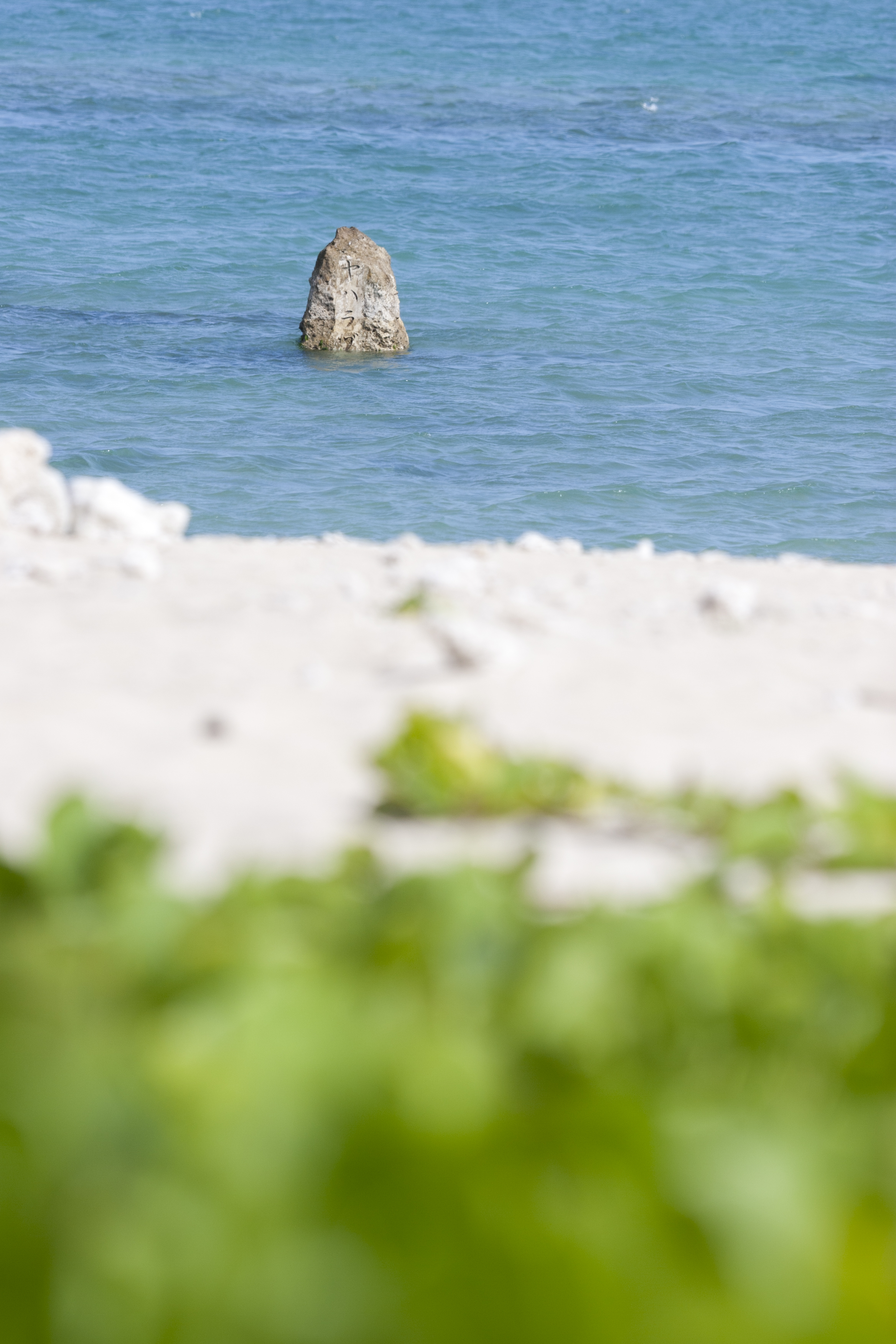
A stone monument standing in the sea next to Hyakuna Beach. It symbolizes the first landing on Okinawa by the god Amamikiyo.
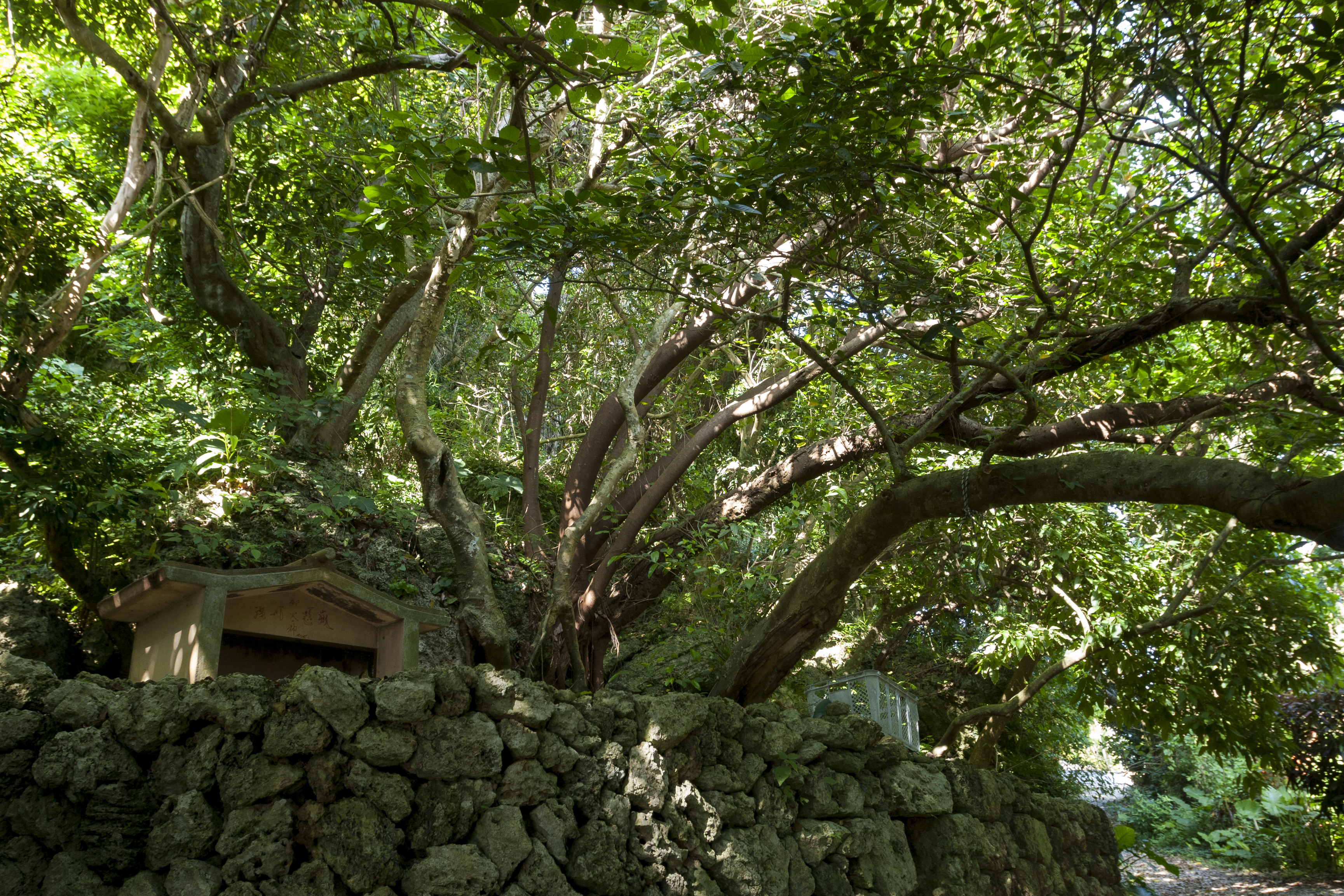
A stone’s throw from the beach and inside the forest is Hamagawa Utaki, where the god Amamikiyo is said to have temporarily lived.
Yaharazukasa, Hamagawa Utaki
Hyakuna, Tmagagusuku, Nanjo-city, Okinawa