Kimono as a Tool for Japanese Propaganda
In the 1930s, the power and superiority of the Japanese army were displayed on indoor clothing, notably propaganda kimono.
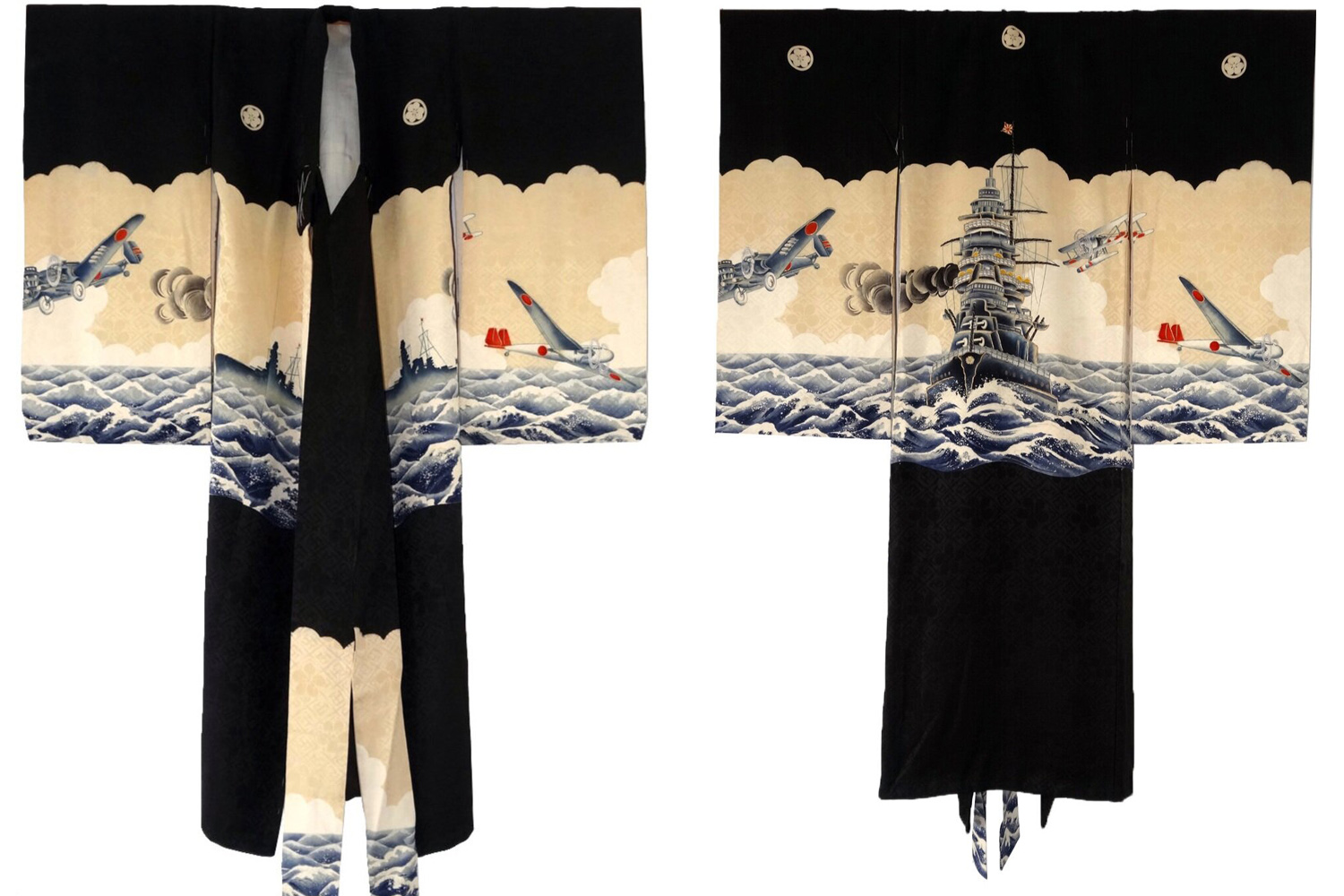
Boy’s omiyamairi with battleship and military aircraft, © NORMAN BROSTERMAN
At the end of the 19th century, the traditional kimono, with its floral or animal patterns, was joined by the so-called propaganda kimono. As Japanese society was becoming more modern, textile manufacturers followed popular trends and decorated their fabrics with daring motifs, inspired by the Art Deco and Dada movements, where birds and cherry blossom gave way to skyscrapers, trains, and aeroplanes.
The production of these kimono shifted in the 1930s when Japan took a military turn. The fabrics produced in workshops started to promote the country’s political and military ambitions in South-East Asia, China, or Manchuria. Like this fabric featuring a mikasa, the ship sailed by admiral Togo Heihachiro, hero of the Russo-Japanese War (1904-1905), which was the first Japanese victory in an international conflict, or another on which a battleship cuts through the ocean, escorted by combat aircraft. Other propaganda kimono bring together nationalist themes and pop culture references, where baby-faced young men, named gosho ningyo, carrying rucksacks, brandish the flag of the imperial army, surrounded by tanks.
Patterns kept private
However, most of these fabrics adorned with propaganda images were destined to be used to create indoor clothing, reserved for private celebrations or worn underneath another outfit, hidden from unknown eyes. These military and nationalist motifs often appeared on nagajuban, pieces of cotton to be worn underneath kimono and on omiyamairi, costumes worn by young children on their first visit to a Shinto shrine.
These kimono were rediscovered thanks to Jacqueline Atkins. The American textile historian and specialist in 20th-century Japanese fabrics has also released a book on the subject entitled Wearing Propaganda, Textiles in Japan, Britain and the United States 1931–1945.
Wearing Propaganda, Textiles in Japan, Britain and the United States 1931–1945 (2005) by Jacqueline Atkins is published by Yale University Press.
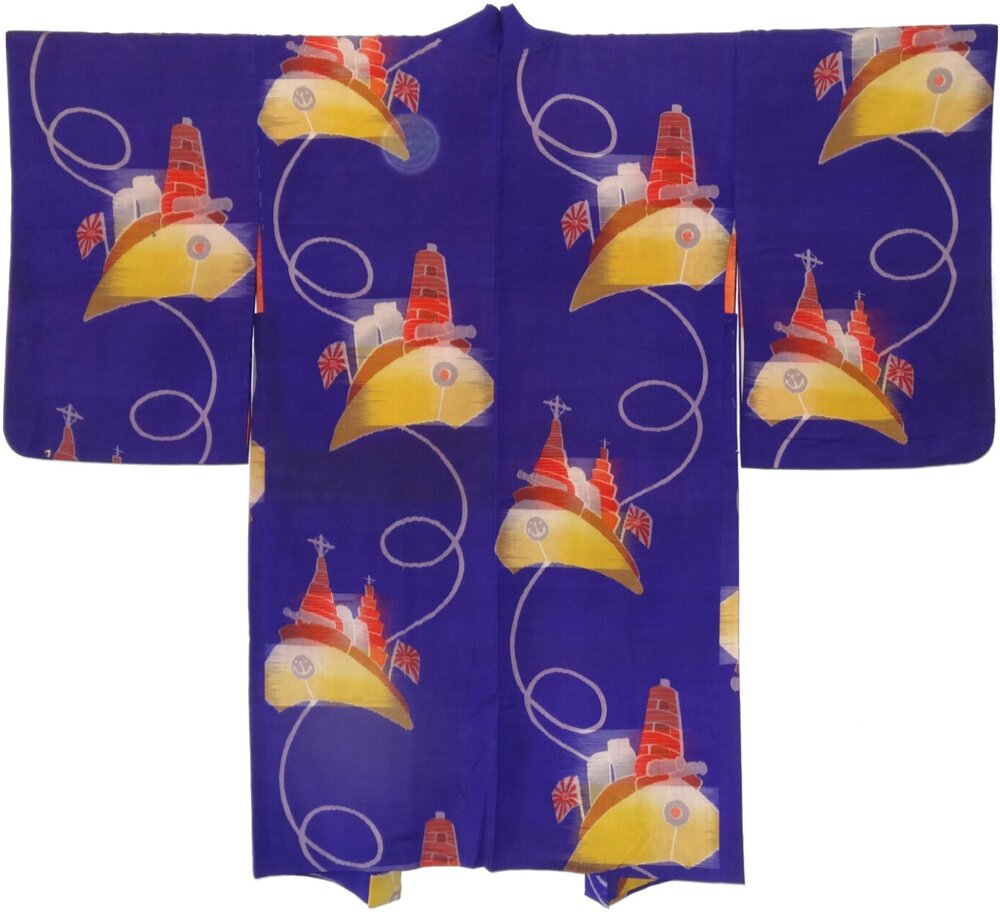
Woman’s haori, circa 1934 © NORMAN BROSTERMAN
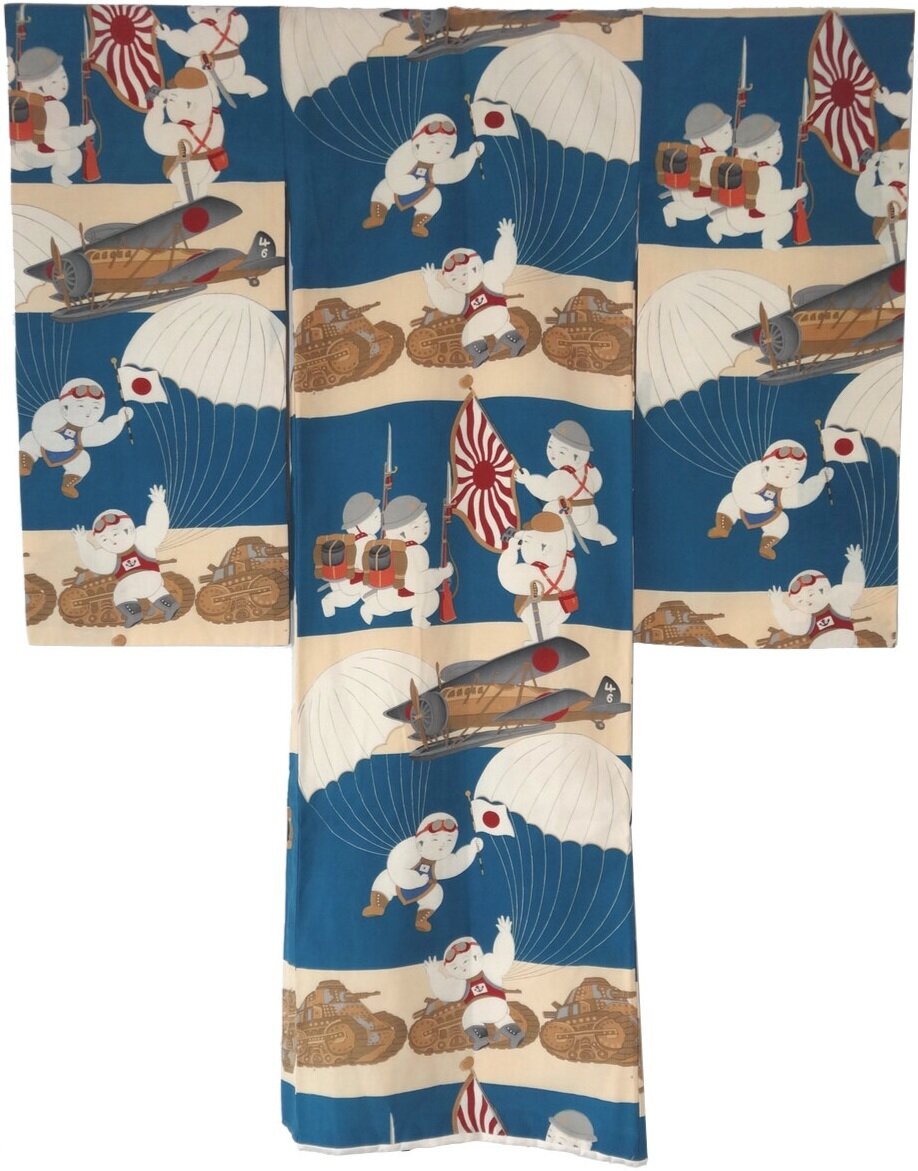
Boy’s omiyamairi, 1930s © NORMAN BROSTERMAN
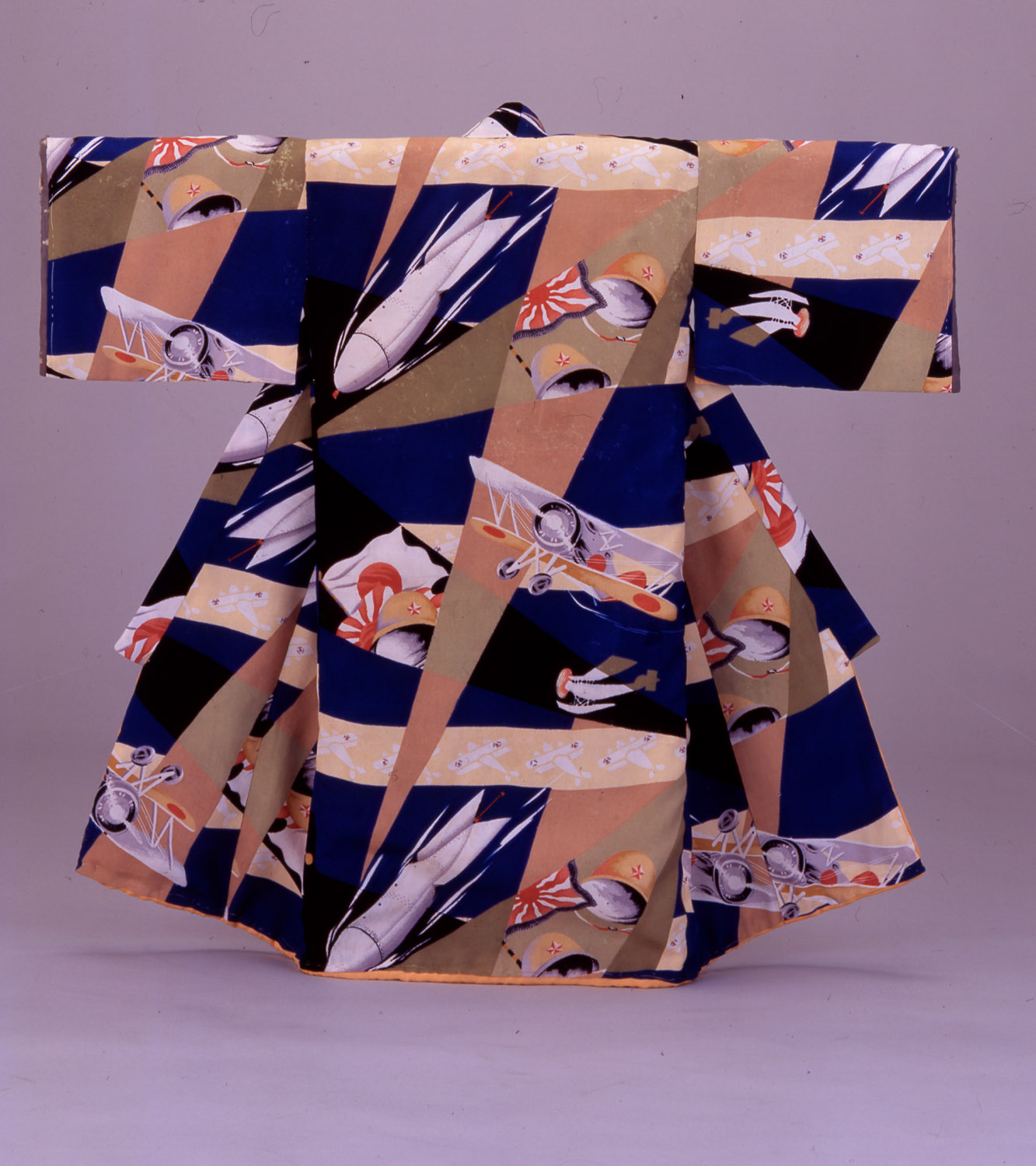
Kimono. 1940s. Collection of Yoku Tanaka. © Nakagawa Tadaaki / ARTEC Studio.
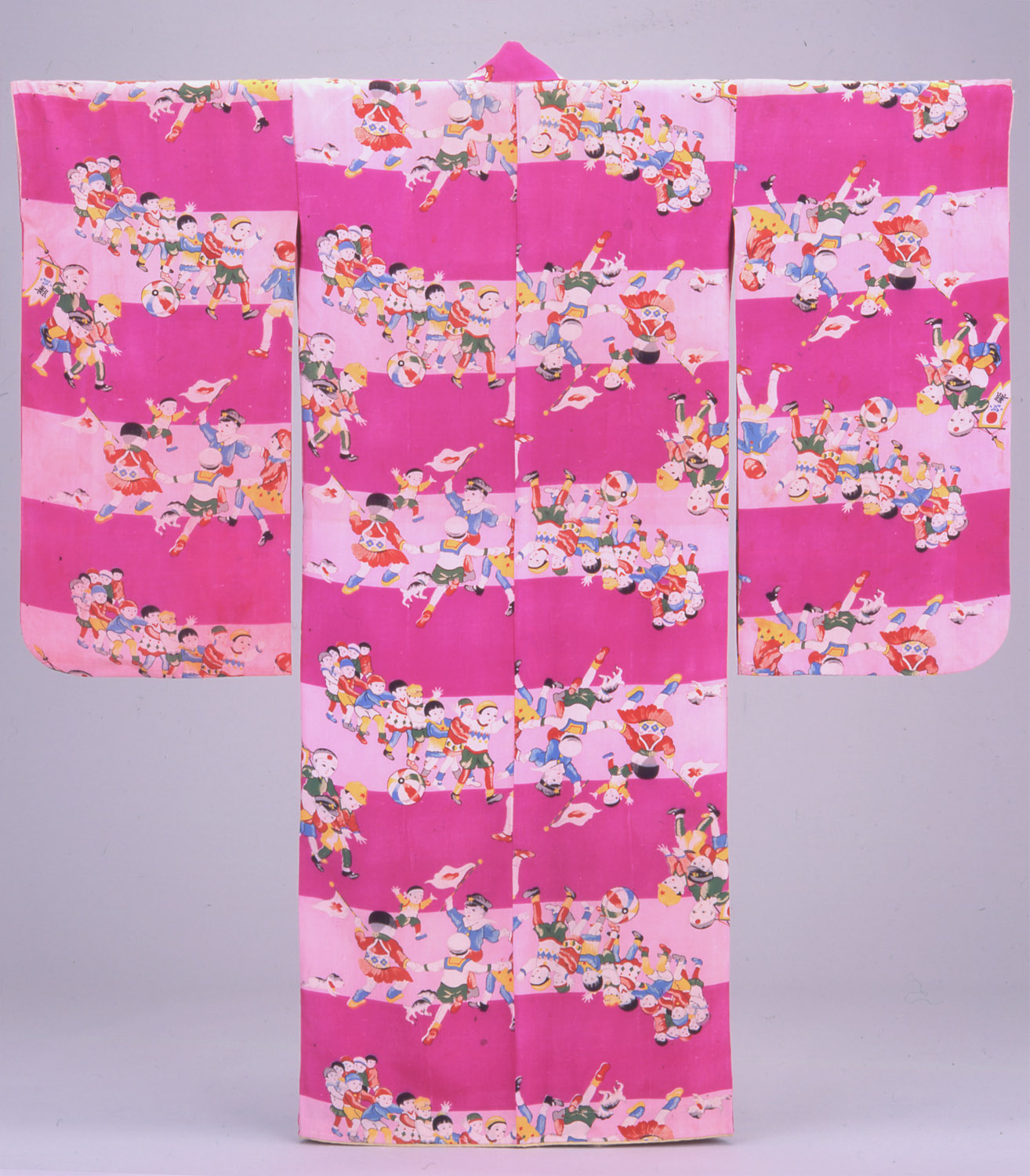
Girl’s kimono. 1930s. Collection of Ranko Nagata. © Nakagawa Tadaaki / ARTEC Studio