Project E-2, Hiromi Fujii’s Neutral Living Space
The architect shares a minimalist vision of the building that neutralises space thanks to being designed entirely on a grid.
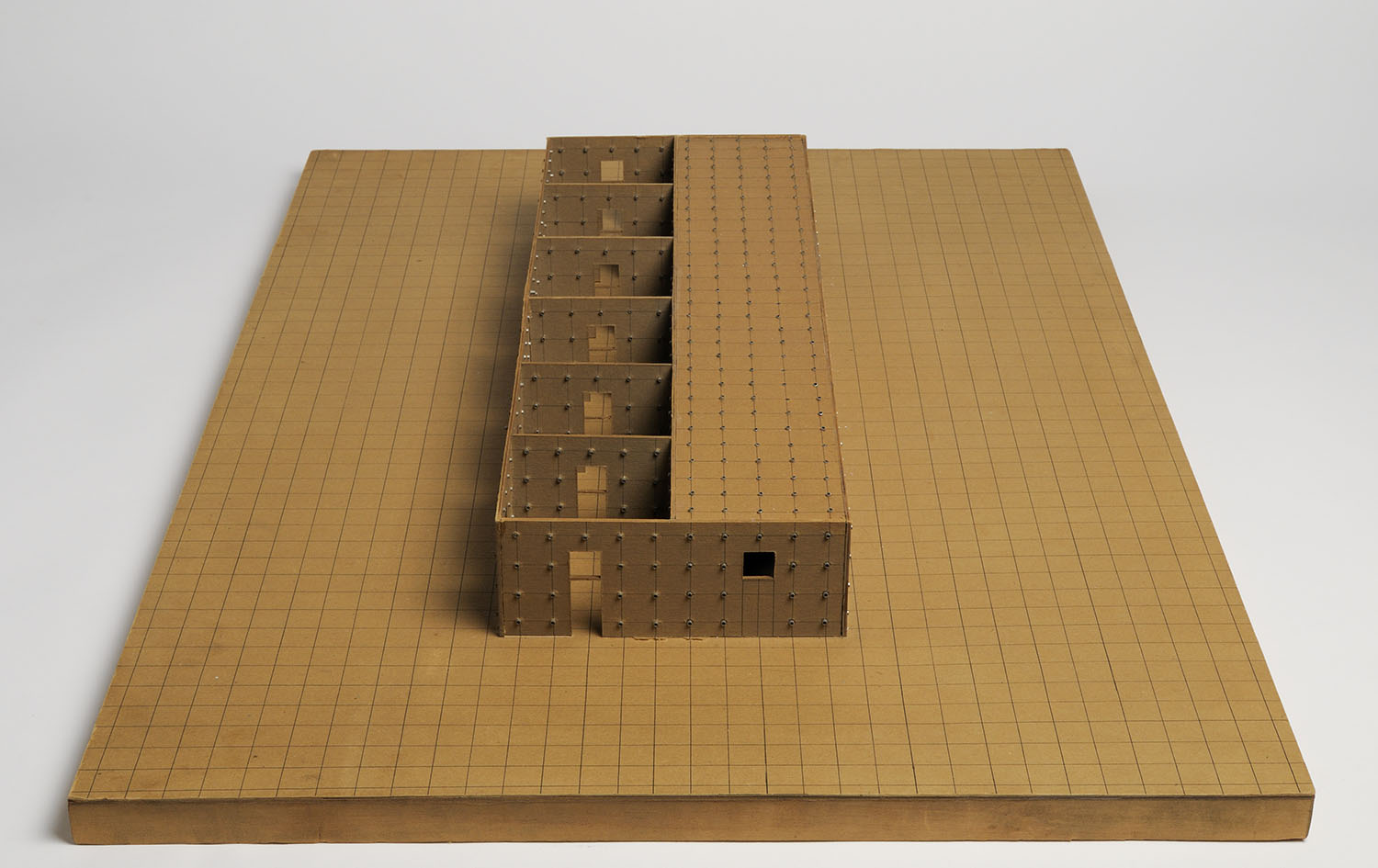
Hiromi Fujii, ‘Project E-2’, 1968-1971 Collection Frac Centre-Val de Loire Photograph © François Lauginie
Between 1968 and 1971, Hiromi Fujii conducted research into a more neutral form of architecture, free from stylistic influences and historical references. Thus, he created Project E-2, a work created entirely on a grid. Breaking with modernist architecture and being more in line with the minimalist tendencies of the 60s and 70s, he came up with this new technique of creation on a grid in order to neutralise space.
Hiromi Fujii, a student of architect Motoo Take, settled in Milan in the mid-60s, where he collaborated with Italian architect Angelo Mangiarotti. He then moved to London, before returning to Japan where he founded his own firm, Fujii Architects Studio. There, he developed various experiments like Project E-2 and his series Mizoe, mock-ups made from coloured cards and mounted on paper, which are then assembled as homes.
Symmetrical architecture on a grid
The architect draws his designs on squared paper. A square acts as the starting point, then the sheet is covered in lines, forming a bedroom here, a living room there, but always in the perfect geometry of the grid. A 3D mock-up then takes shape.
Project E-2 is a house comprised of two rows of six adjacent rooms, all square and connected to form a line. In the first row, each room is equipped with built-in furniture that the architect has carefully placed in the centre to allow free circulation in the space. The second row is built completely symmetrically to the first, but as an exterior counterpoint: the rooms are empty and are not covered by a roof.
Project E-2 (1968-1970) is now part of the Frac Centre-Val de Loire collection.
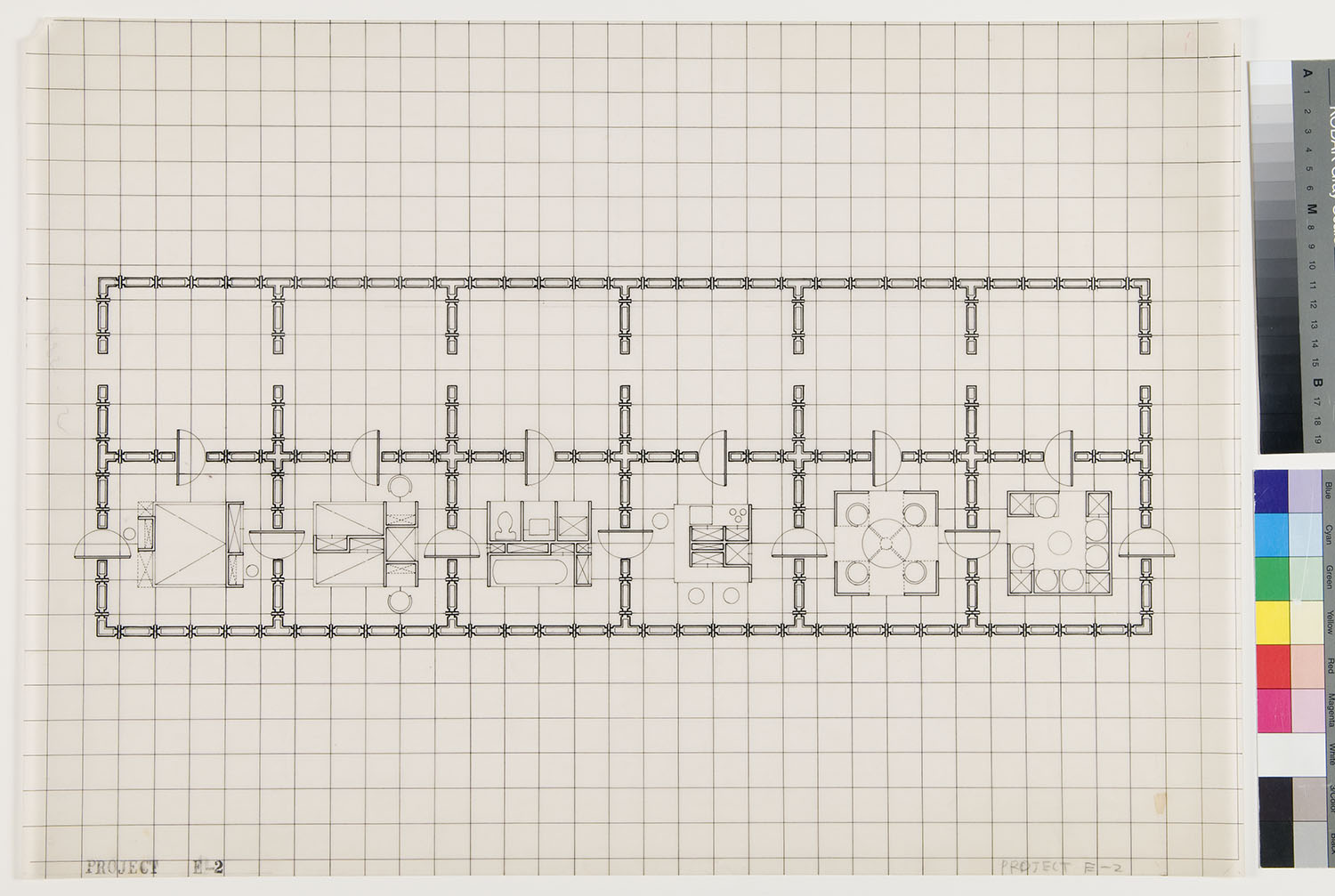
Hiromi Fujii, ‘Project E-2’, 1968-1971 Collection Frac Centre-Val de Loire Photograph © François Lauginie
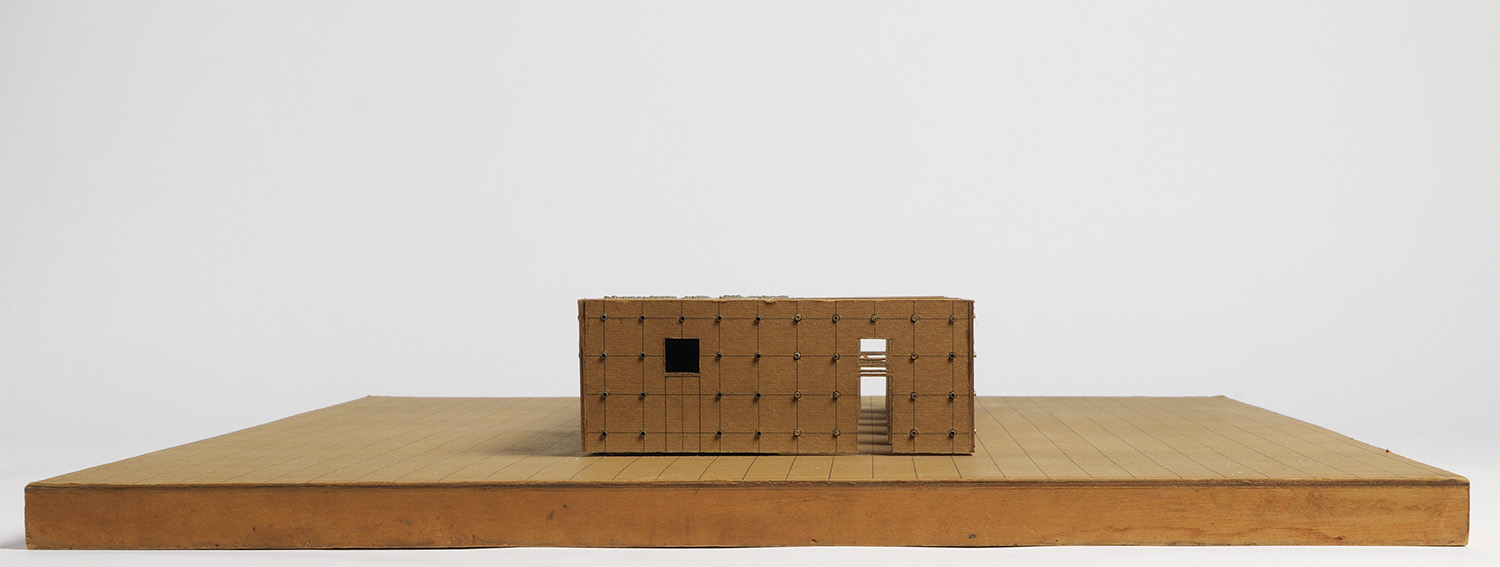
Hiromi Fujii, ‘Project E-2’, 1968-1971 Collection Frac Centre-Val de Loire Photograph © François Lauginie
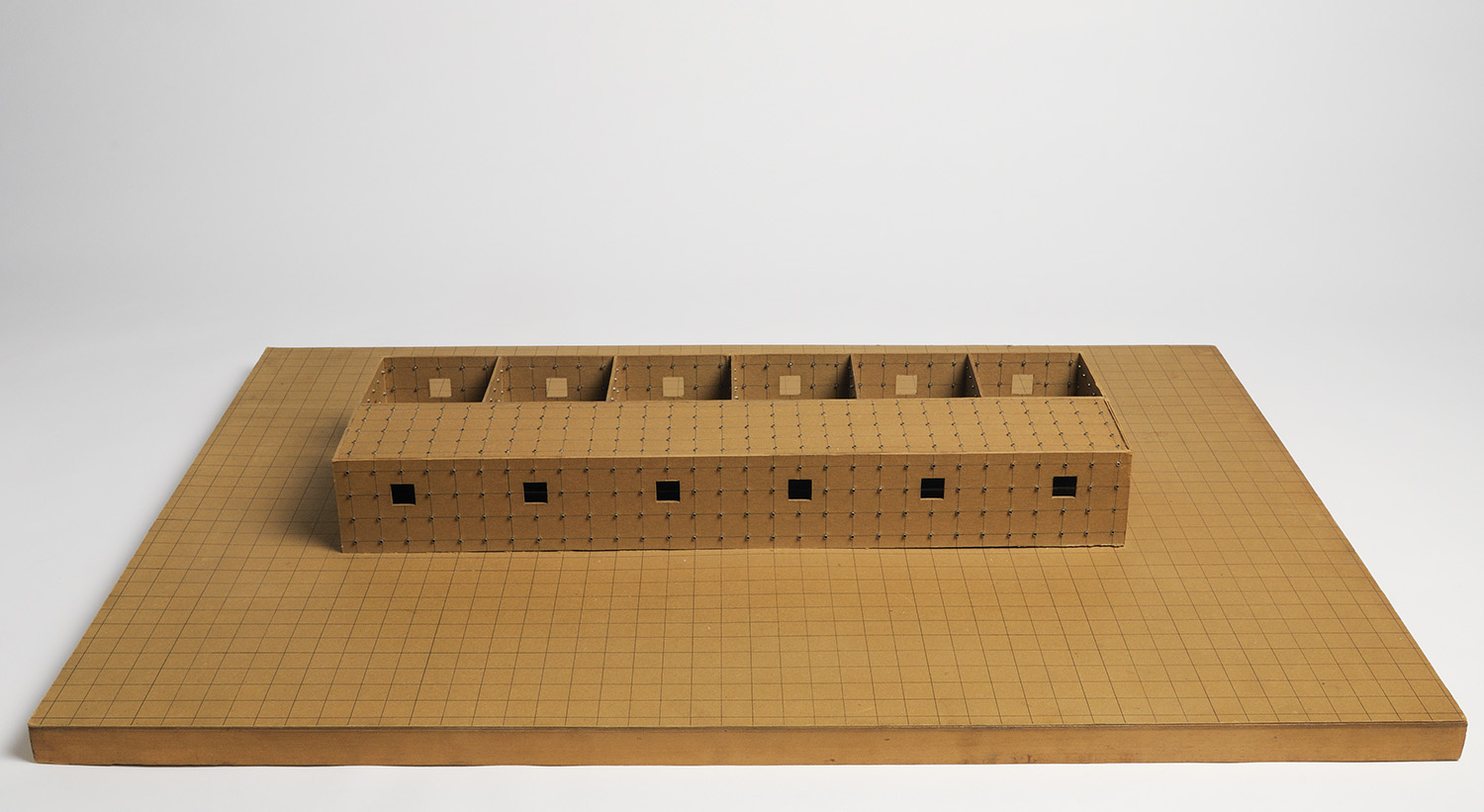
Hiromi Fujii, ‘Project E-2’, 1968-1971 Collection Frac Centre-Val de Loire Photograph © François Lauginie
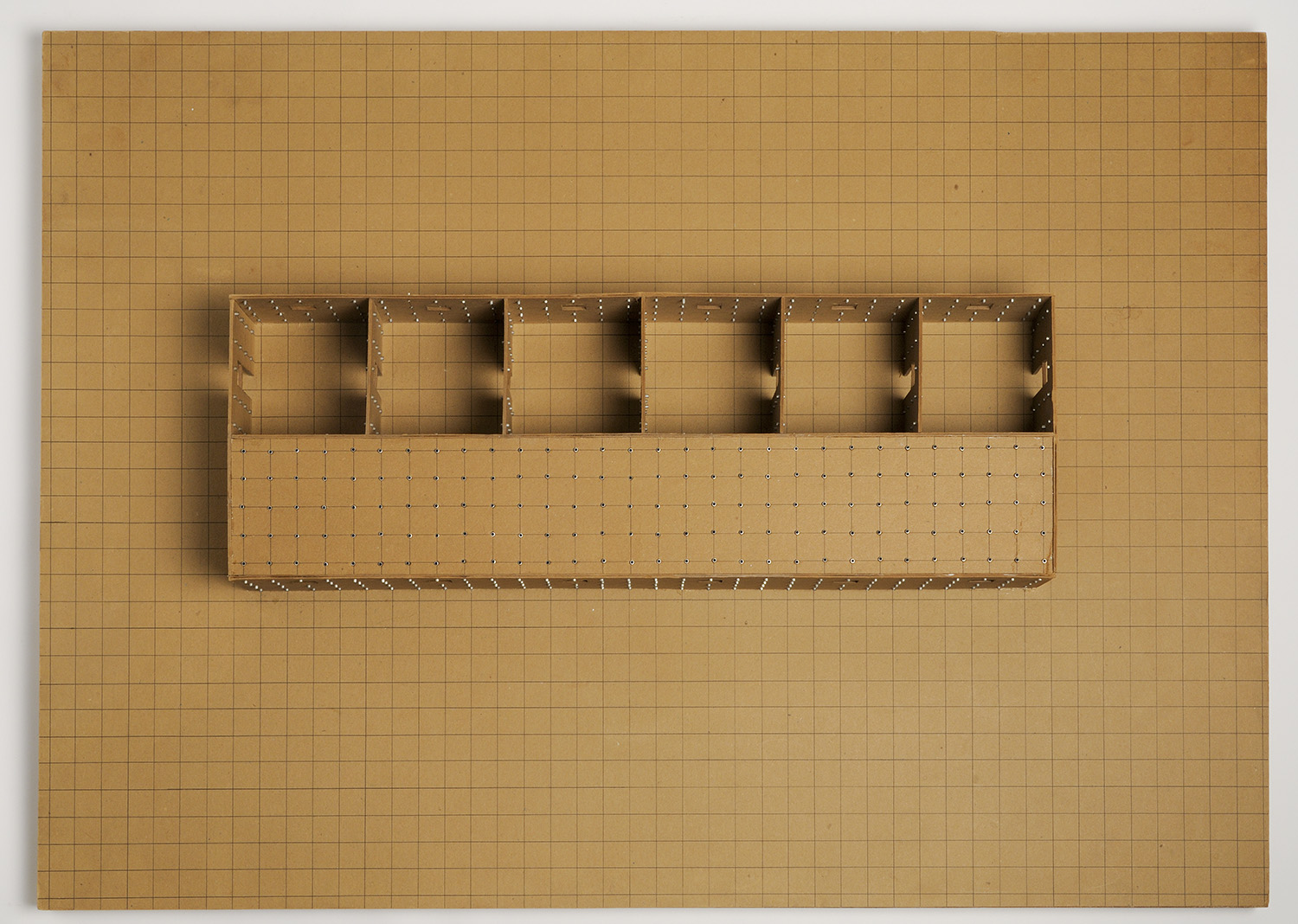
Hiromi Fujii, ‘Project E-2’, 1968-1971 Collection Frac Centre-Val de Loire Photograph © François Lauginie
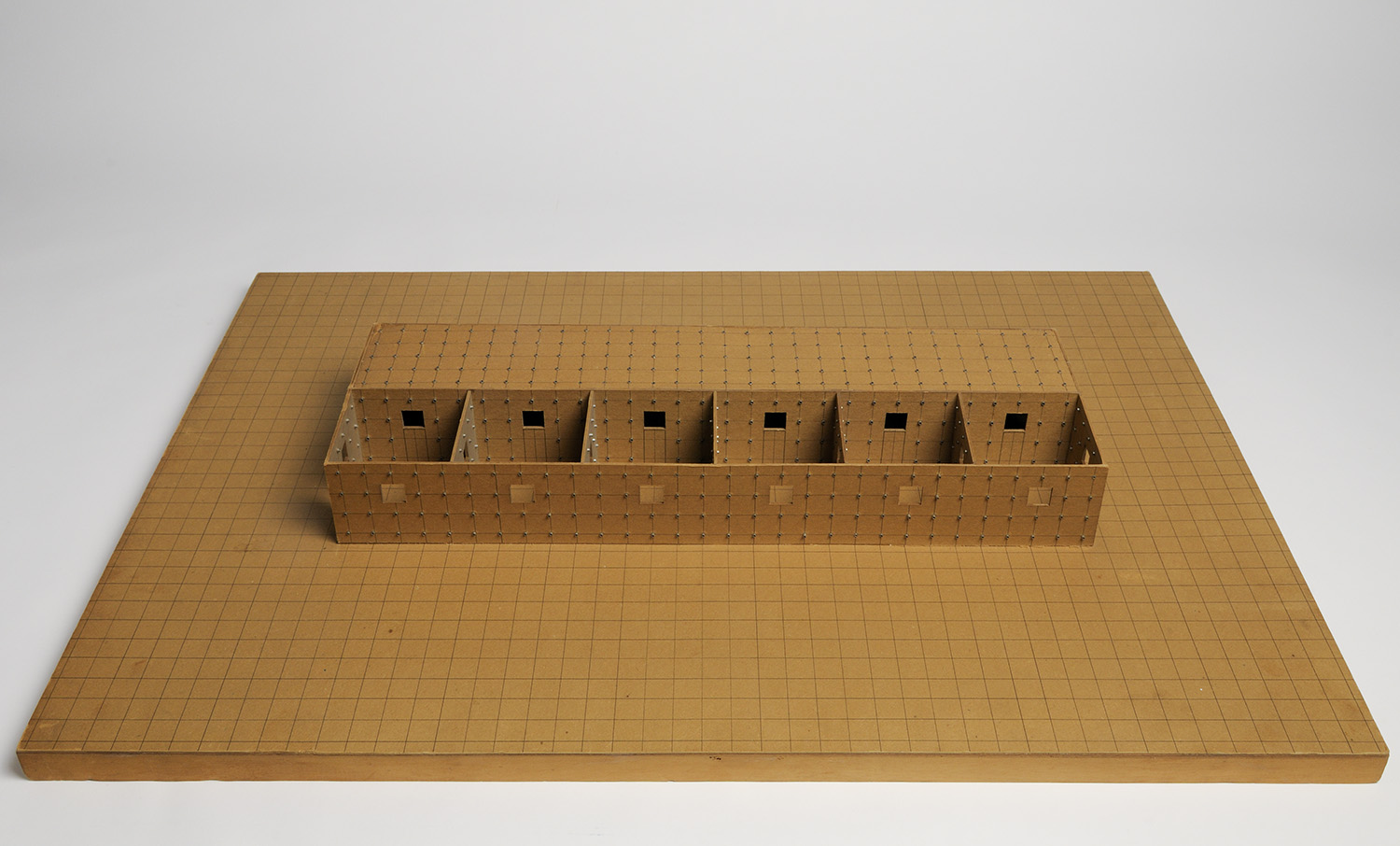
Hiromi Fujii, ‘Project E-2’, 1968-1971 Collection Frac Centre-Val de Loire Photograph © François Lauginie
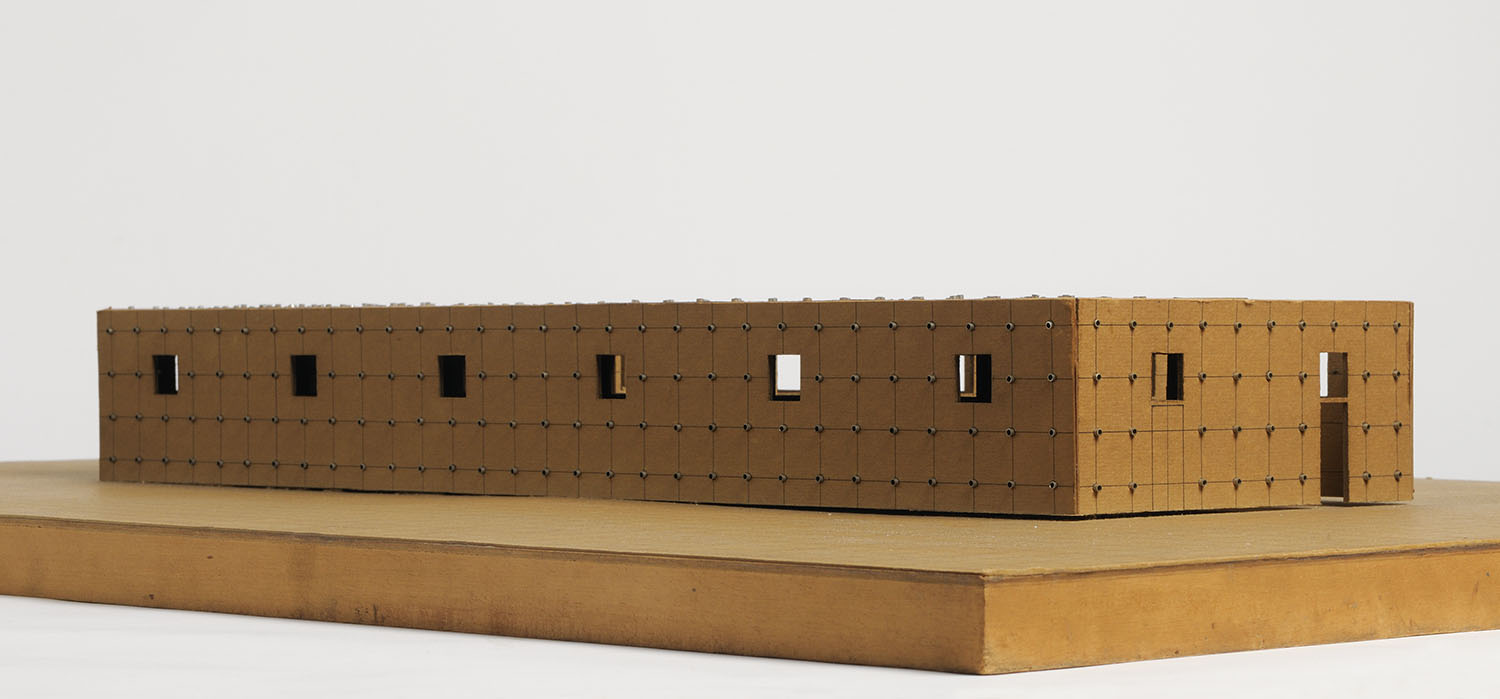
Hiromi Fujii, ‘Project E-2’, 1968-1971 Collection Frac Centre-Val de Loire Photograph © François Lauginie