Hōshi Onsen Chōjukan, a Hidden Mountain Bath Frozen in Time
In his ‘Bath Chronicle’ series, Kundō Koyama advocates for ‘yudō’, the ‘way of the bath’, as a pillar of traditional Japanese culture.
Screenwriter Kundō Koyama advocates for the recognition of yudō, the ‘way of the bath’, alongside sadō, the way of tea, and kadō, the way of flowers, as a fundamental element of traditional Japanese culture. He immerses himself across Japan in different types of baths, from hot springs (onsen) to public bathhouses (sentō), as well as domestic bathtubs. In each issue of Pen, he records these journeys in his ‘Bath Chronicle’.
Hōshi Onsen Chōjukan (Minakami Town, Gunma Prefecture)
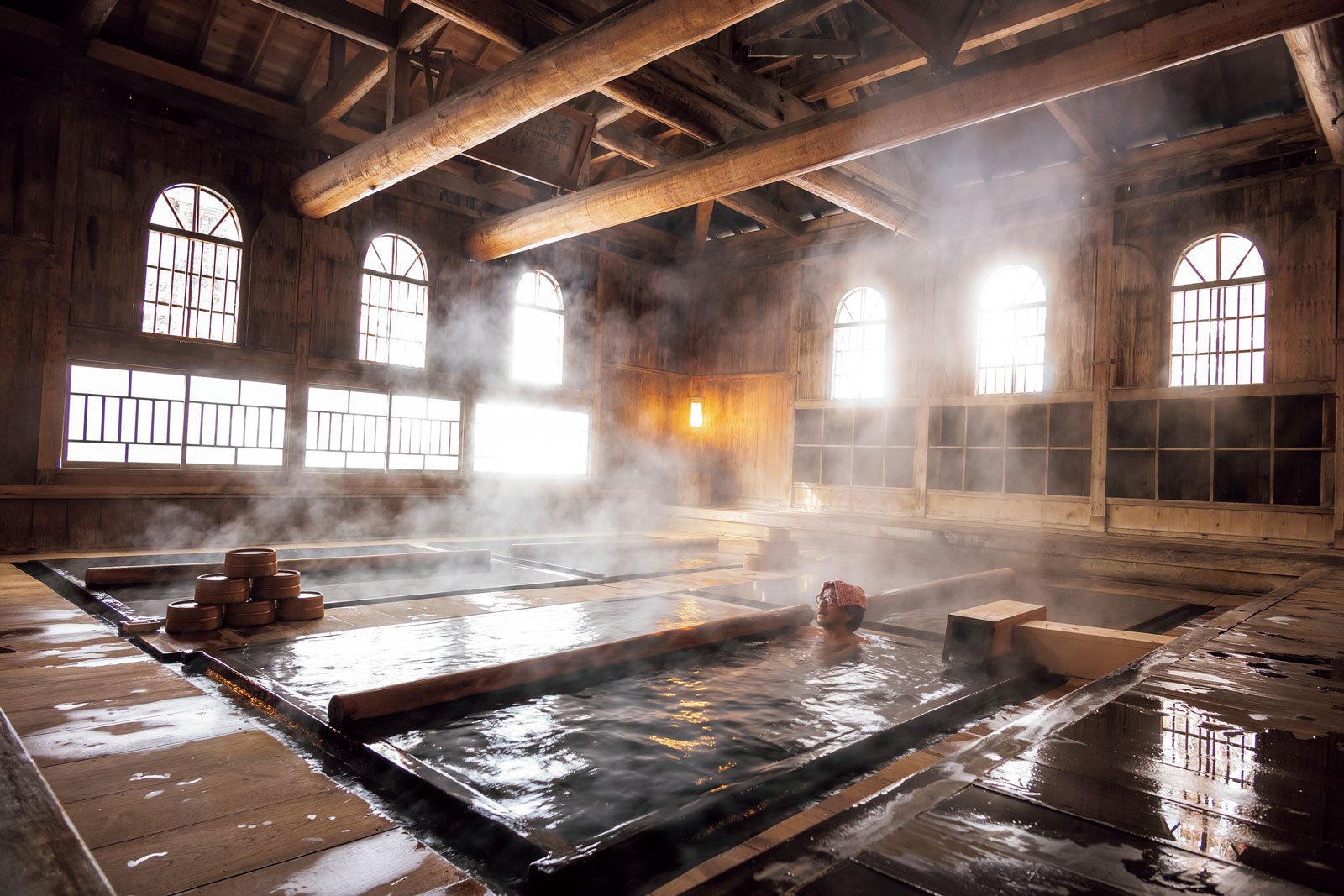
Kundō Koyama bathing in Hōshi Onsen Chōjukan.
I love the sound of footsteps on snow. After parking the car, I carefully made my way toward the inn’s entrance, trying not to slip on the frozen ground. The moment I opened the wooden sliding door with its rippling antique glass, I was greeted by the nostalgic smell of a kerosene stove. This is Hōshi Onsen Chōjukan, a secluded hot spring inn hidden deep in the mountains of Jōshū. From the irori hearth room beside the entrance came the crackling sound of burning firewood. Perhaps the phrase ‘time stands still’ was made precisely for a place like this.
The destination here is Hōshi-no-Yu, the large communal bath designated as a Registered Tangible Cultural Property of Japan, still carrying the atmosphere of the Rokumeikan era. Beneath the floor of rounded river stones, clear gypsum-rich spring water rises naturally through the gaps, flowing directly from the source in a pure and luxurious free-flowing bath.
In the past, the temperature has fluctuated according to the whims of the Earth itself, climbing as high as 44°C and dropping to 36°C after the earthquake. These days, however, it remains around a comfortable 40°C. Each bathing square differs subtly in temperature, allowing guests to search for the spot that feels just right before slowly sinking into the water. Neither too hot nor too cool, it is simply perfect.
After closing my eyes and letting myself drift in the comfort of the bath, I slowly opened them again. Soft light streamed through the Baroque-style windows, illuminating the gently rising steam. With hot water as the ticket, one feels capable of traveling through time forever.
I later learned that maintaining the bath requires the work of three people. Once a week, all the water is drained and every single river stone is turned over by hand and cleaned individually. Surrounded by water kept at such an ideal temperature and maintained with such care, gratitude naturally arises—both toward nature and toward the people who sustain it. The warmth of the bath seems to deepen all the more because of it.
Hōshi Onsen Chōjukan
Address: 650 Nagai, Minakami Town, Tone District, Gunma Prefecture
Phone: +81 278 660 005
Hours: 11:00–13:30 (day-use bathing)
Rates: ¥1,500 for day-use bathing; overnight stays from ¥19,800 per person including two meals (excluding bathing tax)
www.hoshi-onsen.com/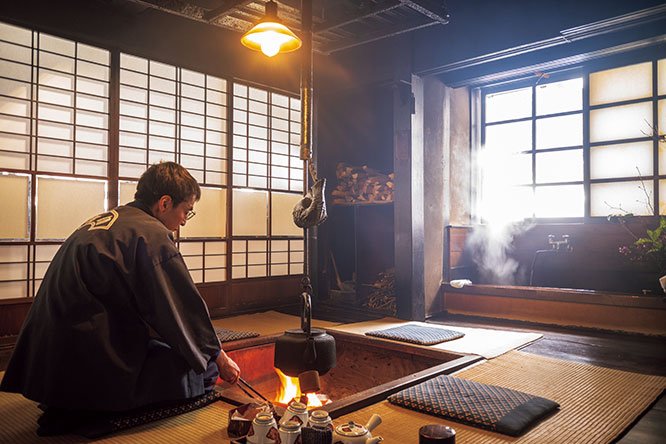
The ‘irori’ hearth room near the entrance naturally becomes a gathering place where guests prepare tea and chat with one another. On the day of our visit, Mr. Okamura from the inn’s public relations team kindly lit the fire for us.
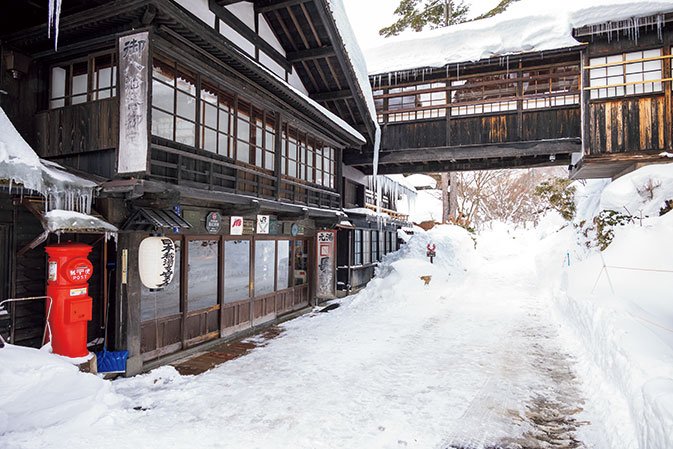
About a 30-minute drive from JR Jōmō-Kōgen Station. The inn takes its name from a legend that Kōbō Daishi discovered the spring. Founded in 1875, it is also registered with the Japan Association of Secluded Hot Spring Inns. The baths are generally mixed-gender, though women-only hours are also provided.