Shirahata-no-Yu, a Remarkably Hot Bath in Kusatsu That Clears the Mind
In his ‘Bath Chronicle’ series, Kundō Koyama advocates for ‘yudō’, the ‘way of the bath’, as a pillar of traditional Japanese culture.
Screenwriter Kundō Koyama advocates for the recognition of yudō, the ‘way of the bath’, alongside sadō, the way of tea, and kadō, the way of flowers, as a fundamental element of traditional Japanese culture. He immerses himself across Japan in different types of baths, from hot springs (onsen) to public bathhouses (sentō), as well as domestic bathtubs. In each issue of Pen, he records these journeys in his ‘Bath Chronicle’.
Shirahata-no-Yu (Kusatsu Town, Gunma Prefecture)
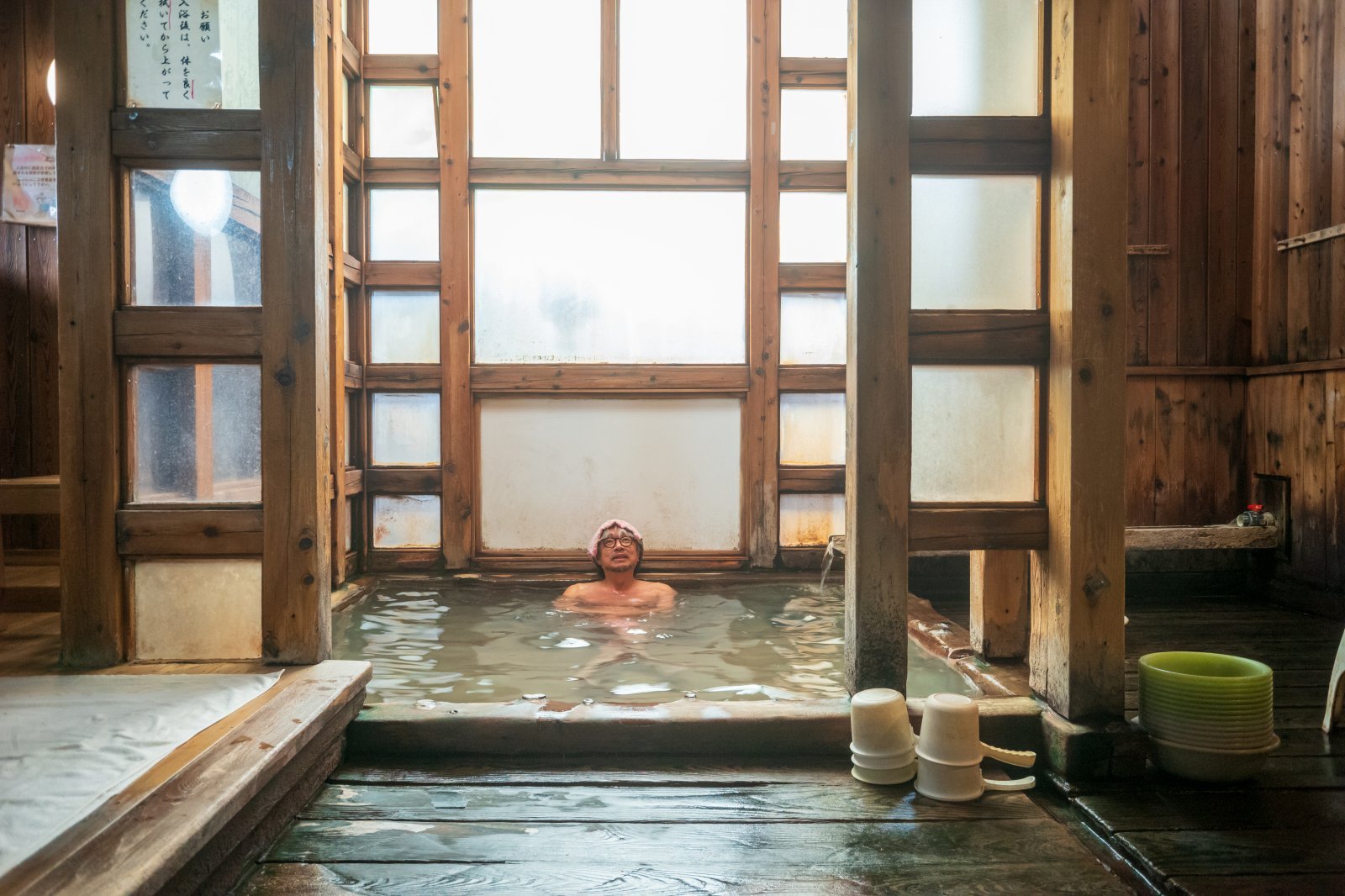
Kundō Koyama bathing in Shirahata-no-Yu.
Kusatsu Onsen is counted among Japan’s three most famous hot spring resorts. For a long time, it was seen as a destination mainly for older visitors, with as many as 70 percent of guests falling into that category. It carried a strong image of a traditional, somewhat old-fashioned spa town.
That began to change around 15 years ago, when Mayor Nobutada Kuroiwa launched a new urban vision looking a century ahead. Improvements around the iconic Yubatake, the construction of the Onsen Gate, and the united efforts of local inn proprietresses transformed the town. Today, around 70 percent of visitors are younger generations, and Kusatsu has surpassed four million annual visitors for the first time in its history.
Kusatsu has 19 public bathhouses that residents can use free of charge. Of these, three are also open to tourists at no cost. Among them, Shirahata-no-Yu, located right beside the Yubatake, stands out for both its prime location and the quality of its waters.
The name ‘Shirahata’ is said to come from Minamoto no Yoritomo, who is believed to have bathed here, referencing the white flag of the Minamoto clan. In reality, once you step into the bath, the heat alone is enough to make you want to raise a white flag in surrender.
There are technically two baths, one hotter and one milder, but in truth, both are intensely hot. The source temperature is 51°C. While the town’s hot spring department recommends bathing below 44°C, seasoned bathers would likely say it rarely drops under 46°C.
In the practice of yudō, one typically soaks in silence, reflecting inward and letting thoughts unfold. Here, there is no such luxury. The heat demands your full attention, leaving your mind completely blank.
And yet, once you step out, the sensation of cooling off in the breeze is extraordinary. Unlike a sauna, it is not only the body that feels restored, but the mind as well.
Kusatsu Onsen, wrapped in the atmosphere of Taishō-era romance and Shōwa retro charm, is now filled with younger visitors seeking relief from the fatigue of modern life.
Shirahata-no-Yu
Address: 112-1 Kusatsu, Kusatsu Town, Agatsuma District, Gunma Prefecture
Tel: 0279-88-0800
Hours: 8:00–23:00
Closed: Open year-round
www.kusatsu-onsen.ne.jp/kankou/1097.php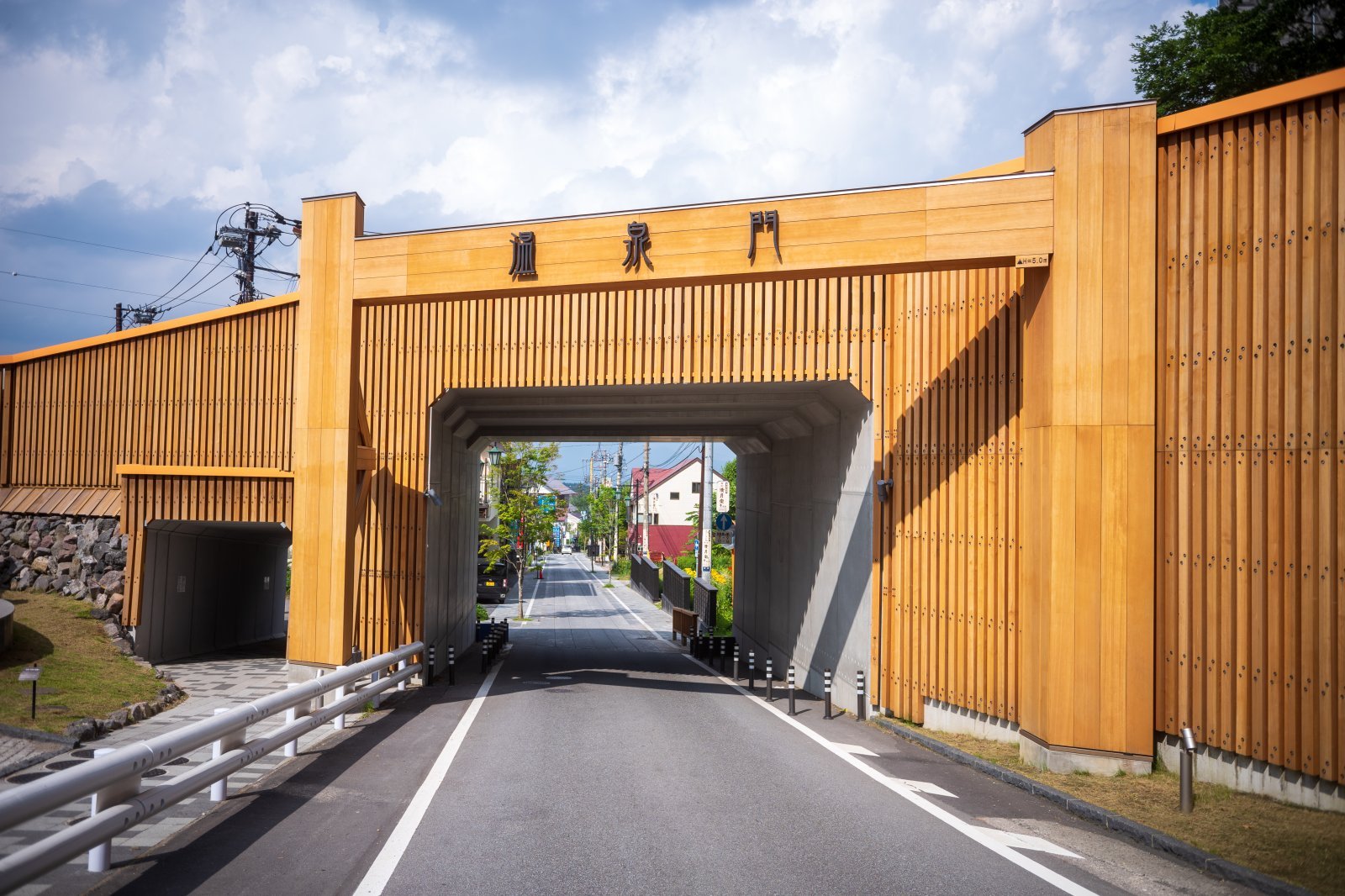
About a 30-minute bus ride from JR Naganohara-Kusatsuguchi Station. Completed in 2023, the Onsen Gate has helped ease long-standing traffic congestion while serving as a new symbolic entrance to the hot spring town leading toward the Yubatake.
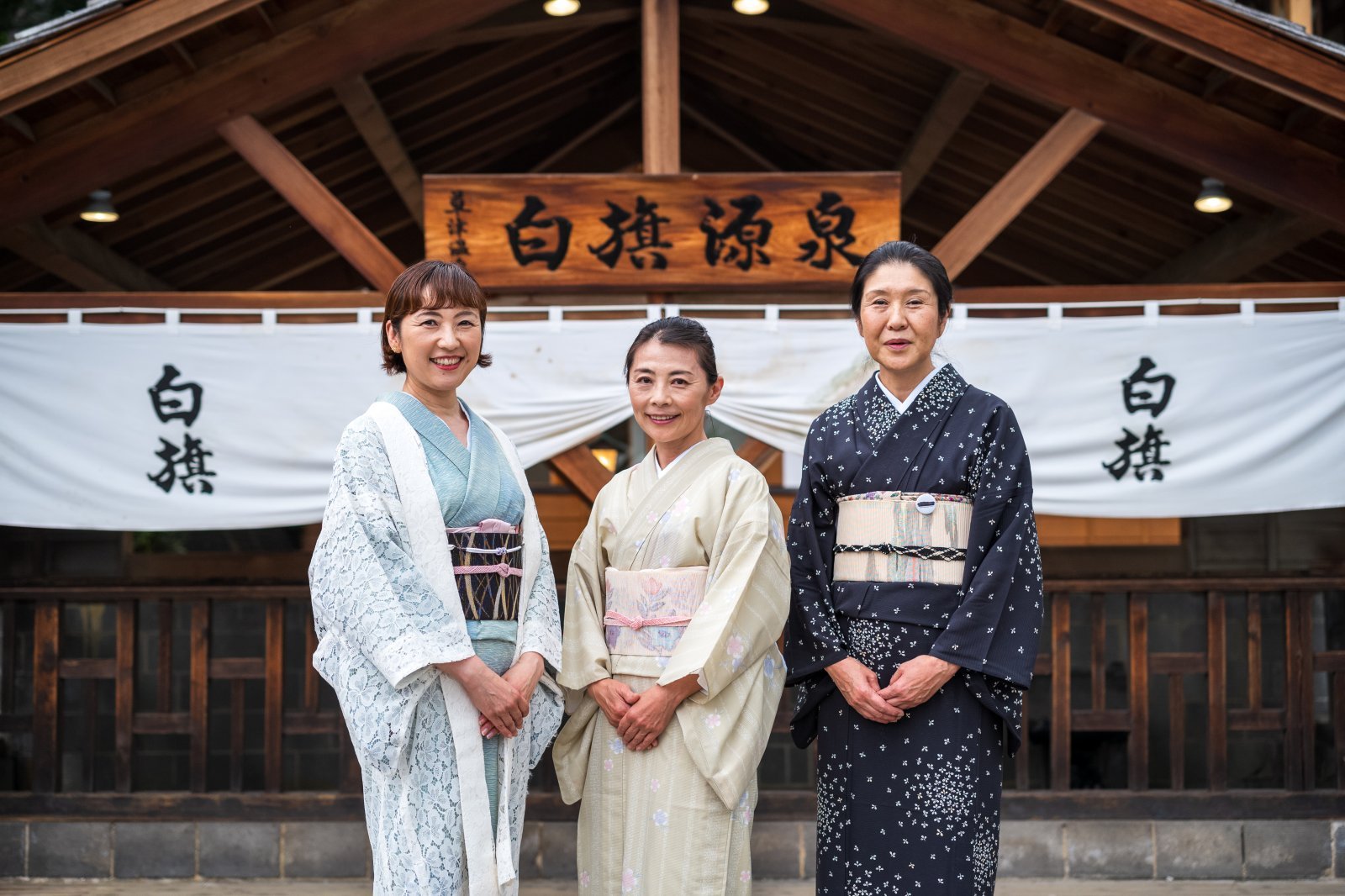
The proprietresses of the long-established inns that make up the ‘Wafū Village.’ This summer, they revived the ‘Himuro no Sekku’, an Edo-period tradition held to pray for good health.