A Rare Stone Pumpkin by Yayoi Kusama on View in Hakone
The arrival of this sculpture offers a renewed opportunity to enjoy a stroll among the artworks of the Hakone Open-Air Museum.
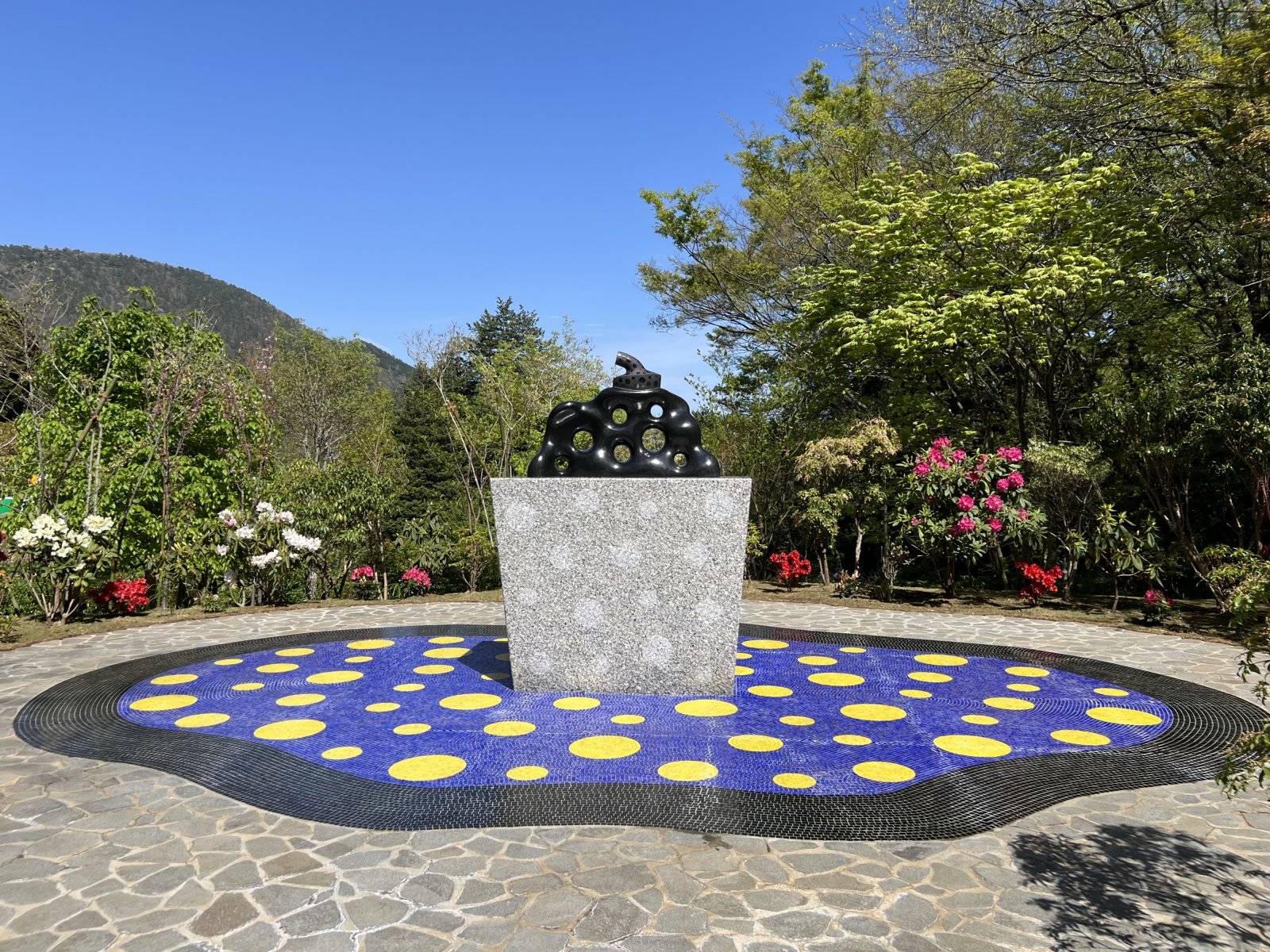
Yayoi Kusama, ‘I Am a Pumpkin’, 2013. ©YAYOI KUSAMA, Courtesy of Ota Fine Arts
One of Yayoi Kusama’s rare stone sculptures, I Am a Pumpkin (‘Ware wa Kabocha’), is now on view at the Hakone Open-Air Museum in Hakone, Kanagawa Prefecture. Installed within the museum’s lush outdoor grounds, the work engages in a dialogue with the surrounding landscape while retaining the distinctive presence that characterises Kusama’s oeuvre. Its arrival also provides an opportunity to revisit the highlights of a museum where sculpture and nature coexist throughout the site.
A New Display Area for ‘I Am a Pumpkin’, Framed by Polka-Dot Mosaics
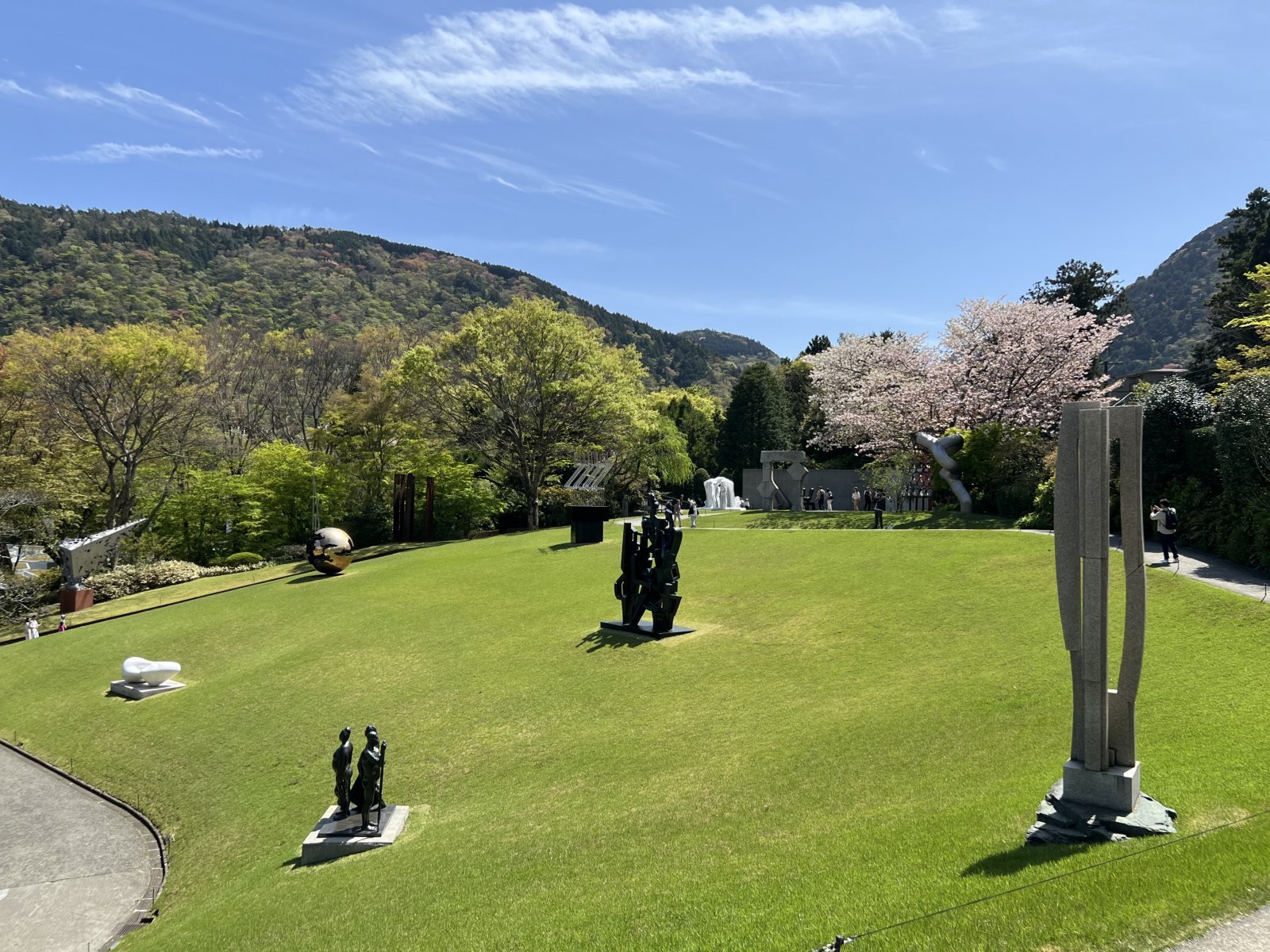
The outdoor exhibition spaces of the Hakone Open-Air Museum. Temporary exhibitions and the permanent collection can be explored in around 1.5 to 2 hours, but to fully enjoy the outdoor sculptures, the café and the footbath, it is worth allowing half a day to wander at a leisurely pace.
The museum lies about 40 minutes from Hakone-Yumoto Station by mountain railway. After passing through Kowakudani, the train winds through the hills, revealing on the right-hand side a gently sloping landscape dotted with sculptures. Opened in 1969, the Hakone Open-Air Museum was Japan’s first open-air art museum. Spread across nearly 70,000 square metres of outdoor exhibition space, it permanently displays around 120 works by leading figures of modern and contemporary art, including Auguste Rodin, Henry Moore and Joan Miró.
Beyond the entrance, Round Plaza opens onto sweeping views of the Hakone mountains. The newly installed I Am a Pumpkin is located just before the Picasso Pavilion, in an area adjacent to The Hakone Open-Air Museum Café & KI TO KI. The ground has been paved with brightly coloured polka-dot mosaics, while the surrounding planting and landscape design have been carefully arranged to echo the work itself.
Yayoi Kusama’s First Stone Sculpture and Its Message of Eternal Love
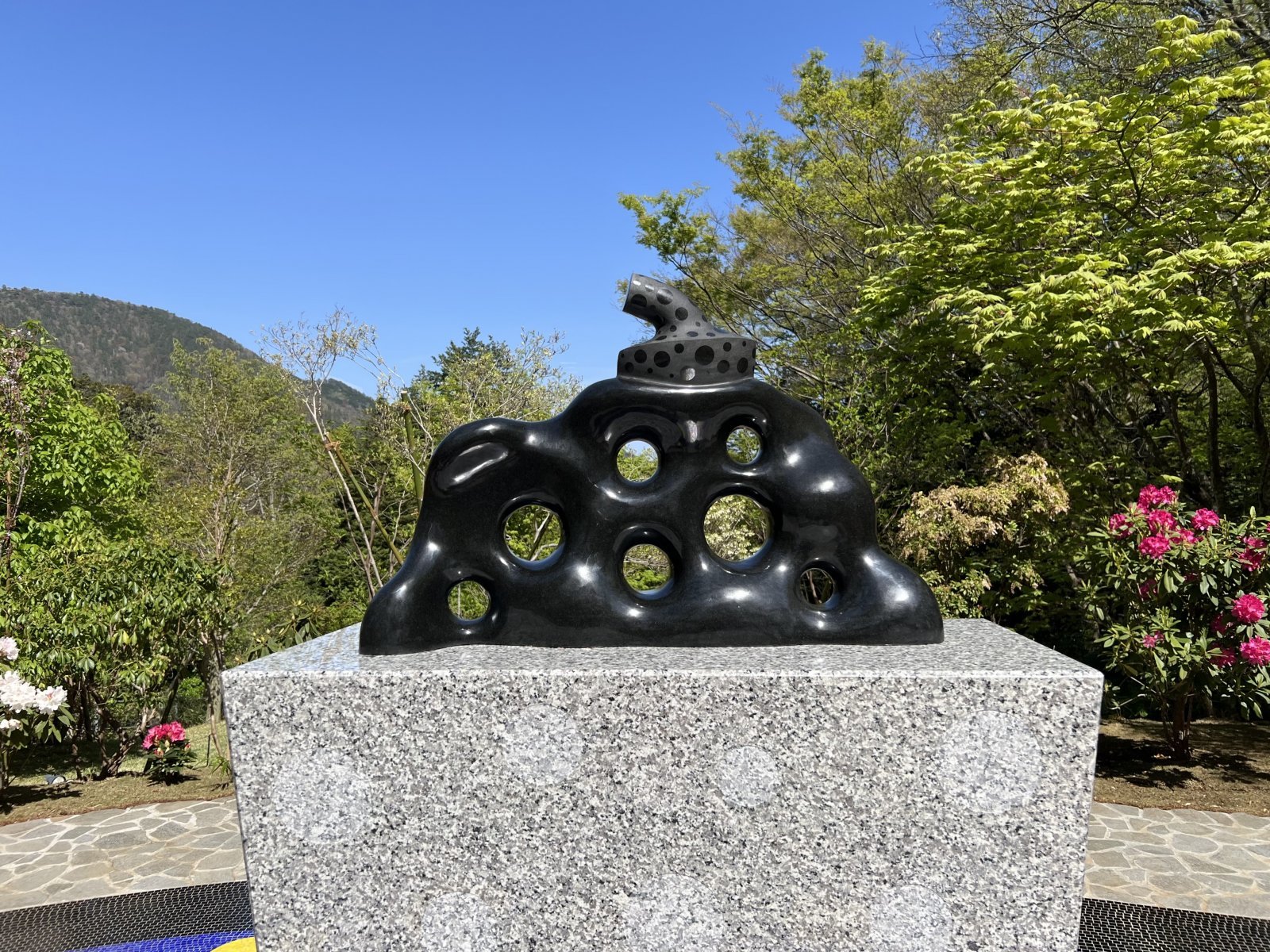
Yayoi Kusama, ‘I Am a Pumpkin’, 2013. ©YAYOI KUSAMA, Courtesy of Ota Fine Arts. Until 2025, ‘I Am a Pumpkin’ was displayed as part of the Marunouchi Street Gallery in Tokyo, overseen by the Chokoku-no-Mori Art Foundation. With its addition to the museum’s collection, the work has left the office towers of Marunouchi to join the greenery of Hakone.
Since presenting her fabric-based ‘soft sculptures’ in 1962, Yayoi Kusama has worked across a wide range of materials. I Am a Pumpkin, however, marks a significant milestone as her first sculpture carved in stone. The pumpkin, a recurring motif throughout Kusama’s career, is far more than a simple subject. It functions as a kind of alter ego for the artist herself. The work also carries a message of peace and anti-war sentiment, together with the idea that ‘love is eternal’. Today, it remains the only stone sculpture by Kusama that can be viewed in Japan.
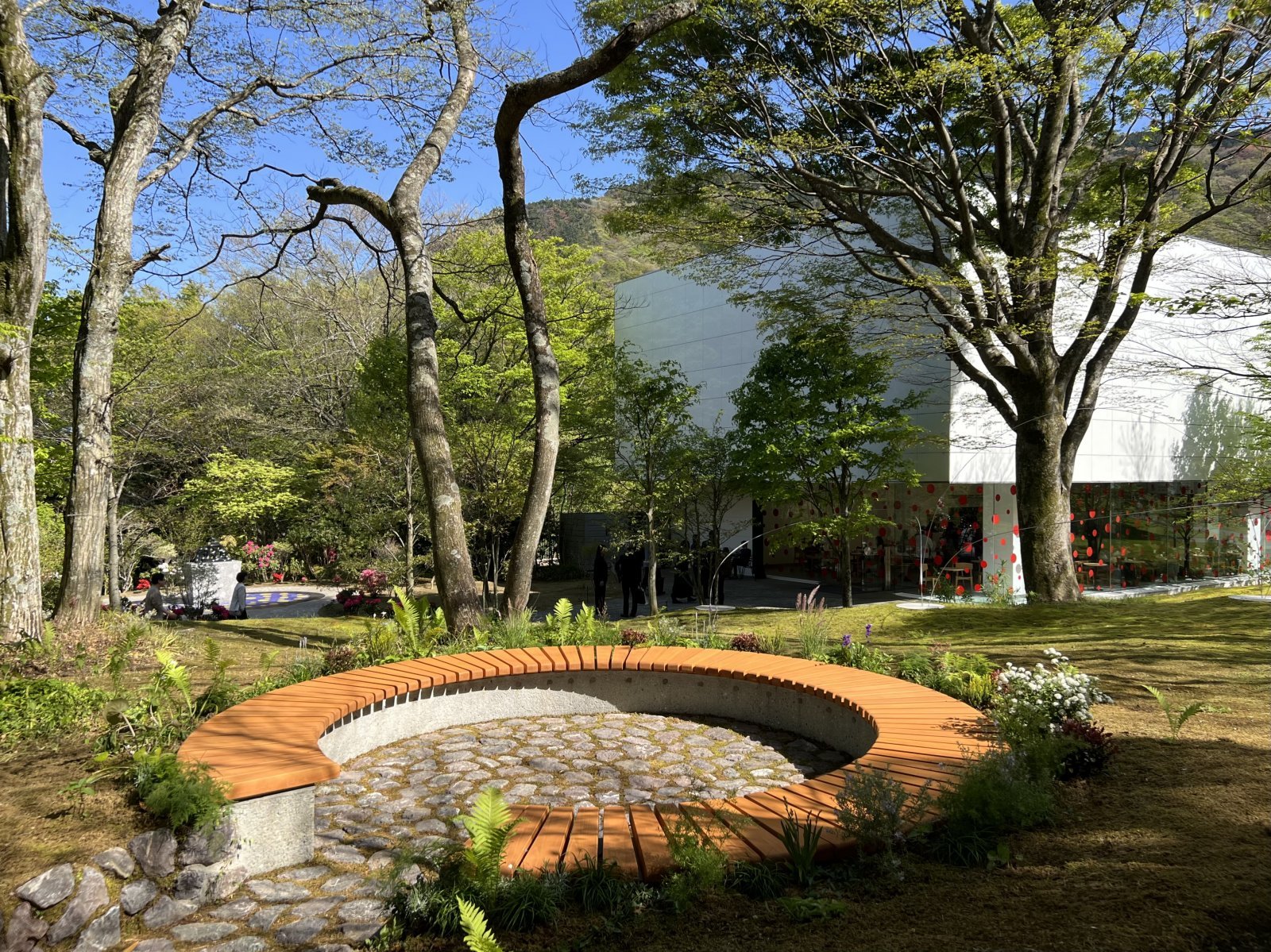
The newly created resting area around the work. ‘I Am a Pumpkin’ appears in the background on the left. The building on the right houses The Hakone Open-Air Museum Café on the ground floor and KI TO KI on the first floor.
A new seating area has also been created alongside the installation of I Am a Pumpkin. Designed by TORAFU ARCHITECTS, the studio behind the museum’s KI TO KI and Forest Footbath, the space was conceived as ‘an enclosed secret garden where visitors can quietly engage with Kusama’s work on their own’. Filtered sunlight streams through the trees, creating a setting in which visitors can sit and contemplate the sculpture at leisure. The benches are slightly recessed into the ground, allowing them to blend into the landscape and enhancing the feeling of being immersed in nature.
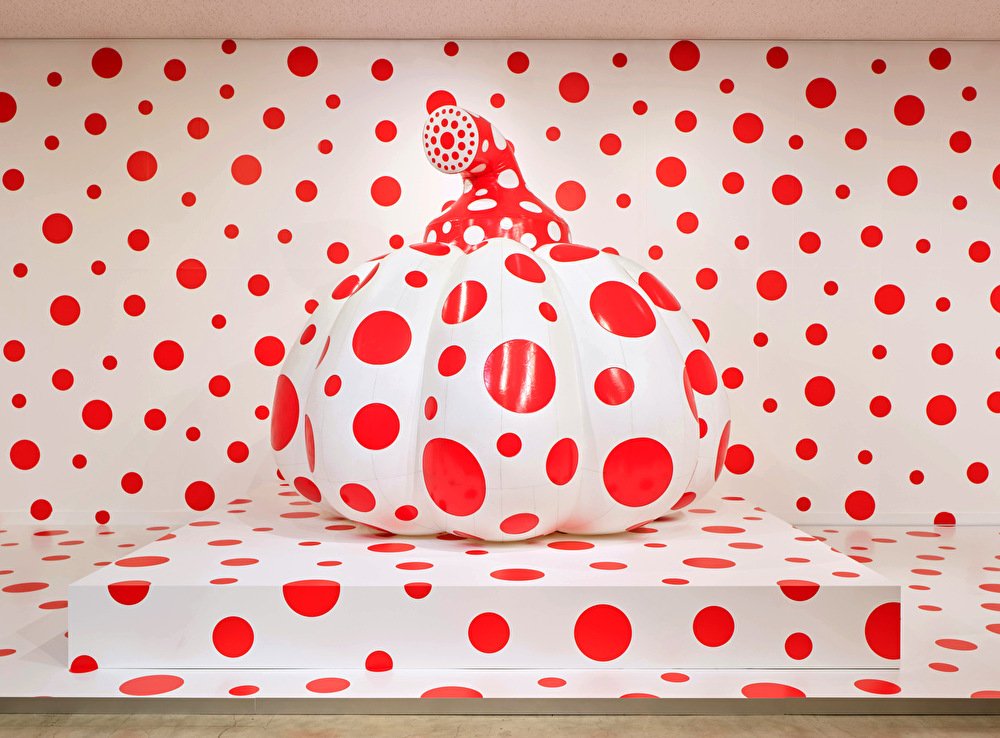
Yayoi Kusama, ‘Pumpkin’, 2017. ©YAYOI KUSAMA, Courtesy of Ota Fine Arts
The café and Log Plaza ‘KI TO KI’ are also worth visiting. As part of a special project, an installation of Kusama’ work is being presented for a limited time, through November 1. Red-and-white pumpkin-shaped balloons fill the space, while the artist’s signature dots spread across the environment, creating an immersive experience. KI TO KI also features sculptural furniture made from thinned timber sourced in Hakone. The organic forms of the wood create an unexpected dialogue with Yayoi Kusama’s polka dots.
A Landscape in Motion, Transforming with Every Step
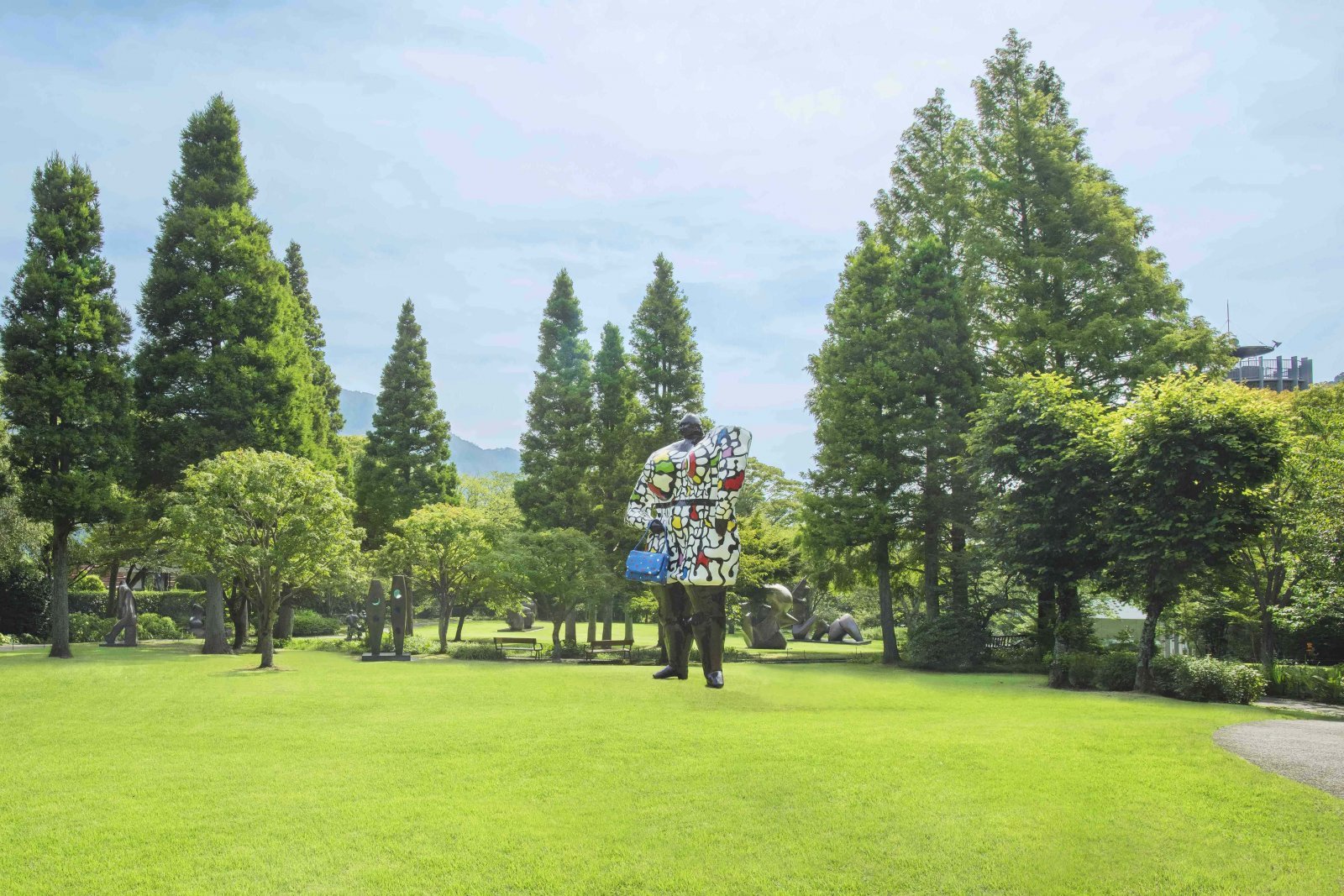
Niki de Saint Phalle, ‘Miss Black Power’, 1968. This sculpture belongs to the monumental ‘Nana’ series of large female figures made from fibre-reinforced plastic (FRP). Courtesy of the Hakone Open-Air Museum.
Across the museum’s extensive grounds, artworks are scattered throughout a landscape shaped by Hakone’s natural topography. As visitors move through open lawns and wooded areas, perspectives continually shift, creating ever-changing encounters between art and nature—one of the defining pleasures of the museum.
Niki de Saint Phalle’s Miss Black Power is a monumental five-metre-tall sculpture depicting a female figure. Dressed in vibrant white, red and yellow, it rises powerfully against a backdrop of greenery. By contrast, Antony Gormley’s Close III portrays a human figure lying on the ground with arms and legs outstretched. While the sculpture conveys a primal physical strength, its vulnerable posture also lends it a subtle sense of irony.
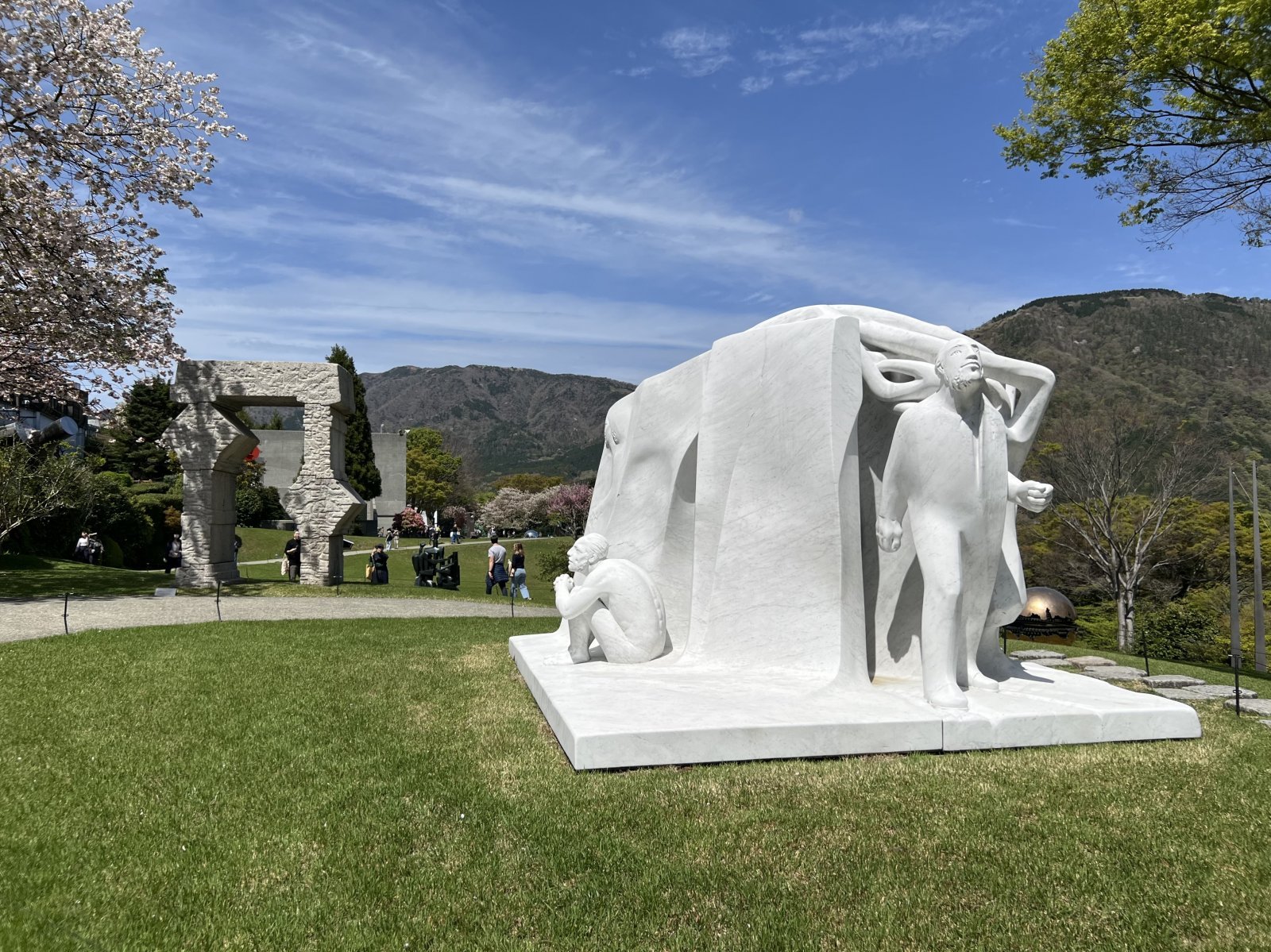
Giuliano Vangi, ‘A Grand Story’, 2004. In the background on the left appears ‘Wind’s Impression’ (1979) by Masayuki Nagare.
Nearby, Italian sculptor Giuliano Vangi’s A Grand Story, carved from white marble, stands out against the blue sky. Human figures—a man crouched within a cave and an embracing couple among them—suggest reflections on existence and the stories that shape human life.
From the Picasso Pavilion to the Forest Footbath: An Art-Filled Escape in Hakone
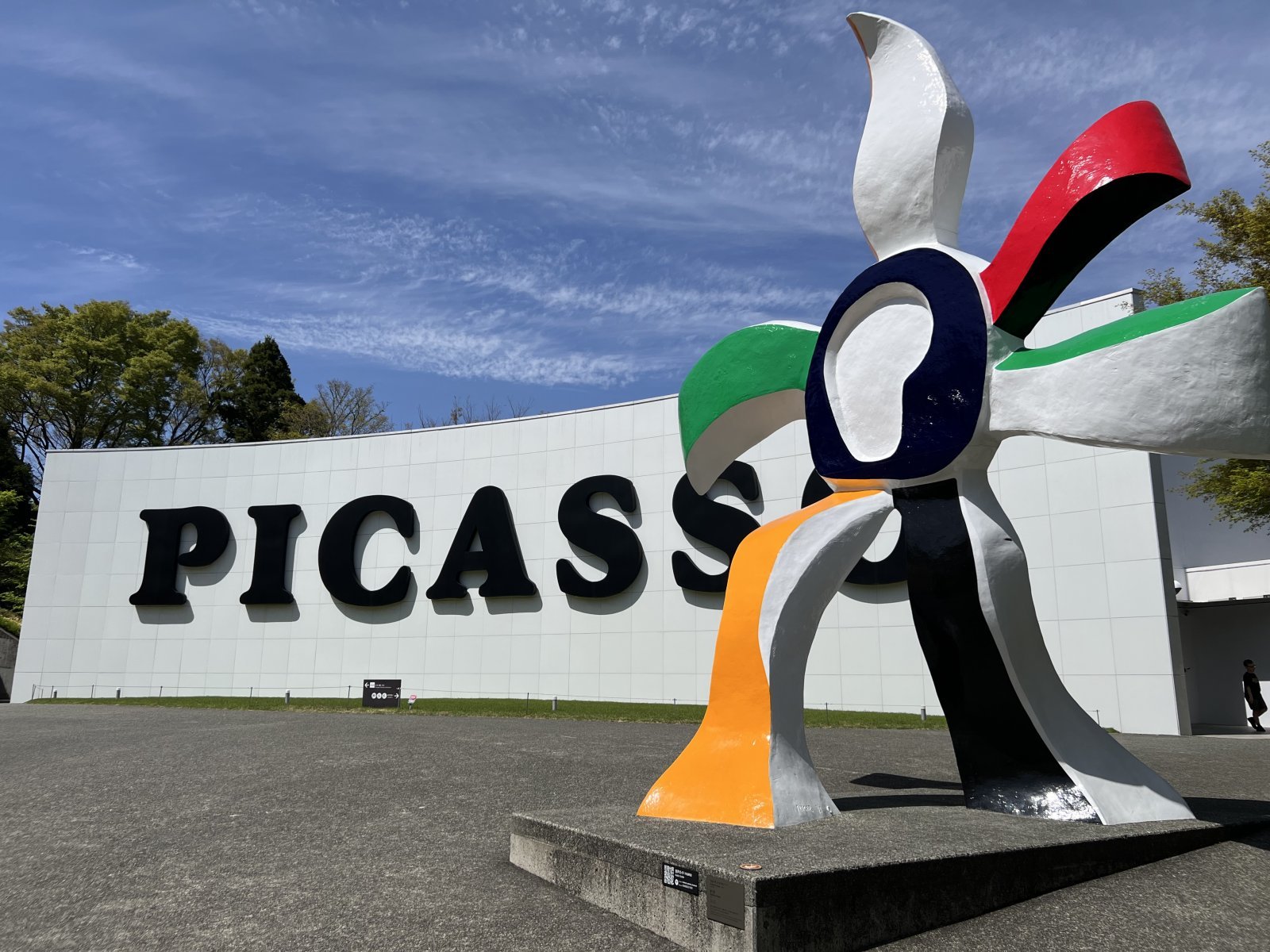
The Picasso Pavilion and Fernand Léger’s ‘Walking Flower’ (1952).
Beyond its outdoor sculptures, the museum’s indoor spaces, including the Picasso Pavilion and the Art Hall, are equally worth exploring. The Picasso Pavilion is currently presenting Picasso’s Driving Force, an exhibition that examines the inspirations behind the artist’s creative practice. Around 130 works are on display, including ceramics, paintings and tapestries. The Art Hall’s ‘Masterpiece Collection’ features works by Modigliani and Giacometti, alongside sculptures by Japanese artists such as Fumio Asakura and Yasutake Funakoshi.
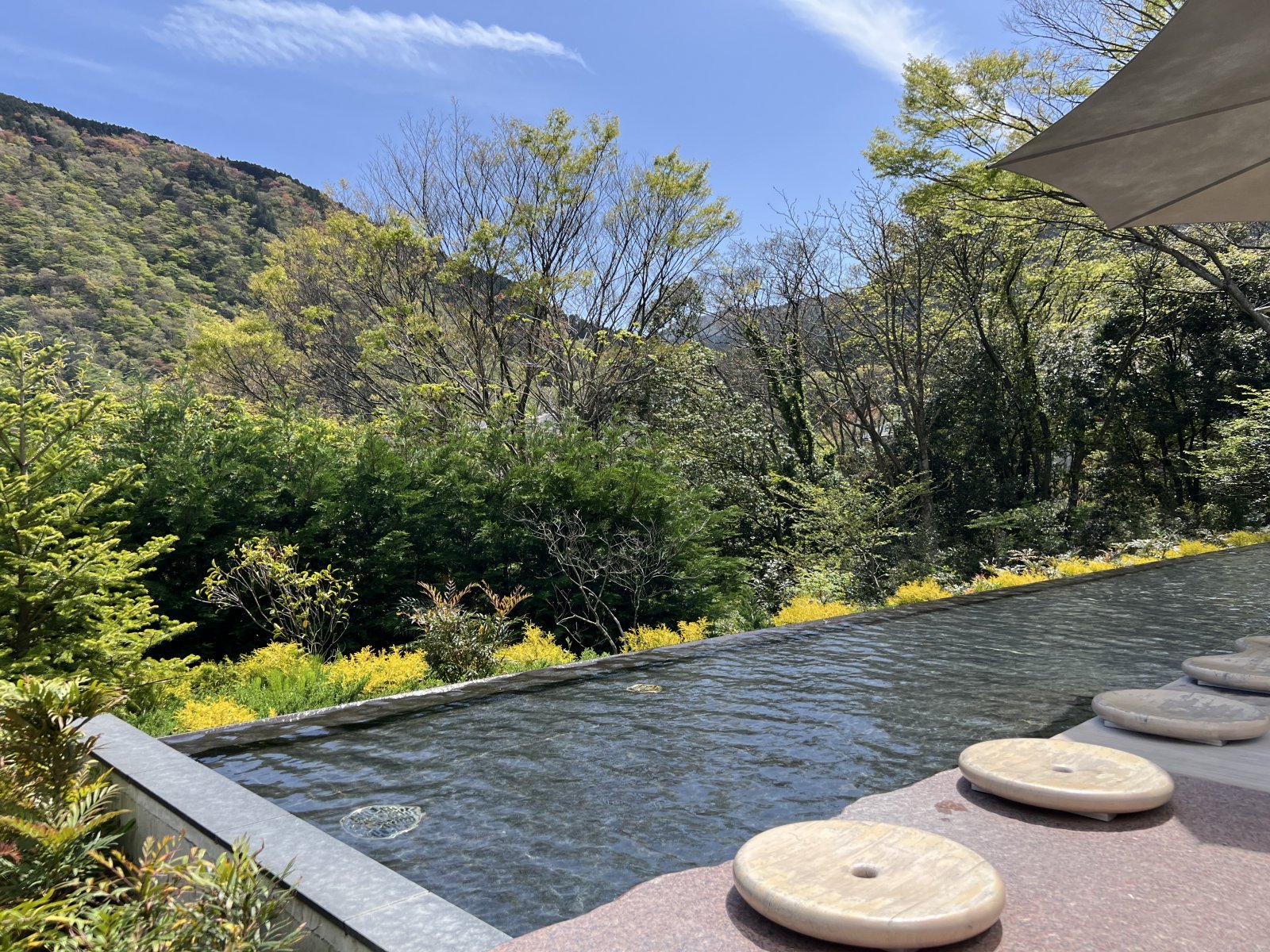
The Forest Footbath, designed by TORAFU ARCHITECTS and Shinji Sonoda Architects. A ‘teyu’, a hot-spring hand bath, is also available, offering easier access to the natural spring water.
One of the most striking aspects of the museum is the presence of children moving freely among the artworks. Spaces such as Woods of Net, where visitors can climb and play within the installation, and PockeT., an interactive rest area featuring participatory artworks, encourage a physical engagement with art.
After exploring the museum, visitors can unwind at the Forest Footbath, renovated in 2024. Soaking one’s feet in the natural hot spring water while looking out over the surrounding mountains provides a fittingly tranquil conclusion to the experience—one that feels uniquely Hakone.
Yayoi Kusama – ‘I Am a Pumpkin’
Hakone Open-Air Museum
Address: 1121 Ninotaira, Hakone-machi, Ashigarashimo District, Kanagawa Prefecture
Opening hours: 9:00 a.m.–5:00 p.m. (last admission 4:30 p.m.)
Open year-round
Admission: ¥2,000 for adults
www.hakone-oam.or.jp/en/