Fujiko Nakaya’s Fog Sculptures
This artist is the first to use fog as a means of expression in her works, the majority of which are ephemeral.
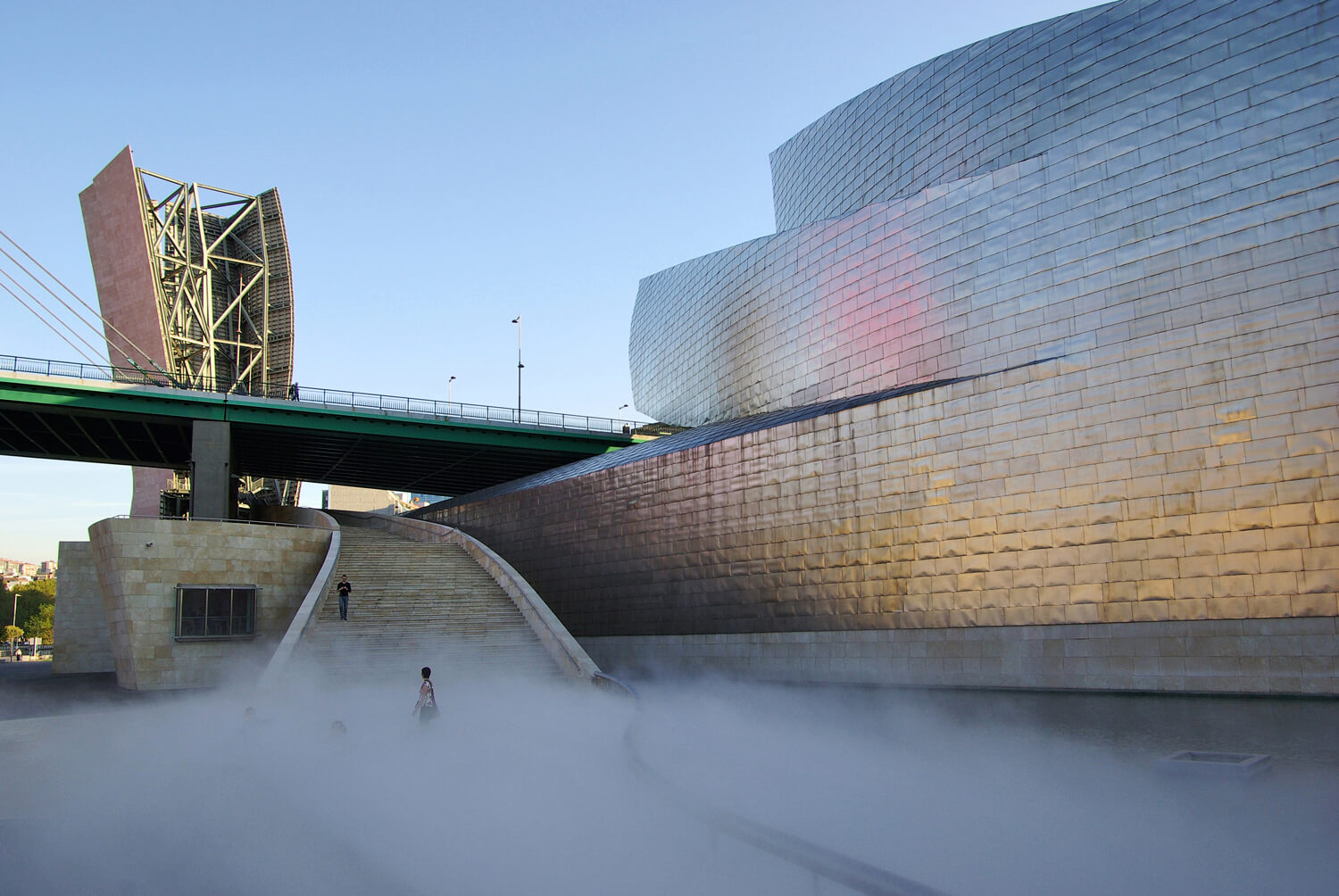
© Fujiko Nakaya
For the last 40 years, Fujiko Nakaya’s fog sculptures have been touring the world. In 2018, the artist was a winner of the prestigious Praemium Imperiale, an international prize awarded every year to five artists by the Imperial House of Japan.
Fujiko Nakaya, born in Sapporo in 1933, is the first artist to use fog as a means of expression. She wraps objects in vaporous sculptures to show them in a new light and regularly collaborates with other artists, sculptors, architects and choreographers like Trisha Brown.
Her ephemeral artworks (other than one piece in Canberra, which has been on display since 1983) magnify public spaces. Over the decades, the artist has occupied the Bassin des Nymphes at the Grand Palais in Paris, the Guggenheim museum in Bilbao and the Connecticut Glass House, and created the Children’s Forest in the Showa memorial park in Tokyo, a living piece of art that allows young visitors to enjoy the sensory experience of fog.
From painting clouds to shaping fog
For Fujiko Nakaya, it all began in the 1960s. At the time, she was studying in Illinois in the United States and painting clouds, the volatility of which reminded her of that of human life. However, she felt the need to be closer to the world around her, at this point in the 20th century when social and political uprisings reached their peak. This was when she had the idea to work with fog, a more ‘earthly’ material than the clouds that had previously occupied her art.
Her dream became a reality in 1967 when she became a member of the Experiments in Art and Technology (EAT) association that brought artists and engineers together to collaborate on projects. Three years later, during the Osaka Universal Exhibition in 1970, Fujiko Nakaya surrounded the Pepsi pavilion with artificial fog with the help of chemist Thomas Mee. This work, the like of which had never been seen before, received high praise. Fog sculpture became her medium of choice and launched her international career.
Glorifying artificial fog
This experimental form of art gives nature a voice. Fujiko Nakaya does not seek to warp the environment to satisfy her own whims, but rather collaborates with the elements that surround her. Before installing her sculptures in a precise location, she studies the meteorological conditions of the site over many months in order to determine its exact degree of humidity and the speed of the wind that will carry her artificial fog.
Over the years, the artist has developed an arsenal of techniques that allow her to regulate the thickness and direction of the fog, and has even patented one of them. For Fujiko Nakaya, the link between art and science is in her blood: her father, Ukichiro Nakaya (1900-1962), was a professor at Hokkaido University of Science, and the first person in the world to create artificial snowflakes.
One of Fujiko Nakaya’s pieces is on display at the Guggenheim museum in Bilbao.
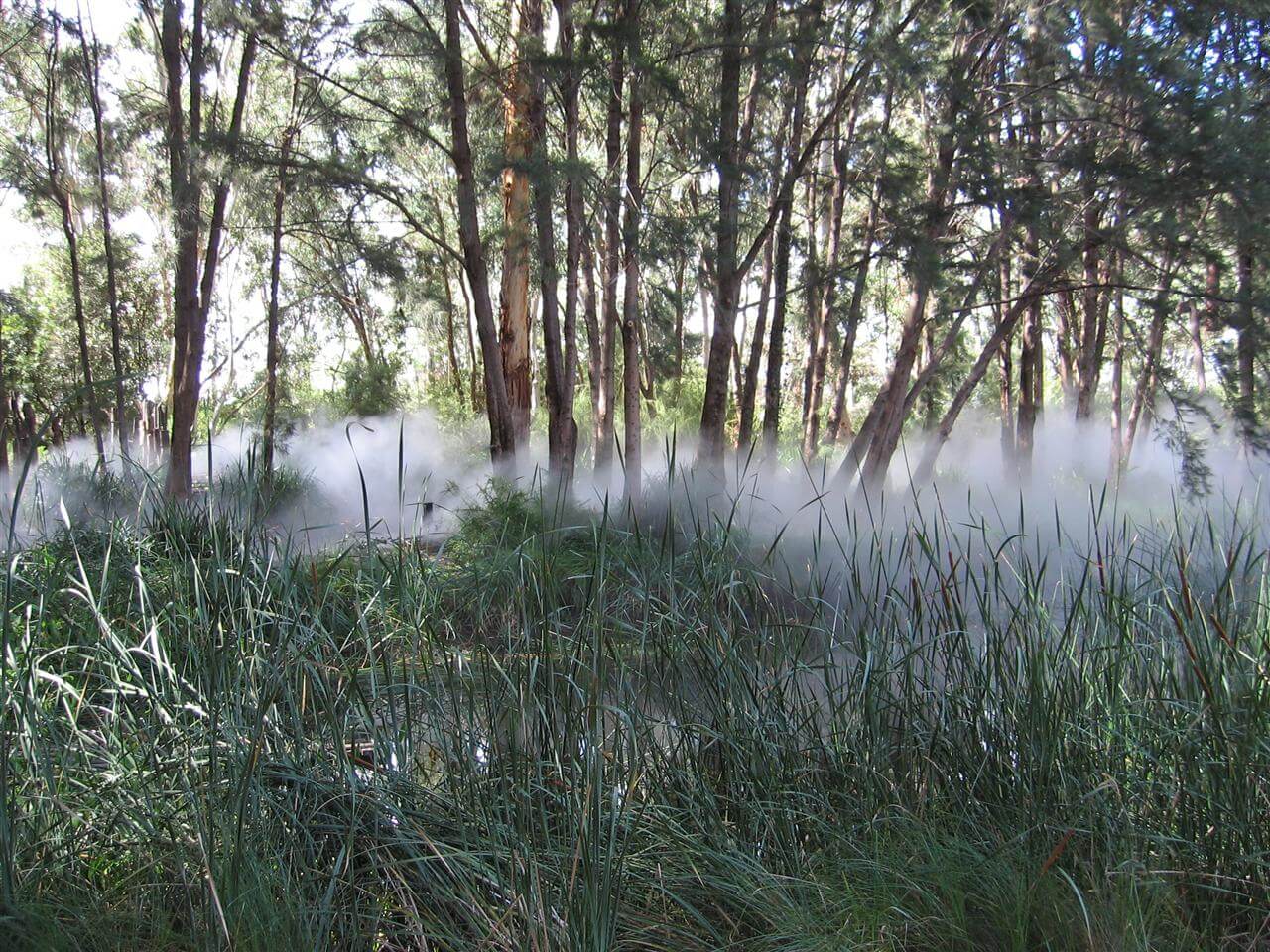
© Fujiko Nakaya
TRENDING
-
The Tattoos that Marked the Criminals of the Edo Period
Traditional tattoos were strong signifiers; murderers had head tattoos, while theft might result in an arm tattoo.

-
Paris, Tokyo: Robert Compagnon
With his co-chef and talented wife, Jessica Yang, Robert Compagnon opened one of the top new restaurants in Paris: Le Rigmarole.
3:31 -
Chiharu Shiota, Red Threads of the Soul
Last year, more than 660,000 people visited the retrospective 'Chiharu Shiota: The Soul Trembles' exhibit at the Mori Art Museum.
-
‘Before Doubting Others, Doubt Yourself. Who Can Truly Say a Dish Isn’t What It Used to Be?’
In ‘A Non-Conformist’s Guide to Surviving Society’, author Satoshi Ogawa shares his strategies for navigating everyday life.
-
The Story of Sada Yacco, the Geisha who Bewitched Europe
Described by Dazed magazine as the first beauty influencer, she has been restored to her former glory since 2019.