‘Do Friendships Survive Adulthood? Sometimes, It All Comes Down to One Person’
In ‘A Non-Conformist’s Guide to Surviving Society’, author Satoshi Ogawa shares his strategies for navigating everyday life.
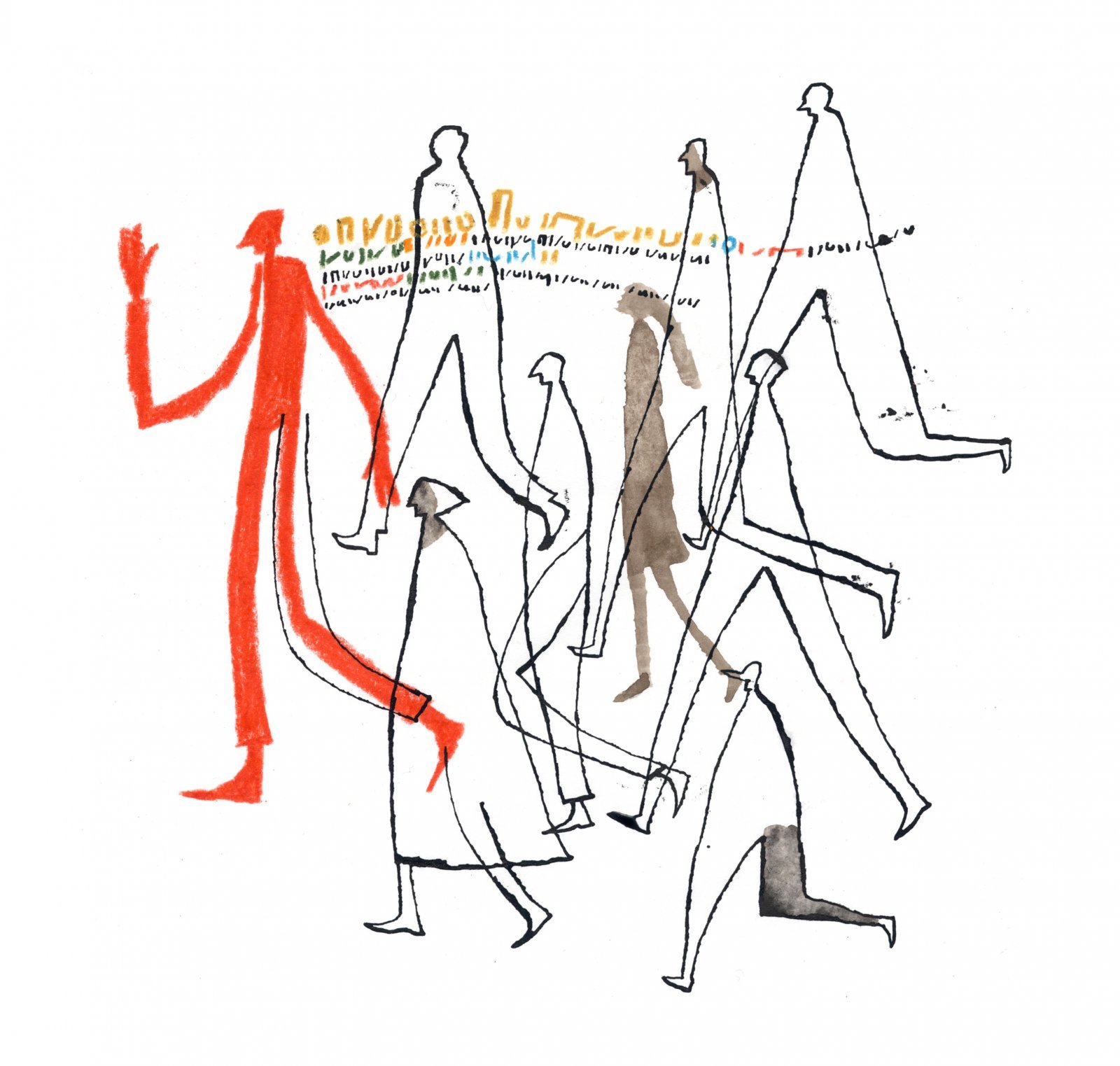
© Tomoyuki Yanagi
In every issue of Pen, the Naoki Prize-winning author Satoshi Ogawa presents a new essay in his series ‘A Non-Conformist’s Guide to Surviving Society’. In this series, Ogawa reflects on the often eccentric strategies he devises to navigate life’s everyday challenges. Below is the twentieth installment ‘The One Who Makes the First Move.’
How many friends you have depends, of course, on how you define friendship. But if we consider a friend to be ‘someone you’ve met outside of work at least once in the past year,’ then my own number of friends has steadily declined since my early twenties. Around that age, people begin getting married, having children, or relocating for work, making it physically harder to see one another. At the same time, the communities that once brought us together on a regular basis gradually disappear.
When it comes to relationships, I’ve always been remarkably passive. I’ve never been the sort of person to organise gatherings, coordinate schedules or rally a group together. Whenever I invite someone, I can’t shake the feeling that I’m asking them to give up their time for my sake. And if they’re making that effort, I feel responsible for making sure they enjoy themselves. The more I worry about whether everyone else is having a good time, the less I enjoy myself—and I often end up exhausted.
That said, if you never make the first move, opportunities to see other people become incredibly scarce. So whenever someone does invite me somewhere, I make a point of accepting whenever I can, unless I already have plans or there’s a genuine reason to decline.
Looking back, I realise that student life was an unusual period for someone like me. School forced us to see one another every day. These days, I work independently rather than in an office, and as the years pass, my friends have started families, taken on greater responsibilities at work or simply become busier. Invitations have become less frequent, and with them, the number of friendships I actively maintain.
Novelists, by nature, tend to work alone. We’re all freelancers, with no shared workplace to bring us together. Literary prize ceremonies and industry events offer opportunities to exchange a few words, but building a relationship beyond that means asking for someone’s contact details, arranging to meet and setting a date. Unless one person is willing to take that first step, the relationship often goes no further than polite acquaintance.
Then again, people who become novelists are rarely those with a natural talent for organising events or bringing people together. Many probably spent their evenings reading quietly in a corner while everyone else was out socialising. That’s part of what led them to become writers in the first place.
Even so, I’ve formed genuine friendships with a number of fellow novelists. How? Simply because, every now and then, there’s someone who naturally takes the initiative. They’re the ones who collect everyone’s contact details, organise dinners, board game nights or other get-togethers, and bring people together. Without people like that, I doubt I would ever have become close to many of my colleagues.
When I look at the groups of friends I still see regularly today, I notice they all have one thing in common: there’s always someone who takes the lead. They’re the one who sends the message, finds a date and books the restaurant. More than anything else, they’re the reason those friendships have endured.
I’d even go so far as to say that whether a friendship survives into adulthood often has very little to do with how close you were as students. The friend I was closest to at university—the one I spent virtually every day with from morning until night—I haven’t spoken to in quite some time. Neither of us is the kind of person who reaches out first. Back then, all we had to do was show up on campus and we’d inevitably see each other. After graduation, however, someone has to make the first move. And when neither person does, even the strongest friendships quietly fade away.
If you’re still young, that may be difficult to imagine. But the longevity of a friendship isn’t always determined by the depth of the memories you’ve shared. Sometimes, it simply depends on whether there’s someone willing to say, ‘Shall we get together?’
About the author
Satoshi Ogawa was born in Chiba Prefecture in 1986. He made his literary debut in 2015 with This Side of Eutronica (Yūtoronika no Kochiragawa, Hayakawa Books). In 2018, his novel Game Kingdom (Gēmu no Ōkoku, Hayakawa Books) earned both the 38th Japan SF Grand Prize and the 31st Yamamoto Shūgorō Prize. He was awarded the 168th Naoki Prize—one of Japan’s most prestigious literary awards, recognizing exceptional popular fiction— in January 2023 for The Map and The Fist (Chizu to Ken, Shūeisha). His latest work, Your Quiz (Kimi no Kuizu), was released by Asahi Shimbun Publishing in 2024.

© Seiichi Saito