‘Writers, Idols, Politicians… Don’t Trust the Personalities They Present to Us’
In ‘A Non-Conformist’s Guide to Surviving Society’, author Satoshi Ogawa shares his strategies for navigating everyday life.
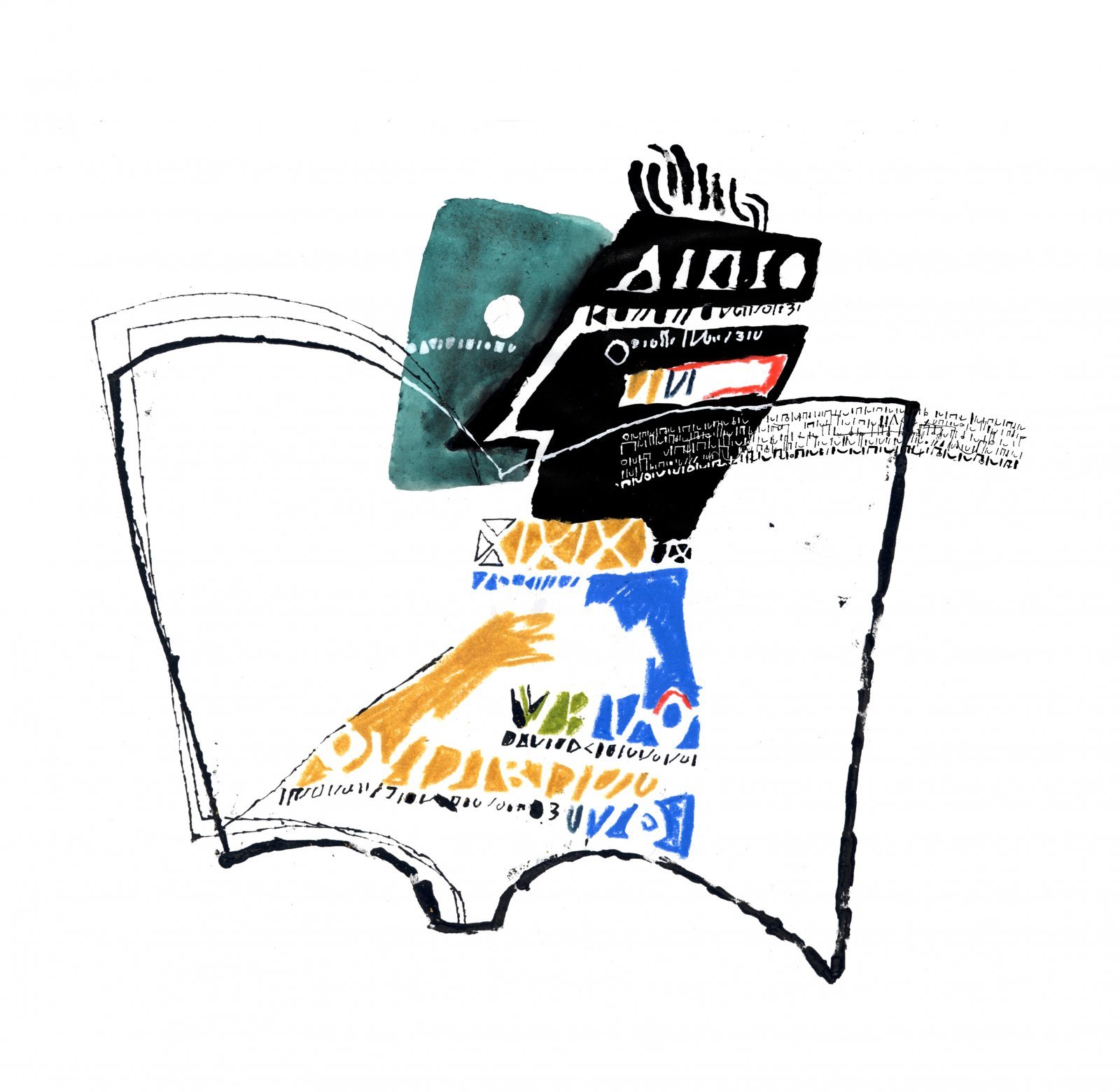
© Tomoyuki Yanagi
In every issue of Pen, the Naoki Prize-winning author Satoshi Ogawa presents a new essay in his series ‘A Non-Conformist’s Guide to Surviving Society’. In this series, Ogawa reflects on the often eccentric strategies he devises to navigate life’s everyday challenges. Below is the twenty-second installment ‘The Imagined Persona.’
I sometimes hear people close to me complain about, or even speak badly of, someone we both know. More often than not, I find myself thinking: ‘Really? I’ve always thought they were a good person.’ I’m told that this person suddenly started shouting at them, or ignored them at a gathering. Yet they have never shouted at me or ignored me. On the contrary, whenever I greet them, they always respond with a smile.
But then I have another thought: ‘When I once complained about this person, I was told, ‘They’re not the kind of person who would do that.’’ Perhaps, after all, people are capable of changing their behaviour depending on who they are dealing with.
So is this person really a good person? Or are they actually unpleasant?
We should begin with a simple principle: complaints and criticisms about other people sometimes leave out the context, or even certain facts that might reflect poorly on the person telling the story. It would therefore be unwise to take them at face value.
Imagine someone telling you: ‘Yesterday, while I was walking down the street, an old man suddenly came out of his house, grabbed me by the collar and shouted, ‘Don’t ever walk past my house again!’’ You might feel sympathy for this person, apparently attacked for no reason by an eccentric old man. But suppose an important detail had been left out. Suppose, for example, that they had been walking past the house at three in the morning with several drunken friends, and, under the influence of alcohol, had been setting off fireworks in the direction of the old man’s house. In that case, the person deserving of our sympathy would look rather different.
The example is deliberately extreme, but the complaints and criticisms we hear from others can also conceal context or certain facts. Sometimes, then, my initial impression—‘Yet I think they’re a good person’—may in fact be the more accurate one.
That said, even if we keep this principle in mind, there are times when the criticism levelled at someone is entirely justified. In other words, my own judgement can be wrong too.
Human beings know how to play a role. We can conceal our less admirable sides and behave in ways that create a good impression—or, at the very least, avoid creating a bad one. In fact, this ability is one of the skills we need in order to function in society as adults.
I don’t know what impression you have of me as you read these lines, but it is unlikely that I am exactly the person you imagine me to be. Within the limited confines of a 1,500-character essay, it is easy for me to conceal my foolish side and my less flattering traits. Given a limited amount of time, we can pretend to be almost anyone. How can you know whether someone is truly a good person simply because they smiled and greeted you warmly when you first met?
Of course, as the phrase ‘given a limited amount of time’ suggests, there are limits to our ability to play a role. When it comes to family members who live under the same roof, or colleagues we see every day, our less admirable sides inevitably begin to show. It is only when we are able to accept someone, including those less flattering aspects of their personality, that we can perhaps begin to regard them as genuinely a ‘good’ or ‘bad’ person.
The profession of writing, in particular, makes it remarkably easy to construct a public persona: an author only encounters their readers within the limited space of their work. The same is probably true of manga artists, musicians, idols and politicians.
Just as we should not judge someone we have only just met based solely on the impression they made during a first encounter, I don’t think we should, even when a work moves us deeply, place too many expectations or fantasies on the personality of the person who created it.
About the author
Satoshi Ogawa was born in Chiba Prefecture in 1986. He made his literary debut in 2015 with This Side of Eutronica (Yūtoronika no Kochiragawa, Hayakawa Books). In 2018, his novel Game Kingdom (Gēmu no Ōkoku, Hayakawa Books) earned both the 38th Japan SF Grand Prize and the 31st Yamamoto Shūgorō Prize. He was awarded the 168th Naoki Prize—one of Japan’s most prestigious literary awards, recognizing exceptional popular fiction— in January 2023 for The Map and The Fist (Chizu to Ken, Shūeisha). His latest work, Your Quiz (Kimi no Kuizu), was released by Asahi Shimbun Publishing in 2024.

© Seiichi Saito