‘Advice for Those Who Struggle with Small Talk’
In ‘A Non-Conformist’s Guide to Surviving Society’, author Satoshi Ogawa shares his strategies for navigating everyday life.
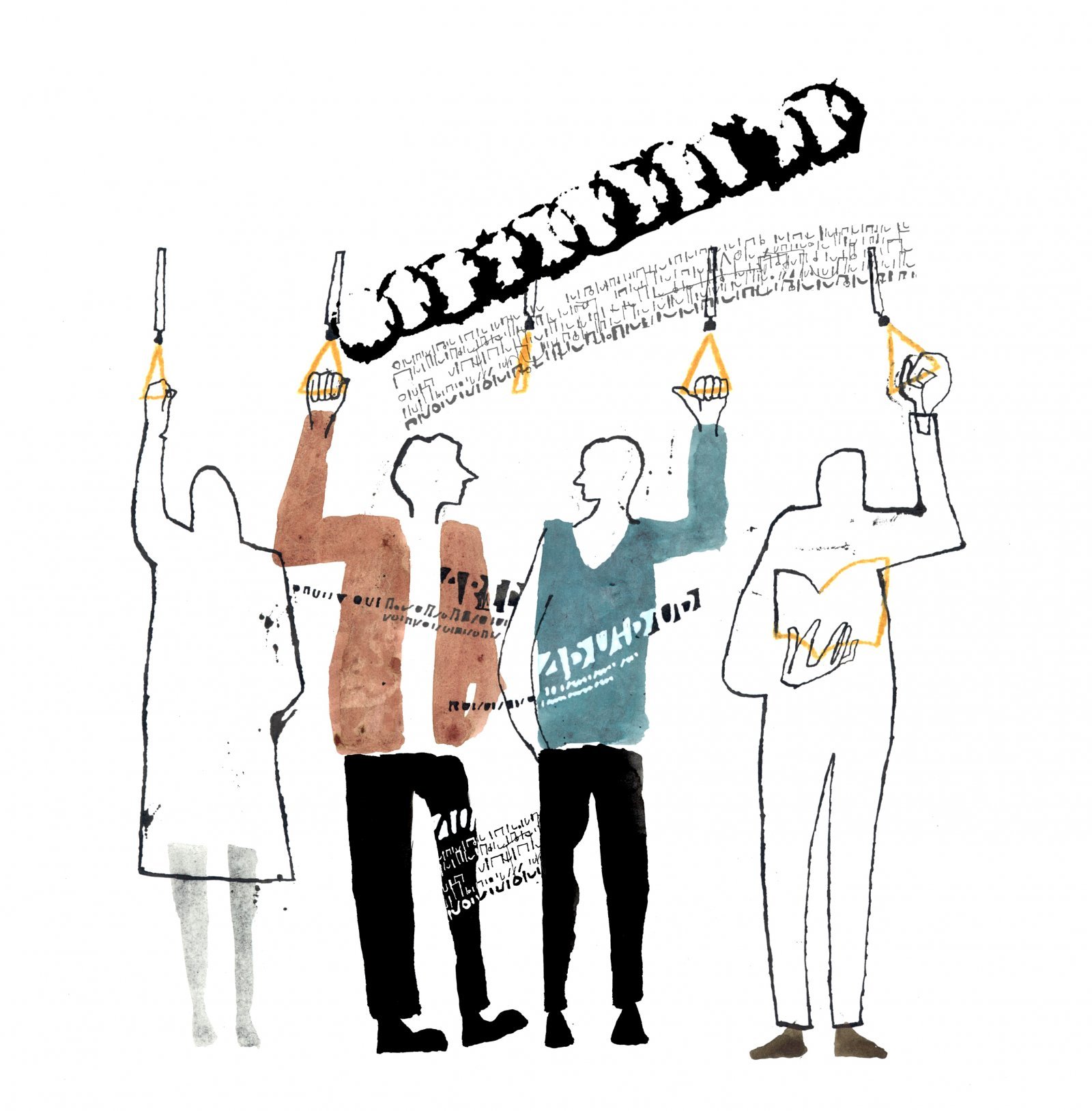
© Tomoyuki Yanagi
In every issue of Pen, the Naoki Prize-winning author Satoshi Ogawa presents a new essay in his series ‘A Non-Conformist’s Guide to Surviving Society’. In this series, Ogawa reflects on the often eccentric strategies he devises to navigate life’s everyday challenges. Below is the twenty-fourth installment ‘When You Don’t Know How to Make Small Talk.’
I have always been particularly bad at small talk. After trying to work out why, I eventually arrived at one explanation that seems fairly convincing to me.
Take a simple example. When I find myself alone with someone I have just met, I can’t bring myself to say, ‘It’s hot today, isn’t it?’ Why? Quite simply because the statement serves no purpose. Whether or not it is hot today can be determined objectively; there is no need to confirm something we already know. An exchange like ‘It’s hot today, isn’t it?’, ‘Yes’ achieves absolutely nothing. Of course, I understand that seemingly meaningless exchanges can give both people a certain sense of reassurance. But sometimes they are so utterly devoid of meaning that I feel embarrassed by them.
To me, ‘It’s hot today, isn’t it?’ only has a purpose when there is some uncertainty about whether the other person actually feels hot. Imagine, for instance, that they lived in a sauna and we had no idea what they considered hot or cold. In that case, saying, ‘It’s hot today, isn’t it?’ would serve a genuine purpose. If they replied, ‘No, I don’t think it’s particularly hot. I live in a sauna all year round,’ I would have learned something: ‘So people who spend all their time in a sauna stop feeling hot even in the middle of a heatwave.’
The reason I struggle with small talk, then, is that I struggle with innocuous conversation. And innocuous conversation generally involves no exchange of new information. I find that unbearable. At the same time, I don’t have the courage to ask someone I have just met, ‘What do you think about Japan’s imperial system?’, a question that might actually lead to some new information. So I quickly find myself at a dead end.
That is why, when it comes to small talk, I usually leave it up to the other person. I don’t ask them anything myself and simply answer when they ask me a question: it’s a rather cowardly strategy, I admit. That doesn’t mean I feel uncomfortable when someone asks me something like whether it’s hot today; I’m simply incapable of initiating that kind of exchange myself.
Yet there is no avoiding the occasions in life when you have to speak to someone for the first time. How do you get through the small-talk stage in situations like that? I find it genuinely exhausting, so I try to avoid places where I am likely to be surrounded by large numbers of strangers whenever possible.
One commonly recommended approach is to ask where the other person is from. But I can’t use that technique either. Suppose I ask, ‘Where are you from?’ and they reply, ‘Sendai.’ The only things that come to mind are Date Masamune and gyūtan, grilled beef tongue. If, after racking my brains, I manage to come up with, ‘Gyūtan is delicious, isn’t it?’, the other person might well think, ‘Gyūtan again?’
I’m actually from Chiba myself. And whenever I answer ‘Chiba’ to the same question, I inevitably get asked, ‘So do you go to Disneyland?’ or ‘Do you eat lots of peanuts?’
I’ve become somewhat better at making small talk since developing a technique I call the ‘meta approach’ to conversation. For example, if someone says to me, ‘It’s hot today,’ I reply, ‘Yes, it is.’ Normally, that would be the end of the conversation. But I can then ask, ‘Why do we always talk about the weather when we’re making small talk?’
In this way, I turn an innocuous conversation into a discussion about the very meaning of making small talk with someone you have just met. That can allow me to discover how the other person thinks, or even to find out that they dislike talking about the weather too.
Likewise, if someone asks where I’m from and I answer, ‘Chiba’, only for the conversation to fall into an awkward silence, I can always ask, ‘How are you actually supposed to make a conversation about where you’re from interesting?’
If you struggle with small talk, try taking a step back and turning the conversation itself into the subject of discussion. You might be surprised at how well it works.
There is just one thing to bear in mind: in most cases, the other person will probably think you’re being rather difficult.
But give it a try anyway.
About the author
Satoshi Ogawa was born in Chiba Prefecture in 1986. He made his literary debut in 2015 with This Side of Eutronica (Yūtoronika no Kochiragawa, Hayakawa Books). In 2018, his novel Game Kingdom (Gēmu no Ōkoku, Hayakawa Books) earned both the 38th Japan SF Grand Prize and the 31st Yamamoto Shūgorō Prize. He was awarded the 168th Naoki Prize—one of Japan’s most prestigious literary awards, recognizing exceptional popular fiction— in January 2023 for The Map and The Fist (Chizu to Ken, Shūeisha). His latest work, Your Quiz (Kimi no Kuizu), was released by Asahi Shimbun Publishing in 2024.

© Seiichi Saito