Two Directors of a New Generation Reflect the Spirit of Their Time
Yuiga Danzuka and Hiroshi Okuyama, acclaimed on the international festival circuit, discuss their creative processes and vision of cinema.
A Naturalistic Approach to Capturing Shifting Emotions
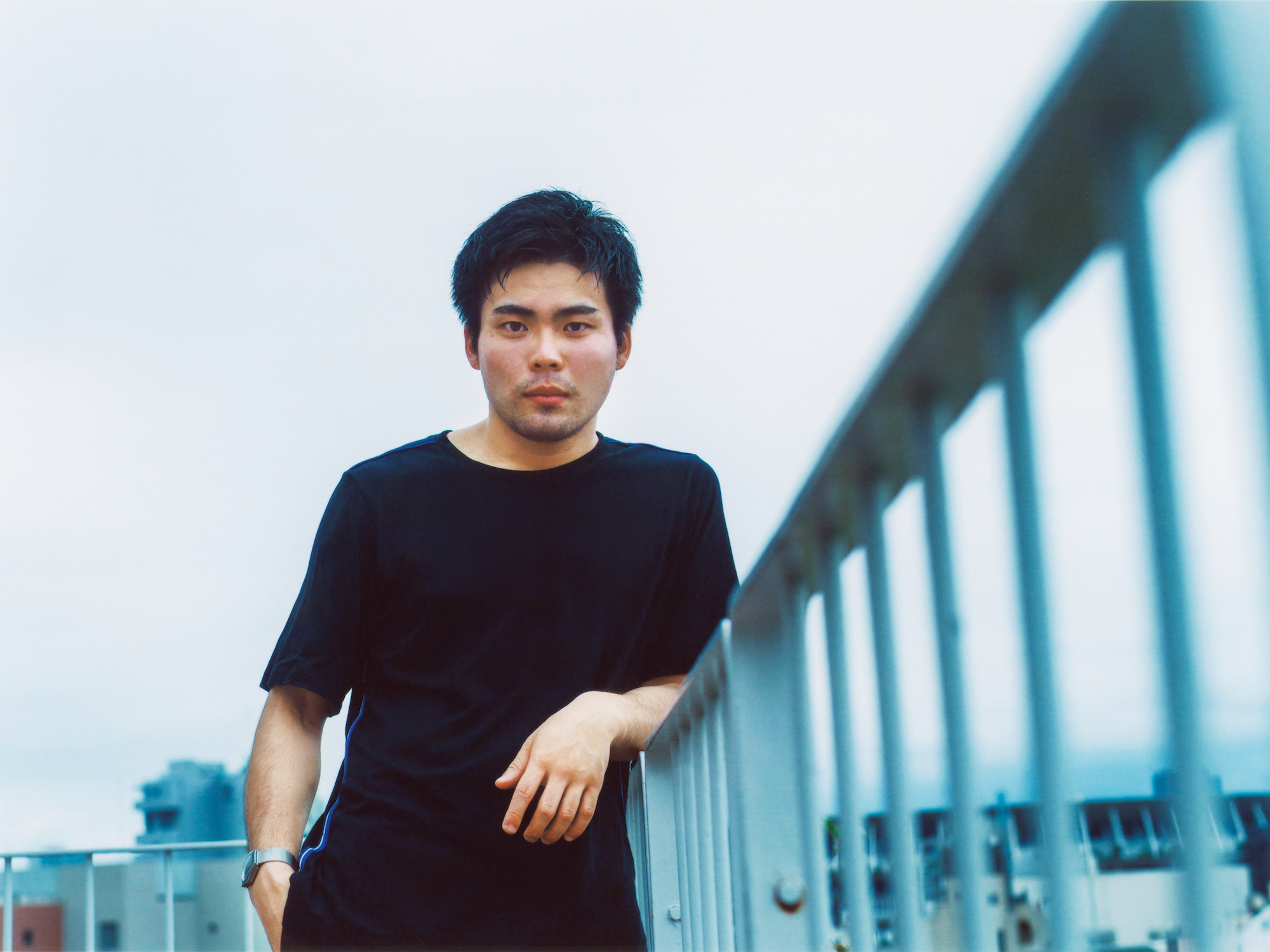
Born in Tokyo in 1998, Yuiga Danzuka dropped out of university before enrolling at the Film School of Tokyo, where he completed his studies. He has directed several short films, including ‘After the Night on the Bridge’ and ‘Far, Far Away’. In 2025, his feature debut, Brand New Landscape, was selected for the Directors’ Fortnight at the 78th Cannes Film Festival, making him the youngest Japanese director ever selected for the programme.
With Brand New Landscape, his feature-film debut, Yuiga Danzuka achieved a remarkable feat: the film was selected for an official screening at the Directors’ Fortnight of the 78th Cannes Film Festival, making him the youngest Japanese director ever to be selected for the programme.
He had already made several short films that won awards at Japanese film festivals, but until the end of high school, baseball had been his main pursuit. It was only at university that he began watching films in earnest. His entry into the world of cinema can be traced back to an offhand conversation with an older student, well versed in the arts and culture, who was staying at his home at the time.
‘One day, I casually mentioned to him that I’d recently become interested in films and had been watching a lot of them. He replied, ‘Why don’t you try making one yourself?’ Suddenly, I began paying much closer attention to direction. Even before that, whenever I watched a film that didn’t quite work for me, I would spend a long time trying to figure out why it hadn’t been interesting, almost as if I were trying to reclaim the time I’d spent watching it. Gradually, I came to realise that what makes a film compelling isn’t just its story. I began to feel the urge to make films of my own, including shaping how they were directed.’
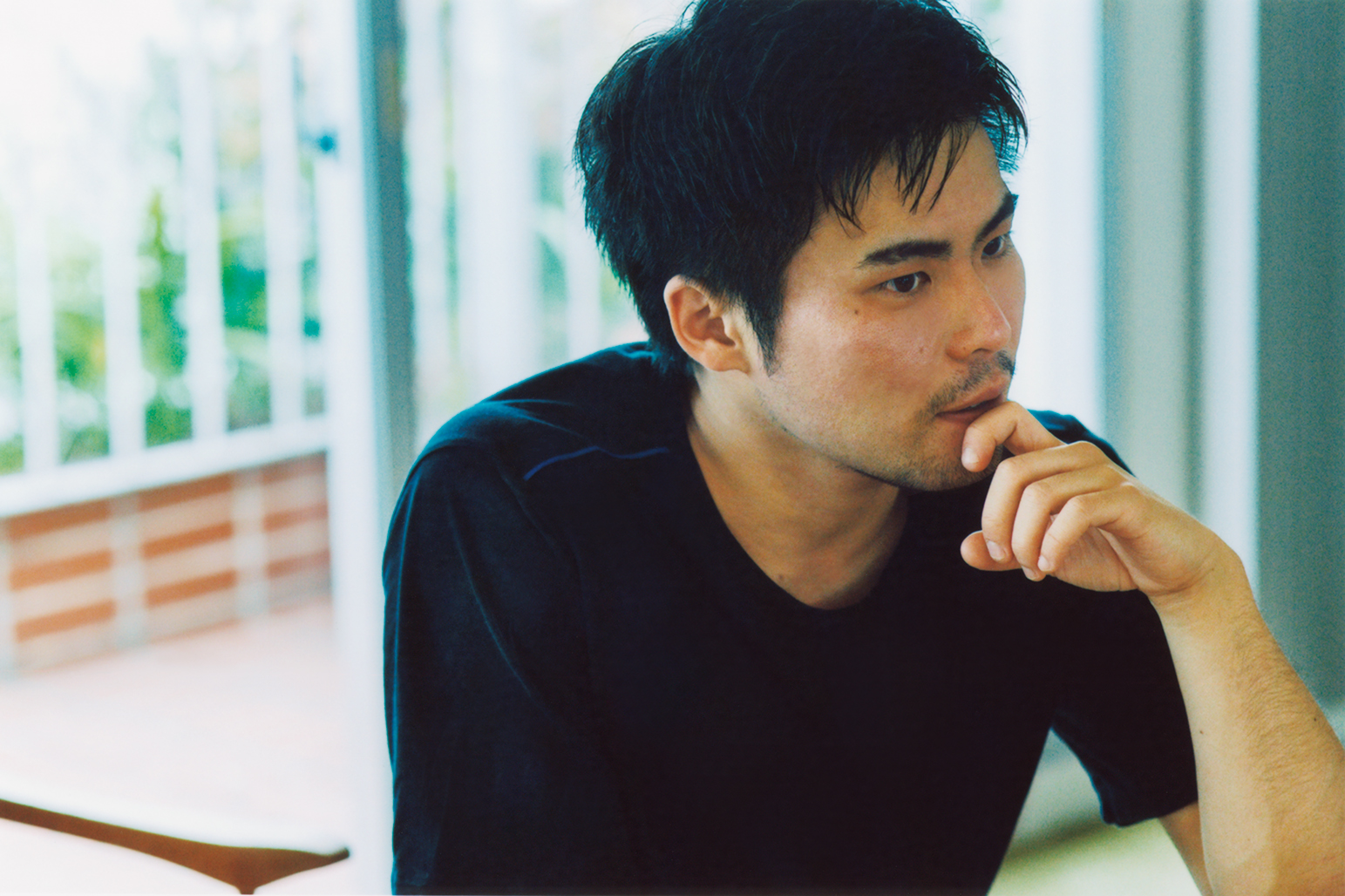
The interview took place at the offices of Danzuka’s agency, which offer views across central Tokyo. Reflecting earnestly on his memories, he remarks with a smile, ‘I often find myself wondering which angle would feel best for capturing the landscape right in front of me.’
When watching a film, Danzuka now finds himself imagining a virtual camera within each scene, wondering, ‘What if I looked at this story from this particular position instead?’ Over time, these mental exercises have helped him develop his own set of principles as a filmmaker. One of the elements he considers most important when shaping a narrative is the movement of the actors. As he works out the shot breakdown, he pays close attention to the relationship between the characters’ dialogue and their physical movements.
‘The reason is that a character’s emotions change according to how the actor actually moves. I might tell them, ‘You’re going to move from here to there,’ and then let them perform the scene. If they find it difficult to deliver a line naturally while playing the character, we discuss it together. Sometimes, changing the movement is enough to make the character fall into place.’
Above all, he takes care to ensure that his characters can inhabit the story naturally, without the direction drawing attention to itself.
‘When bringing a character to life on screen, I’m careful not to let the direction dominate the scene. I feel that once the audience becomes too conscious of it, the character risks being confined to a schematic framework. The films I admire convey a sense of craftsmanship, with shots meticulously composed to suit each scene, yet the director’s individuality emerges naturally, without being imposed on the viewer.
I particularly admire David Fincher, Leos Carax, Kiyoshi Kurosawa and Miwa Nishikawa. In their films, there are moments when the actors seem to go beyond the confines of the script, and I find that captivating. Nishikawa’s The Long Excuse (Nagai iiwake), in particular, remains a precious experience for me. I could sense the protagonist’s most subtle emotions and inner conflicts in every detail of every scene, with a remarkable degree of realism.’
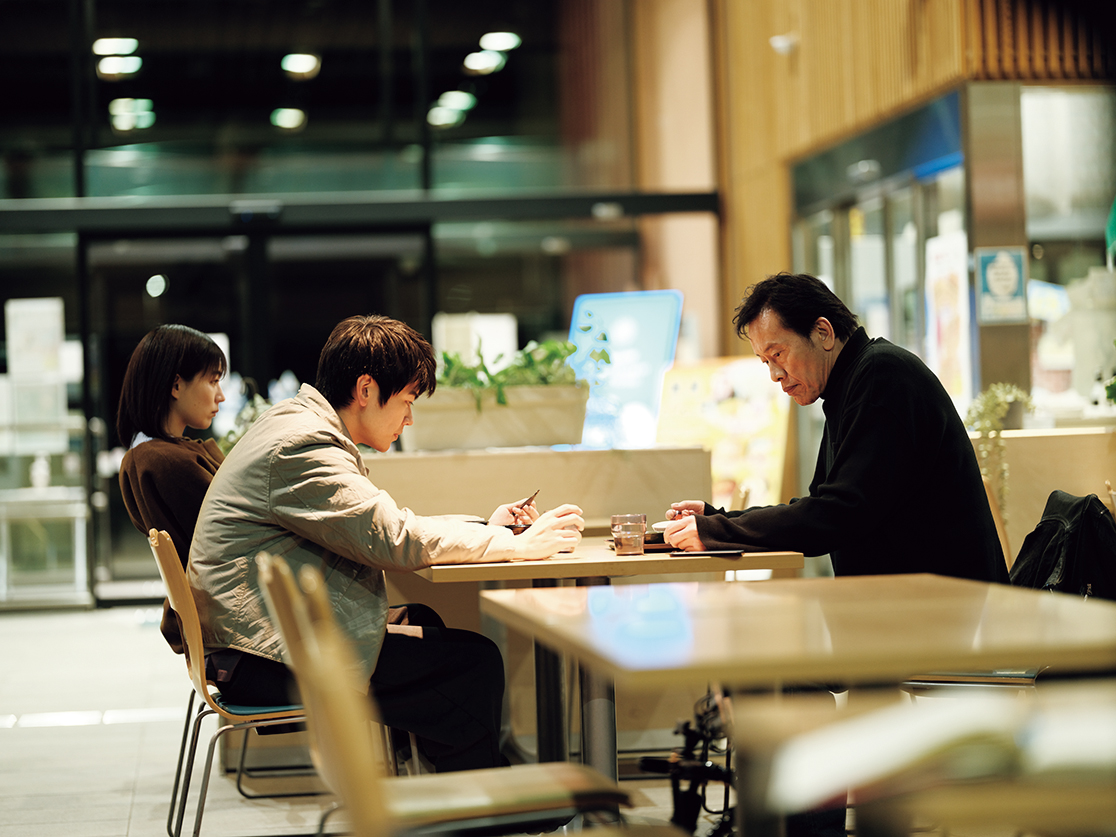
Following their mother’s death, Ren and his elder sister, Emi, reconnect with their estranged father, Hajime, a landscape designer. After an unexpected reunion, the three begin to explore the possibility of rebuilding their family ties in Shibuya, a Tokyo neighbourhood undergoing rapid redevelopment.
Despite his firm artistic convictions, Danzuka is careful not to become too attached to his own vision. He admits that he is still exploring his visual language, continually questioning his own choices along the way.
‘I have certain images and guiding principles in mind, but while filming, I keep wondering whether there might be another, more appropriate solution when it comes to reaching a wider audience. On Brand New Landscape, I was fortunate to work with exceptionally talented people who raised the film to another level.
It’s difficult to explain because it’s more a matter of instinct, but I realised that not everything outside the circle of what I consider acceptable is necessarily wrong. There is what I would regard as an absolute no, but there are also elements in between that aren’t necessarily bad. I’ve come to feel that a key part of making a film is figuring out how to gather as many of these ‘not necessarily wrong’ elements as possible, while listening to everyone’s opinions.’
With anticipation already building around his next project, Danzuka is keen to explore genres such as suspense and mystery. Watching Kiyoshi Kurosawa’s The Samurai and the Prisoner confirmed that this was a direction he wanted to pursue.
‘Recently, there have been many human dramas that don’t fit neatly into a single genre—and I think my own films have that quality, too. Yet watching The Samurai and the Prisoner gave me a sense of reassurance, as though I’d found something familiar. At the same time, I was excited by how much Kurosawa could play with the material while still giving the film a distinct mystery-thriller identity. It awakened a new desire in me: to think seriously about how to make something compelling within a framework that has already been established.’
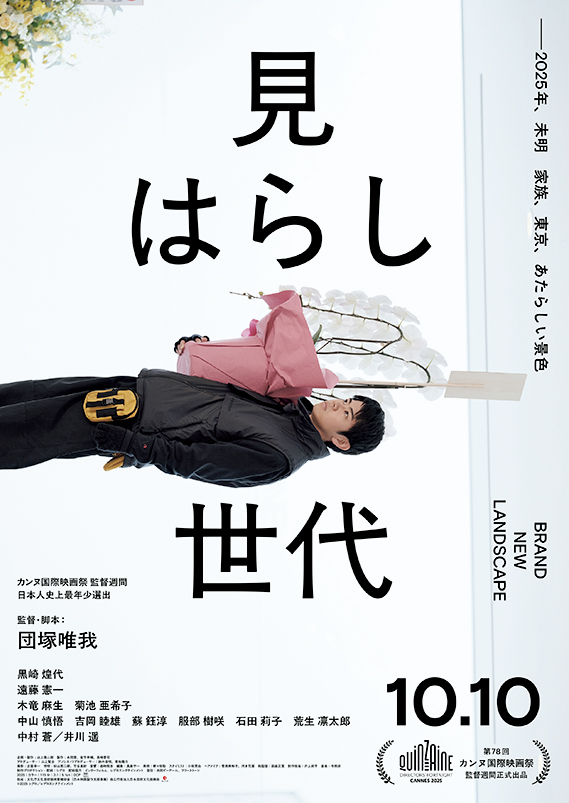
Brand New Landscape
Director and screenplay: Yuiga Danzuka
Cast: Kodai Kurosaki, Kenichi Endo, Haruka Igawa, Mai Kiryu, Akiko Kikuchi, Aoi Nakamura, among others.
Running time: 115 minutes
International release date: To be announced.
© Brand New Landscape Film Partners / SIGLO / LesPros Entertainment
Framing Images as a Way of Rediscovering Forgotten Memories
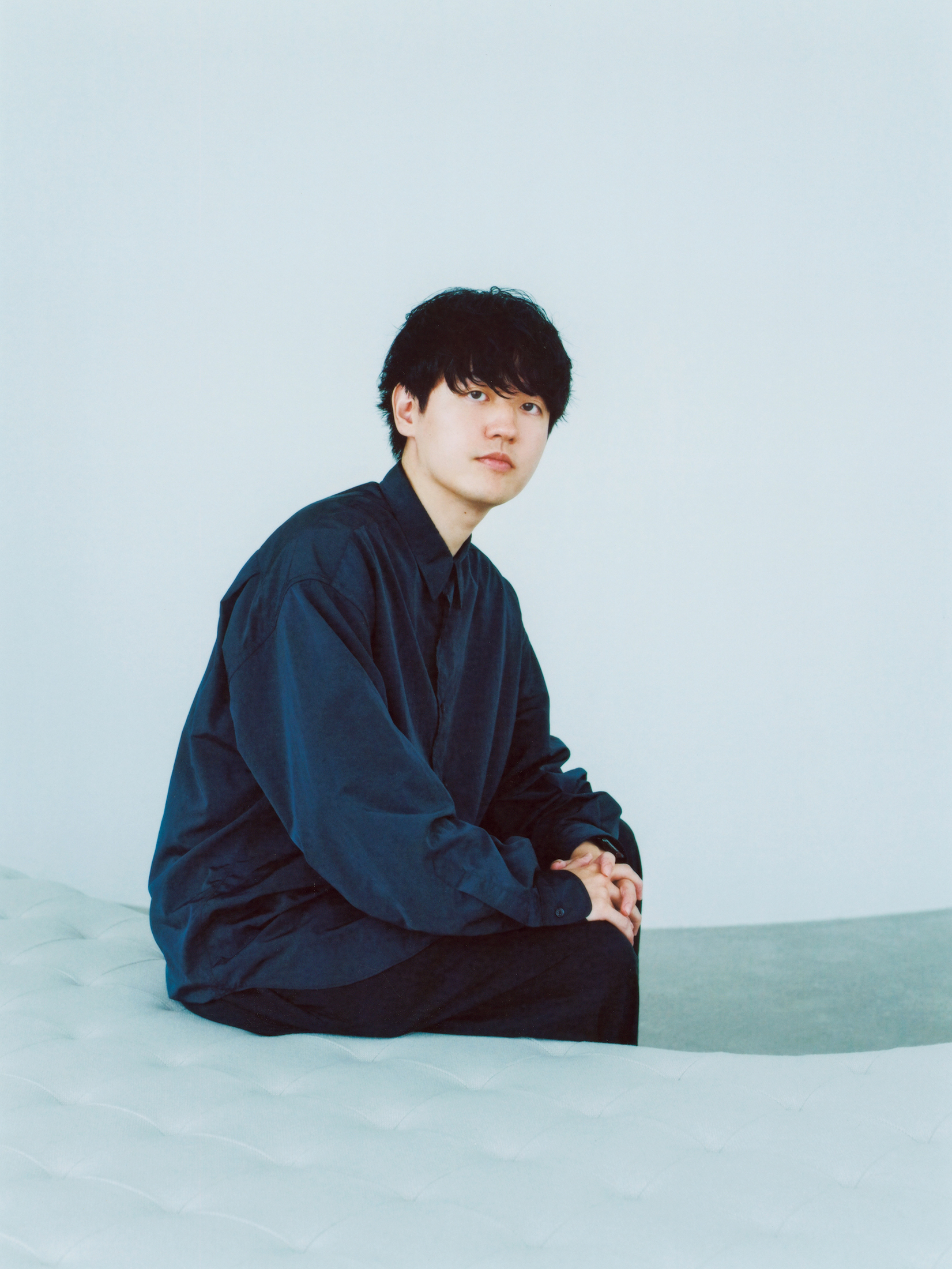
Born in Tokyo in 1996, Hiroshi Okuyama gained international recognition with his feature debut, ‘Jesus’ (2019), followed by his second film, ‘My Sunshine’ (2024). Both have received acclaim at film festivals around the world. In 2026, he also directed the opening title sequence for ‘Blossom’, a morning drama series on NHK. He is pictured here at SIX, the creative agency he belongs to. In this tranquil space, dotted with works of art, he holds meetings and edits his films.
Hiroshi Okuyama’s path to filmmaking began, in fact, with an interest in theatre. The more deeply he immersed himself in it, the more he wanted to preserve the emotions and reactions that emerged from a performance, beyond the constraints of a particular time or place. This desire gradually drew his attention towards an idea that had long lingered in the back of his mind: making films.
‘When I discovered the films of Jacques Tati and Roy Andersson, I was struck by their fresh perspectives, so different from those of Japanese cinema, and thought, ‘So this is another way of filming.’ Watching Aki Kaurismäki’s films, I was sometimes captivated by shots that felt so perfectly right that I found myself thinking, ‘There’s no other camera position that would work for this scene.’ Through these experiences, I discovered what makes cinema interesting in ways that theatre cannot be.’
In his filmmaking, Okuyama places paramount importance on how an image is framed. His films often begin with a visual impulse: a desire to capture a particular landscape, or to explore whether the same expression might reveal a different emotion if it appeared in the shot that followed. The image comes first, and the story takes shape around it.
‘For example, if an adult, a little boy and a little girl were dancing freely on a frozen lake, that would undoubtedly make a wonderful image. It would be beautiful, and I’d want to film it. I then work backwards from that image, asking myself what kind of story would lead to that moment.’
Reflecting on one of his favourite scenes from My Sunshine (Boku no ohisama), his second feature film, Okuyama smiles as he explains, ‘What I love most of all is the time spent searching for the right composition through the camera.’
‘In my head, the director in me and the cinematographer in me are constantly arguing. One says, ‘If we shoot from this angle, that emotion will come across more clearly.’ The other replies, ‘But the composition will lose its balance.’ I feel that by working through these doubts and exploring different possibilities as I shoot, I’m more likely to find the shot that feels right to me.’
When it comes to the stories he wants to tell, Okuyama sums up his ambition in a single phrase: ‘I want to make films that help us remember things we had forgotten.’
‘Until now, I’ve made films whose stories were largely based on my own experiences. The feelings we have for someone, the regret of having hurt someone because of those feelings, the pain of having been hurt ourselves… Looking back on these emotions through my work has made me feel that I can move a little further forward, both as a person and as a filmmaker. Going forward, I’d like to continue portraying pain at times, and to offer a sense of companionship through cinema to those who recognise themselves in the stories I tell.’
His gaze captures the subtleties of human emotion. The landscapes that unfold through his films ultimately resonate with the memories of those who watch them.
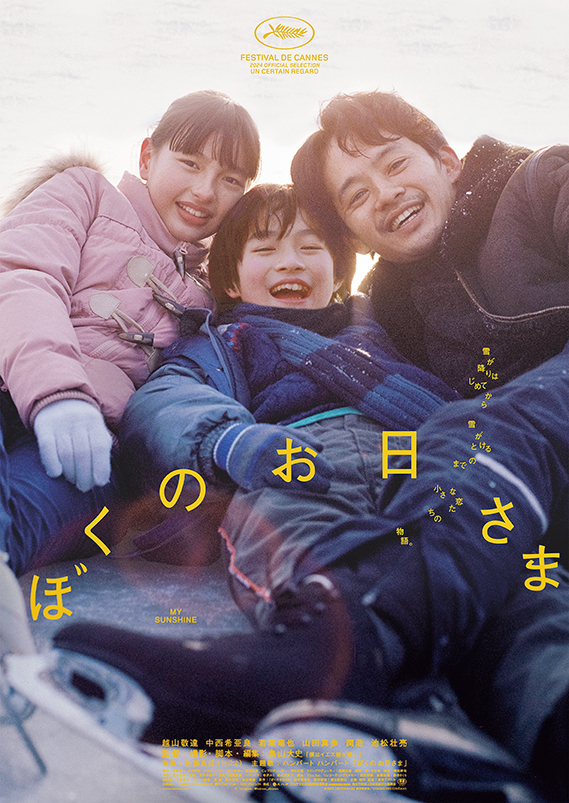
My Sunshine
Director, cinematographer, screenwriter and editor: Hiroshi Okuyama
Cast: Sosuke Ikematsu, Keitatsu Koshiyama, Kiara Nakanishi, Ryuya Wakaba, Maho Yamada and Yunho.
Running time: 90 minutes
US release date: 19 September 2025.
© 2024 My Sunshine Production Committee / COMME DES CINÉMAS