MEGUMI and Kento Kaku, The Producers Shaping a New Era
Both established actors, they have ventured into film production. In this conversation, they discuss what inspired the move.

Kento Kaku, Knitwear: ¥110,000; trousers: ¥170,500 — BODE. Ring: ¥1,320,000 — Cartier. Other items: personal. / MEGUMI, Jacket: ¥104,500; trousers: ¥66,000 — Kanako Sakai. Earrings: ¥176,000; bracelet: ¥330,000; ring (left hand): ¥176,000; ring (right hand): ¥165,000 — Aguadé Diamond. Shoes: personal.
Kento Kaku — I started producing because, during the Covid-19 pandemic, I became concerned that I might suddenly find myself without work. While I was trying to figure out what to do, I was watching foreign films and noticed that some actors were also credited as producers. I realised that was another path I could take.
MEGUMI — The timing and motivation were exactly the same for me. I wanted to break free from the constant fear of running out of work. I realised I needed to become someone who could create opportunities for myself rather than depend on others to provide them. That was the starting point. After spending so many years in the industry, I had also noticed things I wished were done differently, so I decided to take the initiative and do something about them myself.
Kento Kaku — At the time, I felt that it was still relatively uncommon in Japan for actors to take on producing roles as well. There is also a structural problem: without access to specialised training, it is difficult to know how to become a producer in the first place. Initially, I wasn’t particularly conscious of wanting to become one. What interested me most was developing projects, and my work gradually evolved into what I do today.
MEGUMI — It would certainly be good to have more opportunities to learn about producing. At the same time, I sometimes wonder whether not knowing the conventional way of doing things has allowed me to work more boldly and take risks I might otherwise have avoided.
Kento Kaku — That’s true. Whether you succeed or fail, you gain experience. It’s only recently that I’ve learned to look at things that way.
Start with what matters most to you, then find the right way to tell the story
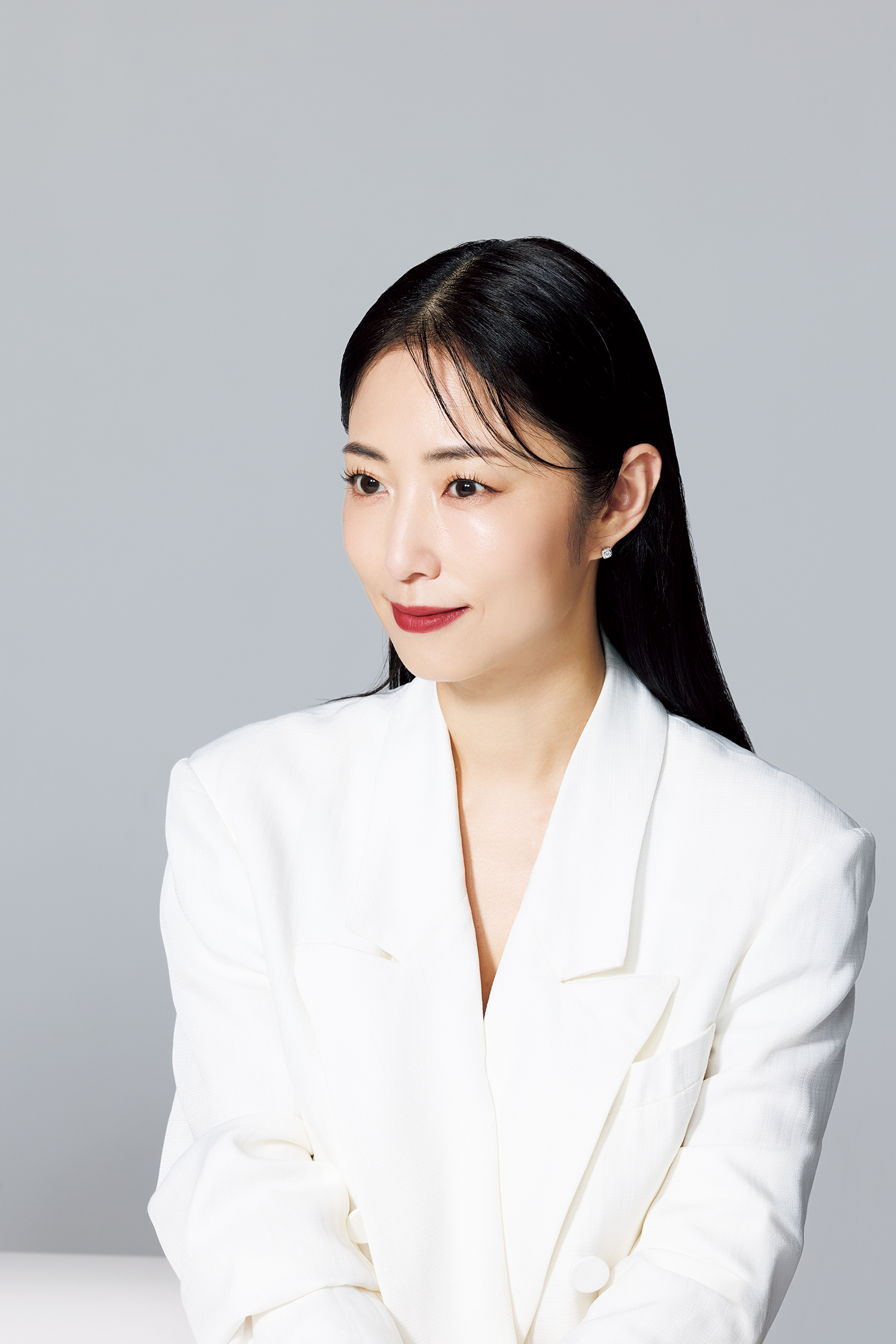
Born in 1981 in Okayama Prefecture, MEGUMI won the Best Supporting Actress award at the 62nd Blue Ribbon Awards in 2020 for her performances in ‘Typhoon Family’ and ‘One Night’. In recent years, alongside her acting career, she has made a name for herself as a producer. Her recent projects include the film ‘FUJIKO’, ‘The Breath of the Blue Whale’ and Netflix's reality dating show ‘Badly in Love’, all of which she has developed and produced.
MEGUMI — Personally, I find it admirable that you’ve ventured into producing. You strike me as someone quite sensitive and introspective, unlike me, as I have a rather different temperament.
Kento Kaku — I am quite shy, actually! (Laughs.) My biggest challenge at the moment is developing the social skills that are so essential for a producer. I know I need to work on that.
MEGUMI — Just give me a call whenever you need help. That’s one of my strengths! (Laughs.) In 2024, you founded the production company SIGNAL 181 with director Dave Boyle. How do you go about developing projects together?
Kento Kaku — Deciding which projects to greenlight depends on whether Dave and I are completely in agreement, as well as whether a project is realistically feasible. But our first instinct is always what matters most: does it excite us? That’s what guides our decisions. The core elements—the structure, story and characters—need to feel fresh, otherwise we won’t enjoy making the work ourselves. That may be the most important consideration of all. We then factor in the market and the spirit of the times.
MEGUMI — I currently have five or six projects in development, each of which has come about in a different way. But when it comes to projects I initiate myself, I work much like Kento: everything starts with the feeling that this is something I really want to do. The reality, however, is that we can’t make a film without securing investors. So I try to have both projects that I’m truly passionate about and others that are more secondary, designed to respond to market demand.
There are many moments when I think that, with a bigger budget, I could make life easier for everyone on set. That’s precisely why we need to succeed in selling our work overseas. This year’s Cannes Film Festival was another reminder that Japan is attracting considerable attention right now, and I believe we need to seize that opportunity.
I’ve heard that you also have connections with film festivals and distribution companies in the United States. How do you see the American market?
Kento Kaku — Genre films, particularly horror, as well as anime, are popular. There’s no doubt that people are interested in and excited by Japanese culture. However, it seems there aren’t enough connections that allow them to engage directly with the people creating the work. I’d like to do whatever I can to help bridge that gap, and I’m keen to explore those opportunities actively.
Something else I’ve come to realise recently is that continuing to make films solely for the Japanese market won’t get us very far. We need to broaden our horizons and approach each project with the understanding that it should be accessible and enjoyable to audiences wherever it is shown. We’re gradually shifting the way we develop projects: rather than explaining everything too explicitly, we’re thinking more carefully from the outset about how to make the most of the visual storytelling and the film’s overall look.
Rather than targeting Japan alone, the goal is to make films that audiences everywhere can understand and enjoy

Born in Tokyo in 1989, Kento Kaku made his acting debut in 2007 and has since appeared in numerous hit productions, including the television series ‘From Today, It's My Turn!!’ and ‘TOKYO MER’. He became independent in 2022. For the Netflix series ‘House of Ninjas’, he not only starred in the show but also contributed to its original concept and development, serving as co-producer. He is also a producer of his latest film, ‘Never After Dark’.
MEGUMI — My ideal would be to make a film like Sean Baker’s Anora, which found success in both Europe and the United States. But the subject matter also needs to be universal. Ultimately, people everywhere struggle with the same things. I believe we need to confront the parts of ourselves that cause us the greatest pain or distress. If we can determine that what we’re exploring goes beyond our own ego and is something worth sharing with the world, then we should delve into it further.
Both Alfred Hitchcock and Park Chan-wook have advised filmmakers to ‘tell stories about what’s within a five-metre radius of you’. I think the challenge lies in finding the right way to communicate deeply personal experiences—the things that affect us most profoundly and matter to us on the most intimate level.
Kento Kaku — When it comes to finding the right approach, I wanted to remove the language barrier in Never After Dark. We therefore cut the dialogue down as much as possible, aiming instead to convey the necessary information through the images.
MEGUMI — That’s precisely one of the things Japanese filmmakers find most difficult. We tend to worry that audiences won’t understand unless we explain everything in words. I was impressed by how Never After Dark chose from the outset to trust the spaces between things—what is left unsaid and unexplained. I thought that was remarkable.
Kento Kaku — Thank you. I also thought FUJIKO was beautiful from its very first shot. You can really feel how much care and attention each department put into crafting the images. The use of music was equally sophisticated.
MEGUMI — The combination of the deliberately chaotic hair, make-up and production design of the 1970s and 1980s with director Taichi Kimura’s sense of rhythm gave the film a distinctive quality, quite unlike what you usually find in period films or family dramas. Initially, we were a little apprehensive about the direction and discussed it at length. But his individual sensibility came together with the spirit of the era, and I’m glad the film ultimately found its balance.
Kento Kaku — It’s genuinely important for audiences to feel excited from the very beginning. Dave and I are particularly insistent on one thing: whatever we make, it has to be entertainment. We took that commitment to heart with Never After Dark, putting the audience first at every stage. From the initial concept through to the final stages of post-production, we kept asking ourselves how we could excite, surprise and make audiences laugh. It became almost like a mantra for us.
MEGUMI — I work across films, television series and even unscripted formats, such as the reality dating show Badly in Love. Each medium calls for a different approach to entertaining audiences. As we’ve discussed, films rely in part on visual storytelling and the space they leave for interpretation. With unscripted programmes, novelty and a sense of unexpectedness are important. For long-running television dramas, it’s often better to focus on current trends and make the storytelling easy to follow.
Despite these differences, I always come back to the same principle: let’s make something people haven’t seen before.
Kento, you also produce a wide range of work, from films to drama series, rather than focusing exclusively on cinema. There aren’t many producers working across such different formats, so I’m delighted to feel that I’ve found someone on the same wavelength!
Kento Kaku — I love both films and television dramas. In either case, my starting point is the same curiosity: what would happen if I tried making one myself? Precisely because I’m not limiting myself to cinema, I’m all the more determined to create films that fully embrace what makes the theatrical experience special—that unique, almost extraordinary experience of watching a film together with other people in a cinema.
MEGUMI — Ultimately, cinema is all about people and the connections they make. I’ve felt that more strongly than ever through Japan Night, which we’ve organised at Cannes for three consecutive years.
When people who love cinema come together and hit it off, it doesn’t matter where they’re from or what their backgrounds are. Things can move remarkably quickly: someone suggests distributing a film, someone else proposes a co-production, and suddenly something new is taking shape. I’d really encourage Japanese creatives who see international film festivals as distant or inaccessible to go and experience one for themselves at least once.
Kento Kaku — I’m convinced that Japanese film crews and actors are every bit as good as their counterparts anywhere in the world. We’re still figuring out how best to bring these extraordinary talents to international audiences. It’s a mission I’d like us all to accomplish by working together and pooling our efforts. That’s why I’m genuinely happy to have had this conversation with you, MEGUMI.
MEGUMI — Likewise. Thank you so much!
Two films produced by Kento Kaku and MEGUMI, released in June 2026 and recognised at international film festivals
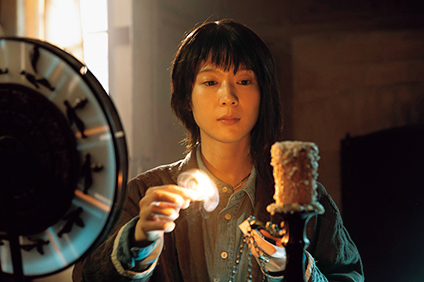
‘Never After Dark’
After receiving a request to investigate reports of a male ghost, medium Airi (Moeka Hoshi) visits a secluded Western-style mansion deep in the mountains, accompanied by her older sister Miku (Kurumi Inagaki), who has become a ghost herself. As they investigate, they uncover shocking secrets hidden within the mansion.
Director and screenwriter: Dave Boyle
Producer: Kento Kaku
Starring Moeka Hoshi, Kurumi Inagaki, Kento Kaku, Mutsuo Yoshioka, Bokuzo Masana and Tae Kimura, among others.
2026 · 105 minutes
© 2025 Signal181, Inc. All rights reserved.
Released theatrically in the US on 25 September 2026
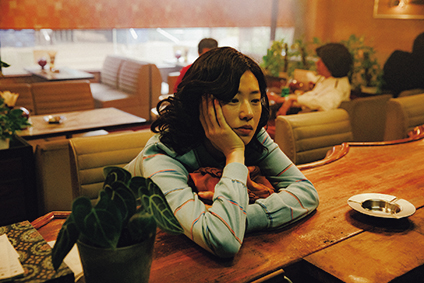
‘FUJIKO’
Shizuoka, 1977. Shortly after giving birth to her daughter, Fujiko (Yuki Katayama) is subjected to unreasonable and cruel treatment by her husband’s family. She sets out on a new path as a single mother. The film follows the tumultuous first half of her life, a roller-coaster journey with a distinctly rock ’n’ roll spirit.
Director and original concept: Taichi Kimura
Planning and producer: MEGUMI
Starring Yuki Katayama, YOU, Lily Franky, MEGUMI and Issei Ogata, among others.
2026 · 95 minutes
© 2026 FUJIKO Film Partners
No international release date has been announced yet