Japanese Auteur Cinema Finds Its Audience in France
Festivals and distributors such as Kinotayo and Art House are opening up new opportunities by bringing lesser-known works to wider audiences.

‘All Greens’, the second feature by Takashi Koyama, is competing at the 2026 Kinotayo Contemporary Japanese Film Festival in Paris. A punk film with razor-sharp humour, it follows three high-school girls involved in marijuana trafficking, one of whom is played by rising star Natsuki Deguchi, who has also appeared in a film by Hirokazu Kore-eda.
While manga and anime continue to enjoy growing international success, Japanese cinema has followed a quieter trajectory. After the golden age of the 1950s, embodied by Akira Kurosawa and Yasujirō Ozu, and the revival of the 1990s spearheaded by Takeshi Kitano, a new generation of filmmakers has gradually won over audiences abroad. Kiyoshi Kurosawa and Hirokazu Kore-eda, both present at Cannes in 2026, are among its best-known representatives. Yet beyond these familiar faces on the international festival circuit, other directors are finding their audiences thanks to organisations specialising in the distribution and promotion of Japanese cinema.
In France, the Kinotayo Contemporary Japanese Film Festival was founded in 2006. Its name refers to its highest accolade, the Golden Sun (in Japanese, kin no taiyō), awarded by the audience. Each year, the festival presents an eclectic selection of films made within the previous 18 months, ranging from documentaries to animation. Its director, Nousha Saint-Martin, is delighted by the substantial growth in attendance over the past two years, with more than 10,000 admissions recorded in 2025.
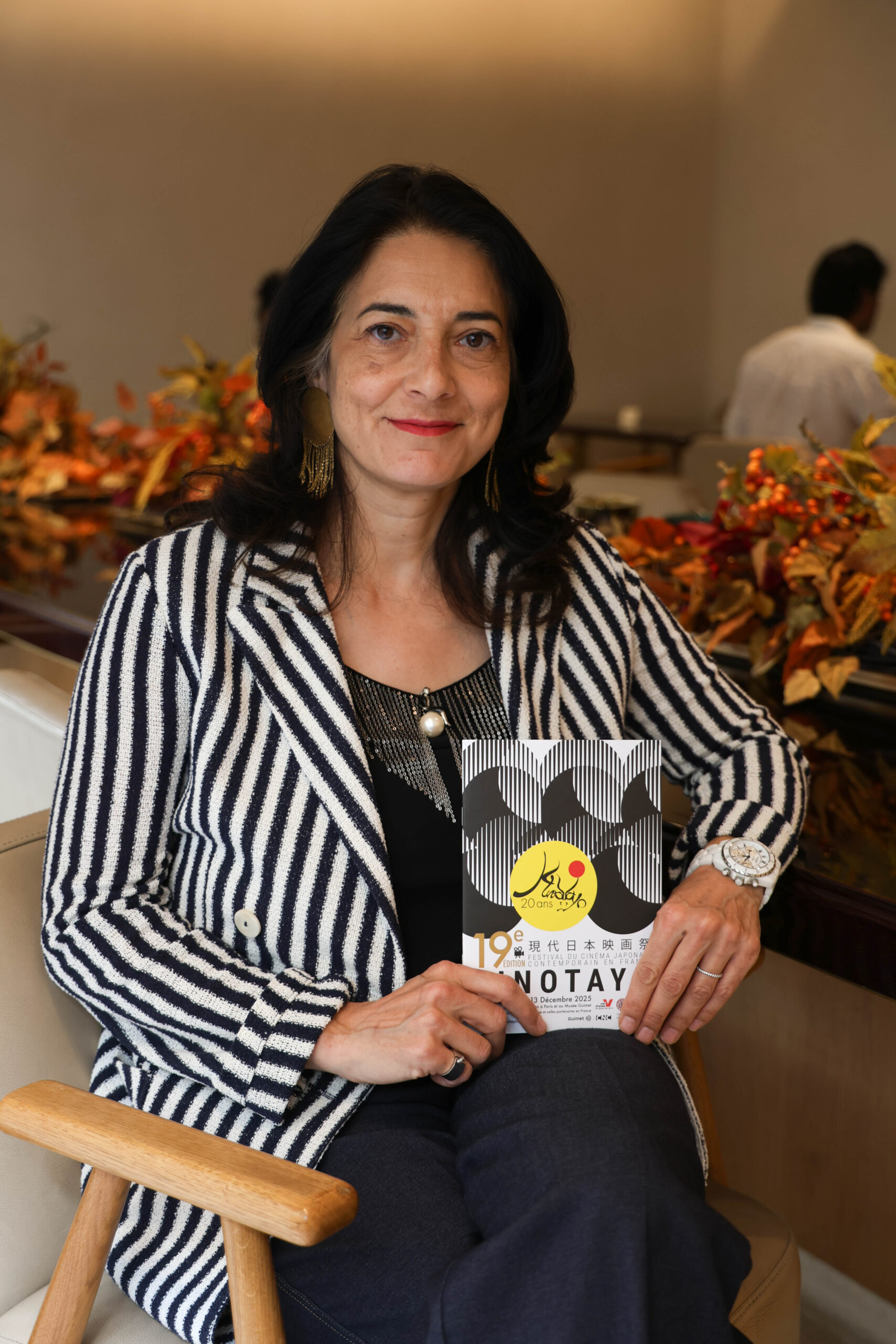
Nousha Saint-Martin, President of the Kinotayo Contemporary Japanese Film Festival, photographed in Paris in September 2026. The festival’s next edition will run from 28 November to 12 December 2026.
On Screen, an Intimate Japan Beyond the Public Eye
This growing attendance reflects a broader enthusiasm for Japan. Kinotayo’s audience includes people who have lived there, as well as those who wish to gain a deeper understanding of Japanese society. ‘Cinema offers a way of entering into the intimacy and inner world of Japanese people,’ explains Nousha Saint-Martin. ‘These are spaces that can remain relatively impenetrable because of cultural upbringing, even when you live in Japan and speak the language. I lived in Japan for 15 years myself, and through certain films I discover communities and situations that would otherwise be completely inaccessible to me, because we often remain within our own circles. That is the magic of cinema.’
Although these films open a window onto Japan, they do not always paint a flattering picture of the country. A Girl Named Ann, directed by Yū Irie and awarded the Golden Sun in 2024, for instance, tackles child abuse. Yet works of this kind still manage to move audiences. Ultimately, Japanese cinema explores themes that are universal.
Kinotayo’s selection committee, made up of volunteer film enthusiasts, is particularly committed to a director’s distinctive vision of society, regardless of their experience. First features are included in the programme every year. Some filmmakers who have since received accolades at the world’s leading festivals first came to Kinotayo before securing a French distributor. This was the case with Ryūsuke Hamaguchi, whose Senses won the festival’s Golden Sun Award in 2016. His films now regularly attract close to 200,000 admissions in French cinemas.
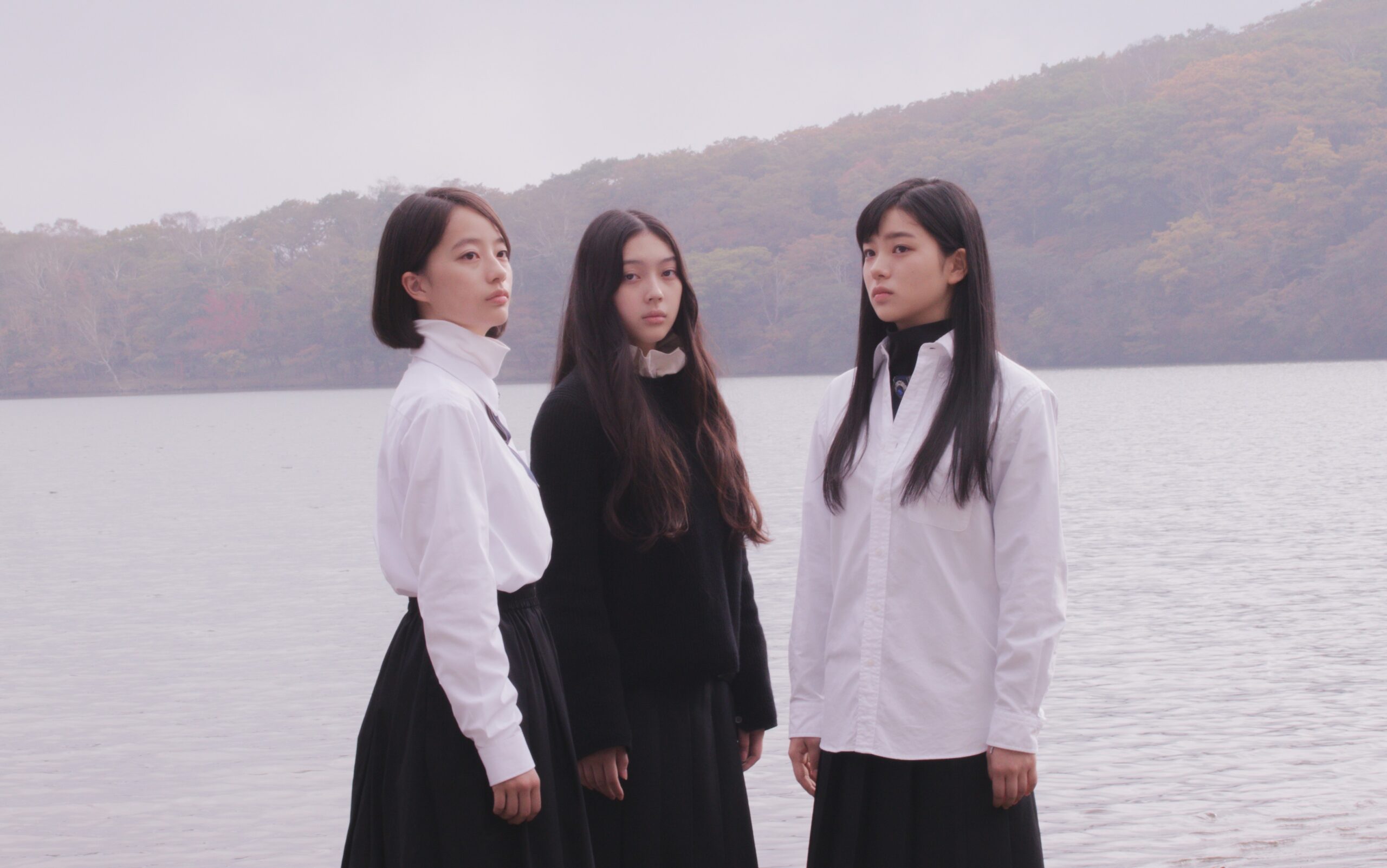
Yukari Sakamoto’s debut feature, ‘White Flowers and Fruits’, is also in the running for the Golden Sun Award at the 2026 Kinotayo festival. This fantasy film explores the bonds between teenage girls through a carefully crafted visual aesthetic.
Kōji Fukada is another filmmaker whose talent was first recognised in France. In 2008, he received Kinotayo’s award for best first feature for La Grenadière. Éric Le Bot, the distributor behind Kiyoshi Kurosawa’s Penance and Ryūsuke Hamaguchi’s Happy Hour, recognised Fukada’s artistic approach early on. He has supported the director through Art House, his distribution company founded in 2018 and specialising in Japanese cinema.
‘It was a genuine meeting of artistic sensibilities,’ he explains. ‘We were on the same wavelength. Kōji Fukada makes films that are deeply feminist, while also being somewhat cruel and clear-eyed. His approach resonates with us, so we have been committing to his films earlier and earlier in the process—now, even at the screenplay stage.’
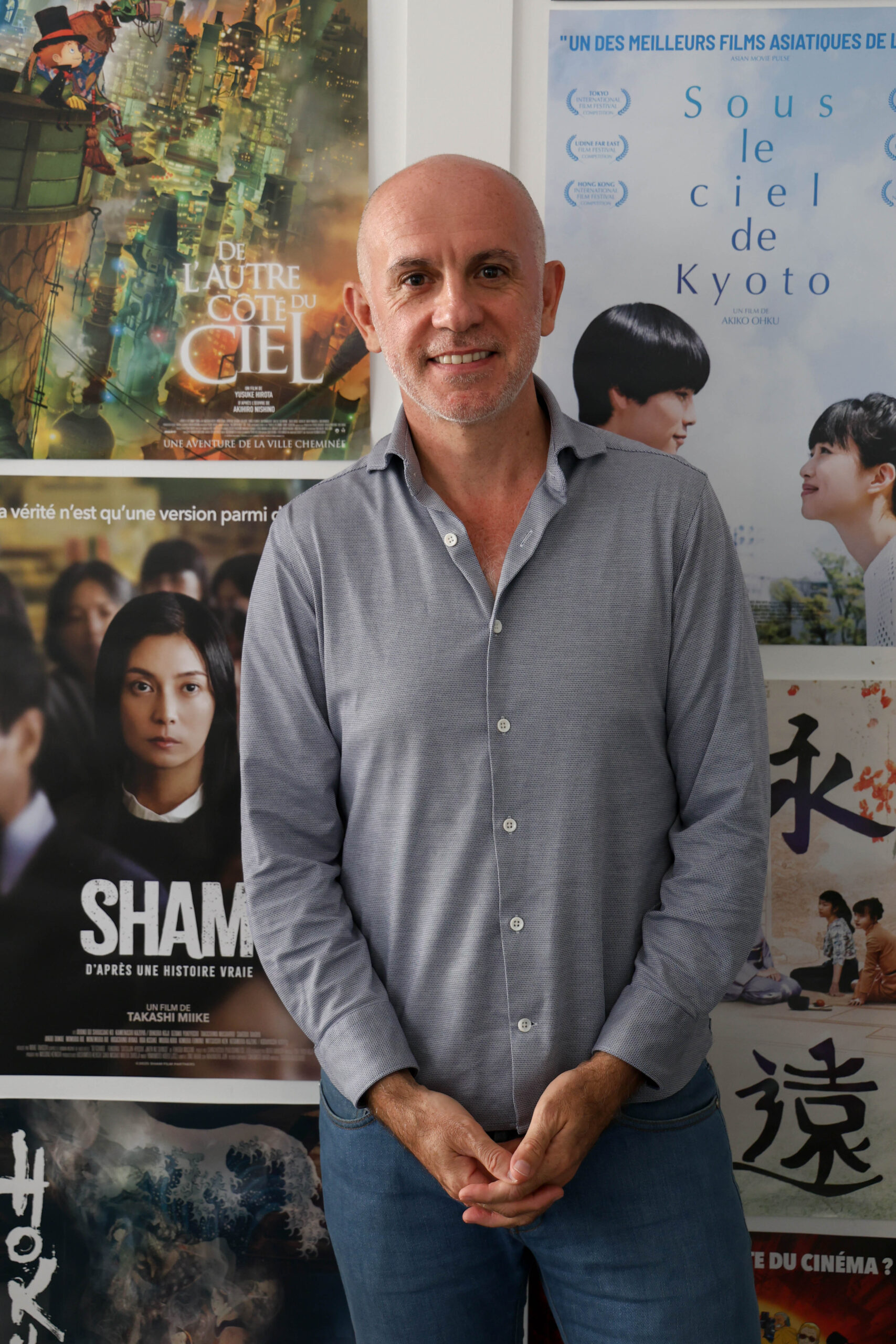
Éric Le Bot stands in front of posters for films recently distributed by Art House and released in French cinemas this year, including Takashi Miike’s ‘Sham’ and Akiko Ohku’s ‘She Taught Me Serendipity’. His Les Saisons Hanabi festival will run from 6 to 12 January 2027. Portrait taken at the Paris offices of his distribution company in September 2026.
Films That Sometimes Find Greater Success Abroad
The gamble has paid off. Before being selected for Cannes this year with Nagi Notes, Kōji Fukada had already won over French audiences. His film Love Life attracted three times as many admissions in France as it did in Japan.
Alongside his distribution company, Éric Le Bot has created Hanabi, an online community for enthusiasts of Japanese cinema and culture, as well as Les Saisons Hanabi, a festival offering advance screenings of some of the films distributed by Art House. The community’s members, most of whom are women with an average age of 45, appreciate the opportunity to discover the full diversity of Japanese cinema. ‘Audiences don’t always want to see the same kind of Japanese film,’ notes Éric Le Bot.
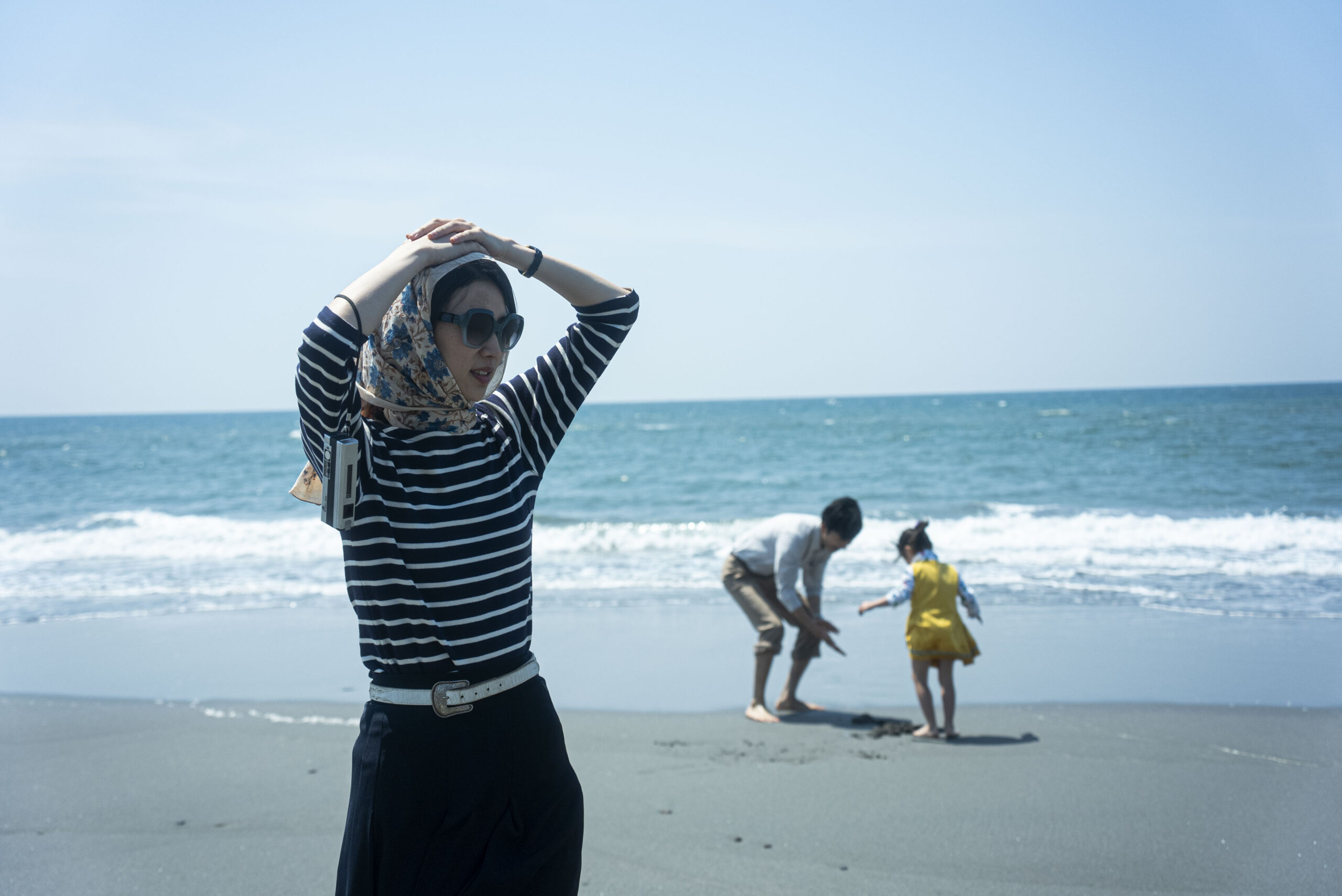
‘Fujiko’ is the second feature by Taichi Kimura, a Japanese filmmaker based in England, and will be screened as part of the 2027 Les Saisons Hanabi festival. Produced by and starring MEGUMI, the film offers a captivating glimpse into Japan in the 1970s and 1980s, following a strong-willed single mother fighting to live life on her own terms.
Art House’s programme responds to this appetite for variety, spanning films devoted to Japanese traditions, such as Every Day a Good Day, which explores the tea ceremony, and works addressing contemporary social issues, such as The Asadas, which won Kinotayo’s Golden Sun Award in 2022.
The latter, which approaches the aftermath of the 2011 disaster with a touch of humour, is the distributor’s biggest hit to date, having drawn 260,000 admissions in French cinemas. Auteur comedies are also popular, as demonstrated by River and Mondays: See You ‘This’ Week!, both of which make inventive use of the time-loop premise.
Festivals and Distributors, Driving International Recognition
Although Japanese auteur cinema has found an audience in France, its success remains far below that of major anime franchises, which often exceed one million admissions. Nevertheless, Japanese directors are pleased to find recognition in France that is sometimes lacking in their home country. ‘In Japan, casting often seems to take precedence over the director’s vision, in order to secure the commercial success needed to finance promotion and theatrical distribution,’ laments Nousha Saint-Martin. ‘We tend to operate in the opposite way, following a European model of independent auteur cinema that does not necessarily rely on a large budget.’
Being selected for Kinotayo—which this year runs from 28 November to 12 December 2026 in Paris, before travelling to other regions of France in 2027—helps independent Japanese films reach French audiences. The festival also provides professional French subtitles, a cost that production budgets often cannot cover, improving the films’ chances of securing a release in France. The 2026 line-up includes established directors alongside filmmakers making only their second feature, such as Oudai Kojima with Flames of a Flower and Takashi Koyama with All Greens. Yukari Sakamoto’s debut feature, White Flowers and Fruits, is also in the running for the Golden Sun.
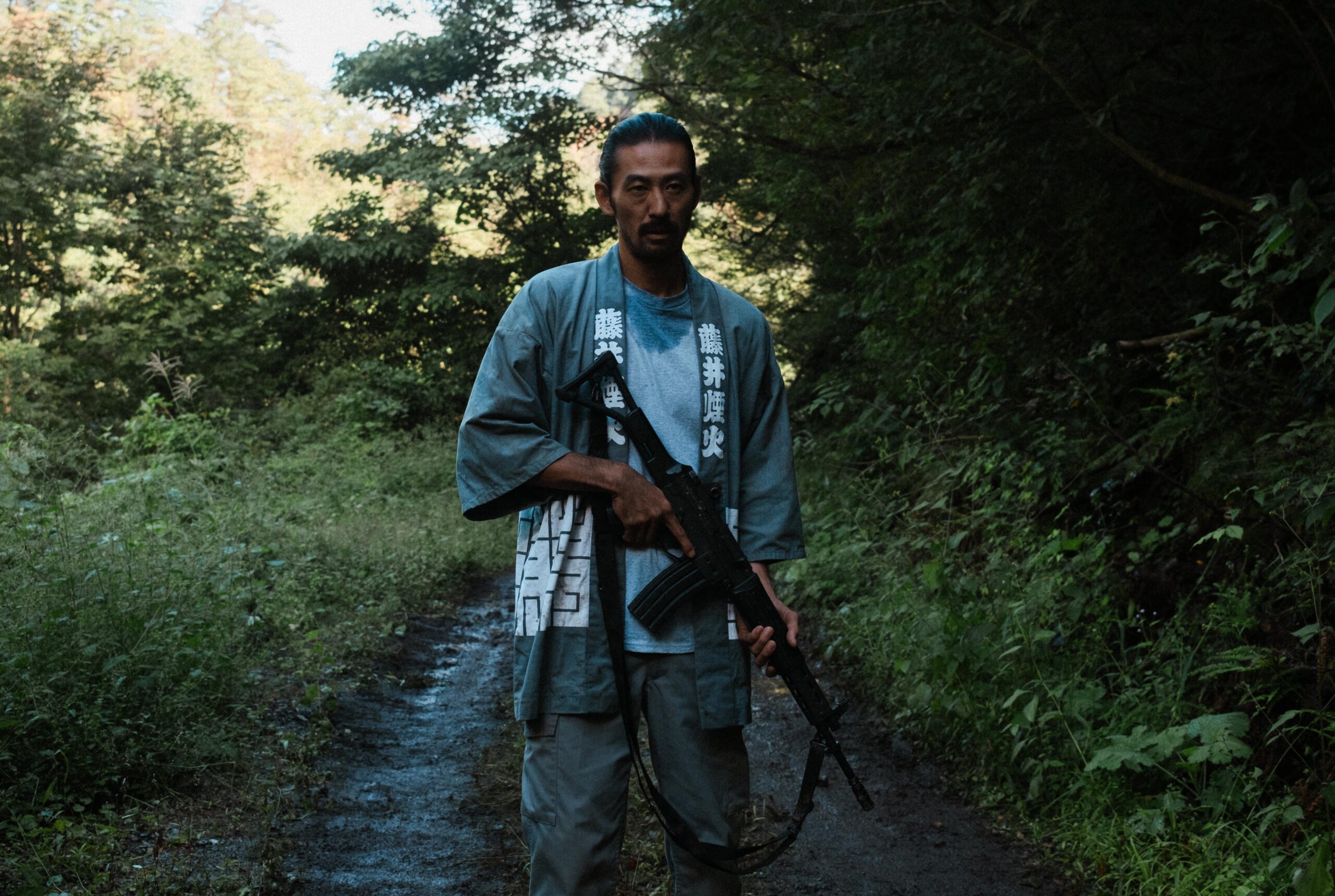
‘Flames of a Flower’ is the second feature by director Oudai Kojima and is competing at the 2026 Kinotayo festival. It follows a former member of Japan’s Self-Defence Forces struggling with post-traumatic stress disorder.
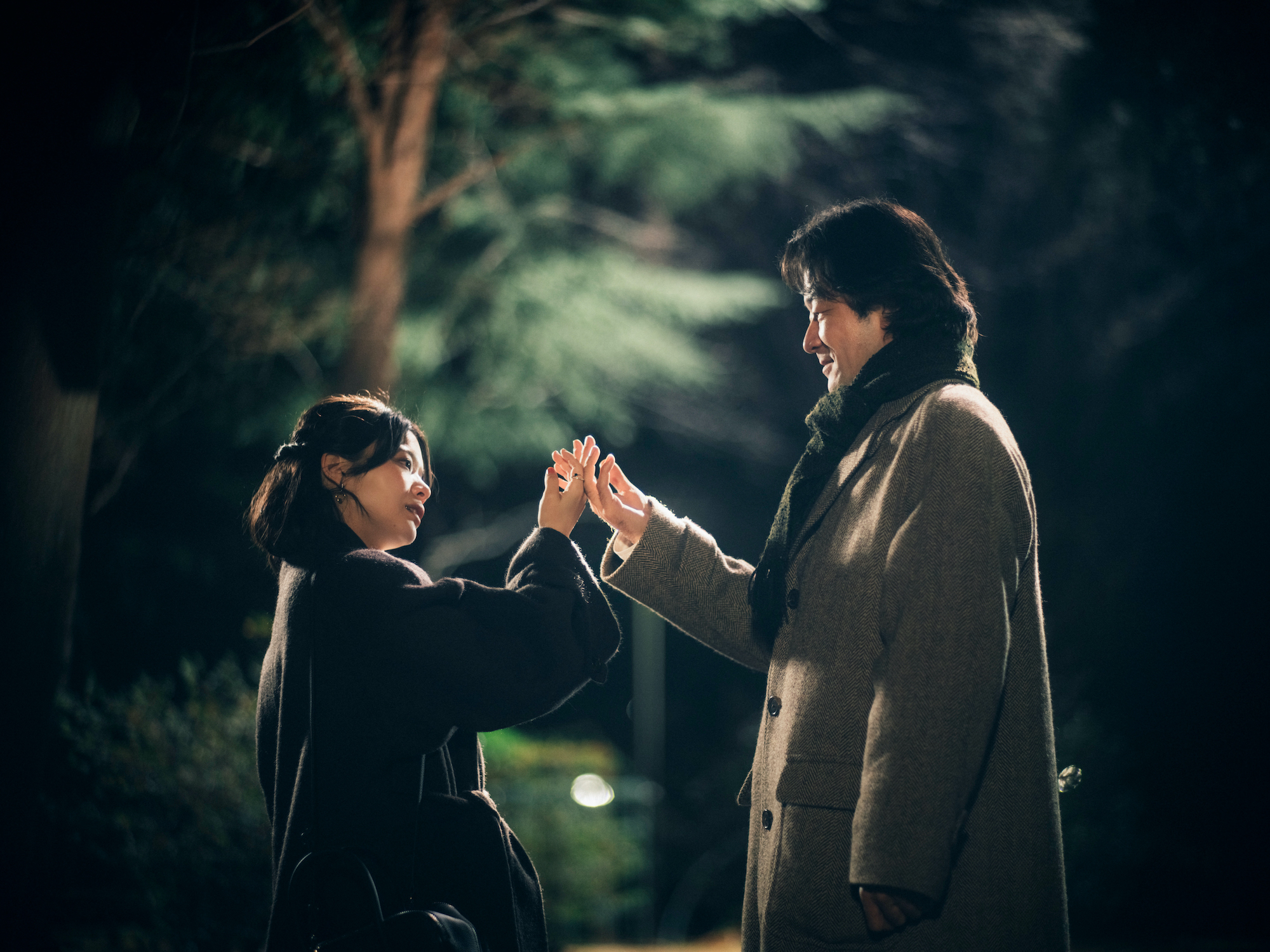
At Les Saisons Hanabi 2027, Yukiko Sode, whose acclaimed film ‘Aristocrats’ won Kinotayo’s Golden Sun Award in 2021, returns with ‘All the Lovers in the Night’, an adaptation of Mieko Kawakami’s novel that was selected for the 2026 Cannes Film Festival. The film is scheduled for release in French cinemas on 28 April 2027.
Les Saisons Hanabi, whose next edition will take place from 6 to 12 January 2027, also allows Éric Le Bot to gauge audience reactions before the theatrical release of films he is preparing to distribute, enabling him to adjust his promotional budget accordingly. This is essential work: a successful release in France can also draw the attention of Cannes selectors to a director’s subsequent films.
Yukiko Sode is a case in point. Her film Aristocrats attracted considerable attention upon its release, and she was selected for Cannes this year with All the Lovers in the Night. This screen adaptation of a novel by Mieko Kawakami is part of the 2027 Les Saisons Hanabi programme. Audiences with an interest in Japanese culture will also be able to discover another adaptation of a creator whose work is popular in France: manga artist Yoshiharu Tsuge. In Two Seasons, Two Strangers, another gifted filmmaker, Shō Miyake, adapts several of Tsuge’s stories. The festival’s opening film, Fujiko, is also led by a major figure in contemporary Japanese cinema: actor and producer MEGUMI.
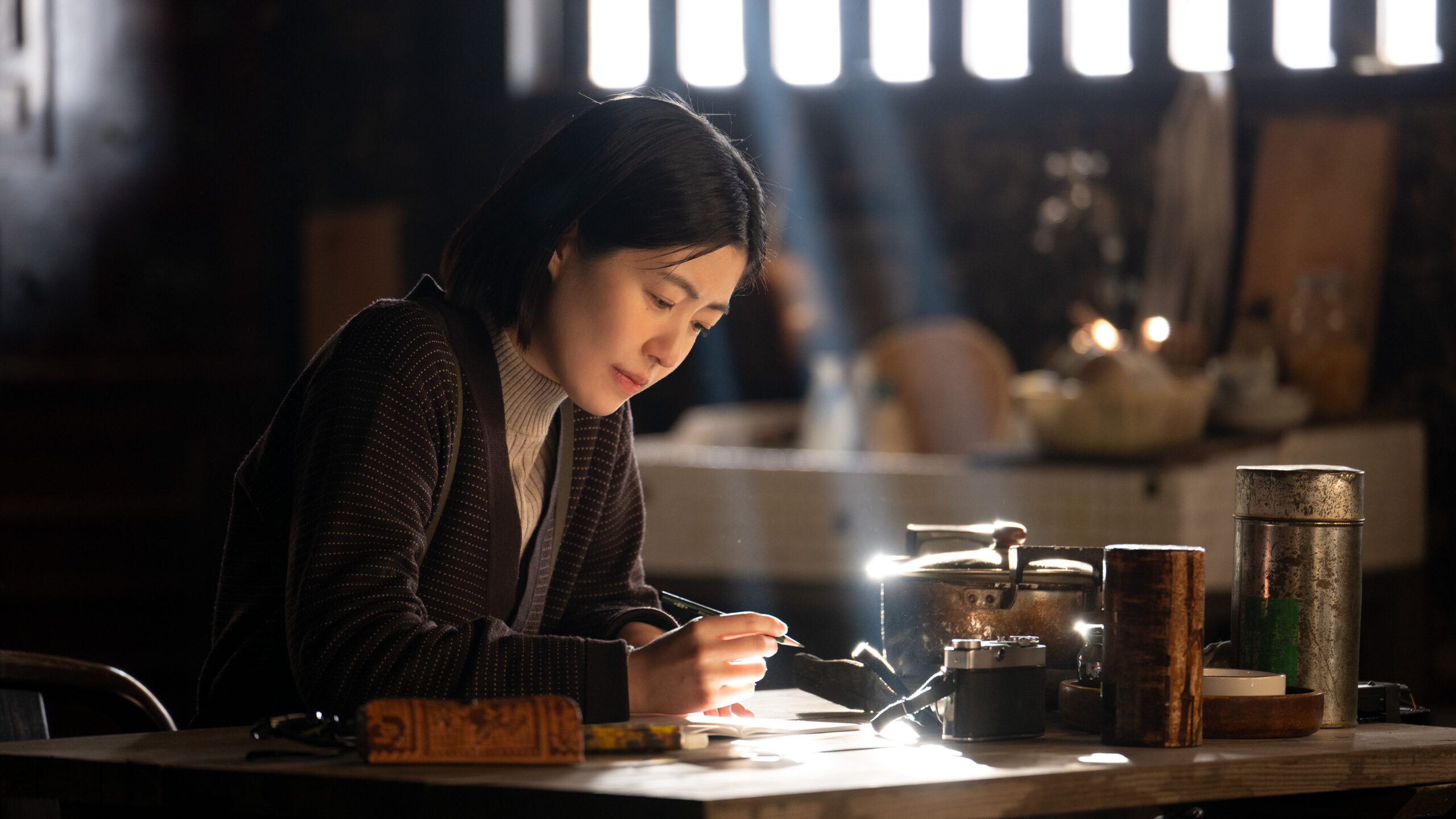
Also featured in the 2027 Les Saisons Hanabi programme, ‘Two Seasons, Two Strangers’ marks Shō Miyake’s much-anticipated return with an atmospheric work adapted from several manga by master artist Yoshiharu Tsuge. The film is due to open in French cinemas on 17 February 2027.
The films soon to be released in French cinemas testify to the vitality of Japanese auteur cinema, whose richness extends far beyond its most popular productions. As they gain recognition abroad and are selected for major international festivals, Japanese filmmakers can also hope to achieve greater visibility in their own country.
With this in mind, Nousha Saint-Martin is considering organising an edition of Kinotayo in Japan, further strengthening cinematic exchanges between the two countries. Festivals and distributors play an essential role in this virtuous circle, supporting filmmakers and helping new voices emerge within contemporary cinema.