The Philosophy of Kapital, a Pioneer of Japanese Denim
Its signature ‘Century Denim’ draws on centuries-old Japanese dyeing techniques to make every pair of jeans a one-of-a-kind piece.
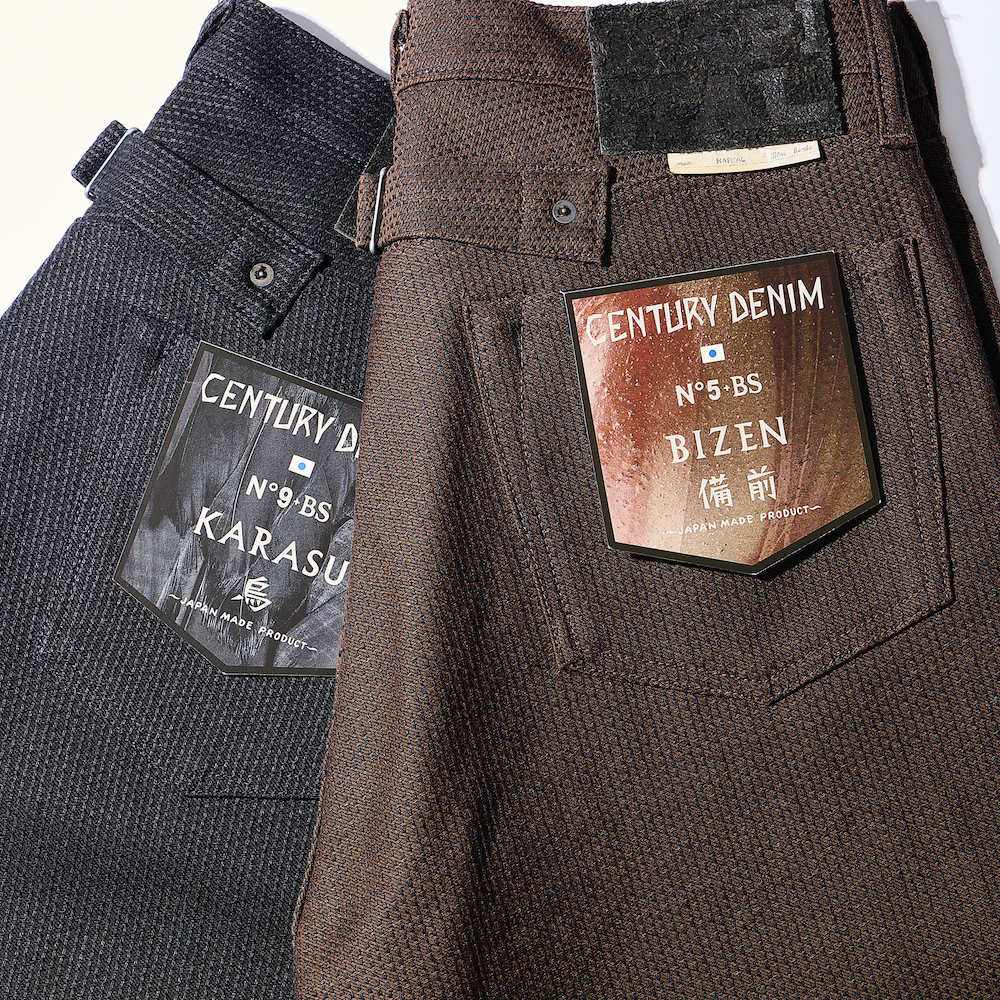
‘BIZEN’ and ‘KARASU’, another of the season’s new colourways. Even the cardboard tag attached to the jeans has its own distinctive character. © Yuki Saito
It was in Kojima, in the city of Kurashiki, Okayama Prefecture, that Kapital established itself as a pioneer in denim manufacturing and finishing, helping shape the identity of the industry. Born in the United States as workwear, jeans held a wealth of untapped potential that the brand’s founder was determined to explore.
Today, his son, Kiro Hirata, has inherited this ambition as the brand’s creative director, pushing the creative boundaries of denim and winning a devoted following around the world.
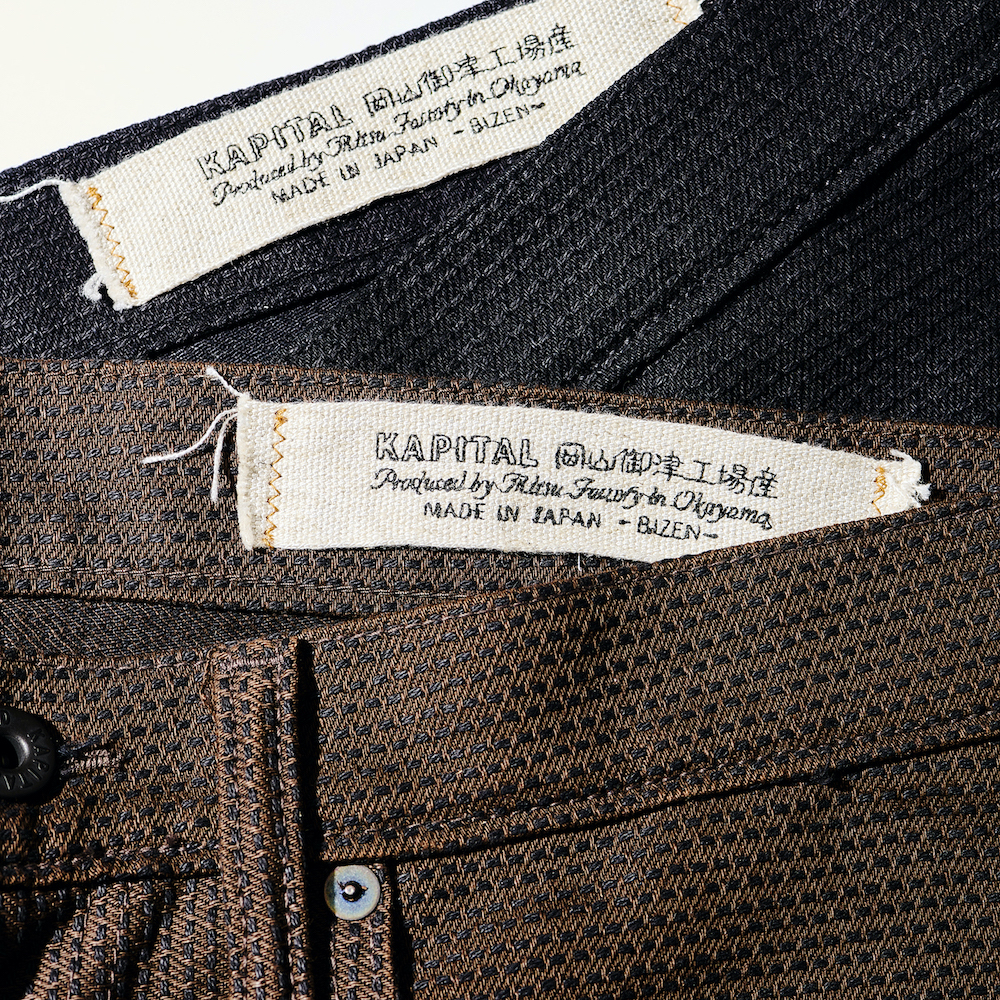
Kapital operates three garment-making workshops. Its jeans are produced at the Mitsu workshop in Okayama Prefecture. © Yuki Saito
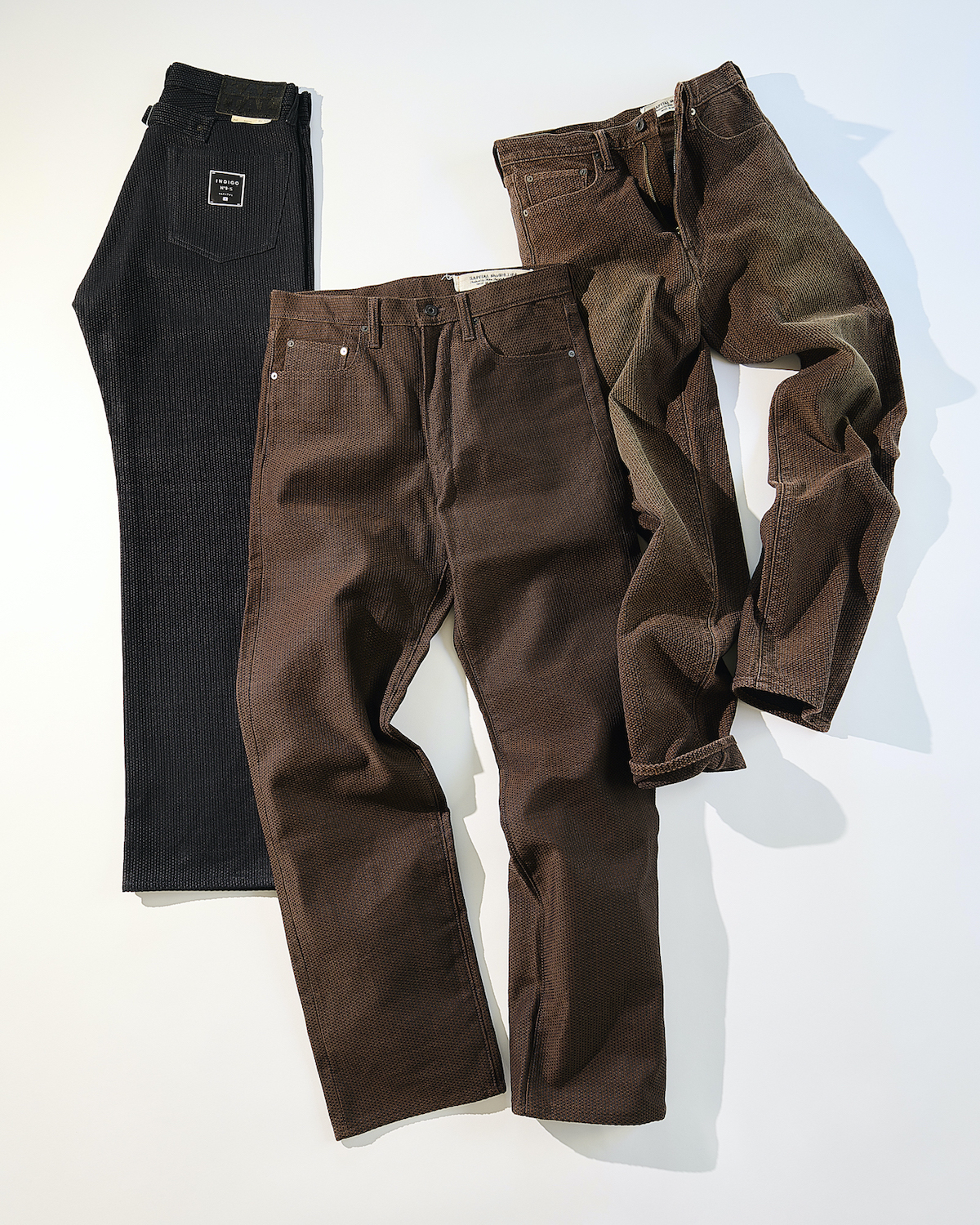
Among the season’s new colourways are ‘BIZEN’ (centre), made from ‘kakishibu’-dyed denim, and ‘KARASU’ (left), crafted from black denim. Both feature black stitching, giving them a restrained, refined appearance. On the right is a ‘BIZEN’ pair that has developed its patina over time. With every wash, the indigo-dyed ‘sashiko’ thread, coloured using the rope-dyeing technique, gradually fades, as does the ‘kakishibu’-dyed denim beneath it. The fabric develops greater character and softens, gradually moulding itself to the wearer’s body. Centre: ¥39,380; left: ¥39,380. Both by Kapital, available at the Legs Craftsman Store. © Yuki Saito
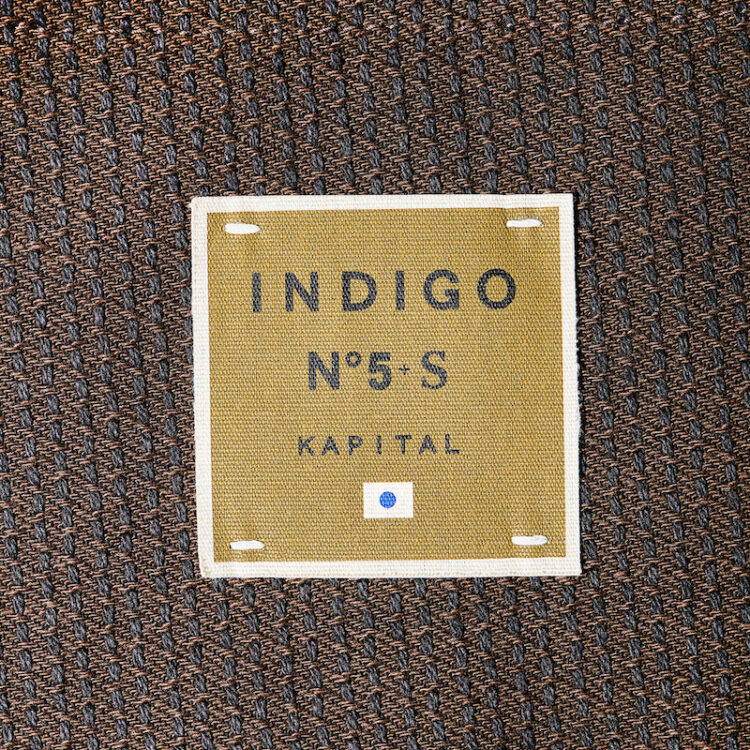
The ‘Century Denim’ is perhaps the product that best embodies Kapital’s identity. In simple terms, it consists of denim dyed with kakishibu (fermented persimmon juice) or sumi ink, then embellished with sashiko stitching using indigo-dyed thread.
The idea was born from a discovery Kiro Hirata made at an antique market he has frequented for many years: an old sakabukuro, a cotton bag once used to press the fermented mash during sake production, dyed with kakishibu. The bag had been reinforced with sashiko stitching in indigo thread. Over time, the blue dye had bled into the surrounding fabric, blending with the persimmon’s rich brown tones to create a remarkably beautiful patina unlike anything Hirata had seen before.
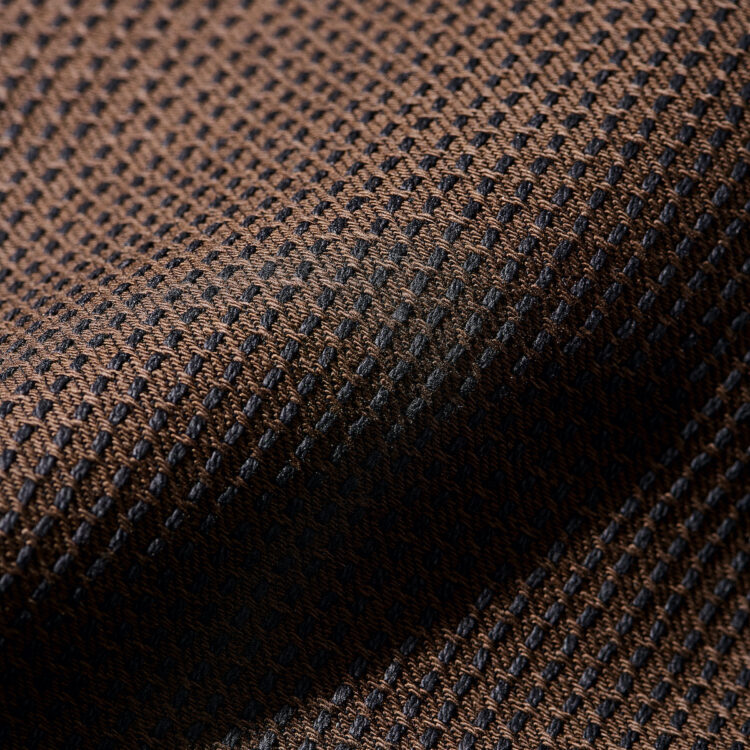
Left: ‘BIZEN’, the season’s new colourway, features denim dyed with ‘kakishibu’ and embellished with black ‘sashiko’ stitching. Right: A branded label sits prominently on the back pocket. © Yuki Saito
Eager to reproduce this effect in denim, he spent several years experimenting before launching the product in 2012. With each wash, the persimmon dye or sumi ink gradually fades, while the indigo from the sashiko stitching seeps into the surrounding fabric, creating an increasingly nuanced patina. Today, this denim, which develops its own distinctive character over time, has captivated enthusiasts around the world.
While paying homage to American jeans, the ‘Century Denim’ incorporates techniques and traditions unique to Japan. True to its name, which evokes a century, it embodies the ambition to create a garment that will endure for the next hundred years. A piece designed to last, yet one that continues to evolve.
A Store Where You Can Experience ‘Century Denim’ and Make It Your Own
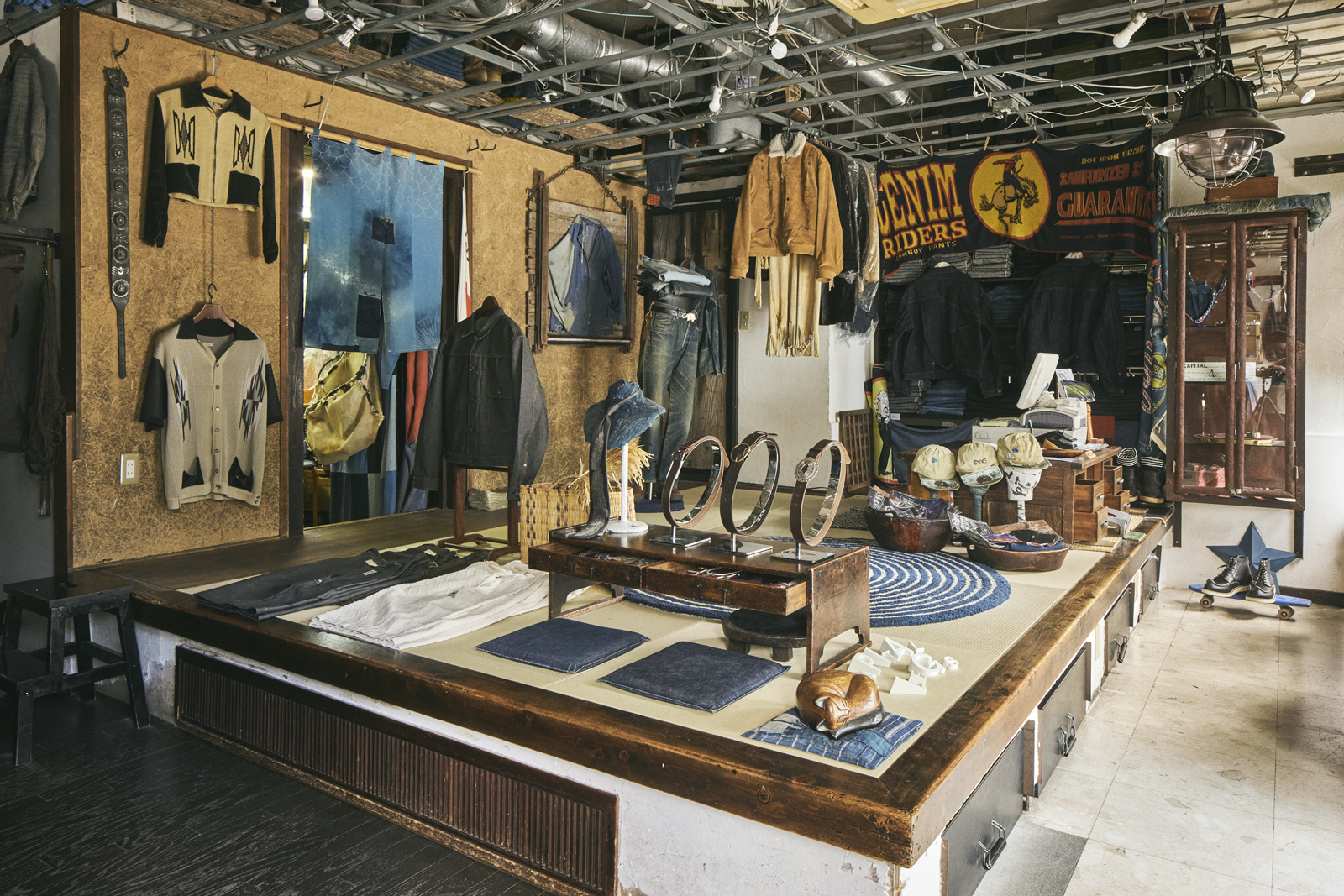
Upon entering the store, visitors are immediately drawn to a spacious tatami-mat area. Inspired by traditional kimono shops, where fabrics are spread out on the floor for customers to examine, the team wanted to present its jeans in the same way, laid out on tatami mats. Asking customers to remove their shoes is also intended to create an experience that engages all five senses. In keeping with the Japanese heritage that informs the ‘Century Denim’, the interior is decorated with antiques collected by Kiro Hirata. © Seiichi Saito
Kapital now has three stores in Tokyo’s Ebisu neighbourhood alone. Of these, the Legs Craftsman Store, featured here, is the only one where the ‘Century Denim’ is available to purchase.
With a focus on jeans, the store also serves as Kapital’s dedicated denim repair centre. Skilled repair specialists are on hand at all times, bringing their expertise to garments designed to last.
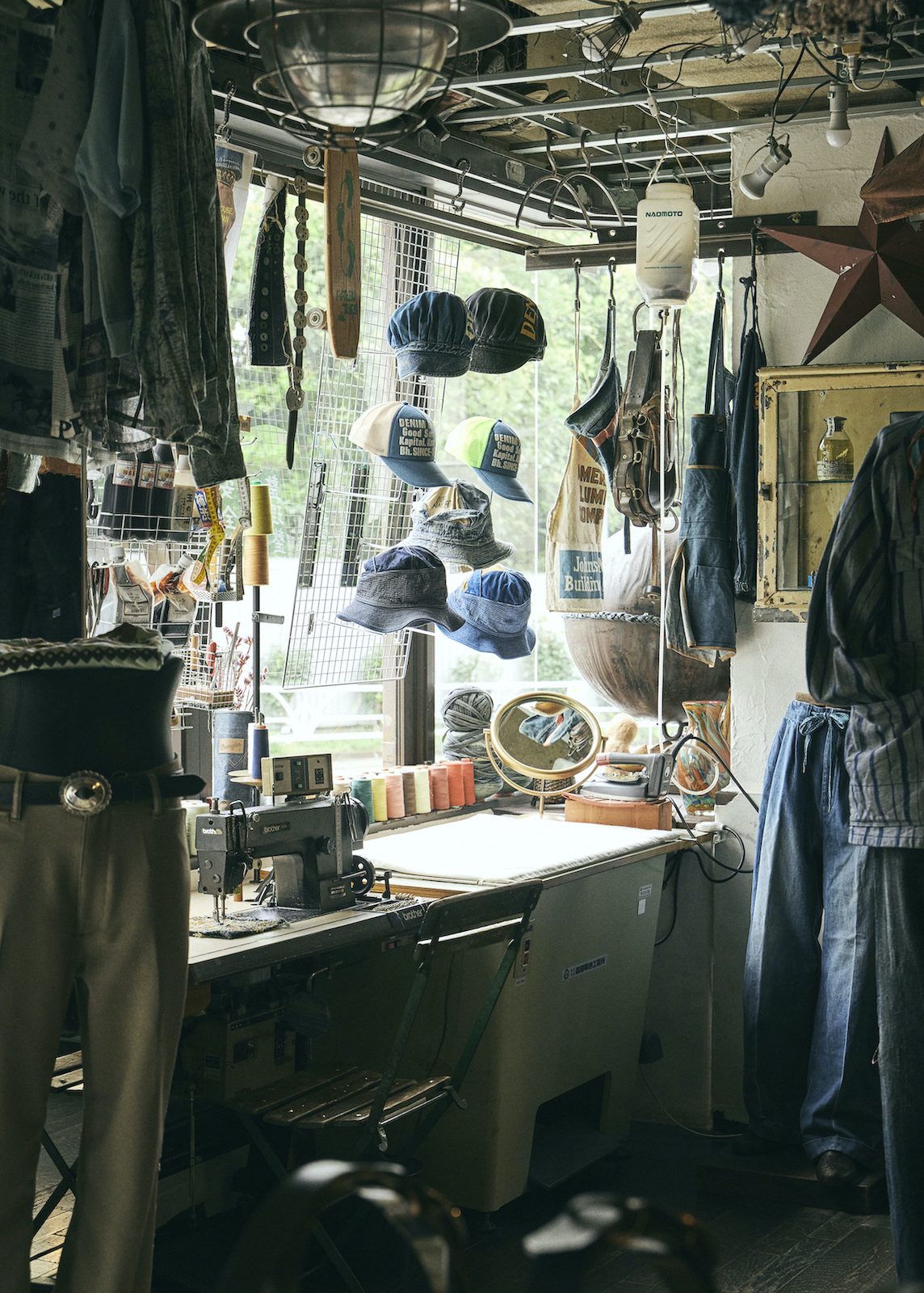
The Legs Craftsman Store is home to specialists in denim repair and also serves as Kapital’s dedicated repair centre. A work area has been set up inside the store to accommodate customers’ repair requests. © Seiichi Saito
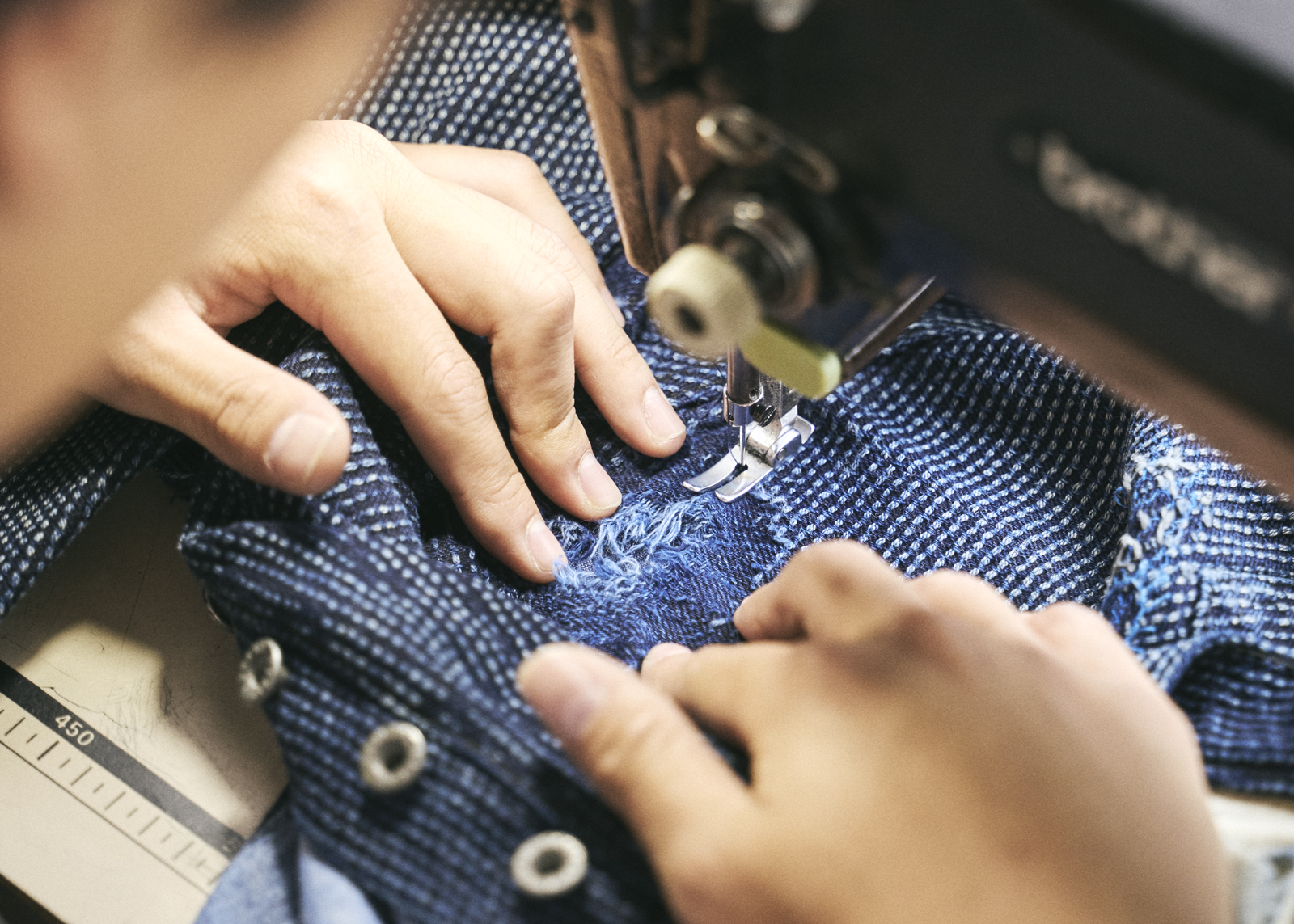
Repairing a hole at the crotch caused by repeated friction. © Seiichi Saito
The name ‘Century Denim’, with its reference to a hundred years, reflects more than the way the product is made. It also alludes to a particular ritual: applying a coating of kakishibu, a natural dye produced by fermenting persimmon juice.
Possessing preservative, insect-repellent and water-resistant properties, this traditional Japanese liquid material has served a wide range of purposes since the Heian period (794–1185). Designer Kiro Hirata came up with the idea of applying it to his garments to strengthen the fabric while giving each piece a distinctive appearance, shaped by its individual character and its owner’s touch.
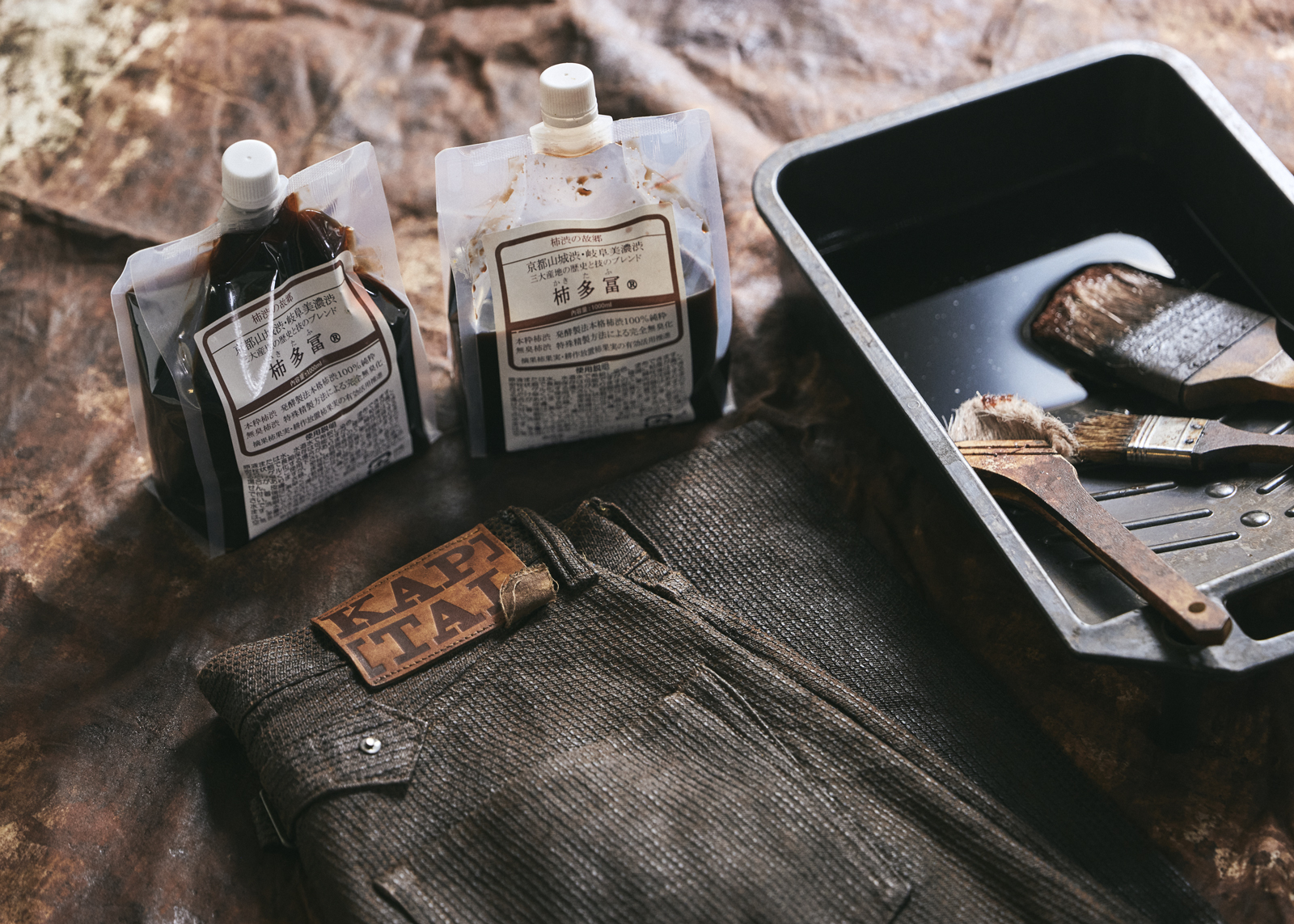
The ‘kakishibu’ dye used by Kapital is a commercially available product that anyone can easily purchase. Customers who buy ‘Century Denim’ can therefore apply the dye to their own garments. The store also regularly holds workshops dedicated to this process. The dye is spread over the fabric with a brush, which is then left to dry in the sun. Repeating the process several times strengthens the fabric’s surface while creating distinctive variations in colour and texture. © Seiichi Saito
Alongside the development of the garments themselves, Hirata conducted repeated experiments until he found a kakishibu preparation without its characteristic odour.
He also sought to recreate, in the way ‘Century Denim’ is sold, the spirit of the antique markets where he had made his own discoveries: a direct exchange between seller and customer, allowing the former to explain the product’s particular qualities and the latter to understand them before taking the piece home. It is this entire process that makes ‘Century Denim’ a truly distinctive line.
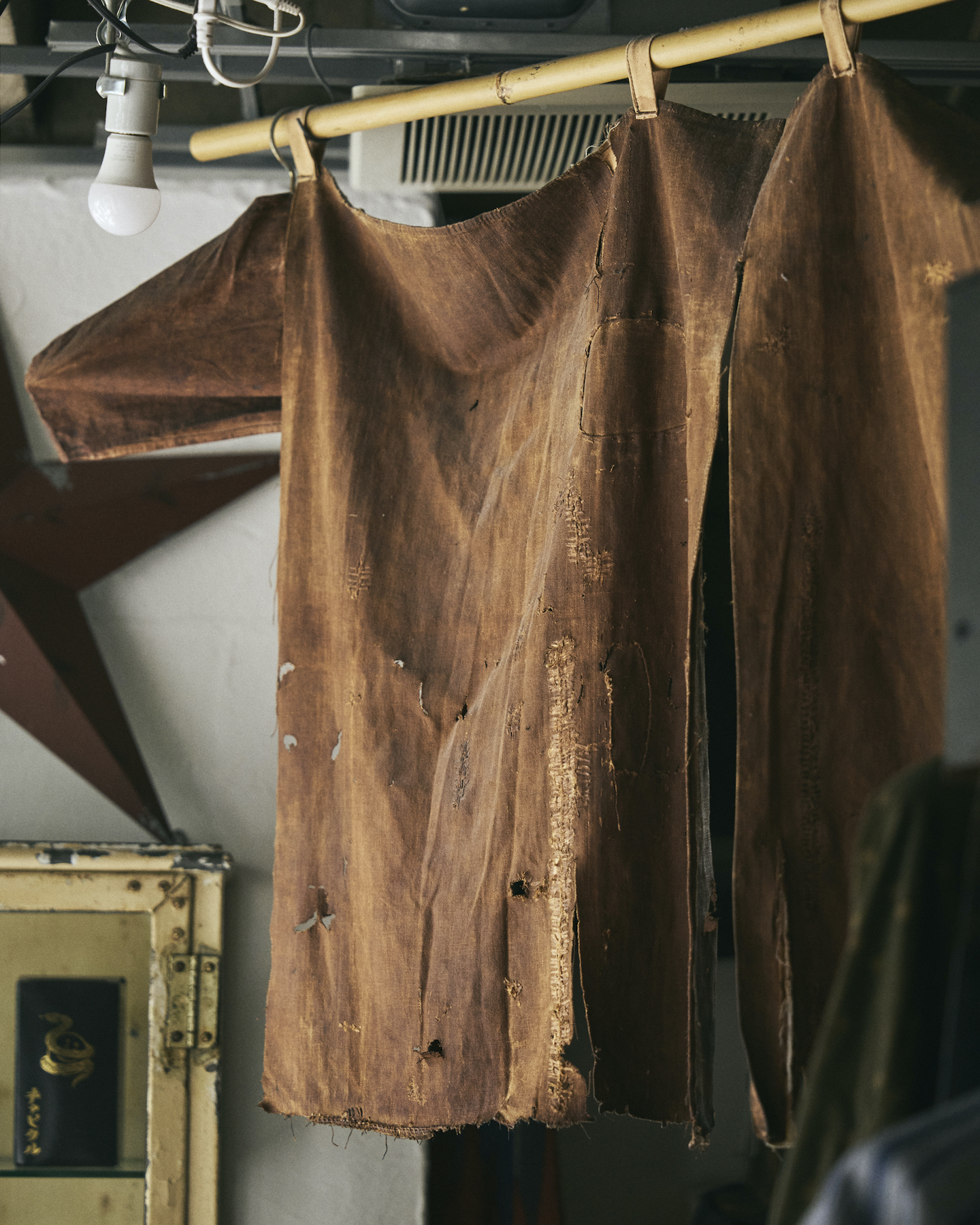
An old sake bag dyed with ‘kakishibu’ has been repurposed as a ‘noren’, the traditional Japanese fabric curtain hung at the entrance to shops. © Seiichi Saito
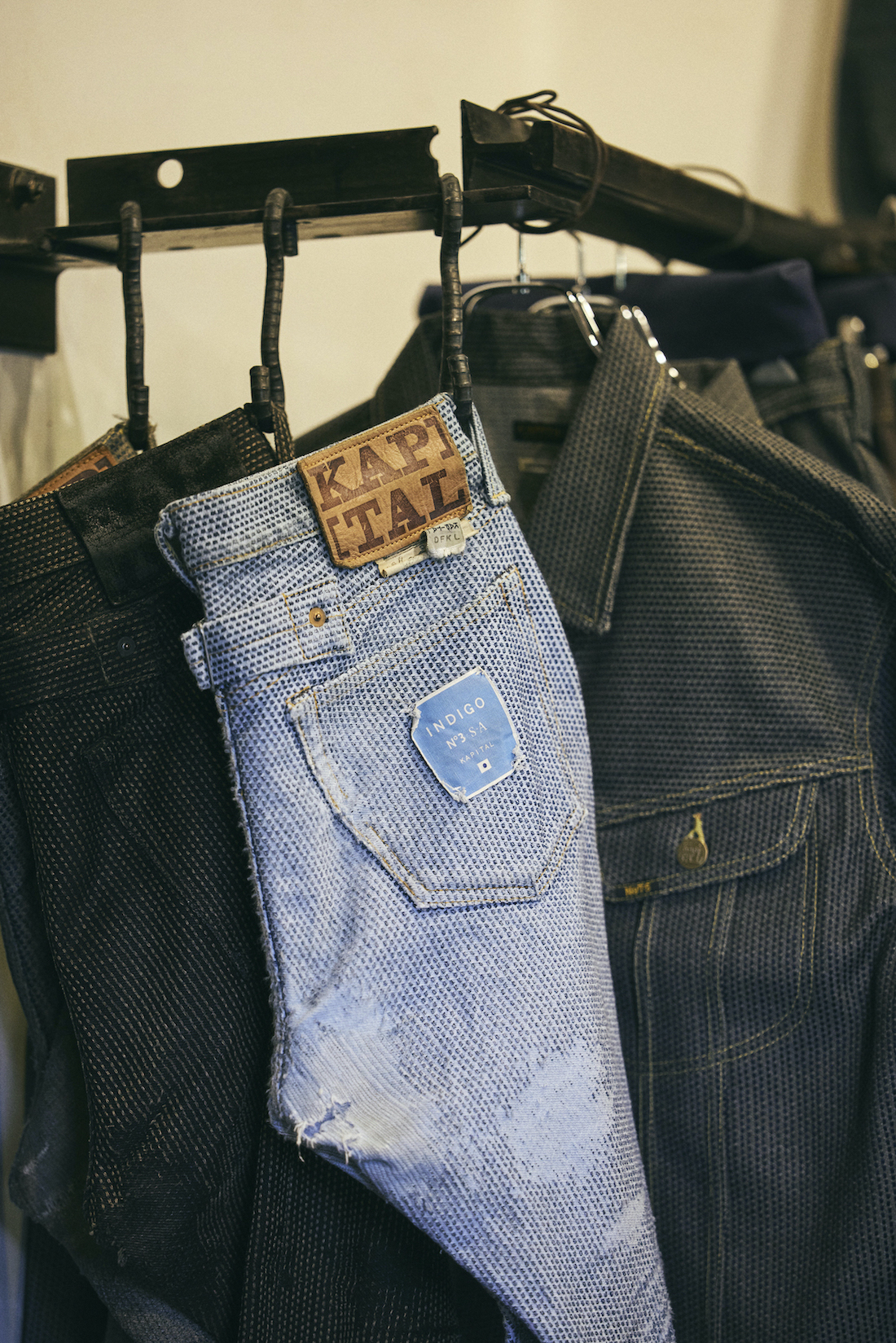
The store also displays samples showing how the ‘Century Denim’ develops its patina over time. © Seiichi Saito
The Legs Craftsman Store plays an essential role in this approach. The store regularly hosts events at which customers can have their ‘Century Denim’ treated with a coating of kakishibu. It is an opportunity to experience first-hand how this dye transforms the fabric, allowing it to continue evolving over time.
Legs Craftsman Store
2-23-12 Ebisu-minami, Ebisu Sunny Building, Ground Floor, Shibuya-ku, Tokyo
Phone: +813-5773-8305
Opening hours: 11 am–8 pm
Closed: Irregular holidays
www.instagram.com/kapitallegs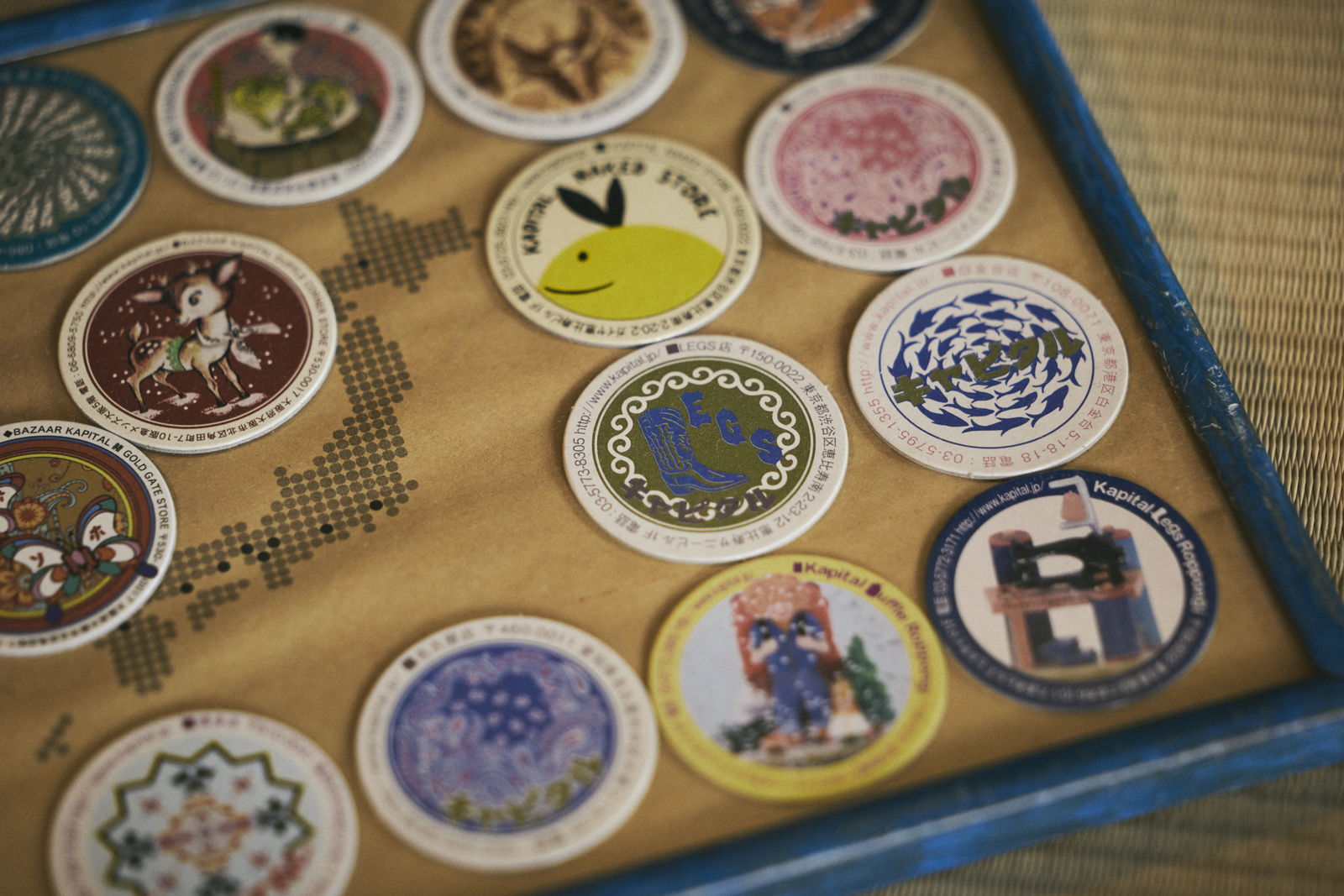
Resembling milk bottle caps, the shop cards from Kapital’s stores have a charm all their own. The brand operates 15 directly managed stores, and collectors who gather the cards from all 15 locations may even receive an exclusive teddy bear that is not available for sale. The cards have consequently become a familiar sight among Kapital enthusiasts. © Seiichi Saito
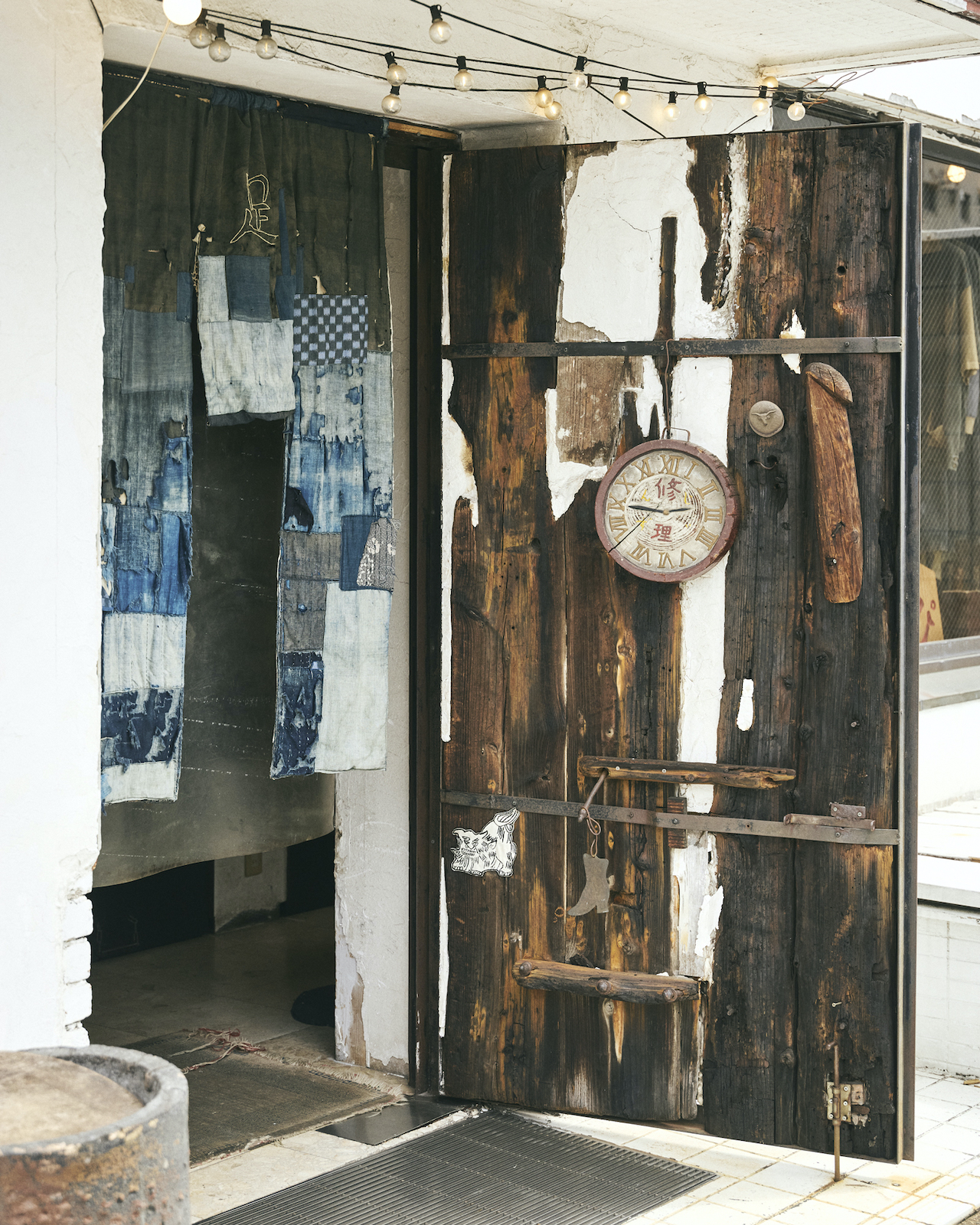
On the weathered entrance door, designer Kiro Hirata has added the words ‘Jeans Repair’ to an old sign from a watch-repair shop that he discovered at an antique market. © Seiichi Saito