Why is Japanese Menswear Increasingly Celebrated Abroad?
With their meticulous approach to craftsmanship, silhouettes and materials, Japanese designers are surpassing Europe and the US.
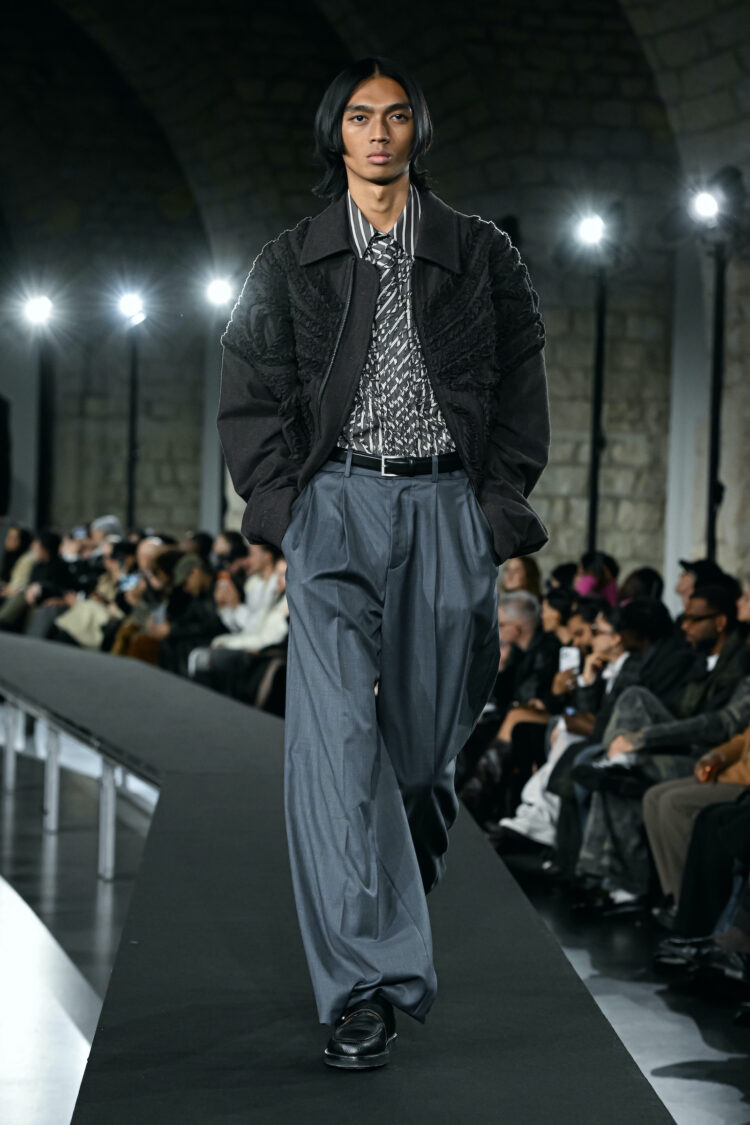
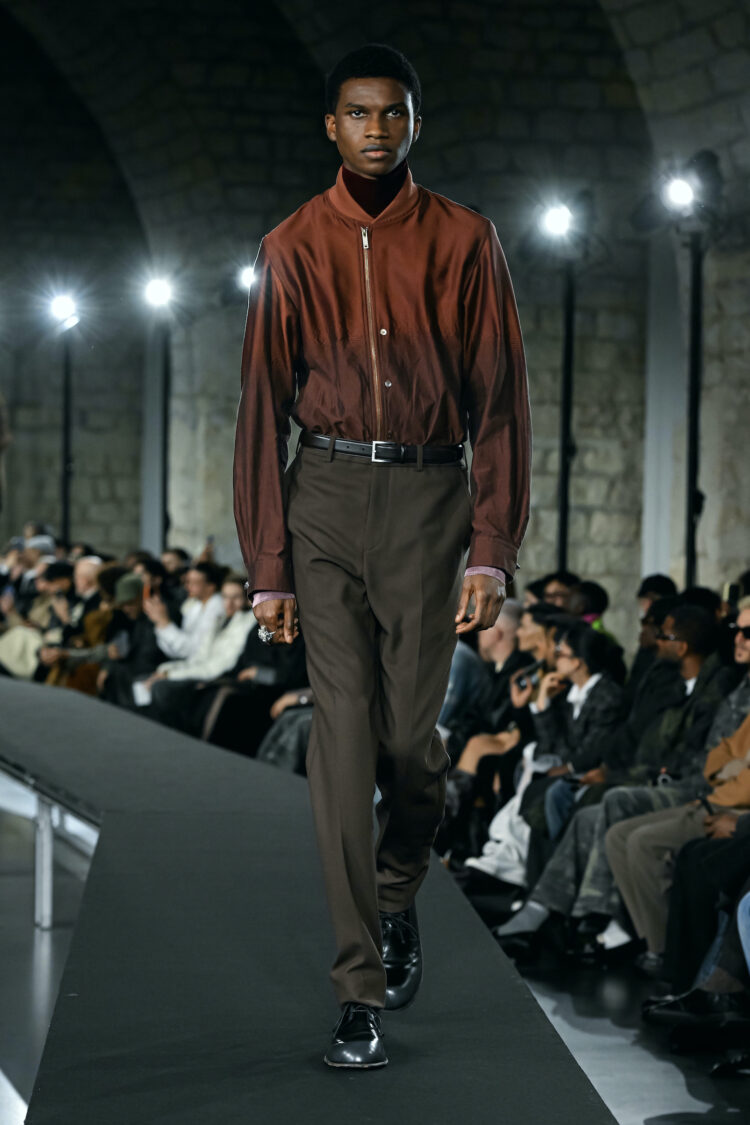
At the Paris Men’s Fashion Week Autumn–Winter 2026, TAAKK presented highly innovative pieces, ranging from raised embroidery (left) to gradient fabrics shifting from cotton to wool (right). © Courtesy of TAAKK.
With fifteen brands featured on the official calendar of the Paris Men’s Fashion Week Autumn–Winter 2026, representing 22% of the total, Japan has established itself as an essential player in contemporary menswear. Audiences are drawn to the precision of Japanese tailoring and the exceptional quality of its fabrics, at a time when the closure of numerous factories in Europe is increasingly constraining production.
Yet this gradual conquest of international wardrobes is unfolding largely outside the sphere of Japan’s three most emblematic fashion houses—Comme des Garçons, Yohji Yamamoto and Issey Miyake. At Fashion Week, TAAKK’s runway show illustrated this shift: a vision of desirable yet accessible fashion that continues to embrace innovation, through raised embroidery and gradient fabrics in which cotton gradually transforms into wool.
At Rendez-Vous Store, a multi-brand boutique with two locations in Toulouse and one in Paris, Japanese designers account for 60% of the menswear selection. Marc Llorens, co-founder of the store, who began his career at Irié and helped launch the Irié Wash line, is unequivocal: ‘menswear, for us, is in Japan.’ His customers are particularly drawn to the fabrics and materials, distinct from those found elsewhere, such as the soft cashmeres from KAPTAIN SUNSHINE.
Exceptional textile craftsmanship
Japanese designers benefit from outstanding materials produced by manufacturers who combine artisanal expertise, traditional techniques and cutting-edge technology. Fabrics are developed not only at the level of the yarn itself, but also through finishing processes and treatments. Functionality now plays a central role, with particular attention paid to comfort: garments must remain cool in summer and warm in winter. All of this is achieved while maintaining remarkable finesse and consistently high quality, reflecting the exceptional skill of Japan’s textile artisans.
Of course, functionality and comfort alone cannot explain the success of Japanese fashion. As Olivier Salette, co-founder of Rendez-Vous Store—formerly in merchandising at Ralph Lauren—explains, what is also essential is an added dimension of soul, ‘an emotion’. This is where Japanese designers stand out, with ‘modern cuts, less fitted and more relaxed than European production’, inspired by vintage references and workwear. Materials are designed to develop a patina over time, revealing a different relationship to clothing—pieces meant to last, to be kept, and to be passed on. Timeless fashion.
‘It’s difficult to explain, but the proportions are just right,’ adds his partner Marc Llorens. ‘There is a silhouette.’ The most structured pieces are also the bestsellers, such as coats, jackets and trousers.
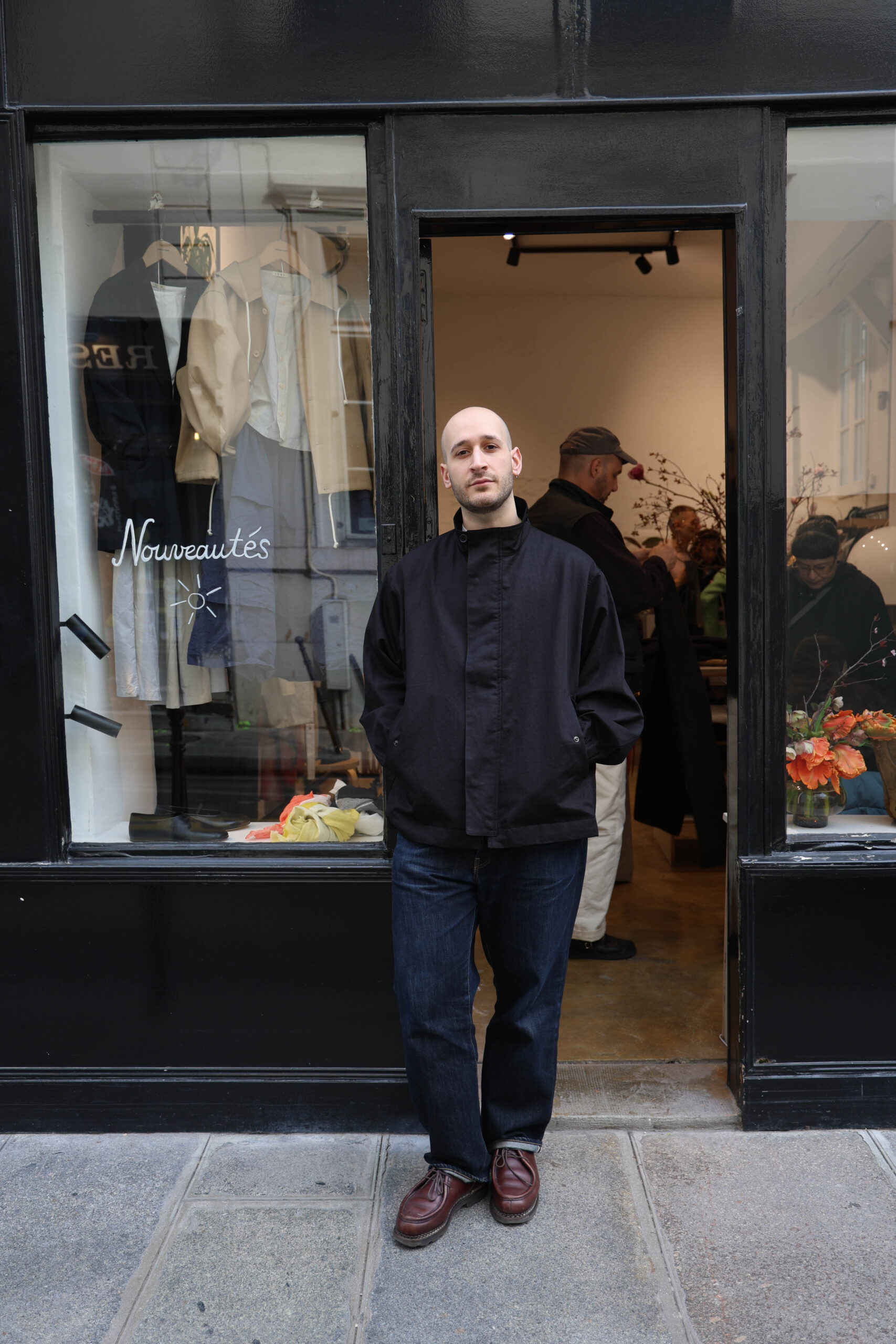
Avery Naman, Communication Manager at Rendez-Vous Store, is wearing the ‘Star Blouson’ by Still by Hand (€490), paired with raw selvedge denim by HATSKI (€335), which he has worn in to develop its patina, and French Paraboot shoes (€300).
An international expansion that is not always straightforward
However, not all Japanese designers seek a global audience. Many take time before making the leap. This is the case of COMOLI, a brand the duo behind Rendez-Vous Store discovered in Japan just a few months after opening their first boutique in Toulouse, in southern France, in 2014. At the time, they were among the brand’s very first stockists worldwide, yet the initial collections sold out in just two weeks. A decade later, the brand remains among the store’s bestsellers, alongside STILL BY HAND, which was also present from the early days of Rendez-Vous Store, and ssstein, introduced in recent seasons.
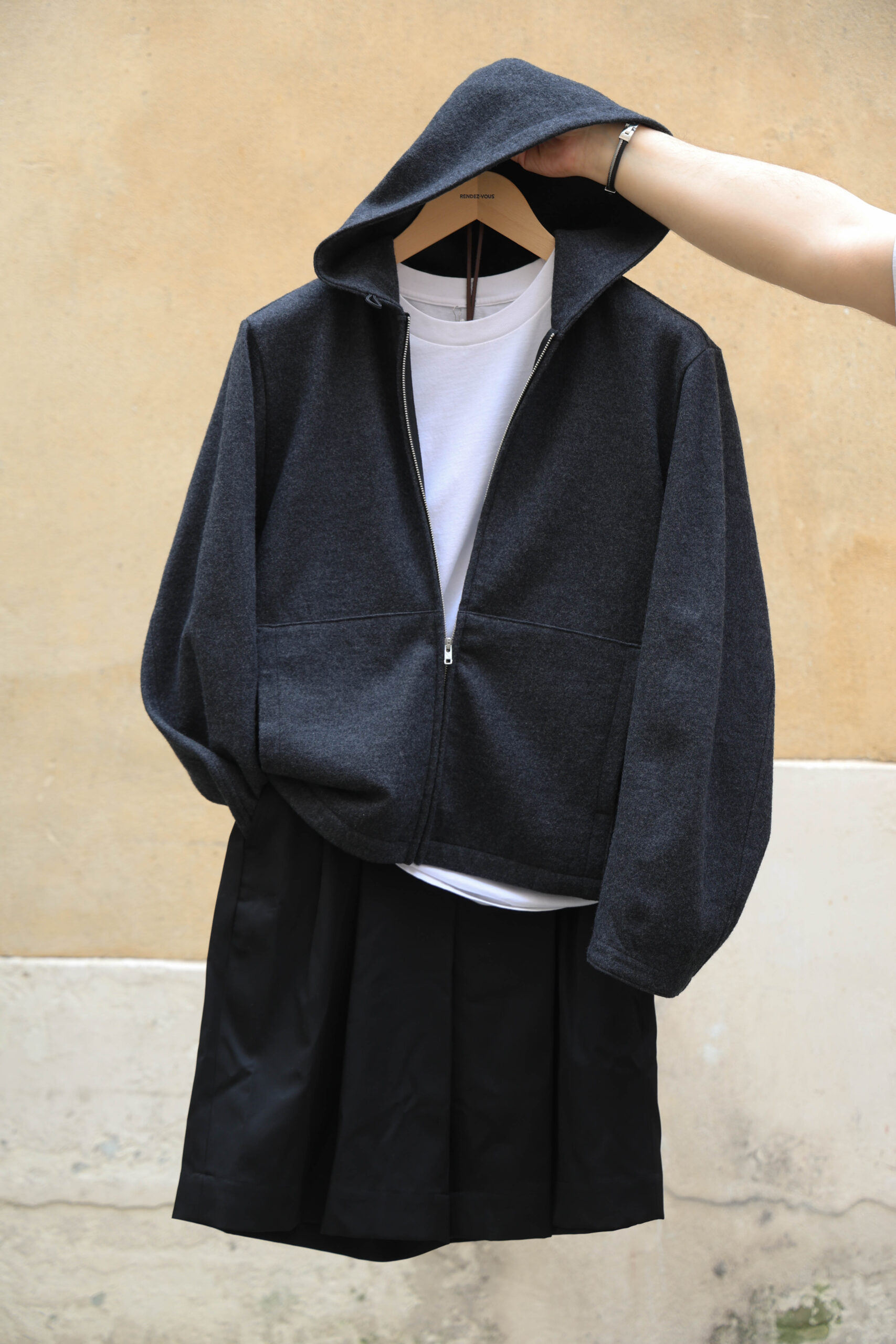
Rendez-Vous Store carefully curates exceptional designers from around the world. Here, a T-shirt and a wool zip-up blouson (€115 and €530) by Los Angeles–based Lady White are paired with ssstein shorts (€420).
The latter was already enjoying strong success before its designer became a semi-finalist for the 2026 LVMH Prize. Marc Llorens attributes this enthusiasm to Kiichiro Asakawa’s unisex vision. Female customers are particularly drawn to his men’s knitwear and coats, to the point that the womenswear collection has recently been introduced to the Paris store. ssstein had previously won the Fashion Prize of Tokyo in 2025, which supports selected brands through the organisation of two runway shows and showrooms during Paris Fashion Week. This award typically recognises labels that already enjoy a certain level of international recognition.
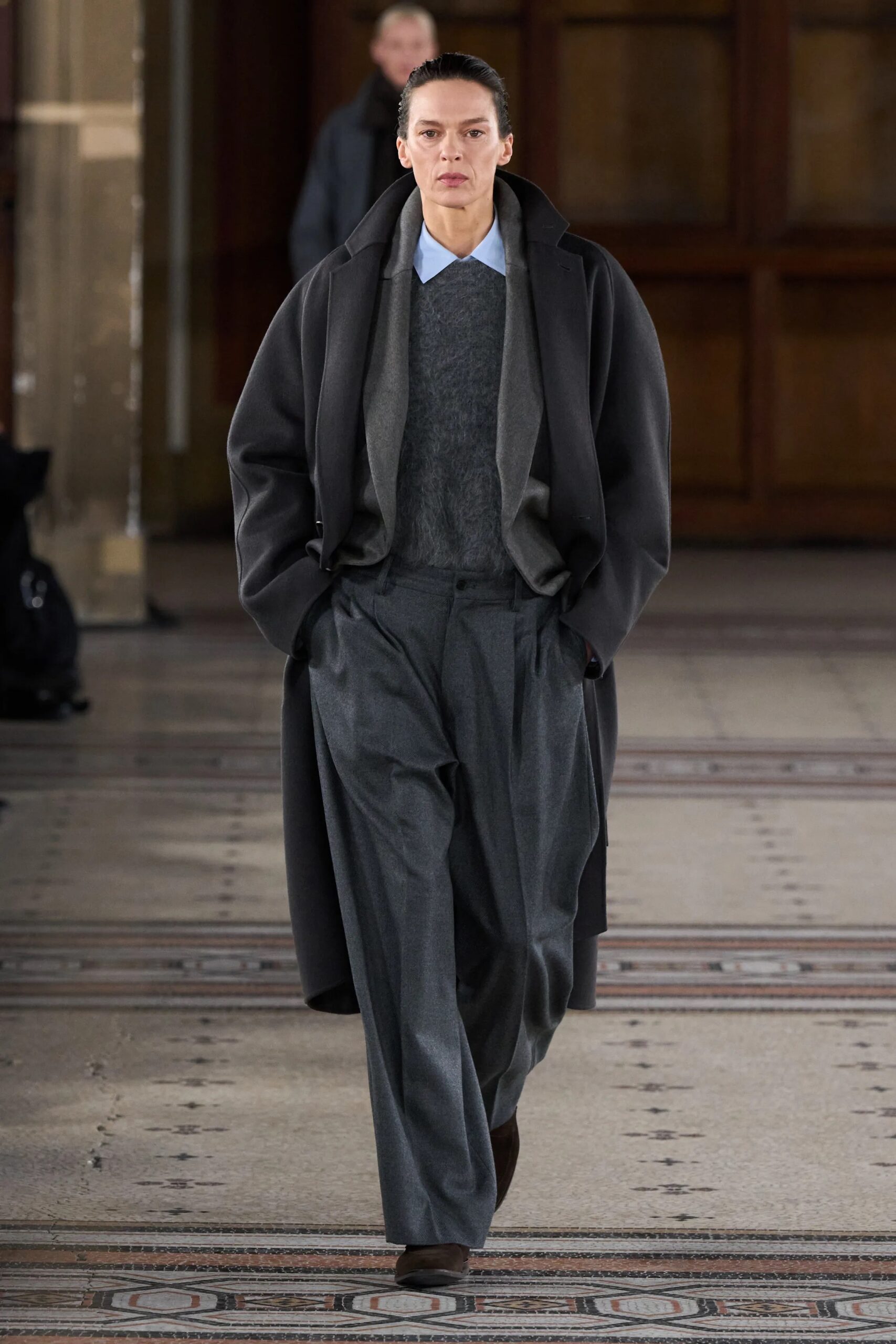
The opening look of ssstein’s Autumn–Winter 2026 runway show. The model wears a knit and a coat, both among the brand’s most popular pieces, including with its female clientele.
By contrast, the Tokyo Fashion Award is presented each year to eight Japanese brands that are not yet widely known abroad but show strong international potential. The Japan Fashion Week Organization helps them reach this goal by presenting their collections at showroom.tokyo in Paris, held alongside Paris Fashion Week. In the January 2026 edition, menswear designers ANTHEM A, kiminori morishita and MATSUFUJI stood out in particular.
Introducing a new generation of designers
For the first time this year, their pieces were offered for sale at the ‘TOKYO FASHION AWARD POP UP EVENT in PARIS’ at Printemps Haussmann Men’s, within the ELEVASTOR concept space. According to Hiroshi Komoda, Executive Director of The Japan Fashion Week Organization, this represents an important step: beyond the originality of a collection, success abroad also depends on meeting the end consumer. One of the key challenges lies in sizing, which differs from the Japanese market, as well as pricing strategies.
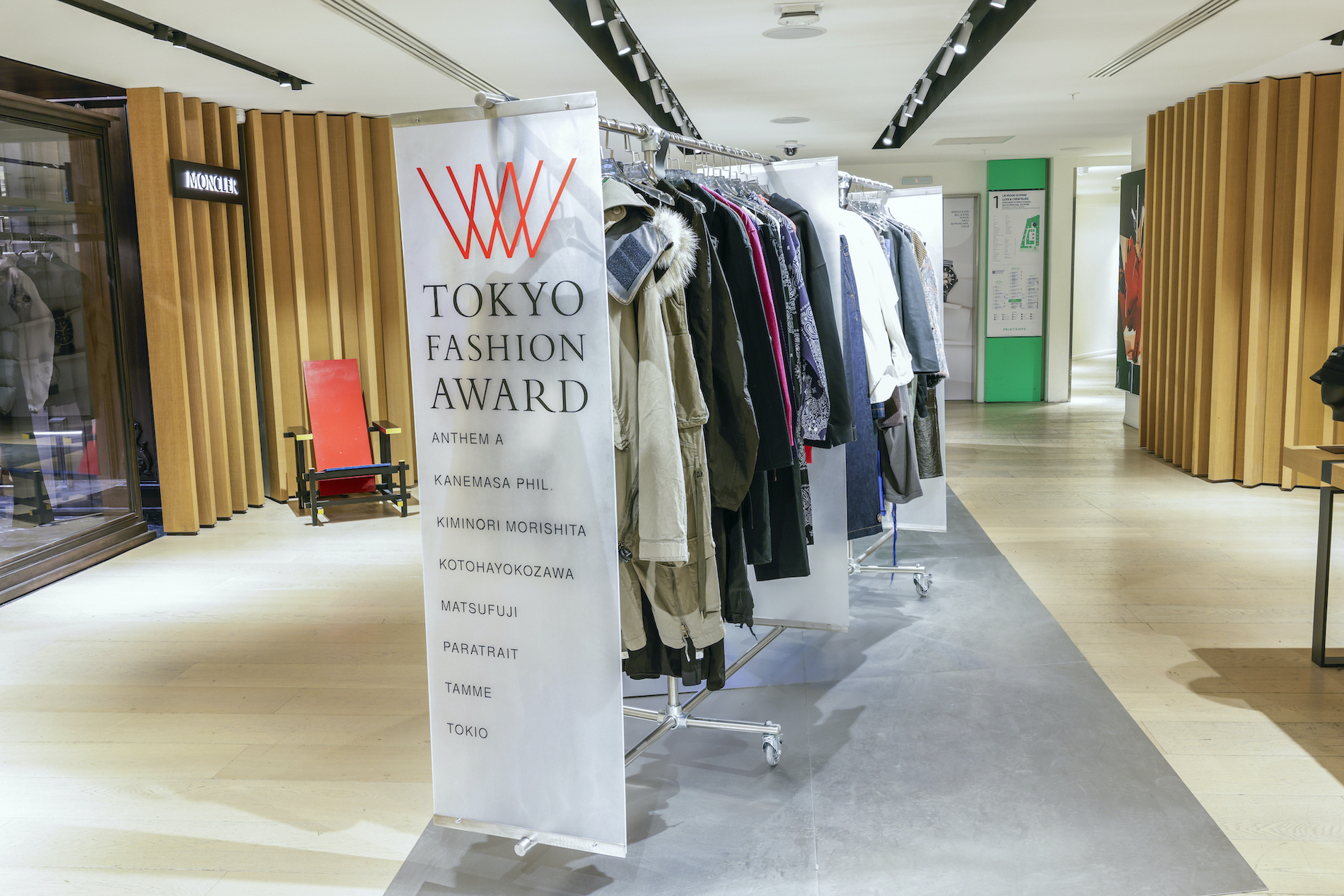
A pop-up featuring eight menswear designers awarded the Tokyo Fashion Award in 2025 and 2026, held from January 20 to 31, 2026, at Printemps Haussmann in Paris. © Courtesy of Tokyo Fashion Award.
‘When pieces are actually placed in stores, they may receive unexpected reactions and sell well, or, conversely, items of which we were very confident may fail to resonate,’ he explains. ‘Being able to experience this directly is essential, beyond pre-orders placed by buyers. Real in-store evaluation helps us understand what we should create next.’
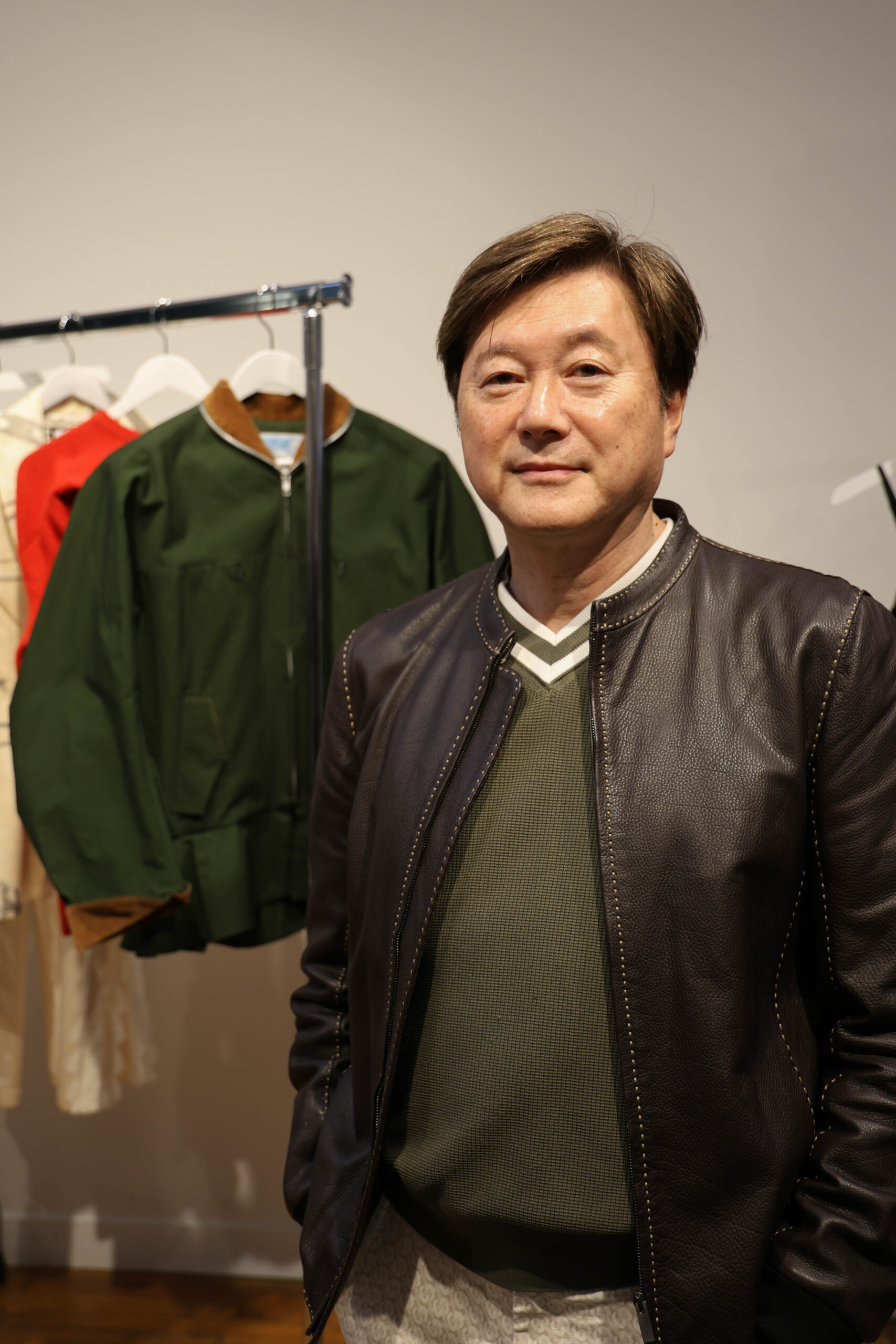
Hiroshi Komoda, Executive Director of the Japan Fashion Week Organization, during showroom.tokyo in Paris, held alongside Paris Women’s Fashion Week Autumn–Winter 2026 on March 5, 2026.
As sales remain closely linked to brand awareness, the ‘TOKYO FASHION AWARD POP UP EVENT in PARIS’ did not meet its initial targets. Communication strategy will therefore be a central focus of future Tokyo Fashion Award initiatives. While showroom.tokyo in Paris is now firmly established among industry professionals as the key meeting point for discovering the next generation of Japanese designers, the challenge now is to give equal visibility to the pop-up, which will return during Paris Fashion Week in June 2026.
In the meantime, fashion enthusiasts can visit Rendez-Vous Store Paris or its website, where new arrivals are curated weekly through the discerning eye of Marc Llorens and Olivier Salette, long-standing connoisseurs of Japanese fashion.
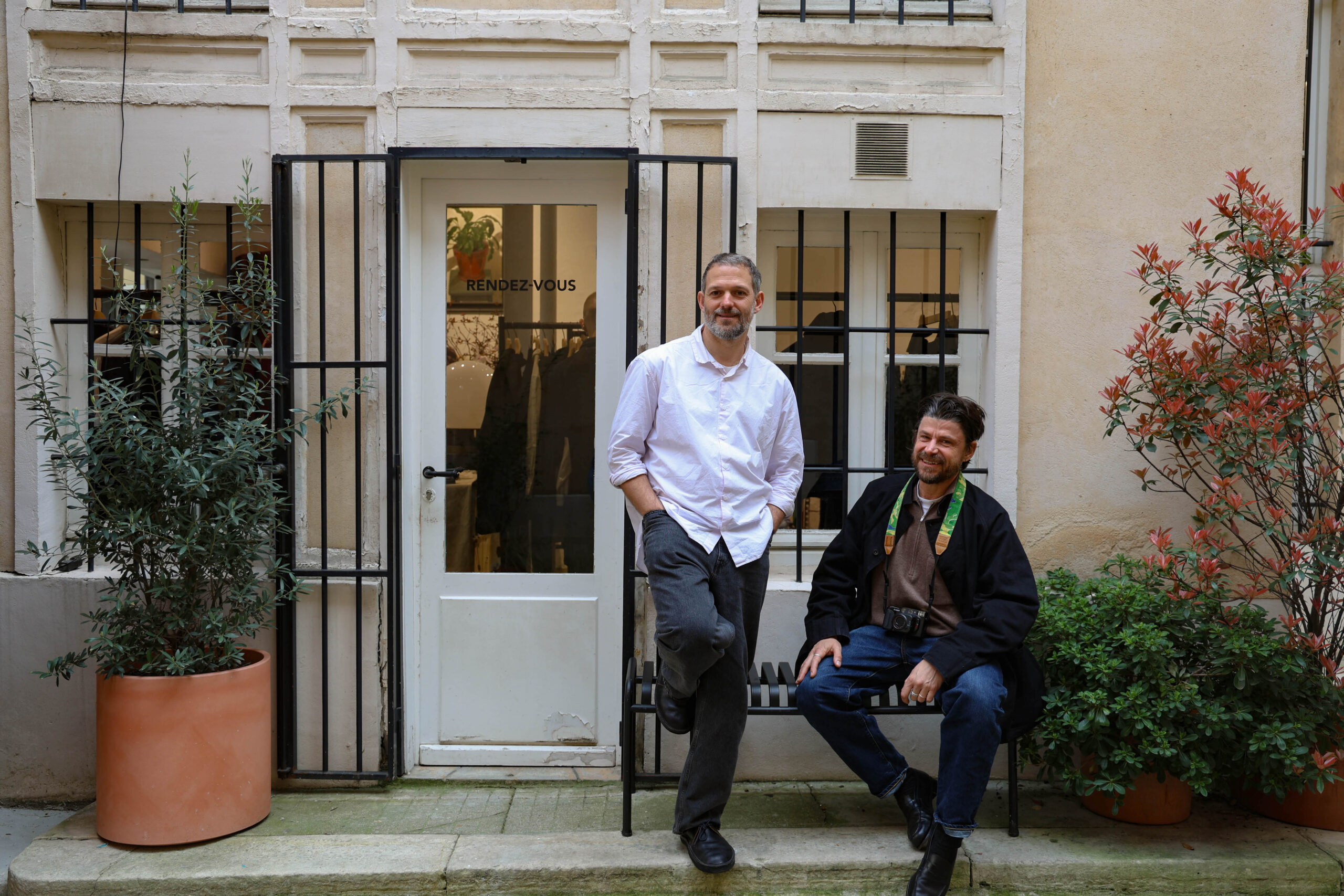
Olivier Salette (left) and Marc Llorens (right), co-founders of Rendez-Vous Store, in front of their Paris boutique in March 2026. They are the strongest ambassadors of their selection and are often featured in imagery for their e-shop. The small team produces everything in-house. Olivier’s outfit: Bergfabel shirt (Italy), YLÈVE jeans (Japan), and YOKO SAKAMOTO shoes (Japan) with Vibram soles (Italy). Marc’s outfit: COMOLI jacket and T-shirt (Japan), ATON sweater (Japan), vintage HATSKI jeans from their first or second season, worn in by himself, ROTOTO socks (Japan), and J.M. Weston loafers (France).