The Exhibition ‘Shōji Kamoda and IM MEN’ Traces the Course of a Quiet Dialogue
The works of the ceramic artist and the garments of Issey Miyake’s menswear line resonate here across time and disciplines.
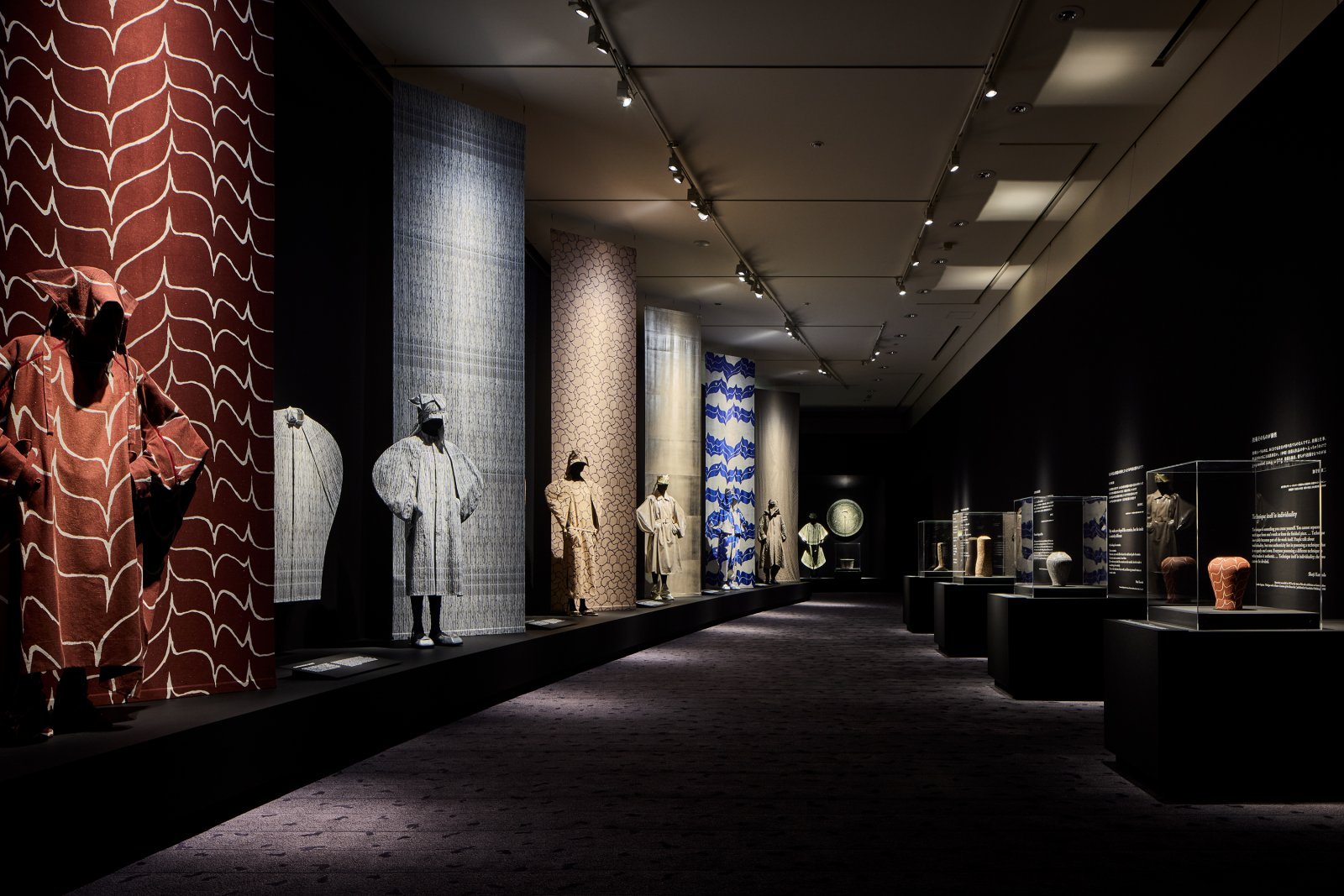
In the exhibition space, nine series inspired by Kamoda’s works are presented alongside the textiles.
Presented at the National Museum of Modern Art, Kyoto, in the Okazaki district, the exhibition Shōji Kamoda and IM MEN brings together two fields that might at first appear distinct: craft and fashion. The works of ceramic artist Shōji Kamoda and garments from IM MEN, Issey Miyake’s menswear line, are placed in dialogue, echoing one another beyond differences in period and medium.
Launched in 2021, IM MEN extends and reinterprets Issey Miyake’s concept of ‘a piece of cloth,’ while exploring new possibilities in making. Its Spring/Summer 2026 collection draws on the formal world of Shōji Kamoda.
Born in 1933 and active until his death in 1983, Kamoda occupies a singular position in the history of Japanese ceramics. Born in Osaka and trained in Kyoto, he developed his practice in Mashiko and later in Tōno. His works are characterised by a raw materiality, at times associated with Jōmon aesthetics, taut forms, and meticulously constructed patterns. They carry a presence that unsettles perception.
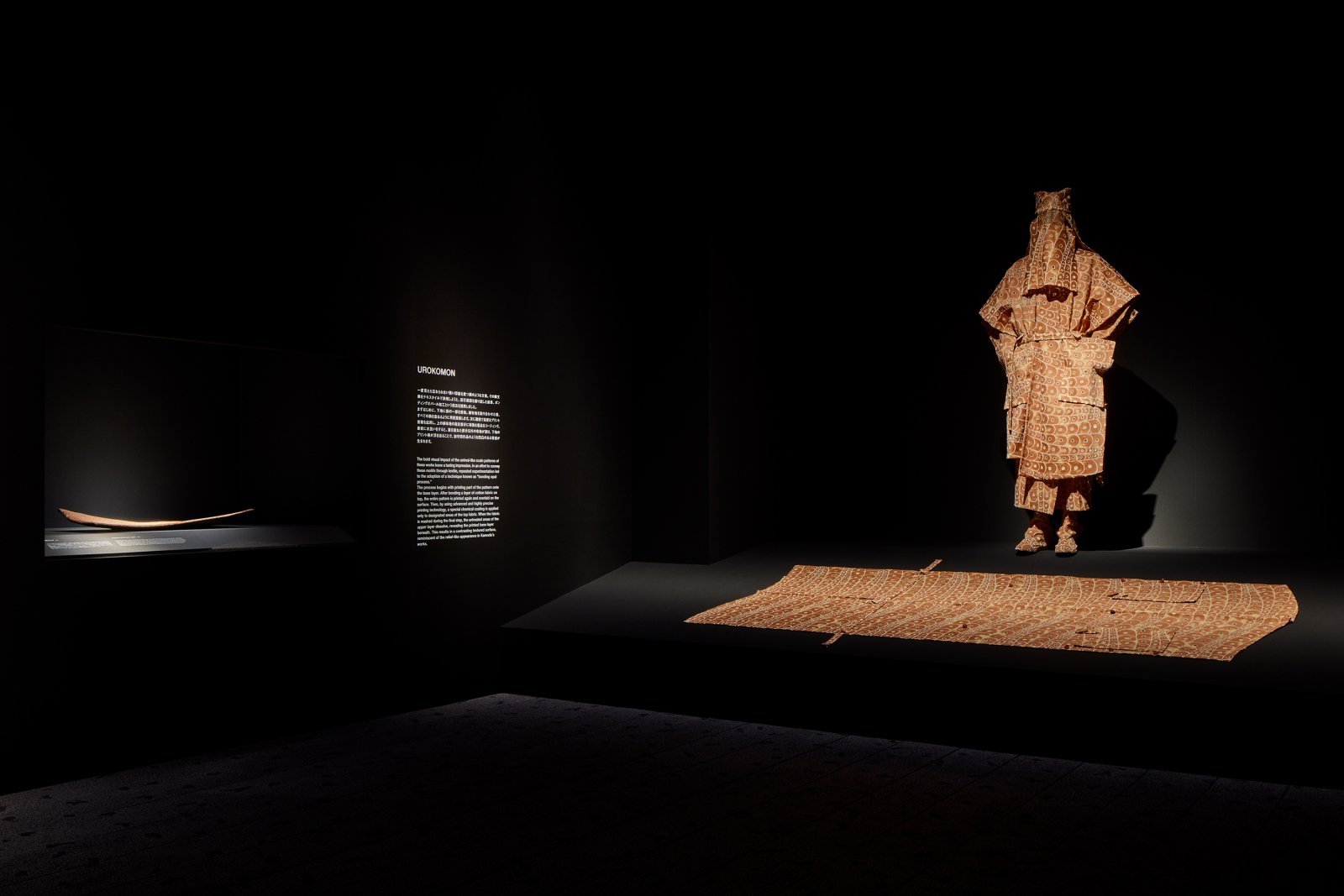
The ‘Urokomon’ series, at the core of the collection. Motifs, textures, and relief are meticulously translated into textile.
‘Rather than something simply beautiful or pleasing, it was a slightly disquieting sensation that drew me in,’ says Sen Kawahara, in charge of design and engineering at IM MEN. Encountering Kamoda’s work, he perceived a different set of values, distinct from established aesthetic criteria. ‘It seemed to me that there was a connection between the way Issey Miyake developed garments with an almost craft-like approach, and this beauty that is at once simple, powerful, and highly structured.’
Given the fundamental differences between ceramics and clothing, the aim was not to transpose one into the other directly. Attention instead focused on textures, tonal variations, and in particular the matte quality of the surfaces, translating these into textile.
‘The Spring/Summer 2026 collection is titled ‘Dancing Texture,’’ Kawahara explains. ‘The name comes from the sense of movement that emerges from each texture, conceived almost as volume. In the process of making, there are moments when one enters a state of complete concentration. It is close to the sensation of dancing, when the body begins to move naturally to the rhythm of the music. I strongly felt this dimension in Kamoda’s work.’
He continues: ‘Although he is well known within the field of ceramics, he remains relatively unfamiliar to a wider audience. We hope this exhibition will serve as an entry point to his work, and that new encounters will emerge at the intersection of fashion and craft.’
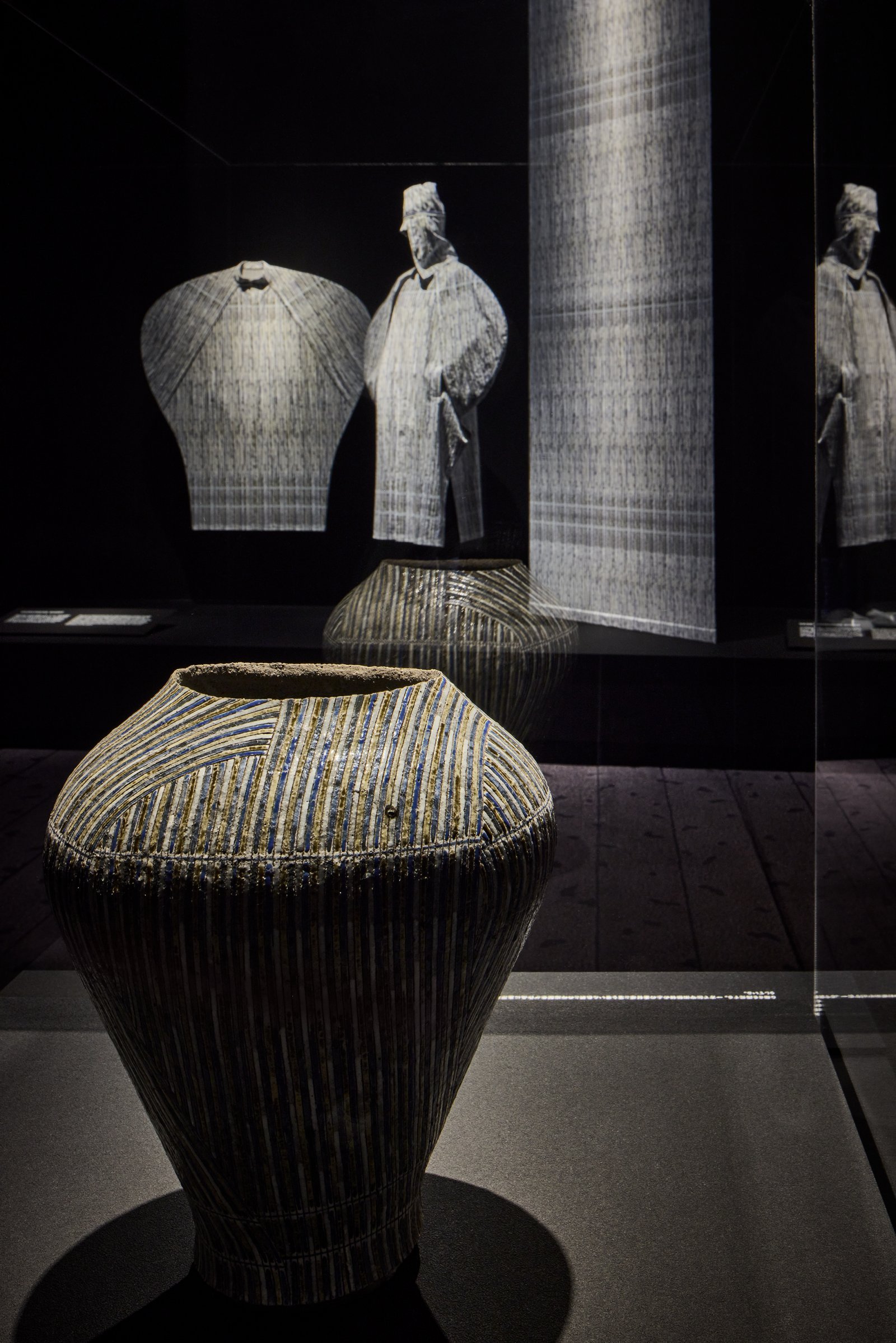
A piece that Sen Kawahara says he wanted to wear, and which became the starting point of the collection. An original digital print is layered over yarn-dyed striped fabric, creating effects of fading and variation.
In the exhibition space, key pieces from the Spring/Summer 2026 collection are presented alongside the Kamoda works that inspired them, as if engaged in conversation. Among them, the ‘Urokomon’ series—central to the collection—draws on the motifs and texture of Colored Jar (1971), translated through a technique known as bonding opal. In order to reproduce the matte surface, nearly seventy combinations of materials were tested. The ‘Curviness Shirt,’ meanwhile, takes up the clearly defined bands of colour seen in Vase (1978).
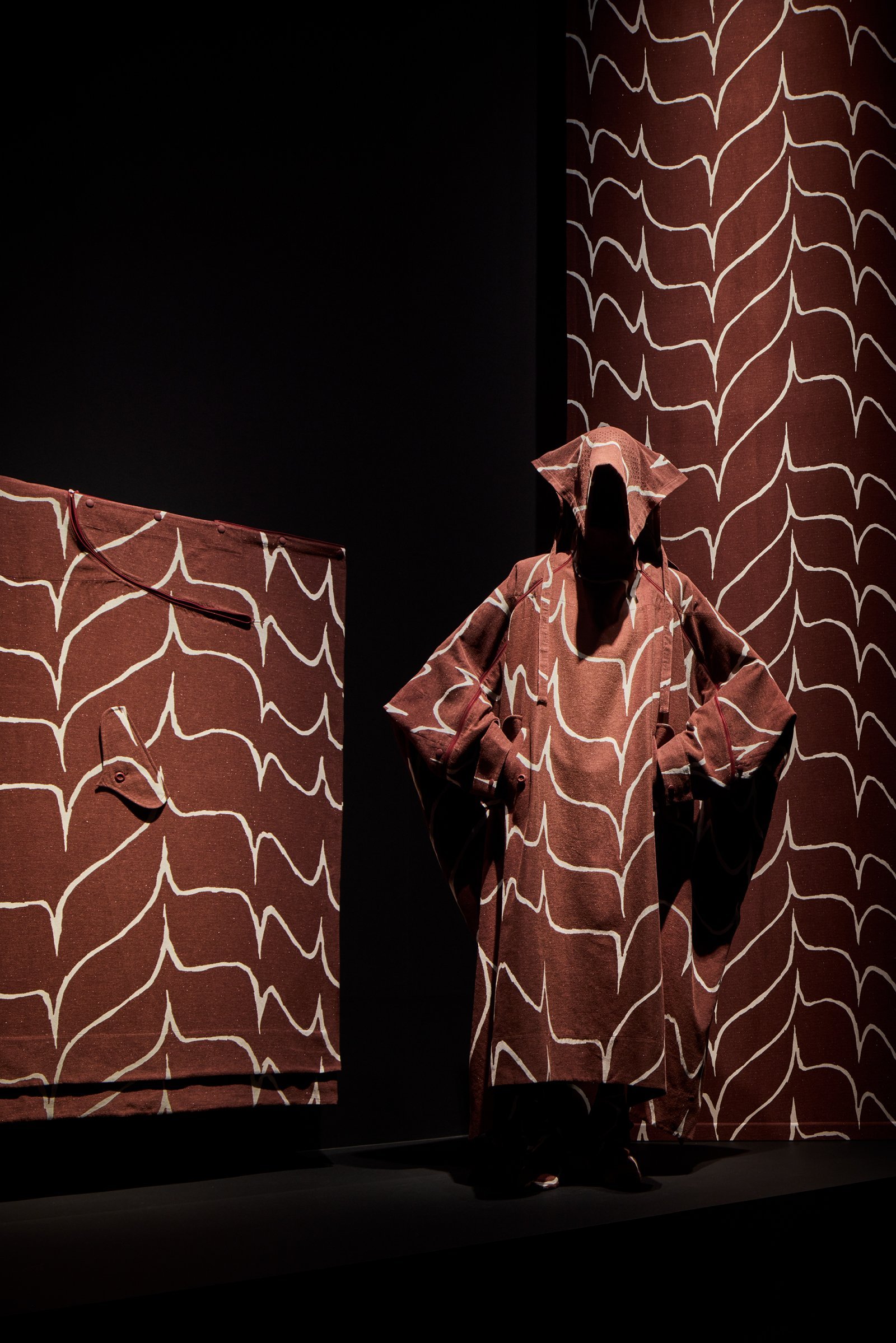
A series inspired by ‘Colored Jar’ (1975), distinguished by the contrast between a matte ground and white wave-like patterns. Eight types of yarn are used to render textures and tonal variations, down to the way particles in the clay reflect light.
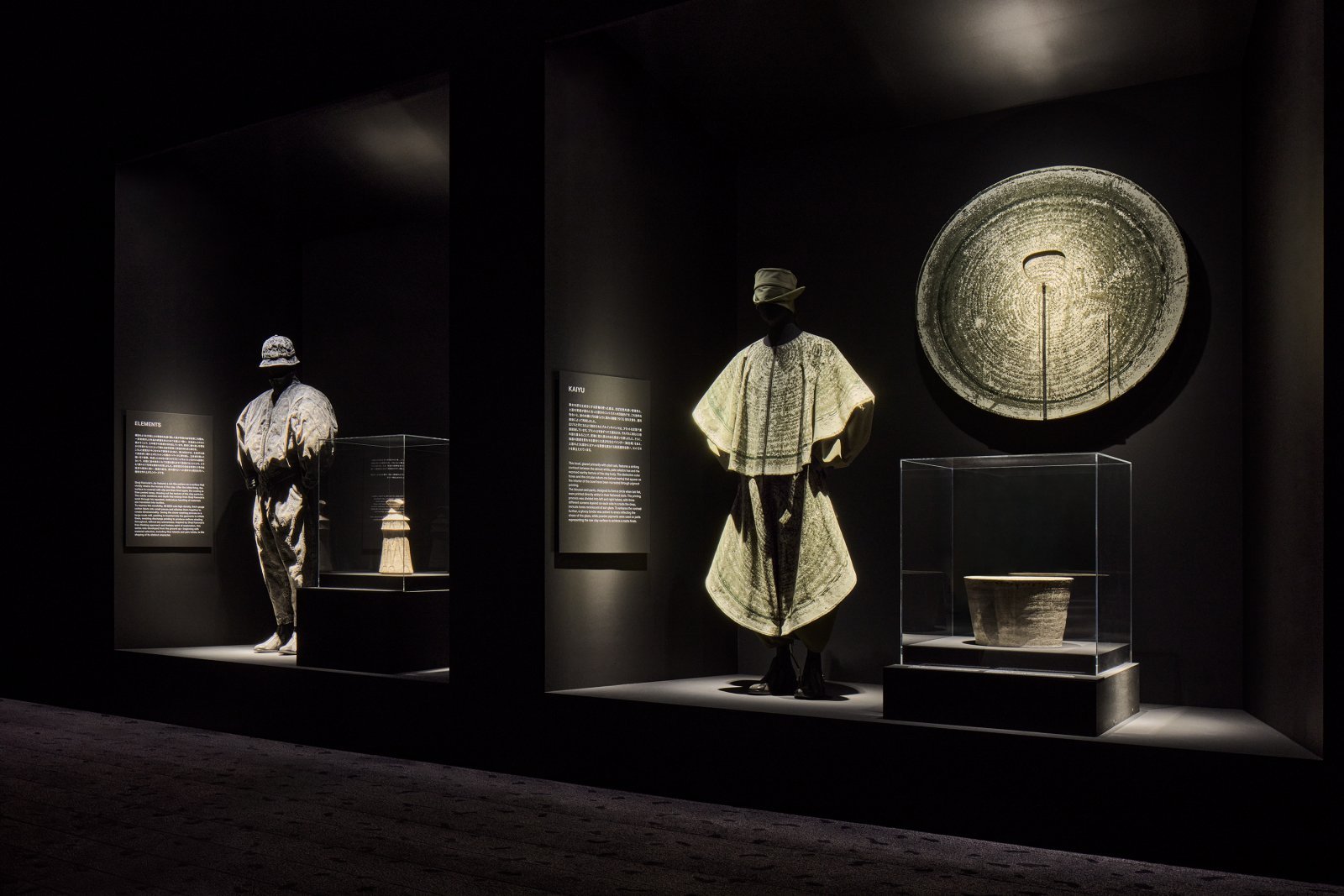
A collection developed through multiple approaches, in resonance with Shōji Kamoda’s practice—from forms seen from above to patterns unfolded across surfaces—reflecting sustained engagement with material.
These textiles were developed under the direction of Nobutaka Kobayashi, in charge of textile design and engineering at IM MEN. ‘When we encountered Kamoda’s work, there was a strong desire to give form to that energy,’ he says. ‘More than textures or colours, it was the intensity with which he engages the process of making that left an impression.’ Research carried out in workshops in Kyoto, Shiga and Okayama, in collaboration with artisans, led to an evolution of production methods.
These materials are then shaped into garments under the direction of Yuki Itakura, responsible for design and engineering at IM MEN. He focused on characteristic compositional features in Kamoda’s work, where centrally symmetrical patterns unfold as if enveloping the form of the vessel, as well as on the relationships between form and motif, and the range of expressions in which geometric and organic elements overlap. From these elements, the designs were developed either from motifs or from silhouettes, resulting in a wide range of expressions.
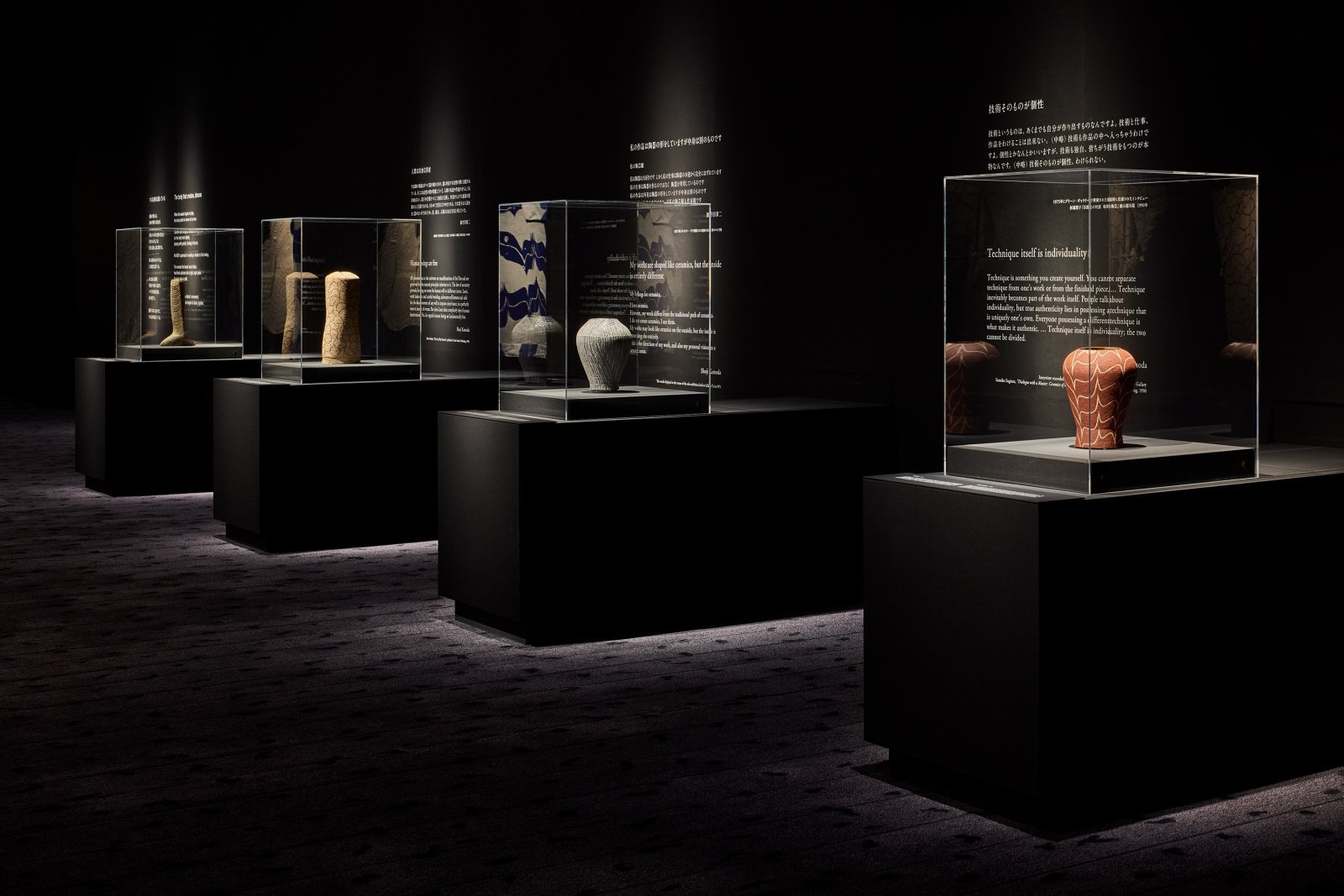
Over nearly twenty years of practice, Shōji Kamoda developed a distinctive language. The exhibition offers a rare opportunity to encounter major works.
Tomohiro Daichō, senior curator at the National Museum of Modern Art, Kyoto, emphasises the rigour of Kamoda’s creative process: ‘Each stage is precisely conceived. Rather than leaving things to chance, the work proceeds with a clear vision of the final outcome. Even distortions are anticipated and incorporated into the process, including how to intervene. This reflects both technical mastery and a strong sense of intent.’
He also highlights the way Kamoda draws on nature and classical forms, not to reproduce them, but to reinterpret them through his own perspective, reconstructing the relationship between form and ornament. ‘What we see in his works is not the source itself, but his interpretation of it—in other words, his gaze.’
This approach resonates closely with that of IM MEN. Rather than reproducing an object as it is, the process involves translating it—through a distinct interpretation—into different materials and structures. What connects these approaches is a shared commitment to engaging with the essence of making. The exhibition thus suggests, with restraint, a renewed relationship between those who create and those who encounter their work, and points toward the possibilities that emerge from it.
‘Shōji Kamoda and IM MEN’
National Museum of Modern Art, Kyoto, 1st Floor (Lobby)
26-1 Okazaki Enshōjichō, Sakyō-ku, Kyoto 606-8344
Dates: March 28 – June 21, 2026
www.momak.go.jp/English/