Kissa Soirée, Kyoto’s Showa-Retro Café Where Blue Light Meets Art Nouveau
A solo visit to the long-established café reveals jelly punch floats, hand-carved interiors and a preserved piece of postwar Kyoto café culture.
Fashion reporter and photographer Kazushi Takahashi turns his gaze beyond the runway, tracing the beauty that lives in the everyday. A graduate of Meiji University and Bunka Fashion College, he began his career as an editor at Bunka Publishing Bureau (MR High Fashion, Soen). Now freelance, he travels through Japan to write, photograph and style stories where fashion meets craft, design and culture, sharing what he discovers in each issue of Pen.
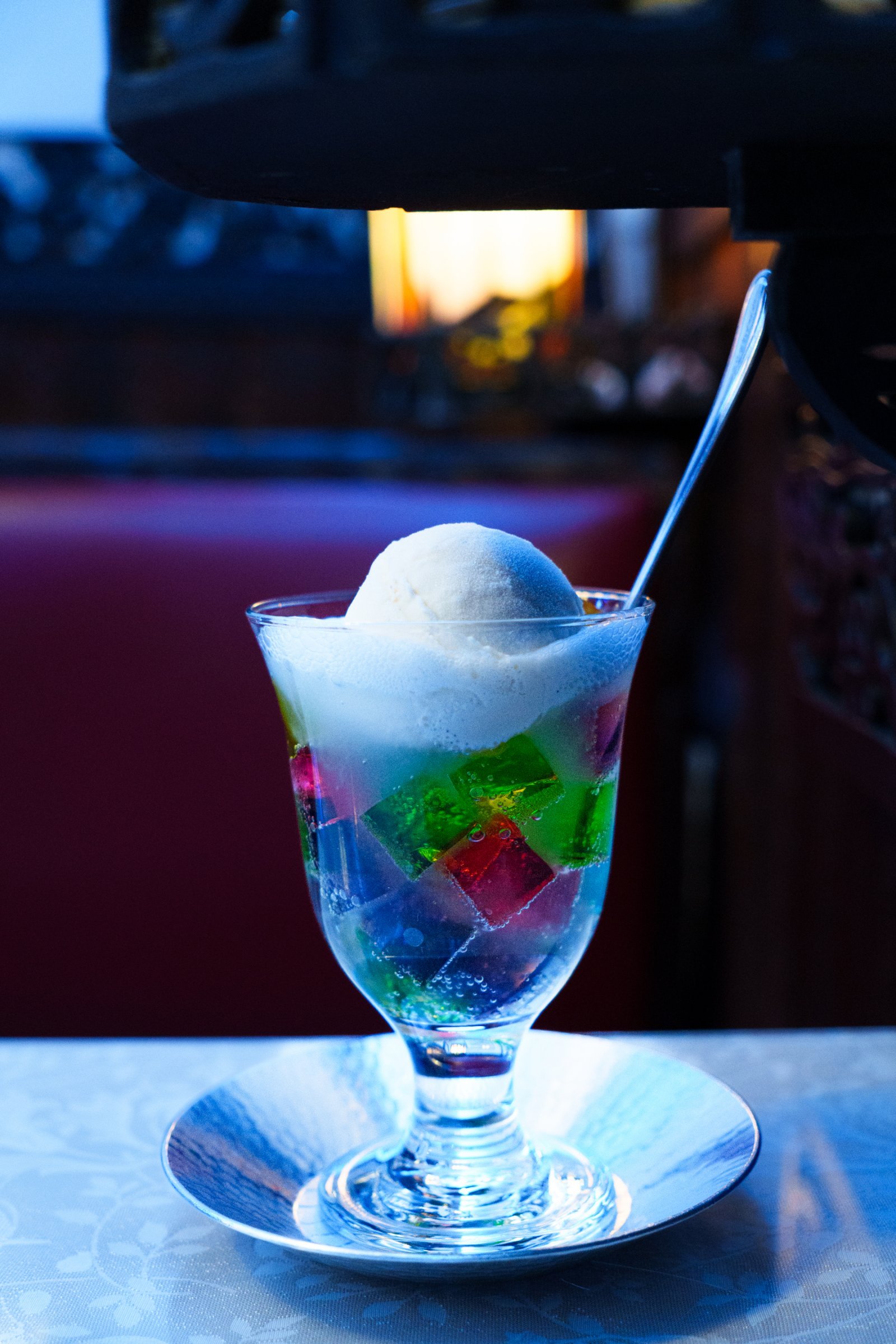
Kissa Soirée is one of Kyoto’s most iconic long-established cafés from the Showa era.
Its signature Jelly Punch Float is the perfect way to revive yourself after a long day of walking around the city.
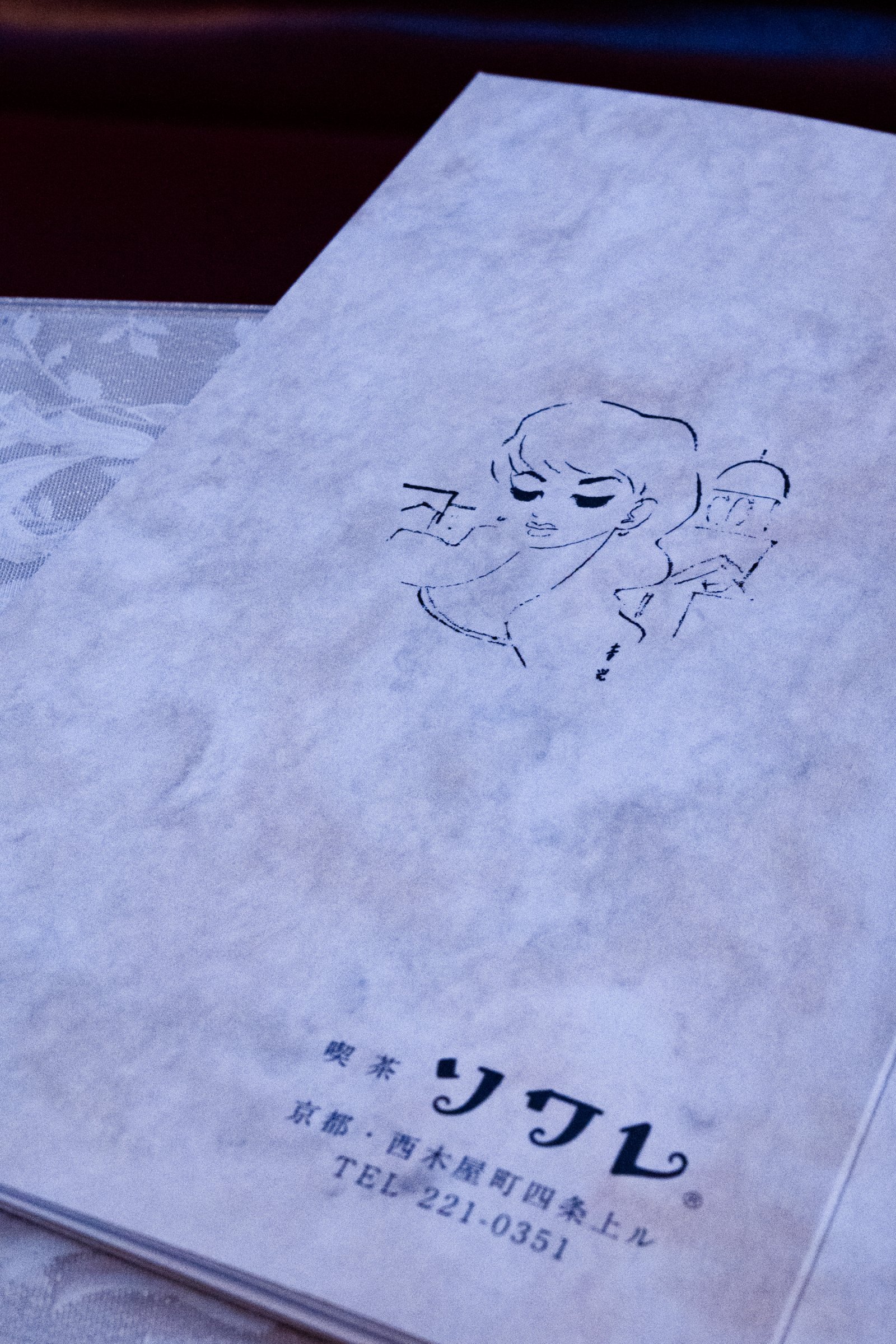
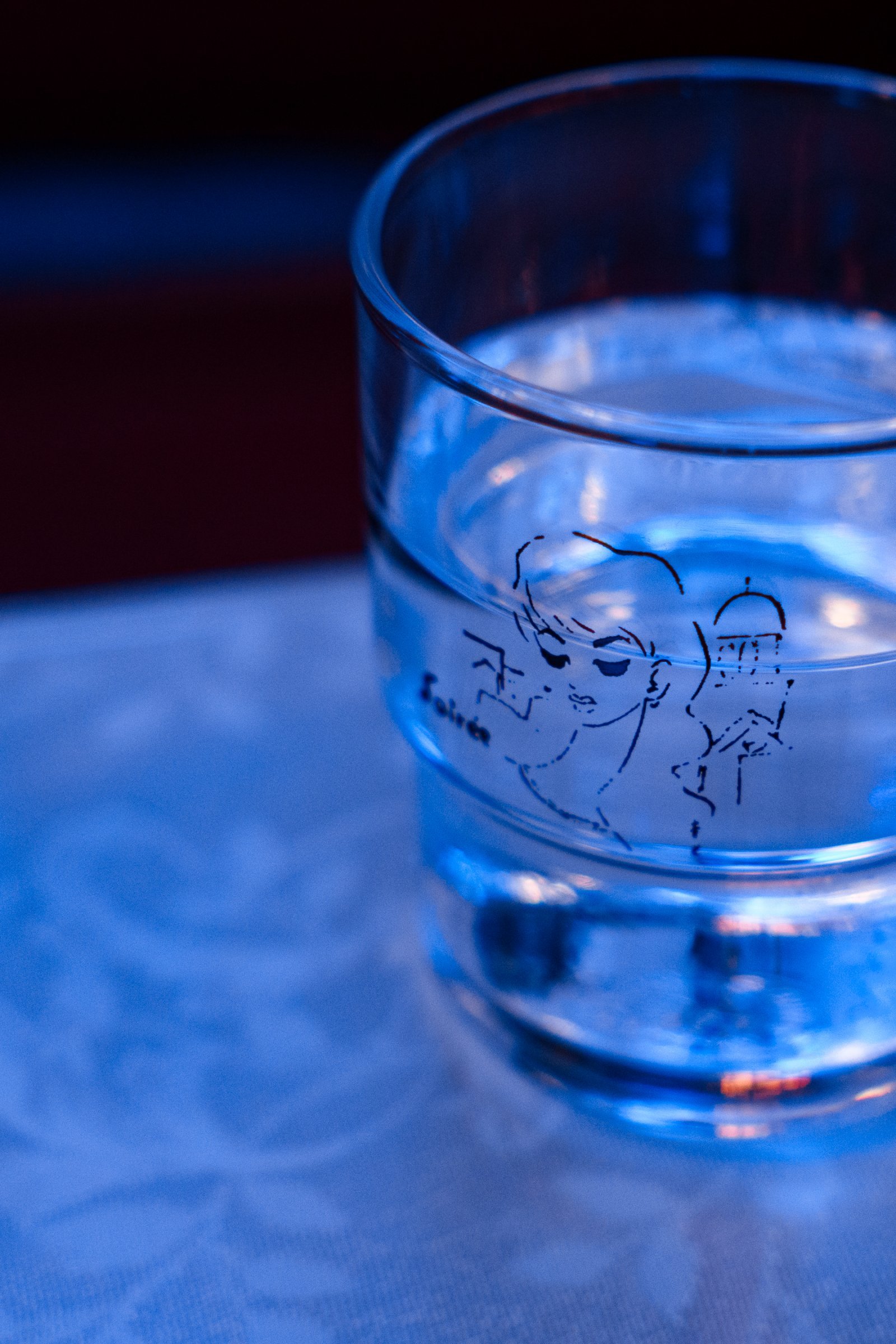
I visited for the first time.
At last, I made it to Kissa Soirée, a place I had been curious about for some time. I love coffee and old Japanese houses, and in Kyoto I often go around visiting contemporary coffee shops renovated from traditional machiya townhouses.
My solo trips from Tokyo, camera in hand, are usually either overnight stays or day trips. With limited time, older cafés tend to get postponed with the thought, ‘I’ll go next time.’
Among Kyoto’s long-established Showa cafés, I had been to the main branch of Inoda Coffee, whose Japanese name is officially written as Inoda ‘Kōhi.’ That café opened in 1947, shortly after the war. Kissa Soirée opened the following year, in 1948. In other words, they belong to the same era of social cafés.
The major difference between the two is that Inoda is usually discussed in the context of coffee, while Soirée is discussed more in terms of style. I had somehow formed the impression that Soirée was more of a place for women. Even though I once worked as an editor for women’s fashion magazines and have absolutely no resistance to things considered ‘feminine,’ it had never ranked very high on my personal list of places I wanted to visit in Kyoto.
But during a trip to Kyoto this April, I became tired from walking and found myself craving something sweet and fizzy.
‘Oh, right. Isn’t Kissa Soirée famous for its cream soda?’
With that thought, I decided to open the door.
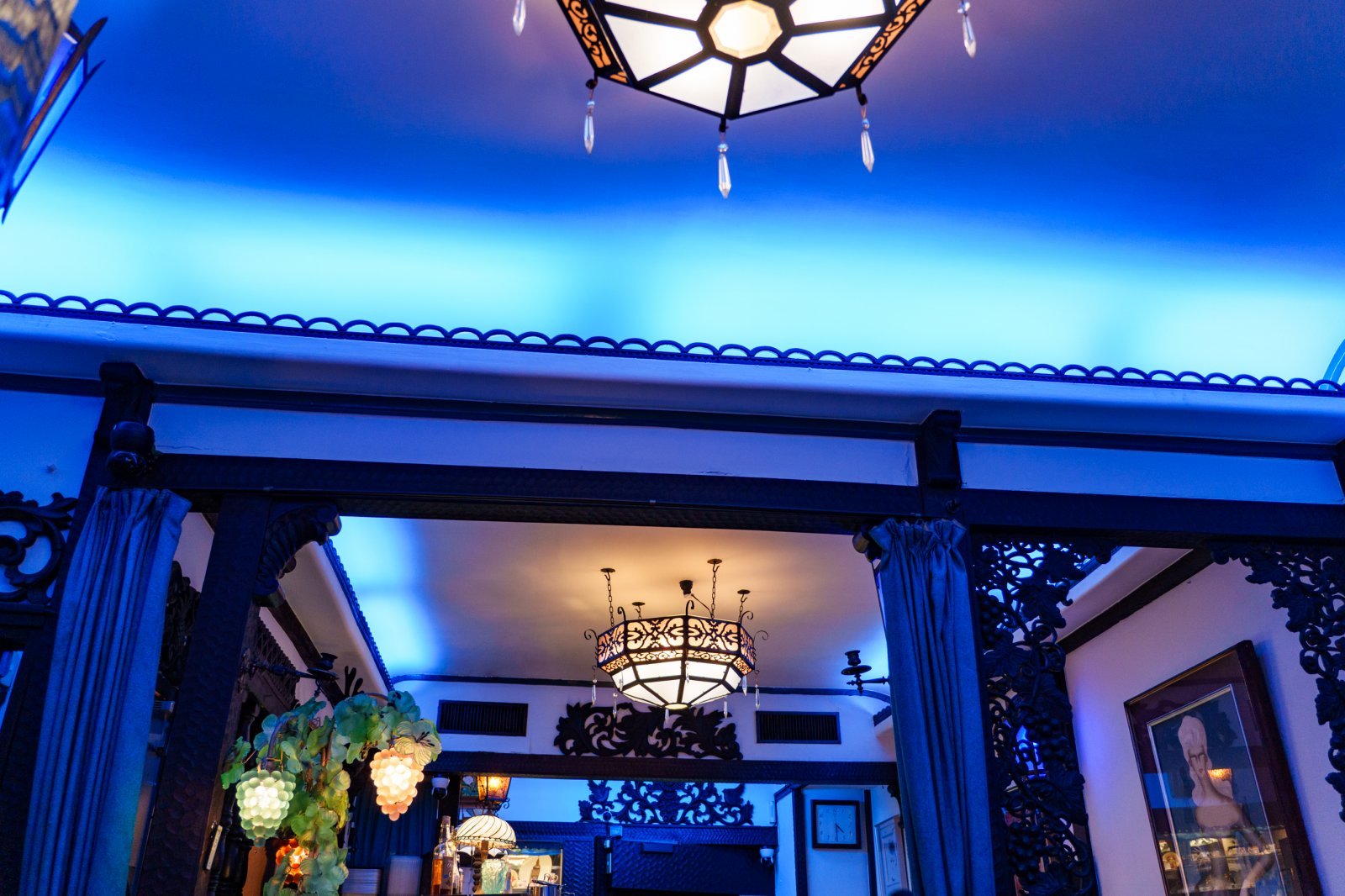
The moment I stepped inside, I found myself surrounded by the much-talked-about blue lighting. The dim, blue, dreamlike space envelops you completely. The absence of music creates a pleasant kind of tension, opening up a world that feels cut off from the outside.
In its early days, Kissa Soirée apparently wrapped fluorescent lights in blue cellophane. Since the COVID-19 period in the Reiwa era, these have been replaced with blue LEDs. One oft-told story about the café is that its blue lighting was devised with the idea that it would make women appear more beautiful and men look younger.
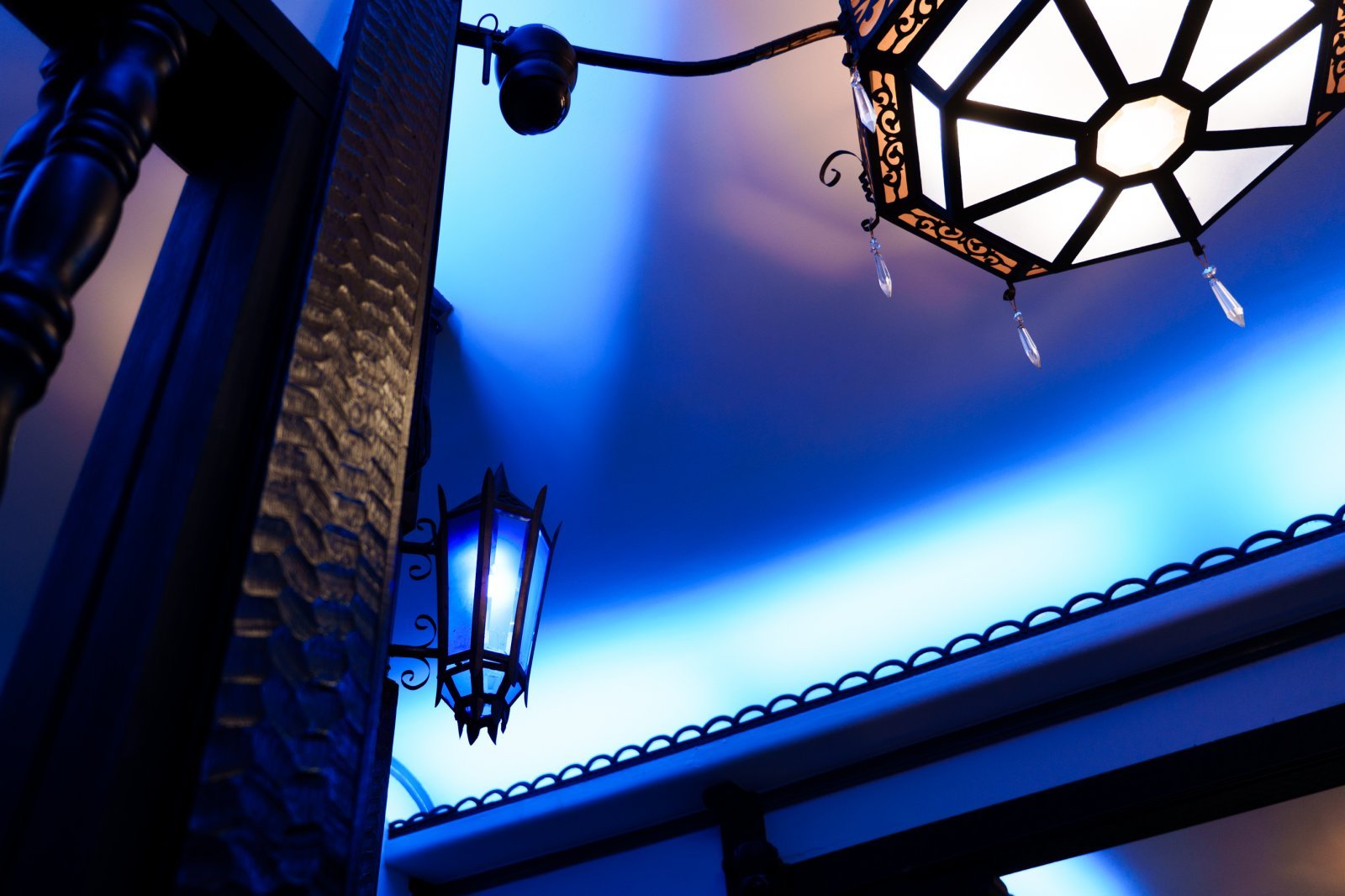
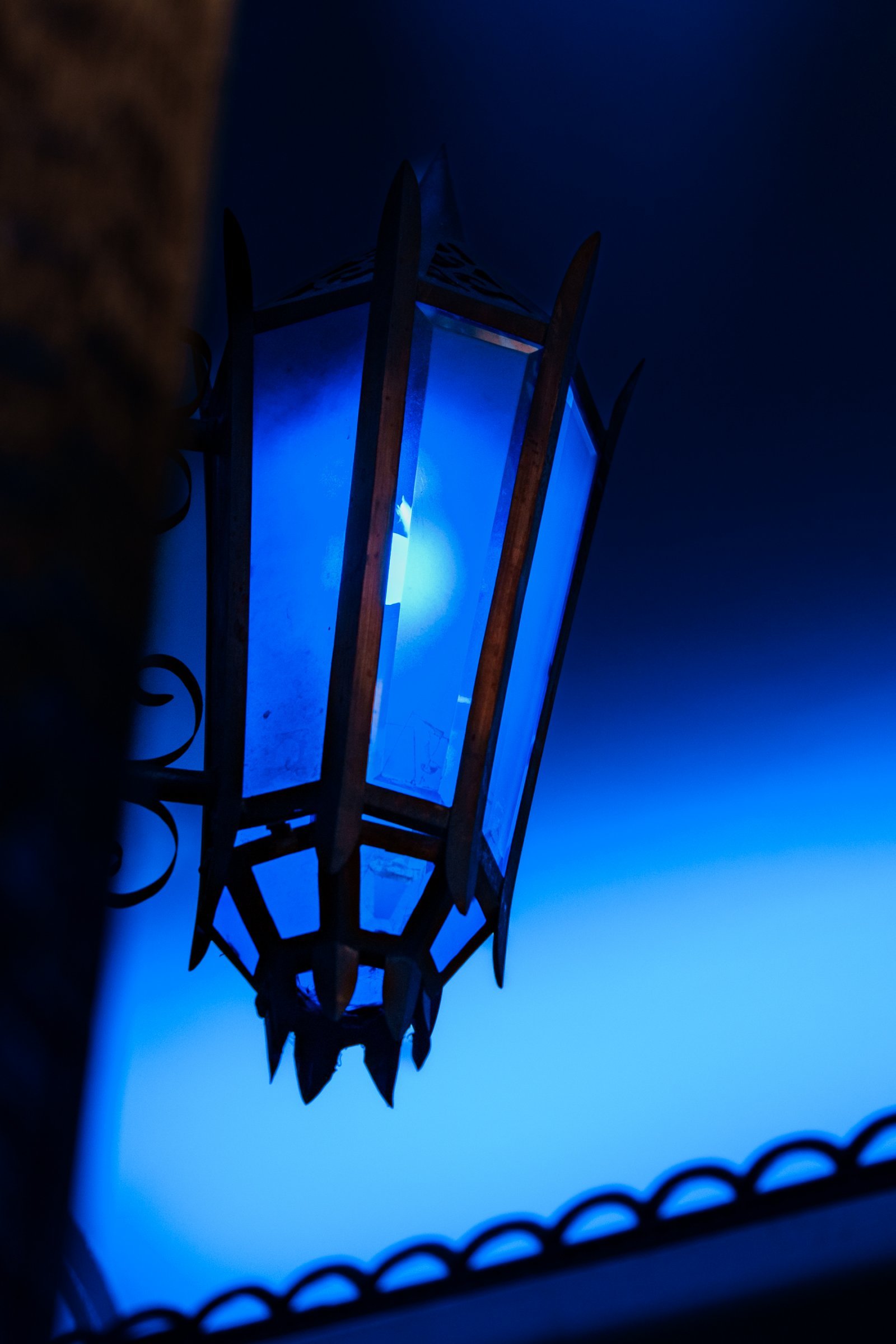
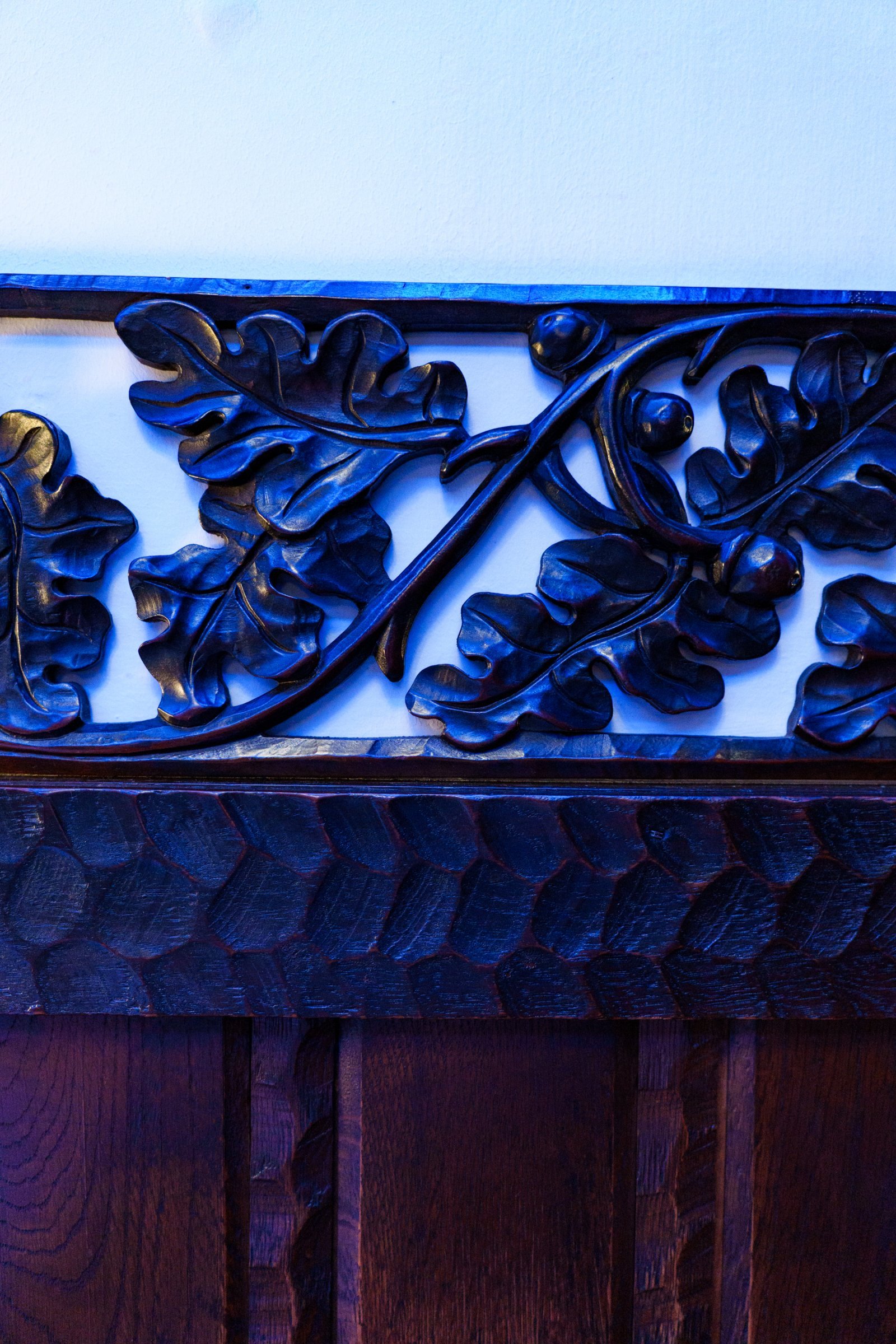
Once seated, I calmly looked around and noticed interiors and decorative details that appeared to draw from early 20th-century Art Nouveau, with its curving motifs inspired by plants and living things, as well as the later Art Deco style, known for geometric lines.
The experience of being surrounded by hand-carved wooden decoration felt surprisingly fresh. It had the opposite warmth of contemporary cafés, or fashion boutiques, built around hard materials such as marble, concrete and glass.
‘Ah, this kind of thing is nice once in a while,’ I thought to myself, quite sincerely.
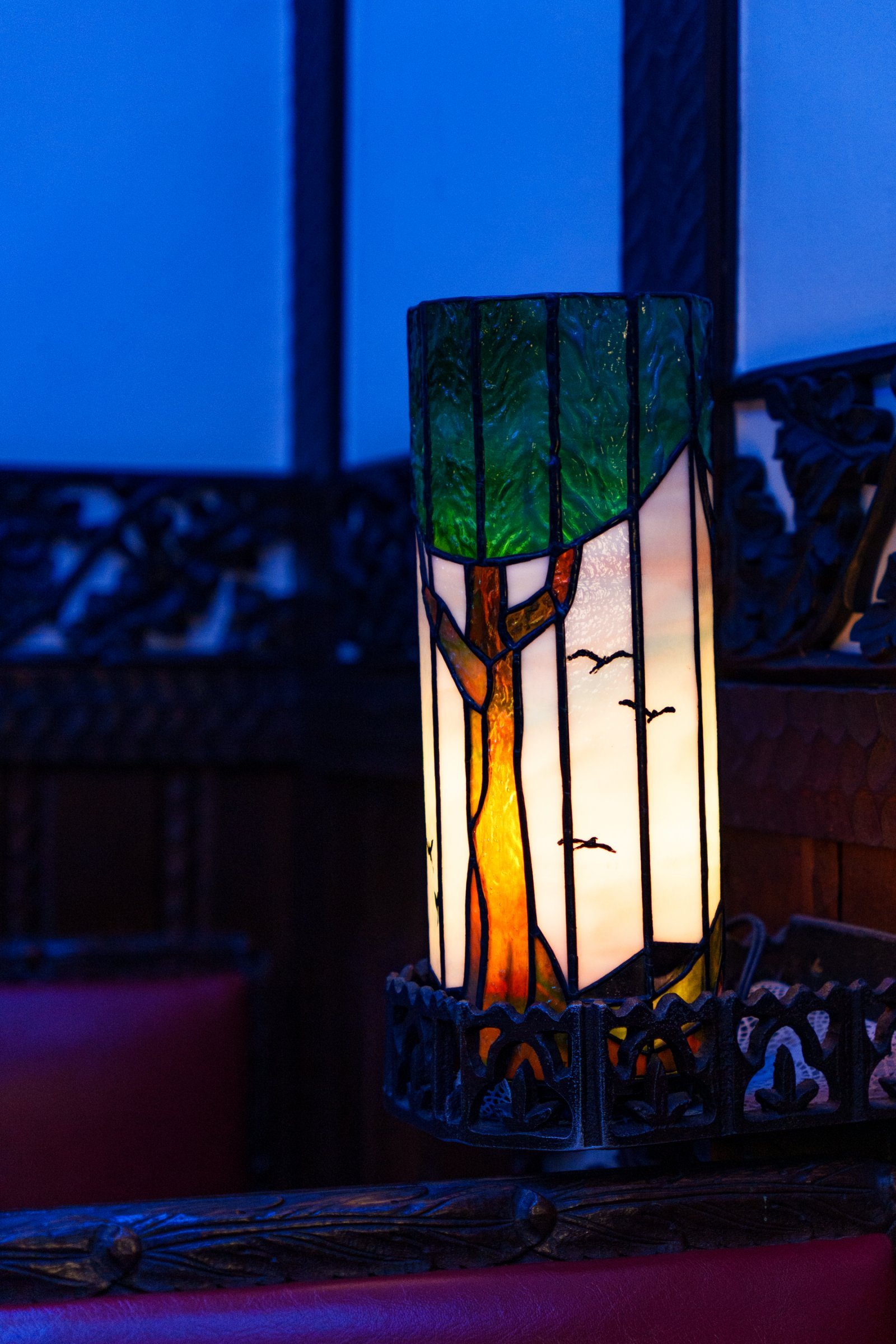
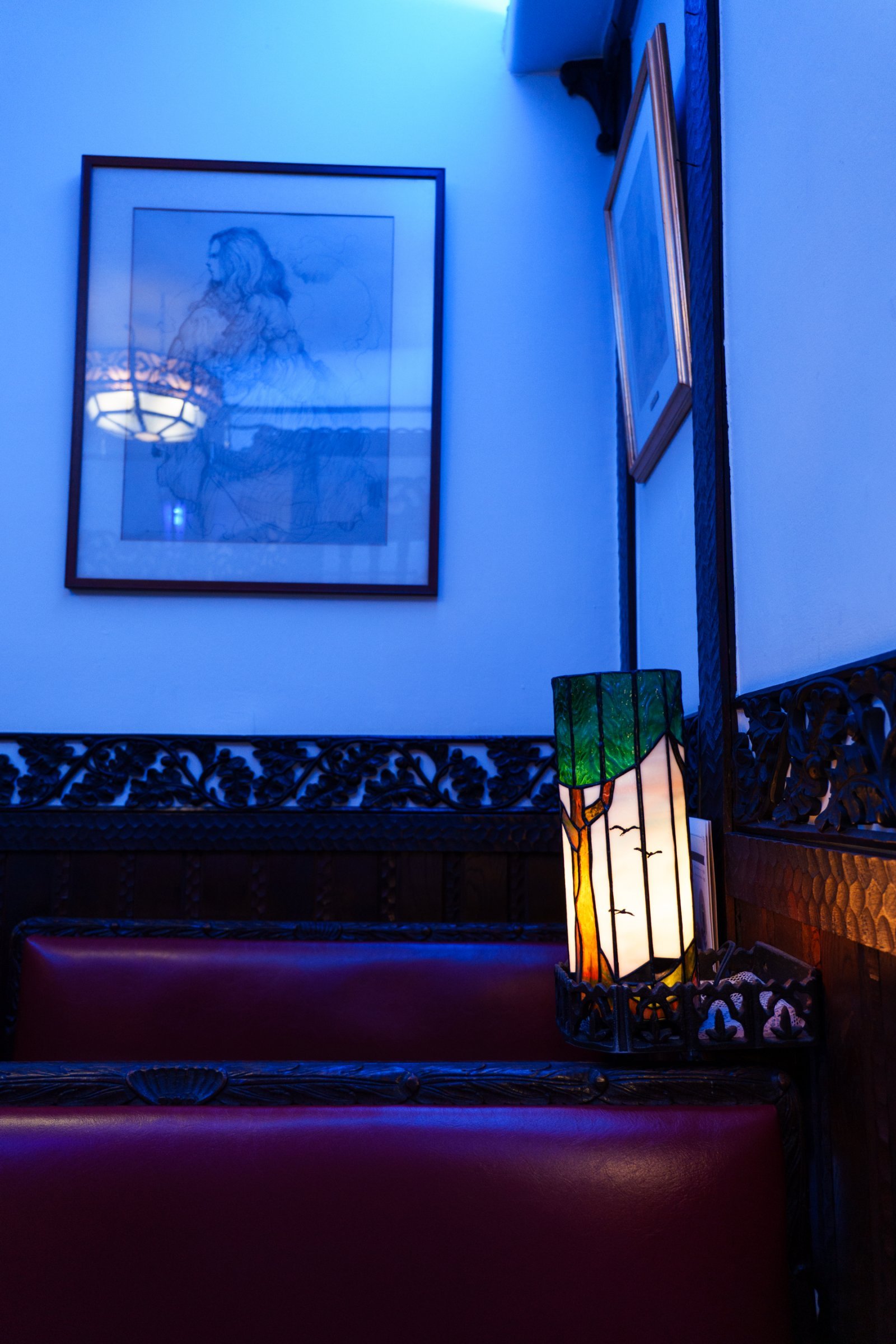
Stained glass is another decorative element often seen in the early 20th century.
By the time this café opened in postwar Japan, even Art Deco would already have been past its peak in Europe. But considering the time lag with which information crossed the seas and reached this island nation, one can imagine that it must have felt extremely modern in Japan at the time.
In its early years, the café was apparently a gathering place for adult men. In the 1970s, beautiful menu items such as fruit punch were created in the hope of attracting more female customers.
The other day, I came across an online article in The Asahi Shimbun, dated April 28, introducing Kissa Soirée with the headline: ‘Nearly 80 Years in Kyoto’s Downtown: Like a Museum, the Famous Café Becomes a Nationally Registered Cultural Property.’
There are many Nationally Registered Tangible Cultural Properties in Kyoto, with 243 in Kyoto City alone as of the announcement made at the end of January 2019, according to a note published by Kyoto City on April 16, 2025.
François Kissashitsu, founded in 1934 and older than Kissa Soirée, is also one of them. According to its official website, François became the first coffeehouse in Japan to be designated a Nationally Registered Tangible Cultural Property in 2003.
When limited to the categories of restaurants and cafés, only a small number of such buildings are still registered. It is a wonderful thing that the café culture born in Kyoto, a city of scholarship where intellectuals and students once gathered, continues to be protected today.
Once seated, I ordered the Jelly Punch Float. Since I was there, I thought I might as well choose something photogenic. It also allowed me to enjoy both the carbonated soda and ice cream of a cream soda, satisfying my craving perfectly.
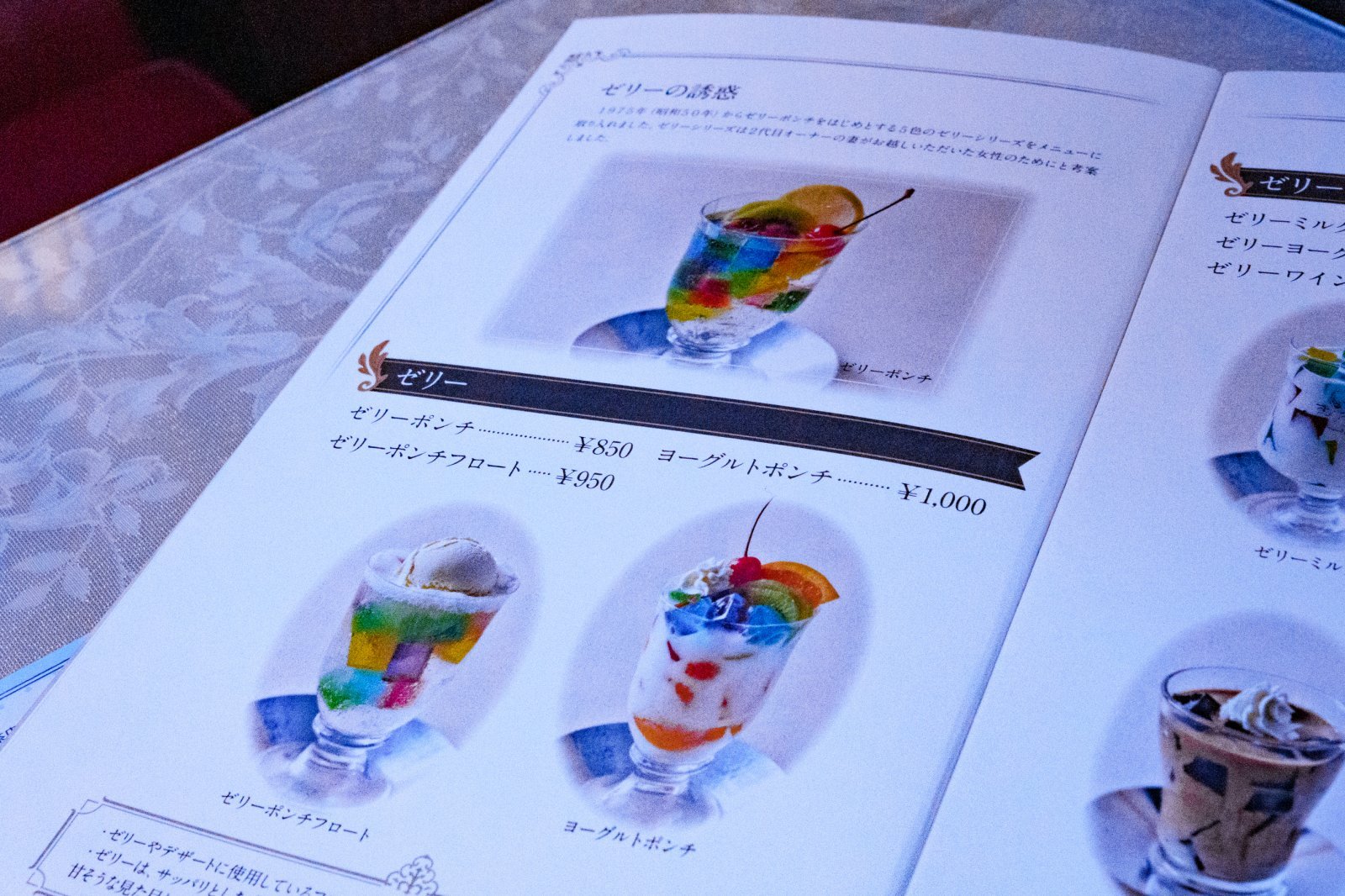
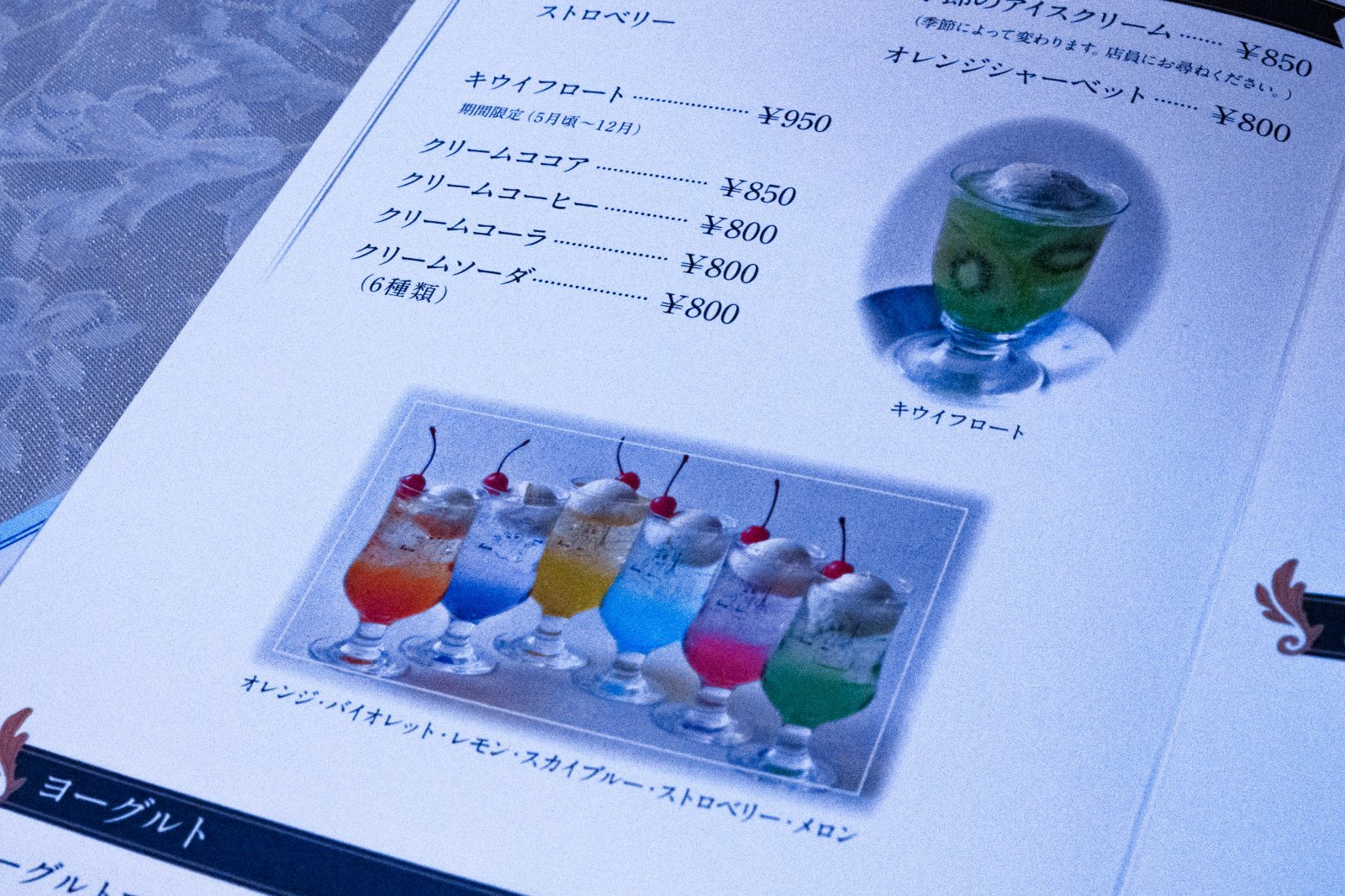
The sweetness was light, and the jelly itself had a very delicate flavor. The café is said to preserve its old-fashioned method of making it.
In an age filled with countless luxurious desserts, this may not be a striking flavor in itself. But it suits this place perfectly. In my mind, I found myself muttering, ‘This is exactly right. This is how it should be.’
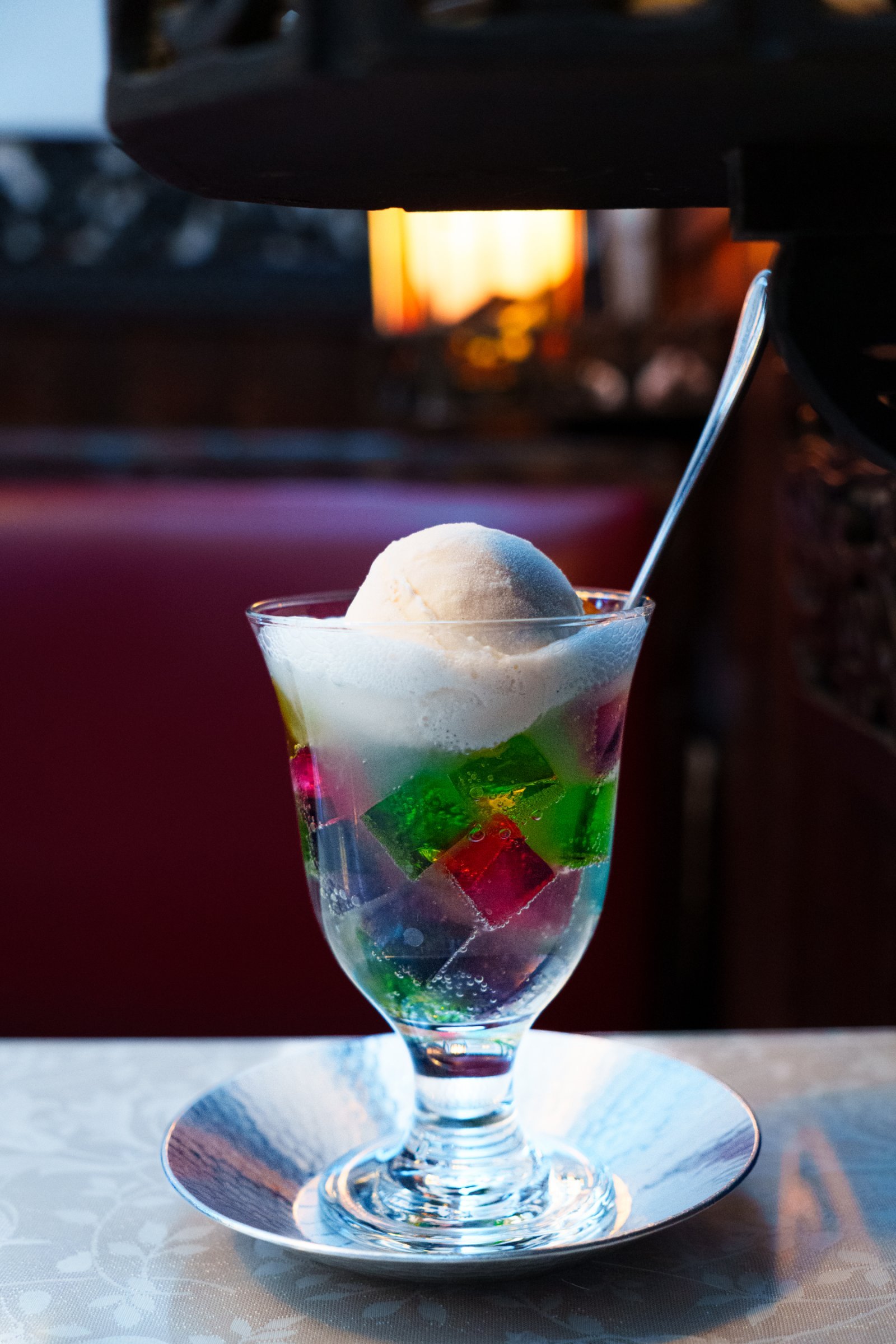
The photo above shows the Jelly Punch Float corrected to normal color tones.
Kissa Soirée is located very close to Shijo Bridge, the well-known sightseeing spot over the Kamo River. It is about a one-minute walk from Kyoto-Kawaramachi Station. The café occupies a two-story building on prime land in the busiest shopping district of Kyoto.
It would probably be a lovely place to visit in the height of summer. I imagine it would cool both body and mind.
Those who like the interiors of the Tokyo Metropolitan Teien Art Museum in Meguro will probably find much to enjoy here. While slipping back into the Showa era, you can spend a strangely transporting moment, as if you had become another person living in Kyoto in an earlier time.