Kyoto Imperial Palace, a Vast Historic Site with a Dreamlike Garden Bridge
A free-to-visit landmark where imperial architecture, moss-covered bridges and classical Japanese aesthetics reveal another side of Kyoto.
Fashion reporter and photographer Kazushi Takahashi turns his gaze beyond the runway, tracing the beauty that lives in the everyday. A graduate of Meiji University and Bunka Fashion College, he began his career as an editor at Bunka Publishing Bureau (MR High Fashion, Soen). Now freelance, he travels through Japan to write, photograph and style stories where fashion meets craft, design and culture, sharing what he discovers in each issue of Pen.
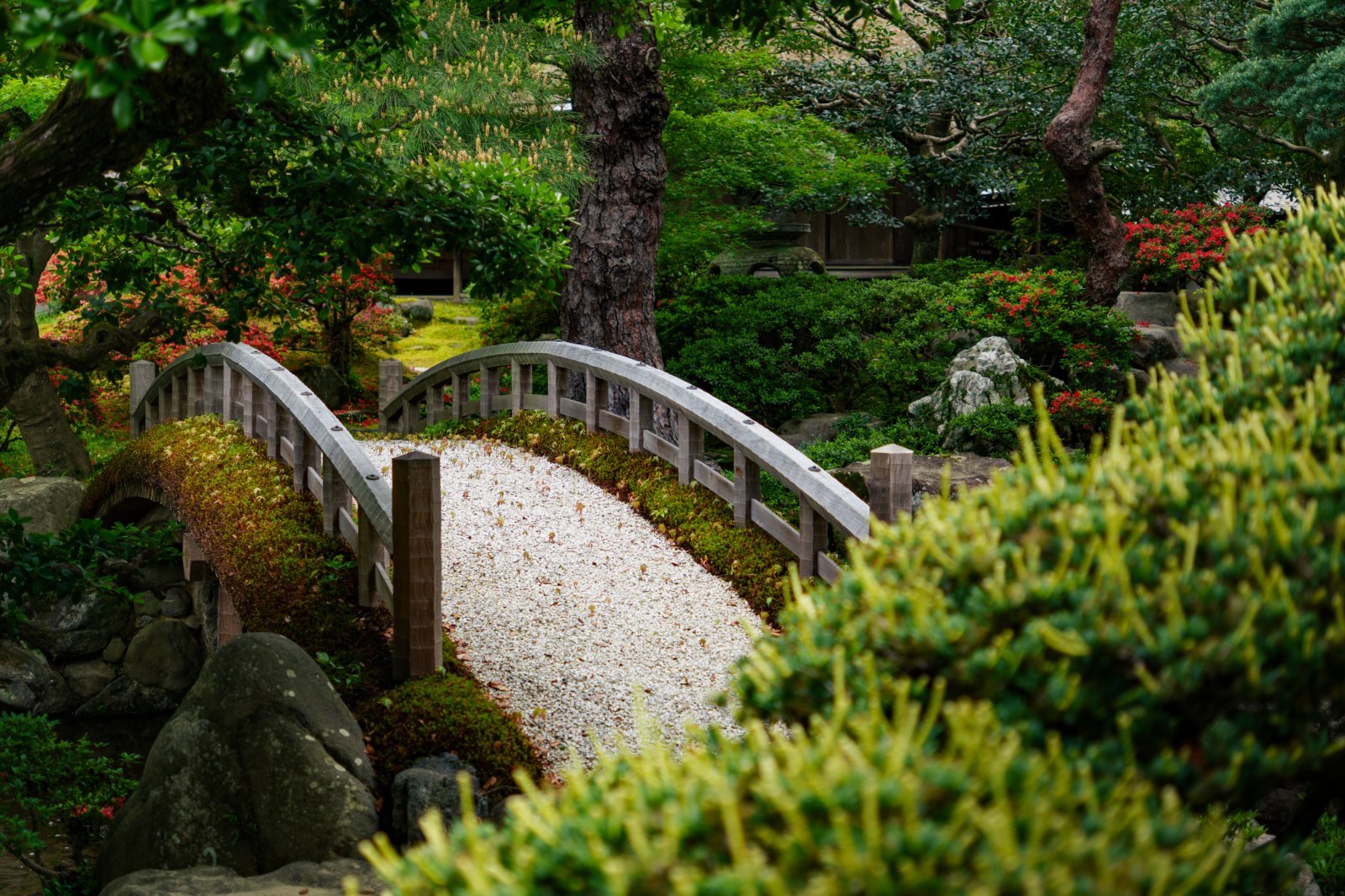
‘Gosho,’ as in Kyoto Gosho, refers to the residence of the Imperial Family.
Before the imperial residence was moved to Tokyo in the Meiji era, this vast site traced its history all the way back to the age of Heian-kyō, the ancient capital of Japan established in 794, which later became modern-day Kyoto. Did you know that it can be visited for free?
Anyone can casually experience architecture and gardens that could be described as standing at the pinnacle of Japanese formal beauty, including the philosophy behind their creation.
The buildings of Heian-kyō appear to have been strongly influenced by China, or Tang China at the time. Kyoto Imperial Palace, however, seems to have followed older Japanese styles, using roofs made of layered hinoki cypress bark, known as hiwadabuki, and shiraki-zukuri, a form of construction that preserves the natural surface of the wood.
In other words, while keeping an eye on the trends of the age, it seems to have held firm to the idea: ‘No, this is what Japan is.’
In a completely uncomplicated, fan-like way, I can only think: ‘That’s cool.’ It also makes me want to reconsider our contemporary lives, which are so easily swept along by global trends in thought, lifestyle and economics.
The photographs here show scenes from Kyoto Imperial Palace, which I visited from Tokyo in late April, just before Golden Week.
It was actually my first time there.
There is a reason I had never gone before, but I will save that story for the end.
A Dreamlike Bridge Spanning the Garden Pond
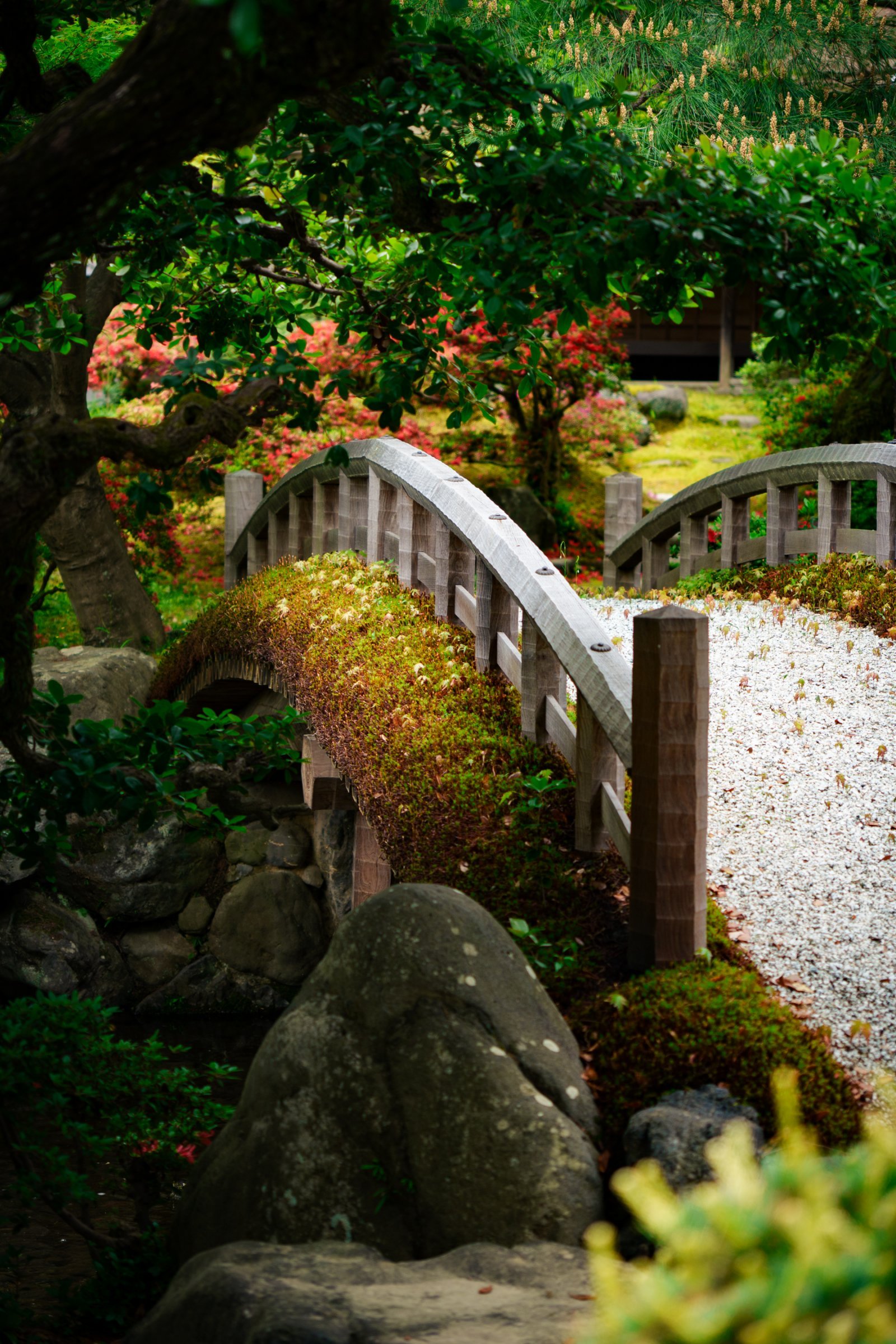
The moment I saw this bridge, I was overwhelmed. Kyoto Imperial Palace has wonderful buildings, of course it does. But what captured my heart most was this earthen bridge, which looked as if it had slipped out of a dream world.
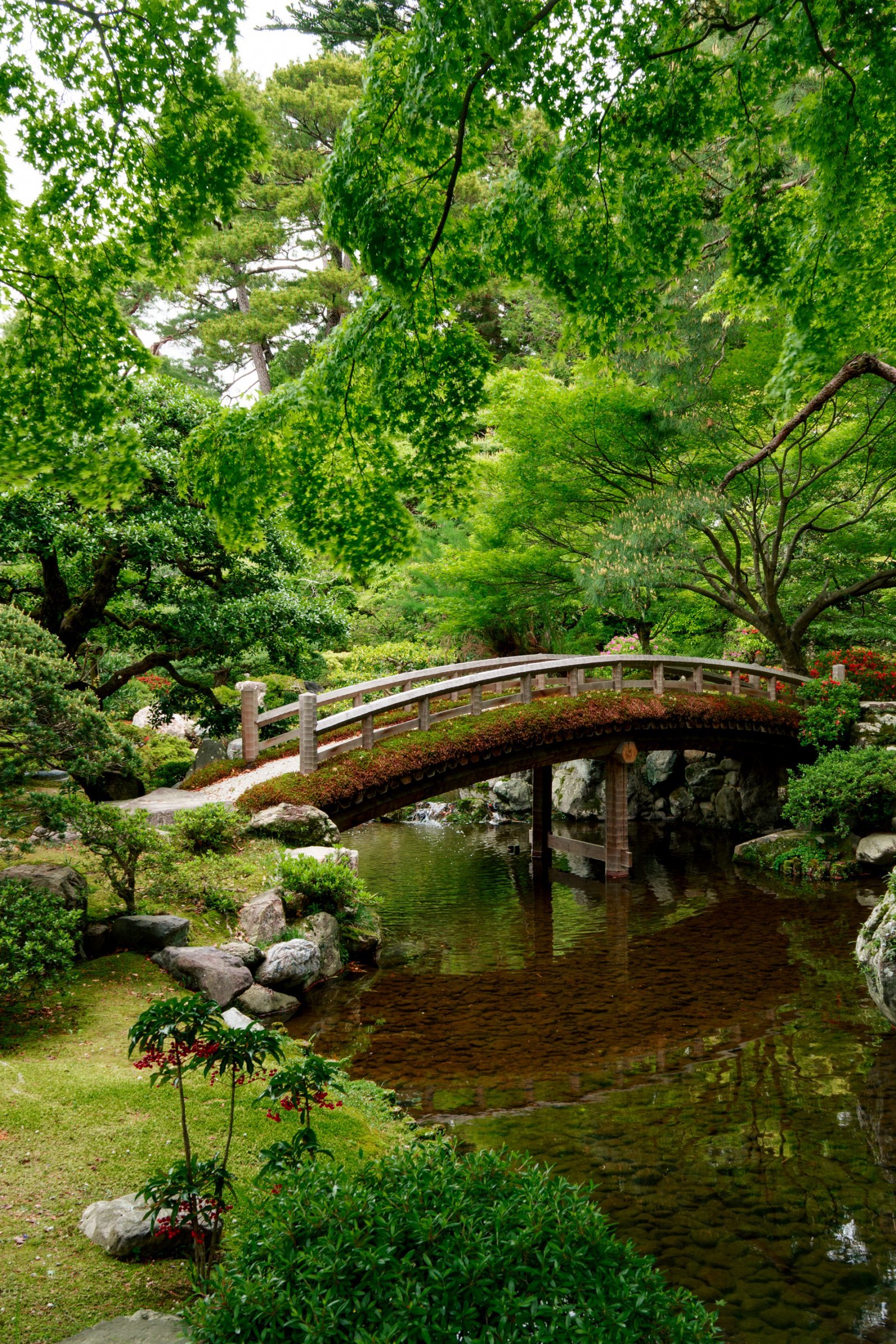
It had the kind of atmosphere that made me think, ‘Fairies could be walking across this.’
The railings are very low, and the bridge is so narrow that only one person could cross at a time. Overall, it is small. The moss planting that spills generously beyond both sides of the railing heightens the sense of fantasy.
How often do you see a wooden bridge where both edges of the path are covered in plants?
Forgive me if there are others.
The gravel laid along the walkway also feels somehow mismatched with the structure of an arched bridge that rises on a slope. For a while, I sank into a private fantasy, thinking, ‘Columbina from Genshin Impact would look perfect floating barefoot across this.’
That will mean absolutely nothing to anyone who does not play RPGs.
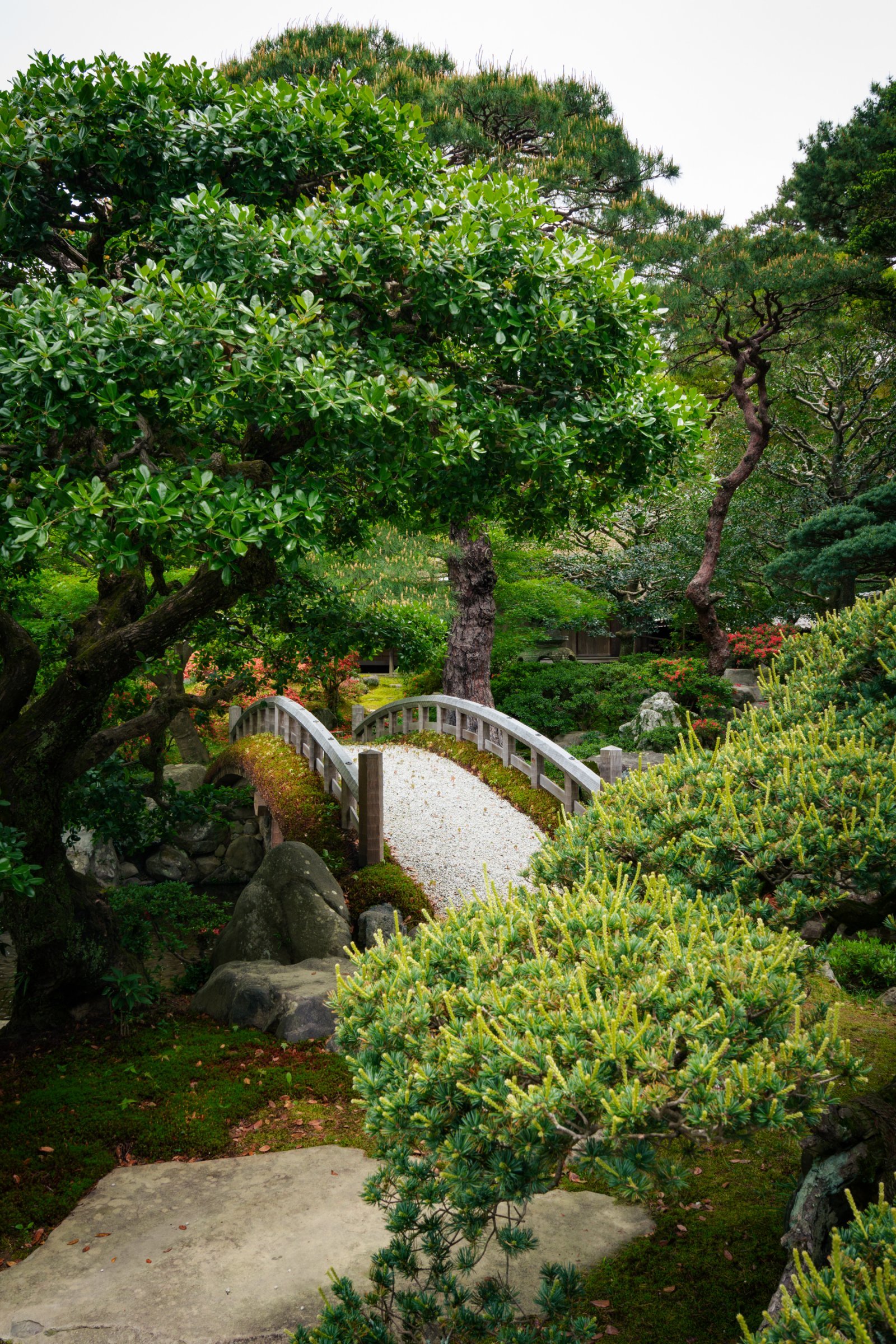
Visitors are not allowed to cross the bridge.
Passage is forbidden.
The absence of human traces is one reason it felt like something from a fairy tale, or perhaps a ruin. Because no one steps on it, moss even grows a little through the gravel of the path. It feels almost like an entrance to another world, one that must not be entered.
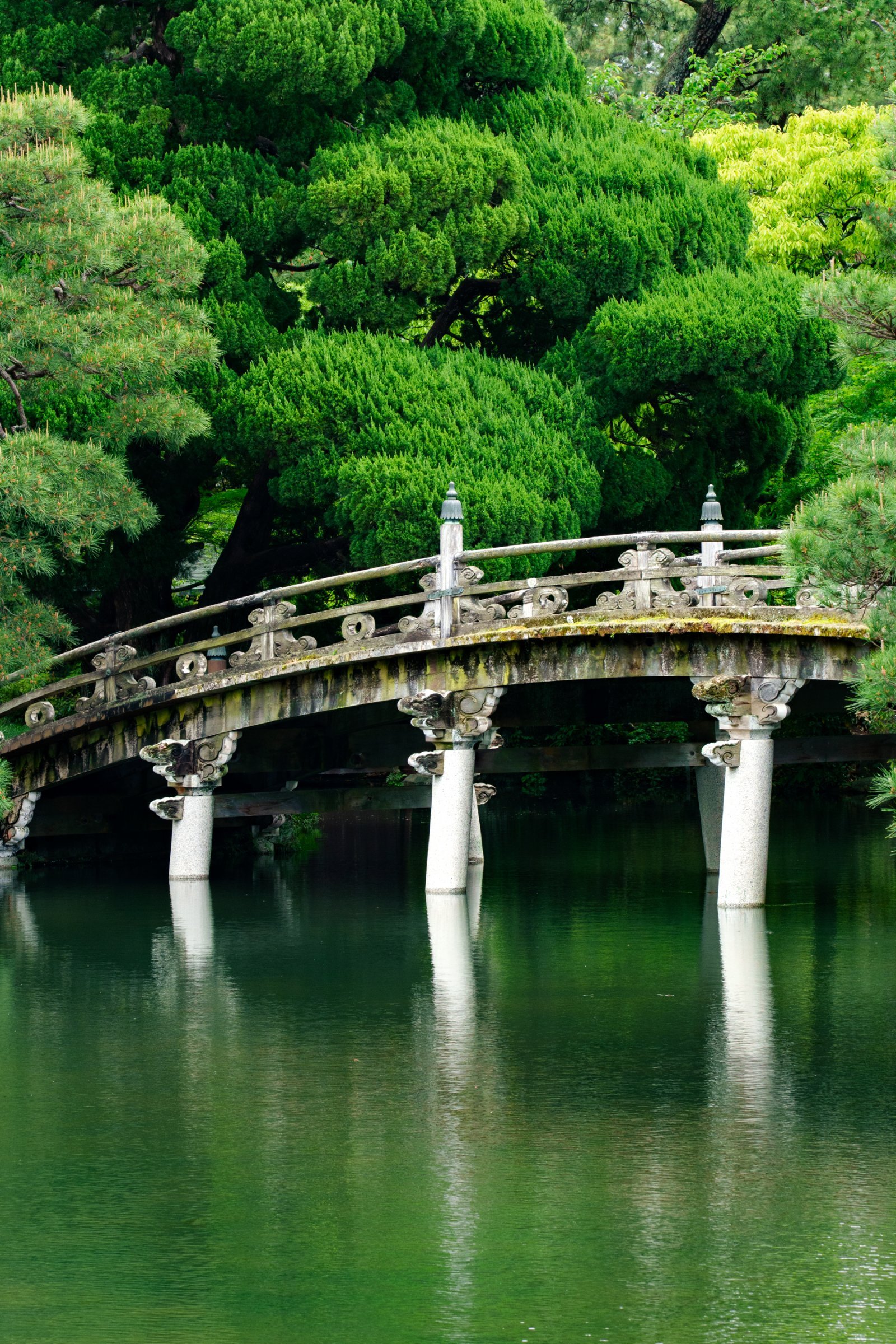
Kyoto Imperial Palace has two connected gardens, Gonaitei and Oike-niwa, with several bridges, each large or small and each with its own distinctive atmosphere. The Keyaki Bridge shown above is one of the representative examples.
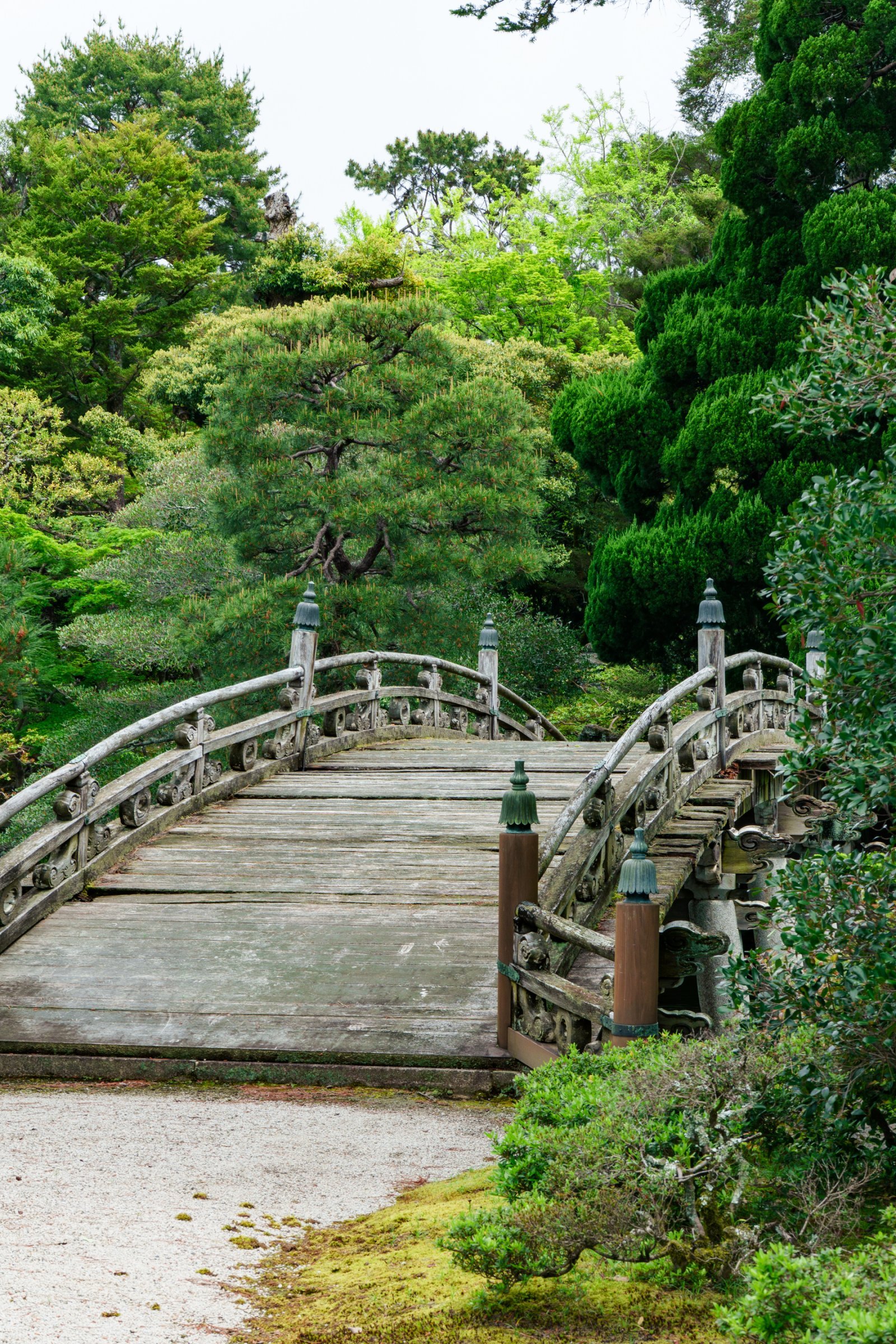
This bridge, too, was wonderful.
The zelkova wood has aged and decayed to a point that goes far beyond the quiet beauty of sabi in wabi-sabi. It has a presence of tremendous force.
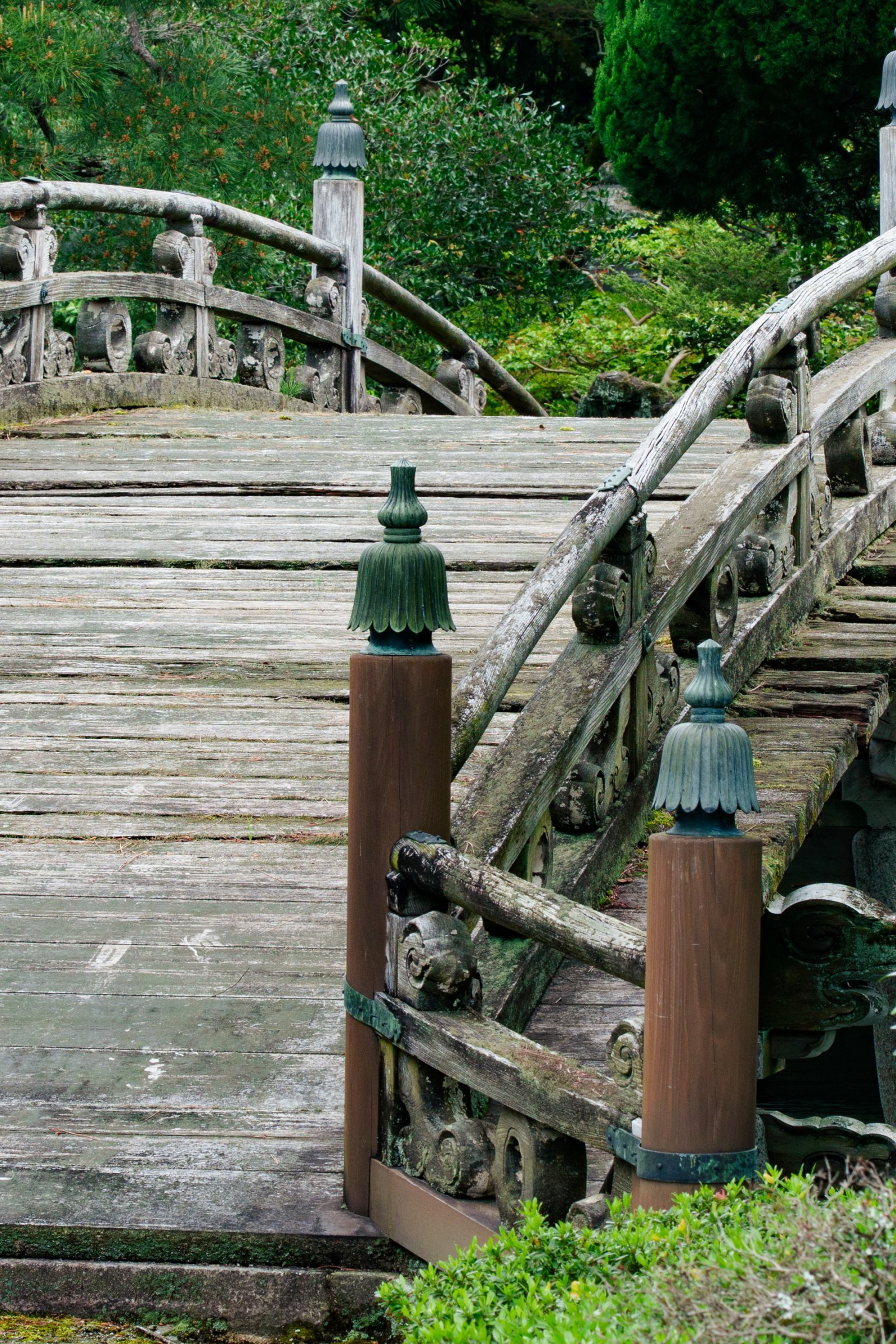
The photograph shown here was taken with a telephoto lens. Visitors cannot walk across the bridge or even approach it.
The same applies to the earthen bridge introduced earlier.
I would have loved to see it directly from a short distance. But to avoid even the slightest risk of damage, this is surely a necessary measure.
The bridge piers that support it are currently made of granite. According to the view of the Imperial Household Agency, the piers were also wooden in the early Shōwa period, around 1928, and photographs from that time still remain.
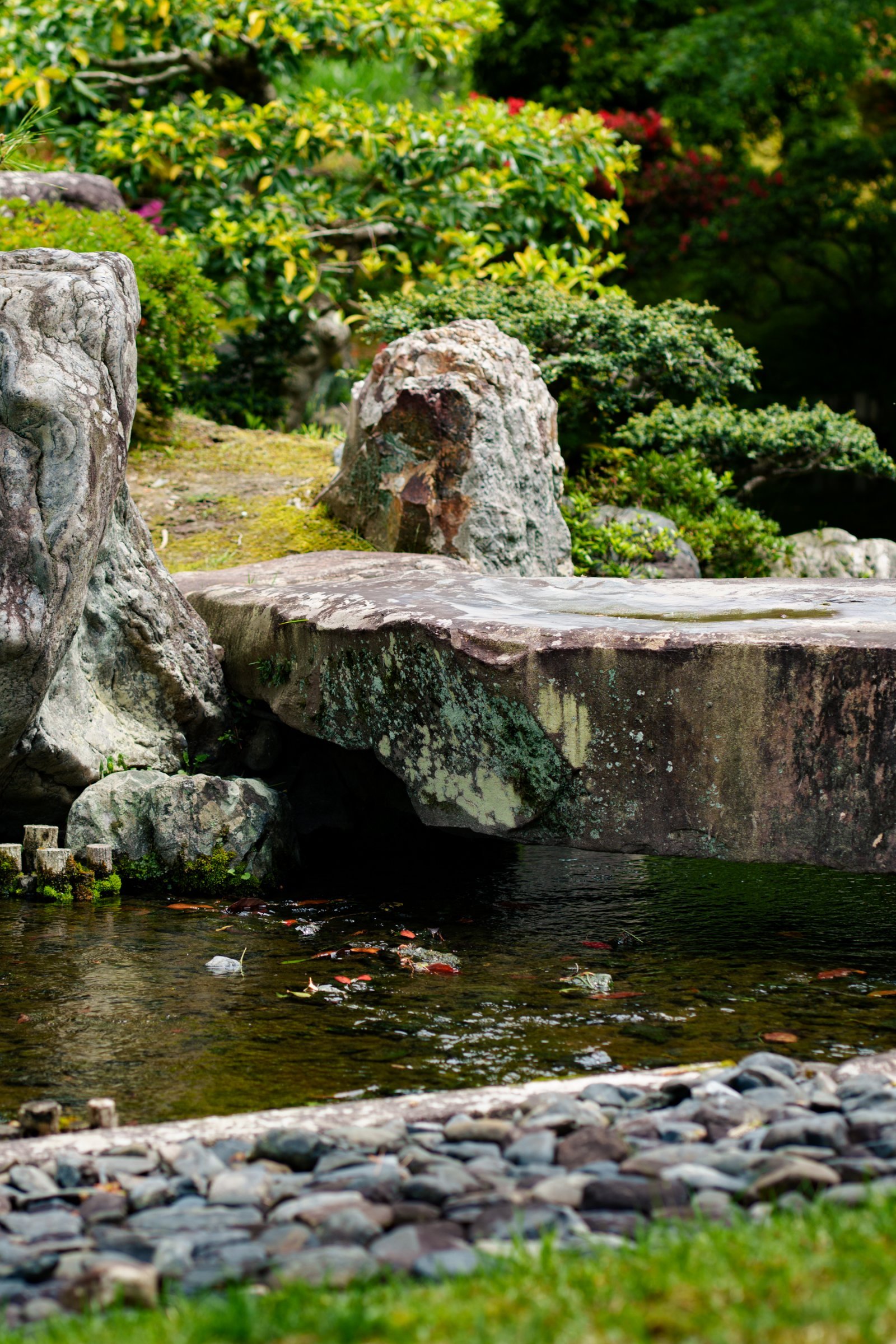
The understated stone bridges in the garden are also full of charm. Many of the objects that remain from the palace’s earlier periods seem to have been offerings presented to the Imperial Family.
Graphic Buildings Full of Beauty
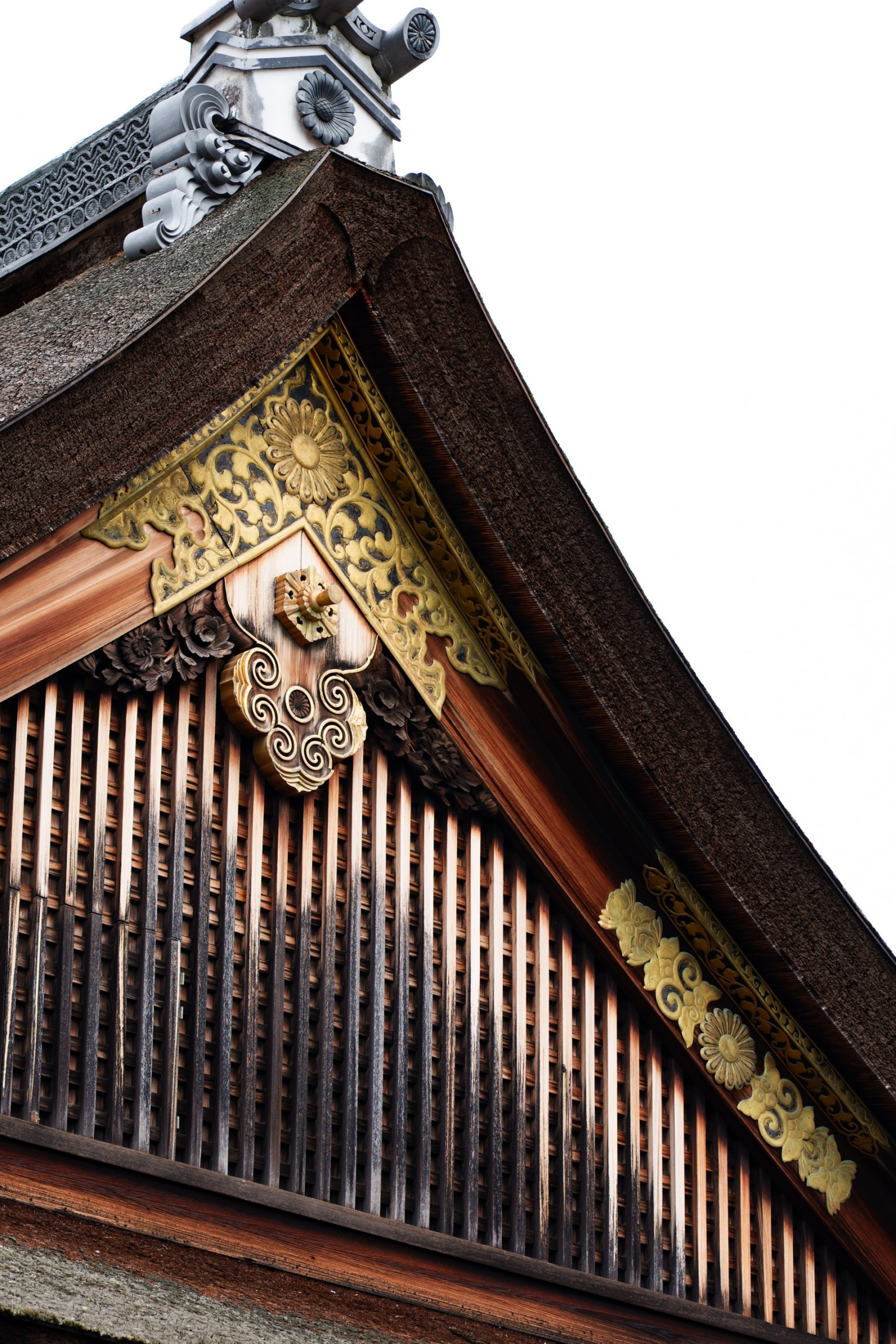
Among the architectural elements of Kyoto Imperial Palace, what I found especially attractive was its graphic use of color.
In addition to the brown and white combination often seen in shrines and temples, the accent color of vermilion, or what I think can be called vermilion, left a strong impression. What has been lost, what has survived and what has been restored since the time of the palace’s original construction?
My own knowledge is far too limited to tell. But in its present form, what I find beautiful is the balance between three colors: brown, white and vermilion.
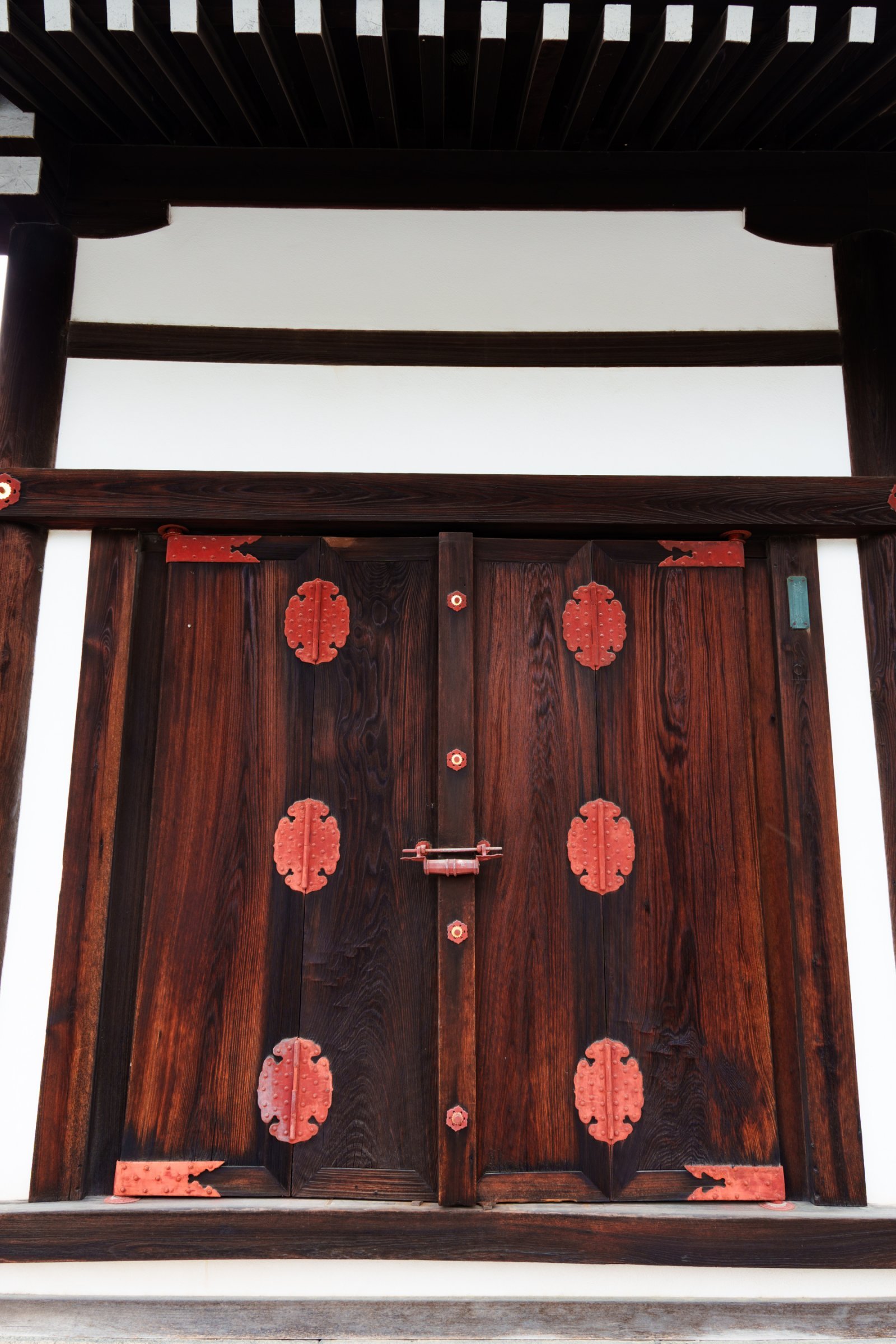
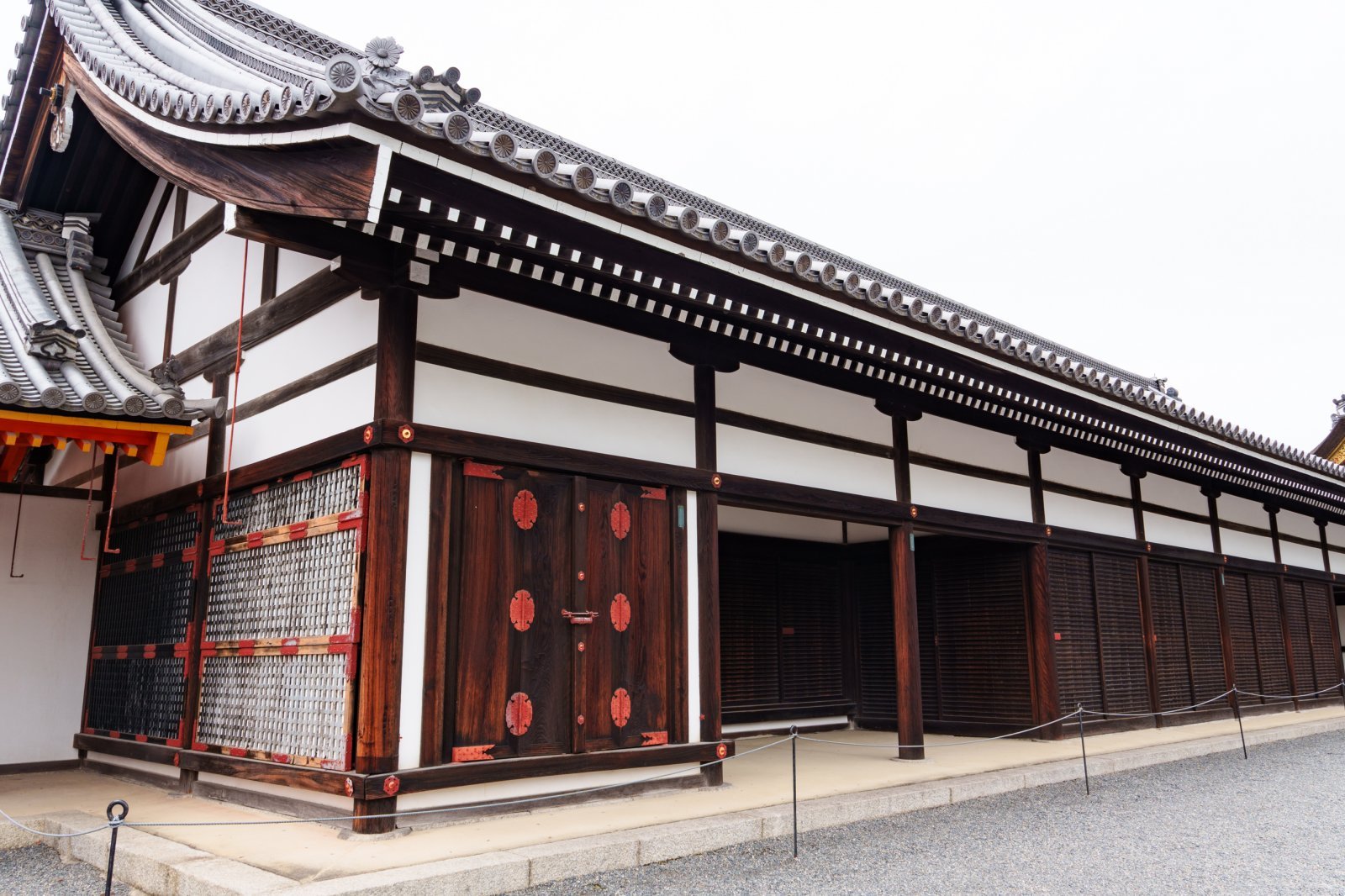
What looks especially cool is the way the texture of the wood is left as it is, while the metal fittings are painted vermilion, or red. It has a dignified presence that contrasts with the deep character of copper that has oxidized into a green patina. Vermilion, which came from China, is said to have symbolized protection against evil and authority.
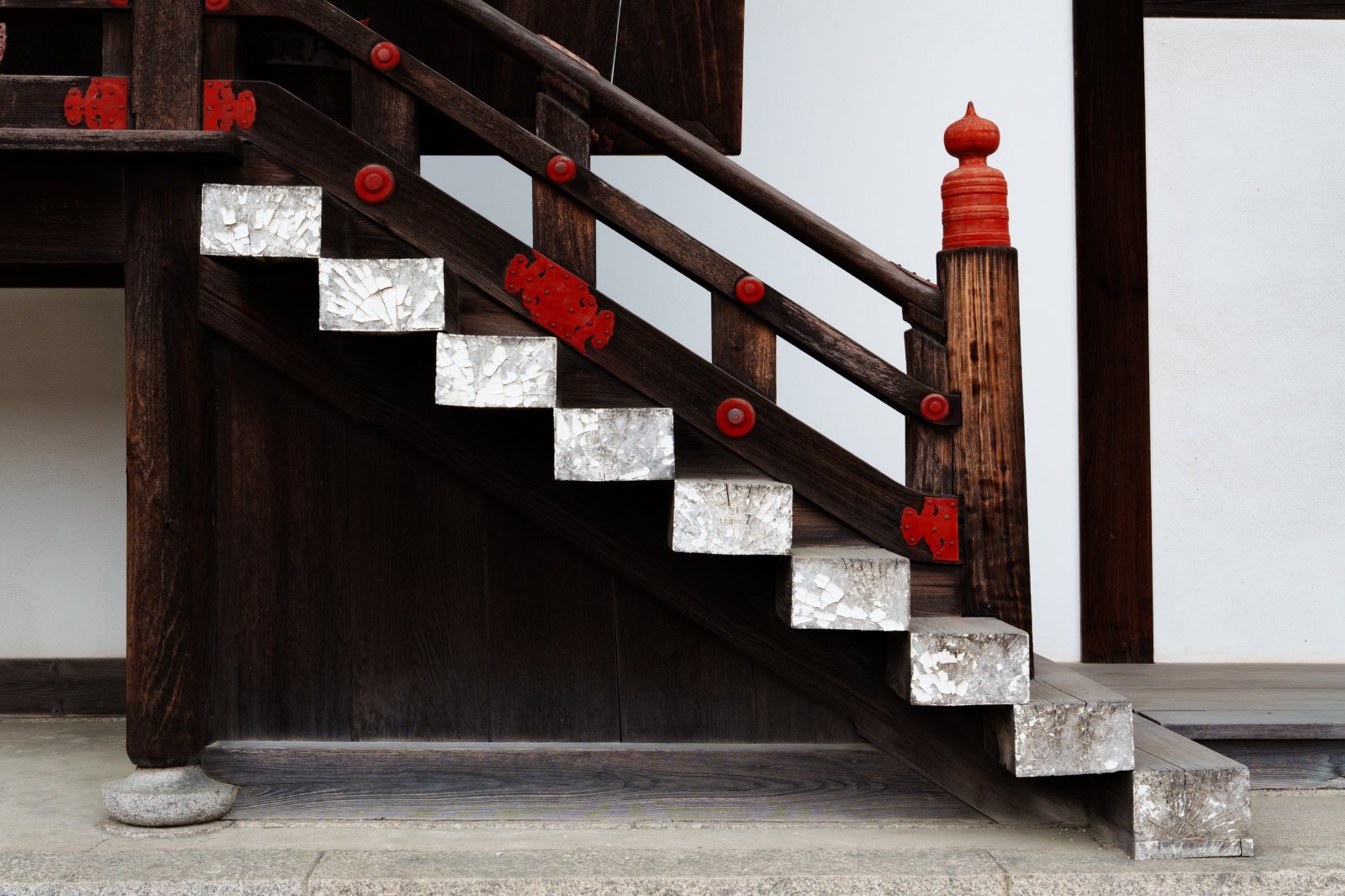
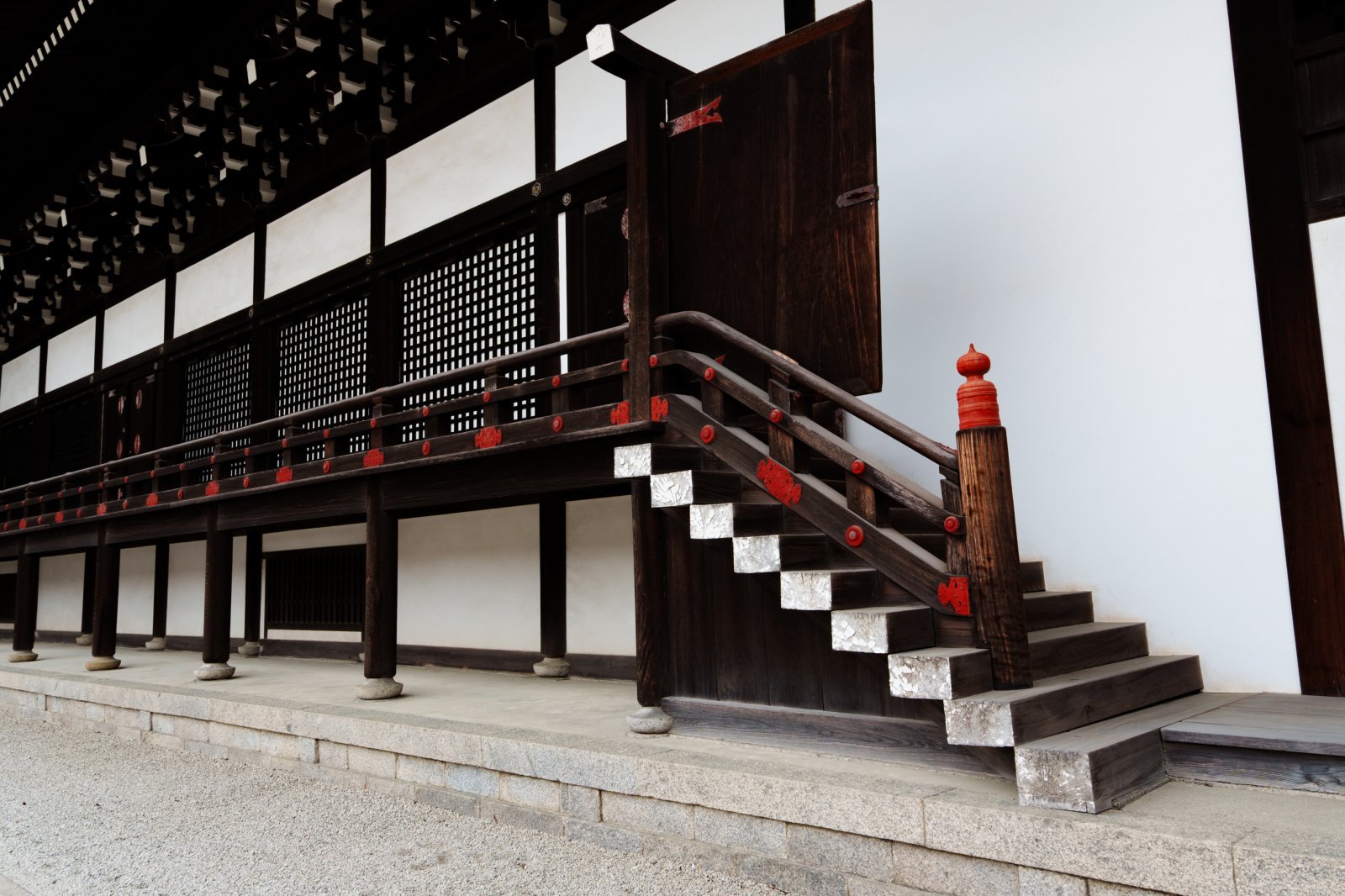
This staircase and railing were beautiful too.
They belong to a building in an area overlooking the garden.
The degree of weathering feels just right and resonates deeply. Those responsible for maintaining it must constantly be thinking about how far restoration, such as repainting, should be taken.
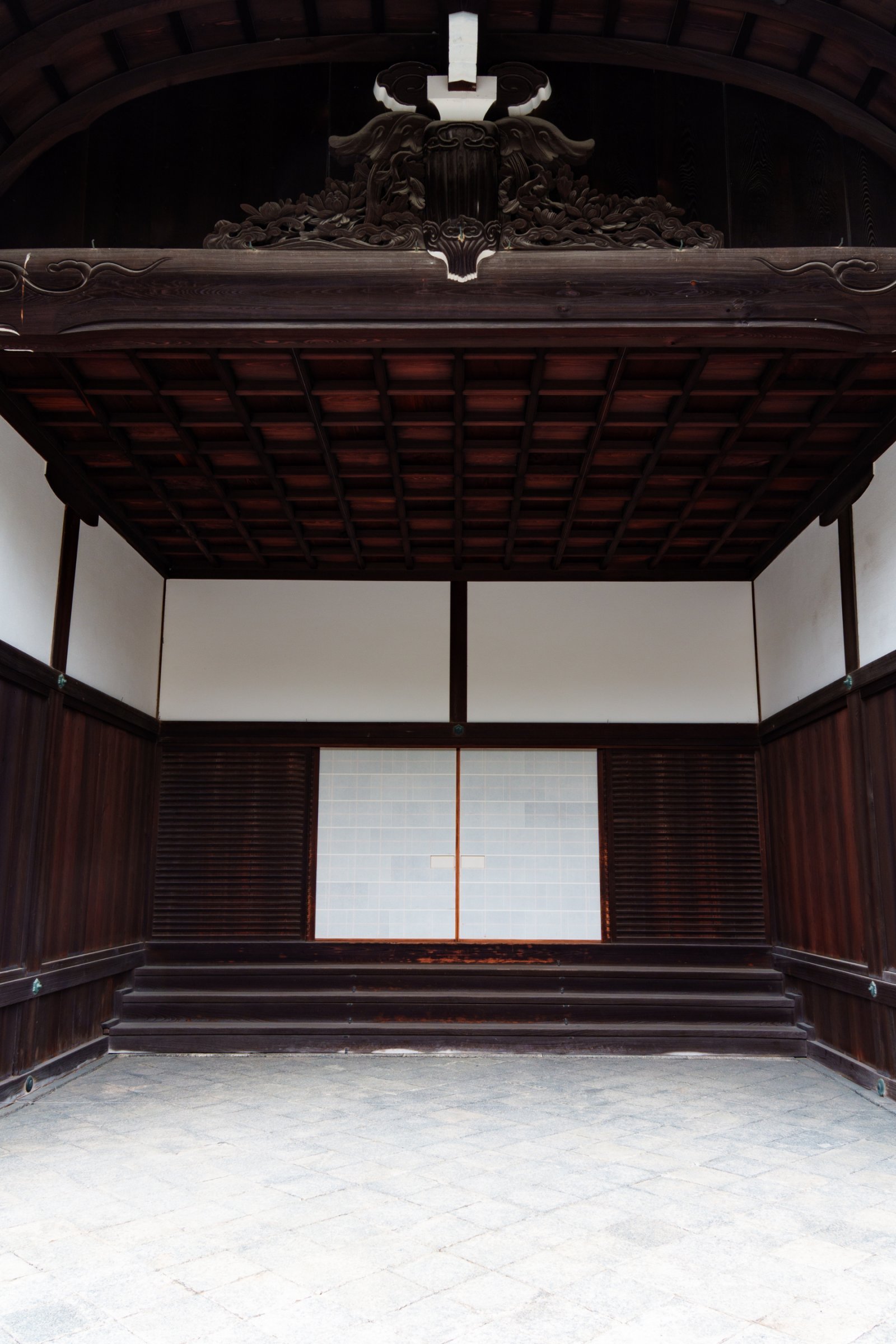
‘This entrance was used to receive those who came to the palace for ceremonies or audiences with the emperor. It was used only by a limited group of people, such as court nobles and courtiers.’
So reads the explanation on the sign at the site, describing the Okurumayose, a formal entrance area where carriages would pull up and where high-ranking visitors were received.
In other words, if you had once been a person of high rank and came to Kyoto Gyoen thinking, ‘Today I am going to meet the emperor,’ this is the entrance through which you would have entered the building.
A Brief Glimpse of the Grounds through Smartphone Snapshots
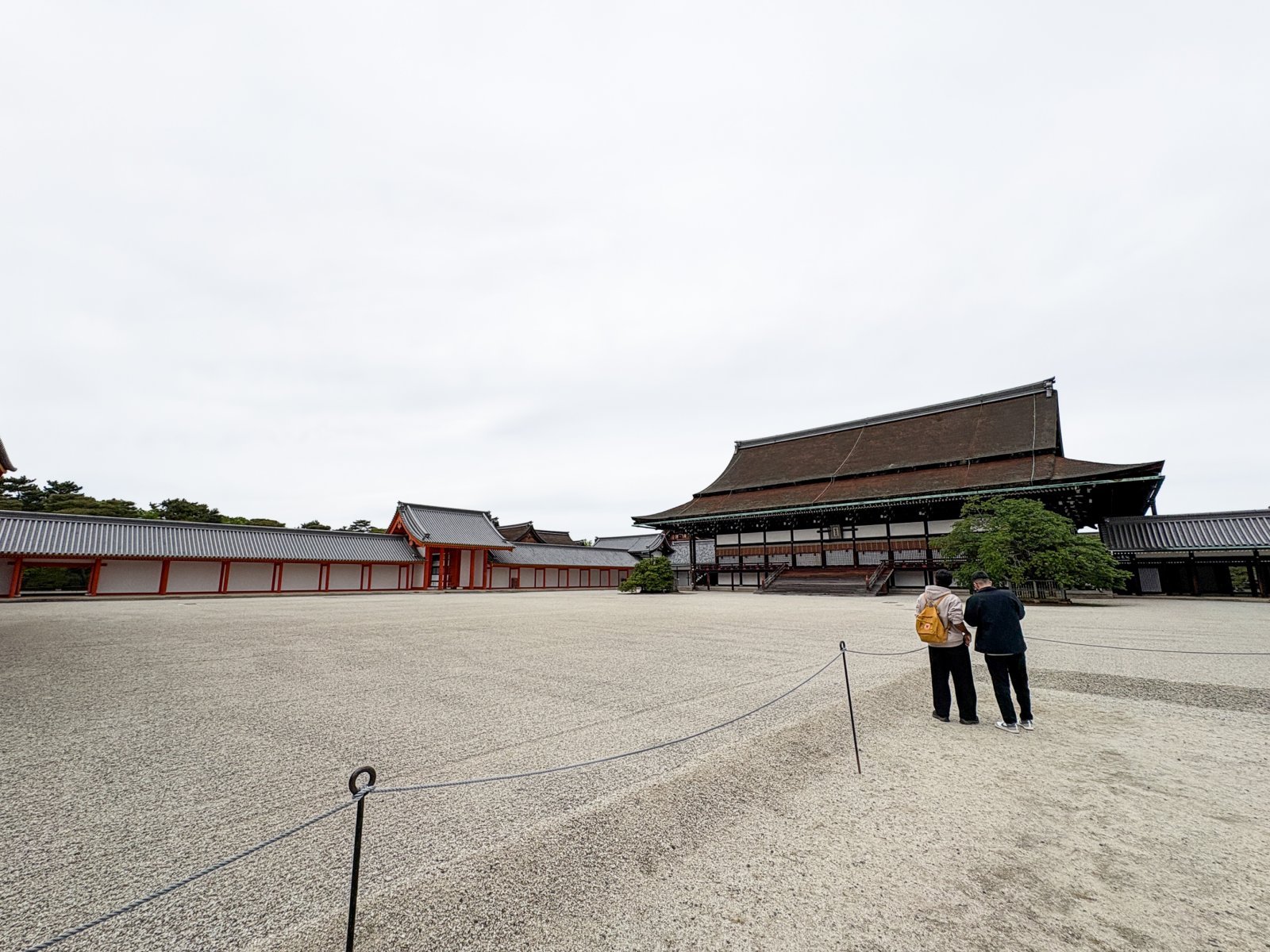
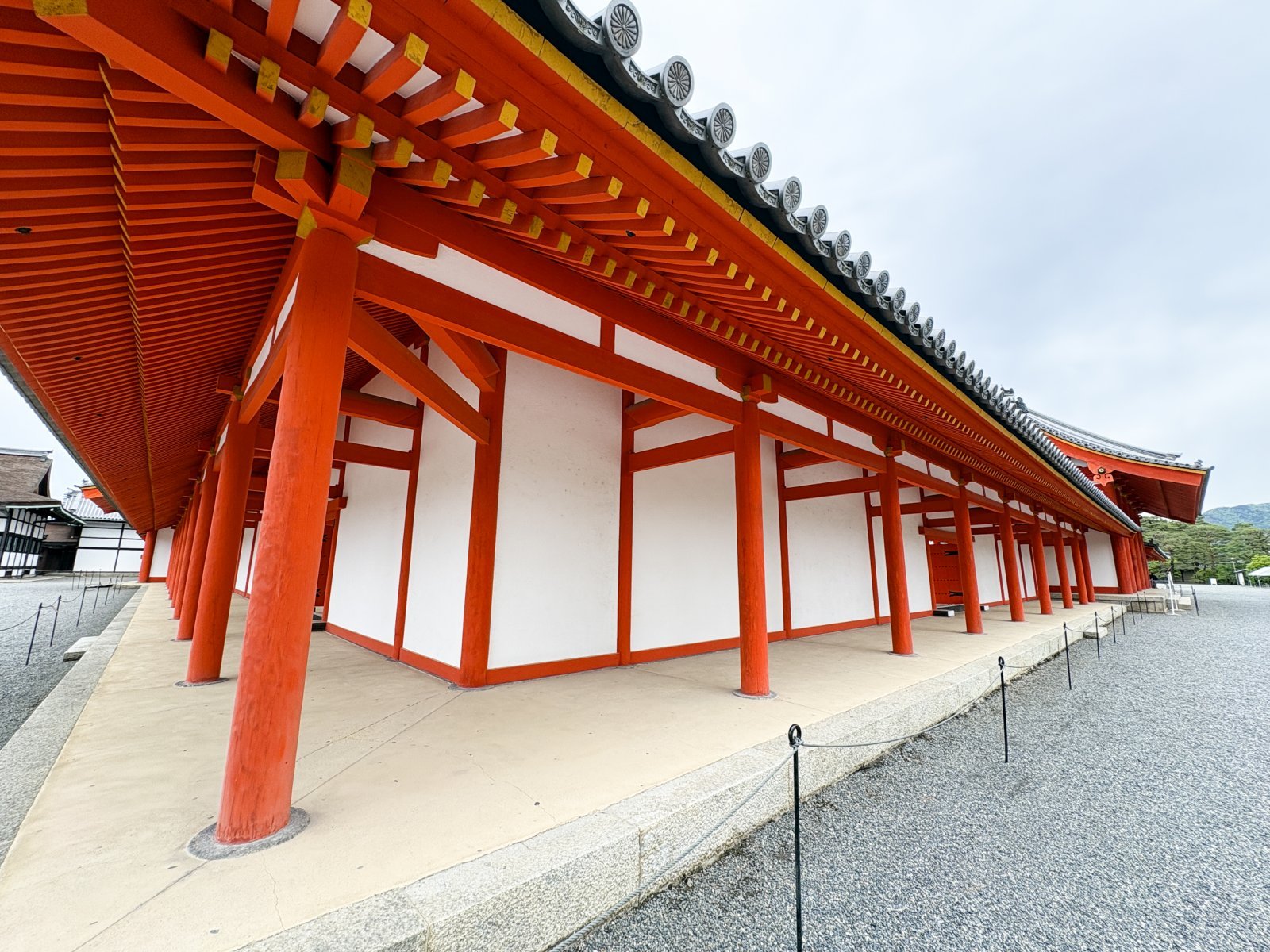
The building and bridge photographs in this article probably do not convey the vastness of the space. So I will include three smartphone snapshots I took for reference.
Above all, the sky feels enormous.
There are no tall buildings, no modern structures in sight.
What immersion.
And all of this exists in a highly accessible urban area of Kyoto.
From Kyoto Station, it takes about 10 minutes by train to the nearest station, Imadegawa. By taxi, around 15 minutes.
It is precisely because the landscape is protected by scenic preservation regulations that the place offers such an extraordinary experience.
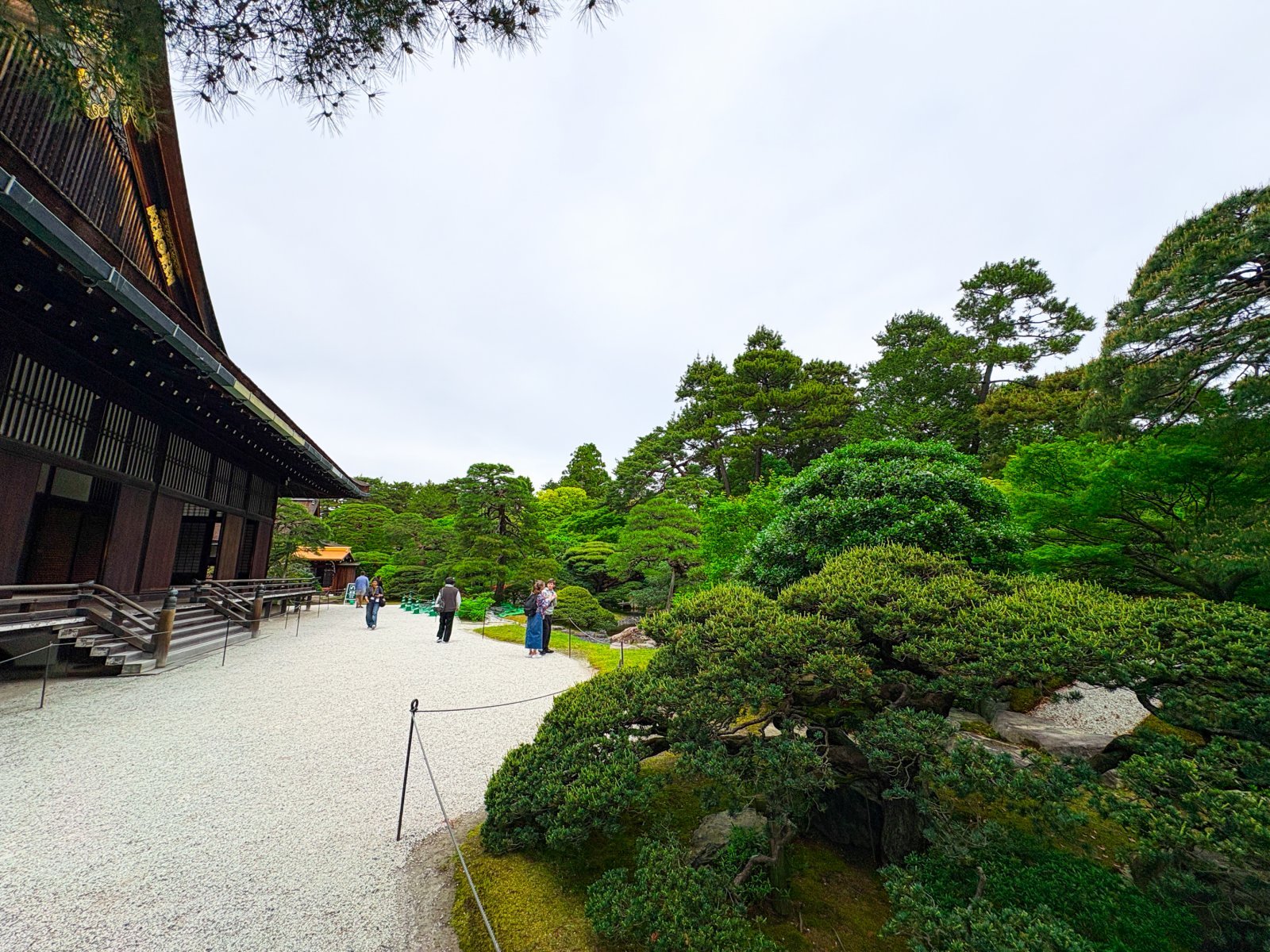
This is Gonaitei, the garden where the earthen bridge introduced at the beginning of the article is located. Here, the buildings and the lush garden greenery stand relatively close together.
The number of visitors to Kyoto Gyoen was surprisingly modest, at least on a weekday before Golden Week. One reason may be that, as a sightseeing spot, it gives a rather subdued impression. There are almost no lavish decorations or elaborate architectural arrangements.
Compared with the otherworldly rows of vivid torii gates at Fushimi Inari, or Ginkakuji, where Japanese ideas of wabi-sabi, atmosphere and aesthetic sensibility are condensed into a small site, Kyoto Imperial Palace may not be the kind of place that immediately raises your excitement unless you are a historian.
I was able to discover its appeal because I searched for it in specific details. But perhaps the elements that would deeply captivate visitors from overseas are somewhat limited.
Why I Never Visited Kyoto Imperial Palace Before
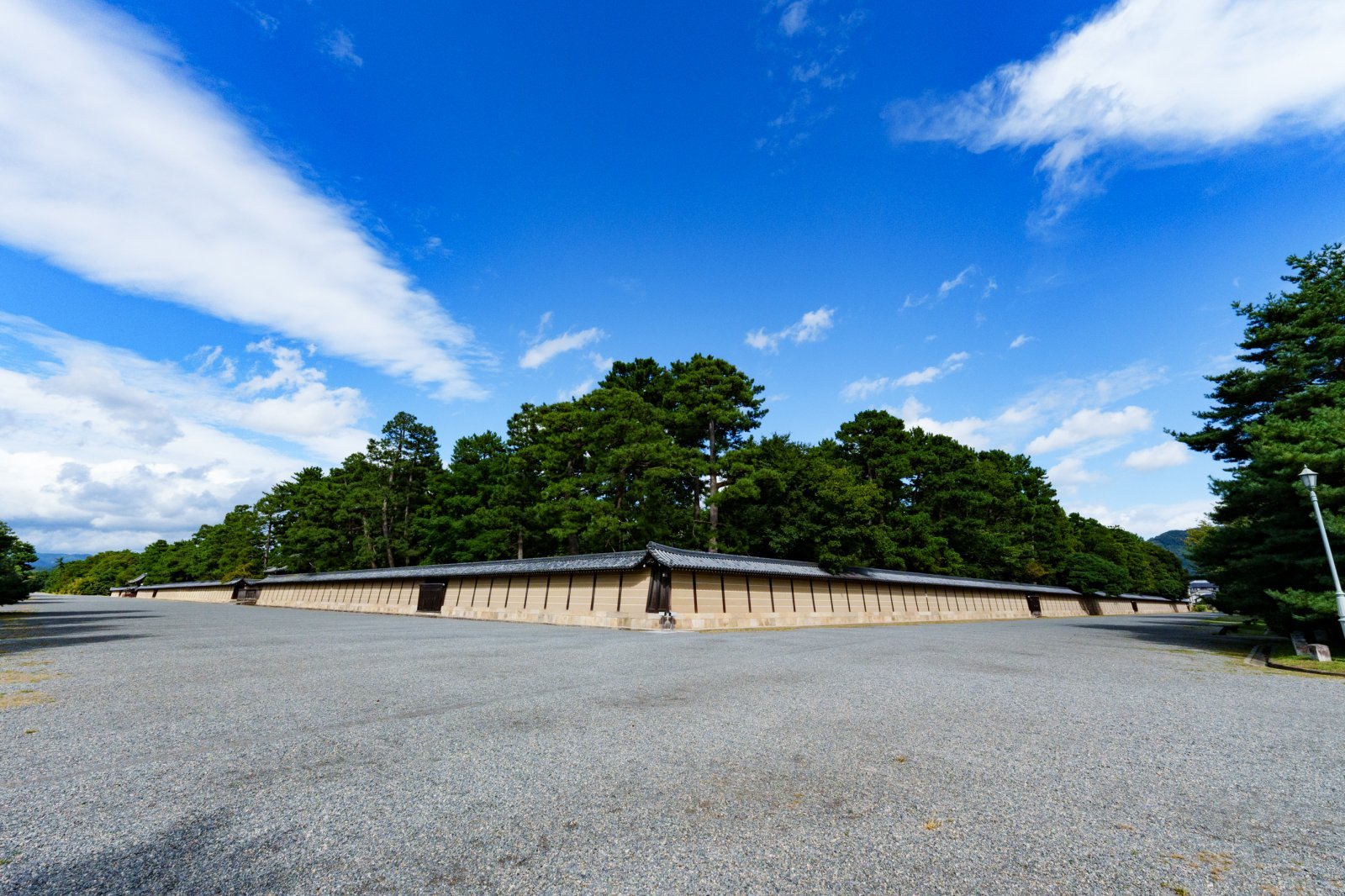
Kyoto Imperial Palace is located within Kyoto Gyoen National Garden, which functions as a public park.
The photograph above shows a scene from a walk through the park in autumn 2025.
To be completely honest, when I first visited the park, I underestimated just how vast it was. I entered without understanding where the palace entrance gate was, thinking, ‘I’ll get there eventually,’ and wandered casually. Partway through, I realized that I had to go all the way around the moat.
Then, when I finally reached the entrance gate, I discovered that visits had been suspended that day.
I had not known that it was closed on Mondays.
My spirit completely broke.
You might be thinking, ‘How little stamina do you have if a walk through a park defeated you?’
But have you ever walked endlessly along a gravel path?
The entire park path is gravel.
My Salomon trail running shoes kept getting heavier and heavier.
Since it was a tightly scheduled trip, I was close to tears thinking, ‘Now I don’t have time to visit any other shrines, temples or cafés.’ I also needed the bathroom. It was a problem.
And so Kyoto Imperial Palace was archived away on my list of places to visit someday.
This time, however, I properly researched the route in advance. I traveled by train to Imadegawa Station, the nearest stop to the entrance gate, and entered the palace area with the minimum amount of walking.
Even so, both the park and the palace grounds are covered in gravel paths, so seeing everything still takes a fair amount of time.
If this article has made you curious, please enjoy your visit while carefully planning how much time to allocate in your travel schedule.