Ginkakuji, the World Heritage Site Still Worth Visiting Despite the Crowds
In winter Kyoto, Kazushi Takahashi finds quiet beauty in weathered wood, mossy gardens and the muted elegance of the Silver Pavilion.
Fashion reporter and photographer Kazushi Takahashi turns his gaze beyond the runway, tracing the beauty that lives in the everyday. A graduate of Meiji University and Bunka Fashion College, he began his career as an editor at Bunka Publishing Bureau (MR High Fashion, Soen). Now freelance, he travels through Japan to write, photograph and style stories where fashion meets craft, design and culture, sharing what he discovers in each issue of Pen.
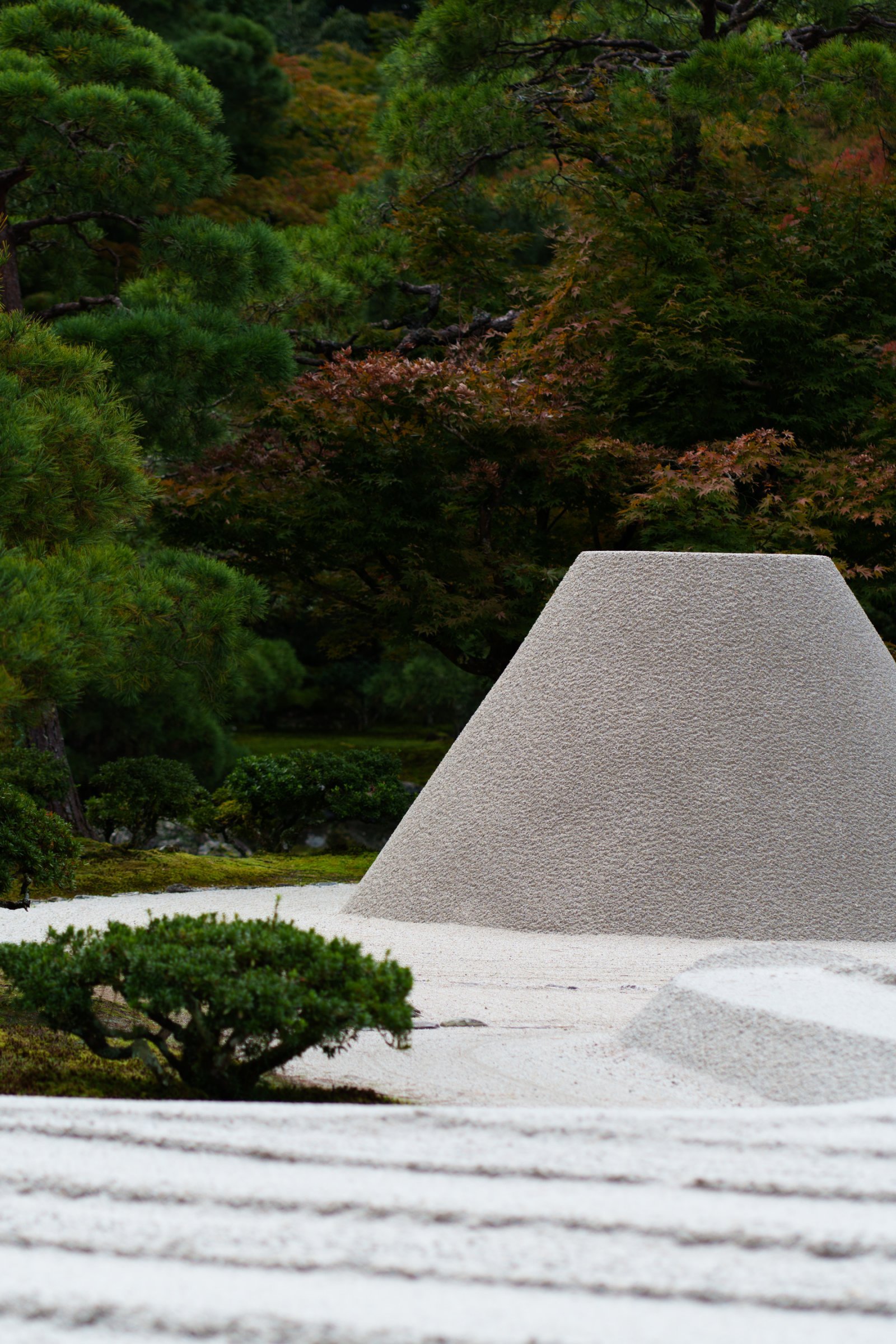
All the photographs shown here were taken when I visited Kyoto’s Ginkakuji alone on a weekday in November 2025.
I was in the city on a work trip from Tokyo.
Looking at the photos, you might think:
‘It seems like such a quiet and peaceful place to spend time.’
No, no, no, no, no, no, no, no.
It was packed.
The grounds were bustling with visitors from all over the world, mixed with large groups of elementary school children in yellow caps. It was not quite the commuter-rush level of Arashiyama’s bamboo grove or Fushimi Inari Shrine, but I still had to keep moving along the designated route at a steady pace, almost as if being pushed forward from behind.
The photos shown here are the result of holding up my camera and waiting, again and again, for the brief moments when people disappeared from the frame.
And there was one more sad discovery: the noise.
Everyone was talking constantly, so not a single moment of silence arrived. More than the number of people, it was the voices that felt exhausting. Where had wabi-sabi gone? My own inner voice, trying to sink into the atmosphere, was drowned out. Whenever I came across school trip students or children on an excursion, all I could do was wait patiently for them to pass.
I have the feeling that if Ginkakuji did not carry the title of ‘World Heritage Site’, it might not be this crowded. The buildings are weathered and worn, and the hillside chisen-kaiyūshiki garden, a pond garden designed to be viewed while walking around it, resembles a moss-covered natural landscape. It may not captivate everyone.
And yet.
For those who love the atmosphere of Kyoto, it is a treasure house of materials and spatial beauty.
After spending about two hours there, my mind seemed to update itself. I acquired a natural noise-cancelling function that allowed my brain to cut out the surrounding chatter. If you want to experience it with fewer people, the current winter off-season is probably the time to go. It is a good chance to visit one of the great expressions of ‘the Kyoto’ everyone imagines.
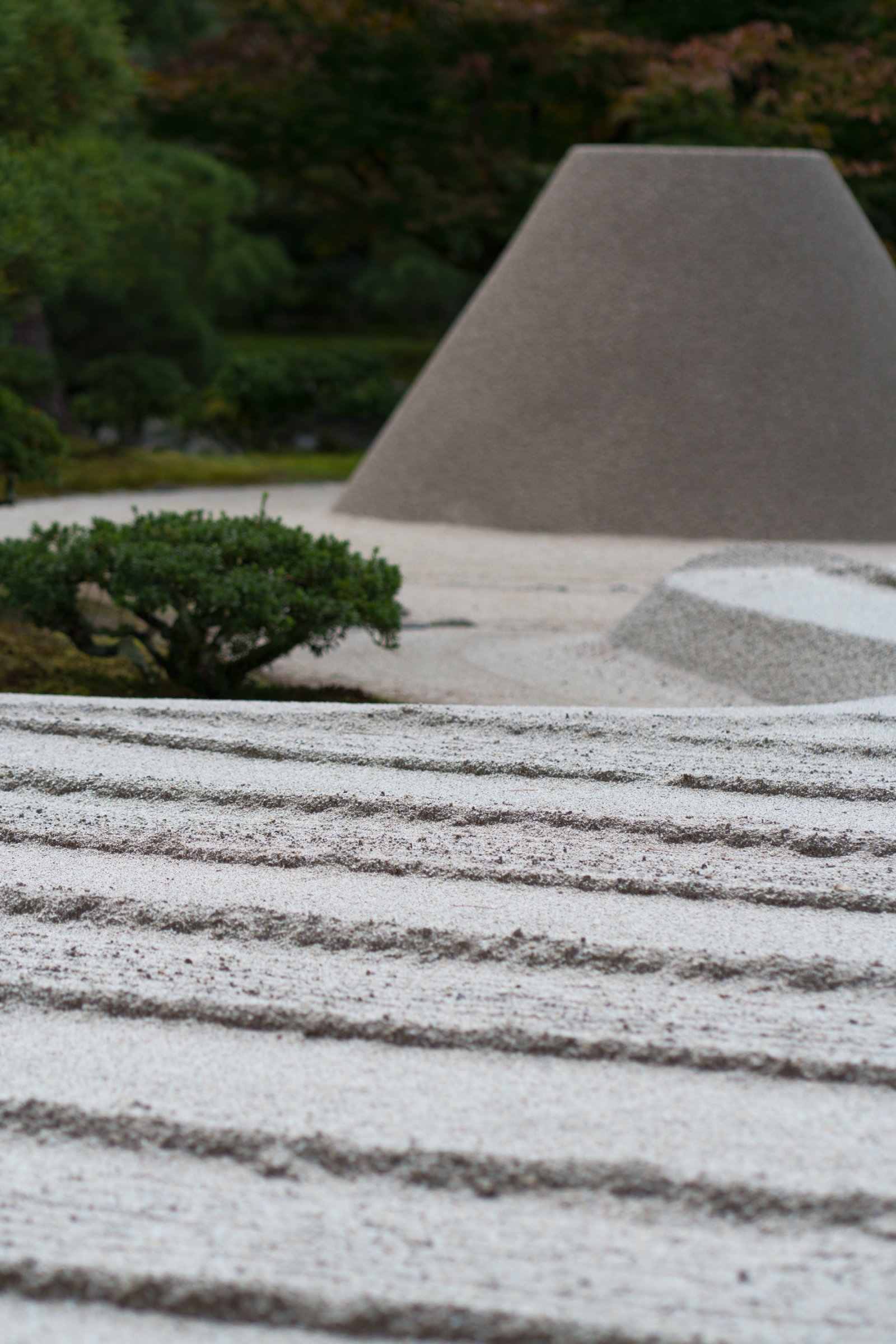
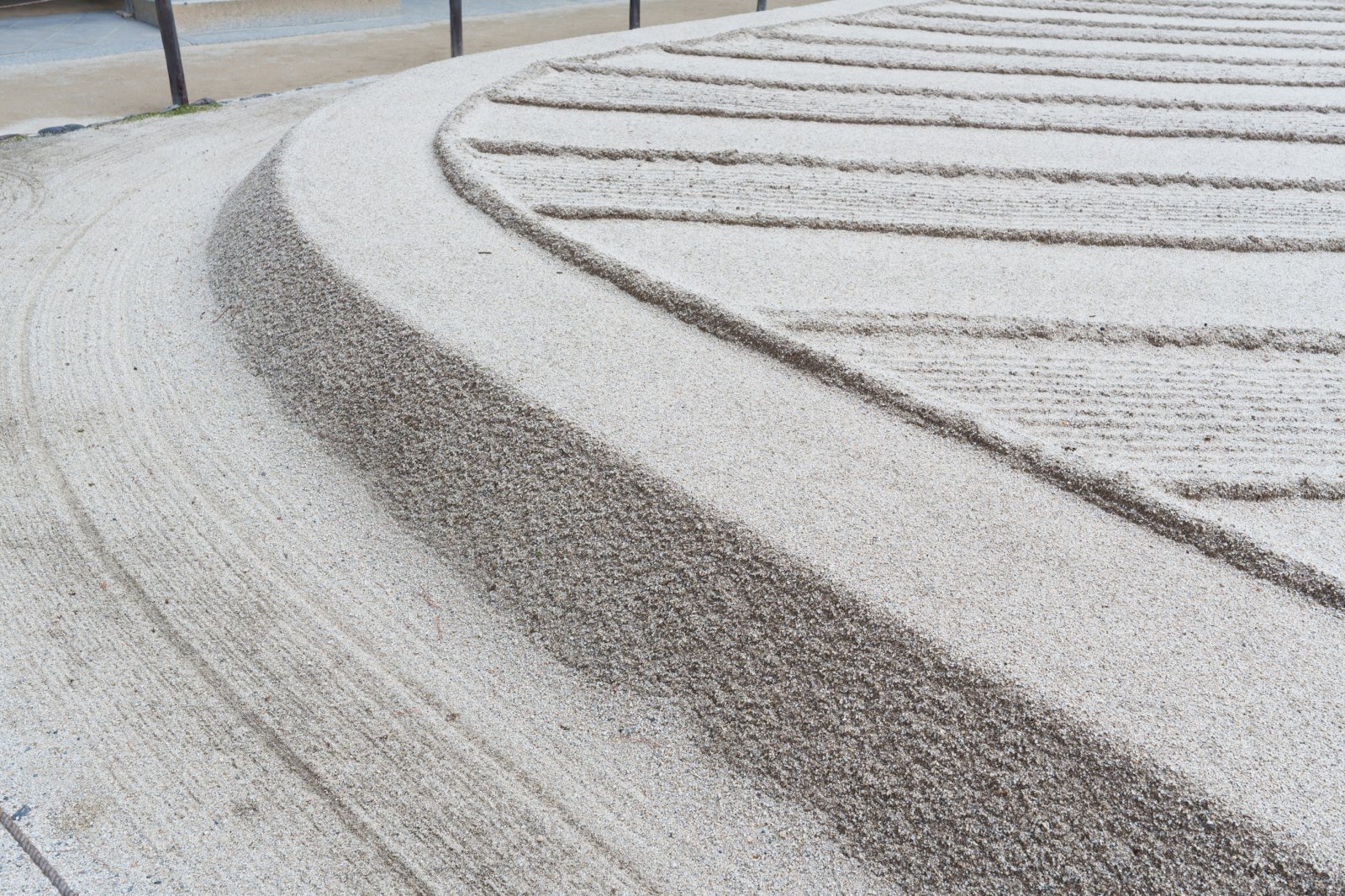
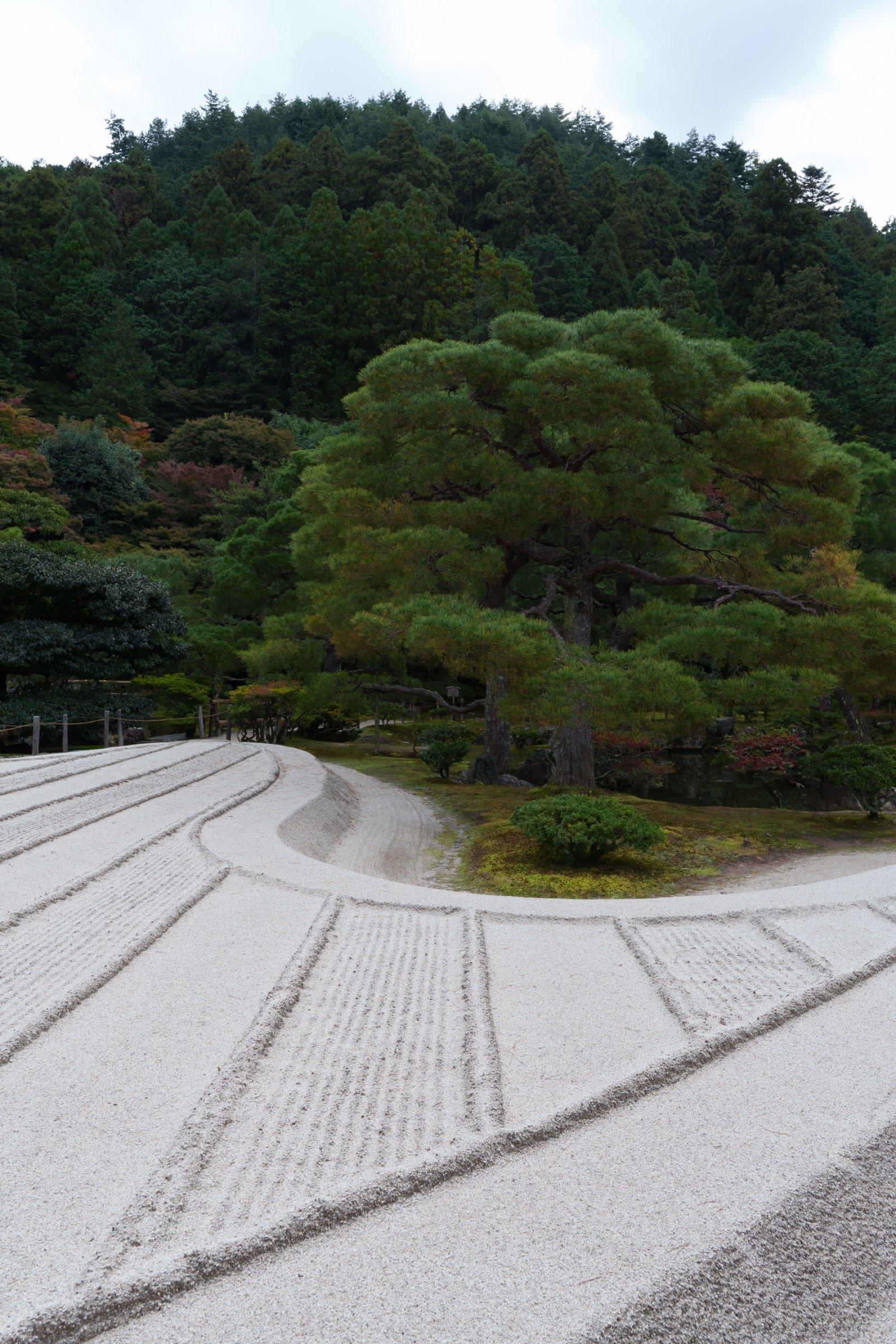
The cone-shaped Kogetsudai, about as tall as an adult and resembling Mount Fuji, and the Ginshadan, a dry landscape of raised white sand shaped to suggest waves, are perhaps the most visually refined area of Ginkakuji.
Kogetsudai looks like a sculpture carved from stone, but it is actually formed simply by compacting Shirakawa sand and soil. It is regularly maintained and seems strong enough to withstand wind and rain.
Ginkakuji itself was built in the Muromachi period, but this garden is thought to have been created in the late Edo period. If we think of it as dating from just before the Meiji era, its modern sense of form begins to make sense.
It is said that neither its creator nor its purpose is clearly known. Stories connected to the moon are often told, such as the idea that it was designed to reflect moonlight.
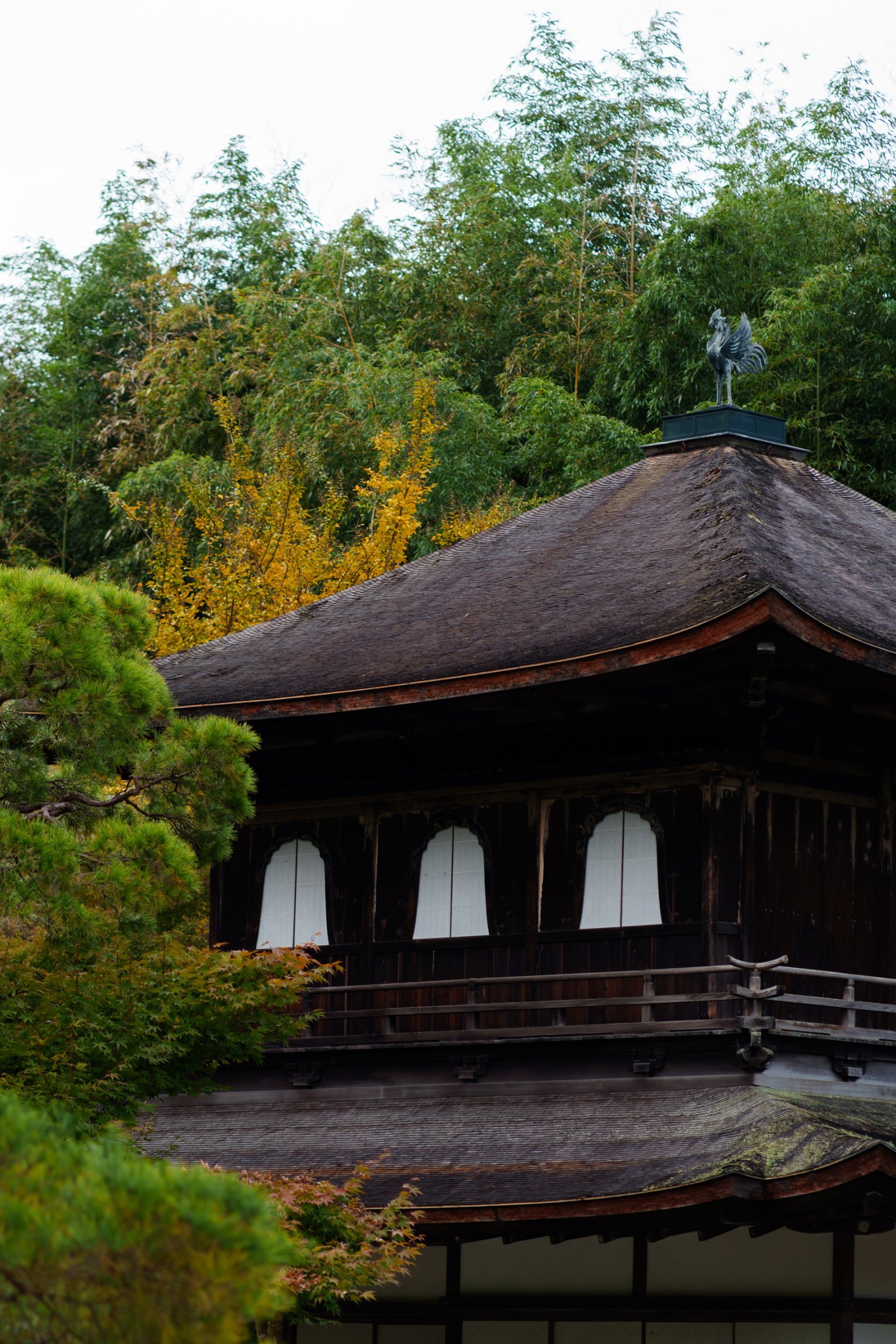
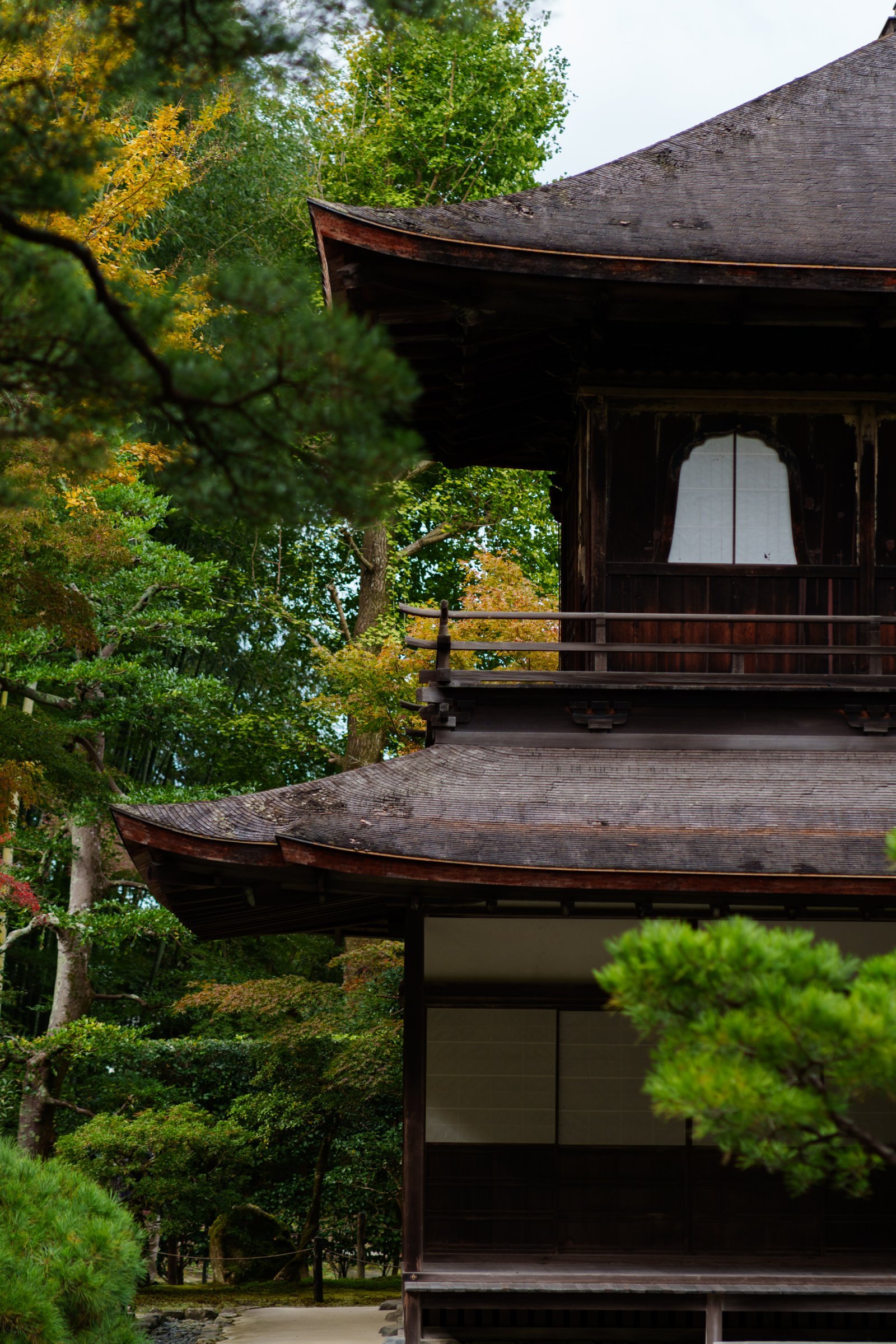
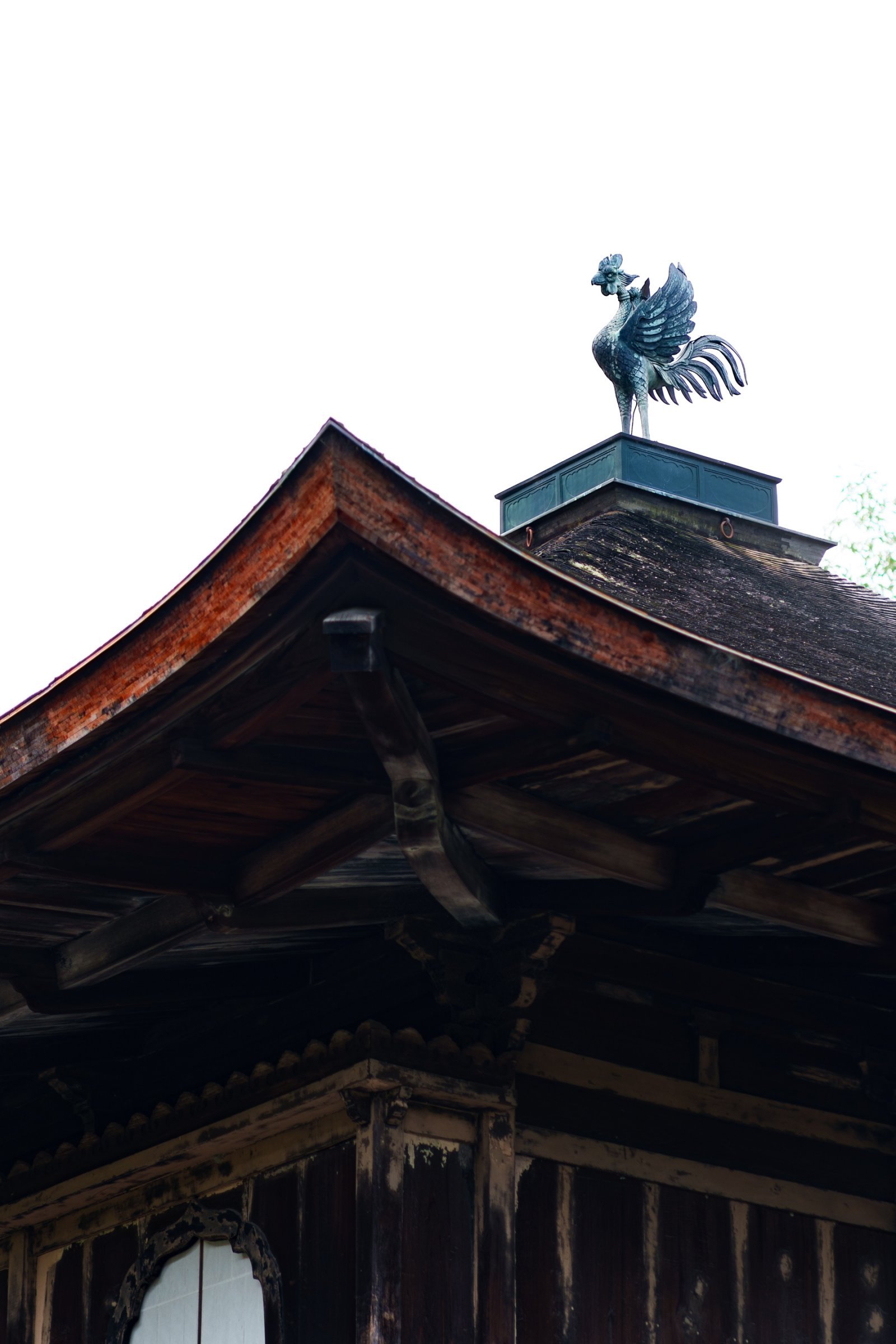
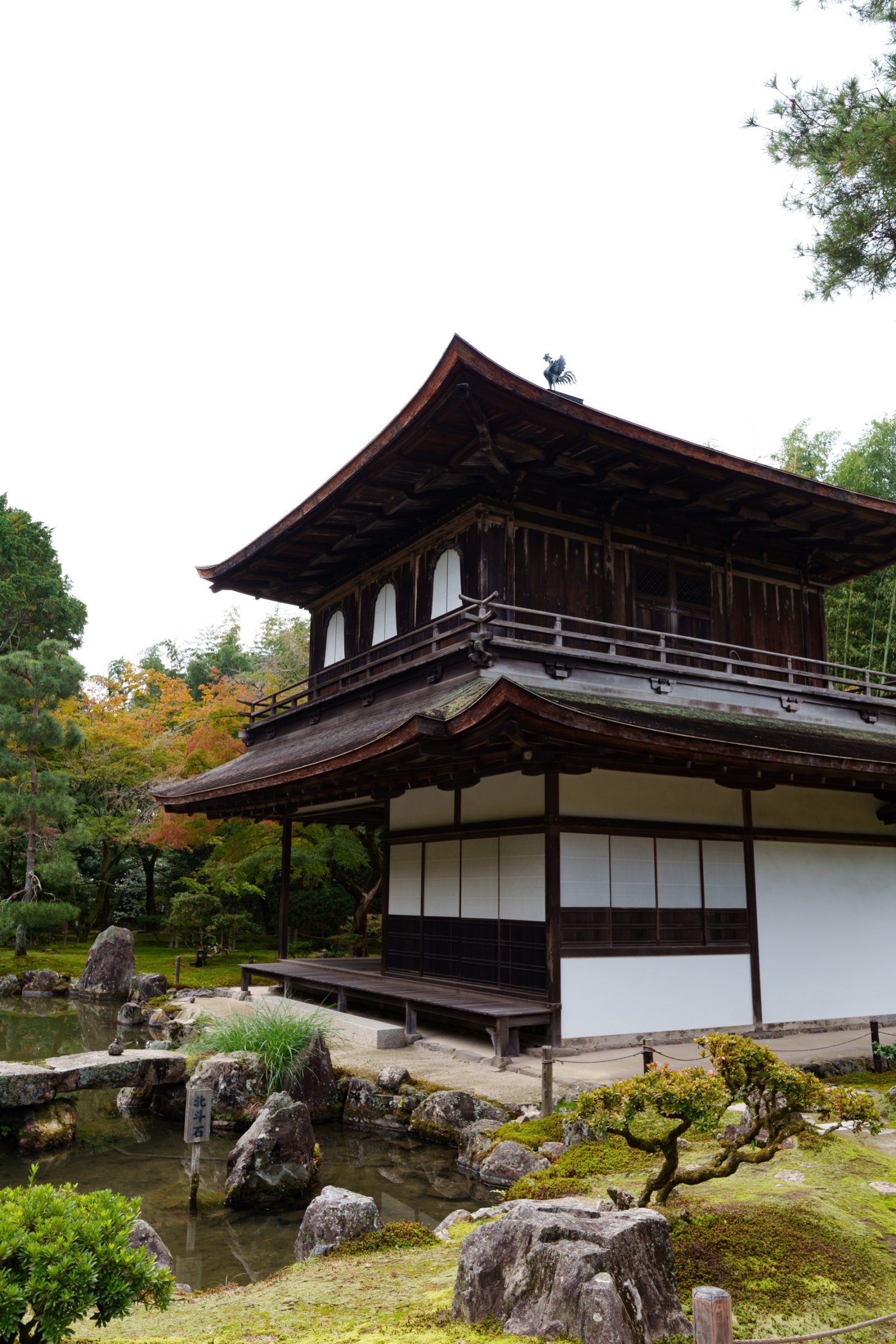
The official name of Ginkakuji is Tōzan Jishōji.
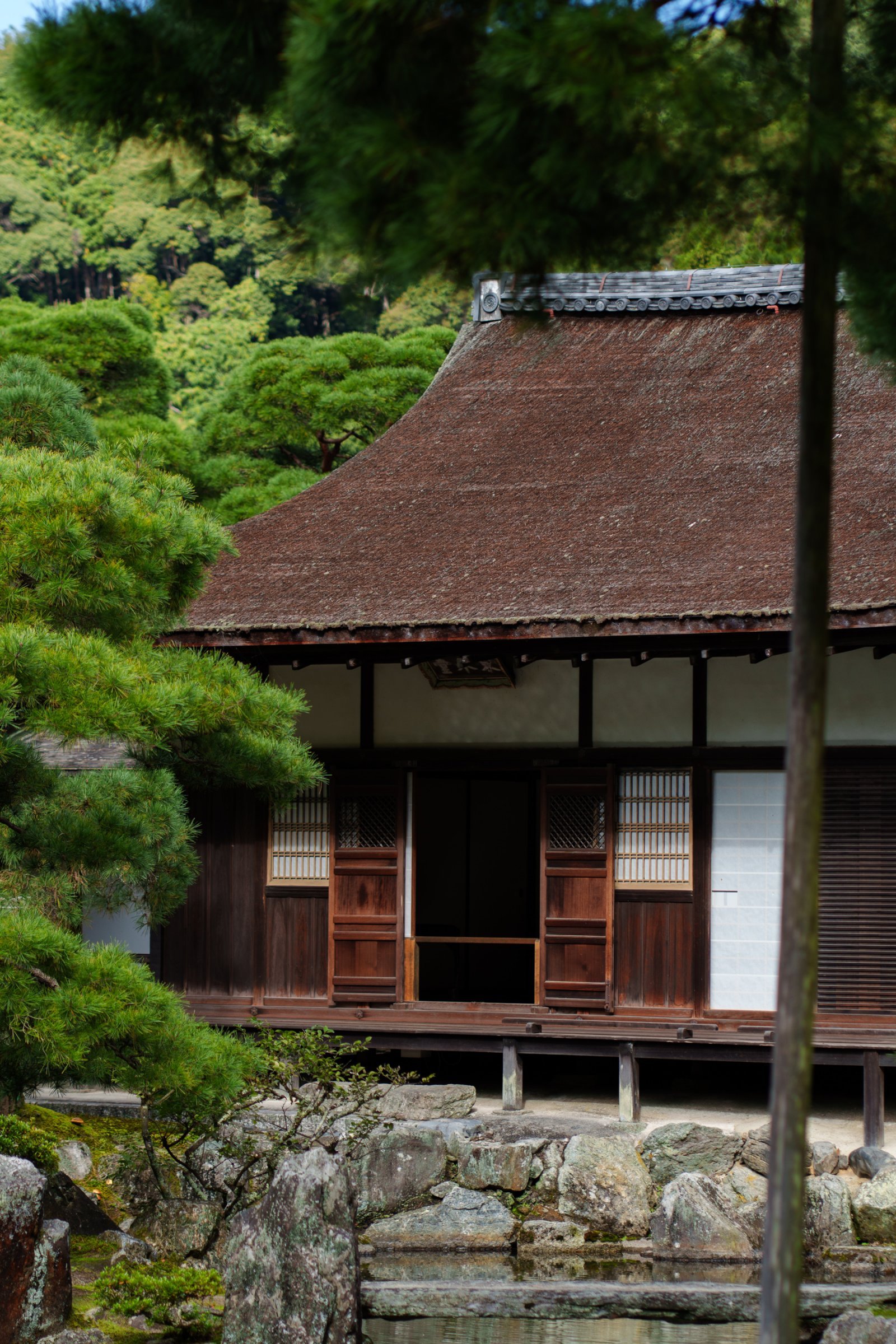
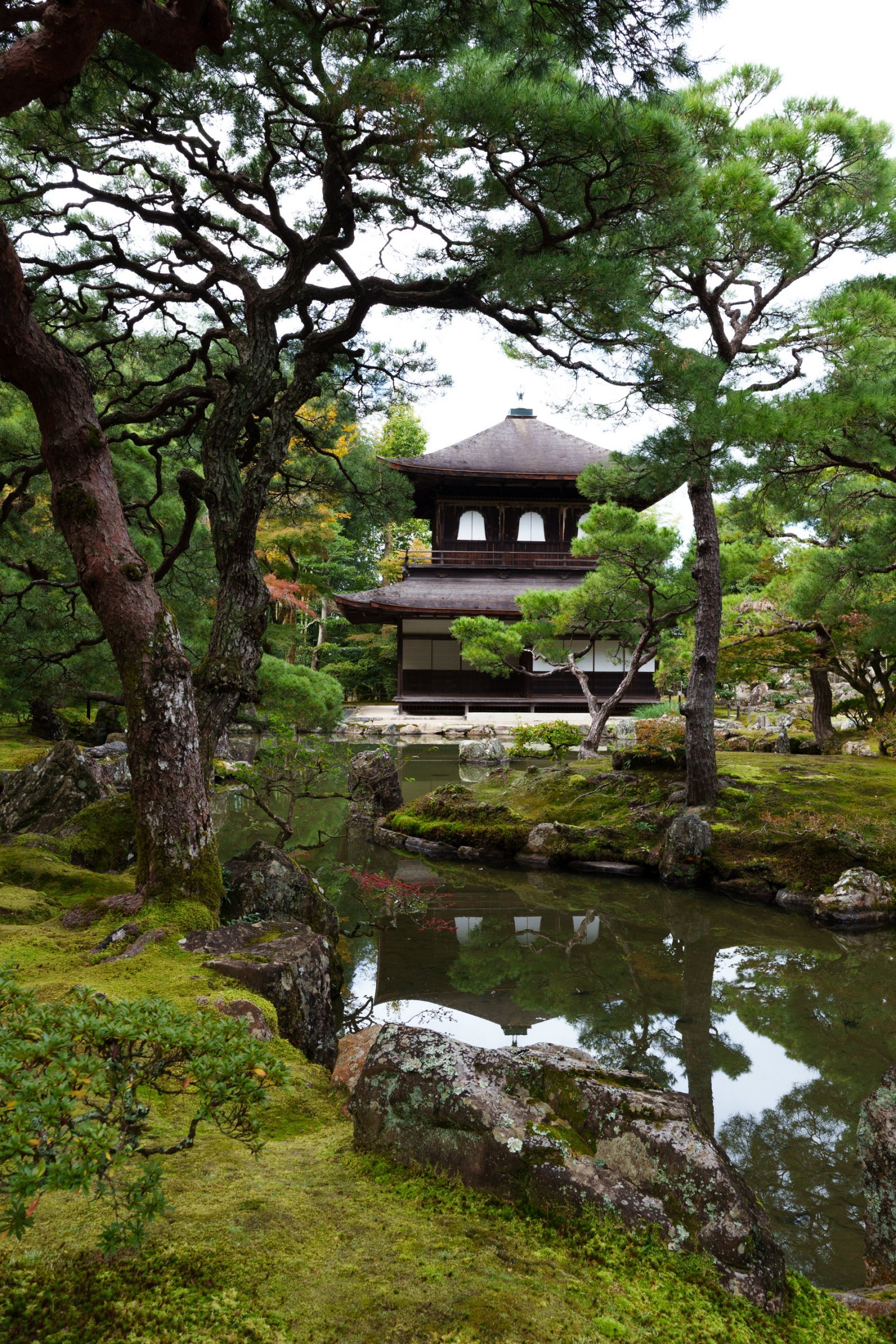
There are two National Treasures among its buildings. One is the Kannon-den, shown in the four photographs above, better known as the Silver Pavilion.
The upward curve of its kokerabuki roof, made with thin wooden shingles, is very beautiful. At the same time, when I first saw the building, what struck me most was its old and weathered appearance.
It is hard to simply say, ‘This weathering equals the beauty of sabi.’ There is a subtle ambiguity to it.
But when you think about the fact that this wooden building has never burned down and has survived as a remnant of Higashiyama culture, and when you imagine the formal beauty that people in Japan at the time aspired to, it slowly begins to sink into the heart.
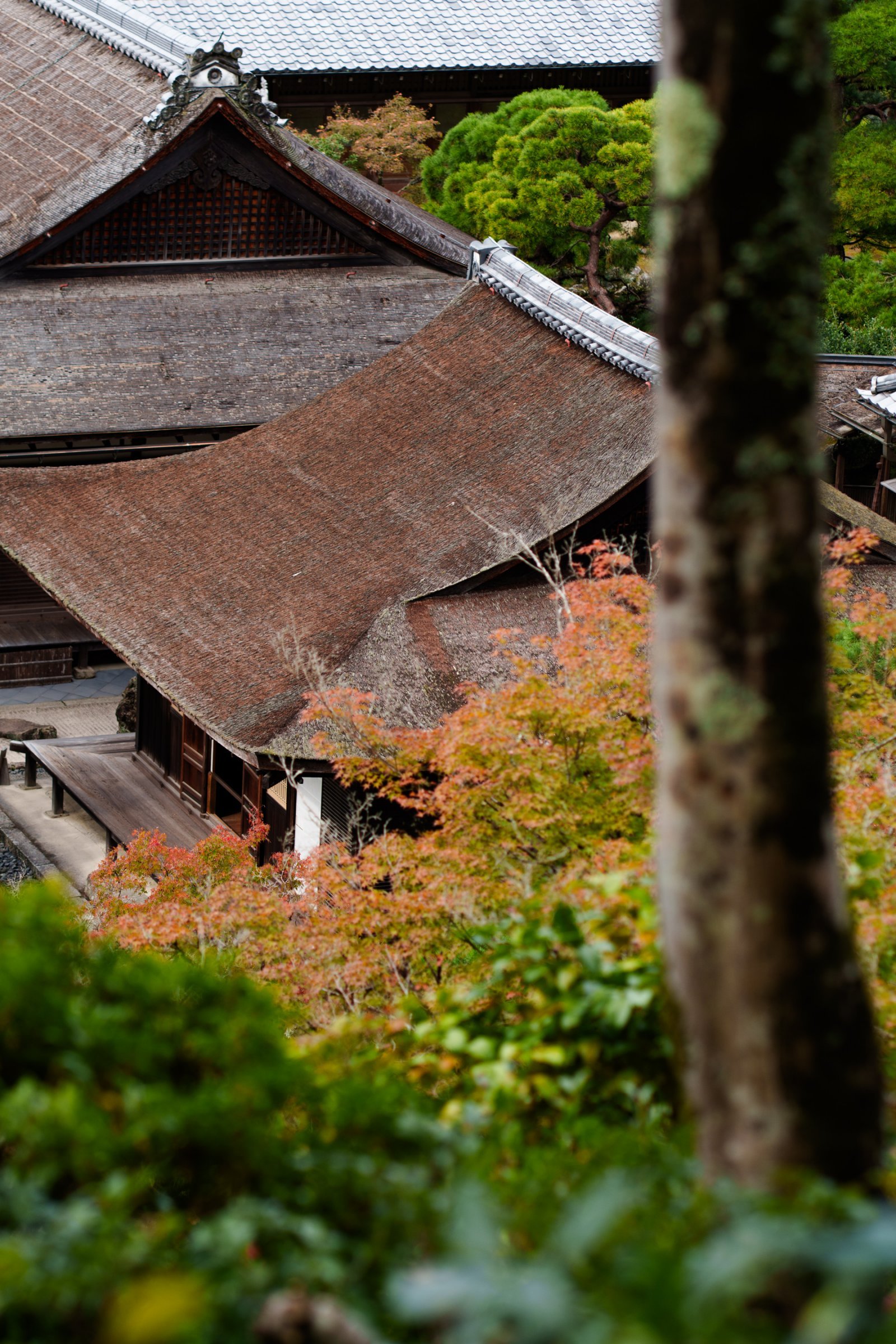
The other National Treasure is Tōgudō, shown in the two photographs above.
Inside is a four-and-a-half-tatami room said to be the oldest surviving example of shoin-zukuri, the architectural style that became the prototype for today’s traditional Japanese room.
Climb the hill of the strolling garden and the view looking down over the roof is superb.
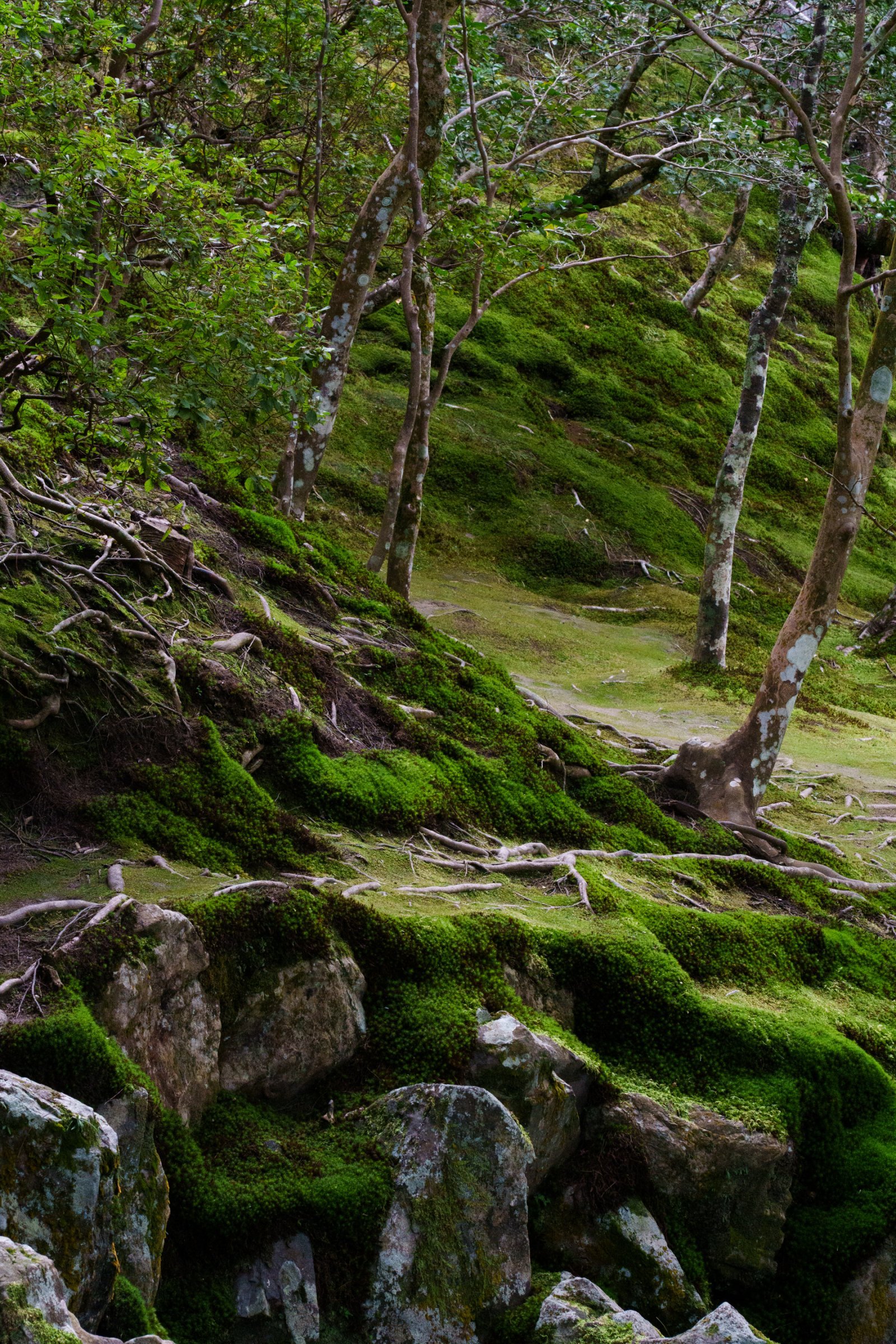
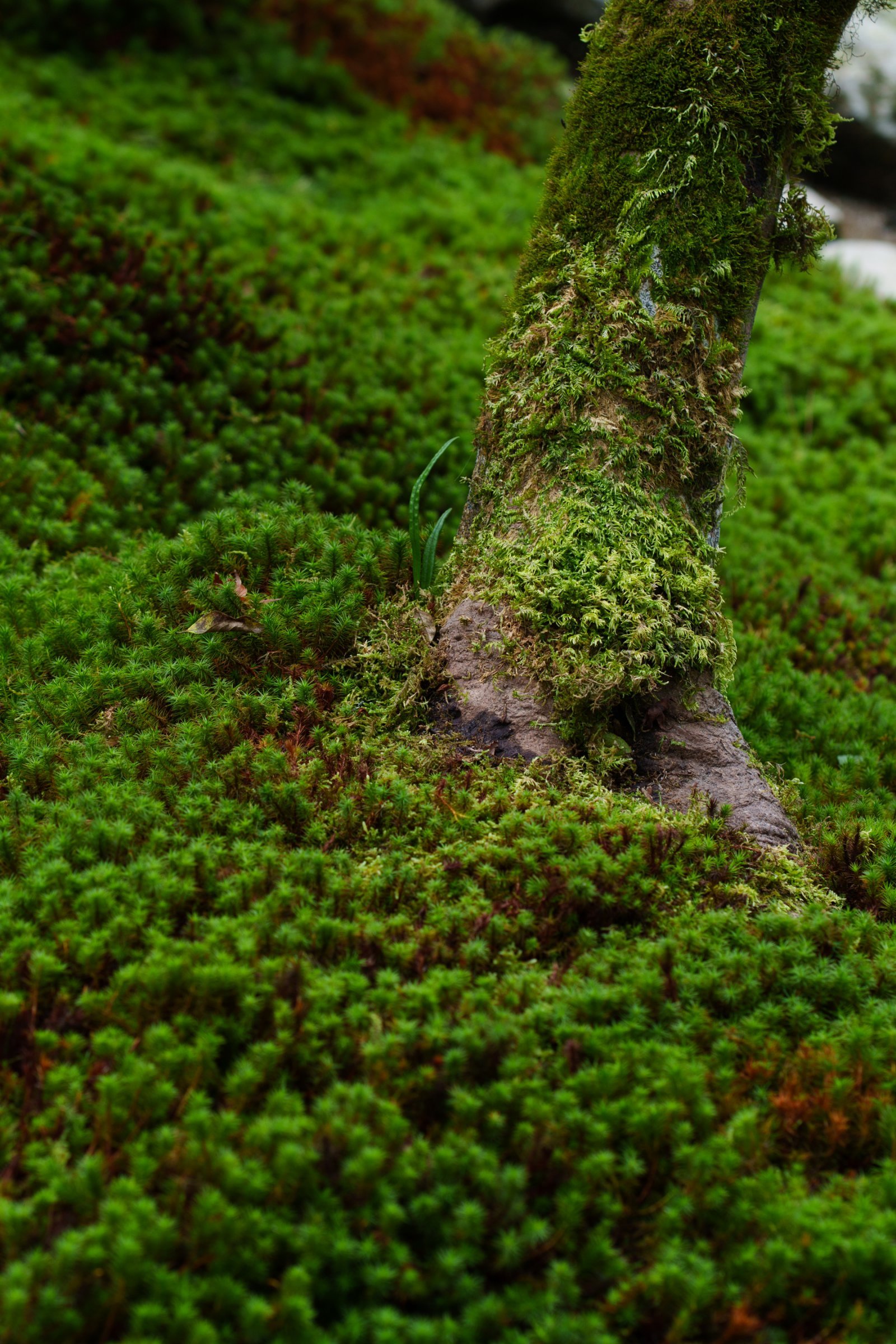
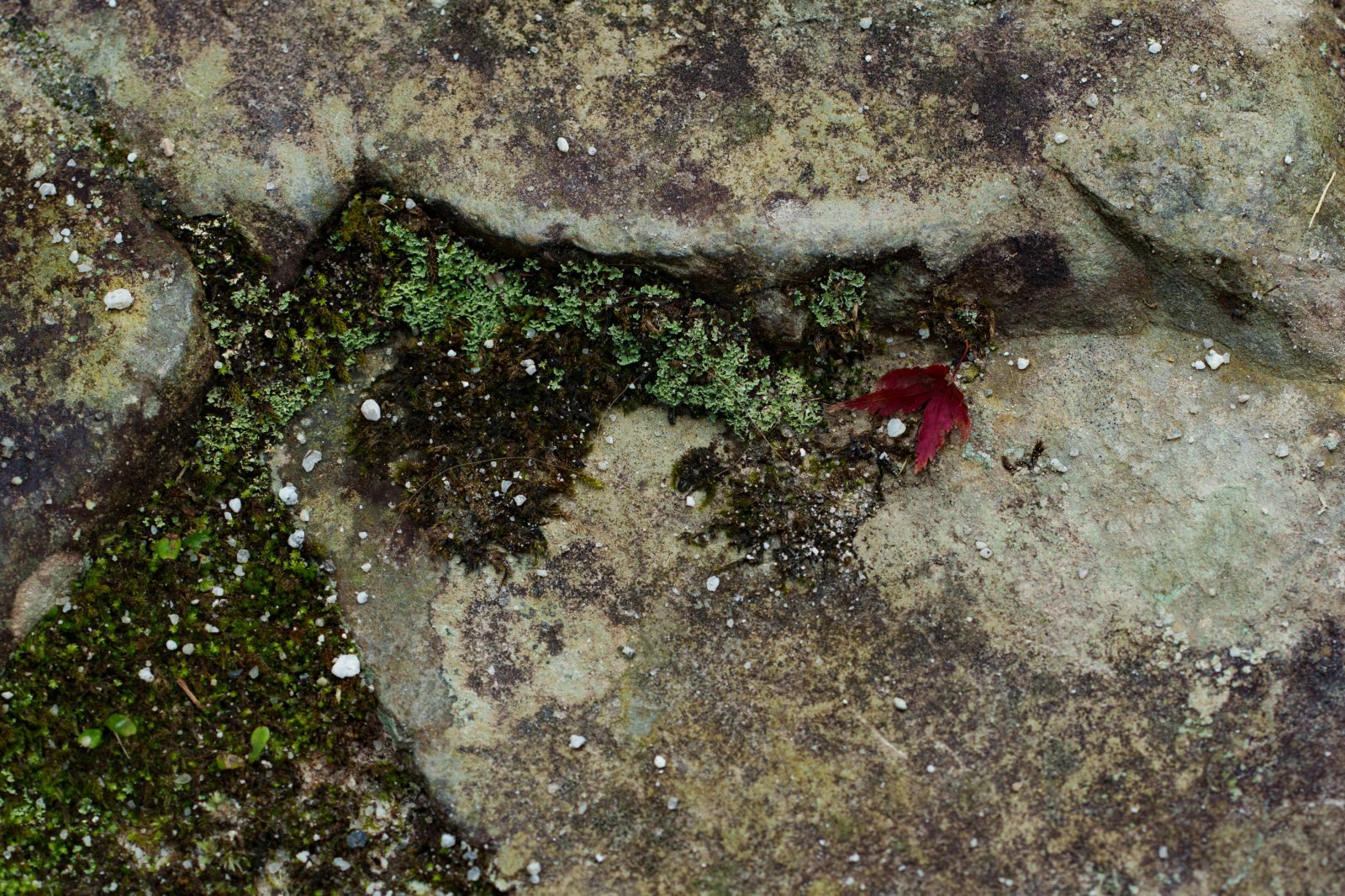
For me, the greatest reason Ginkakuji is so compelling is its garden.
The way it is maintained is exquisite. It is a space overflowing with the essence of sabi. A kaleidoscope of beauty, the kind that makes your eyes dart restlessly from one detail to the next.
Ginkakuji’s garden is said to have been modelled on Saihōji in Kyoto, the temple famous for its moss garden.
However, when Saihōji was first built in the Nara period, it was apparently not a moss-covered temple. Due to river flooding and intense humidity, the temple fell into disrepair. Over time, moss began to grow densely, and it eventually shifted toward becoming the Moss Temple we know today. That change is said to have taken place in the late Edo period.
Ginkakuji, too, was not a moss garden when it was first built in the Muromachi period. Its appearance seems to have changed greatly between past and present.
But if the current form is this beautiful, that is more than fine.
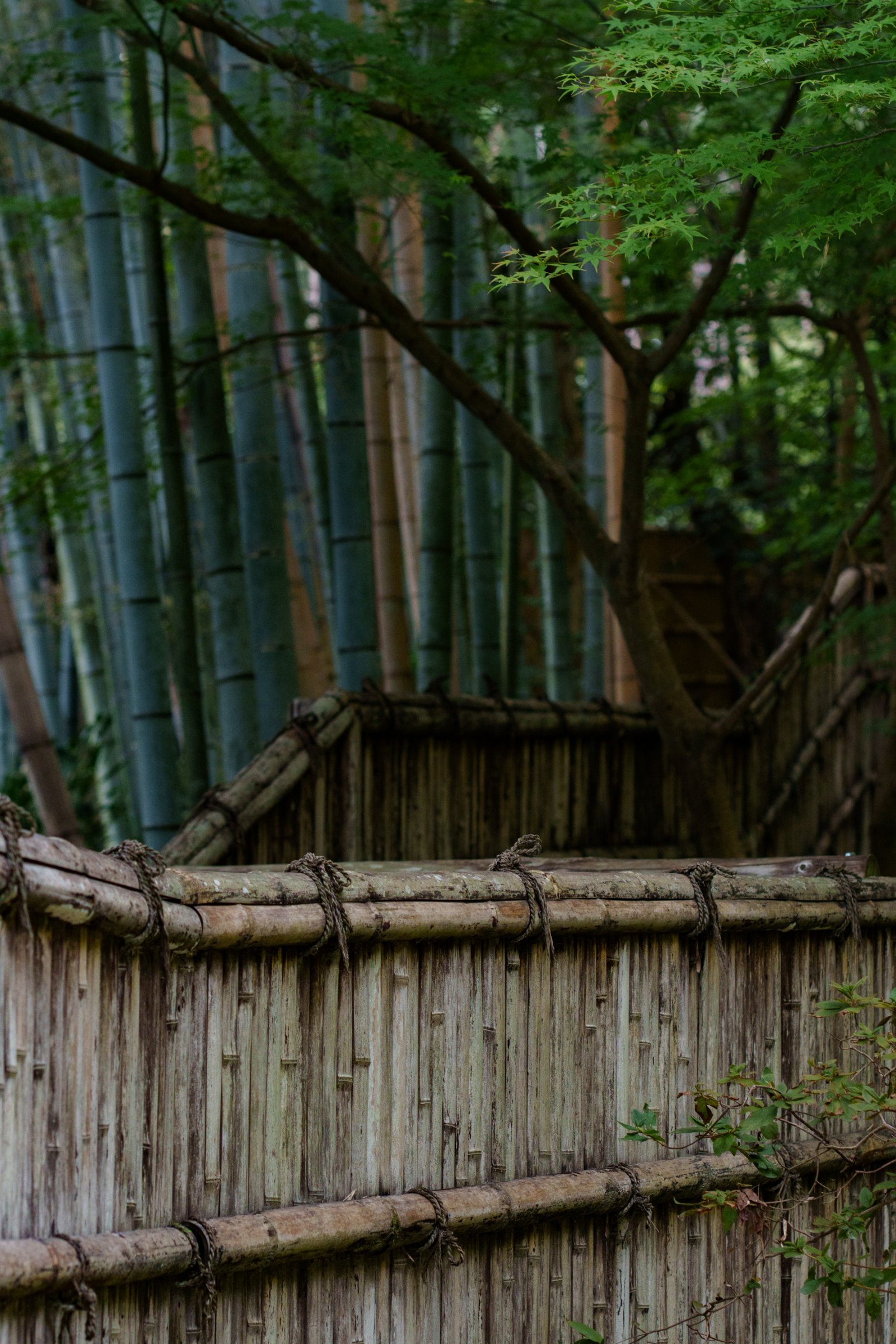
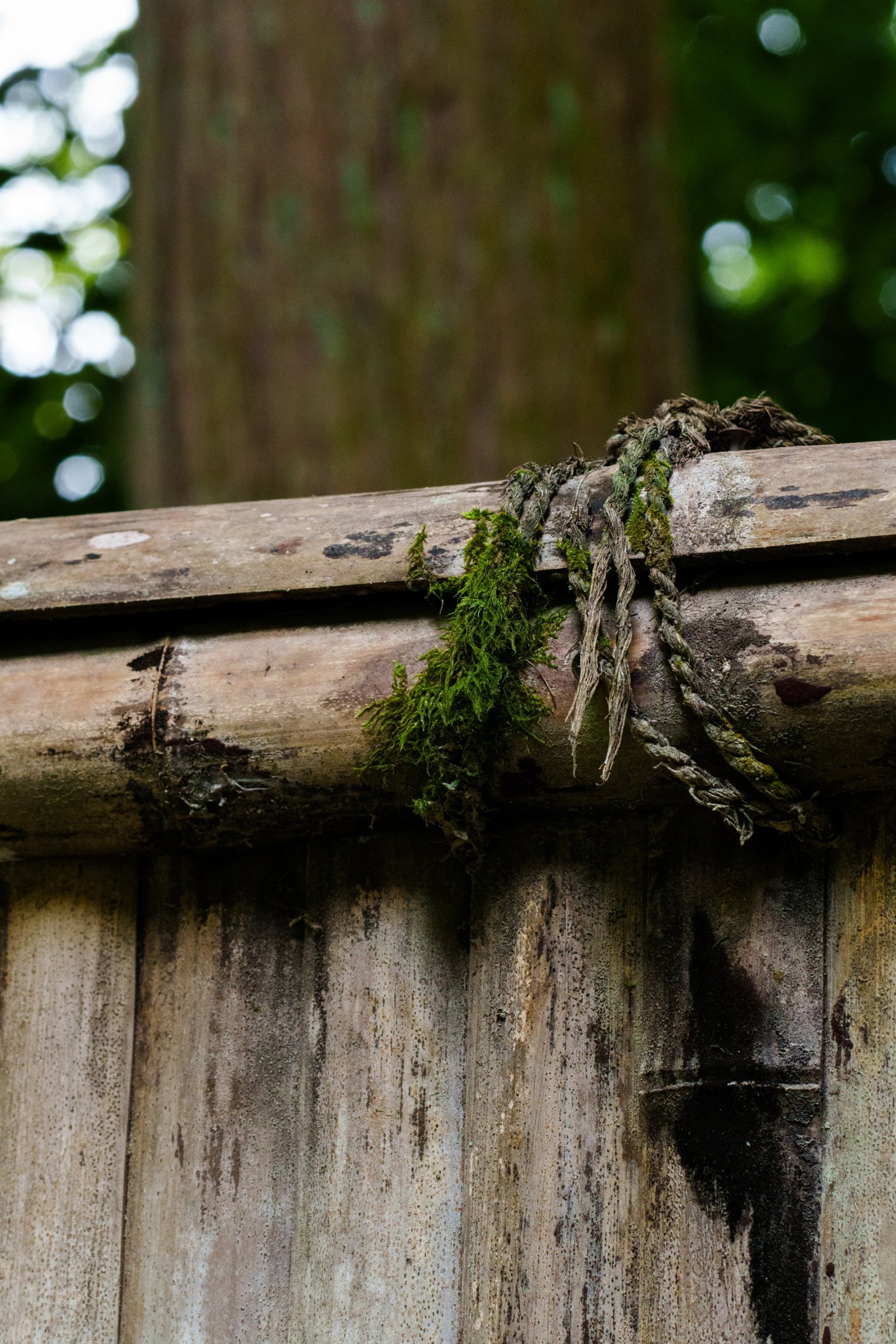
Small details reveal weight, dignity and traditional design. Because the materials are of high quality, exposure to wind and rain only seems to deepen their character. The fact that this kind of sabi landscape extends across the whole garden is part of what makes Kyoto so extraordinary.
During the COVID-19 pandemic in 2020, I visited Kyoto for an assignment covering a certain coffee shop. In my free time, I went to Kiyomizu-dera and, amazingly, had the chance to photograph both the famous Kiyomizu stage and the photogenic Sannenzaka slope without a single person in the frame.
For people in Kyoto, whose tourism income had fallen sharply, it must have been a very difficult time.
Looking back now, I should have gone to Ginkakuji then as well. Unless I apply for permission to visit for a shoot early in the morning, I may never again see this garden space completely empty in my lifetime.
Autumn, when the leaves turn red, is Kyoto’s peak sightseeing season.
But if you can appreciate the atmosphere of winter, when the leaves have fallen from the plants, why not aim for the off-season?
If you can take even one day off, a day trip is possible. From Tokyo Station to Kyoto Station takes about two hours by Shinkansen. Since shrines and temples close in the evening, the ideal course is to leave early in the morning and return on a Shinkansen around 7 p.m.
Visit a few places you have been wanting to see, then look back on the day over a Kyoto coffee in a café renovated from an old machiya townhouse. For me, that is one of the happiest ways to spend time.