Kyoto Sento Monzen-yu, a Neighborhood Bathhouse Rooted in the Seasons
At this public bath near Daitokuji Temple, soft groundwater and seasonal rituals keep Kyoto’s ‘sentō’ culture alive.
Screenwriter Kundō Koyama advocates for the recognition of yudō, the ‘way of the bath’, alongside sadō, the way of tea, and kadō, the way of flowers, as a fundamental element of traditional Japanese culture. He immerses himself across Japan in different types of baths, from hot springs (onsen) to public bathhouses (sentō), as well as domestic bathtubs. In each issue of Pen, he records these journeys in his ‘Bath Chronicle’.
Kyoto Sento Monzen-yu (Kyoto City, Kyoto Prefecture)
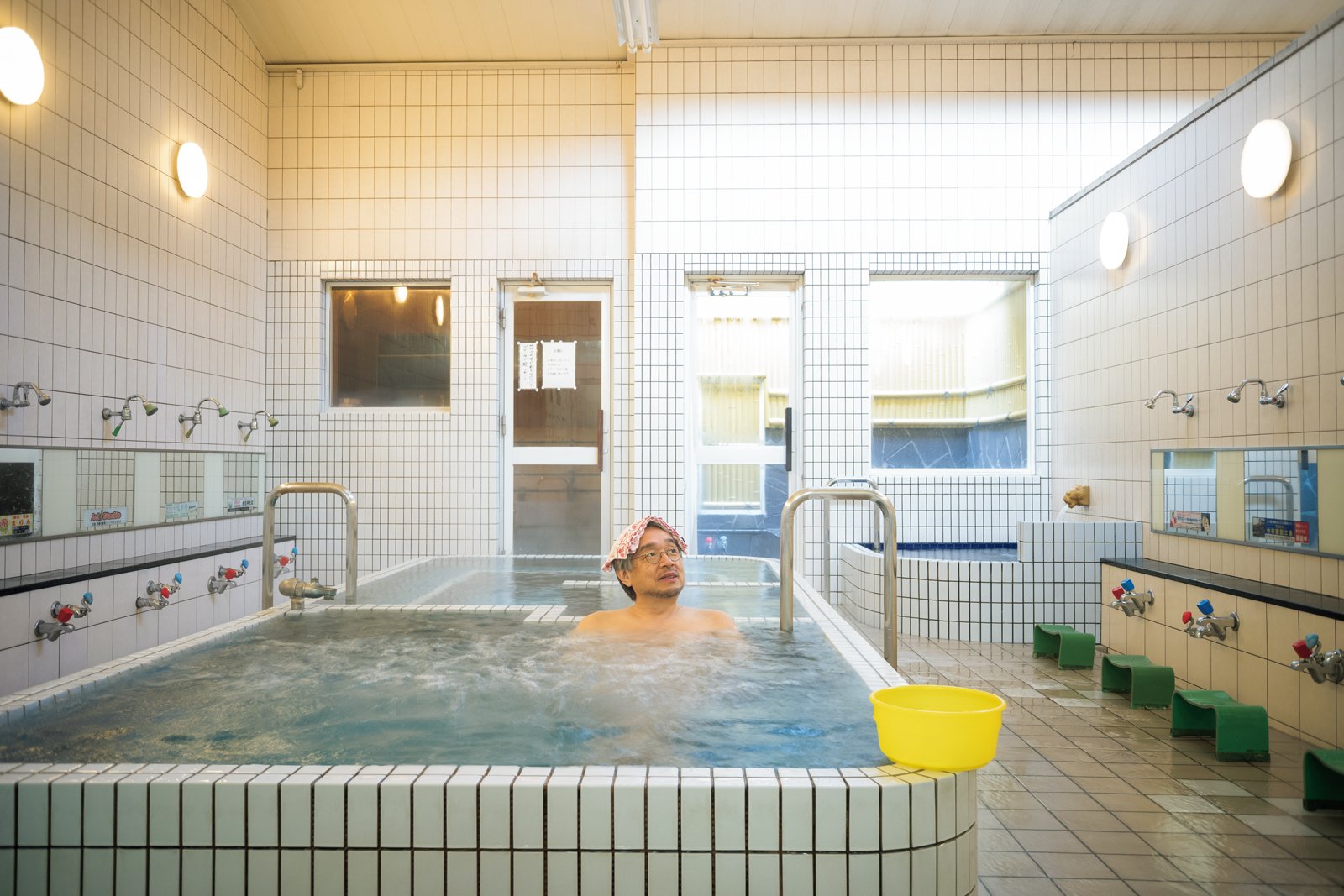
Kundō Koyama bathing in Kyoto Sento Monzen-yu.
I once made a film called Yudō, or ‘the way of bathing.’ It tells the story of an architect active in the city who, after the death of his father, plans to demolish the family sentō and build an apartment block in its place. But as he comes into contact with the customers who gather there, he develops a love for the public bath and decides to preserve it.
The owner of Monzen-yu, Mr. Yoshimoto, is a first-class architect. Instead of taking over the sentō his grandfather had opened 90 years earlier, he went to work at an architectural firm. But after his father’s sudden passing, he returned. Now, as the third-generation owner, he protects the bathhouse while continuing his design work. When Mr. Yoshimoto saw Yudō, he apparently shouted, ‘This is me!’
Today, he also leads Kyoto’s sentō scene as chair of the Kyoto Prefecture Bathhouse Association. Since the end of last year, he has brought together public baths across Kyoto City to launch the ‘24 Solar Terms Bath Tour.’ The 24 solar terms are traditional seasonal markers that divide the year according to subtle shifts in climate and nature. For each term, from Greater Snow, Winter Solstice, Lesser Cold and Greater Cold to Beginning of Spring and Rain Water, visitors receive a sticker featuring Nippon-ga artwork by artist Tarō Yamamoto. Some paste the stickers into a bath-tour booklet and aim to collect all 24 seasonal designs. Others try to visit every sentō and collect stamps. There are now fans attempting to complete both.
Many of Kyoto’s sentō use groundwater, giving the bathwater a notably soft feel. To soak while experiencing the blessings of nature and the changing seasons is a true luxury. The morning bath, in particular, when one soaks in the light of daybreak, is exceptional.
Wanting to share this happiness with as many people as possible, Mr. Yoshimoto wakes up every morning at seven to heat the bathwater. During the day, he draws architectural plans. After the bathhouse closes at 2 a.m., he cleans the baths and goes to sleep at three.
Knowing this story behind the scenes, one cannot help but want to press the hands together in gratitude while soaking, as if paying a visit to nearby Daitokuji Temple.
Kyoto Sento Monzen-yu
Address: 29 Murasakino Monzen-cho, Kita-ku, Kyoto City, Kyoto Prefecture
Phone: +8175-492-2314
Hours: 9:00–12:00 / 15:00–26:00, Monday–Wednesday and Friday–Saturday; 9:00–26:00, Sunday
Closed: Thursday
Admission: Adults ¥550 / Elementary school students ¥200
1010.kyoto/spot/monzenyu/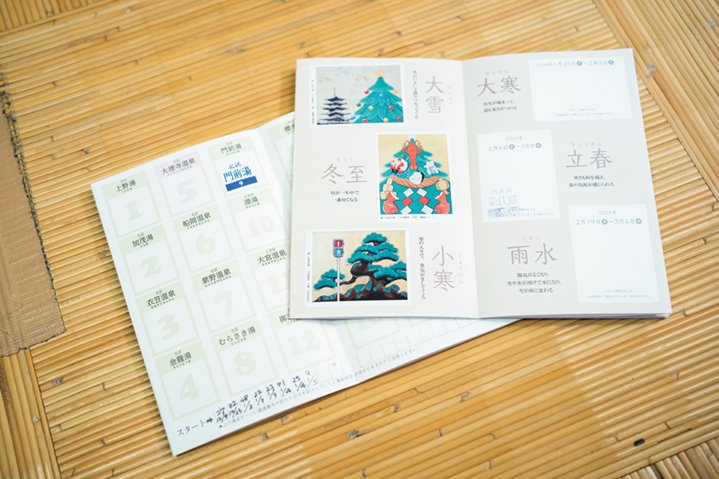
The ‘24 Solar Terms Bath Tour,’ covering all ‘sentō’ in Kyoto City, runs until Sunday, December 6 this year.
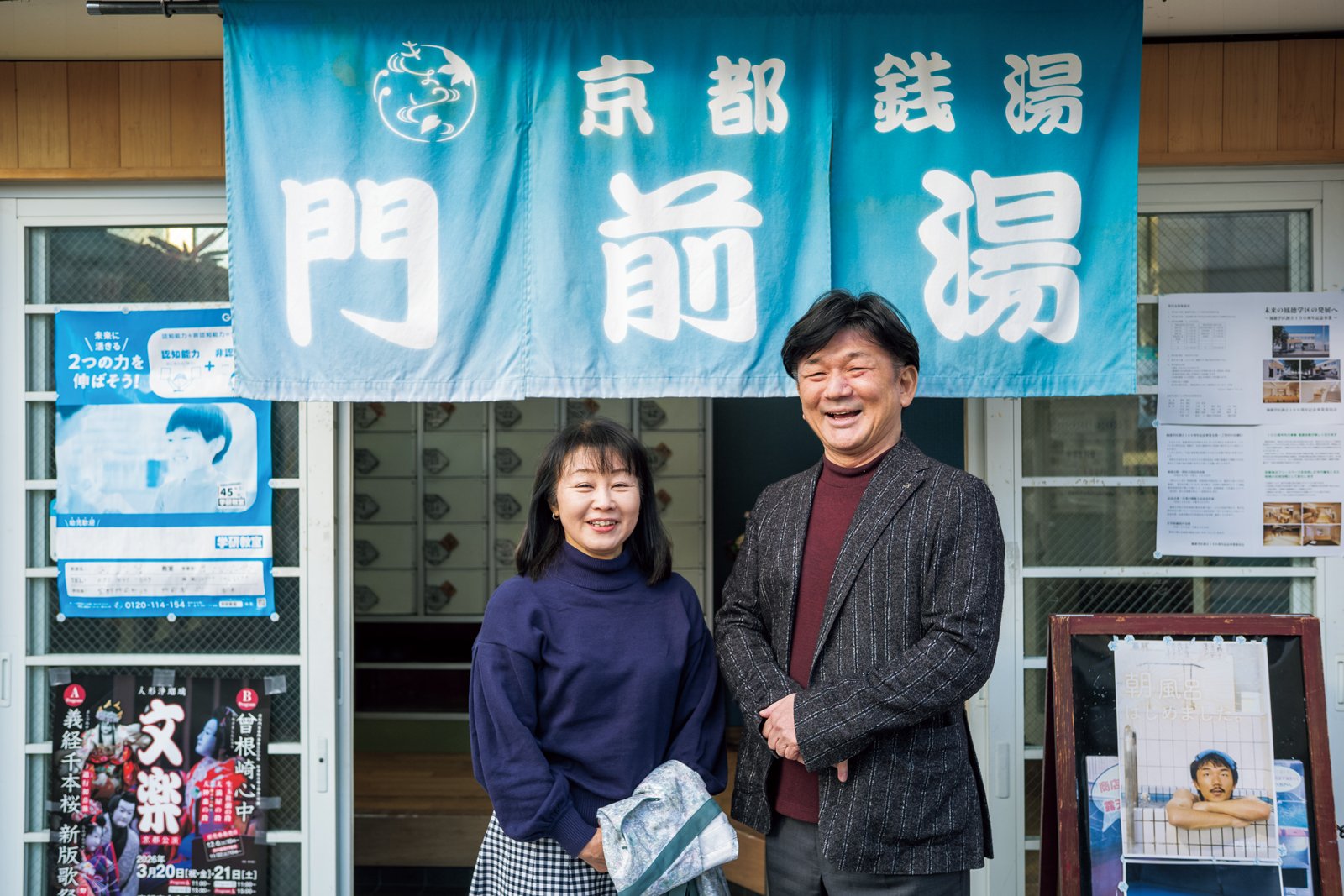
Located a five-minute walk from the Daitokuji-mae city bus stop, Monzen-yu is equipped with an open-air bath, sauna and cold bath, and also offers morning bathing. Pictured are Mr. and Mrs. Yoshimoto, who operate the bathhouse. The third-generation owner, Mr. Yoshimoto, right, devotes himself to behind-the-scenes work such as heating the baths, while family members and friends sit at the reception counter.