Japan’s New Generation of Experimental Photographers
With an increasing number of projects rooted in research or developed collectively, they continue to push the boundaries of the medium.
‘Photography is a form of expression born out of experimentation, and it could be said that the history of photography has been shaped by a succession of experiments,’ says photographer Taisuke Koyama.
Alongside creating and exhibiting his own experimental photographic and video works, he conducts research into photography through TOKYO PHOTOGRAPHIC RESEARCH, a collective he leads and which is primarily made up of photographers. Here, he introduces several contemporary artists who, each in their own way, are expanding the possibilities of the medium.
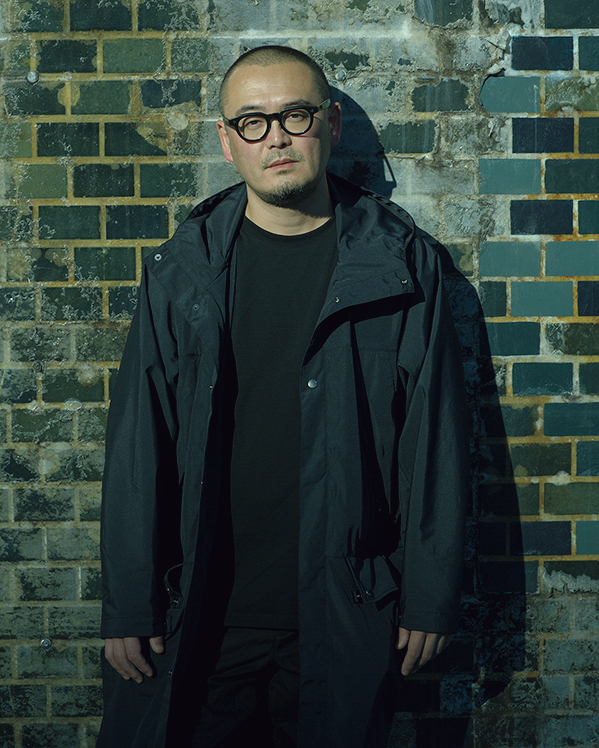
Taisuke Koyama is a photographer born in Tokyo in 1978. He is the director of TOKYO PHOTOGRAPHIC RESEARCH and is also involved in the planning of YAU (Yurakucho Art Urbanism), an art-based innovation programme. In December 2025, he published ‘TPR Book #01: 200 Years of Experimental Photographic Expression’ (TOKYO PHOTOGRAPHIC RESEARCH).
Two centuries after its invention, photographic expression continues to be explored by artists of every generation. Asked where the medium stands today, Koyama observes that it is becoming increasingly diverse and fragmented.
‘What I find particularly interesting is the growing number of projects based on research. More and more artists are moving beyond simply relying on their own sensations and emotions. They are looking at how to perceive the outside world and connect with it, and how to engage with histories and events that have previously gone unnoticed. Their works emerge from this process of research. We are also seeing a growing practice of treating photography as a material in itself, rather than simply as a means of recording reality, with works that develop into fully-fledged spatial experiences.’
Collective practices and collaboration with AI
In recent years, the very notion of what it means to be a photographer has also evolved.
‘In Europe in particular, there has been an increase in photographic duos and collectives. Traditionally, especially in Japan, photographic expression was often associated with personal photography, or shi-shashin, and therefore with the idea that an artwork should reflect the author’s individual life and experiences. Today, many photographers are moving beyond this conception and are more interested in how they can handle the medium and create a visual experience. I think that practices developed by duos and collectives are an extension of this way of thinking.’
There has also been a proliferation of works that construct images in collaboration with artificial intelligence, as well as works that question the very acts of ‘seeing’ and ‘photographing’.
‘One thing we can say in general is that, now that AI makes it possible to generate images freely, the question of ‘what a human being should think about as someone who photographs’ may have become a common theme among many artists.’
The six young artists selected by Koyama for this article are likewise expanding the possibilities of the photographic medium in very different ways. Their practices offer a glimpse into the state of photography today.
A poetry of reality woven through research
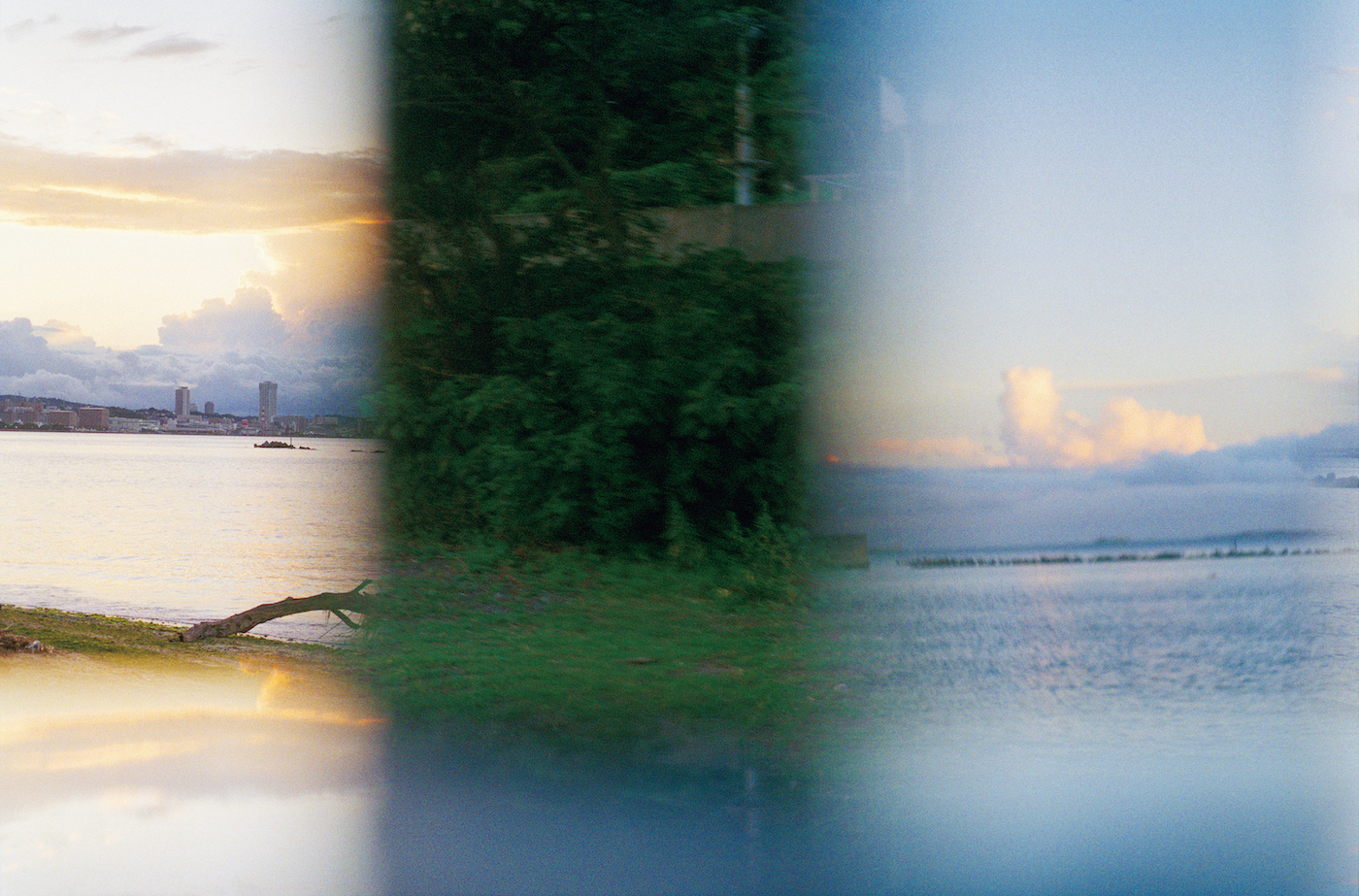
‘-・・ (Chō Tan Tan)’, 2025. A photograph from ‘-・・ (Chō Tan Tan)’, winner of the 50th Kimura Ihei Commemorative Photography Award. The title means ‘arrived at the bottom of the sea’ and refers to a sequence of symbols inspired by a Morse code-like communication system once used between members of the underwater Fukuryū units and ships on the surface. © Kanade Hamamoto
Kanade Hamamoto
Born in 2000, Kanade Hamamoto explores different forms of expression, taking photographs with broken cameras and making field recordings to document the ‘memories’ that remain in the gaps between humans, non-humans and places. In 2025, she founded her independent publishing house, Shinjū Shuppan.
This year, she received the Kimura Ihei Commemorative Photography Award for -・・ (Chō Tan Tan), a work that grew out of her participation in the art festival SENSE ISLAND/LAND|感覚の島と感覚の地 2024, held in Yokosuka and on Sarushima, a largely untouched island.
‘Kanade Hamamoto is known in particular for her experimental practice of spontaneously installing her works in abandoned buildings and other ruins, but she is also an artist with a deep interest in history and the specific character of places. The work she presented at the festival also originated in a historical event: the waters off Yokosuka were once used as a training ground for the Fukuryū units, kamikaze soldiers trained to attack enemy vessels underwater as human mines. She also drew on written accounts by former members of these units. The landscapes and sounds described in those accounts particularly inspired her, and she began collecting, through her fieldwork, scenes that they themselves might have seen.’
Although the work is haunted by the painful memory of war, Koyama emphasises that it is equally important to consider that the photographs themselves depict contemporary landscapes.
‘Most of them are, in fact, present-day landscapes, which the artist herself describes as scenes from everyday life. I think one of the work’s appeals lies precisely in the sense of distance it conveys between the events she researched and her own reality as someone living in the present.’
Dark images born from the sensations of everyday life
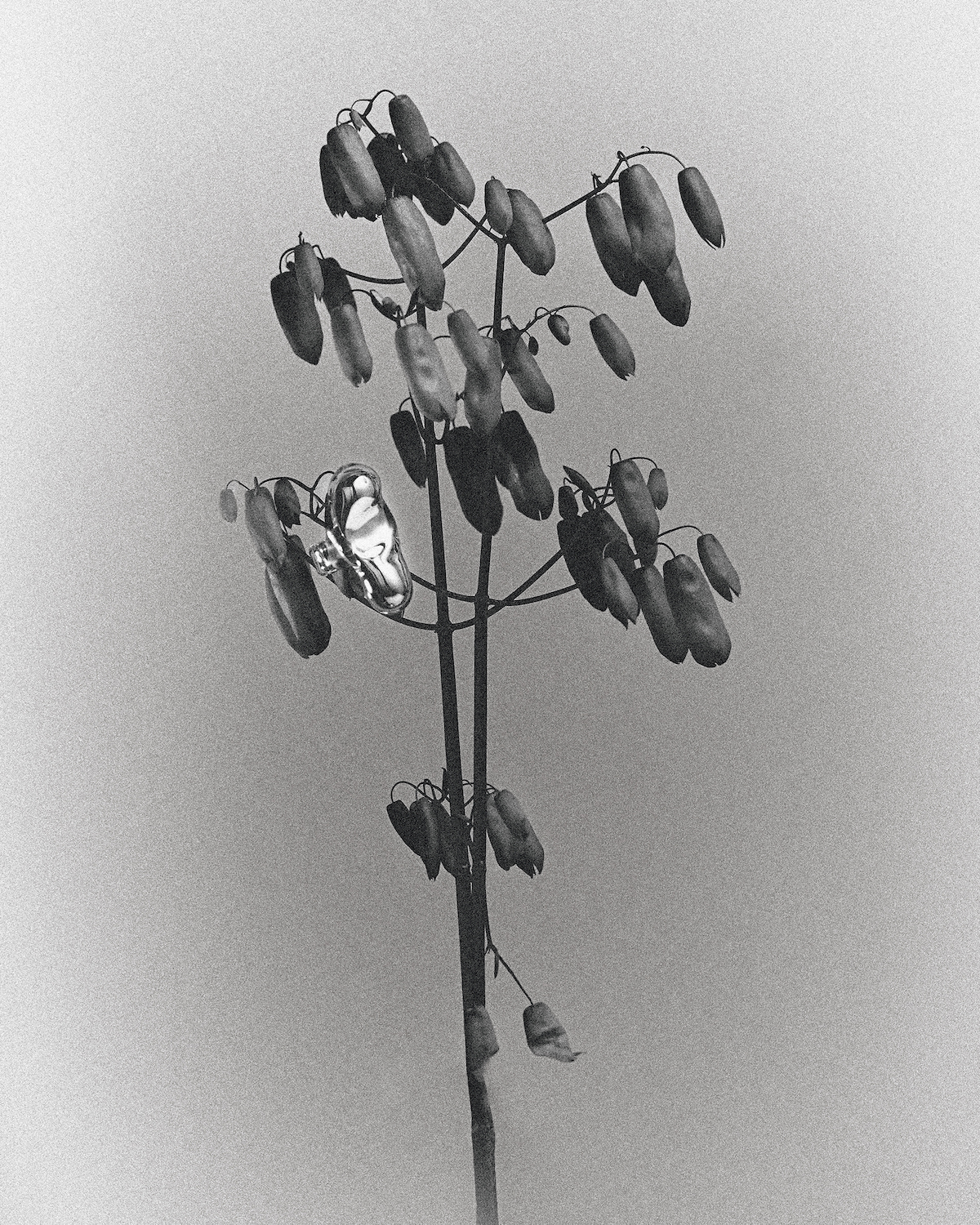
‘光脈の下で~Underground archives~’, 2025. This work explores the sensation of darkness imprinted on Nanako Kobayashi’s body during days spent in a windowless underground studio under artificial light. Her mastery of photographic technique is also striking, particularly the beauty of the monochrome prints, which powerfully supports the work’s visual world. A zine compiling the series has also been published. © Nanako Kobayashi
Nanako Kobayashi
Born in 2000 in Fukuoka Prefecture, Nanako Kobayashi graduated from Tokyo Polytechnic University in 2022. She creates installations combining photography, sound and other media, starting from small events in everyday life. She is also a member of the art collective GC magazine.
Until now, photographers’ everyday lives have often been expressed through a practice connected to their own lives and memories, as in personal photography. But a new generation of artists is starting with small events or sensations from everyday life and freely transforming them into images, rather than simply recording them as snapshots. Nanako Kobayashi is one of them.
‘Her latest work, 光脈の下で ~Underground archives~, is precisely rooted in a private sensation drawn from everyday life. At the time, she was spending her days working in an underground studio, seeing very little sunlight and passing her time in a windowless space illuminated solely by artificial light. She took what she saw there, the emotions that arose from the experience, and her very perception of darkness itself as starting points, transforming them into photographs through evocative motifs.’
In a darkened space, monochrome photographs of eyes and hands, along with photographs transformed into objects, were presented using an installation-like approach. The artist also employed a new technology that allows images to change depending on the way they are illuminated, as well as projecting video onto the exhibited works. Through this combination of techniques, she gives her visual world an almost three-dimensional presence.
A new approach to still life from which narratives emerge
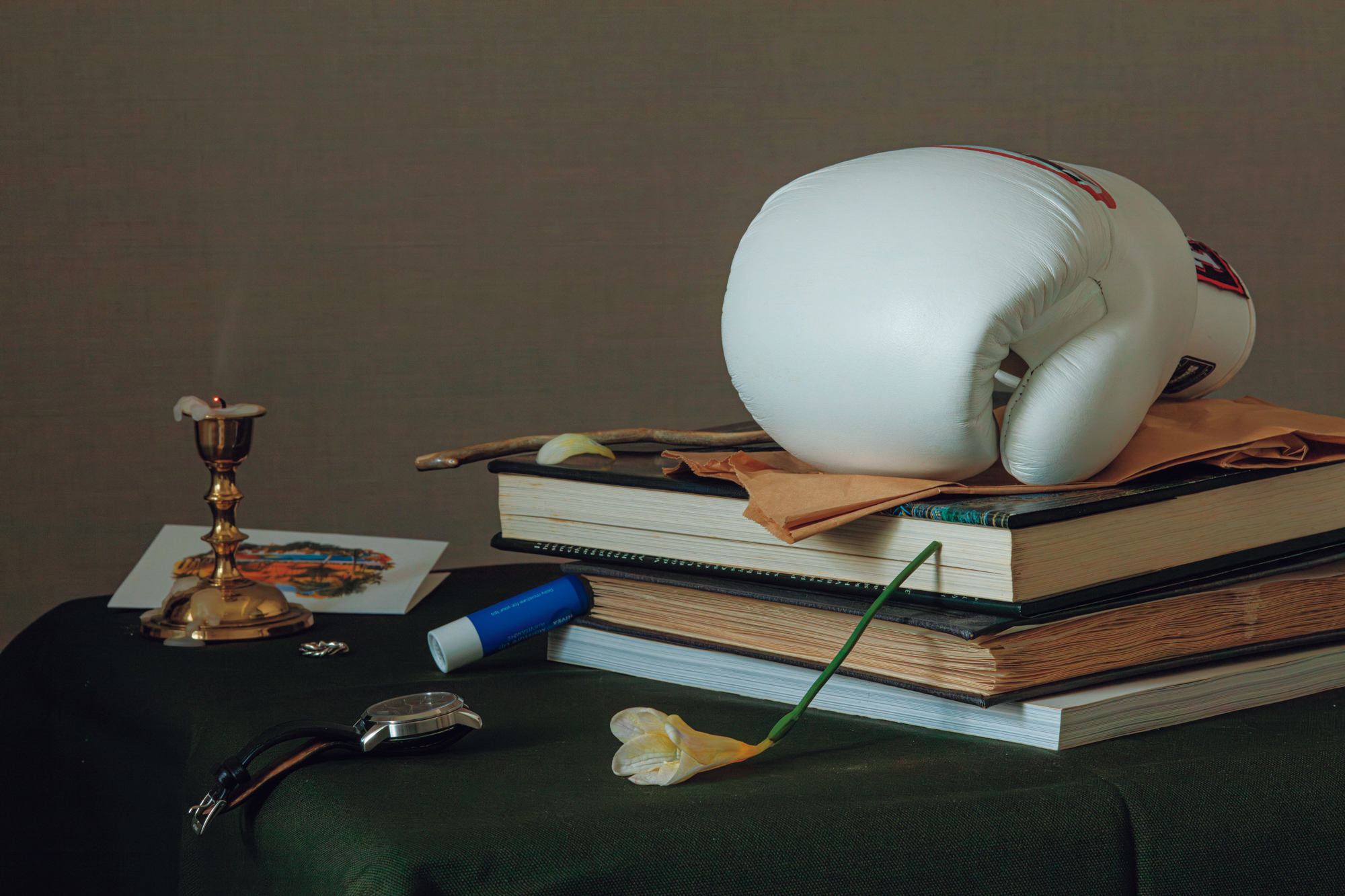
‘Pieces of Narratives’, 2025. Drawing on narratology, the study of narrative structure, this work takes the form of an installation designed to draw out the latent stories within the viewer. It also reveals something fundamental about the nature of photography: its interpretation is inherently left to the viewer, while each photograph remains no more than a fragment of a narrative. © System of Culture
System of Culture
Founded in 2017, System of Culture was originally an art collective made up of three members. The project now continues under the artist name Toshimitsu Komatsu. His photography books include Pieces of Narratives (United Vagabonds).
Within photography, there is a genre known as ‘object composition’ or ‘still-life photography’, centred on the selection, arrangement and combination of photographed subjects. Descending from the tradition of still-life painting in Western art, it has long served as a field for experimentation. Toshimitsu Komatsu, who continues his practice under the name System of Culture, is one of the artists currently pushing its boundaries.
‘In his new project, Pieces of Narratives, he has expanded his interest to consider how a story can emerge from a photograph, opening up a new direction in his practice. One particularly noteworthy aspect of his creative process is that he selects the objects and situations that become his subjects through dialogue with AI. He says this is a way of eliminating the author’s arbitrariness. In that sense, you could say that he is working as a duo with AI.’
The new work consists of 31 photographs. Motifs such as boxing gloves placed casually, a wristwatch, a smartphone and discarded clothing appear repeatedly, prompting viewers to try to construct their own stories. For the solo exhibition devoted to the series, the artist asked three figures—writer Awa Ito, neuroscientist Nobuko Nakano and contemporary artist Rintarō Fuse—to each create a narrative, which was exhibited alongside the photographs.
Exploring the very act of seeing through photography
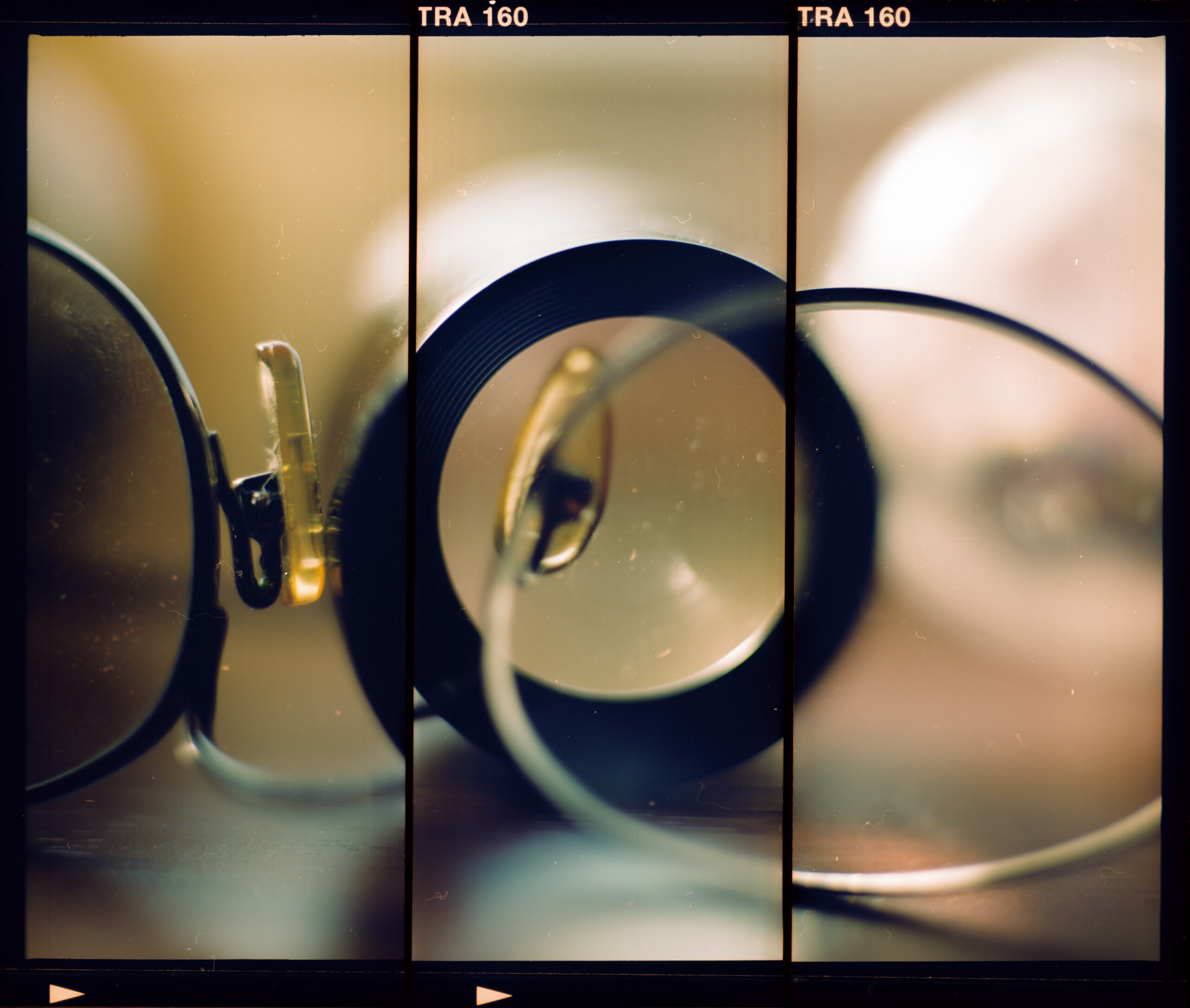
‘one day_2_1_1’, 2026. Negatives taken from the same angle, with the focus shifted incrementally, are combined and printed onto a single sheet of photographic paper. The work was inspired by the scientist who designs memories in ‘Blade Runner 2049’. By rearranging details, the artist attempts to bring a scene from memory into being. © Kei Murata
Kei Murata
Born in 1990 in Niigata Prefecture, Kei Murata graduated from Tokyo University of the Arts in 2016. His recent exhibitions include ‘Jelly’ (Düsseldorf, 2026) and ‘NEW ANXIETIES’ (Seoul, 2025).
How does an image come into being? What is photography, in the first place? An increasing number of artists are confronting such questions through photographic expression. Kei Murata is one of them. By reproducing photographic prints using optical phenomena such as reflection, transparency and refraction, he seeks not to capture the motif itself, but rather to capture his own viewpoint as he observes it.
‘The works he presented in his solo exhibition last year delved even further into these questions. He photographed a motif from the same angle while gradually changing the focus, then combined multiple negatives to make a single print. He says he was attempting to multiply a point of focus that would normally be singular. Unlike a camera, the human eye perceives the world with binocular disparity; our gaze shifts and our consciousness moves as we look. This work attempts to express that through photography.’
Kei Murata has previously produced works using AI. Having gone through that phase of his practice, it is also interesting to see him now return to a more personal form of creation centred on the very act of ‘seeing’.
‘Shooting’ or ‘photographing’: rethinking the essence of the photographic act
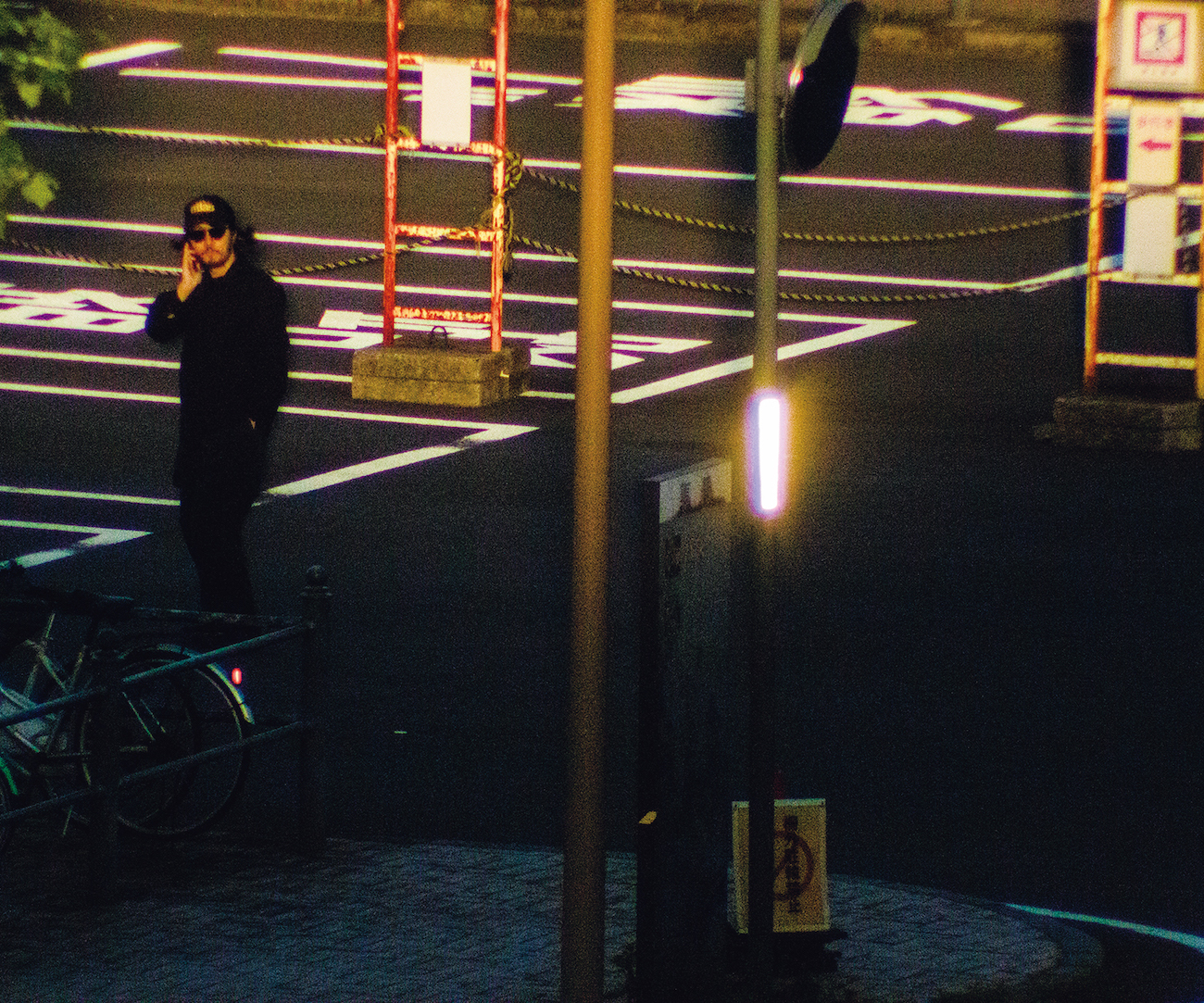
‘End Evening Nautical Twilight’, 2023. The subject of this photograph is Shota Tsukiyama himself. He gave instructions by phone to another person positioned more than 500 metres away with a camera, telling them when to press the shutter. In his own words, it is a remote self-portrait in which the artist himself becomes the object of observation. © Shota Tsukiyama
Shota Tsukiyama
Born in Tokyo in 1997, Shota Tsukiyama has in recent years developed works exploring the affinities between sniping and photography, incorporating gestures associated with observation and reconnaissance into the processes surrounding his photographic practice. He is also an assistant director at TOKYO PHOTOGRAPHIC RESEARCH.
Photography and sniping share the English word ‘shooting’: in both cases, an object is captured within a frame. Shota Tsukiyama focuses on the act of photographing itself, the gestures that accompany it and the tools involved, using them to explore new ways of thinking about photography and vision.
‘His solo exhibition S.L.L.S., held this year, was centred precisely on the hunter’s point of view. One of the works referred to the way sniping depends on coordination with a spotter. It was a self-portrait of Tsukiyama himself, photographed by another photographer positioned at a distance, who took the picture according to Tsukiyama’s instructions. Orange photographs of the sun were also displayed in the exhibition space. When a photographer takes a picture, they position themselves with their back to the sun; from the perspective of the person being photographed, the light is so dazzling that they cannot see anything. The photograph therefore shows the view Tsukiyama himself was seeing at the moment the previous photograph was taken.’
For the exhibition, the artist also made and displayed his own tools, including a bird call used by hunters to imitate birdsong and incense designed to conceal human body odour. His concept was therefore not conveyed solely through photography, but also given a three-dimensional presence in the exhibition space.
An accumulation of images floating through space
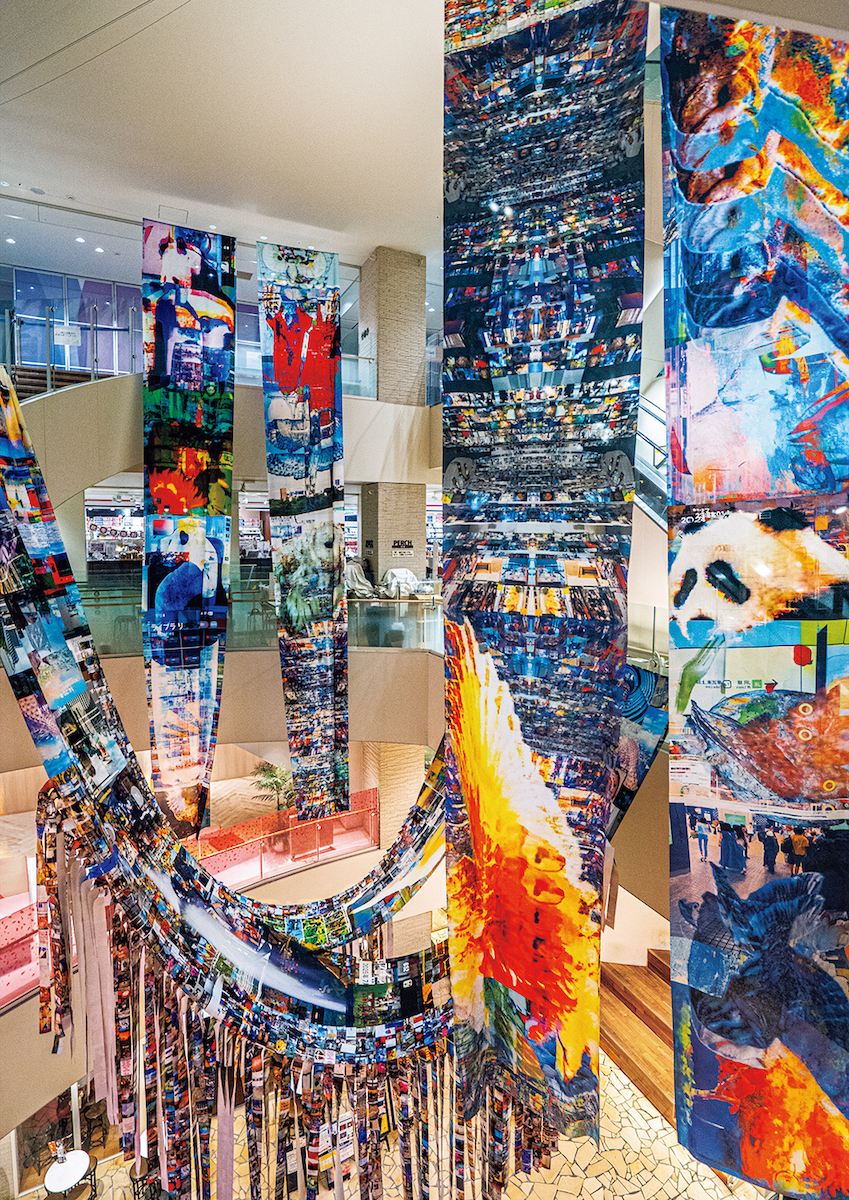
‘たぶんフクロウたちが飛んでいるところ (Tabun fukurō-tachi ga tondeiru tokoro)’, 2025. Installation view at WACCA Ikebukuro. In creating the work, the artist also conducted research into the surrounding neighbourhoods of Ikebukuro and their inhabitants. Yuu Matsui (Takuya Sekikawa) is particularly interested in the similarities between the vast quantity of images stored on smartphones and social media and the behaviour of a virus, a line of thought that informs his practice. © Yuu Matsui (Takuya Sekikawa)
Yuu Matsui (Takuya Sekikawa)
Born in Tokyo, Yuu Matsui began creating works independently after receiving the Excellence Award at Canon’s New Cosmos of Photography in 2016. Since 2022, he has worked under the name Yuu Matsui (Takuya Sekikawa). Takuya Sekikawa was his classmate in high school; the two realised that they shared a sensibility comparable to that of the Tachikoma in ‘Ghost in the Shell’—artificial intelligences whose brains can share the same cloud and synchronise their knowledge and experiences. They therefore collaborate on certain projects when necessary.
Since his early practice, Yuu Matsui (Takuya Sekikawa) has explored new forms of expression by combining photography, video, 3D and other media, with two main themes at the heart of his work: ‘image files’ and ‘pandas and contemporary mental illness’.
たぶんフクロウたちが飛んでいるところ (Tabun fukurō-tachi ga tondeiru tokoro) is an installation presented at the WACCA Ikebukuro shopping complex. In creating the work, the artist gathered several thousand images, both from his own archives and collected from people passing through the building, then collaged them onto a piece of fabric approximately 100 metres long. The result was a vast floating form, as though an accumulation of images were drifting through the space.
‘In photography, there is a practice known as the ‘found image’, which involves reusing pre-existing images. In his case, however, he may take the photographs himself or use photographs taken by others. He does not seem to make any semantic distinction between the two, treating them equally and exploring how new images might be generated from them. The fact that he also uses images stored on smartphones—images that would normally never be shown to other people—evokes AI and the large language models behind it. I find a certain sense of contemporaneity in this.’